
Gantry Crane

Your Position:
Home > Blog > Gantry Crane

Gantry Crane

Browse all-around gantry crane guides covering selection, anti-wind design, anti-corrosion treatment and real project cases for construction, scrap yard & precast field.
2026-08-27

Tunneling & Underground Excavation Gantry Cranes: High-Lift Shaft Winch Systems

This article focuses on the core equipment of shaft winch system, high-lift shaft winch, and tunnel gantry crane, and comprehensively analyzes its definition, working principle, structural configuration, application scenarios, selection standards, safety protection, and operation and maintenance points, and provides professional reference for equipment selection, construction operation and maintenance, and program customization for underground excavation projects.
View More
2026-08-27

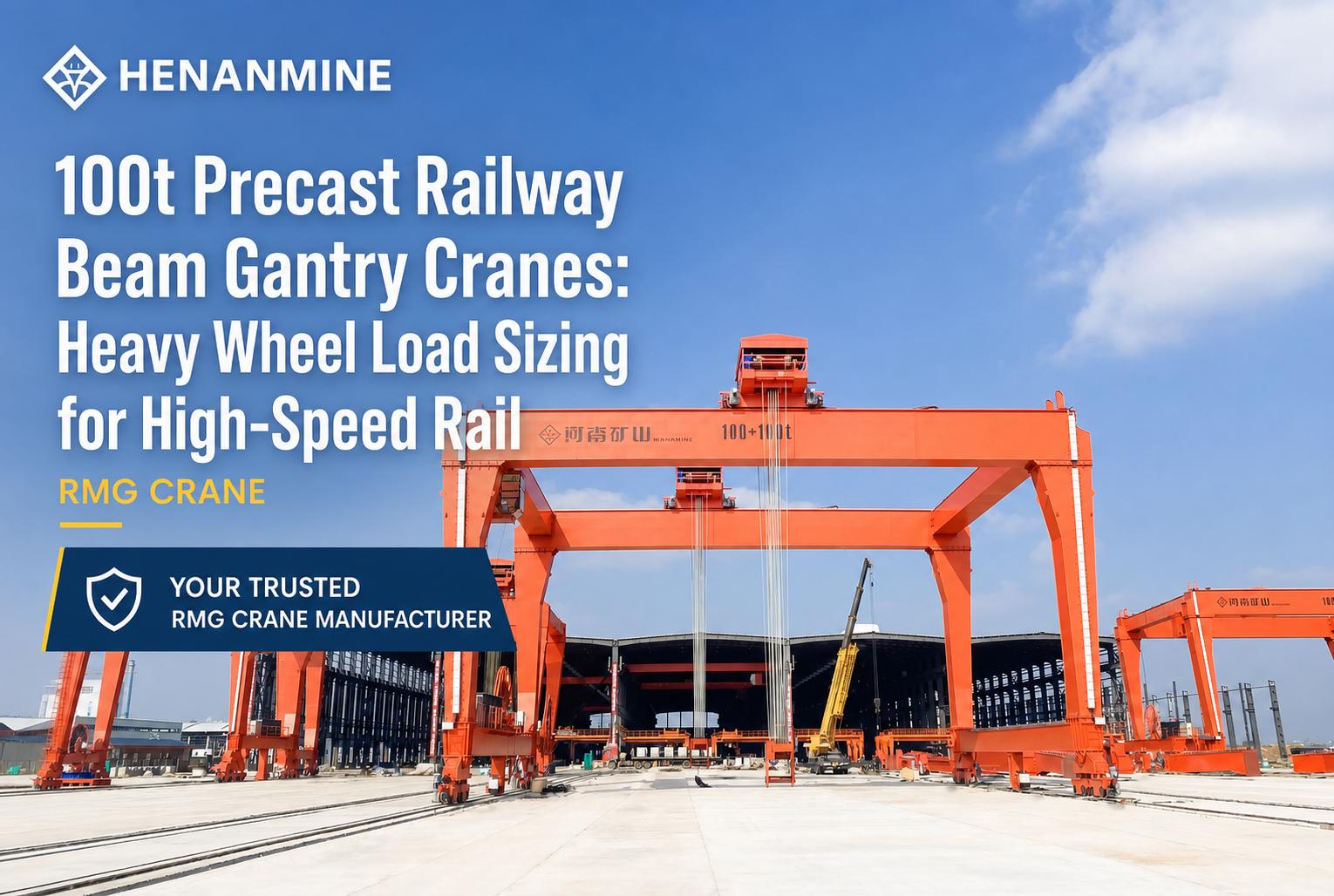
Outdoor Heavy Gantry Cranes for High-Speed Railway & Bridge Beam Lifting

This article will explain in detail the outdoor heavy-duty gantry cranes suitable for high-speed rail bridge construction from the full dimensions of equipment principle, core structure, construction application, parameter selection, safety specifications, operation and maintenance procurement, etc., and provide professional reference for infrastructure engineering equipment selection and on-site construction.
View More
How to Design a Gantry Crane for Uneven Ground Conditions Complex working conditions such as uneven ground, uneven slope, and soft soil are common in construction sites, field infrastructure, and port warehousing. Standard gantry cranes are difficult to adapt to such sites, and they are prone to problems such as fuselage tilt, force imbalance, derailment, deformation, and even overturning during operation, which not only reduces construction efficiency, but also hides major safety risks and increases equipment loss and construction costs.Customized design of gantry cranes for uneven ground conditions can fundamentally improve the operating stability and safety of gantry cranes, and adapt to the lifting needs of gantry cranes on various complex non-flat sites. Assess The Ground Conditions Before Gantry Crane Design Site survey is the pre-core process of the design of gantry cranes on uneven ground. The design of all structures, systems, and parameters must rely on real site working condition data to directly determine the site adaptability and operating safety of gantry cranes.Skipping site survey and designing based on experience alone will lead to a serious mismatch between the gantry crane and the working conditions, laying permanent safety hazards.Accurate site survey can be fully carried out from the three dimensions of surface morphology and slope, ground carrying capacity, site obstacles and drainage system, and provide accurate data support for the subsequent customized design of non-standard gantry cranes. Surface type and slope The construction site covers a variety of surface types such as concrete floor, gravel pavement, soft soil and backfill soil. Among them, loose soil can easily settle and collapse, which is the key focus of the design of gantry cranes on uneven ground.There are widespread natural gradients and local bumps in field sites, which will directly affect the support stability and walking safety of gantry cranes. It is also the core difficulty of Henan Mine Crane manufactured terrain adaptation gantry crane design.Before the design, it is necessary to accurately survey and record the slope parameters, concave and convex points and gap values of the site, and formulate a foundation leveling or equipment adaptive adjustment plan based on the actual terrain to avoid safety hazards such as tilt of the gantry crane fuselage and unilateral force overload from the source. Ground bearing capacity The ground carrying capacity is the core parameter of the gantry crane design, which directly determines whether the heavy-duty gantry crane can stably carry its own weight, rated lifting weight and dynamic impact load.Most temporary field sites are not reinforced, the bearing capacity of soft soil and backfill soil is weak, and long-term operations are prone to uneven settlement, causing problems such as deformation of the track of the gantry crane, offset of the fuselage, and structural cracking.Before the design, the bearing capacity and settlement coefficient of the site must be calculated through professional geotechnical testing, and the grounding pressure of the gantry crane equipment must be matched. Cushion laying and foundation reinforcement are used for sites with insufficient bearing capacity to ensure that the ground load fully meets the operating needs of gantry cranes on uneven sites. Site obstacles and drainage Obstacles such as piles, materials, pipelines, foundation pits, etc. on the construction site will limit the walking range of the gantry crane, and the offset trajectory will exacerbate the force deviation of the uneven ground, which directly affects the operating stability of the mobile gantry crane.During the survey phase, the location and size of obstacles need to be fully marked, and the span, walking stroke and outrigger layout of the gantry crane equipment should be reasonably planned to avoid operational interference.At the same time, it is necessary to focus on investigating the stagnant water area of the site, build a supporting drainage system, and discharge the stagnant water in time to avoid the stagnant water softening the soil layer, reducing the bearing capacity of the foundation, and preventing the structure and components of the outdoor gantry crane from being corroded by water vapor. Design The Gantry Crane Structure For Uneven Ground Based on accurate site survey data, the main structure of the gantry crane needs to be optimized in a targeted manner to break the fixed design limitations of standard gantry crane models. By strengthening the stability of the frame, optimizing the load distribution, and configuring the adjustable support structure, Henan Mine Crane manufactured customized gantry cranes can adapt to the complex force state of uneven ground, and solve the core working conditions such as tilt, deformation, and instability of the gantry crane from the structural level. Gantry frame stability The gantry frame is the core load-bearing structure of the gantry crane. The rigidity of the standard gantry crane frame is insufficient. Under the influence of the slope and gap of the uneven ground, it is prone to distortion, deformation of the outriggers, and excessive deflection of the main beam.For complex terrain conditions, it is necessary to adopt a high-strength box beam structure, thicken the steel plate of the core components and optimize the welding process to improve the torsional and bending resistance of the terrain-adapted gantry crane.At the same time, a symmetrical load-bearing layout is adopted, node connections are strengthened, and reinforced ribs are added to appropriately reduce the center of gravity of the gantry crane, effectively offset the force deviation caused by the terrain, and ensure that the gantry crane fuselage is stable and free of deformation and violent shaking throughout the process. Structural load distribution Uneven load distribution caused by uneven ground is the main cause of structural wear, deformation and cracking of gantry cranes. Terrain gaps can easily cause overload of one-sided outriggers and wheels of gantry cranes, and long-term eccentric loads will greatly shorten the service life of gantry cranes.In the design stage, it is necessary to rely on the topographic data of the site, and simulate the force state of the gantry crane parking, walking, hoisting and other working conditions through mechanical simulation, and accurately adjust the structural stiffness and load-bearing ratio.The non-standard gantry crane adopts a flexible adaptation structure to disperse and concentrate the stress, so that the load of the gantry crane is evenly distributed, and sufficient safety margin is reserved to effectively offset the dynamic force deviation caused by the terrain. Adjustable support solutions The adjustable support structure is a cost-effective adaptation solution for gantry cranes on uneven ground. It can effectively replace the high-cost full-site foundation transformation, quickly adapt to the slope and local drop of the site, and greatly improve the adaptability of gantry cranes to complex sites.At present, the mainstream configuration of gantry cranes is divided into hydraulic adjustable outriggers and mechanical heightening outriggers. The hydraulic outriggers can be adjusted independently, with large adjustment stroke and high leveling accuracy. With a locking device, the operation offset of the gantry crane can be eliminated.The mechanical outrigger has a simple structure and easy maintenance, and is suitable for small gap sites.With a large-size bottom pad, the grounding area can be expanded, the grounding pressure can be reduced, and the soft foundation of the gantry crane can be effectively prevented from settling and subsiding. Select The Right Wheels and Traveling System The walking system is the core component of the gantry crane in direct contact with the uneven ground. The wheel selection, load distribution, and anti-deviation walking control of the gantry crane directly determine the walking smoothness, stability and service life of the gantry crane.Ordinary standard walking wheels are prone to stagnation, derailment, partial wear, slippage and other problems on uneven ground, and the walking system scheme adapted to gantry cranes on uneven ground needs to be customized in a targeted manner. Wheel type and size The material, type and size of the wheels of the gantry crane need to be accurately selected according to the working conditions of the site, and adapted to the operating needs of the gantry crane on different uneven ground.Hardened concave-convex and gravel pavement is suitable for high-strength quenched cast steel wheels, which are impact-resistant and wear-resistant, can resist the wear and impact of gravel and raised pavement, and protect the walking structure of gantry cranes.For soft soil, loose sand and gravel, it is better to widen the rubber wheels to increase the grounding area and reduce the grounding pressure to avoid the wheels of the gantry crane from sinking and slipping.Heavy-duty gantry cranes are equipped with large-diameter wide-width wheels to buffer vibration, and light-duty gantry cranes use lightweight adjustable wheels to optimize ground clearance and avoid obstacles. Wheel load distribution The slope of the ground and the height difference can easily cause uneven force on the wheels of the gantry crane. The working conditions of overloading on one side and floating on one side can cause partial wear of the wheels of the gantry crane, bearing damage, and track deformation. In severe cases, the gantry crane derails and capsizes. Accidents.In order to solve this problem, the walking system needs to adopt a balanced beam and an articulated bracket structure, so that the wheels can adapt to the ups and downs of the ground and automatically fine-tune the height to ensure that the wheels of all Henan Mine Crane manufactured gantry cranes fit the ground throughout the process and are evenly forced.Combining the total weight of the gantry crane with the dynamic load, the bearing capacity of the single wheel is accurately distributed, and sufficient safety margin is reserved to adapt to the dynamic force changes of the gantry crane in complex terrain. Anti-skew traveling control The imbalance of force caused by uneven ground can easily cause the walking deviation of the gantry crane, the skew of the body and the gnawing of the rail, which accelerates the wear of the wheels and rails of the gantry crane, causing the structure of the gantry crane to be distorted and the operating resistance to increase, greatly reducing the service life of the gantry crane equipment.For this working condition, it is necessary to be equipped with a professional anti-deviation walking control system, relying on the PLC intelligent module to monitor the speed and displacement deviation of the gantry crane walking on both sides in real time, and automatically fine-tune the motor speed to achieve accurate correction.With the dual protection of the guide wheel and the mechanical limit, the walking offset failure of the gantry crane caused by the terrain is completely solved. Improve Stability With Proper Ground and Track Design The optimization of the structure of gantry crane equipment is the basis for adapting to uneven ground, and the standardized design of the ground, track and foundation of the site is the core guarantee for the long-term stable operation of gantry cranes.By standardizing ground leveling standards, optimizing track alignment accuracy, and strengthening foundation support structures, terrain defects can be compensated from the level of external working conditions, forming a dual guarantee with the customized design of Henan Mine Crane manufactured gantry crane, and comprehensively improving the safety of uneven ground gantry crane operations. Ground leveling requirements There is no need for full-field high-precision leveling of uneven ground, but the walking operation area of the gantry crane must be guaranteed to be flat and solid, and the hidden dangers of the operation of the gantry crane must be reduced from the basic level.Before construction, it is necessary to clean up the gravel and debris of the site, fill the pits, compactor and crush the soft soil layer, improve the compactness of the surface, and provide a stable operating base surface for the gantry crane.Strictly control the slope parameters of the site. The longitudinal slope of conventional gantry cranes does not exceed 3% and the transverse slope does not exceed 2%. The local gap needs to be controlled within the adjustable range of gantry crane equipment.Areas with excessive gaps can be leveled with concrete or gravel cushions to avoid the uneven tilt and force of gantry cranes caused by the ups and downs of the terrain. Rail and track alignment The track flatness and alignment accuracy directly determine the operating stability of the orbital gantry crane. Uneven ground can easily cause track offset, uneven height, and gauge deviation, causing the gantry crane to travel stuck, derailment, and structural deformation.Before the track is laid, the site needs to be leveled and compacted, and the sleepers and cushions need to be laid to disperse the pressure to prevent the track of the gantry crane from settling and deformation.Accurately calibrate the straightness, level and track gauge of the track during laying to ensure the parallel height of the two tracks. The site with a small slope adopts a homeopathic laying method and is equipped with adjustable fixtures. The calibration can be fine-tuned regularly in the later stage to maintain the long-term operation accuracy of the gantry crane. Foundation and support design For uneven, soft, and easy-to-settle construction sites, customized foundation support design is the key to the long-term stable operation of gantry cranes.The layered rolling process can be used for temporary work sites to lay gravel and ash cushions to enhance the compactness and bearing capacity of the foundation, and to ensure the stability of the temporary operation of the gantry crane.Gantry cranes for long-term heavy-duty operations need to pour reinforced concrete foundations, and calculate the foundation thickness and reinforcement specifications according to the soil bearing capacity to expand the force area.In weak soil areas, pile foundation reinforcement and soil layer replacement processes can be used, and special load-bearing foundations can be added at the force points of the gantry crane legs and the track to eliminate the problem of local overload and settlement. Control Load Swing and Dynamic Forces Uneven ground will exacerbate the dynamic force fluctuations in the operation of the gantry crane, causing problems such as swing, inertial shock, and structural vibration of the gantry crane, greatly increasing the risk of instability of the gantry crane equipment.By accurately controlling the lifting swing of the gantry crane, optimizing the lifting speed, and adapting to outdoor wind conditions, it can effectively offset the impact of dynamic loads and ensure the safety of gantry cranes in uneven sites under complex terrain. Load movement control The slight tilt of the fuselage caused by uneven ground can easily cause the lifting center of the gantry crane to shift, and a large swing occurs during operation, which not only affects the lifting accuracy of the gantry crane, but also has the safety risks of lifting collision and fuselage overturning.Therefore, gantry cranes operating in complex terrain need to be equipped with an intelligent anti-swing control system to monitor the swing angle and swing speed of gantry cranes in real time.The system can accurately control the start and stop rhythm of gantry crane carts and trolleys through PLC, and adopts flexible start and stop mode to compensate for swing inertia, quickly suppress lifting shaking, and effectively improve the lifting stability and operating accuracy of gantry cranes under complex terrain. Lifting speed and acceleration Conventional high-speed and high-acceleration operating modes are not suitable for uneven ground conditions, which are prone to strong inertial shocks, which exacerbate the vibration of the gantry crane structure, crane swing and component wear.In order to adapt to complex terrain, it is necessary to optimize the driving parameters of gantry crane equipment, reduce the lifting and walking speed under heavy-duty conditions, slow down the start-stop acceleration and deceleration, and adopt a low-speed flexible operating mode to weaken the dynamic impact force.The equipment can be set to multi-speed adjustment, the operator can flexibly switch gears according to the degree of irregularities on the ground, and the low-speed safety mode is enabled for complex terrain, taking into account the operating efficiency and operating safety of the gantry crane. Wind and outdoor conditions When outdoor gantry cranes are operating on uneven ground, the tilt of the fuselage will be superimposed with the wind load, which greatly increases the risk of overturning of the gantry crane, which is the main safety hazard in the construction of field gantry cranes.When designing, it is necessary to calculate the wind load based on the maximum wind strength level of the operating area, strengthen the wind-resistant rigidity of the main beam and outriggers of the gantry crane, and optimize the structure of the gantry crane fuselage to improve the overall wind resistance.Equipped with intelligent wind speed monitoring equipment, it collects on-site wind data in real time, automatically alarms when the wind speed exceeds the standard, and restricts the heavy-duty operation of the gantry crane to avoid the construction risk of terrain and wind superposition. Add Safety Systems For Uneven Ground Operation Complex and uneven site working conditions are complex and changeable, and risks cannot be completely avoided by structural optimization and operation control alone. Gantry cranes must be equipped with a full set of dedicated safety protection systems. Through real-time monitoring, intelligent protection, and emergency braking, an all-round safety barrier is built to prevent safety accidents such as tilting, overloading, and crossing boundaries of gantry cranes. Tilt and level monitoring The inclination and level monitoring system is the core safety guarantee for gantry crane operations on uneven ground. It can dynamically monitor the horizontal state and tilt angle of the fuselage of Henan Mine Crane manufactured gantry crane 24 hours a day, and predict the risk of instability of the gantry crane in advance.The equipment is equipped with a high-precision sensing module, which can accurately capture the tilt changes of the gantry crane fuselage caused by ground settlement and terrain gaps. Once the value exceeds the safety threshold, a sound and light alarm will be triggered immediately.The intelligent model can be linked with a control system to automatically lock the heavy-duty and walking functions of the gantry crane, eliminate safety accidents such as tilting and overturning of the gantry crane from the source, and adapt to dynamically changing complex site working conditions. Overload protection Uneven ground operations are prone to uneven force, dynamic impact loads exceeding the standard, etc., which can easily cause safety accidents such as structural damage and falling of gantry cranes. Therefore, high-precision overload protection systems for gantry cranes are essential.The equipment is equipped with weight sensing and load monitoring modules, which can collect static lifting weight and dynamic impact load data of gantry cranes in real time, and accurately identify overload conditions.Once the load is detected to exceed the rated standard, the system will immediately cut off the lifting power of the gantry crane, lock the dangerous operation and issue an alarm, effectively avoiding the risk of force fluctuations of the gantry crane caused by the terrain. Travel limit and emergency systems Irregular site obstacles can easily cause gantry cranes to cross boundaries, collide, and derail, and they need to be equipped with a perfect limit and emergency system to ensure the safety of gantry cranes.The walking end point of the gantry crane is equipped with a dual mechanical and electrical limiting device to accurately limit the walking stroke and prevent cross-border collision failures.At the same time, emergency braking and power-off devices are equipped. When the fuselage of the gantry crane tilts, the walking is stuck, and the hoisting is out of control, it can be stopped with one key to avoid danger.The high-end model comes with a fault self-inspection function, which can investigate anomalies of gantry cranes in real time, give early warning, and adapt to complex and uneven site operations. Consider Mobile and Custom Gantry Crane Solutions For uneven working conditions with complex terrain, unstable sites, and frequent transitions, standardized transformation cannot meet the needs, and customized mobile gantry cranes are the optimal solution.Through the selection of adaptable models and personalized configuration customization, it can be adapted to all kinds of complex and uneven sites in all directions, and the versatility of gantry crane equipment and the practicality of field construction can be improved. Rubber-tired gantry cranes Henan Mine Crane manufactured tire-type gantry crane is an ideal model for complex, uneven and soft sites. It does not need to lay a fixed track and relies on rubber tires to walk directly on the ground. The adaptability of the site far exceeds that of traditional rail-type gantry cranes.Widened and thickened rubber tires can increase the grounding area and reduce the grounding specific pressure, effectively avoid the subsidence and slippage of soft soil and gravel sites, and easily adapt to small slopes and uneven terrain.The equipment has strong mobility and flexible transition. With hydraulic leveling legs, it can compensate for ground gaps in real time. It is a high-quality uneven ground gantry crane suitable for temporary construction in the field. Adjustable wheel systems The adjustable wheel system is the core customized configuration of the gantry crane. The height, angle and spacing of the wheels can be adjusted adaptively according to the terrain of the site, which perfectly solves the problems of easy suspension, uneven force, and stuck walking of the fixed wheels of the gantry crane.The mechanically adjustable wheels rely on manual adjustment, with simple structure and easy maintenance, and are suitable for small light-load gantry cranes and small drop sites.The hydraulically adjustable wheels support automatic and independent adjustment, with higher accuracy and stronger stability. They can cope with complex working conditions with large slopes and high gaps, and greatly improve the versatility of gantry crane site adaptation. Custom crane configurations Standardized gantry cranes cannot be adapted to differentiated uneven site working conditions. Personalized customization of gantry cranes is the key to ensuring the efficient and safe operation of equipment.The core structure and functional configuration of gantry cranes can be customized according to the actual slope, soil quality, span, lifting weight and other parameters of the construction site.Lengthen the hydraulic parallel adjustment range of the gantry crane for large drop sites, optimize the low-pressure load-bearing walking structure of the gantry crane for soft base surfaces, and strengthen the wind resistance system of the gantry crane for windy outdoor scenes.The precise customized design of gantry cranes can fundamentally solve the problem of uneven site adaptation, balancing operating efficiency and equipment service life. Henan Mine Crane Factory Custom The core of gantry cranes adapted to uneven ground lies in the integrated customized design of precise survey, structural optimization and a full set of safety configurations.As a professional gantry crane manufacturer, Henan Mine Crane Factory relies on mature non-standard customization experience to optimize equipment structure, walking system and safety protection for complex working conditions such as slope, soft foundation, and uneven sites, and solve problems such as fuselage tilt, derailment instability, and frequent failures from the root cause, greatly improving the operating stability and service life of gantry cranes on uneven ground, and providing highly adaptable and safe hoisting equipment solutions for all kinds of complex field sites.
2026-08-25

How to Design a Gantry Crane for Uneven Ground Conditions

Gantry crane design for uneven ground requires careful site assessment, structural reinforcement, adjustable supports, stable traveling systems, and advanced safety controls. Explore practical solutions for slopes, soft soil, uneven surfaces, and demanding outdoor lifting conditions.
View More
Common Gantry Crane Accidents and How to Prevent Them
2026-08-25

Common Gantry Crane Accidents and How to Prevent Them

Gantry crane accidents can result from overloading, dropped loads, collisions, structural failures, equipment faults, and human error. Learn practical ways to improve gantry crane safety through inspections, maintenance, safety devices, training, and clear operating procedures.
View More
2026-08-24

Cantilever Gantry Cranes: Overhang Calculation & Application Guide

This article systematically expounds its structural design, application scenarios, cost points and safety specifications, avoids selection misunderstandings, and provides technical reference for equipment customization, selection, and operation and maintenance.
View More
2026-08-21

Marine & Shipyard Gantry Crane Budgeting Guide for Heavy Lifting

This guide focuses on the scenarios of heavy-duty gantry cranes in dockyards and ports, system disassembly selection, environmental protection, safety configuration, automation and full life cycle costs, and helps enterprises formulate accurate budgets during the procurement and project establishment phase to solve common problems such as missing items, mismatches, and overspending.
View More
2026-08-21

Steel Mill Crane Solutions: Choosing The Right Equipment For Heavy Manufacturing

Most steel mill equipment failures, production shutdowns and safety hazards are due to the mismatch between crane selection and actual working conditions.This article systematically combs the application scenarios, equipment selection, core parameters, safety configuration and common misunderstandings of steel mill cranes, and provides professional landing selection solutions for steel companies.
View More
How to Choose the Right Gantry Crane for Your Material Handling Needs
2026-08-20

How to Choose the Right Gantry Crane for Your Material Handling Needs

Choosing the right gantry crane starts with understanding material handling needs, load capacity, lifting height, span, duty cycle, working conditions, and control options. A practical approach helps match the crane to current operations while leaving room for future growth.
View More
Why Crane Wheels Wear Out Quickly and How to Prevent It
2026-08-20

Why Crane Wheels Wear Out Quickly and How to Prevent It

Crane wheel wear can quickly lead to uneven travel, costly repairs, and unexpected downtime. Learn what causes rapid crane wheel wear and how proper alignment, operation, and maintenance can help extend wheel service life.
View More
2026-08-19

Selecting Cranes for Modular Steel Construction & Prefabricated Assembly

This article streamlines and combs the core requirements, mainstream models, selection parameters, safety specifications and common misunderstandings of modular hoisting, and provides accurate selection reference for engineering construction.
View More
How Are Gantry Crane Prices Determined Key Factors Explained
2026-08-18

How Are Gantry Crane Prices Determined Key Factors Explained

Gantry crane prices depend on more than lifting capacity. Span, lifting height, duty class, crane design, custom features, installation, and transportation all affect the final cost. Understanding these factors helps buyers compare quotes, avoid hidden costs, and choose the right crane for long-term value.
View More
Why Crane Prices Differ for the Same Tonnage – A Buyer Guide
2026-08-17

Why Crane Prices Differ for the Same Tonnage – A Buyer Guide

Crane prices can vary significantly even for the same tonnage. Key factors such as crane structure, span, lifting height, working duty, components, control systems, safety standards, and working conditions all affect the final cost. Understanding these differences helps buyers compare crane quotations more accurately and avoid choosing a low-priced crane that may lead to higher operating and maintenance costs
View More
Get your customized solution
Contact us today by email at info@hnksglobal.com or fill out the form below.


    X