
When Should a Factory Choose a Semi-Gantry Crane Instead of a Full Gantry Crane
For material handling projects on the factory floor, the person in charge of procurement and equipment often needs to choose between full gantry cranes and semi-gantry cranes.Although both types of equipment can meet the needs of industrial lifting, they have their own characteristics in terms of structural design, space utilization, installation conditions and overall cost.If the selection is improper, it may increase the cost of plant renovation and foundation construction, and it will also affect the efficiency of daily operations.When the workshop already has building support, limited ground space, or needs to take into account indoor and outdoor material handling, semi-gantry cranes may be a more economical and flexible solution.
What Is the Difference Between a Semi-Gantry Crane and a Full Gantry Crane?
Semi-gantry crane design
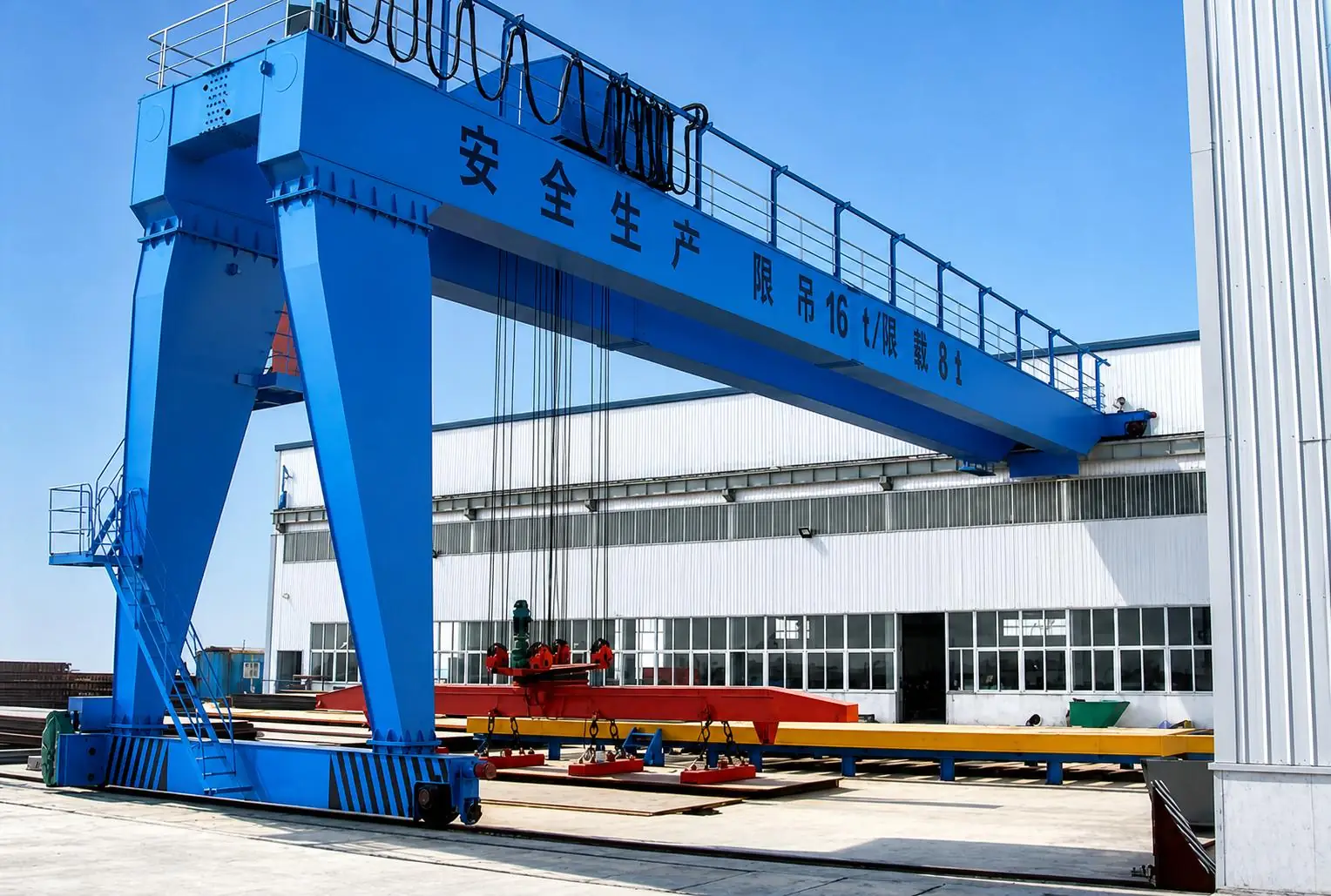
Henan Crane manufacturing semi-gantry crane crane is a kind of lifting equipment with one side of the outrigger landing and the other side relying on the original building structure of the plant.Independent outriggers are set on one side of the equipment and run along the ground track.The end beam of the cart on the other side is mounted on the high-altitude track of the plant column, ox leg or prefabricated crane beam, and there is no need to build a second track and outriggers on the ground.The complete set of door frame, lifting trolley, lifting mechanism, and electrical control system are integrated, and the electric hoist or hoist lifting mechanism can be configured to adapt to a variety of single-beam and double-beam structures, taking into account the indoor workshop, and also supporting the transition operation scene of semi-indoor and semi-outdoor at the entrance of the plant.
Key structural differences
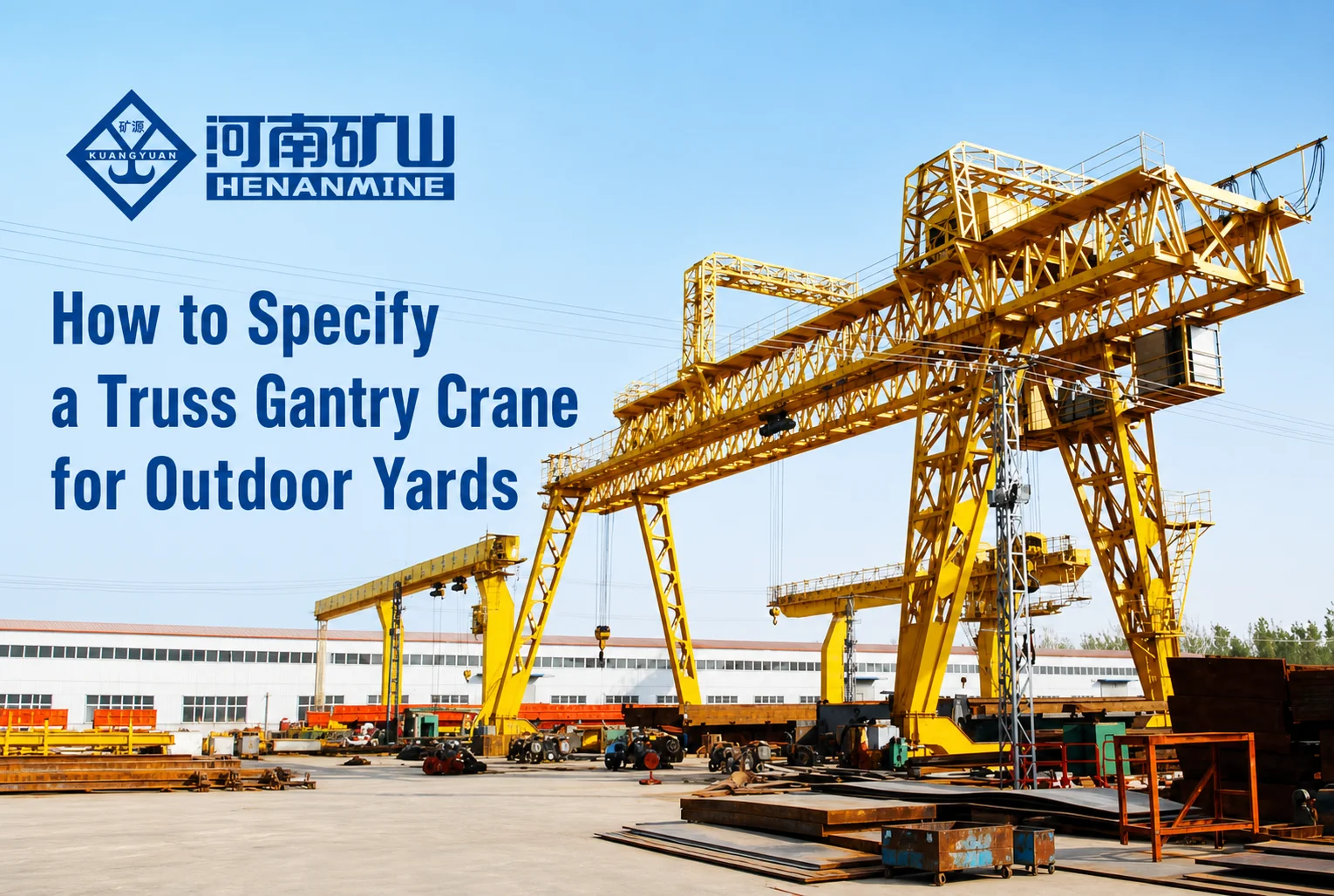
The full gantry crane adopts double-sided landing legs, and both sides require ground tracks and independent concrete foundations. The complete set of equipment is completely self-supporting and does not depend on the bearing capacity of the plant wall or column. It is an independent and complete gantry system.The semi-gantry crane crane has only one side of the landing legs, and the load on the other side is transferred to the steel structure of the building, eliminating the need for one side of the ground rail, legs and corresponding civil foundation.This is the core structural difference between the two, and it also directly determines the area, construction volume, cost and installation cycle.The overall stiffness of the full gantry gantry is higher, and it is not limited by the structure of the plant.Semi-gantry cranes need to verify the load-bearing capacity of the original beams and columns of the plant in advance.
When Is a Semi-Gantry Crane the Better Choice?
Limited floor area
When the ground space of the workshop is tight, the passages are narrow, and the production lines are densely arranged, the advantages of semi-gantry cranes are outstanding.The whole gantry has reserved space for outriggers on both sides, which will take up a lot of ground and squeeze the passage of forklifts and transshipment trucks.The semi-gantry crane has a ground outrigger track on only one side, and the other side is carried by the high-altitude beam of the plant, which can release a large amount of available ground area. It is suitable for narrow and long workshops, wall-mounted stations, and finished and semi-finished products stacked against the wall. The area will not interfere with the assembly line and tooling.For the renovation project of the old factory building, when the ground space cannot be excavated for the foundation of the double-sided track, the semi-gantry crane is the preferred solution.
Existing building support
If the original columns, cattle legs, and crane beams of the plant have undergone structural verification and the bearing capacity meets the crane load requirements, priority will be given to semi-gantry cranes.It can directly reuse the building structure as a high-altitude carrying track, eliminating the need to build a large steel structure bracket and ground foundation on one side.Many old factories do not want to dismantle the main building on a large scale, and do not want to invest in high civil construction and reinforcement costs. Under such working conditions, gantry cranes can significantly compress the scope of construction and shorten the downtime and transformation cycle.The premise is that professional engineers must complete the construction load test to confirm that the plant structure can withstand the dynamic load caused by crane operation and braking.
Indoor and outdoor operation
Crane manufacturing in Henan Province, semi-gantry cranes, cranes support semi-indoor and semi-outdoor mixed operations at the entrances and exits of indoor and factory buildings.Many factories need to hoist the workpiece from the indoor station to the outdoor yard at the gate of the workshop, or transfer it in reverse.One side of the track is arranged on the ground inside the workshop, and the other side of the track is erected on the beam of the workshop at the gate, and the lifting is completed across the inner and outer boundaries.Compared with the full gantry, it does not need to build a complete set of bilateral foundations outdoors, which is suitable for this kind of semi-open transition lifting scene.Purely large-area open-air yards and sites without building support are not suitable for semi-gantry crane schemes.
Semi-Gantry Crane vs Full Gantry Crane
Installation space
The semi-gantry crane crane has only one side of the ground track, which takes up less space on the ground and is friendly to the workshop passage, especially suitable for wall-mounted stations and narrow and long workshops.However, there must be beams and columns on one side of the building that can erect high-altitude tracks. There are hard requirements for the height of the plant and the position of the beam body, and the carrying capacity of the structure needs to be verified in advance.Ground tracks and foundations are required on both sides of the whole gantry. There is a large demand for reserved space on the ground and higher requirements for the horizontal width of the workshop. However, the advantage is that it is completely independent and does not need to rely on any building body. The open site and the newly built open-air site can be arranged.When selecting the type, the available width of the workshop should be measured first, and then combined with the structural conditions of the workshop to determine which scheme is more suitable.
Improve ability
The mainstream lifting weight of semi-gantry cranes covers 3~32 tons, mainly for medium-light and medium-duty material handling. Single-beam models are mostly used for 3-20 tons. Double-beam semi-gantry cranes can be selected for large tonnage, but they are limited by the carrying capacity of the building side structure, and it is not recommended for heavy-duty conditions with large tonnage.The full gantry can achieve large loads of tens or even hundreds of tons, with stable structure, better performance in heavy-duty, frequent impact, and heavy-duty work scenarios, and is suitable for heavy-duty steel components, large-scale equipment, ship segments, etc. Large-weight lifting.When selecting the type, it should be judged comprehensively based on the actual lifting weight and operating intensity to avoid affecting efficiency or safety due to insufficient capacity selection.
Installation and operating costs
Civil construction costs are the biggest gap.Henan Mine Crane manufactured semi-gantry cranes are only used for single-sided foundations, and the amount of civil engineering is greatly reduced, the amount of steel is used is less, and the overall procurement + civil construction budget is lower.The installation period is short, and the workshop shutdown construction time is short, which reduces the loss of production line shutdown.However, it is necessary to increase the cost of building structure inspection and beam reinforcement. If the carrying capacity of the original plant is insufficient, the reinforcement cost will rise.The volume of civil engineering projects in the whole gantry has doubled, two tracks and foundations on both sides have been excavated and poured, the amount of steel is greater, and the total investment in pre-procurement, civil construction, and installation is higher.In the later stage, the outriggers on both sides and the two tracks must be inspected and maintained regularly, and there are more operation and maintenance points.
Which Industries Use Semi-Gantry Cranes?
Machinery manufacturing
Semi-gantry cranes are widely used in general machinery, machine tool processing, and construction machinery parts workshops.Machining workshops usually arrange machining centers, tooling and fixtures against the wall, and castings, forgings, machine tool bases and large tooling need to be frequently hoisted next to the station, and the ground access is already tight.The semi-gantry crane is arranged with one-sided ground rails against the wall, saving ground access and not interfering with the normal operation of the CNC production line. It is suitable for loading, unloading and transshipment of single-piece and small-batch workpieces.The conventional working system of A3-A5 fully matches the intermediate frequency hoisting needs of the machining workshop, which not only ensures the operating efficiency, but also effectively reduces the investment in plant renovation and civil construction.
Steel manufacturing
Steel structure processing plants, sheet metal workshops, and profile storage areas often stack long-size materials such as steel plates, pipes, and pipes against the wall.The semi-gantry crane is arranged along the side of the workshop, responsible for the unloading, transfer of steel and the lifting of workpieces in pairs, and releases a large area of ground in the middle of the workshop to the core stations such as cutting and welding, reducing the back and forth intersection of materials and equipment.It does not need to occupy the ground in the middle of the workshop, can take into account the stable lifting of long materials such as steel, and with medium tonnage lifting weight, it is very suitable for the intermediate frequency transfer rhythm of steel structure plants, and it is also convenient for subsequent installation and centralized maintenance.
Industrial warehousing
The factory's raw material warehouse and finished product storage workshop are equipped with semi-gantry cranes against the wall, which are mainly used for the stacking and loading of pallets, heavy-duty bins and large finished products.Warehouse access resources are precious, and forklifts and transshipment trucks need to travel frequently between shelves. Semi-gantry cranes manufactured by cranes in Henan Province only retain the arrangement of one-sided ground rails against the wall, leaving the middle area intact for forklift traffic and shelf arrangement to avoid interference between loading and unloading equipment and transportation vehicles.It can not only complete the stable lifting of large materials, but also maintain high-density storage in warehouses, especially suitable for heavy-duty bins and large-scale finished product loading, unloading and transshipment scenarios.
What Should Buyers Check Before Choosing a Semi-Gantry Crane?
Capacity and category of responsibilities
First confirm the rated lifting weight, and at the same time, the working level (working system) of the crane cannot be ignored.Many customers only look at tonnage, but ignore the number of daily cycles, continuous running time and impact load, which can easily lead to low selection.Working Principle: Working Principle: Working Principle: Working Principle: Working Principle: Working Principle: Working Principle: Working Principle: Working Principle: Working Principle: Working Principle: Working Principle: Working principle Workshop 3/a4.Overloading or choosing a working level that is lower than the requirements of working conditions will accelerate the aging of equipment and bring safety risks.Manufacturers should recommend matching single-beam or double-beam solutions based on the actual number of lifting cycles and the intensity of workshop operations.
Runway and foundation
The two rail systems of the semi-gantry crane must be evaluated. The track on the ground side needs to verify the foundation bearing capacity, ground flatness and long-term settlement requirements.For the high-altitude rail beam on the side of the building, the building structure must be verified and the static load must be checked against the dynamic load generated by the braking of the crane cart.If the bearing capacity of the beams and columns of the original plant is insufficient, the reinforcement design needs to be made in advance.The embedding, grounding, and limit installation of foundations and tracks are the key to the safe operation of semi-gantry cranes. Any lack may affect the accuracy and safety of lifting, so the preliminary survey cannot be omitted.
Span and lifting height
The span is the distance from the centerline of the ground track to the centerline of the side track of the building, which directly determines the steel selection and overall stiffness of the main beam and outriggers of the gantry.The lifting height needs to consider the lowest and highest positions of the hook, reserve sufficient operating safety distance, and avoid plant pipelines, bridges, and lighting pipelines to prevent interference during lifting.It is also necessary to combine the height of the workpiece and the tooling to confirm whether it is necessary to add a cantilever, and simultaneously check the additional bending moment caused by the cantilever on the side structure of the building to ensure that the whole machine and the plant structure are safe and reliable under dynamic load.
How to Choose the Right Gantry Crane
When to choose semi-gantry
If the following conditions are met, Henan Mine Factory supply Crane will be preferred to manufacture semi-gantry cranes. The workshop floor is narrow and the space for forklifts and transshipment trucks needs to be reserved.The plant has a qualified and reusable original beam and column structure, which can carry high-altitude tracks.The lifting weight is medium-light to medium-tonnage, and the working system is conventional frequency.The scope of operation is indoors, or semi-indoor and semi-outdoor transfer is required at the entrance of the factory.The budget is limited, and it is hoped that civil construction will be reduced and the installation cycle will be shortened.This kind of project is especially suitable for the renovation of old factories. Without major demolition and construction, the equipment can be quickly completed and put into operation.
When to choose a full gantry
In these working conditions, a full gantry crane should be selected. There is no available building support on the site and it needs to be operated in a pure open-air environment.It requires frequent heavy-duty lifting under the large tonnage and heavy-duty work system.The workshop walls and columns cannot be reinforced, and the structural bearing capacity is insufficient.It needs to move freely within the full width of the entire site, and there are no buildings on both sides to set up high-altitude tracks.A complete set of equipment that is completely independent and does not depend on the main structure of the plant is required.The full gantry has self-supporting landing legs on both sides, which can stably carry large loads on open sites without building support, and is suitable for heavy-duty and high-frequency operations.
Customized crane solutions
The workshop size, foundation conditions, workpiece specifications, and work shifts of each factory are different, and it is difficult for standardized cranes to be perfectly adapted.Professional crane manufacturers will provide customized solutions based on site survey data, and design main beams, outriggers, rails, lifting mechanisms, electronic controls, limits and various safety protection devices in a targeted manner.Whether it is a semi-gantry crane or a full gantry crane, it can be customized according to your span, lifting height, tonnage, explosion-proof, frequency conversion and other needs. At the same time, it is equipped with civil construction recommendations, structural verification, installation guidance and after-sales maintenance plans to ensure the safe and stable landing of the entire lifting system and long-term reliable operation.
Henan Mining Crane Factory
Choosing between a semi-gantry crane and a full-gantry crane requires more than just comparing lifting capacity and purchase price. Your workshop layout, existing building structure, runway conditions, load requirements, and daily operating frequency will all affect the correct solution. A well-matched crane can reduce unnecessary construction costs, improve material handling efficiency and support long-term production needs.
In Henan Mine Crane Factory, we provide industrial crane solutions according to different facility layout and important operating conditions. Whether you need a semi-gantry crane to maximize workshop space or a full-gantry crane for independent heavy lifting, our team can help evaluate your project requirements and recommend suitable configurations. Contact us with your required capabilities, span, lifting height and site conditions to discuss a customized crane solution for your factory.