
How to Install Heavy Duty Gantry Cranes in Existing Steel Structure Workshops
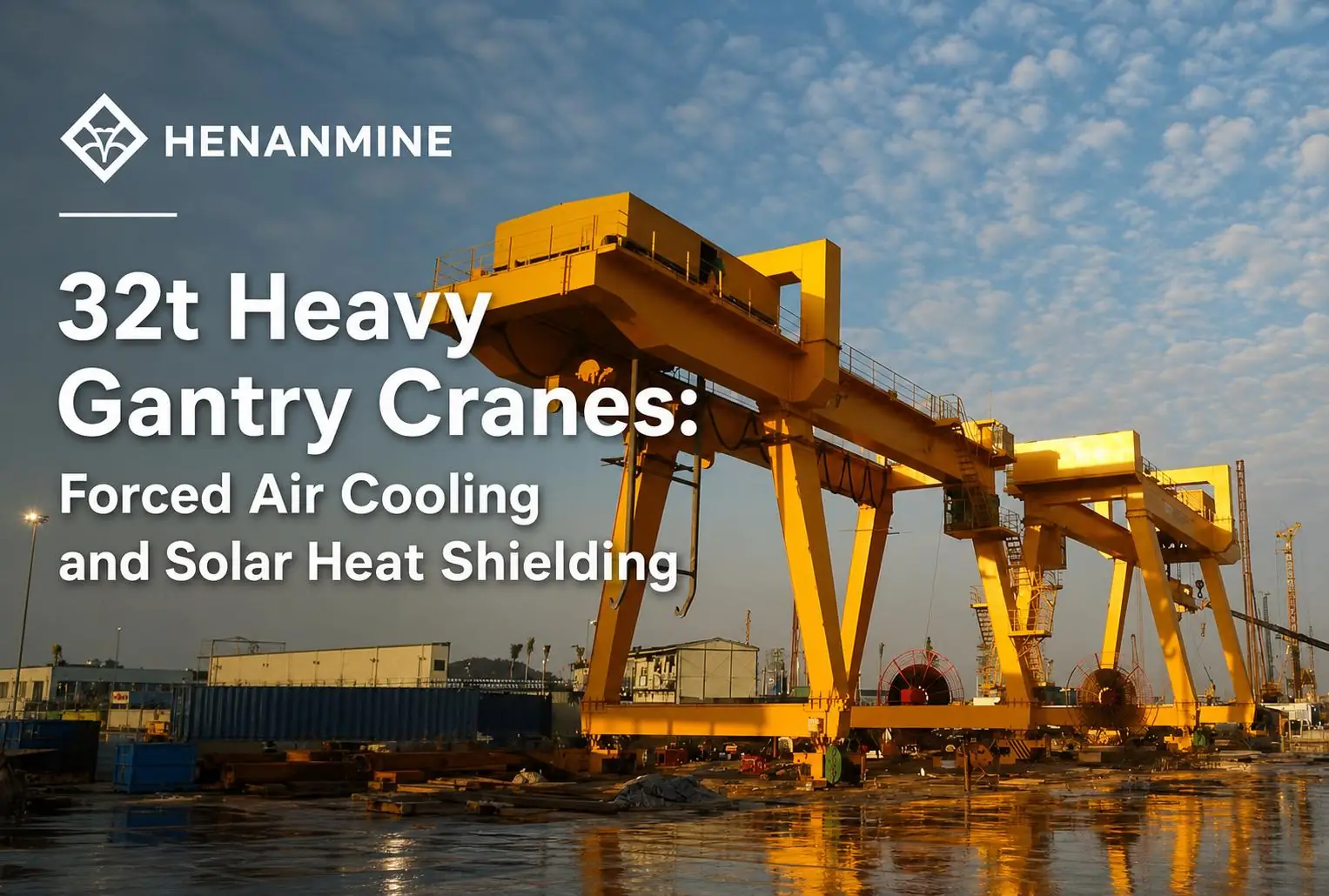
Heavy-duty gantry cranes are widely used in manufacturing, warehousing and heavy industry processing scenarios, and undertake large-scale material hoisting, transshipment and assembly operations.In the stage of upgrading production capacity, many enterprises hope to use the built steel structure workshop to install lifting equipment to avoid the high cost and long construction period of the new plant.Heavy-duty gantry cranes have a large impact on their own weight and dynamic load, and have strict requirements for the bearing capacity, ground load, space clearance and foundation foundation of the steel structure of the original plant. Direct construction without evaluation can easily cause hidden dangers such as component deformation, ground settlement, and equipment stagnation, and even fail to pass safety acceptance.The installation of the plant needs to evaluate the adaptability of the site first, implement pre-testing, targeted structural transformation, standardized installation and load acceptance, while taking into account the project cost and production shutdown control, and provide a complete landing idea for the workshop hoisting transformation.
Can a Heavy-Duty Gantry Crane Be Installed in an Existing Workshop?
The core issue that many factory managers are most concerned about is whether the built steel structure plant can be equipped with heavy gantry cranes?The answer is yes, but the three core conditions of structure, load, and space must be met. Not all factories are suitable.Light-duty gantry cranes can be easily installed, while heavy-duty gantry cranes with a rated lifting weight of more than 5 tons need to be specially evaluated in combination with the original parameters of the plant and the working conditions of the equipment. Factories that do not meet the conditions must be retrofitted before installation, and direct construction is strictly prohibited.The following are the three core adaptation evaluation dimensions.
Workshop structure assessment
The stability of the steel structure of the plant is the basic prerequisite for the installation of heavy gantry cranes.The specifications and materials of the steel columns, steel beams, roof supports, inter-column supports, and connecting bolts of the existing steel structure plant directly determine whether it can carry the static load, dynamic load, and braking impact force generated by the operation of the gantry crane.First of all, it is necessary to verify the original construction drawings of the plant and confirm the load-bearing parameters of the steel structure design, the cross-section dimensions of the components, and the steel labels.Secondly, investigate the current situation on the site, whether there are aging and damage problems such as steel column corrosion, steel beam deformation, weld cracking, loose bolts, and missing support.
At the same time, it is necessary to distinguish the design and use of the plant. Most of the ordinary light-duty processing and storage steel structure plants do not reserve lifting equipment loads, and the overall stiffness and side resistance are insufficient, which cannot be directly adapted to heavy gantry cranes.The heavy industry adapted steel structure plant has reserved the lifting load margin, which can be installed with a simple review.Professional engineers need to pass the structural force calculation and bearing capacity verification, and issue a plant structure evaluation report to determine whether the original steel structure meets the operating requirements of the equipment, and clarify whether it needs to be reinforced and transformed.
Crane load requirements
The load parameters of Henan Mine Crane manufactured heavy gantry crane are the core basis for the adaptation of the plant. The core includes three categories: static load, dynamic load, and impact load, which are indispensable.Static load refers to the fixed weight of the gantry crane, hook, trolley, wire rope, etc., and is the basic load-bearing pressure of the plant and the ground.Dynamic load is the alternating load generated when the equipment is running, the material is lifted and lowered, and the horizontal movement is made.The impact load is the instantaneous impact force generated at the moment of start, stop and braking, and it is also the key load that steel structures are most vulnerable to damage.
The loads of heavy gantry cranes of different tonnages vary greatly, and the requirements of 10-ton, 20-ton, and 50-ton heavy equipment for the steel column force, ground load-bearing, and track foundation of the plant are completely different.In the evaluation stage, it is necessary to clarify the rated lifting weight, maximum operating span, lifting height, operating speed, and working level of the equipment, and calculate the overall carrying margin in combination with the plant structure to ensure that the ultimate carrying capacity of the plant > the total load of the equipment + the safety redundancy coefficient, so as to eliminate the risk of structural fatigue, deformation and collapse in long-term operation.
Available installation space
The space size is not up to standard, and no matter how qualified the structure is, the installation and normal operation of the gantry crane cannot be completed.First, verify the vertical clearance. It is necessary to meet the height of the gantry crane legs, the installation height of the main beam, and the maximum lifting height of the material. At the same time, reserve the top safety maintenance gap to avoid the collision of materials and equipment with the roof and steel beams of the plant.Secondly, check the horizontal span. The column spacing and overall span of the plant need to match the design span of the gantry crane to ensure that the equipment walks unobstructed and interference-free.
At the same time, it is necessary to reserve equipment operation channels and maintenance space. There cannot be fixed equipment, shelves, or walls on both sides of the plant to block the walking track, and a buffer safe distance needs to be reserved at both ends to meet the needs of gantry crane limit braking, maintenance and maintenance.In addition, it is necessary to verify the space of the import, export and internal passages of the factory area to ensure the entry of large-scale component transportation and hoisting equipment, so as to avoid the construction problems that the equipment cannot enter and the installation space is insufficient.
What Should Be Checked Before Gantry Crane Installation?
After the plant adaptation assessment is passed, a full range of pre-verification must be completed before the formal construction. This is the key link to avoid installation failures, eliminate safety hazards, and ensure that the acceptance is qualified.Most of the problems of installation rework, equipment failure, and failure to pass safety supervision are due to omissions in the early verification.This link will clarify the main points of standardized verification from the three dimensions of building foundation, ground load, and operating environment.
Building structure and foundation
The main structure and foundation of the plant building are the core foundations for carrying heavy gantry cranes, and the verification work needs to be detailed and comprehensive.For building structures, it is necessary to review the verticality of the steel column, the flatness of the steel beam, and the firmness of the connection nodes of the steel structure twice, investigate weld defects, bolt fastening conditions, and the integrity of the support system, and confirm that the structure has no deformation, no loosening, and no aging damage.The key points of foundation foundation verification are foundation settlement, concrete strength, and foundation size.The long-term reciprocating operation of heavy-duty gantry cranes has extremely high requirements for foundation stability. It is necessary to test the concrete marking of the ground foundation of the plant to confirm whether it meets the equipment pressure standard.Investigate whether there are uneven settlement, cracking, and empty drum problems in the foundation. If the foundation sinks and the strength is insufficient, serious problems such as track deformation, equipment deviation, and structural tilt will occur in the later stage.All basic data must be kept in inspection records as the core information for subsequent acceptance and annual inspection.
Floor load capacity
The load-bearing capacity of the ground is an easily overlooked but vital verification item.Unlike ordinary equipment, Henan Mine Crane manufactured heavy gantry crane when walking, the load will be concentrated on the ground in the track paving area, and the local pressure is extremely high.It is necessary to accurately detect the load-bearing per unit area of the plant floor, the thickness of the concrete, and the flatness of the ground, and confirm that the ground can withstand the combined load of the gantry crane's own weight and the maximum hoisting material.The ground of an ordinary factory building is only suitable for the passage of personnel and small equipment. It is not designed for centralized heavy-duty, and the gantry crane is directly installed on the track. Problems such as ground cracking, collapse, and track tilt will directly cause the equipment to fail to operate smoothly, greatly increasing the probability of safety accidents.If the ground load is not up to standard, targeted ground thickening, reinforcement of steel bars, and reinforcement of cushions are required to ensure that the ground carrying capacity meets the long-term operating standards of the equipment.
Clearance and access conditions
The verification of headroom and access conditions directly determines the efficiency of installation and construction and the safety of the equipment in the later stage of operation.Clearance verification needs to fully cover the operating area, reserve a safe height at the top, a horizontal clearance distance on both sides, and a buffer distance at the end, and completely remove obstacles such as pipelines, lamps, shelves, and temporary facilities within the operating range to ensure that the gantry crane does not interfere in the whole process of lifting, walking, and braking.The installation and passage conditions are mainly for the construction phase. It is necessary to confirm the entry route of heavy components such as large-scale hoisting equipment, gantry crane main beams, and outriggers, clean up obstacles in the factory area, level the entry road, and ensure the smooth entry of transportation vehicles and cranes. In place.At the same time, plan the construction site enclosure, work area, and safety warning area, do a good job of construction isolation, avoid cross-operation interference, and lay the foundation for safe and efficient construction.
How to Modify an Existing Workshop for a Gantry Crane?
Most old and ordinary steel structure factories cannot directly install heavy-duty gantry cranes, so targeted special retrofits need to be made based on the results of preliminary testing and evaluation.The renovation of the plant follows the principles of minimum changes, maximum safety, and optimal cost. There is no need for overall reconstruction. Only the reinforcement and optimization of weak links can meet the installation and operation standards of heavy gantry cranes.The core transformation is divided into three modules.
Reinforcing the steel structure
Steel structure reinforcement is the core process of plant transformation, and it is optimized for steel components with insufficient bearing capacity, insufficient stiffness, and poor stability.Common reinforcement methods include thickening and strengthening of steel beams and steel columns, adding inter-column support, roof transverse support, and oblique support components to enhance the overall steel structure's resistance to lateral force and deformation, and offset the alternating load and impact force generated by the operation of the gantry crane.For steel components with corrosion, thin walls, and seriously insufficient bearing capacity, the corresponding specifications of high-strength steel need to be replaced. All reinforced welds are fully welded and fastened with high-strength bolts. After the welding is completed, anti-corrosion and anti-rust treatment will be done to avoid corrosion and aging of the components in the later stage.After the reinforcement is completed, the bearing capacity verification needs to be done again to confirm that the steel structure as a whole meets the load requirements of the long-term operation of the heavy gantry crane, and a reinforcement acceptance report is issued.
Preparing the crane travel area
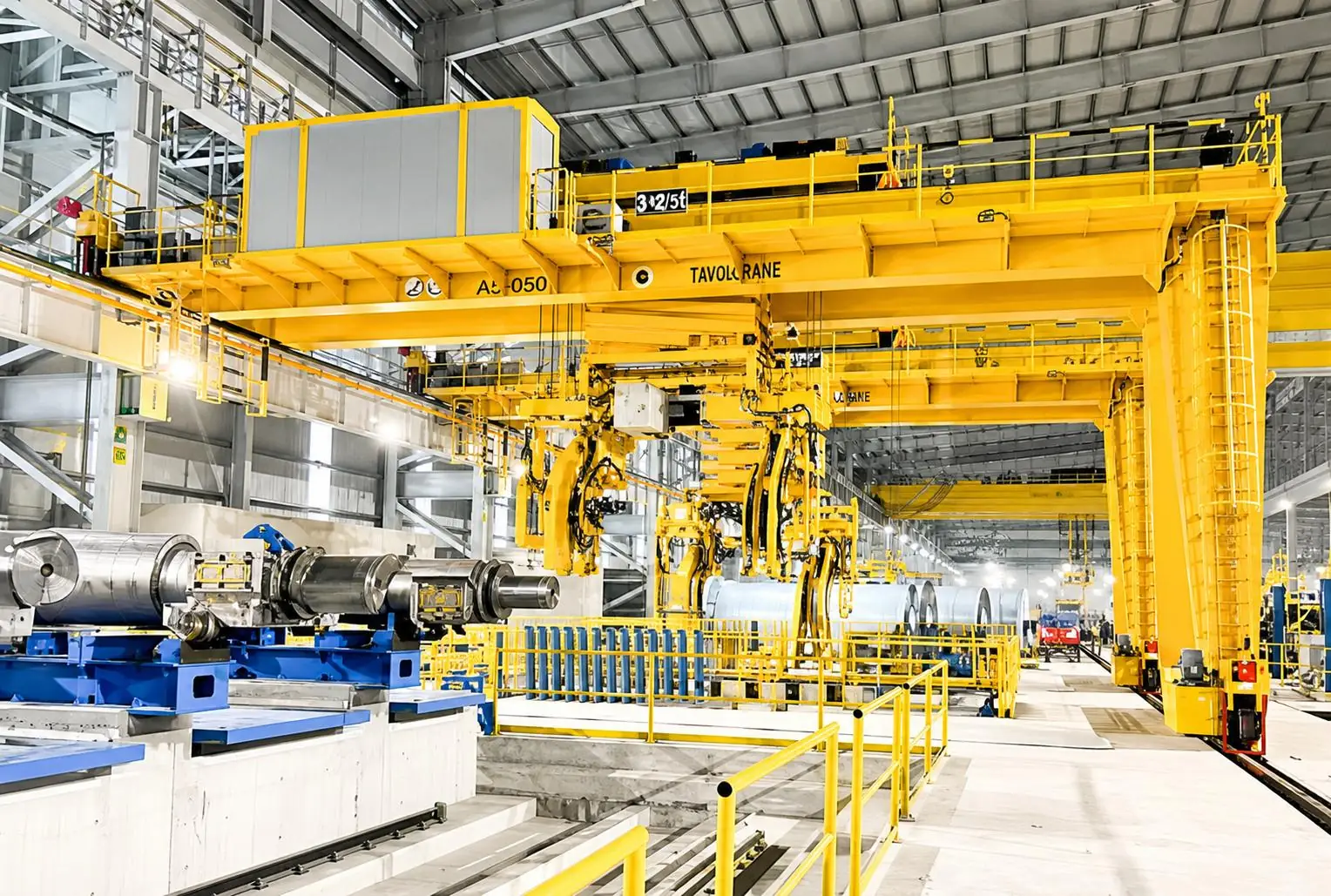
The transformation of the walking area of the gantry crane directly affects the smooth operation and service life of the equipment.First, the ground and foundation of the walking track area are hardened and strengthened, the concrete cushion is thickened, and a double-layer steel mesh is added to enhance the overall pressure bearing capacity of the ground and prevent the ground from settling and cracking due to long-term heavy-duty operation.Secondly, accurately level the operating ground, control the ground flatness error within the industry standard range, and prevent the height difference after the track is paved.Accurately lay the line according to the design parameters of the gantry crane, determine the centerline of the track, pavement spacing, and elevation parameters, lay a special lifting track, and fix the track pressure plate, buffer baffle, and grounding device to ensure that the track parallelism, flatness, and spacing are fully up to standard.At the same time, clean up all debris and raised obstacles in the walking area, and polish the raised parts of the ground to ensure that the gantry crane walks smoothly, without caton, and without deviation.
Adjusting workshop clearance
In view of the lack of headroom and space interference in the plant, refined space adjustments are required.For scenes where the top clearance is insufficient, the roof ancillary facilities can be optimized, the ceiling pipelines can be shifted, and the position of lamps and lanterns can be adjusted to maximize the use of vertical space.For situations where there is insufficient space on both sides, move the fixed equipment, shelves, and fixtures in the work area to broaden the walking space of the equipment.If there is a slight deviation in the span and column spacing of the plant, the installation and positioning of the gantry crane can be adjusted to adapt to the existing structure of the plant.If the spatial deviation is too large, the wall and column ancillary structures need to be partially modified to eliminate the risk of collision in equipment operation.After the transformation is completed, the headroom size will be reviewed in all directions to ensure that the lifting limit height, walking limit range, and maintenance operation space all comply with safety specifications.
How Is a Heavy-Duty Gantry Crane Installed?
After the preliminary verification and the acceptance of the plant renovation are passed, the standardized installation and construction of heavy gantry cranes can be started.Heavy-duty gantry crane components are large in size, heavy in weight, and require high installation accuracy,
Component transportation and positioning
Henan Mine Crane manufactured heavy-duty gantry cranes include main beams, outriggers, walking end beams, winches, trolleys, electrical systems and other large-scale components. Transportation and precise placement are the first step in installation.All components are packed in protective packaging before leaving the factory to avoid bumps, deformation, and corrosion during transportation. Special transportation vehicles are used for large, ultra-long and ultra-wide components, which are firmly fixed to prevent transportation displacement and damage to the equipment structure.After the components enter the field, they will be placed in partitions in accordance with the installation order, and the site will be leveled and cushioned. Sleepers and cushions will be placed under the heavy-duty components to avoid the components from directly touching the ground and being deformed by moisture.At the same time, combined with the construction drawings, precise placement and positioning, mark the installation point of the outrigger, the docking position of the main beam, and the track reference line, review all positioning dimensions, and provide accurate benchmarks for subsequent assembly and construction to eliminate installation deviations.
Main girder and leg assembly
The assembly of the main beam and outriggers is the core process of the entire installation project, which directly determines the overall stability and operating accuracy of the equipment.The construction adopts segmented hoisting and alignment assembly technology. First, a large crane is used to accurately lift the outriggers on both sides to a preset positioning point. After temporary fixation, the verticality and level are calibrated to ensure that the outriggers are not tilted or offset.Then the main bridge body is hoisted, the main beam is smoothly buttoned to the flange interface of the outriggers on both sides, and the 10.9-level high-strength bolts are used for layered preload fixation, and the preload force is applied three times to the design torque value to ensure uniform butt gaps and balanced force, and prevent deformation of the main beam and loosening of the connection.After the docking of the main beam is completed, the span, level, and verticality of the equipment are calibrated as a whole, and the deviation is fine-tuned to ensure that the installation accuracy of the main structure meets the national standard construction standards.
Hoist and trolley installation
After the installation and calibration of the main frame is completed, the hoisting core components, the hoist and the walking trolley, will be installed.First, the trolley and hoist are accurately hoisted to the center of the main beam track, and the wheel track and clearance of the trolley are adjusted to ensure that the trolley walks flexibly without caton and deviation.Then install the hooks, wire ropes, and pulley blocks, and wear and wrap the wire ropes in strict accordance with the specifications of the equipment instructions to ensure that the wire ropes are moderately elastic, neatly arranged, no extrusion, and no wear.Install the limit device and the lifting limit protection device, debug the upper and lower limits of the hook lifting, and the walking limit of the trolley to ensure that the limit action is sensitive and accurate, and the risk of rushing to the top and derailing is eliminated.All mechanical connection parts are fastened in place, and special lubricating greases are added to ensure the smooth operation of the transmission mechanism and improve the operating stability and service life of the equipment.
Electrical and control system connection
After the installation of the mechanical structure is completed, the wiring, wiring and debugging of the electrical control system will be carried out.Lay the cables in accordance with the electrical schematic diagram, standardize the routing and fixing of the cables, and do a good job of cable protection to avoid wear, pulling, moisture and leakage.Install the control cabinet, operation handle, emergency stop switch, limit alarm, walking warning light and other electrical accessories in turn.After the wiring is completed, strictly check the on-off, insulation performance, and grounding protection of the line to prevent short circuits, leakage, and wiring errors.Then debug the control system, test the basic functions of equipment start-stop, lifting, walking, variable speed, etc., optimize the control sensitivity, ensure smooth operation and accurate response, and debug safety alarm, overload protection, emergency braking and other protective functions to ensure the safe and stable operation of the electrical system.
How to Ensure Safe Crane Operation After Installation?
The completion of the installation does not mean the end of the construction. It must pass all-round testing, load testing, and safety acceptance. After confirming that the equipment meets the standards, it can be put into production and use.Standardized acceptance and commissioning is the core link to avoid late-stage safety accidents and ensure the compliance operation of equipment, and it is also an essential process for passing safety supervision and filing.
Load testing and commissioning
Load testing is the core standard for verifying the load-bearing performance and structural stability of Henan Mine Crane manufactured gantry cranes. It strictly follows the step-by-step test specifications for no-load, half-load, full-load, and overload.First, a no-load trial operation is carried out to test whether the equipment is stable in walking, lifting, and braking throughout the process, with no noise, no caton, and no offset.Then the rated load test is carried out, the standard counterweight material is hoisted, the normal operating conditions are simulated, and the structural force, orbital operation, and mechanical transmission status of the equipment are tested.Finally, an overload test of 1.25 times the rated load was carried out to verify the ultimate carrying capacity and structural stability of the equipment, and to investigate whether there are hidden dangers such as structural deformation, loose bolts, and cracked welds.All test data are recorded in detail, and the commissioning and delivery of the equipment can be completed after passing the test, and a complete commissioning and acceptance report can be issued.
Travel and lifting tests
Special operation and lifting tests focus on the accuracy and stability of equipment operations.The walking test detects the overall longitudinal walking of the gantry crane and the smoothness of the trolley's horizontal walking throughout the whole process, investigates problems such as deviation, jitter, caton, and brake offset, and fine-tunes the track clearance and the accuracy of the walking wheel to ensure the smooth operation of the whole process at uniform speed.The lifting test focuses on detecting the smoothness of material lifting, the cushioning effect of start and stop, and the accuracy of height limit. It tests whether the low-speed and high-speed lifting and switching are smooth, whether the braking is accurate and reliable, and there is no slip hook or slip phenomenon.At the same time, the operating status of different spans and heights is tested to ensure the stable operation of the equipment under all working conditions and adapt to the needs of various hoisting operations in the factory.
Safety system inspection
Comprehensive investigation of the safety system is the last line of defense to eliminate operational risks, covering all safety protection devices and emergency systems.Detect overload protection, overload limit, lifting height limit, walking stroke limit, emergency braking device, buffer, and anti-collision device one by one to ensure that all protective devices are sensitive, reliable, and triggered accurately.At the same time, check electrical grounding, leakage protection, warning devices, sound and light alarms, and emergency power-off systems to investigate electrical safety hazards.After completing the hardware testing, carry out safety operation and emergency response training for operators, clarify equipment operation specifications, contraindicated working conditions, and emergency plans for failures, and ensure the safe operation of equipment from the three parties of equipment, personnel, and system.
What Affects the Cost of Installing a Gantry Crane?
Many companies are concerned about the overall cost of installing heavy gantry cranes in existing factories. The installation cost of equipment is not a fixed value and is affected by multiple factors such as the current situation of the plant, the difficulty of transformation, equipment parameters, and construction standards.The overall cost is mainly divided into three major sectors. Accurate understanding of cost influencing factors can effectively control the budget and avoid overspending.
Structural modification costs
The cost of plant structure renovation is the sector with the largest budget fluctuations, which mainly depends on the original conditions of the plant.The carrying capacity of old factories and ordinary light steel structure factories is insufficient, and large-area steel structure reinforcement, ground hardening, foundation reinforcement, and space transformation are required. There are many processes, large consumables, and high transformation costs.The brand-new heavy-duty steel structure plant and the plant reserved for hoisting loads only need to be simply reviewed and fine-tuned, and the cost of transformation is extremely low.At the same time, the transformation of tonnage and span will also affect costs. Large-tonnage and large-span heavy-duty gantry cranes have higher requirements for reinforcement standards, and steel, concrete, and labor costs have increased simultaneously.The cost gap between local transformation and overall reinforcement is significant, and accurate pre-evaluation can effectively avoid excessive transformation and waste of budget.
Crane installation costs
The installation cost of the equipment body includes labor, large-scale hoisting equipment, construction consumables, and on-site commissioning costs.Henan Mine Crane manufactured large-tonnage heavy-duty gantry cranes have complex structures and bulky components. They require the cooperation of large cranes and the collaborative construction of multiple professional technicians. The construction cycle is longer and the installation labor and equipment rental costs are higher.The installation process of small-tonnage equipment is simple, the construction efficiency is high, and the installation cost is lower.In addition, the construction environment will also affect the cost. In scenarios where the plant space is small, the entry is difficult, and there are many cross-operations, the construction difficulty will increase, the construction period will be extended, and the installation cost will increase accordingly.3. The construction of standardized factories is convenient, which can effectively reduce the cost of installation and construction.
Electrical and commissioning costs
Electrical system and commissioning costs include cable laying, electronic control equipment installation, system commissioning, inspection and acceptance, safety supervision filing and other costs.High-end intelligent control system, frequency conversion speed regulation, remote monitoring, intelligent limit and other configurations, the cost of electrical accessories is higher, and the debugging process is more complex.The cost of basic conventional electronic control systems is lower.At the same time, compliance acceptance, third-party testing, and data filing are also fixed expenses. The regular construction team will assist in completing the testing, acceptance, and filing process throughout the process to ensure that the equipment is put into production in compliance with regulations and avoid additional costs for later rectification.
How to Minimize Downtime During Installation?
The biggest pain point of the installation of gantry cranes in the factory is the shutdown of construction, which affects normal production, resulting in loss of production capacity and delays in construction.Through scientific construction planning and refined management, downtime can be compressed to the maximum extent, construction transformation and production peaks can be realized in parallel, and production losses can be greatly reduced.
Pre-installation planning
Perfect pre-planning is the core prerequisite for reducing downtime.Complete all plant inspections, plan design, drawing confirmation, material procurement, and equipment stocking work before construction, and complete the construction filing with the safety supervision department in advance to avoid downtime due to plan changes, material shortages, and incomplete procedures in the middle of construction.Accurately plan the construction process, process convergence, and staffing, refine daily construction tasks, and eliminate invalid construction periods.At the same time, investigate construction risks in advance, predict possible problems during renovation and installation, and formulate emergency plans to avoid failures and delays in construction.The more adequate the pre-preparation, the higher the efficiency of on-site construction and the shorter the overall downtime.
Phased installation
The phased and zoned construction mode is adopted to replace the one-time shutdown of the whole plant.Divide the plant into production areas and construction areas, isolate the construction area, and only close a small area of working space, and the rest of the area will be used for normal production operations.According to the step-by-step construction of transformation, paving, installation, and commissioning, each process is immediately accepted for acceptance, compressing the single-stage construction cycle.For multi-span factories and large-area workshops, they can be constructed step by step and put into production step by step to avoid overall shutdown.Phased construction can balance the construction schedule and production needs to the greatest extent, and minimize downtime losses.
Production coordination
Do a good job of coordination between the construction team and the production team, and arrange construction and production at the wrong peak.Use night shifts, weekends, and downtime to carry out noisy and interfering construction processes, and carry out refined and low-interference installation and commissioning work during the day.Adjust the production plan in advance, transfer the production tasks in the construction area to the normal operating area, and rationally allocate production capacity.Set up full-time coordination personnel on site to co-ordinate construction progress and production arrangements, resolve cross-operation contradictions in a timely manner, and avoid mutual interference between construction and production.Through efficient collaboration, both equipment upgrading and normal production are realized, and the loss of production capacity caused by transformation and installation is minimized.
Henan Mine Crane Factory Custom
For the installation of heavy-duty gantry cranes in existing steel structure factories, the core logic is first evaluation, then verification, fine transformation, standardized installation, and strict acceptance.Not all factories can directly install equipment. It is necessary to evaluate the structural bearing capacity, load parameters and space size, and then carry out reasonable design and transformation according to the on-site conditions, cooperate with standardized installation, load testing and safety acceptance, so that the heavy gantry crane can truly adapt to the production environment of the original factory.
Henan Mine Crane Factory can provide customized gantry crane solutions according to plant size, lifting weight, span, lifting height and actual operating needs, and carry out targeted design and engineering support based on on-site conditions.Whether it is the renovation of existing factories or the upgrading of heavy equipment, it can be matched from program design, equipment manufacturing to installation and commissioning, so that enterprises can improve their hoisting capabilities without blindly expanding their plant investment.If you are considering installing a heavy-duty gantry crane in an existing steel structure plant, please contact Henan Mine Crane Factory for customized solutions and project quotations.