
65t Ship-to-Shore (STS) Portal Cranes: High-Speed Container Unloading and Anti-Sway Control
In modern deep-water container ports, the 65-ton ship-to-shore (STS) Portal Crane is the core loading and unloading equipment, which directly affects port throughput, shipping schedule turnover and logistics costs.The equipment is suitable for ultra-large and ultra-large container ships (ULCV), relying on a 65-ton rated load, large operating coverage and intelligent anti-swing system, and is mostly used in high-load container operation scenarios such as international hub ports and transit terminals.
This article will analyze the structural principle, core parameters, performance advantages, selection points, operation and maintenance plans and procurement standards of the 65-ton STS crane in an all-round way, and provide a professional reference for the upgrading of port equipment and the selection of new terminal equipment.
What Is a 65t Ship-to-Shore (STS) Portal Crane?
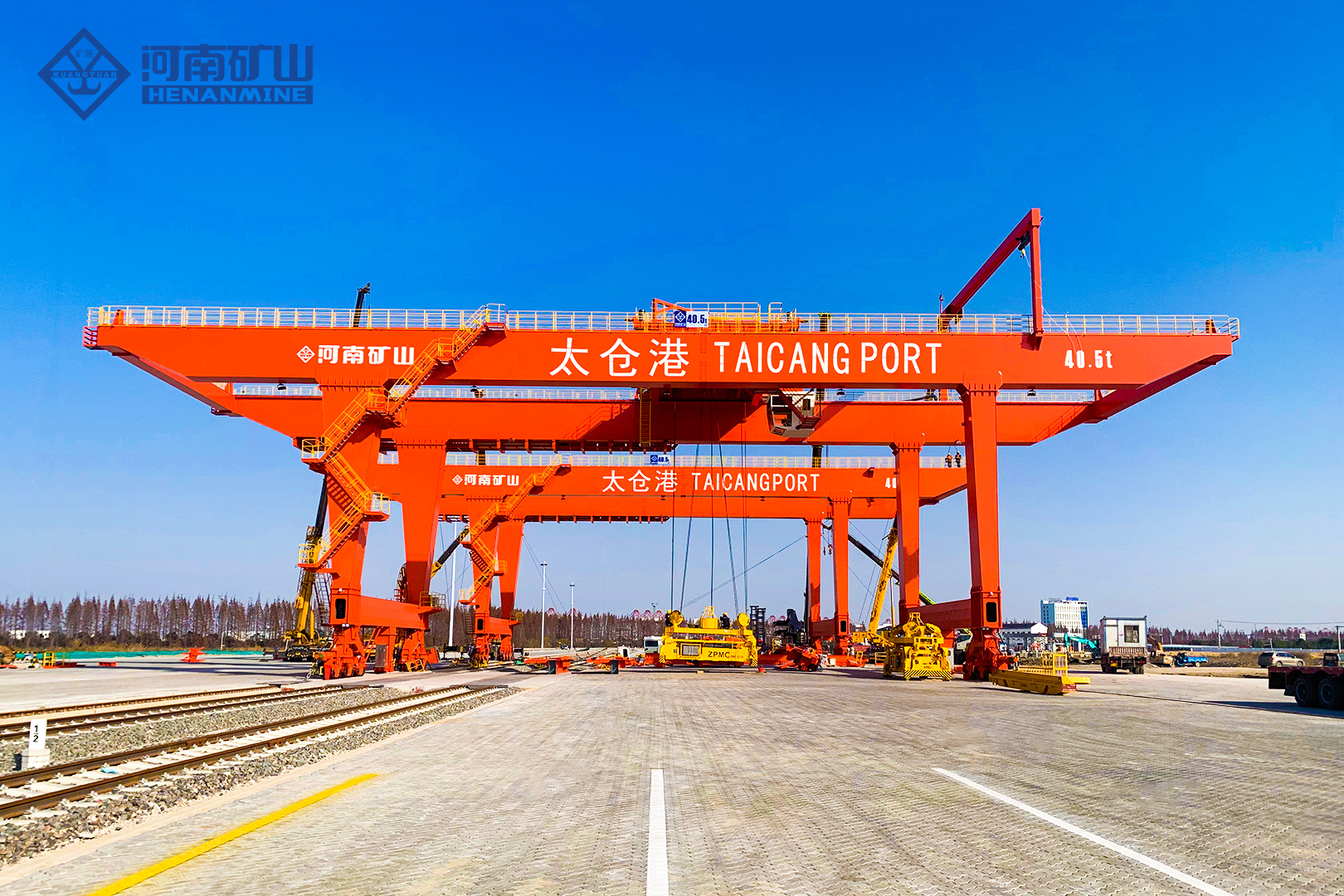
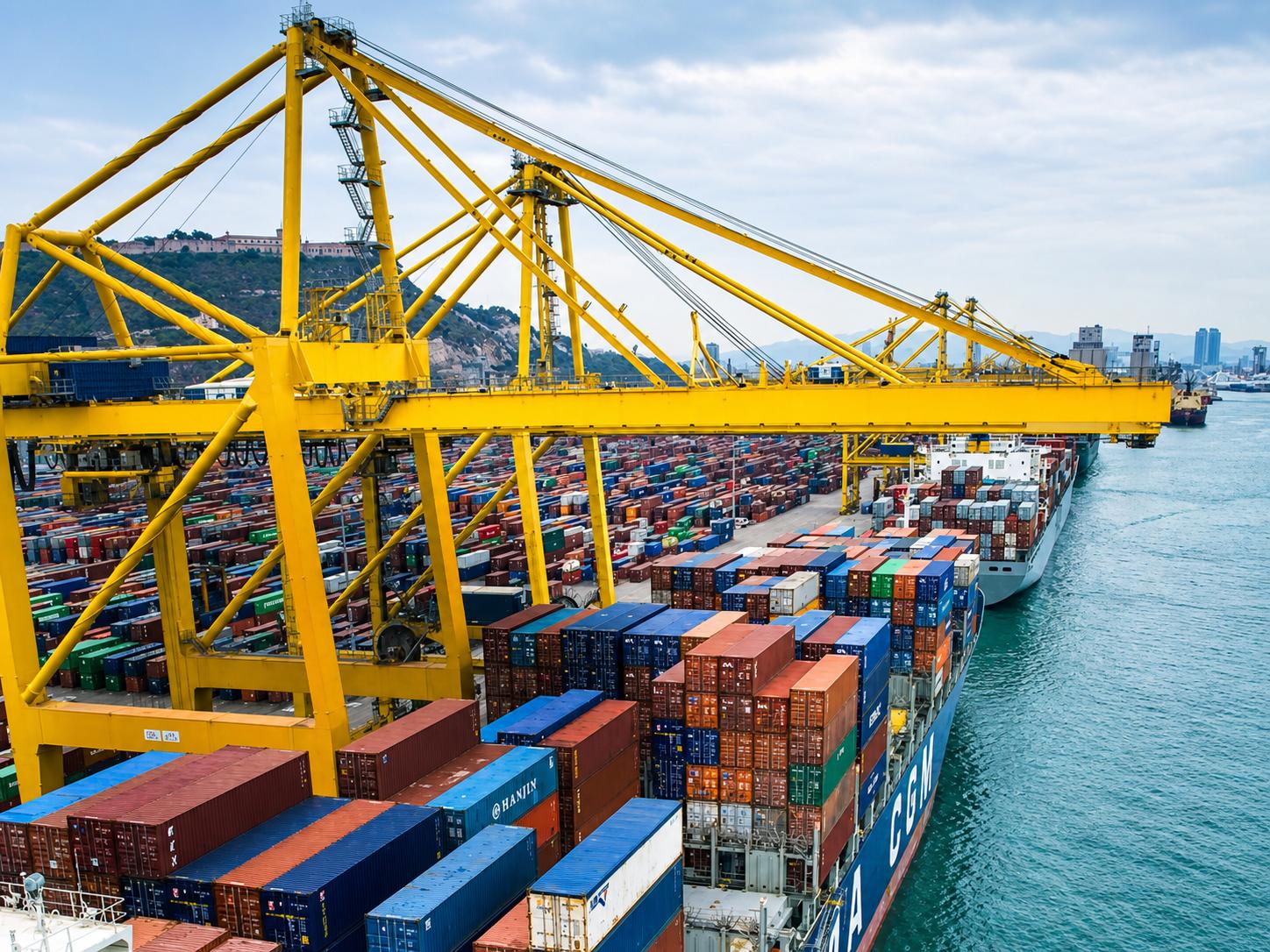
ship-to-shore (STS) Portal Crane, also known as shore container crane, is a rail-type lifting equipment installed at the forefront of the terminal and used for ship-shore container transshipment.The 65-ton shore bridge belongs to the fixed infrastructure of the terminal, which is adapted to the civil construction and power supply system of the berth, and supports high-intensity continuous operation. A single unit can complete 25-40 operation cycles per hour.
65 tons represents the rated safe lifting load under the spreader. It is the mainstream specification of large international ports. It supports single-box and double-box hoisting. It is compatible with 20/40/45-foot standard containers, can load and unload ordinary and heavy-duty special containers, and has a balanced versatility and carrying capacity.
Compared with mobile port cranes, the 65t STS crane has stronger structural stability, higher operating efficiency, and better automation adaptability. It is designed for all-weather, high-intensity continuous port operations and is an indispensable core equipment for large container terminals.
Core structure composition
The 65-ton ship-to-shore (STS) gantry crane adopts a modular high-strength steel structure design. The overall structure is stable, wind-resistant and corrosion-resistant, and can be adapted to complex port environments such as high coastal salt spray and strong winds. The core structural system is mainly divided into five major sectors.:
- Gantry and rail walking system: the carrying frame is composed of outriggers and balance beams, and the load is transmitted to the walking mechanism and the dock base.The equipment moves vertically along the track, its positioning is stable, and it can be adapted to the loading and unloading of different compartments of the ship to ensure the stability of the operation.
- Boom, main beam and trolley mechanism: The boom supports pitch folding, which is convenient for navigation and avoidance; the main beam is for the trolley to walk.The trolley belt lifting and spreader system, which moves laterally along the main beam to complete the shore transfer of container ships, is the core component of efficient operation.
- Lifting mechanism and spreader: The high-power lifting motor cooperates with the wire rope to realize the vertical lifting of the container.Standard telescopic spreader, suitable for 20-45-foot containers, automatically locks and unlocks the corners of the box; it can be replaced with a 75-ton hook beam to expand heavy-duty bulk cargo operations.
- Operation cab: integrated on the side of the trolley, equipped with a panoramic field of view, shock absorption and noise reduction, and constant temperature control system to provide operators with a comfortable operating environment. At the same time, it is equipped with a full set of operation control handles and monitoring display screens to achieve precise control of the operation of the whole machine.
- Electrical and intelligent control system: With PLC programmable controller and frequency conversion drive system as the core, it integrates sensors, encoders, anti-swing systems, and safety protection devices to realize intelligent control of the whole process of equipment start and stop, speed regulation, positioning, anti-swing, and safety early warning.
Core application scenarios
With high-strength carrying capacity, large operating range and efficient operating capabilities, 65t STS cranes are widely used in various high-end container operating scenarios, including core scenarios.:
- Container loading and unloading of large ships: suitable for ultra-Panama and ULCV ultra-large container ships, which can cover multiple rows of container operations on the deck of the ship to meet the loading and unloading needs of large ships.;
- High-frequency operation of international hub ports: suitable for high-load terminals with an annual throughput of more than one million TEU, to achieve 24-hour uninterrupted continuous operation, greatly improving the efficiency of port turnover;
- Container transit terminal: to meet the needs of rapid transit and distribution operations between ships, and shorten the berthing time of ships in the port;
- Heavy-duty special container operations: for the lifting and transshipment operations of fully loaded heavy-duty containers and special dry cargo containers, it makes up for the short load of conventional small-tonnage cranes.
Key Specifications to Consider When Selecting a 65t STS Crane
The core of the selection of the 65-ton STS shore bridge lies in the precise matching of various working condition parameters with the actual operating needs of the terminal. Each core parameter directly affects the safety, coverage and overall operating efficiency of the equipment, which is the key basis for the selection of equipment.
- The rated lifting capacity is the basic core of the safe operation of the equipment. It specifically refers to the rated load under the 65-ton spreader, which clarifies the maximum safe operating load of the equipment, which can be perfectly adapted to the heavy-duty container operation scenario of the terminal, and guarantees the safety of all-weather high-intensity operations from the root cause, and eliminates the risk of overloading operations.
- The forward extension distance determines the operating coverage of the equipment facing the outside of the ship. When selecting the type, it is necessary to meet the loading and unloading needs of containers with more than 15 rows on the deck of large ships, and fully adapt to the width of ultra-large ships to ensure that the equipment can cover most of the ship's operating areas without operating blind spots.
- The rear extension distance is mainly used to ensure the working space of the terminal shore base, and to support the precise placement of containers on the terminal yard, collection card and AGV automated transshipment equipment, so as to realize the efficient connection and transshipment of ship and shore containers, and adapt to the automated terminal operation process.
- The lifting height is divided into two dimensions: on-rail and off-rail. It can be flexibly adapted to ultra-high container stacking operations on the ship deck. At the same time, it can adapt to changes in tidal water levels to ensure barrier-free loading and unloading operations under different water levels and different container height scenarios, and adapt to complex terminal conditions.
- The lifting speed of full load and no load directly determines the length of the single box operation cycle, which is the core index that affects the overall operation efficiency of the terminal.The differentiated speed configuration can achieve stable operation at full load and fast return at no load, greatly reducing the time-consuming of invalid operations, and effectively increasing the hourly operation volume of a single equipment.
- The operating speed of the trolley controls the efficiency of the horizontal transfer of container ships on the shore. The faster and smoother operating speed can effectively shorten the positioning and movement time of the container between the ship and the shore base, compress the single operation cycle, and improve the turnover efficiency.
- The walking speed guarantee equipment of the cart can be quickly shifted along the dock track, which can flexibly adapt to the needs of batch loading and unloading operations of different compartments of the ship, without frequent standby adjustments, to ensure the continuity of container loading and unloading operations of the whole ship.
- The track gauge span needs to strictly match the existing track infrastructure of the terminal. The accurately adapted track gauge can avoid large-scale civil engineering transformation of the terminal, reduce the cost of equipment landing, and ensure stable equipment installation and stable operation. Adapt to the original infrastructure system of the terminal.
- The working level determines the continuous operation carrying capacity of the equipment. The high-working level models are specially adapted to the 24-hour uninterrupted, high-intensity and high-frequency operation mode of the port. The equipment is more durable and stable in operation, and it is suitable for high-throughput terminal operation needs.
- The type of spreader determines the flexibility and compatibility of container operations. Single-box and double-box retractable spreaders can be adapted to different terminal operating processes, compatible with multi-specification standard container loading and unloading, and can flexibly switch operating modes according to the cargo flow structure, greatly improving the adaptability of equipment.
Anti-Sway Control: The Key to Faster and More Accurate Container Handling
Container swing is the core pain point that restricts the efficiency of port operations and affects the safety of operations. The intelligent anti-swing control system is the core technology of the 65t container crane to achieve high-speed and accurate operation, and it is also the core advantage that distinguishes it from ordinary lifting equipment.
Core causes of container operation swing
Container shaking in port operations is mainly caused by the combination of two major internal and external factors.:
- Internal equipment factors: the inertial force generated by the start, stop and variable speed of small cars and carts, and the pendulum effect formed by the long-distance suspension of wire ropes are the main causes of load swing.;
- External environmental factors: the normalization of high winds and gusty weather in coastal ports, the floating displacement of ships, further exacerbate the swing of containers, and in severe cases, it will lead to interruption of operations.Usually when the wind speed exceeds 22m/s, conventional cranes need to stop operating.
Working principle
The 65-ton STS crane is equipped with a closed-loop intelligent anti-swing system, relying on the integrated control logic of "sensor detection + controller operation + actuator compensation" to achieve dynamic pendulum suppression”:
The equipment has built-in high-precision displacement, speed, and angle sensors, which collect container swing amplitude, speed, and equipment operating status data in real time and transmit it to the core controller; the system accurately calculates the reverse compensation torque through algorithms, and automatically fine-tunes the acceleration and deceleration rhythm of small cars and carts to offset the swing force generated by inertia and wind, and realize dynamic pendulum suppression, which can maintain load stability without manual intervention.
Core values
The anti-swing system comprehensively optimizes the operation experience from the three dimensions of efficiency, safety, and operation and maintenance.:
- Shorten the stable standing time of the load, reduce the repeated fine-tuning actions when the container is aligned, and the number of operating cycles per hour of the equipment can be increased by more than 30%, continuously improve the efficiency of container loading and unloading at the terminal, and improve the overall throughput.
- Effectively reduce the risk of collision between containers and ship compartments, dock walls, and surrounding supporting facilities, reduce cargo damage and equipment damage accidents, and ensure the safety of cargo, shore bridge equipment, and on-site operators.
- Achieve stable and standardized operation processes, reduce the difficulty and intensity of driver operation, reduce manual operation deviations, and alleviate the problem of human error caused by long-term and high-intensity operations.
- Weaken the impact load generated by loading and unloading operations, reduce the wear and tear of equipment parts, extend the service life of wire ropes, brake components and gantry steel structures, reduce the frequency of equipment maintenance, and reduce long-term operation and maintenance investment.
65t STS Crane Control Systems for Precision Container Positioning
Precise positioning is the basis for the standardization and automation of container operations. The 65-ton 65-ton STS crane is equipped with a full set of intelligent control systems to achieve precise positioning and stable operation at the millimeter level.
PLC frequency conversion drive control
The equipment adopts industrial-grade PLC programmable controller as the core control unit, and is equipped with a VFD frequency conversion speed control system to realize collaborative variable speed control of the four major mechanisms of lifting, trolley walking, cart walking, and boom pitch.
The system supports flexible start-stop, stepless speed regulation, and synchronous linkage operation. The action response is accurate and the operation is stable. It completely solves the problems of large start-stop impact and large positioning deviation of traditional cranes, and is suitable for high-frequency continuous operation scenarios.
Sensor and encoder feedback system
The whole machine is equipped with high-precision position encoders, load sensors, height detection sensors, and visual positioning equipment to feedback data such as equipment walking position, lifting height, load weight, and container alignment status in real time to form a closed-loop control system.All operation data is synchronized to the control system in real time to realize dynamic correction and ensure the accuracy of each hoisting, transshipment, and placement action.
Semi-automatic and fully automatic operation
Adapted to the needs of modern smart port construction, the 65-ton shore bridge supports multi-level automated operation modes: the basic mode assists the operator in anti-swing operations to reduce the difficulty of operation; the advanced mode supports automatic alignment, automatic placement, and trajectory preset functions.;
The high-end models can be connected to the terminal operating system (TOS) to realize fully automated unmanned operations, and work in concert with AGV automatic guided vehicles and yard gantry cranes to create a full-process automated container operation system, benchmarking Shanghai Yangshan Port, Rotterdam Port and other top automated terminal operation standards.
Safety Features for 65t Ship-to-Shore Cranes
The safety of heavy-duty port equipment operations is of the utmost importance. The 65-ton port container crane is equipped with a comprehensive and multi-level safety protection system, covering all mechanical, electrical, environmental, and operating scenarios to ensure the safe operation of the equipment around the clock.:
- Load protection system: real-time collection of operating load data, once the rated lifting capacity of 65 tons is exceeded, the mechanism action is immediately locked and the sound and light alarm is triggered to stop, avoiding the hidden dangers of overload operations from the source.
- Emergency stop system: The whole machine is equipped with a global emergency stop button, and the driver and the ground personnel can trigger the shutdown with one key to quickly deal with all kinds of sudden failures and dangerous working conditions.
- Stroke limit protection: Limit switches are configured on the upper and lower ends of the lifting, trolley and trolley running tracks to effectively prevent equipment from over-stroke operation and avoid collisions and structural damage.
- Anti-collision system: rely on the intelligent sensing module to continuously detect peripheral equipment and obstacles, and perform early warning, deceleration and even shutdown instructions in a hierarchical manner to prevent multi-machine cross-operation collision accidents.
- Wind speed monitoring system: monitor the environmental wind speed in the port area in real time, automatically issue an alarm and lock the equipment when the wind exceeds the safety threshold, and prohibit hoisting operations in strong wind environments.
- Electrical safety protection: integrated overcurrent, overload, leakage and grounding protection functions to protect electrical components in all directions, reduce the risk of electric shock and circuit failure, and protect the safety of personnel.
- Fail-safe braking: The brake automatically locks when there is a power failure or system failure, and the crane is firmly fixed to prevent heavy objects from falling and the risk of the whole machine slipping.
- Safety protection of the cab: it adopts shock absorption, sound insulation, and anti-shaking structure design, and is equipped with a panoramic field of view window to create a stable and safe long-term operating environment for operators.
Designing a 65t STS Crane for Different Port Conditions
The ship specifications, terminal infrastructure, climate environment, and operating requirements of different ports vary greatly. The 65-ton STS crane supports customized design and adapts to various working conditions and scenarios.:
- Adapt to the height of ships and containers: facing the working conditions of multi-row containers and ultra-high containers on the deck of large ships, the forward extension and lifting height can be customized to increase, completely covering the scope of ship operations.
- Match the infrastructure conditions of the terminal: customize the gantry span and the size of the whole machine according to the track span, berth width, and ground load-bearing indicators of the terminal, greatly reducing the amount of civil engineering renovation projects of the terminal.
- Adapt to the meteorological environment: coastal typhoons and high salt spray areas can strengthen the anti-corrosion and wind resistance of steel structures, and install storm anchoring devices; low-temperature ports are equipped with antifreeze-type electrical systems to ensure reliable operation in harsh climates.
- Adaptation to power supply infrastructure: docking with the existing power supply standards of the terminal, supporting high-voltage power supply and cable retractable system to ensure long-term continuous and stable power supply of the shore bridge.
- Adapt to automation needs: manual, semi-automatic, and fully automatic multi-level operating modes can be flexibly selected according to the port's intelligent upgrade plan to facilitate later function expansion.
- Adapt to the frequency of operations: for high-load terminal conditions with 24-hour uninterrupted operation, high-level electromechanical components are used to effectively extend the service life of the whole machine and improve the durability of the equipment.
Maintenance Considerations for a 65t STS Portal Crane
The 65t container crane is a high-value heavy-duty infrastructure. Long-term 24-hour high-frequency operation is prone to component wear and tear. Standardized preventive maintenance is the key to extending equipment life and ensuring stable production capacity. The operation and maintenance focus is divided into three major modules.:
Mechanical parts
Focus on checking the wear, corrosion, and deformation of the wire rope, and replace it in time according to the operating cycle; regularly check the flatness of pulleys, brakes, walking wheels, and tracks, and lubricate the transmission gearboxes and articulated parts in time; verify the flexibility of the spreader locking mechanism to ensure that the container is locked and unlocked accurately and reliably; regularly investigate the welds and deformation of the steel structure of the main beam and gantry to eliminate structural safety hazards.
Electrical control system
Regularly detect the insulation status of lifting motors, frequency conversion drives, PLC controllers, and circuits, and clean up dust and oil stains in electric control cabinets; verify the detection accuracy of various sensors and encoders, and investigate signal transmission failures; establish a core spare parts inventory to ensure the rapid replacement of key components such as motors, frequency converters, and control modules to reduce downtime.
Anti-swing system
The anti-swing system is the core of efficient operation. It is necessary to calibrate the attitude sensor and position encoder regularly to detect the algorithm parameters of the control system; conduct regular dynamic pendulum suppression tests to ensure that the compensation accuracy of the system is up to standard; upgrade the control system software in time to repair operating loopholes and ensure the stability of long-term pendulum suppression effect.
How to Choose a 65t STS Crane Manufacturer
The 65-ton shore bridge is a large-scale customized port equipment with a long procurement cycle, high input cost and long service cycle. The manufacturer's selection directly determines the equipment quality, operating performance and late operation and maintenance guarantee. The core selection criteria are as follows:
| Selection Core Criteria | Key Considerations |
| Custom Engineering Capability | Parameters such as outreach, hoisting height, rail gauge, and protective configurations can be customized based on terminal conditions, vessel specifications, and automation requirements |
| Industry Project Experience | Proven track record of large-port 65t STS crane deployments, with project performance and client references available for verification |
| Structural & Load Design | Strict compliance with FEM, ISO, and EN international standards; fatigue-resistant, wind-resistant, and corrosion-protected steel structures with ample load safety margins |
| Core Technical Capability | Self-developed anti-sway algorithms, variable-frequency drive control, and precision positioning systems, delivering mature and reliable core technologies |
| Safety System Configuration | Full suite of overload, limit, anti-collision, wind-speed monitoring, and emergency braking systems, with options for custom upgrades |
| Automation Expansion Capability | Compatible with terminal TOS integration, supporting semi-automatic and fully automatic upgrades to meet smart-port development needs |
| Testing & Acceptance System | Pre-delivery load testing at 100%, 110%, and 125% of rated capacity, with full inspection of machine dynamic performance and control systems |
| Spare Parts & After-Sales Support | Global spare parts warehousing for rapid delivery of core components, plus one-stop on-site installation, commissioning, maintenance, and technical training |
| Qualifications & Compliance | Full qualifications for crane manufacturing, installation, and inspection; products comply with common international port equipment standards |
Conclusion
The 65-ton STS shore bridge is mostly used for shore loading and unloading of large container terminals.With a large rated load and operating range, combined with a high-speed and precise control system, it meets the needs of heavy-duty container operations in terms of efficiency, stability and positioning accuracy.The equipment integrates anti-shake, frequency conversion drive and automation system to continuously improve the continuity of loading and unloading.
Unlike the RTG and RMG equipment in the yard, the STS shore bridge is responsible for the container transfer from the ship to the terminal. The selection needs to integrate the ship specifications, shore line parts, operation frequency, lifting height and extension distance.Henan Mine Crane can customize the 65-ton STS shore bridge according to the working conditions of the port, supporting the control system, safety protection and operation and maintenance plan, and adapt to the container loading and unloading process of the terminal.