
How to Calculate the Right Crane Capacity for Your Project
In engineering scenarios such as construction, factory operation and maintenance, port loading and unloading, and steel metallurgy, the reasonable selection of the rated capacity of the crane directly affects construction safety, operating efficiency and project cost.Most safety accidents, construction delays and equipment losses are rooted in the fact that the early capacity calculations are based on experience alone, ignoring key factors such as the weight of the spreader, dynamic load and operating environment, resulting in equipment that is either idle and wasteful of investment or overloaded for a long time. Operation.Accurate calculation of lifting weight is a prerequisite to ensure the safe operation of the crane and take into account the economy.
What Factors Determine the Required Crane Capacity?
The rated load required for Henan Mine Crane manufactured cranes is not determined by the weight of a single heavy object, but is the result of a comprehensive determination of the parameters of the whole operation scene and the whole process.The omission of any parameter will lead to a deviation in the capacity calculation, laying safety and cost hidden dangers for the project.The following six core factors are the basic basis for all crane load calculations, covering static, dynamic, environmental and long-term use needs.
Load weight
The self-weight of the load is the core benchmark for the calculation of crane capacity, which refers to the net weight of the core heavy object in a single hoisting operation, and it is also the primary reference data for selection.It should be noted that the load weight here is by no means a rough valuation, and must be based on the precise net weight marked on the equipment drawings, material parameter sheets, and cargo nameplates.In actual projects, many materials will be accompanied by ancillary accessories, such as connecting brackets for steel structure components, fixed bases for equipment, packaging reinforcement parts for goods, etc. Such ancillary weights must all be included in the total load, and the main body weight cannot be calculated separately.Accurate accounting of the weight of the basic load is the first step to avoid the rated capacity of the crane is too small and hidden overload occurs.
Load dimensions
The length, width and height of the load directly affect the hoisting radius, the layout of the hoisting point and the actual effective load of the crane, which is a key factor that can easily be ignored.Large-size, ultra-long, ultra-wide, and ultra-high special-shaped loads will change the force balance of the crane, increase the lifting torque, and directly reduce the actual carrying capacity of the crane.For example, for steel of the same weight, the hoisting requirements of a regular billet are completely different from that of an ultra-long steel truss.Long loads will force the crane to increase the operating radius, and the rated load of the crane will decrease as the operating radius increases.Ultra-wide and ultra-high loads are prone to center of gravity shift, resulting in uneven force. Not only does it require a larger rated capacity, but it also needs to match special spreaders to indirectly increase the overall load requirements.Therefore, the load size is an important basis for correcting the crane capacity parameters.
Lifting height
Lifting height refers to the vertical distance of the crane hook manufactured by Henan Mine Crane from the lowest operating position to the highest operating position. The higher the height, the higher the performance and load margin requirements of the crane.In high-lift hoisting operations, wire rope stretching, spreader deformation, and wind load effects will be magnified, and the effective carrying efficiency of the equipment will decrease slightly.At the same time, the lifting height determines the extension length of the crane boom. The longer the boom is extended, the lower the overall stability of the equipment and the higher the safety redundancy requirements.If you only select the type according to the weight of the low-altitude hoisting and ignore the performance loss of the high-lift, it will lead to insufficient actual bearing capacity of the crane during high-altitude operation, and there will be problems of hoisting jitter, overload alarm or even inability to complete the operation.
Duty cycle
The frequency of working conditions is the operating frequency of the crane, the length of continuous working time and the number of starts and stops, which directly determines the working level and continuous carrying capacity of the equipment.The hoisting requirements of different projects vary greatly. Temporary single hoisting, daily intermittent operations, and 24-hour continuous high-frequency operations have completely different crane capacity selection criteria.For low-frequency temporary operations, the type can be selected according to the standard rated load.In high-frequency cyclic operation scenarios such as factory assembly lines, port loading and unloading, steel workshops, etc., cranes are under fatigue conditions of start-stop, lifting, and luffing for a long time, and equipment components are lost faster, and the carrying stability will gradually decrease.In such scenarios, a larger load margin must be reserved and a higher rated capacity must be selected to avoid the attenuation of equipment carrying capacity and frequent failures caused by long-term high-frequency operations.
Operating conditions
Outdoor open air, indoor airtight, high temperature, low temperature, dust, high wind, humidity, corrosion and other operating environments will directly affect the actual carrying performance of the crane, which is an important correction parameter for capacity calculation.Indoor windless, constant temperature, clean operating environment, stable equipment performance, can be calculated according to standard parameters.In complex outdoor and special industrial environments, load redundancy must be increased.For example, outdoor windy weather will produce lateral wind loads, which will increase the lifting force load.The high temperature environment of steel plants will reduce the stability of metal structures and electrical components.The humid and corrosive environment of chemical industry and coastal areas will accelerate the aging of equipment components.Under harsh working conditions, the effective carrying capacity of the crane will be greatly reduced. If the capacity standards are not adjusted according to the environment, safety risks will easily arise.
Future load needs
The professional Henan Mine Crane manufactured crane capacity selection is by no means only to meet the current operating needs. It must take into account future needs such as late-stage expansion of the project, upgrading of working conditions, and material weight gain, and adapt to long-term production and operation.In order to save costs in the short term, many companies choose small-tonnage cranes that just match the current load. After the production capacity is upgraded and the material weight is increased in the later stage, the equipment is directly scrapped or frequently overloaded, resulting in high costs for secondary procurement and transformation.In the scenarios of factory expansion, production line upgrading, port throughput improvement, and equipment iteration, 10%-20% of the rated capacity margin is reserved in advance, which can allow the crane to adapt to changes in working conditions in the next 3-5 years, extend the service life of the equipment, avoid repeated investment, and improve the cost performance of the equipment.
How to Calculate the Right Crane Capacity
After mastering the core influencing factors, it is necessary to follow a standardized and scientific calculation process to accurately calculate the crane capacity required for the project.The industry-common crane load calculation method combines the four core dimensions of basic load, ancillary equipment, dynamic loss, and safety margin. It can be landed and reused throughout the process, and is suitable for all kinds of crane models.The following is a complete disassembly of the calculation steps for everyone, with practical cases attached, which is convenient for direct application.
Find maximum load
The first step is to accurately count the maximum static load in the project operation, that is, the net weight of the heaviest material hoisted by the project in a single time, including all non-separable weights such as the material body, fixed accessories, and ancillary components.The statistics need to cover all hoisting conditions in the whole cycle of the project. They cannot only refer to conventional light-load conditions, but must be based on the maximum limit load.For example, for plant equipment installation projects, the weight of conventional hoisting materials is 5 tons, but the weight of the core host equipment is 8 tons. At this time, 8 tons must be used as the maximum basic load, not the average load.At the same time, the position of the center of gravity of the material needs to be checked, and the eccentric load needs to be additionally marked to provide a basis for subsequent margin calculations.
Add lifting gear
This is the most easily missed calculation step.Many users only calculate the weight of the material, ignoring the weight of all hoisting auxiliary equipment such as spreaders, wire ropes, hooks, beams, shackles, fixtures, etc., resulting in a small final selection capacity.The weight of all equipment involved in hoisting and lifting synchronously with the load must all be included in the total static load.Under conventional working conditions, the weight of the complete set of spreaders accounts for about 3%-8% of the basic load, and under large-scale special-shaped hoisting and ultra-long hanging beams, the proportion can reach more than 10%.The complete formula is total static load = maximum material load + weight of all spreaders and ancillary lifting equipment.
Consider dynamic loads
Static load only represents the weight of the equipment in the stationary state, while the actual lifting process of start-stop, lifting, luffing, rotation, braking and other actions will produce inertial impact and form dynamic loads. This is the core reason for load fluctuations in hoisting operations.The dynamic load will instantly increase the force of the equipment, far exceeding the static rated value.According to industry standards, the dynamic load coefficient of conventional smooth operation is 1.1.The dynamic coefficient of frequent start and stop, rapid lifting, and hoisting of special-shaped materials is 1.2-1.3.In outdoor windy and bumpy operation scenarios, the dynamic coefficient needs to be increased to more than 1.3.The dynamic load calculation formula is total dynamic load = total static load × dynamic load coefficient.
Apply safety margin
Safety margin is the core barrier to ensure the long-term safe and stable operation of cranes, and it is also a mandatory requirement of the industry.No matter what kind of working conditions, the crane is not allowed to operate at full load or overload. Reasonable safety redundancy must be reserved to offset the load fluctuations caused by environment, wear and tear, and operating errors.For ordinary indoor low-frequency operations, the safety margin coefficient is recommended to take 1.25.For outdoor conventional construction and medium-frequency operations, the coefficient is 1.3-1.4.In harsh working conditions such as high temperature, corrosion, high-frequency heavy-duty, and high-altitude operation, the safety factor must reach 1.5 and above.The final required crane rated capacity = dynamic total load × safety margin coefficient.This value is the minimum lifting machine tonnage standard adapted to the project.
How to Choose Crane Capacity for Different Applications
The operating environment, frequency of operating conditions, and load characteristics of different application scenarios vary greatly, and a unified capacity selection standard cannot be applied.For mainstream crane equipment in various industries, we have compiled targeted capacity selection plans to accurately adapt to the needs of various segmented scenarios.
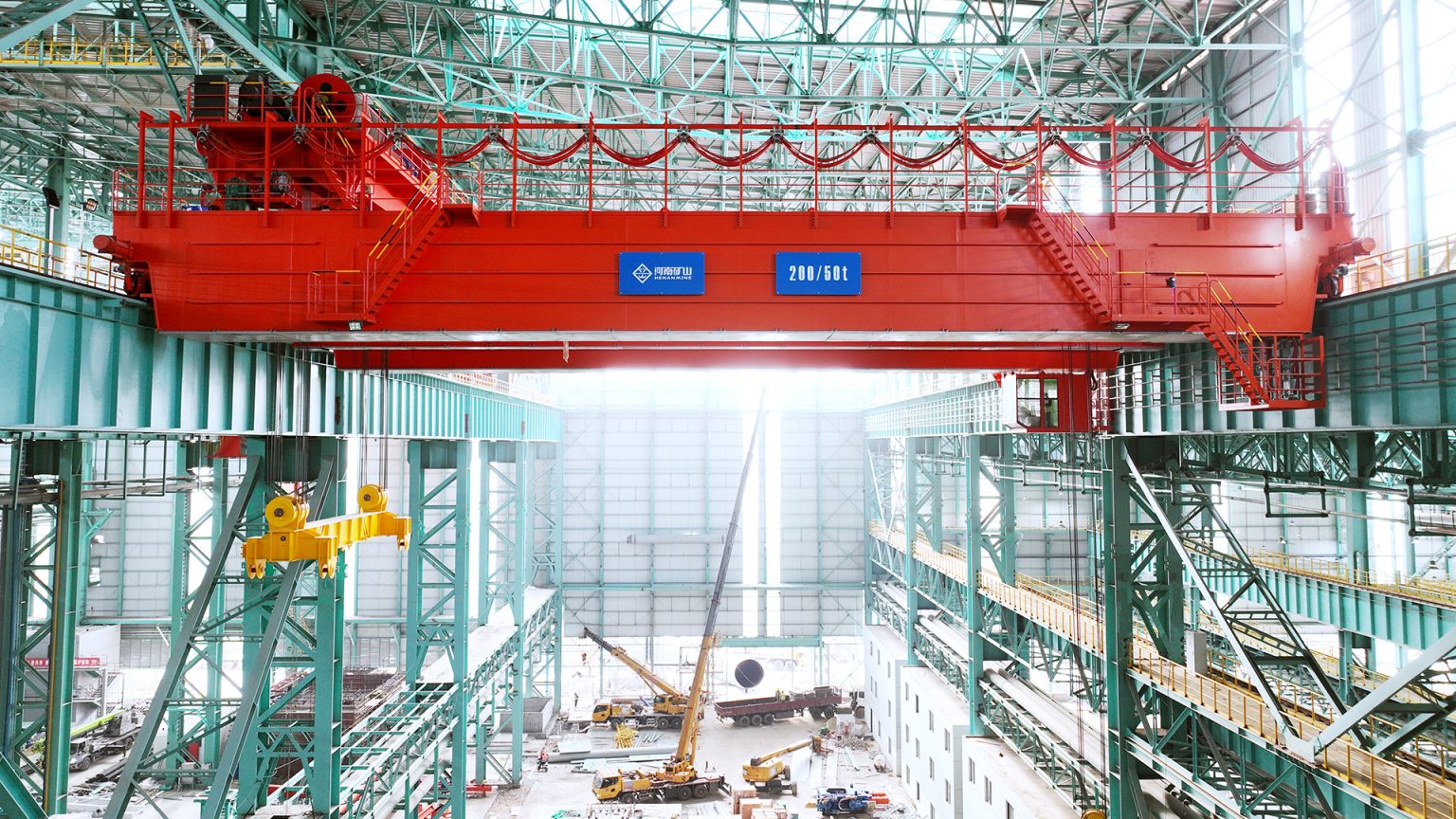
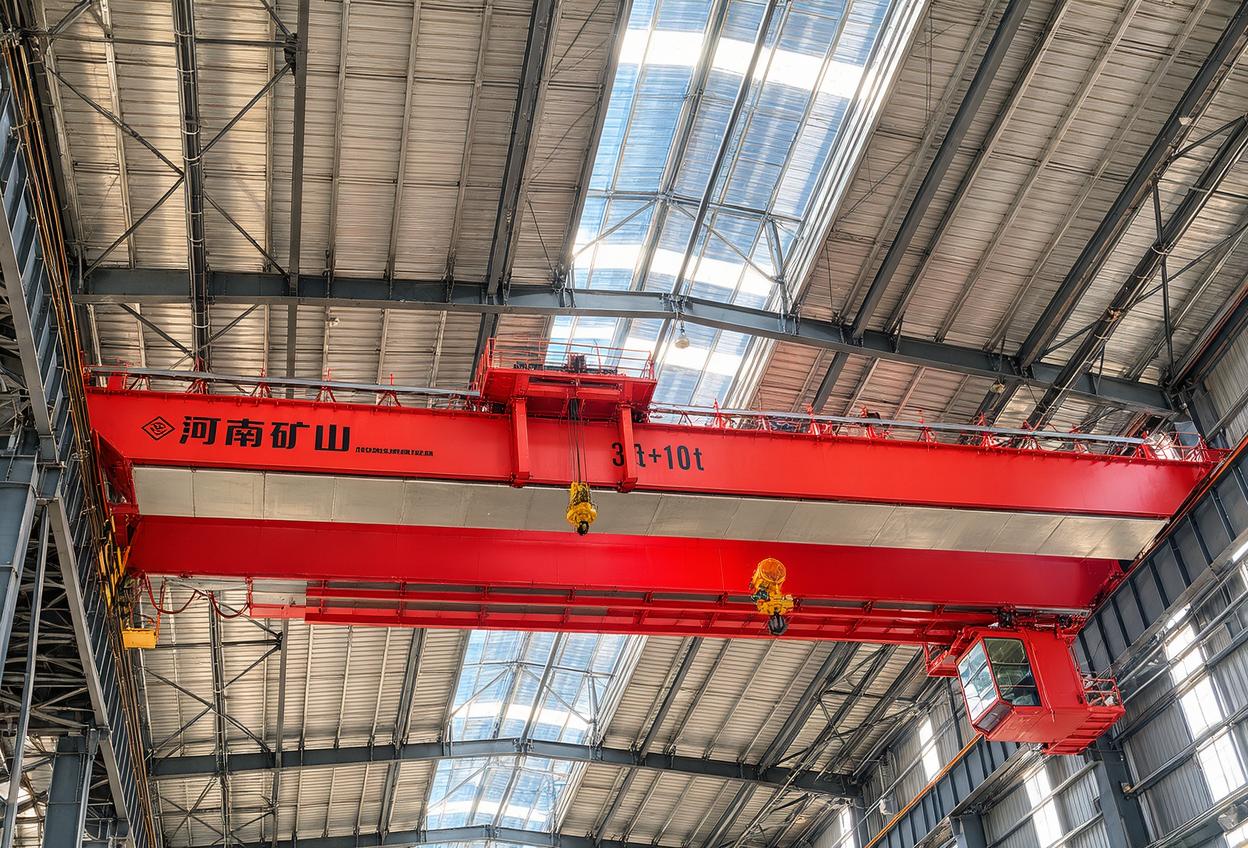
Factory overhead cranes
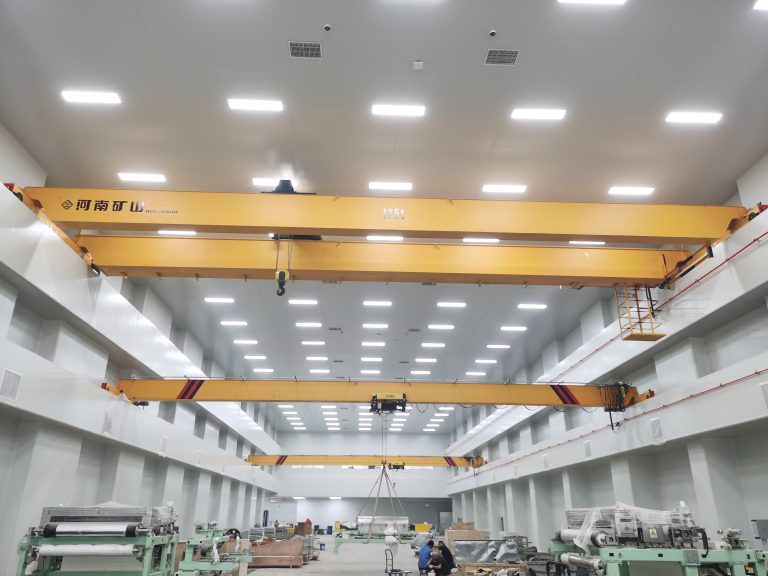
Henan Mine Crane manufactured plant bridge cranes are mostly used for indoor workshops, production line material transfer, equipment installation and maintenance. The operating environment is stable, there is no wind and rain interference, and the temperature is controllable. They are mainly used for intermittent and regular hoisting.The selection core is adapted to the conventional load of production, while taking into account the future upgrade needs of the production line.In the light-duty parts processing workshop, the calculated rated capacity can directly match the standard tonnage, and the safety factor can be 1.25.In high-frequency operation scenarios of heavy machinery and mold workshops, the capacity margin needs to be increased by 10%-15% to avoid long-term fatigue operation losses.For bridge cranes with continuous cycle operation of assembly lines, priority is given to high-specification models with working levels A5-A7, and more than 20% of the capacity is reserved for redundancy.
Outdoor gantry cranes
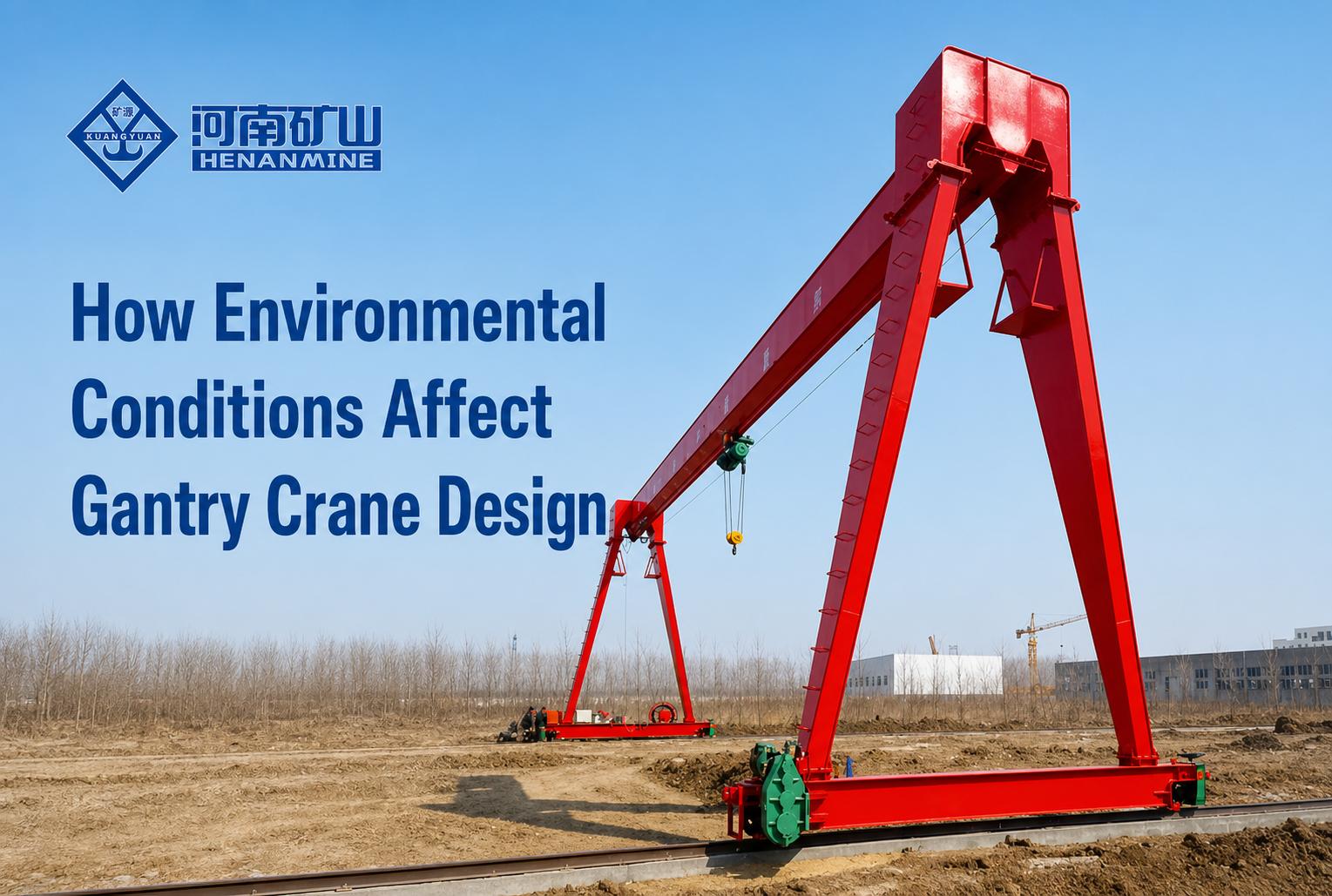
Outdoor gantry cranes are mostly used for site construction, material depots, and hoisting prefabricated components. They are exposed to wind, rain, sand, and temperature differences for a long time in a complex environment. They are greatly affected by wind load, ground settlement, and temperature deformation, and the load reduction is obvious.When selecting the model, it is necessary to add additional environmental redundancy on the basis of standard computing capacity, with a dynamic coefficient of not less than 1.2 and a safety coefficient of not less than 1.3.For conventional operations in small and medium-sized depots, the type can be selected according to the calculated value of 15% increase.For large-scale infrastructure and high-altitude prefabricated parts hoisting scenarios, they must float more than 20% of their capacity, while matching windproof, non-slip, and anti-tilt configurations to ensure stable operation in complex outdoor working conditions.
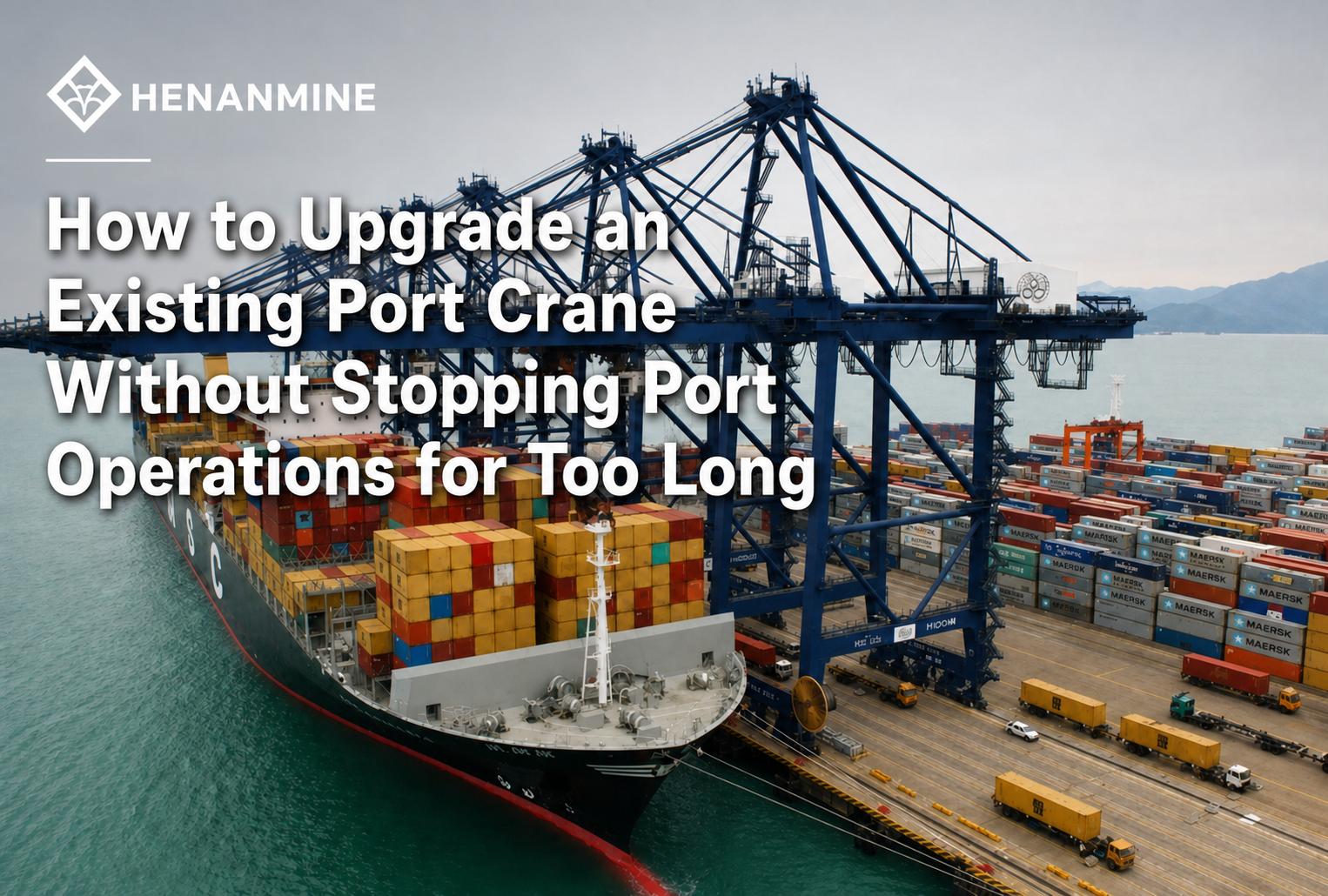
Port cranes
Henan Mine Crane manufactured port cranes are suitable for container, bulk cargo, and grocery loading and unloading operations. The core characteristics are high frequency, high intensity, long duration, large load fluctuations, and high seaside humidity, salt spray corrosion, and frequent windy weather. The equipment loss rate is much higher than that of ordinary scenarios.The selection of port equipment is strictly prohibited. The selection of full configuration must be based on the maximum limit load, the dynamic coefficient shall be 1.3 and above, and the safety factor shall not be less than 1.4.Container hoisting needs to take into account the dynamic impact of alternating full load and no load. Bulk cargo hoisting needs to consider the load deviation of uneven material center of gravity. The overall capacity needs to be reserved on the basis of the calculated value. 25%-30% redundancy, suitable for 24-hour uninterrupted operation requirements.
Steel mill cranes
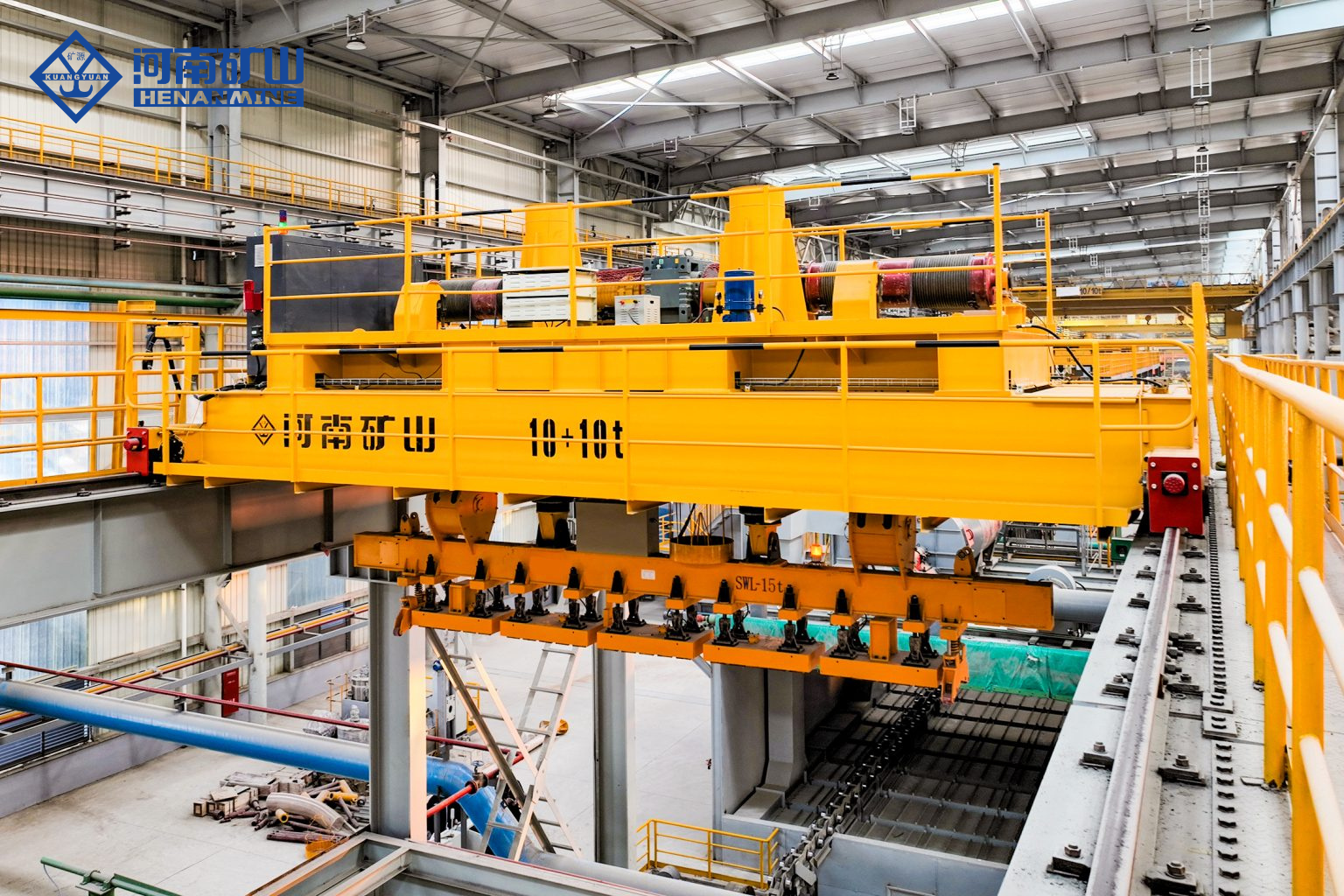
Steel mill cranes are special heavy-duty equipment, which are used for the transfer of molten steel, billet, and steel. The operating environment is high temperature, dusty, strong thermal radiation, and harsh working conditions. The stability and carrying safety of the equipment are extremely demanding, and they belong to high-risk operating scenarios.The capacity selection of such equipment must be strictly high-standard, and even if the conventional load is small, it must match the large redundant tonnage.The dynamic load coefficient is uniformly taken at 1.3-1.5, and the safety factor is not less than 1.5. At the same time, the strength reduction of steel and equipment fatigue loss in high temperature environments need to be considered.All steel mill cranes need to reserve more than 30% of the capacity margin to eliminate any overload risk and ensure absolute safety under high temperature and heavy load conditions.
Heavy-duty cranes
Henan Mine Crane manufactured heavy-duty cranes are mainly used in heavy-load scenarios such as large-scale infrastructure, wind power installation, large-scale equipment hoisting, and bridge construction. The hoisting load is large, the operating radius is large, the lifting height is high, and the operation is difficult. The value of a single hoisting is high and the risk is high.The selection of heavy equipment needs to be combined with accurate torque calculation, operating radius correction, and high-altitude wind load correction. The selection of heavy equipment cannot be based on the basic weight alone.All heavy-duty operations must review the torque curve and reserve sufficient margin within the rated torque range. The capacity selection must be based on the accurately calculated value and rise by more than 30%. At the same time, it matches professional counterweight, spreader and operation plan to avoid the safety risks of high-altitude heavy-duty hoisting.
What Happens If You Choose the Wrong Crane Capacity?
The deviation of crane capacity selection is divided into two situations: the tonnage is too small and the tonnage is too large. Both will have a negative impact on the project, especially the selection of small tonnage overload, which will cause multiple problems of safety, cost, efficiency, and equipment loss, which directly affect the overall project revenue and construction safety.
Overload risks
This is the most deadly hazard of improper selection.Insufficient rated capacity of the crane will lead to long-term overload operation of the equipment, exceeding the carrying limit of the fuselage metal structure, wire rope, reducer, and reel, which can easily cause major safety accidents such as wire rope fracture, boom bending, main beam deformation, and overturning of the whole machine.At the same time, the safety protection device of the equipment under overload will frequently alarm and self-lock and stop. Forced operation will directly lead to equipment scrap, material damage, and even cause casualties, bringing irreversible safety accidents and legal responsibilities.
Higher costs
The tonnage selection is too small, which will cause the equipment to fail to meet the operating needs. It is necessary to temporarily lease large-scale equipment, replace spreaders, and adjust the construction plan, resulting in additional leasing, labor, and construction period rectification costs.Equipment that is severely overloaded and damaged will also have to bear high maintenance and replacement parts costs.On the contrary, blindly choosing oversized tonnage cranes will cause equipment procurement and leasing costs to be inflated, large-scale equipment will consume more energy, operation and maintenance costs will be more expensive, and long-term idleness will be wasted, which will significantly compress the profit margins of the project and cause a waste of capital and resources.
Lower efficiency
Cranes with insufficient capacity frequently trigger overload protection, start-stop caton, and slow lifting during operation. The time-consuming of a single hoisting is greatly increased, which cannot match the pace of project construction and directly slows down the overall construction period.Some overweight materials cannot be hoisted in place at once, and they need to be split and hoisted multiple times, which greatly increases the process and reduces the efficiency of the operation.For cranes with excessive tonnage, the equipment is large in size, the operating flexibility is poor, and the lifting of light materials has the problems of redundant operation and slow movement, which will also reduce the efficiency of daily operations and affect the overall progress of the project.
Faster wear
Long-term overload operation is the core cause of premature aging of crane equipment.When the rated capacity is insufficient, the metal structure, transmission components, and electrical system of the fuselage are in a state of overload and fatigue for a long time, and the wear rate is doubled. Problems such as wire rope aging, bearing wear, main beam deformation, and electrical failure occur frequently.Even if there is no safety accident, the equipment failure rate will be greatly increased and the service life will be greatly shortened. Equipment that could have been used for 10 years may be completely scrapped in 3-5 years, greatly increasing the cost of equipment iteration of enterprises and affecting production continuity.
Henan Mine Crane Factory Custom
The calculation and selection of crane capacity is the core work that takes into account construction safety, operating efficiency, project cost, and equipment life. It is by no means a simple weight matching.From basic load, spreader weight, dynamic loss to safety margin, from indoor factories and outdoor depots to special scenes in ports and steel plants, each parameter and each type of working condition has its own calculation and selection criteria.Accurate accounting of crane capacity can not only completely avoid overload safety risks, reduce equipment losses, but also maximize project cost control and improve operational efficiency. It is an indispensable core link before various engineering projects are implemented.Henan Mine Crane Factory can obtain a one-to-one accurate crane tonnage selection plan according to the specific working conditions, hoisting parameters, and operating environment of your project.