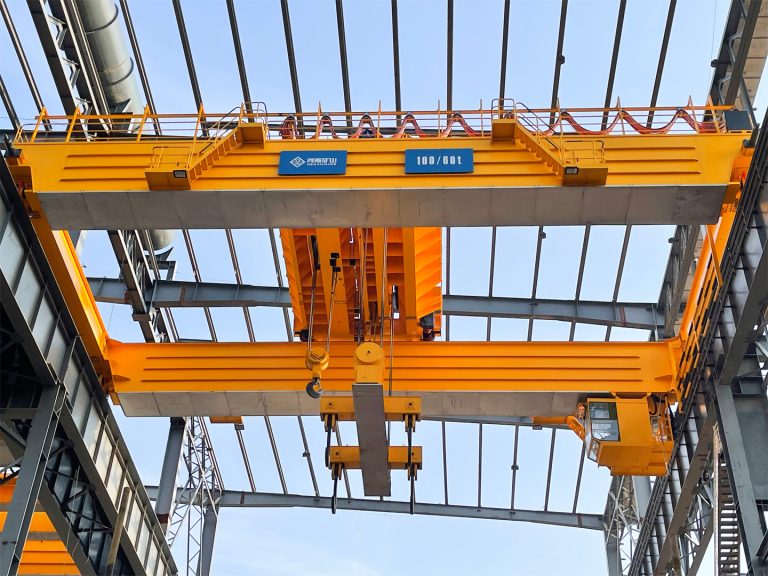

What Load Capacity is Suitable for Yacht Crane in Marina?
Choosing the wrong yacht crane load capacity is one of the most expensive mistakes a marina operator can make. Undersize the equipment and you turn away larger vessels or risk a critical safety incident; oversize it and you sink capital into concrete, tires, and hydraulics you don't need. Marina cranes and travel lifts on the market today range from under 1 ton for small davits to well over 1,000 tons for shipyard-class travel lifts, so "capacity" is not a single number it's a decision that depends on your vessel mix, growth plans, and site infrastructure.
This guide walks through exactly how to determine the right load capacity for a marina crane, covering crane types, the calculation methodology for capacity headroom, vessel-specific sizing factors, and the infrastructure that a given tonnage class requires.
What Load Capacity Actually Means for a Marina Crane
Every marina crane or travel lift is rated by its lifting capacity, expressed as a Safe Working Load (SWL) in metric or short tons. This figure already builds in a structural safety factor it is not the absolute point of mechanical failure but the maximum load the manufacturer certifies as safe under normal operating conditions.
It's worth distinguishing gross capacity from net capacity. For heavier lifts, the difference matters: rigging gear alone can consume several tons of a crane's rated capacity, so the true available load for the vessel itself is always somewhat below the number printed on the spec sheet.
For travel lifts specifically, capacity also interacts with the sling arrangement. A crane rated for 100 tons doesn't mean each individual sling point can bear 25 tons independently uneven mass distribution, hull shape, and center of gravity mean load isn't evenly spread across lifting points, which is why the full hoisting arrangement, not just the headline number, needs review.
Crane Types Used in Marinas and Their Typical Capacity Ranges
Marinas typically rely on a mix of equipment rather than one universal crane. Matching the type to the task avoids paying for capacity you don't need on routine jobs.
| Crane Type | Typical Capacity | Best For |
| Davit crane | Up to ~1.5 tons | Tenders, jet skis, dinghies; space-constrained docks |
| Jib crane | 2.5–20 tons | Engine/gearbox removal, mast stepping, quayside component handling |
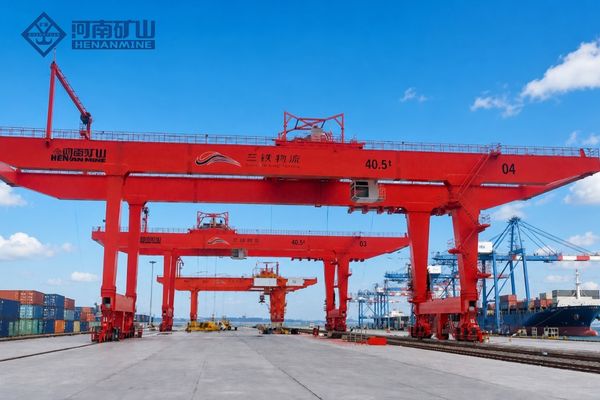
| Marine gantry crane | 5–300 tons | Fixed-rail installations spanning a work area |
| Mobile boat hoist / travel lift | 15–1,000+ tons | Full vessel haul-out, launching, and yard transport |
| Shipboard/knuckle-boom crane | 10–200 tons | Cargo handling and onboard equipment transfer |
Davit cranes are the most space-efficient option and are common on yachts themselves for launching tenders, but their lifting capacity is limited and they require secure anchoring against lateral forces. Jib cranes are the workhorse of daily marina tasks a single vertical column anchor-bolted to a concrete pad, with a horizontal boom that rotates to cover a working radius, ideal for jobs like engine servicing rather than full vessel extraction.
Mobile boat hoists (also called travel lifts) are a different category altogether. They straddle the vessel in a haul-out slip on a wheeled, self-propelled frame, pass slings under the hull, and lift the boat completely clear of the water. This is the equipment class that actually determines a marina's maximum vessel size, since jib and gantry cranes handle components, not whole boats.
Matching Capacity to Your Marina’s Vessel Mix
The right tonnage class depends heavily on the type of facility you're running:
- Small recreational marinas:dayboats, dinghies, entry-level cruisers usually see maximum vessel displacement under 15 tons, with most boats well below that. A hoist in the 15–30 ton range provides appropriate operational headroom without over-investing in infrastructure a small marina doesn't need.
- Mid-size yacht service centers:handling sailing and motor yachts in the 12–30 meter range typically need equipment in the 35–75 ton bracket, which covers most monohull sailing yachts up to roughly 60 feet LOA and powerboats of comparable displacement.
- Superyacht and commercial shipyard operations: move into custom-engineered territory above 100 tons, with the largest travel lift platforms rated from 150 up to 1,500 metric tons for vessels like superyachts, tugs, and cargo ships.
Rather than sizing to your "typical" boat, size to the heaviest vessel you currently service or plan to service a single oversized haul-out request that you can't fulfill costs you both the job and the client relationship.
Our engineering team supports customers from project consultation and equipment selection to manufacturing, installation guidance, and long-term after-sales service.
The Safety Margin Calculation
The core sizing formula used across the industry is straightforward:
Required Crane Capacity = Heaviest Vessel Displacement × (1 + Safety Margin %)
A minimum margin of 20% above the heaviest vessel's full operational displacement is a common industry starting point, rising to 30% for marinas with strong growth ambitions or a vessel mix clustered near the top of a capacity class. In broader marine crane contexts, a 25% margin above the calculated load (inclusive of rigging weight) is a frequently cited baseline as well.
A related concept from crane safety practice: any lift that uses more than 75% of a crane's net rated capacity is generally classified as a "critical lift," requiring additional planning, inspection, and oversight before proceeding. Applied to marina sizing, this means your day-to-day heaviest vessel should ideally sit well under 75% of the crane's rating not right up against it.
Worked example: If your heaviest current vessel displaces 40 tons, a 20% margin puts your minimum crane spec at 48 tons. Rounding up to the next standard model size (commonly 50 tons) keeps that lift at 80% of rated capacity still inside comfortable operating range, with headroom for a slightly heavier future vessel.
Vessel-Specific Factors That Affect Sizing
Tonnage isn't the only variable. Several vessel characteristics change what a crane needs to handle physically, independent of raw weight:
- Draft depth:deep-draft sailing yachts with fin keels require slings to be positioned and managed at significant depth from the dock surface, which affects lift frame height and haul-out slip design, not just capacity.
- Beam width:modern yachts and catamarans are trending wider, which affects pier spacing and the inside clear width a travel lift needs to straddle the vessel.
- Hull shape and mass distribution:catamarans, trimarans, and vessels with uneven contents may require dual-point lifting or custom sling positions, placing asymmetrical loads on the crane structure that a simple tonnage rating doesn't capture.
- Tidal range:variation in water level at the haul-out slip needs to be factored into sling positioning and access planning.
A crane sized correctly on tonnage alone can still be the wrong choice if it can't physically accommodate these hull-specific factors.
Infrastructure Requirements at Different Capacity Levels
Capacity decisions and civil infrastructure decisions can't be separated. A heavy-duty hoist concentrates enormous point loads onto a small number of tire contact patches, rather than distributing weight the way a standard vehicle does. That has direct construction implications:
- Runway thickness:typically scales from standard slabs up to 10–18 inches of high-PSI reinforced concrete for heavier hoist classes, with dense rebar grids required to prevent cracking under repeated loading.
- Geotechnical review:becomes necessary at higher capacities, since waterfront soil is often soft silt, clay, or reclaimed land that may need soil borings and, in some cases, deep pile foundations to prevent uneven settlement.
- Haul-out ramp specification:a reinforced ramp with a defined slope, typically in the 1:10 to 1:15 gradient range, along with load-rated hardstanding for vessel storage, is required for travel lift installations.
- Pier and slip clearance:must accommodate the widest vessels the facility intends to serve, factoring in the trend toward wider modern hulls.
Before committing to a capacity class, it's worth budgeting the infrastructure cost alongside the equipment cost the crane purchase price is often the smaller of the two line items at higher tonnage levels.
Planning for Growth: Why Undersizing Costs More Long-Term
Vessel sizes across both recreational and commercial marine markets have trended consistently larger over recent decades, and a marina correctly specified for today's fleet often finds itself needing higher capacity within the operational life of the equipment. A correctly specified boat hoist represents a 25-to-30-year capital investment, and the incremental cost of stepping up one capacity tier at initial purchase is consistently lower than retrofitting or supplementing undersized equipment later.
Practically, this means: if your analysis puts you between two standard capacity tiers, the growth-oriented choice is almost always to round up rather than down.
Environmental and Duty-Cycle Considerations
How often and how intensively a crane operates changes what capacity and build quality you actually need, beyond the raw tonnage figure. Light-duty, seasonal marinas can typically use smaller-capacity equipment with lower duty ratings, while commercial shipyards or high-throughput operations need continuous-duty systems built with stronger components and higher-powered drive systems to handle sustained daily cycling.
Marine environments also degrade equipment faster than land-based use. Saltwater exposure calls for corrosion-resistant construction and protective coatings, and in regions with high wind exposure, load charts and permitted lifting conditions may need to account for reduced safe capacity in gusty conditions.
Common Sizing Mistakes and How to Avoid Them
- Sizing to the average boat instead of the heaviest one.A crane rated for your typical vessel will fail you the first time an outlier arrives.
- Ignoring rigging weight.Slings, spreader bars, and hooks eat into net capacity verify the crane's net rating, not just the gross figure.
- Overlooking hull geometry.A tonnage-appropriate crane can still be wrong for a wide catamaran or deep-draft sailboat if frame height and slip width weren't checked.
- Underbuilding the infrastructure.A correctly rated crane on an undersized concrete runway is still a safety failure waiting to happen.
- Skipping the growth calculation.Buying exactly to today's fleet, with no margin, guarantees a costly upgrade cycle sooner than expected.
Conclusion
Terminal equipment selection should take into account the current use needs and future business, ship development trends, to ensure long-term investment returns.In the early stage of the project, we cooperated with professional lifting equipment manufacturers to accurately optimize the selection scheme, avoid installation hidden dangers, and eliminate the high cost of equipment upgrading and transformation in the later stage.
Henan Mine Crane specializes in marine lifting equipment manufacturing, providing customized lifting solutions for marinas, shipyards, ports and ship maintenance sites.The team can provide full-process services such as load calculation, equipment selection, structural design and project consultation, adapt to complex marine conditions, and create safe, efficient and durable lifting systems.