
How to Choose the Right Crane for Your Steel Mill?
Picking the wrong crane for a steel mill rarely shows up as a single dramatic failure. It shows up as a structural recertification bill three years earlier than expected, a converter bay crane that can't keep pace with tap times, or a magnet crane in the scrap yard that burns through brake linings every quarter. Choosing the right crane for your steel mill is an engineering decision, not a catalog purchase and the variables that matter are rarely the ones buyers default to first.
This guide walks through a practical, bay-by-bay framework for selecting the correct crane type, capacity, and duty classification, plus the safety standards and cost factors that separate a crane that lasts 20 years from one that needs replacing in five.
What Makes Steel Mill Cranes Different From Standard Industrial Cranes
A general-purpose overhead crane and a steel mill crane can look similar from the floor, but they're engineered for entirely different operating realities. Steel mills create five conditions that standard cranes simply aren't built to withstand: radiant heat from furnaces and ladles, airborne metallic dust, corrosive atmospheres, continuous multi-shift duty cycles, and the severe safety consequences of a dropped or mishandled load.
Each of those conditions translates into a concrete design requirement. Radiant heat demands heat-resistant structural steel, insulated control cabinets, and high-temperature wire rope. Dust and corrosion call for sealed enclosures rated to at least IP54. Continuous operation requires a higher duty classification and reinforced gear trains. And anywhere molten metal is involved, redundant braking and load-monitoring systems move from "recommended" to mandatory.
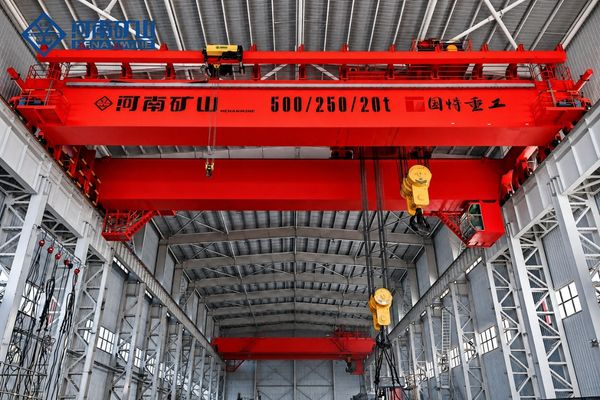
A standard double-girder crane rated for a warehouse or light fabrication shop will not survive long-term service above a furnace, even if its rated capacity matches the load. The structural fatigue accumulates far faster than the nameplate tonnage suggests.
Step 1: Map the Process Before You Pick a Crane
The starting point isn't a crane brochure it's your plant's process flow. For each bay where a crane is needed, you need to define:
- Which production zone:the crane will serve (steelmaking, casting, rolling, raw materials, finishing)
- What material is being moved:(molten steel, billets, coils, scrap, bulk raw material)
- Transfer distance and frequency:how far the load travels and how many lifts occur per shift
- Ambient conditionsproximity to furnaces, expected temperature at hook height, dust exposure
This process-first approach matters because steel mills aren't a single operating environment they're several distinct ones stitched together under one roof. A crane correctly specified for the rolling mill would fail catastrophically in the converter bay, and a ladle crane in a maintenance shop would be a wildly expensive overkill.
Step 2: Match the Crane Type to the Bay
Steel mills typically need several different crane types working in concert, not one universal model. Here's how they map to plant zones:
- Ladle cranes:are the highest-risk, highest-spec equipment in the plant, purpose-built to move ladles holding 150–300+ tonnes of molten steel at temperatures above 1,500°C between furnaces, refining stations, and casters. They require dual independent hoisting mechanisms, redundant brakes on each hoist, and heat shielding across the bridge and trolley.
- Foundry/casting cranes:work the continuous casting and pouring bays, handling tundish positioning and mold-related tasks. Like ladle cranes, heat resistance drives the design insulated motor windings, heat-tolerant wire rope, and often a secondary auxiliary hook for lighter maintenance lifts.
- Electromagnetic cranes:use a lifting magnet instead of a hook, making them the right fit for irregularly shaped ferromagnetic loads scrap bundles, billets, plate, and coil. Power-loss protection that maintains magnetic field on backup power is a non-negotiable safety feature for any above-floor application.
- Grab bucket cranes:handle bulk raw materials iron ore, coke, coal, limestone and slag or dust removal. The grab opens and closes independently of hoist travel, allowing continuous cycling without manual rigging, but the constant impact loading means the structure needs to be rated for that abuse specifically.
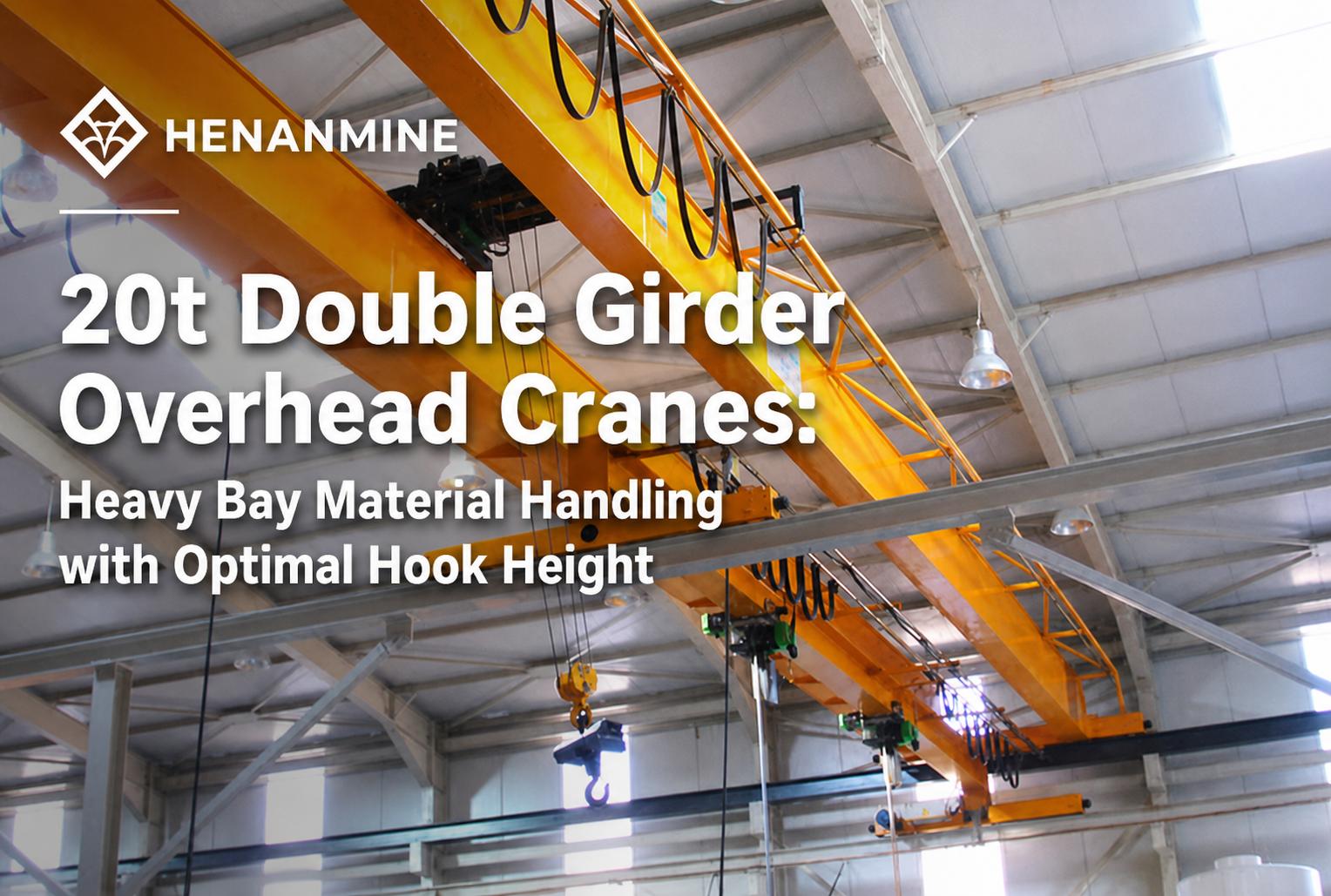
- Double-girder overhead cranes:are the general-purpose workhorses for rolling mills, billet and coil storage, and maintenance bays, where loads are more predictable and temperatures are lower. This is the one crane type where a lighter single-girder configuration is occasionally appropriate, typically in maintenance areas with loads under 20 tons.
Step 3: Calculate Load Capacity Correctly
A common and costly mistake is sizing the crane to the product weight alone and forgetting the rigging. The actual load a hoist must lift includes the hook block, lifting beam, electromagnet, spreader, or ladle itself and that "dead weight" can represent 30–50% of the total load on the hoist. A 100-ton ladle might require a crane rated well above 100 tons once the ladle's own mass is accounted for.
Get this number wrong in either direction and you've either built in a chronic safety margin problem or paid for capacity you'll never use. The correct practice is to total every component that travels with the load hook, attachment, and product before comparing against a crane's rated capacity.
Understanding Duty Class Why It’s the Factor Buyers Get Wrong Most Often
Duty class (also called work grade or service classification) defines how a crane is engineered to handle its expected number of load cycles and average load ratio over its design life. In North America, the Crane Manufacturers Association of America (CMAA) uses a six-tier system from Class A (standby/infrequent) through Class F (continuous, severe duty). In Europe and much of Asia, the FEM 1.001 and ISO 4301 standards use comparable M-class and utilization-class ratings.
For heavy-duty steel mill applications, CMAA Class D or E cranes or FEM M7–M8 equivalents are typically the baseline, with molten-metal-handling ladle and foundry cranes pushed to the top of that range (often labeled A7–A8 under FEM/GB-T classification systems used by many crane manufacturers).
The error pattern that drives unplanned costs: a buyer correctly sizes a crane's tonnage but defaults to a mid-tier duty class because it "sounds heavy duty enough." In a converter bay running continuous multi-shift operation, fatigue-life calculations show that an underspecified structural class can reach its design cycle limit in as little as 4–6 years instead of an expected 15–20, triggering a structural recertification typically 15–25% of the crane's original cost just to keep operating it. Over a full service life, the total cost of an underspecified crane can run 2–3x higher than getting the specification right at purchase.
The fix is straightforward: give your crane supplier your operating hours per year, average lifts per shift, and average percentage of rated load per lift, and let them calculate the duty class from those inputs rather than guessing at a class name yourself.
| Bay / Process Zone | Crane Type | Typical Duty Class | Why |
| Converter / EAF bay | Ladle crane | CMAA E/F (FEM M7–M8) | Continuous high-cycle, near-rated loads |
| Continuous casting | Foundry crane | CMAA E/F (FEM M7–M8) | Near-rated loads on every cast |
| Scrap yard, high throughput | Electromagnetic / grab | CMAA D/E | 40–80 cycles per hour is common |
| Raw material yard | Grab bucket crane | CMAA D | Intermittent but heavy bulk cycling |
| Rolling mill | Double girder | CMAA C/D | Heavy but more predictable cycles |
| Maintenance bay | Double girder | CMAA A/B | Infrequent lifts, low average load |
Environmental and Safety Requirements
Above a moderate duty class, a defined set of safety systems stops being optional. For molten-metal-handling cranes specifically:
- Dual independent hoisting brakes: on every hoist mechanism, so a single brake failure under load doesn't result in a dropped ladle
- Overload protection:with automatic cutout, typically set at 100–110% of rated capacity
- Anti-sway control:using variable-frequency drives across all motion axes for the precision positioning casting operations demand
- Heat shielding and high-temperature wire rope:rated for sustained exposure near molten metal
- Electrical enclosures rated IP54 or higher:with motor windings carrying F-class insulation (155°C) to withstand the heavy industrial electromagnetic and thermal environment found in steel mills
These aren't competitive differentiators between manufacturers they're baseline requirements once you're operating above a certain duty class, and a supplier who treats them as optional upgrades is a warning sign.
Span, Lift Height, and Building Constraints
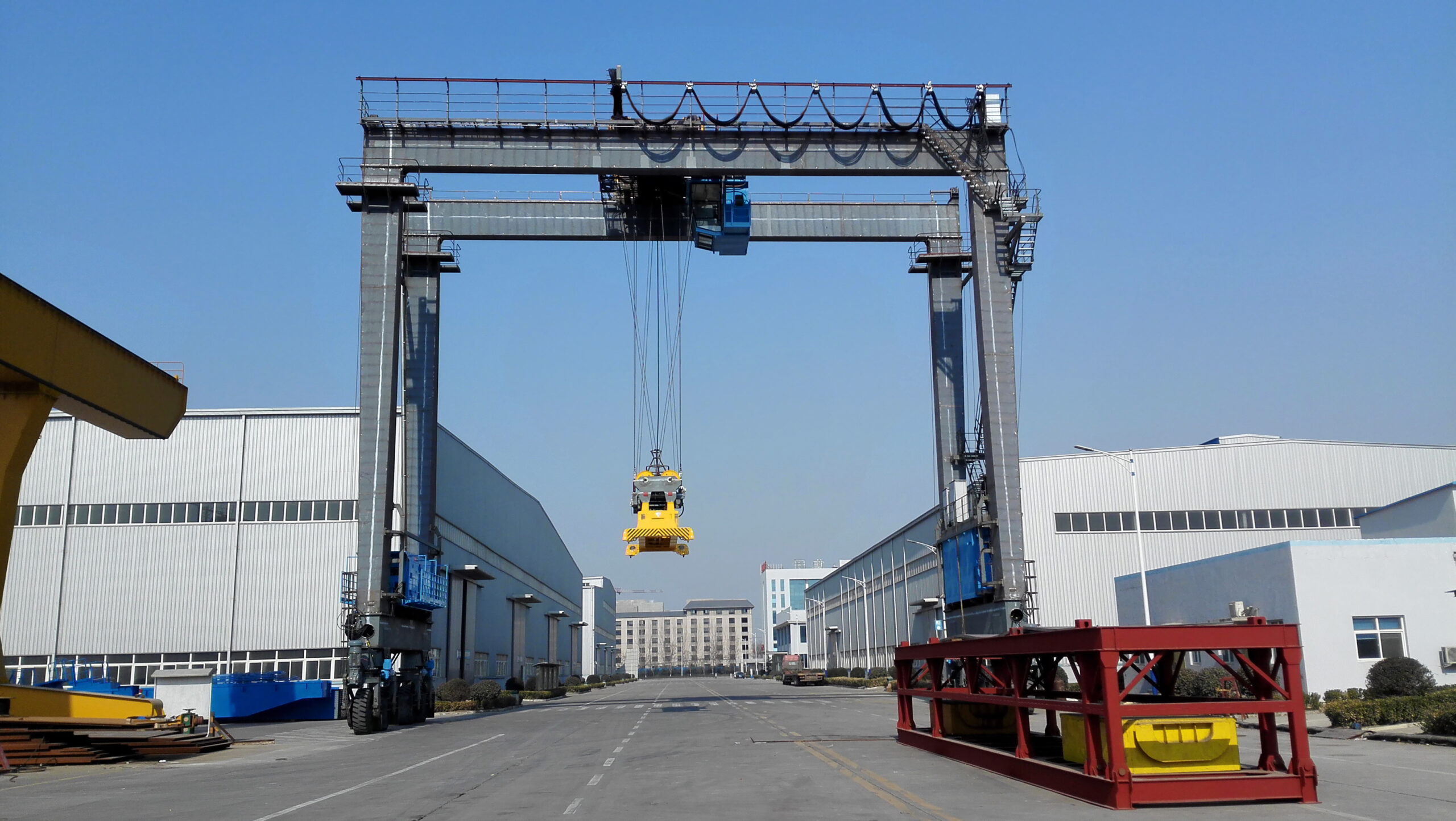
Crane capacity and duty class get most of the attention, but a crane that's structurally perfect and physically unable to fit your building is just as useless. Span needs to cover the full working width of the bay, lift height needs to clear the tallest obstruction in the travel path (including ladles, molds, or stacked coils), and runway support needs to match your building's columns or, where columns don't exist or can't bear the load, a freestanding or gantry-style structure.
Low-clearance buildings often do better with under-running crane configurations rather than top-running ones, and outdoor or corrosive zones like scrap and raw material yards typically need additional protection on electrical enclosures regardless of duty class.
Total Cost of Ownership
The lifecycle of a steel mill crane typically runs 15–20 years, and procurement decisions based purely on sticker price routinely cost more over that span than a correctly specified crane would have. Initial investment covers five major components: the main structural girder, the hoisting/winching system, the electrical control package, dedicated safety guards, and installation/commissioning.
Customized metallurgical-grade cranes cost more upfront than generic equivalents of the same tonnage, because their structural materials, protective configurations, and safety systems sit a full grade above standard equipment.
Buyers who opt for cheaper generic cranes to save on initial investment frequently end up paying more over time, in the form of more frequent failures, unplanned downtime, and earlier replacement the same dynamic that drives the 2–3x lifecycle cost gap discussed above with duty class. A complete TCO comparison should weigh purchase price against expected maintenance frequency, structural recertification risk, and downtime cost per hour of lost production.
Working With Manufacturers: What to Provide for an Accurate Quote
The quality of a crane specification depends heavily on the quality of the information you give your supplier. Before requesting quotes, prepare:
- Work station and process parameters: Clarify core basic process information such as operation area, material type, material transfer distance, etc., and clarify field operation conditions.
- Operating condition parameters: sort out key operating cycle data such as annual operating time of equipment, lifting frequency per shift, average load ratio to rated load, etc., and accurately match equipment operating condition grade.
- Limit load parameters: fully calculate the maximum operating load of equipment, fully include the weight of lifting tools, hook groups, lifting beams, ladles and various supporting tooling accessories, and ensure that the total load calculation is complete without deviation.
- Plant structural parameters: accurately check the civil structure and installation size parameters such as crane span, effective lifting height, running track support form, plant column spacing, etc. to avoid space adaptation problems.
- On-site environmental parameters: detect the ambient temperature at the operating height of the hook, comprehensively investigate adverse environmental factors such as dust and medium corrosion on site, and match the equipment protection configuration requirements.
- Qualification and compliance requirements: The equipment in the EU region shall meet the requirements of CE certification and EN 13001 standard, and the equipment in other regions shall strictly comply with the current specifications and standards of the corresponding countries and industries.
A competent manufacturer should be able to calculate duty class from your operating profile rather than asking you to name it. If a supplier skips straight to a tonnage-and-price quote without asking about cycle rate or ambient conditions, treat that as a signal to look elsewhere.
Common Mistakes to Avoid When Selecting a Steel Mill Crane
- The rated load selection of equipment is calculated only according to the weight of the material, ignoring the weight of the hook group, cross beam, ladle and other supporting structures, and the overall total load is not calculated, which is easy to cause insufficient load margin in the selection, resulting in safety and performance problems such as overload operation and increased loss of equipment.
- The equipment working condition grade is not accurately calculated according to the actual operation frequency, start-stop frequency, load fluctuation and other cycle data, and is directly defaulted to heavy working condition, resulting in the working condition grade inconsistent with the actual operation requirements on site and unable to match the equipment design standard and service life.
- Core safety systems such as overload, limit and temperature control are regarded as optional upgrade configurations, which are not listed as basic standard according to the working condition grade specification, which reduces the equipment safety configuration standard, retains potential safety hazards of operation, and cannot meet the requirements of high-load safety production.
- The supplier price comparison only refers to the purchase price, and the core parameters such as working condition grade, structure material, safety configuration and manufacturing process of the standard equipment are not uniformly matched. The price comparison dimension is single and unfair, and it is easy to select equipment with low price and low quality, substandard parameters and poor adaptability.
- Underestimating the influence of high temperature radiation and heat load on industrial site, especially for cranes operating close to furnace and casting area, failing to consider the high temperature loss caused by heat source not directly above, resulting in equipment selection and protection configuration unable to adapt to high temperature operation environment.
- In the early stage of the project, the site constraints such as the civil engineering size and space limit of the plant were not checked, and the site adaptation verification process was omitted, resulting in the mismatch of span and clearance size during equipment installation, resulting in rework rectification, delay in construction period and additional cost loss.
Conclusion
Choosing the right crane for your steel mill comes down to matching crane type, capacity, and duty class to the specific demands of each bay not picking a generically "heavy-duty" unit and hoping it holds up. Molten metal bays need the highest duty classes paired with redundant braking and heat-resistant construction; bulk material handling needs cranes built for continuous-impact cycling; and rolling mill or maintenance areas can usually run on standard equipment at a lower duty class and lower cost.
Before requesting quotes, define your operating profile in concrete numbers tons per lift, lifts per shift, ambient temperature, and building dimensions and hand that data to your supplier rather than naming a duty class yourself. The manufacturers worth working with will calculate it for you and explain why.