
What certifications are required for suppliers of shipyard gantry crane
Shipbuilding gantry cranes are the core heavy-duty equipment for shipyards, dry docks, and offshore engineering prefabrication projects, handling critical operations such as the hoisting of ship sections and the transfer of heavy offshore modules. This type of equipment features high tonnage and wide spans, operating long-term under complex coastal conditions such as salt fog, strong winds, and high humidity. The compliance of this equipment directly determines project construction safety and delivery standards.
When screening shipbuilding gantry crane suppliers, it is easy to confuse the roles of various certificates. Qualifications on the market are primarily divided into three major categories: enterprise management system certifications, overseas market access compliance qualifications, and specialized certifications specific to shipyard projects.
The applicable scenarios, validity, and requirements of these different certifications vary significantly. This article combines global shipbuilding project procurement standards to help buyers accurately select compliant shipyard gantry cranes.
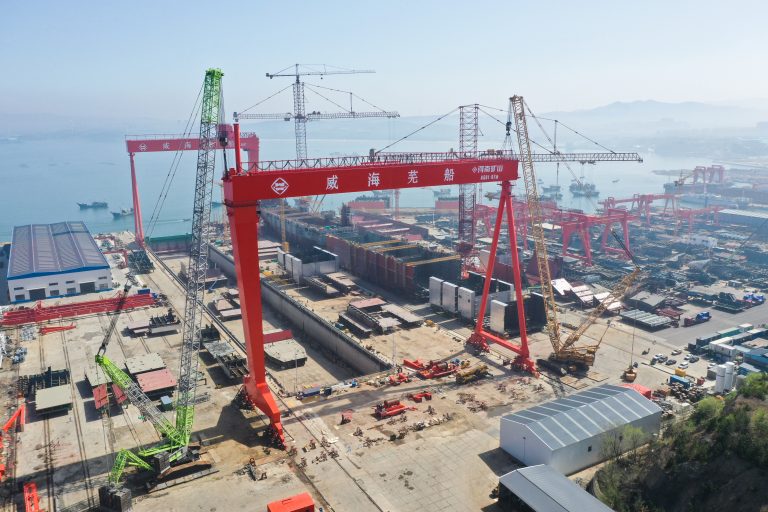
Mainstream Applications of Shipbuilding Gantry Cranes
The certification requirements for shipbuilding gantry cranes are always determined by specific construction scenarios. Due to the unique nature of heavy-load, outdoor, and marine operating conditions, the compliance standards for this type of equipment are far higher than those for ordinary civil gantry cranes.
Hull Section Assembly Projects
Modern shipbuilding commonly employs a construction model involving prefabricated sections and final assembly. Large hull sections have immense dead weight and intricate structures, placing extremely high demands on equipment stability and structural strength during lifting operations.
The marine gantry cranes used in these core processes are also key equipment whose certifications are rigorously verified by project supervisors and shipowners; compliance documentation must be complete and verifiable.
Shipyard Steel Prefabrication Workshops
The shipyard’s daily production of marine steel plates, prefabricated steel components, and modular parts all rely on cranes for routine handling and lifting. The high frequency of continuous operations imposes strict requirements on the manufacturer’s welding processes and production quality control systems.
Shipyard Dry Dock Repair and Refurbishment Projects
Ship repairs, structural modifications, and heavy component replacements within dry docks involve complex operating conditions and unpredictable project durations. Equipment must adapt to diverse lifting requirements while meeting the safety and compliance standards of the ship repair industry.
Installation of Heavy Equipment in Engine Rooms
The hoisting and positioning of ultra-heavy core equipment, such as main engines and generator sets, constitutes high-precision, high-risk operations. Project owners typically conduct rigorous verification of lifting equipment inspection reports, manufacturing certifications, and compliance documentation.
Offshore Engineering Prefabrication Projects
The prefabrication of offshore platforms, jacket systems, and heavy marine steel structures follows the same heavy-load lifting standards as shipyards. Most overseas offshore engineering projects mandate that suppliers possess a full set of compliance certifications and specialized welding certifications.
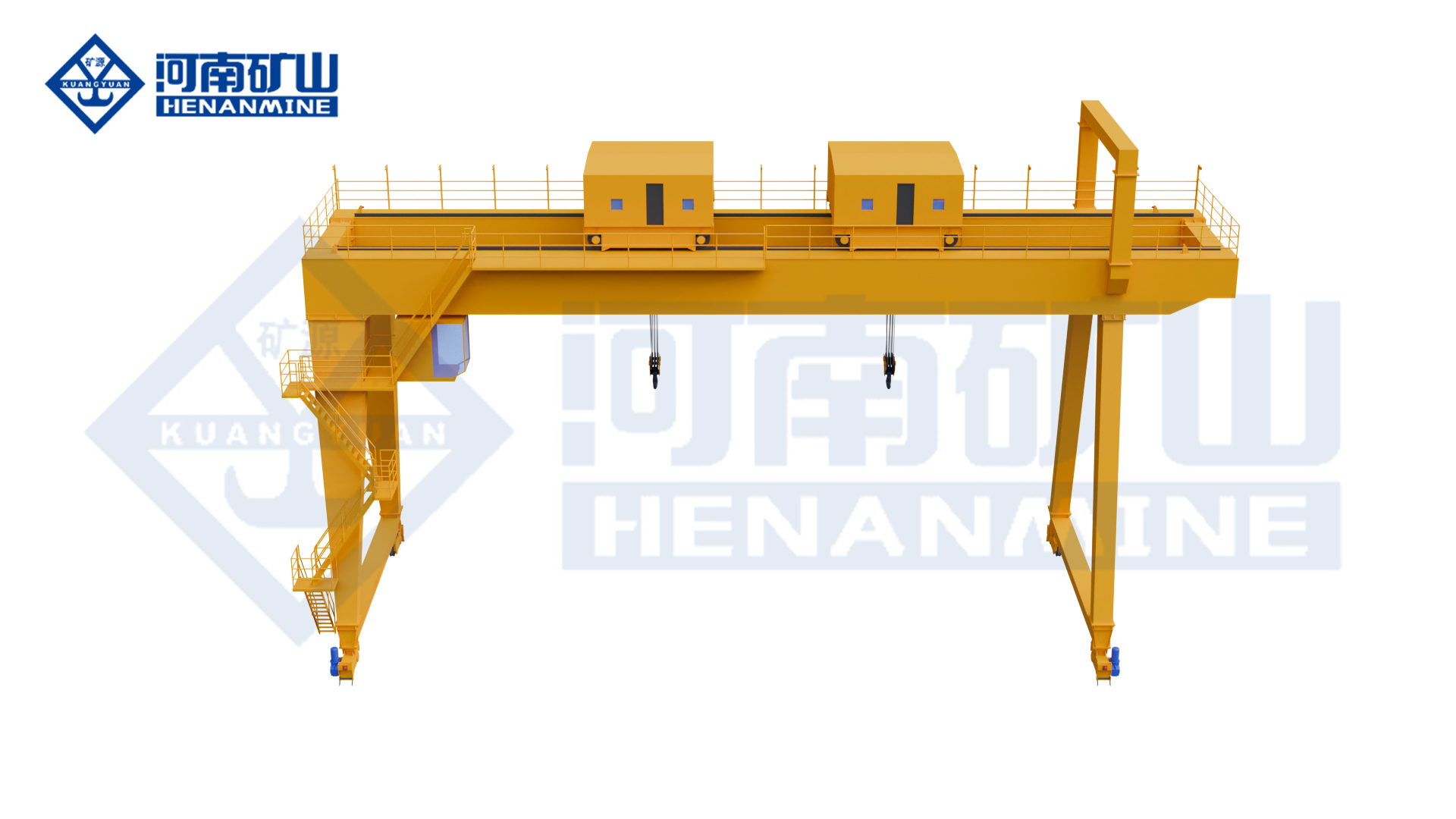
General Compliance Requirements for Shipyard Gantry Crane Projects
Acceptance standards for lifting equipment in shipbuilding and offshore engineering projects are far more stringent than those for general industrial projects, with core requirements focused on equipment reliability, manufacturing quality, and documentation compliance.
Stability under Heavy-Load Conditions
Heavy components lifted in shipyards are typically large in tonnage, have irregular centers of gravity, and often serve as critical load-bearing elements at key construction nodes. The equipment must not exhibit deformation, swaying, or failure-induced downtime; this requires manufacturers to have a mature quality control system for heavy-duty equipment production.
High-Standard Welding and Manufacturing Processes
The main structure of shipyard gantry cranes is entirely formed through welding, and the quality of the welds directly determines the overall strength and service life of the equipment. The welding standards of ordinary cranes fall far short of the requirements for heavy-load, long-term use in shipyard environments.
A high-quality marine gantry crane supplier will establish a dedicated welding quality control system and employ a team of certified welders to ensure the welding precision and stability of large steel structures.
Safety Assurance for Offshore Outdoor Operations
Strong winds, high humidity, and salt fog corrosion at coastal sites continuously erode equipment structures and electrical systems. Compliant marine cranes must feature corresponding protective designs and process standards, along with comprehensive safety protection configurations suitable for long-term outdoor operation.
Complete and Traceable Compliance Documentation
Overseas shipyards and large-scale offshore engineering projects do not accept equipment based solely on product catalogs. Project audits, customs clearance filings, and subsequent annual inspections all require comprehensive supporting documentation, including certification, construction drawings, inspection records, and traceability data.
Long-Term Operation, Maintenance, and Inspection Support Services
Large marine cranes have a service life of up to a decade or more, requiring manufacturer cooperation for periodic inspections, spare part replacements, and equipment maintenance. Reputable, compliant manufacturers can provide long-term inspection documentation and operational support to meet compliance requirements throughout the project lifecycle.
Core Qualification Categories for Shipbuilding Crane Suppliers
Many buyers tend to conflate various types of qualifications, yet their roles and functions differ significantly. These can be broadly categorized into three major groups: enterprise management system qualifications, market access compliance qualifications, and project-specific qualifications.
Enterprise Quality Management System Qualifications
These qualifications serve as fundamental proof of a manufacturer’s comprehensive production capabilities, covering the entire production process. They represent the entry-level standard for legitimate crane manufacturers and constitute a basic verification requirement for all shipyard projects.
Environmental and Occupational Safety Management Qualifications
Large-scale shipbuilding and offshore engineering projects impose strict requirements on partner suppliers regarding environmentally friendly production and workplace safety. These qualifications demonstrate that a manufacturer’s production processes comply with international industrial standards, meeting the entry thresholds for collaboration on large-scale industrial projects.
Welding and Manufacturing Process Qualifications
Specialized certifications for steel structure welding and manufacturing processes in cranes directly determine the structural safety of marine cranes. They serve as the core standard distinguishing general crane manufacturers from specialized shipbuilding equipment manufacturers.
EU CE Market Access Compliance Documentation
A compliance mark established specifically for market access in the EU and the European Economic Area. It is not a quality certification but merely certifies that the equipment complies with local machinery safety regulations; it is a prerequisite for equipment to enter the EU market.
Class Society Marine Specialized Certification
A specialized qualification for high-end projects, applicable only to high-end projects such as ships and offshore engineering. It is processed on an as-needed basis according to contract requirements and shipowner standards; not all cranes in shipbuilding require this certification.
Product Testing and Factory Inspection Documentation
This includes a complete set of records covering factory acceptance testing, load testing, and non-destructive testing. It serves as practical proof of the individual equipment’s quality compliance and, when used in conjunction with certificates, forms a comprehensive compliance system.
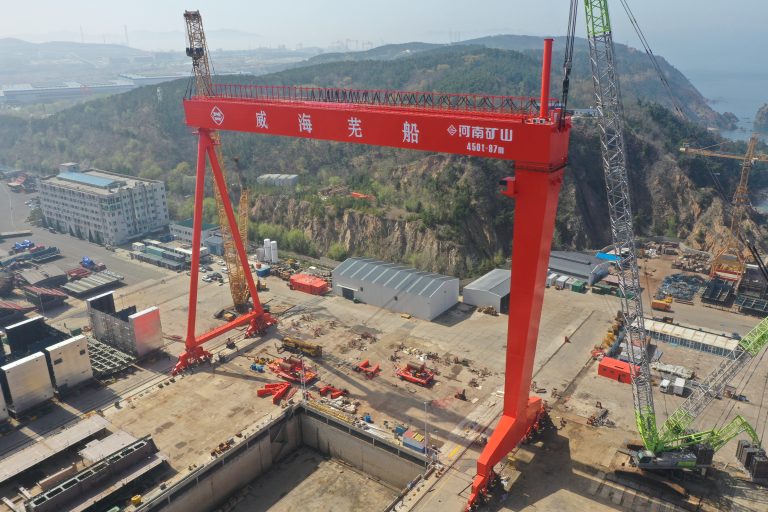
Essential Qualifications Common to All Shipyard Projects
The following qualifications are the standard requirements for legitimate heavy-duty shipyard crane suppliers. They constitute the core elements of procurement verification for both domestic and overseas conventional shipbuilding projects.
ISO 9001 Quality Management System Certification
ISO 9001 is a globally recognized quality management system standard and a fundamental qualification in the crane manufacturing industry. While not a mandatory certification, manufacturers holding this certification demonstrate standardized control processes across the entire production chain—from raw material procurement and manufacturing to finished product inspection and delivery.
For specialized equipment such as shipyard gantry cranes, ISO 9001 certification effectively mitigates issues like substandard materials, non-compliant manufacturing processes, and inadequate quality control, serving as the first threshold for screening legitimate manufacturers.
ISO 14001 Environmental Management System Certification
Shipbuilding and offshore engineering are high-standard industrial projects that impose clear requirements on the environmental production capabilities of partner manufacturers. ISO 14001 certification demonstrates that a manufacturer’s production processes, emissions control, and waste management comply with international environmental standards.
Large overseas shipyards and multinational offshore engineering companies prioritize suppliers with environmental management certifications to mitigate the risk of environmental audits during projects.
ISO 45001 Occupational Health and Safety Management System Certification
Crane manufacturing is a high-risk industry, and ISO 45001 is the internationally recognized standard for workplace safety and occupational health management. Manufacturers holding this certification ensure that their production equipment, operational procedures, and safety protection systems are more standardized.
This certification maximizes the stability of the equipment’s manufacturing process and meets the safety audit requirements of large shipyards for suppliers.
Welding Quality System and Personnel Qualifications
The core load-bearing structures of shipbuilding gantry cranes are entirely formed through welding, and welding quality directly determines the equipment’s safety factor and service life. Most shipbuilding projects require manufacturers to have a comprehensive welding quality system.
The ISO 3834 welding quality standard serves as the industry’s universal reference. Additionally, manufacturers must employ certified welders and maintain standardized welding procedure qualification documents to eliminate structural hazards caused by non-standard welding operations.
EU CE Compliance (Mandatory for EU Projects)
Many buyers mistakenly view the CE mark as a quality certificate. In reality, CE is a mandatory compliance mark for access to the EU market, proving only that the equipment meets basic EU standards such as the Machinery Safety Directive and Electromagnetic Compatibility (EMC) requirements.
All shipyard gantry cranes sold to the EU or the European Economic Area must undergo CE compliance assessment, provide technical documentation and a Declaration of Conformity, and affix the CE mark to complete customs clearance and be put into service; this is not mandatory for non-EU projects.
Project-Specific Certifications
These certifications are not part of the manufacturer’s standard offerings and must be obtained separately based on the project’s location, shipowner requirements, and contract standards; they are exclusive audit items for high-end shipbuilding and offshore engineering projects.
Class Society Specialized Certification
For high-end vessels, offshore marine engineering, and key maritime projects, shipowners or general contractors typically require equipment to be reviewed and certified by member organizations of international classification societies.
Such certifications are primarily used for high-standard maritime engineering projects; they are generally not mandatory for ordinary shipyard construction or routine vessel maintenance projects and must be confirmed as needed based on contract terms.
Country-Specific Market Access Qualifications
CE certification applies only to the European Union. Other overseas countries and regions have their own independent market access requirements, equipment registration procedures, and third-party testing standards.
Prior to procurement, it is necessary to confirm local compliance standards based on the project location and obtain the corresponding market access documents in advance to avoid issues such as failure to clear customs or pass acceptance inspections after equipment completion.
Customer-Specific Audit Requirements
Some large, leading shipyards have their own supplier qualification systems. In addition to general certifications, they may require manufacturers to undergo customized audits, such as on-site factory inspections, welding procedure reviews, and witnessed factory acceptance tests.
There are no uniform standards for these audits; they are entirely based on the shipyard’s internal procurement specifications and serve as a key method for screening high-end supply chains.
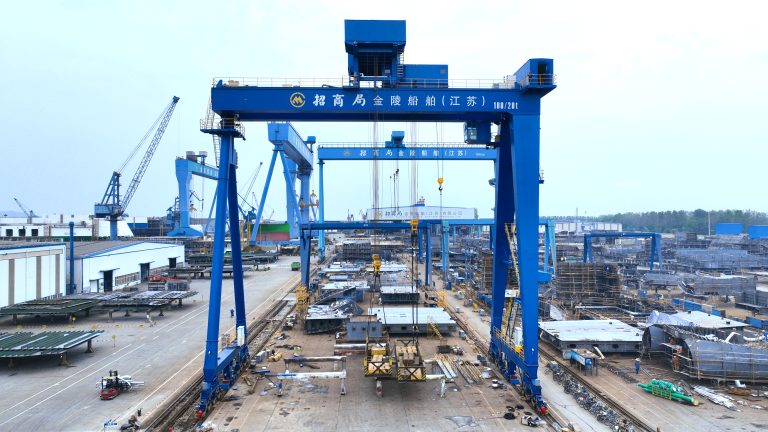
Technical and Compliance Documents That Must Be Verified During Procurement
Paper certificates serve only as basic proof; a complete set of supporting technical documents is required to truly demonstrate that the equipment is compliant, traceable, and meets acceptance requirements throughout the project lifecycle.
System Certificates and Scope of Validity Documents
When verifying ISO series certificates, one must not rely solely on certificate images. It is necessary to confirm that the certifying body is legitimate, that the certificate is within its validity period, and to verify the scope of production covered by the certificate to avoid purchasing equipment with borrowed qualifications or produced beyond the authorized scope.
Complete Set of Welding Compliance Documentation
This includes welding procedure qualification reports, on-the-job welder certification, and steel structure welding inspection records. This comprehensive set of documents fully substantiates the compliance of welding processes and the controllability of quality for the Crane’s main structure.
CE Technical Documentation and Declaration of Conformity
For EU projects, in addition to the CE marking, it is mandatory to request the complete set of technical documentation, risk assessment reports, and the EU Declaration of Conformity. These are essential documents for customs clearance and project acceptance.
Factory Testing and Load Test Records
Before each shipyard gantry crane leaves the factory, it must undergo no-load, full-load, and overload testing. Complete test reports and commissioning records serve as practical proof that the equipment meets performance standards.
Material Traceability and Non-Destructive Testing Documentation
Core steel components of large marine cranes, such as the main girder and outriggers, require material traceability reports. Critical welds must also undergo non-destructive testing, with inspection records issued to mitigate structural safety risks.
Equipment Drawings and Operation & Maintenance Manuals
A complete set of assembly drawings, electrical schematics, and equipment operation and maintenance manuals are essential for subsequent operation, maintenance, repairs, and annual inspections. For overseas projects, complete English versions must be provided.
How to Screen Reliable Suppliers Based on Certifications
The number and authenticity of certifications directly reflect the comprehensive capabilities of a shipbuilding gantry crane manufacturer and serve as the core basis for mitigating procurement risks.
Verify the Manufacturer’s Actual Production Capabilities
Most trading intermediaries possess only basic certificates and lack comprehensive production, welding, and testing systems. Actual manufacturers can provide a full set of production traceability records, inspection reports, and process documentation, ensuring that qualifications align with production capabilities.
Verify Experience with Similar Maritime Projects
Manufacturers with extensive experience in shipyard and offshore engineering projects are familiar with maritime compliance standards and documentation requirements, enabling them to precisely meet various qualification review and project audit needs.
Comprehensively Compare the Full Qualification System
Manufacturers holding only ISO 9001 certification can only meet the requirements of basic civilian projects. Only manufacturers with both the three-system certification and specialized welding qualifications are suitable for heavy-duty shipbuilding conditions. For high-end projects, the addition of classification society certifications and specialized market access qualifications makes the gap in comprehensive capabilities immediately apparent.
Match Market Access Qualifications Based on Needs
Do not blindly demand specialized certifications such as CE; instead, confirm compliance requirements based on the project’s location. Precisely matching the corresponding access documents ensures compliance with acceptance standards while avoiding unnecessary certification costs.
Verify a Complete Chain of Evidence
A single certificate lacks full persuasive power. During procurement, require manufacturers to provide supporting drawings, test reports, process documents, and inspection records to form a complete chain of compliance evidence, thereby eliminating issues with counterfeit or duplicated certificates.
Clarify the Scope of Third-Party Testing and Commissioning
Confirm in advance whether the equipment requires third-party witnessed testing, classification society verification, or on-site compliance commissioning. Reputable manufacturers can cooperate to complete various specialized inspections and acceptance procedures, meeting the project’s high standards.
Common Misconceptions Regarding Qualifications in Shipyard Procurement
Most compliance risks stem from misconceptions during the procurement phase; seemingly minor judgment errors can directly lead to equipment acceptance failure and project delays.
Many buyers mistakenly regard the CE mark as a quality certification standard. CE merely indicates compliance with EU safety access regulations and does not prove the quality of equipment production or the level of manufacturing工艺.
Verifying only the basic ISO 9001 quality certificate while overlooking welding process qualifications and workshop safety management systems can lead to hidden quality risks in the equipment’s steel structure.
Assuming that all maritime projects require classification society certification unnecessarily increases procurement costs, or failing to confirm specialized qualifications in advance can result in project acceptance failure.
Frequently Asked Questions
Is ISO 9001 certification alone sufficient to meet the procurement requirements for shipbuilding cranes?
No. ISO 9001 is only a basic quality control standard, while shipbuilding cranes have higher requirements for welding processes, workplace safety, and environmentally friendly production. For projects at formal shipyards, at least three-system certification plus specialized welding qualifications are required to meet standards.
Is CE certification mandatory for shipbuilding gantry cranes?
No. CE certification is only mandatory for projects implemented in the European Union and the European Economic Area; shipbuilding and offshore engineering projects in other regions do not require mandatory CE compliance procedures.
Is CE a quality certification or a market access mark?
CE is a market access compliance mark, not a quality grading certificate. It merely certifies that the equipment complies with local mechanical safety standards and does not imply that the equipment’s craftsmanship or quality is superior to other products.
Why are welding qualifications important for shipbuilding crane manufacturers?
The core load-bearing structures of shipbuilding cranes rely entirely on welded fabrication. If welding processes fail to meet standards, serious safety hazards such as weld cracking and structural deformation may occur. Welding qualifications and certified teams are the core safeguards for the long-term safe operation of the equipment.
In what scenarios is classification society certification required?
For high-end ocean-going vessels, offshore marine engineering projects, and major maritime projects, classification society review and approval may be required based on shipowner contracts and project specifications. Ordinary shipyard construction and repair projects generally do not require this certification.
What certification documents should be requested from the manufacturer before placing an order?
Basic ISO 9001, ISO 14001, and OHSAS 18001 certificates; welding qualifications and process documentation; factory test reports; material traceability records; complete sets of equipment drawings and operation and maintenance manuals; and, for export projects, additional market access compliance documents.
Is it sufficient to verify only the certificates without reviewing technical documentation?
No. Certificates merely serve as proof of qualification. Only comprehensive test records, process documentation, and inspection reports can demonstrate the actual quality of individual equipment, serving as the core basis for project acceptance and subsequent compliance audits.
Summary
When screening for reliable shipyard gantry cranes suppliers, price alone should not be the sole criterion; the key is to verify the manufacturer’s comprehensive compliance capabilities and project-specific qualifications. The roles of various certifications differ, so they cannot be treated uniformly.
The ISO 9001, ISO 14001, and ISO 45001 tri-system certifications serve as the foundational endorsement of a manufacturer’s comprehensive capabilities; welding quality certifications are the core guarantee of structural safety for marine cranes; CE compliance is the entry requirement for EU projects; and specialized certifications such as those from classification societies are tailored to meet the needs of high-end maritime projects.
A truly professional manufacturer not only possesses a full suite of foundational certifications but also provides customized compliance solutions, comprehensive technical documentation, and long-term after-sales maintenance support tailored to the project’s location and the shipowner’s requirements.
As a professional shipyard gantry crane manufacturer, Henan Mine Crane holds a full set of international system certifications and specialized welding qualifications. We offer CE compliance, third-party testing, and project-specific documentation services to meet the compliance and acceptance standards of shipyards and offshore engineering projects worldwide.
If you are currently evaluating suppliers of compliant shipyard cranes, please provide details such as the equipment’s tonnage, span, working height, the country where the project is located, and any specific certification requirements. Our engineering team will then develop a customized lifting equipment solution that meets local compliance standards.