
The Complete Guide to RMG Crane Specification & Application
Rail-mounted gantry cranes (RMG) are the core equipment for global logistics and container handling, and are widely used in ports, railroad yards and heavy industrial warehouses due to their stable, efficient and accurate characteristics, and their reasonable selection and standardized application directly affects the efficiency, cost and safety of business operations.
This article comprehensively covers the definition of RMG cranes, specifications, types, applications and other core content, to provide practical reference for industry practitioners, to help them master the core knowledge, scientific selection and application.
What is RMG crane?
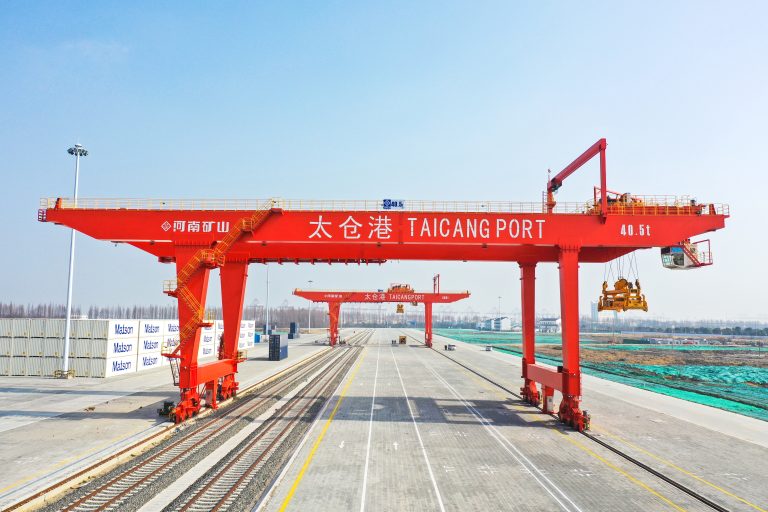
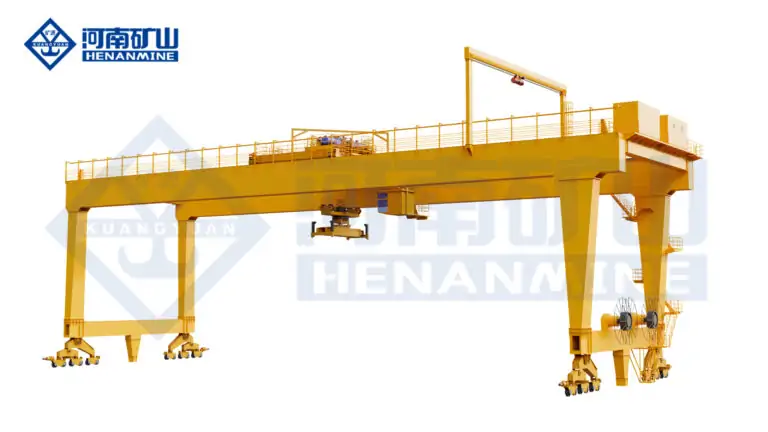
Rail Mounted Gantry Crane (RMG) is a bridge mounted gantry crane running along the track, mainly used for heavy cargo handling, stacking and loading and unloading operations, the core feature is to support the main beam through the two sides of the outriggers, longitudinal movement along the preset track, with the trolley (trolley) transverse movement and hoist (hoist) lifting and lowering action, to complete the all-round handling of goods.
The core functions of RMG cranes include: multi-layer stacking of containers, loading and unloading of ships and vehicles, transshipment of cargoes in intermodal transportation, and handling of heavy industrial materials (such as steel and precast concrete components).
Its core components are mainly composed of five major parts:
- Gantry: as the main structure of the crane, it mainly carries the main beam and outriggers, providing stable support for the whole machine operation;
- Trolley: it can drive the hoisting mechanism to move laterally along the main beam, and precisely realize the horizontal transfer of goods;
- Hoisting mechanism: the core power component, undertaking the lifting and lowering operation of the goods, which is the key to realize the vertical movement of the goods;
- Rail system: guides the crane to run longitudinally along the preset trajectory, which directly determines the operational coverage of the crane;
- Control system: responsible for manipulating the crane's actions, divided into manual, semi-automatic and fully automatic three modes, adapted to different operational requirements.
All components work together to ensure accurate and efficient operation.
The basic working principle of RMG crane is:
Through the rail system to limit the longitudinal running track of the crane, the trolley moves laterally along the main beam, the hoisting mechanism drives the goods up and down through the wire rope or chain, and the three work together to realize the accurate handling of the goods in three-dimensional space, which is suitable for large-scale, high-frequency, high-precision handling scenarios.
Core Differences between RMG and RTG Cranes and Application Scenarios
In the field of container handling, RMG cranes and tire gantry cranes (RTG, Rubber Tyred Gantry Crane) are the two most commonly used equipment, the core difference between the two is the way to move, which affects its application scenarios and performance.
RMG crane adopts rail type movement, relying on the pre-set rail operation, its advantage lies in the strong stability, high carrying capacity, high operational accuracy, and lower energy consumption, maintenance costs are more controllable; limitations lie in the fixed range of movement, poor flexibility, the need to lay the track in advance, the initial infrastructure investment is high.
RTG cranes use rubber tires to move, without the need to pre-set tracks, can flexibly adjust the operating range, to adapt to temporary or variable operating scenarios; but by the limitations of the tire carrying capacity, its stability, carrying capacity is not as good as RMG, and tire wear and tear, high energy consumption, long-term operating costs are high.
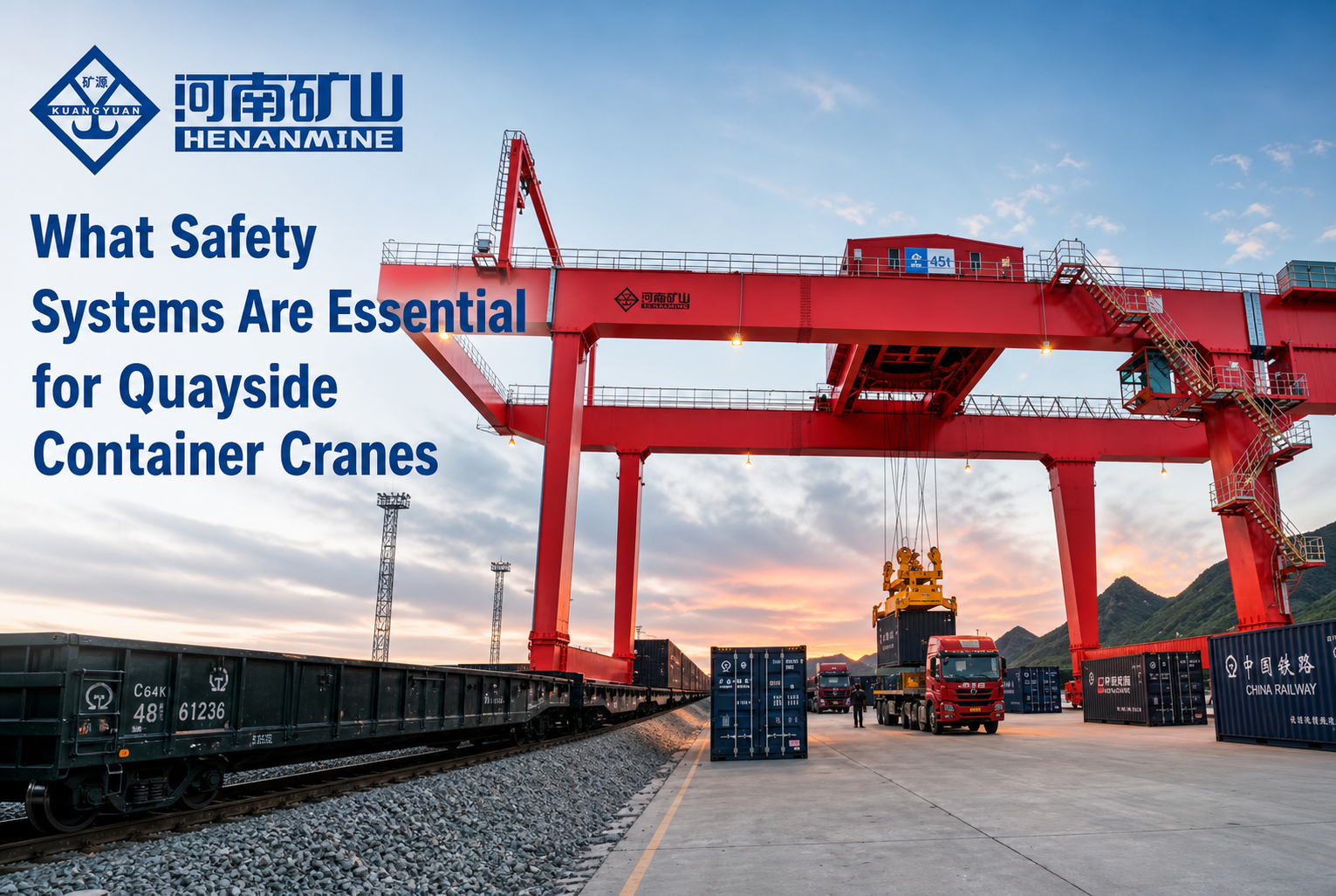
From the point of view of application scenarios, RMG cranes are more suitable for high throughput, high stacking density of the fixed operating scenarios, such as large container terminals, special rail yards, large industrial warehousing centers, especially suitable for the need to automate and upgrade the intelligent operating scenarios;
RTG cranes are more suitable for small and medium-sized terminals, temporary cargo yards, scenes with variable operating range, or temporary handling needs that require flexible adjustment of the operating area.
Key Specifications of RMG Cranes
Lifting Capacity
Lifting capacity is the core specification parameter of RMG cranes, which refers to the maximum weight of goods that can be lifted safely, and directly determines the applicable goods and scenes. Conventional lifting capacity of 30-100 tons or more, 30-50 tons for standard container handling, 50 tons or more suitable for heavy materials, special scenarios can be customized larger lifting capacity.
Selection should focus on the type of cargo, stacking height, operational needs, and pay attention to ISO, FEM and other rated standards, combined with their own scenarios to choose compliant equipment, to eliminate overloading safety risks.
Span and Gauge
Span refers to the horizontal distance between the outriggers on both sides of the RMG crane, which directly determines the operational coverage of the crane and is a key parameter for the layout of the yard. Gauge refers to the distance between the two running rails, which matches the width of the crane's outriggers and affects the stability and operational flexibility of the crane.
The choice of span is mainly determined by the layout of the yard:
- Compact yards are suitable for narrow spans (usually 10-20 meters), which maximize the use of space;
- Large terminals or yards with high stacking density are suitable for wide spans (20-40 meters and above), which can cover more stacking rows, reduce the frequency of longitudinal movement of the crane and improve operational efficiency.
The choice of gauge should be combined with the existing infrastructure, giving priority to the use of standard gauge, if the yard space is special, can be customized non-standard gauge, but need to invest in additional track laying costs.
Common span configurations include narrow span (suitable for small yards, single stacking area), standard span (suitable for medium-sized terminals, multi-row stacking), and wide span (suitable for large-scale intelligent terminals, high-density stacking scenarios).
When selecting the model, it should be combined with the actual width of the yard and the stacking plan, so as to avoid the increase of equipment cost due to too large a span or the impact of too small a span on the operational coverage.
Lifting Height
Lifting height refers to the maximum vertical distance that the crane lifting mechanism can lift the goods, which directly affects the number of stacked layers of containers and determines the space utilization of the yard, and it is one of the core parameters for the selection of high-density yard.
For container handling scenarios, the lifting height is usually expressed in terms of “layers”, and common configurations include 1-over-3 (stackable 4 layers, i.e., 3 layers can be stacked under the main crane beam, and 1 layer can be stacked under the trolley), 1-over-5 (stackable 6 layers), 1-over-6 (stackable 7 layers), etc.
The lifting height is the maximum vertical distance that the crane hoisting mechanism can lift the goods, which directly affects the number of stacked layers of containers, and thus determines the space utilization of the yard, and is one of the core parameters of high-density yard selection. When selecting the lifting height, you need to focus on the following.
When selecting the lifting height, three major factors should be considered: the space constraints of the yard (e.g., the headroom of the yard), the stacking target (e.g., the number of layers to be stacked, which has a direct impact on the throughput of the yard), and the demand for future expansion (if the future plan is to increase the density of the stacking, a certain degree of redundancy in the height of the lifting height needs to be set aside).
For example, large container terminals usually choose a 1-over-5 or 1-over-6 lift height configuration to improve space utilization, while smaller yards or temporary operation areas may choose a 1-over-3 base configuration to reduce equipment costs.
Operating Speeds
The running speed of RMG cranes is categorized into three types, each affecting the operational efficiency of different segments:
- Gantry running speed (the speed at which the crane moves longitudinally along the track),
- Trolley running speed (the speed at which the trolley moves laterally along the main beam),
- Lifting speed (the speed of the hoisting mechanism to lift the goods).
The speed match of the three, directly determines the overall operation of the crane throughput (throughput).
Under normal circumstances, the gantry running speed of 20-60 m / min, trolley 15-40 m / min, lifting 5-15 m / min (heavy load deceleration to ensure safety);
High throughput terminals can choose high-speed configuration to improve efficiency, heavy load, high-precision scenarios need to slow down to ensure safety and accuracy, selection needs to balance the speed and accuracy, combined with the rhythm of operation and the type of goods to choose reasonably.
Power Supply Mode
There are two main power supply methods for RMG cranes, namely, cable reel power supply and slip line power supply, both have their own advantages and disadvantages, and are suitable for different operational scenarios.
Cable Reel Power Supply
Through the reel winding cable for crane power supply, the advantages are simple installation, low cost, suitable for short distance operation of the crane, and not subject to environmental dust, rain, high reliability;
The limitation is that the cable is prone to wear and tear, aging phenomenon, need to be regularly inspected and replaced; and is not applicable to long-distance operation scenarios, the cable is too long and prone to entanglement, breakage and other faults.
Power Supply by Sliding Contact Line
Through the sliding contact line (conductive rail) and collector contact for crane power supply, the advantages are suitable for long-distance operation, less wear and tear of the cable, low maintenance costs, and continuous power supply can be realized, suitable for large terminals, long track operation scenarios;
Limitations are higher installation costs, subject to environmental impact (such as dust, rain may affect the conductive properties), the need for regular cleaning and maintenance.
In addition, the choice of power supply also needs to consider the energy efficiency: the current mainstream RMG cranes are driven by electricity, some scenes can choose hybrid (electricity + fuel), but electric drive is more in line with the green requirements, and the long-term operating costs are lower.
At the same time, it is necessary to combine the local power supply situation, environmental regulations, choose the power supply method that meets the requirements to reduce energy consumption and environmental risks.
Automation and Control System
The control system of RMG cranes is divided into manual, semi-automatic and fully automatic levels, with different levels matching different automation requirements and operating costs, which is one of the core configurations for the construction of smart terminals.
Manual Control
Operators in the crane cab directly control the actions, the advantages of low cost, flexible operation, suitable for small yards, temporary operations or complex working conditions (such as irregular cargo handling); limitations are the high demand for operator skills, operational efficiency is greatly affected by the state of the personnel, and can not be realized 24 hours of continuous operation.
Semi-automatic Control
Combining manual operation and automation functions, such as automatic positioning, automatic stacking, automatic speed regulation, etc., the operator is mainly responsible for monitoring and exception handling, the advantage of flexibility and efficiency, reduce the labor intensity of the operator, suitable for medium-sized terminals, medium throughput of the operational scenarios; limitations are the need for certain infrastructure support, the cost is higher than the manual control.
Fully Automatic Control (Automated RMG)
No need for operator on-site control, through the terminal operating system (TOS, Terminal Operating Systems) to realize remote scheduling, automatic operation, can achieve 24-hour continuous operation, the advantages of high operational efficiency, small error, high security, suitable for large-scale intelligent terminals, high throughput operation scenarios;
limitations are high initial investment, the need for a perfect TOS system, Limitations are high initial investment, the need for perfect TOS system, sensors, monitoring equipment support, and high technical requirements for maintenance personnel.
Regardless of which control mode is chosen, the integration with the TOS system needs to be considered: the TOS system can realize the crane's operation scheduling, cargo tracking, data statistics, and seamless integration with the crane control system, which can significantly improve the operational efficiency and management level, and it is the core demand of modern logistics operations.
Types of RMG Cranes: Choose a Design that Suits Your Needs
Single girder and double girder RMG cranes
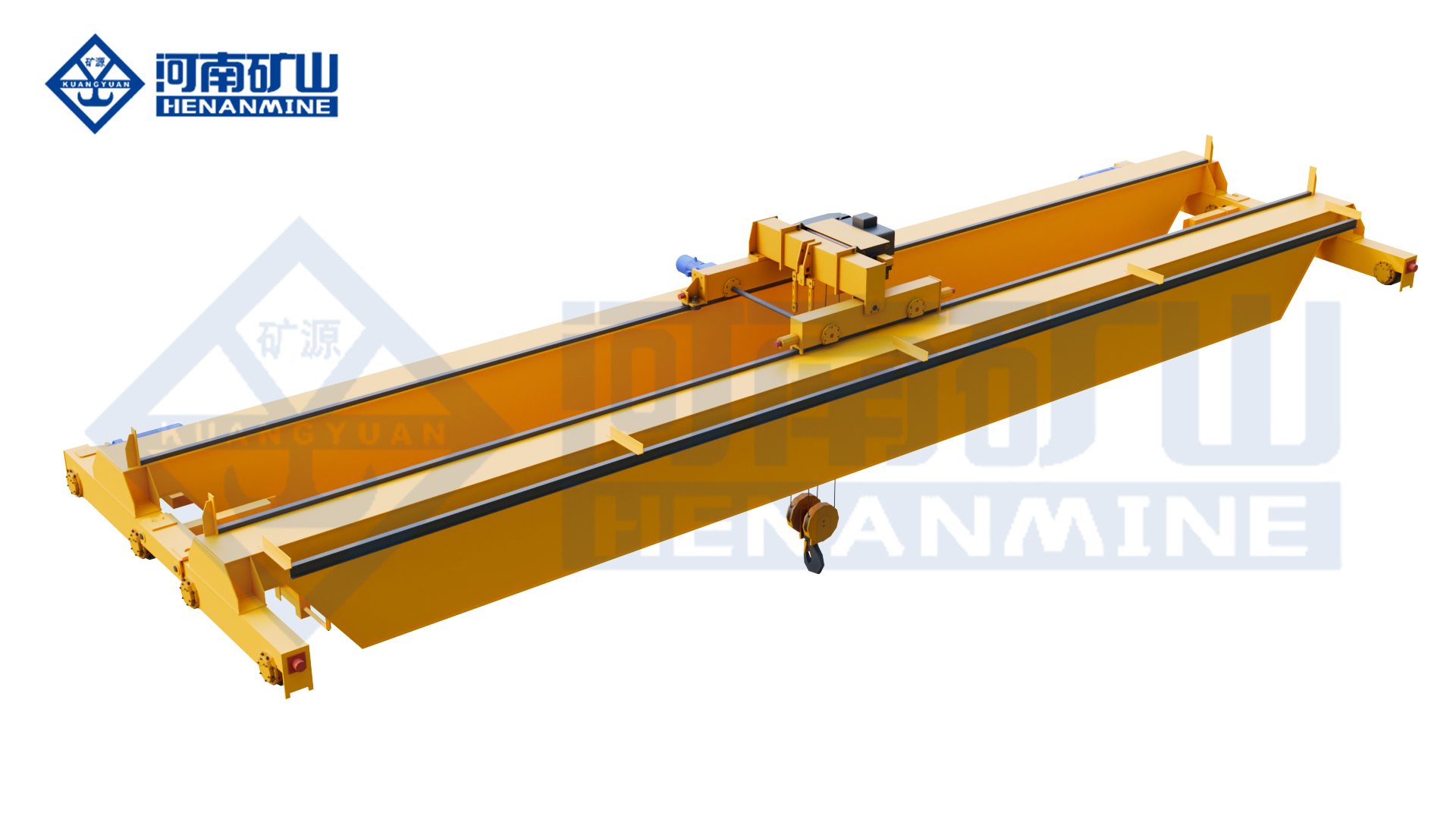
The core difference between single girder and double girder RMG cranes lies in the structural design of the main girder, which in turn affects its load carrying capacity, cost and applicable scenarios, and is an important consideration when selecting the type.
Single Girder RMG Crane
The main girder adopts a single steel girder structure, the advantages of light weight, simple structure, low manufacturing cost, easy installation, and small footprint, suitable for small yards, light and medium-sized cargo handling (lifting capacity is usually in the range of 30-50 tons), such as small container yards, light industrial warehousing; limitations of the limited load carrying capacity, weak resistance to side shift, is not suitable for heavy loads, high lifting height of the operating scenario.
Double Main Girder RMG Cranes
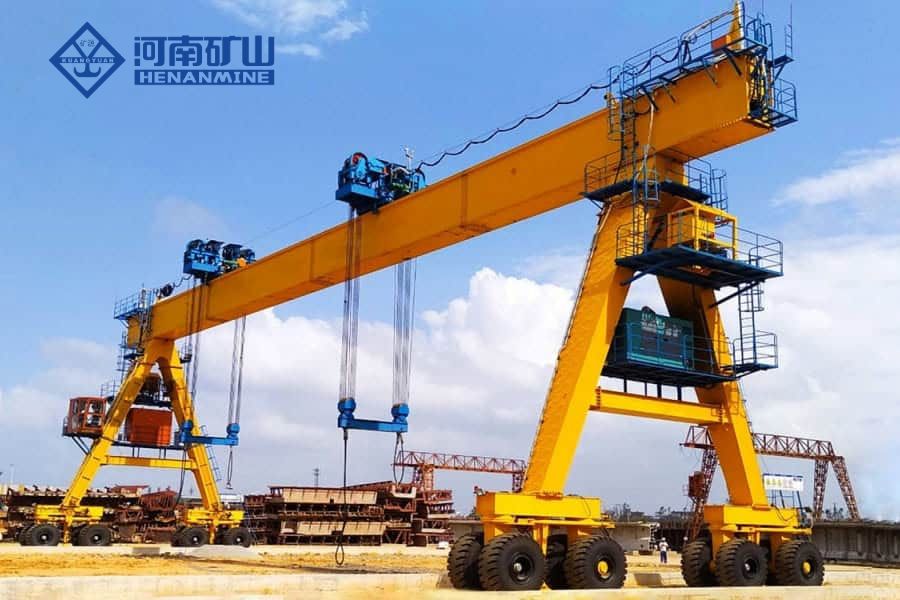
The main girder adopts two parallel steel girder structure, the advantages are strong load carrying capacity, good anti-side-shift ability, high stability, can be adapted to heavy load (more than 50 tons), high lifting height, wide span of the operating scenes, such as large container terminals, heavy industrial material handling; limitations are heavy weight, high manufacturing costs, installation complexity, large footprint, the initial investment is higher than the single girder crane.
Selection needs to be combined with their own cargo weight, lifting height, span requirements and budget: light and medium-sized operations, limited budget, preferred single girder; heavy-duty, high-demand operations, preferred double girder, while taking into account the installation space and infrastructure conditions of the yard.
Automated RMG Crane (ARMG)
Automated RMG crane (ARMG) is the core equipment for the development of smart ports and smart logistics in recent years, and its core advantage lies in the realization of automation and unmanned operation, which significantly improves the operational efficiency and safety, and reduces labor costs.
ARMG plays a key role in smart ports and multimodal terminals. By integrating TOS system, IoT equipment and sensors, it can realize automatic scheduling, positioning, stacking and loading/unloading without on-site operation, 24-hour continuous operation, and increase throughput by more than 30% compared with that of manual cranes, and it also reduces operation errors, lowers safety risks, and facilitates the optimization of operation management.
The core advantages of ARMG are to improve efficiency, reduce labor costs, reduce errors, enhance safety, and support 24-hour operation; the implementation of infrastructure upgrades, personnel training and high initial investment need to be considered, large-scale, high-throughput terminals to adopt its long-term revenue can cover the investment, is the future development trend.
Cantilever and Non-cantilever RMG Design
The core difference between cantilever and non-cantilever RMG cranes is whether the main girder extends out of the outrigger (i.e., cantilever structure), and the two designs are adapted to different yard layouts and operational requirements.
Cantilever RMG Cranes
Both ends of the main girder extend out of the outrigger to form a cantilever structure, the advantage is that the operation covers a wider range of cargo handling outside the outrigger (e.g., container loading and unloading on the quay shore, cargo transfer next to the railroad track), and it is suitable for the scenario that there are railroads, highways, or ships docking at the edge of the yard; the limitation is that the cantilever structure will increase the weight of the crane and the cost of manufacturing, and the stability is slightly lower than that of the non-cantilever type, and it needs stronger outriggers and higher maintenance costs. Support capacity, higher maintenance costs.
Non-cantilever RMG Cranes
The main beam is only between the outriggers, no extension structure, the advantages of simple structure, strong stability, low manufacturing costs, easy maintenance, suitable for compact yards, high-density stacking scenarios (such as the internal stacking of large container yards), no need to work on the outside of the outriggers; limitations are the limited coverage of the operation, can not be realized outside the outriggers of the loading and unloading of goods, less flexible.
Selection should be combined with the layout of the yard: if there is a railroad, highway or ship docking at the edge of the yard, it is necessary to carry out loading and unloading operations on the outside of the outriggers, and priority is given to the cantilever type; if the yard is compact, and only needs to carry out internal stacking and transshipment, it is preferred to choose the non-cantilever type, which reduces the cost and difficulty of maintenance.
Application Scenarios of RMG Cranes: Core Areas with Outstanding Advantages
Container Terminal
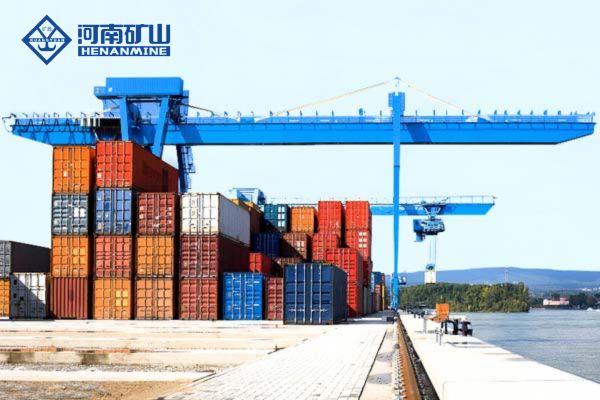
Container terminals are the most important application scenarios for RMG cranes. Whether it is a large coastal port or an inland intermodal yard, RMG cranes undertake the core tasks of container stacking, loading and unloading, and transshipment, and they are the key equipment to increase the throughput of the terminals.
Port operations, RMG cranes with the shore bridge to complete the container shore loading and unloading, yard stacking and vehicle loading and unloading, by virtue of high stability, high precision, high throughput to match the fast-paced needs of large terminals, coastal deep-water ports can be stacked 4-6 layers of containers, with the ARMG can be operated 24 hours a day to enhance the handling capacity of the terminal.
In the intermodal freight yard, RMG cranes are responsible for container transshipment in multiple ways, and the rail-type design ensures accurate transshipment, reduces cargo damage, and is suitable for high-density stacking. At present, RMG is widely used in mainstream terminals around the world, such as Shanghai Port and Singapore Port, of which ARMG is the core configuration of the intelligent terminal.
Railroad Yard
Railroad yard is one of the important application scenarios of RMG cranes, mainly used for intermodal container transfer, loading and unloading of railroad vehicles, as well as the handling of heavy railroad materials, and its core advantage is that it can be accurately docked with the railroad track to achieve efficient transfer of containers.
In the railroad yard, RMG cranes run along the track, can accurately docking railroad wagons, fast loading and unloading of containers and stacked 4-6 layers, to improve space utilization; its stability is better than traditional cranes, can reduce cargo damage, adapt to high-frequency transit, shorten the operating time.
Its application can realize seamless rail-public transportation, improve efficiency, reduce costs, adapt to inland and cross-border railroad hub yards, and help scale up the efficient development of railroad logistics.
Industrial Warehousing and Heavy Industry
In addition to logistics, RMG cranes are also widely used in industrial warehousing and heavy industry scenarios, mainly used for heavy material handling, storage, suitable for steel, precast concrete components, heavy machinery, large industrial components and other cargo needs.
In steel mills, RMG cranes can be used for the handling and storage of steel coils, billets, steel, and their high load capacity (50-100 tons or more) can be adapted to the operational needs of heavy steel, while precise control can avoid steel collision and reduce losses; in precast concrete plants, RMG cranes can be used for the handling and stacking of prefabricated components, and they are adapted to the operation of large precast panels and beams to improve production efficiency; In heavy machinery manufacturing plants, RMG cranes can be used for the assembly and handling of large mechanical parts, which is suitable for the operation of irregular and heavy parts.
For the specificity of industrial scenarios, RMG cranes can be customized, such as adding special spreaders, improving corrosion resistance, adapting to high-temperature or dusty environments, etc., to meet the personalized needs of different industrial fields, and to become the core equipment for heavy industrial production and warehousing.
Advantages of RMG Cranes
Compared with other types of cranes (e.g. RTG, overhead cranes), RMG cranes have obvious advantages in many fields due to their unique structure and performance, becoming one of the preferred equipment in modern logistics and heavy industry.
High Precision and Stability
RMG cranes are rail-mobile with fixed running track, which can realize accurate positioning and handling of goods, and the error can be controlled at centimeter level, which is suitable for operation scenarios requiring high precision (such as stacking of containers and assembling of heavy-duty parts); at the same time, the design of the gantry structure and rail support makes its stability far more than that of the tire-type cranes, and it can be adapted to the operation of heavy loads and high lift heights, and reduces shaking and shifting in the course of the operation. Reduced swaying and deflection during operation.
Lower Operating Costs
Compared with RTG cranes, RMG cranes are powered by electricity, which consumes less energy, and do not require frequent replacement of tires, so maintenance costs are significantly reduced; at the same time, automation upgrades can reduce the need for manpower, further reducing labor costs, and long-term operational benefits are significant.
Energy Efficiency and Environmental Advantages
RMG cranes are mainly driven by electricity, can be adapted to green energy (such as solar, wind), reduce fuel consumption and emissions, in line with global environmental policies and green ports, green industrial development trends; at the same time, its energy consumption is 30% -50% lower than RTG cranes, can significantly reduce the energy costs of enterprises.
Suitable for Automation and Intelligent Logistics
The structural design of RMG cranes facilitates automation upgrading, and it can easily integrate TOS system, IoT equipment, sensors, etc. to realize unmanned operation, remote scheduling, data monitoring and control, which is suitable for the development needs of smart ports and smart logistics, and improves operational efficiency and management level.
High Throughput
RMG cranes can flexibly match the operating speed, stacking height and operating accuracy to match high-frequency and large-scale operation scenarios, such as large container terminals, which can realize the handling of dozens of containers per hour and significantly increase the operational throughput to meet the production capacity needs of enterprises.
Challenges and limitations of RMG cranes
Although RMG cranes have many advantages, but in the actual application, there are still some challenges and limitations, which need to be considered by enterprises in the selection and application process to avoid affecting operational efficiency and cost control.
- Initial infrastructure investment is high: RMG cranes need to be pre-set track system, power supply system, foundation support structure, track laying, foundation construction costs are high, especially wide-span, long-distance operating scenarios, the infrastructure investment is more significant, the initial capital pressure on the enterprise is greater.
- Limited flexibility: RMG cranes run along the track, the operating range is fixed, can not flexibly adjust the operating area like RTG cranes, if the layout of the yard changes, the track system is difficult to transform, high cost, poor adaptability.
- Higher maintenance requirements: RMG cranes have many components and long-term high-load operation, requiring regular maintenance and repair, track, cable and other wear parts need to be handled by specialized personnel and equipment, maintenance costs and difficulties are higher than simple cranes.
- Strict space requirements: the gantry structure of RMG cranes requires a certain footprint, and has strict requirements on the headroom height of the yard and ground bearing capacity, small yards or scenes with poor ground conditions may not be able to install and use RMG cranes.
Key Considerations for Selecting RMG Cranes
When choosing RMG cranes, you need to combine your operational needs, yard conditions, budget, and consider the following five factors to ensure that the selection is scientific and reasonable, and to achieve a balance between efficiency and cost.
Yard Layout and Space Constraints
Yard layout and space is the basis for selection, need to focus on the assessment: the actual width, length and headroom height of the yard, determining the span and lifting height of the crane; the existing infrastructure (such as rail, power supply system), to determine the need for additional investment in the transformation;
Future expansion plans, if the future scale of the yard to expand, you need to choose the crane can be adapted to the expansion needs (such as wide span, high lifting height), to avoid repeated investment. At the same time, the ground bearing capacity of the yard needs to be considered to ensure the safe operation of cranes.
Throughput Demand
Throughput demand directly determines the specifications and types of cranes, need to be combined with their average daily and weekly cargo handling volume, calculate the required operating efficiency, and then select the appropriate lifting capacity, operating speed and control mode.
For example, high throughput scenarios (such as large container terminals), you need to choose a high lifting capacity, high speed double girder RMG or ARMG; medium throughput scenarios (such as medium-sized rail yards), you can choose a single girder or semiautomatic RMG; low throughput scenarios (such as small-scale industrial warehousing), you can choose a manually-controlled basic type of RMG, to reduce costs.
Budget and Return on Investment (ROI)
Budget is an important constraint for selection, and it is necessary to consider the initial investment (equipment procurement, infrastructure construction) and long-term operating costs (maintenance, energy consumption, labor) to calculate the ROI. For example, ARMG has a high initial investment but low long-term operating costs and high efficiency, which is suitable for high throughput and long-term operation scenarios;
Manually controlled RMG has low initial investment, but high long-term labor and maintenance costs, suitable for scenarios with limited budget and low throughput. At the same time, it is necessary to choose cost-effective equipment, prioritize well-known brands and mature technologies, to avoid increased maintenance costs due to equipment quality issues in the later stages.
Automation Requirement Level
Automation needs to be combined with their own scale of operation, labor costs and management level, choose the right control mode: small yards, complex working conditions, give priority to manual control, flexible to adapt to various types of operational needs;
For medium-sized yards, semi-automatic control can be chosen to balance efficiency and cost; for large-scale intelligent terminals and high throughput scenarios, fully automatic control (ARMG) is preferred to realize unmanned operation and improve efficiency and safety. At the same time, it is necessary to consider its own technical strength to ensure that it can support the deployment and maintenance of the automation system.
Environmental and Energy Considerations
With the increasingly stringent environmental policies, the choice of RMG cranes need to focus on environmental and energy considerations: give priority to electric-powered cranes to reduce fuel consumption and emissions; combined with the local energy policy, choose the equipment suitable for green energy (such as solar energy, wind energy);
Pay attention to the energy efficiency of the equipment, choose models with low energy consumption and good energy-saving effect to reduce long-term energy costs. At the same time, it is necessary to comply with local environmental regulations, so as to avoid affecting the operation due to environmental issues.
RMG Crane Design Standards and Safety Requirements
International Standards
The design, manufacture and use of RMG cranes need to follow international standards to ensure the quality, safety and interoperability of the equipment, the world's mainstream standards include: ISO (International Organization for Standardization) standards, mainly provides for the design of cranes, manufacturing, safety requirements and testing methods, is the basic standard for global use;
FEM (European Material Handling Federation) standards for the European market, the performance of cranes, safety, reliability have more stringent requirements; CMAA (Crane Manufacturers Association of America) standards for the North American market, focusing on regulating the design of cranes and safe operation.
For multinational operations or export-oriented enterprises, they need to choose RMG cranes that meet the standards of the target market, to ensure that the equipment can be used normally, and to avoid the compliance risk caused by the standard inconsistency. At the same time, domestic enterprises also need to follow China's relevant standards (such as GB/T 3811-2008 “Crane Design Code”) to ensure the safety and compliance of the equipment.
Safety Features (essential for operation)
The operating environment of RMG cranes is complex (heavy load, high altitude, high frequency), and safety functions are the core and indispensable to ensure the safety of personnel and equipment, mainly including the following four categories:
- Anti-collision system: through sensors, cameras and other equipment, real-time monitoring of the distance between the crane and other equipment, cargo, personnel, to avoid collision accidents, especially suitable for automated operating scenarios, can prevent collision between cranes, between cranes and containers.
- Windproof and Storm Lock: RMG cranes are large in size and susceptible to wind, the windproof system can lock the crane in windy weather to prevent the crane from shifting; the storm lock is used in extreme weather (e.g., rainstorms, typhoons) to fix the crane on the track to avoid equipment damage.
- Emergency control: including emergency stop button, load holding device, standby power supply, etc. When equipment failure or emergency, it can quickly stop the operation, keep the load stable, avoid the expansion of the accident, and protect the safety of personnel and goods.
- Operator safety functions: such as ergonomic (ergonomic) console, safety cage, monitoring system, etc., to reduce the labor intensity of the operator, to avoid the operator contact with the danger zone, to enhance the safety of the operation.
In addition, RMG cranes are subject to regular safety testing and certification to ensure that the safety functions operate properly and avoid safety accidents caused by aging and malfunctioning equipment.
Maintenance and Life Cycle Management
The service life of RMG cranes is usually 15-20 years. Scientific maintenance and life cycle management can extend the service life of the equipment, reduce maintenance costs, ensure stable operation of the equipment, and improve the return on investment.
Preventive Maintenance Best Practices
Preventive maintenance is the core of RMG crane maintenance, the core principle is to “prevent in advance, timely investigation”, to avoid equipment failure caused by downtime, mainly including the following:
Formulate a regular inspection plan, which is divided into daily inspection (operators check before daily operation, such as cables, spreaders, emergency buttons), weekly inspection (maintenance personnel check the operating status of the rail, trolley, hoisting mechanism), monthly inspection (comprehensive inspection of the electrical system and mechanical components of the equipment), and annual inspection (comprehensive testing and calibration by a professional organization to ensure that the equipment meets the standards).
Key maintenance tasks include: cleaning and lubrication of the rail to avoid wear and tear of the rail; lubrication and debugging of the lifting mechanism to ensure smooth lifting and lowering; checking and replacement of cables to avoid aging and breakage of the cables; calibration and upgrading of the control system to ensure precise control; and testing and maintenance of the safety devices to ensure normal safety functions.
The core advantages of preventive maintenance are: to reduce equipment downtime and improve operational efficiency; to reduce maintenance costs and avoid high maintenance costs due to major failures; to extend the service life of equipment and maximize the value of investment.
Common Wearing Parts
RMG crane wearing parts are mostly moving components, which need to be checked and replaced regularly. Commonly, there are rails, wheels, hoisting cables/chains, bearings and control panels, which are prone to wear and tear and failure due to long-term use.
Replacement of wearing parts requires the use of matching original parts, standardized operation, good replacement records and the establishment of maintenance files, combined with the pattern of wear and tear to formulate a replacement plan to avoid equipment downtime.
Life Cycle Cost Optimization
The life cycle cost of RMG cranes includes initial investment (procurement, infrastructure), operating costs (energy, labor, maintenance), replacement costs (wearing parts, equipment renewal), the core of life cycle cost optimization is to "reduce long-term operating costs and extend equipment life.
Specific strategies: choose reliable quality, low energy consumption equipment; establish preventive maintenance system; strengthen personnel training, standardized operation; regular assessment of the state of the equipment, reasonable control of the timing of maintenance and replacement; the use of digital technology to monitor the equipment, predict failures, reduce maintenance costs.
Future Trends of RMG Crane Technology
With the development of smart logistics, green ports, and Industry 4.0, RMG crane technology is developing in the direction of automation, intelligence, and greening, and will show the following five trends in the future to further improve operational efficiency, reduce costs, and enhance safety.
- Integration of advanced automation and AI: ARMG will be deeply combined with AI technology to achieve intelligent scheduling, path optimization, fault prediction, and multiple ARMGs can work together to improve overall efficiency.
- Remote operation and unmanned operation: Remote operation technology will be more mature, operators can control remotely to ensure safety; unmanned operation will become mainstream, combining multiple technologies to realize autonomous operation and 24-hour operation.
- Remote operation and unmanned: Remote operation technology will be more mature, and can be controlled remotely to ensure safety; unmanned operation will become mainstream, combining multiple technologies to realize autonomous operation and 24-hour operation.
- Electrification and green development: RMG will be fully electrified, eliminating hybrids, adapting green energy such as solar energy to achieve carbon-neutral operation, optimizing energy-saving technologies to reduce energy consumption, and contributing to the development of green ports and industries.
Deep integration with IoT and intelligent logistics system: RMG cranes will be integrated into the intelligent logistics system, linked with TOS, WMS and IoT equipment to achieve full tracking of goods, automatic scheduling and data sharing, build an integrated intelligent process, improve efficiency, reduce costs, and help the development of intelligent logistics on a large scale.
Conclusion
RMG cranes are the core equipment of modern logistics and heavy industry, and their selection and adaptation directly affects the operational efficiency, cost and safety. Selection needs to be combined with the yard, throughput, budget and other factors, selection of compliant high-quality equipment and good maintenance; practitioners to master its core knowledge can improve efficiency, reduce costs and ensure safety, and in the future it will play a more important role in intelligent logistics, green port.