
STS Crane vs Portal Harbor Crane: Which Is More Suitable for Deep Water Port?
As the core hub of ocean-going logistics, deep water ports require specialized bridge equipment that is suitable for large vessels, large throughput and high-intensity berth operations. Many port builders, EPC contractors and terminal operators struggle with one core question when planning berth equipment: should deep water terminals use STS quay bridges or gantry harbor cranes?
Both types of quay bridge equipment are the mainstream handling equipment in deepwater ports, but the type of cargo, ship type and mode of operation are completely different. There is no universal optimal equipment, but only suitable solutions that fit the port positioning, cargo structure and long-term planning. There is a huge difference in the logic of equipment selection between deepwater ports focusing on mainline container transportation and multifunctional deepwater ports taking into account bulk cargo and general cargo.
This paper comprehensively compares the practical application differences of STS crane vs portal harbor crane from the dimensions of cargo type fitness, operation capacity, infrastructure investment, full cycle cost and automation fitness, etc., so as to help overseas deep water port projects accurately match the deep water port crane selection program.
what is the STS shore bridge Crane?
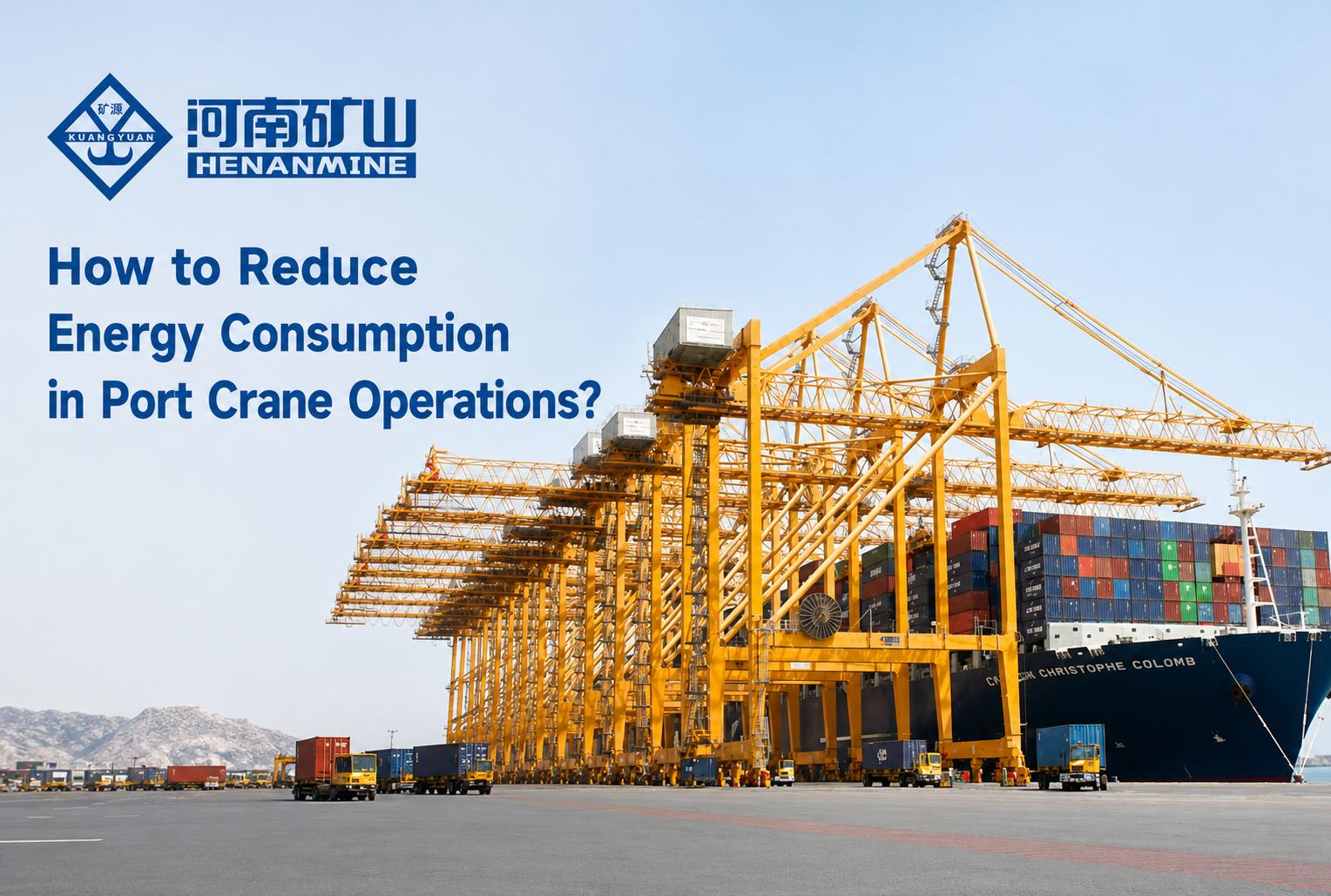
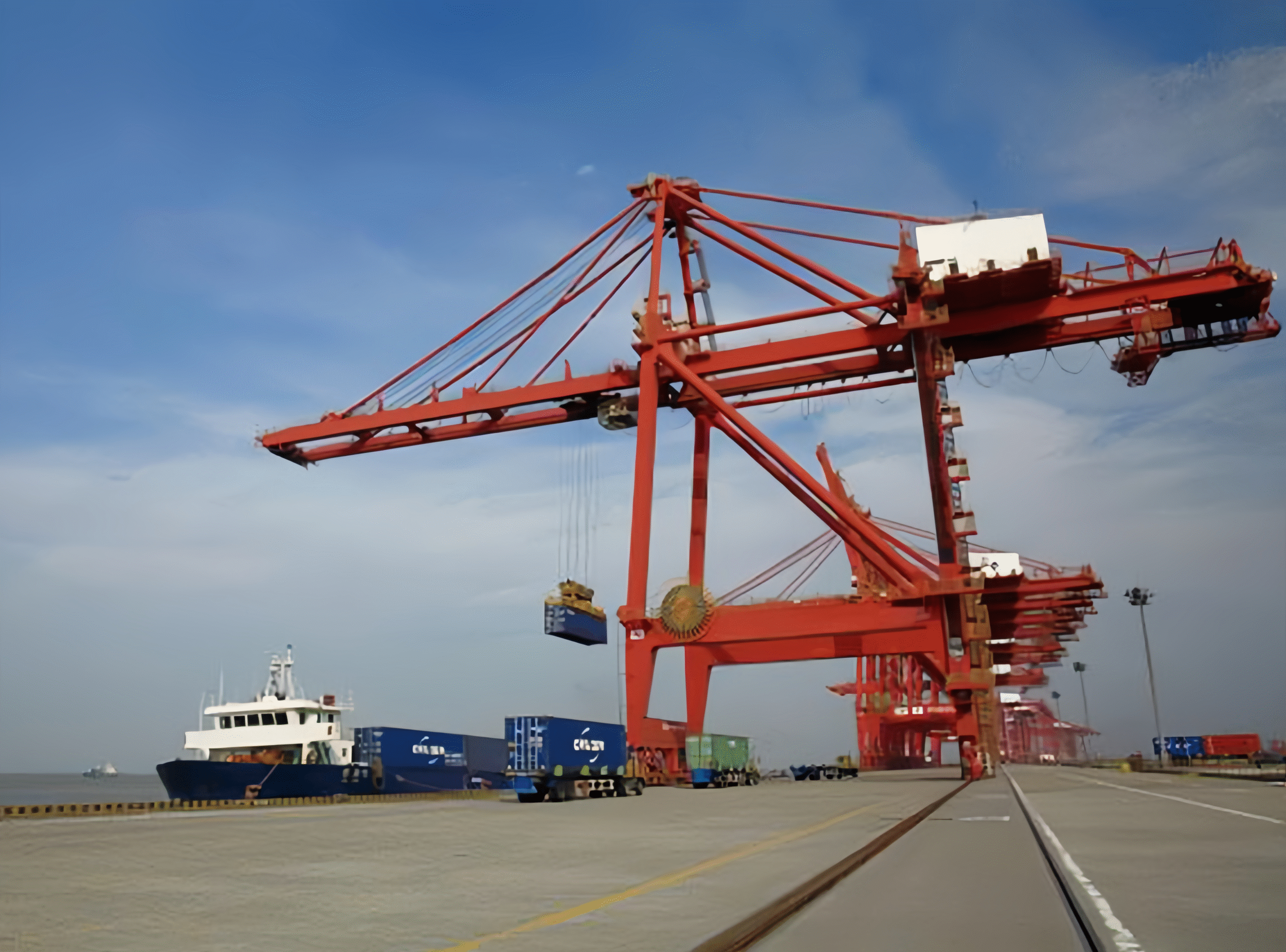
STS cranes, known as Ship-to-Shore Crane, also often called shore container cranes, is the core standard equipment for specialized deep water container terminals. As the exclusive quay crane for container terminal, it adopts the shore rail fixed installation, specializing in the service of container ships and terminal shoreline between the loading and unloading transfer operations.
The core design logic of this kind of container terminal crane is container operation specialization. Equipped with special container telescopic spreader, the equipment has extra-long reach and large lifting height, which can cover the whole deck of ultra-large container ships and is suitable for the smooth loading and unloading of high-level stacked containers.
In actual port operation, STS shorebridge can perfectly match the operation mode of double and multiple containers, and can be linked and adapted with RMG, RTG, AGV and other equipments in the yard, which is suitable for the operation system of automated and semi-automated intelligent terminals. Almost all of the world's large container deep-water hub ports and ocean-going terminals use STS cranes as the core operating equipment.
Its limitation is also very clear, the equipment function is highly specialized, only suitable for standard container operation, not compatible with bulk cargo, steel, engineering large parts and other diversified types of cargo, operational flexibility is relatively limited.
what is a Portal Crane?
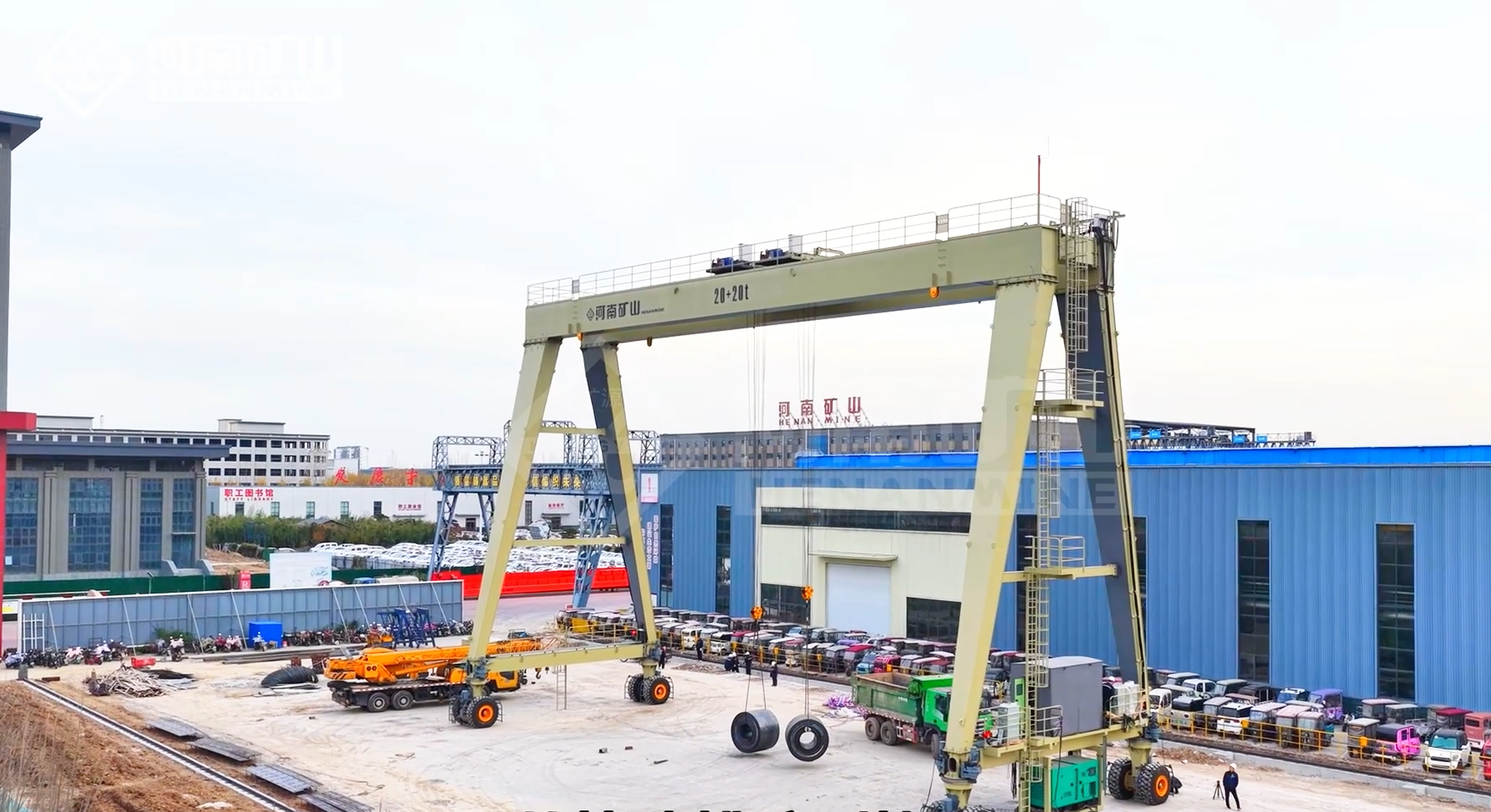
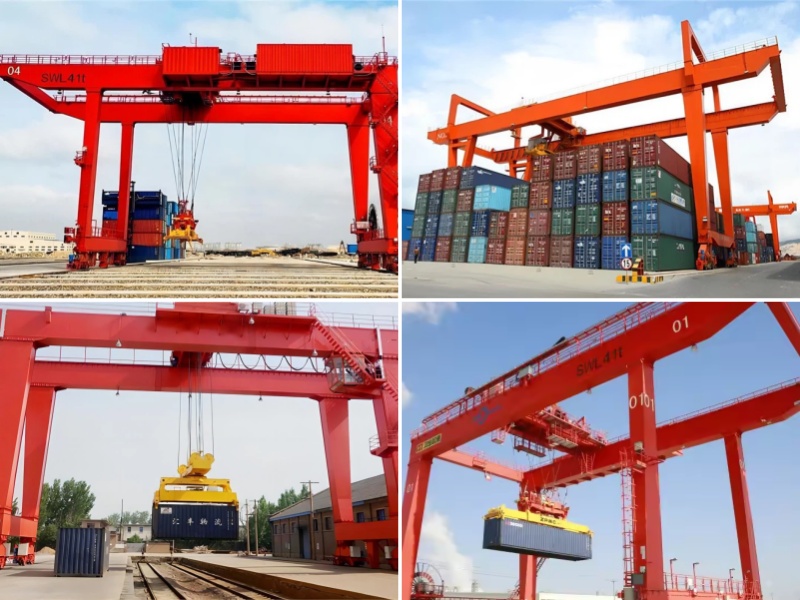
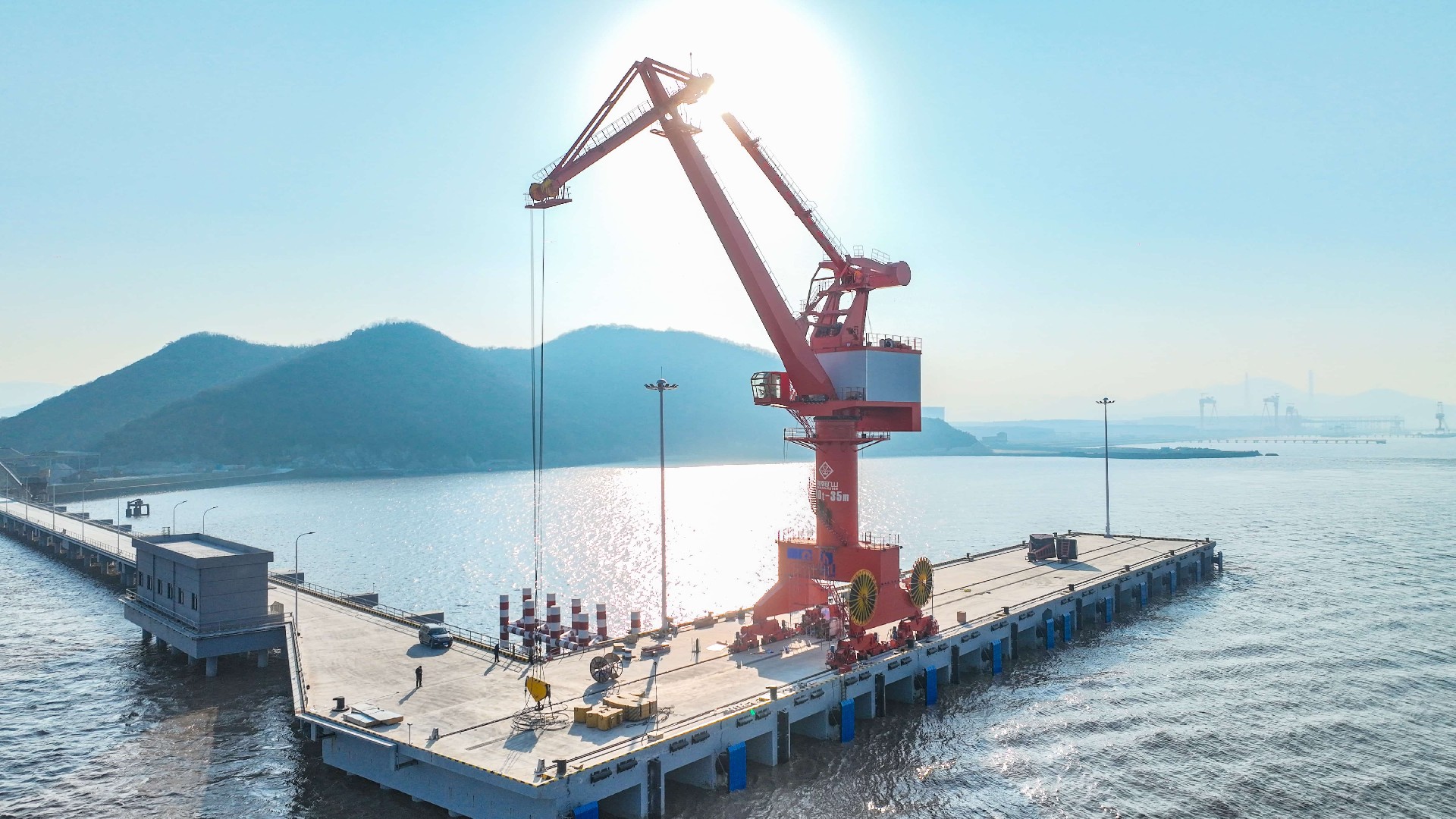
Portal Harbor Crane (Portal Harbor Crane) is a multifunctional terminal general-purpose shore bridge equipment, also using the dock rail installation mode, relying on the portal frame structure design, the lower side of the passage of container trucks, railroad wagons and conveyor equipment, does not take up the effective operating space of the terminal.
Different from the specialization of STS, the biggest advantage of portal harbor crane for deepwater port is its strong compatibility. According to the type of cargo, the crane can be quickly changed with hooks, grabs, electromagnetic suction cups, special beams and other accessories to meet the needs of a variety of cargo loading and unloading.
This kind of bulk cargo portal crane is widely used in bulk cargo deep-water ports, general cargo terminals and multi-functional comprehensive terminals, and can stably load and unload various non-containerized cargoes such as coal, ore, grain, fertilizer, steel, large equipment, etc. It is a highly adaptable equipment for the operation of multiple types of cargoes.
For small and medium-sized deep-water ports with irregular cargo types, both bulk cargo and a small number of container operations, the adaptability and cost-effective advantage of gantry port cranes is very prominent, and can effectively reduce the cost of terminal equipment configuration.
the core difference: container specialization VS multi-cargo flexibility
The core value of the STS quay bridge is the ultimate container operation capacity. As a specialized equipment for container terminal, the whole machine structure, lifting system, trolley operation system and spreader system are all designed around container high-frequency cycle operation.
The specialized structural configuration allows STS cranes to have a higher hourly operating capacity, which can significantly shorten the berthing time of large container ships. At the same time, it can be seamlessly connected to the terminal TOS system, adapted to remote control, automatic alignment, anti-sway control and other functions, which is the most necessary equipment for high throughput container deepwater ports.
The core advantage of gantry port cranes is the flexibility of operation without limitation of cargo types. It does not have a fixed mode of operation constraints, can be flexible to switch between various types of attachments, suitable for continuous loading and unloading of bulk cargo, large equipment lifting, steel bundled goods transfer and other working conditions.
In multi-functional deep-water port, the cargo turnover is random and strong, the gantry crane can flexibly adapt to different ship types and cargo specifications, avoiding the operational shortcomings brought about by the limitation of single equipment function, and greatly improving the utilization rate of the quay berth.
STS cranes and gantry cranes core parameters of the English comparison table
Combined with the global deepwater port project operation experience, we organize the core performance of the two types of shore bridge equipment and adaptive differences, which visually supports the selection decision:
| Comparison Factor | STS Crane | Portal Harbor Crane |
| Best Applicable Cargo | Standard full containers | Bulk cargo, general cargo, steel, project cargo |
| Main Working Tools | Special container spreader | Hook, grab, magnetic chuck, lifting beam |
| Suitable Terminal Type | Dedicated container deepwater terminal | Multi-purpose & bulk deepwater terminal |
| Handling Productivity | High for container handling | Stable for bulk/general cargo, low for containers |
| Vessel Matching | Ultra-large container ships, ULCV | Bulk carriers, general cargo vessels |
| Operational Flexibility | Low, single cargo scenario | High, adaptable to multiple scenarios |
| Total Initial CAPEX (Crane + Civil Works) | High | Medium and controllable |
| Automation Potential | High, fully intelligent compatible | Medium, limited by diverse cargo |
| Typical Service Life | 25–30 years | 20–25 years |
Combined with the practical experience of the project, 3 basic criteria can be used to quickly lock the direction of adaptation:
- Container business accounts for more than 70%, docking fixed large container liner → Prioritize STS shorebridge.
- Bulk / general cargo is mainly, the cargo type fluctuates greatly, there is no stable container schedule → Priority allocation of gantry port crane
- Two types of cargo have stable business volume, berths can be zoned planning → use zoning mix and match program
deep-water container terminals: prioritize the use of STS quay bridge
Focusing on deep-water container seagoing business, STS cranes are irreplaceable core equipment. Ultra-large container ships have many deck positions and high number of stacking layers, so only ship-to-shore gantry crane for deep water container terminal can cover the complete operation range of the ship with its extra-long forward reach and ultra-high lifting height.
Usually, deep water container berths with an annual throughput of more than 300,000 TEU will be equipped with 65-ton double-box STS gantry crane as the main operating equipment, which is suitable for the regular port call operation of super-Panamax vessels. High frequency, standardized container loading and unloading operations require equipment with stable cyclic operation capability, and the double-tank operation configuration of STS bridge can continuously improve the operation efficiency of the berth and reduce the waiting time for large ships to call at port, which is suitable for the operation needs of mainline container terminals.
From the long-term development point of view, modern container deep-water ports are generally upgraded in the direction of automation and intelligence, STS quay bridge can be perfectly connected to the terminal automation system, and yard equipment, transportation equipment to form a linkage operation system, which is suitable for the port's long-term expansion and intelligent upgrading plan.
Although gantry port cranes can be installed with container spreaders for temporary loading and unloading of containers, the operation cycle rhythm, alignment accuracy and capacity, completely unable to meet the regular operational needs of high throughput container terminals, is not suitable for use as the main equipment.
deep-water bulk and general cargo terminals: give priority to gantry port cranes
Coal, ore, grain, fertilizer and other bulk cargo-based deepwater berths, bulk cargo portal harbor crane for deepwater berth adaptability is much higher than the STS shore bridge. This kind of cargo needs grab, hopper, conveyor system supporting operation, which is the core application scenario of portal crane.
For a bulk cargo deepwater berth with an annual throughput of 3 million tons, a 40-ton gantry crane with a corresponding volume of grab can cover the loading and unloading needs of conventional bulk cargo. For irregular bulk cargoes such as steel, large equipment, engineering parts, etc., the gantry crane can complete the lifting operation by replacing the hooks and special lifting beams, which can be adapted to non-standard cargoes with different sizes and weights, thus providing a wider range of operational adaptability.
The special container spreader of STS quay bridge can not be adapted to bulk cargo loading and unloading conditions, and the forced modification of attachments not only has extremely low operating efficiency, but also increases the loss of equipment and safety hazards, which is not suitable for the normalized operation of bulk cargo terminals at all.
Multi-functional deep-water port: the optimal solution for mix and match placement
Many small and medium-sized deepwater ports belong to multi-functional integrated terminal, while undertaking container, bulk, general cargo and other businesses, a single device can not meet all operational needs. This type of port does not need to choose one or the other, using a mix and match placement is the most suitable for the operation of the program.
Dedicated container berths can be divided, the configuration of STS quay crane to protect the capacity of container trunk operations; bulk and general cargo berths configured with gantry port cranes, taking into account the flexibility of multiple types of cargo operations.
This zoning configuration model can not only protect the operational efficiency of the core cargo types, but also cover the operational needs of scattered cargo types, balancing the equipment investment and terminal capacity, suitable for the long-term operation of multi-functional deep-water port planning.
Difference between infrastructure investment and full-cycle cost
STS quay bridge has bigger weight and more complicated structure, which requires higher requirements on quay civil foundation, track bearing and high-voltage power supply system, and higher investment in infrastructure and equipment procurement in the early stage. However, under high-frequency container operation scenarios, the equipment failure rate is low, the operational loss is small, and the long-term operation and maintenance costs are controllable.
Gantry port cranes have lower initial procurement and infrastructure costs, simple equipment structure, short installation and commissioning cycle. However, the frequent replacement of attachments, slewing mechanism wear and tear, long-term maintenance frequency will be slightly higher than the STS shore bridge under multiple working conditions.
From the STS vs portal crane total cost of ownership point of view, high throughput container terminal, STS shorebridge capacity advantage can wipe out the high price difference; multi-species low-frequency terminals, the low cost of portal crane, high flexibility and more cost-effective.
automation and intelligent port adaptability
With high degree of standardization of operation process, fixed operation track and unified operation parameters, STS quay bridge is the core automation equipment of smart container terminal. It can easily realize automatic alignment, automatic loading and unloading, unattended operation, and is suitable for intelligent upgrading of large hub ports.
Gantry port cranes are more difficult to automate due to the variable cargo types and irregular operation modes. Only the basic remote control, safety monitoring functions, it is difficult to complete the whole process of unmanned operation, more suitable for traditional multi-functional terminal operation mode.
port selection of common misconceptions
Many project selection, purely based on equipment procurement price as the basis for decision-making, ignoring the suitability of goods, resulting in insufficient capacity after the commissioning of the equipment, functional idleness. Container terminals use gantry cranes, there will be low operating efficiency, slow turnover of ships.
Blindly selecting STS quay bridge for bulk cargo terminal will result in waste of equipment function, and it can't be adapted to the working condition of bulk cargo, and extra investment is needed to modify the equipment in the later stage, which will increase the unnecessary cost. At the same time, many purchasers ignore the quay pressure and infrastructure carrying capacity, resulting in the equipment not being able to operate at full capacity after installation.
Some overseas procurement projects did not confirm the CE, FEM and other international certification requirements in advance, resulting in equipment arrival in Hong Kong, customs clearance is blocked, the local acceptance does not pass; there are also projects to ignore the environmental standards of the country where the terminal is located, the choice of fuel-driven gantry cranes can not meet the requirements of the local environmental impact assessment, the latter part of the transformation of the investment is huge.
FAQ Frequently Asked Questions
Is it necessary to use STS bridge for deep water harbor?
No. STS is only suitable for container deepwater ports, bulk cargo, multi-functional deepwater ports are more appropriate to use gantry port cranes, the core of the equipment selection depends on the terminal's main types of cargo.
Can gantry cranes replace STS quay bridges for container operation?
Can be temporarily adapted to the low volume of container operations, but can not meet the high-frequency, high-efficiency container turnover needs of large terminals, is not suitable as the main container equipment.
Which equipment is more suitable for long-term port expansion?
For specialized container ports, there is more room for capacity expansion and automation upgrade of STS; for multifunctional ports, the flexibility of gantry cranes can be adapted to the future adjustment of cargo types, which is more adaptable.
Specifically for individual deepwater port projects, the final selection needs to be combined with the berth depth, infrastructure capacity, annual throughput and long-term planning to do accurate accounting, there is no uniform solution that can be applied to all.
Henan Mine Crane Factory supply
Selecting quay cranes for deep water ports is never simply comparing equipment prices or basic parameters. The core lies in matching crane types with The core lies in matching crane types with terminal positioning, main cargo types, vessel scale and long-term operational goals. Professional specialization and practical applicability are far more important than low initial purchase cost.
Henan Mine Crane, as a professional port crane manufacturer supplying global deep water terminals, has rich experience in STS crane and portal harbor crane design, manufacturing and overseas project delivery. crane design, manufacturing and overseas project delivery. We can provide targeted equipment selection, parameter customization, anti-corrosion We can provide targeted equipment selection, parameter customization, anti-corrosion upgrade, technical docking, on-site installation guidance and full after-sales service for container terminals, bulk terminals and multi-purpose harbor projects.
If you have port crane procurement and selection demands, you can provide your terminal cargo type, vessel condition, berth parameters and throughput targets. Our professional engineer team will customize exclusive and cost-effective quay crane solutions for your deep water port project.