
How to Choose a Good Crane for a Hangar (Complete Buyer’s Guide for Aviation Facilities)
From Engine Lifting to Complete Maintenance - 10 Steps to Choosing the Best Crane Solution for Your Hangar
Introduction of Hangar Crane
Hangar cranes are different from ordinary workshop overhead cranes in that they need to cope with aviation industry-specific challenges such as high-precision positioning, safe operation in limited space and protection of high-value assets. Most of the lifting loads are delicate and fragile aircraft components. The core of this paper is to help users avoid the pitfalls of downtime, safety hazards and wasted investment, and balance performance, safety and cost.
Understand Hangar-Specific Lifting Requirements
What Will You Lift?
Hangar lifting is mainly categorized into whole-engine related operations and component handling, in addition to the handling of tools and tools. The whole aircraft operation has high requirements on crane span, lifting height and stability; component lifting focuses on engines, landing gears and other loads with concentrated weight and high value, which need to be protected; and tools and tools, though light in weight, also need to be lifted safely.
Define Key Technical Parameters
Define key technical parameters is the basis of selection, hangar crane parameters have their own particularities: rated lifting capacity (SWL) is usually 3-20 tons, precision is more important than pure lifting capacity; span is determined by the width of the hangar, and a large hangar may require a span of more than 40 meters; the lifting height is directly related to the safety clearance of the aircraft, and it is necessary to take into account the height limitations of the tail wing; the positioning accuracy needs to be up to millimeters, and it is necessary to be equipped with advanced speed control and anti-sway system.
Analyze Hangar Structure & Space Constraints
Building Structure Considerations
Hangar building structure affects crane selection: steel hangars have strong load-bearing capacity and are suitable for top-running cranes; concrete hangars may need to be reinforced and are more suitable for suspended cranes. Existing runway beams and roof load distribution also need to be considered, if necessary, the installation of independent rail or multi-pivot suspension design.
Clearance & Obstruction Challenges
Hangar space restrictions are complex, need to focus on the aircraft tail height restrictions, reserve enough safety margin; at the same time need to avoid lighting, ventilation, hangar doors and other obstacles, cranes and aircraft, their own components and fixed structures need to leave at least 500mm safety clearance, high-precision operations need to be increased appropriately.
Choose the Right Crane Type for Hangar Applications
Overhead Bridge Crane
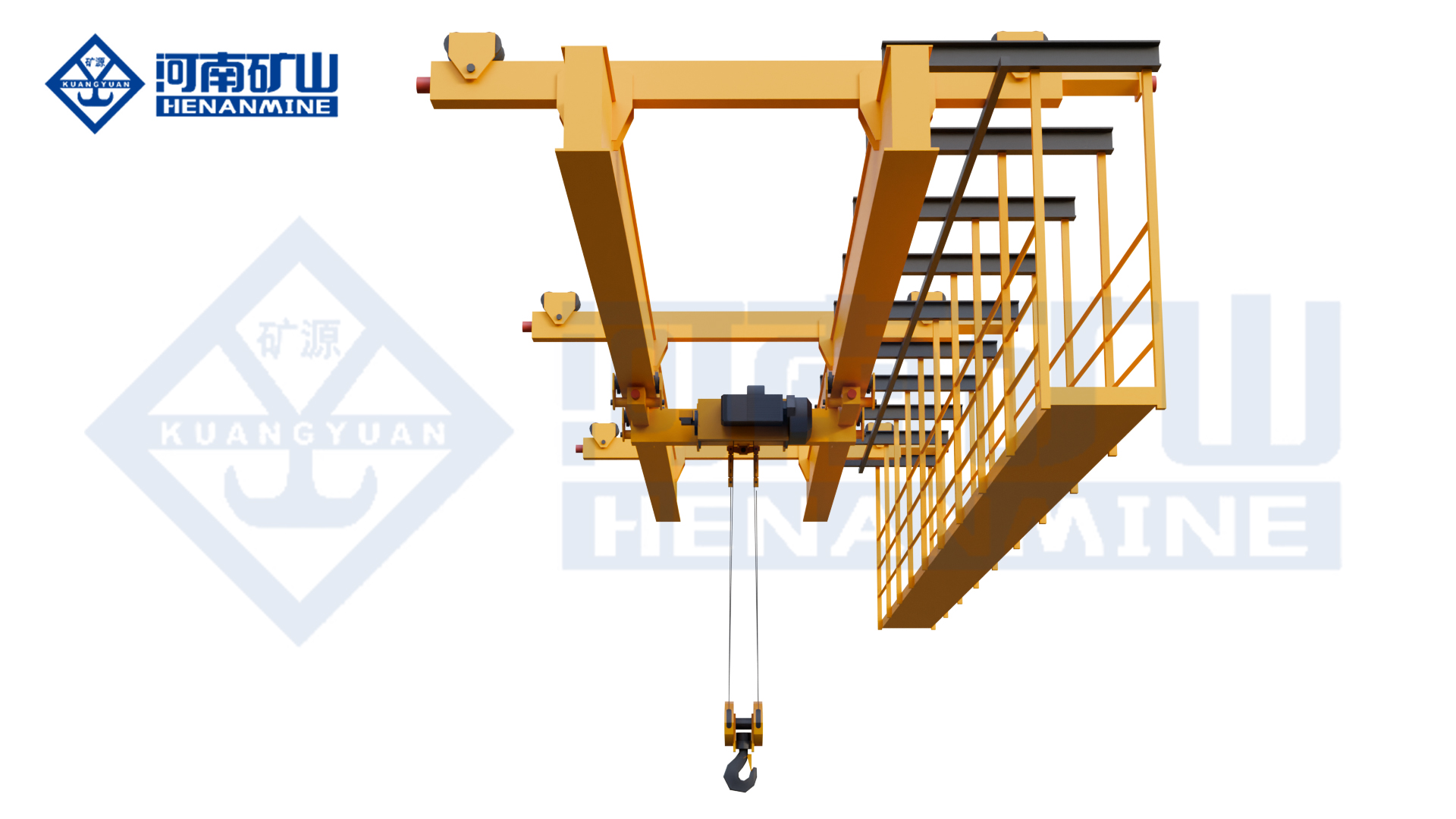
Overhead Bridge Cranes are the preferred choice for hangars, providing full coverage of the working area without the need for ground level tracks, high flexibility and multiple units can be used in large hangars.
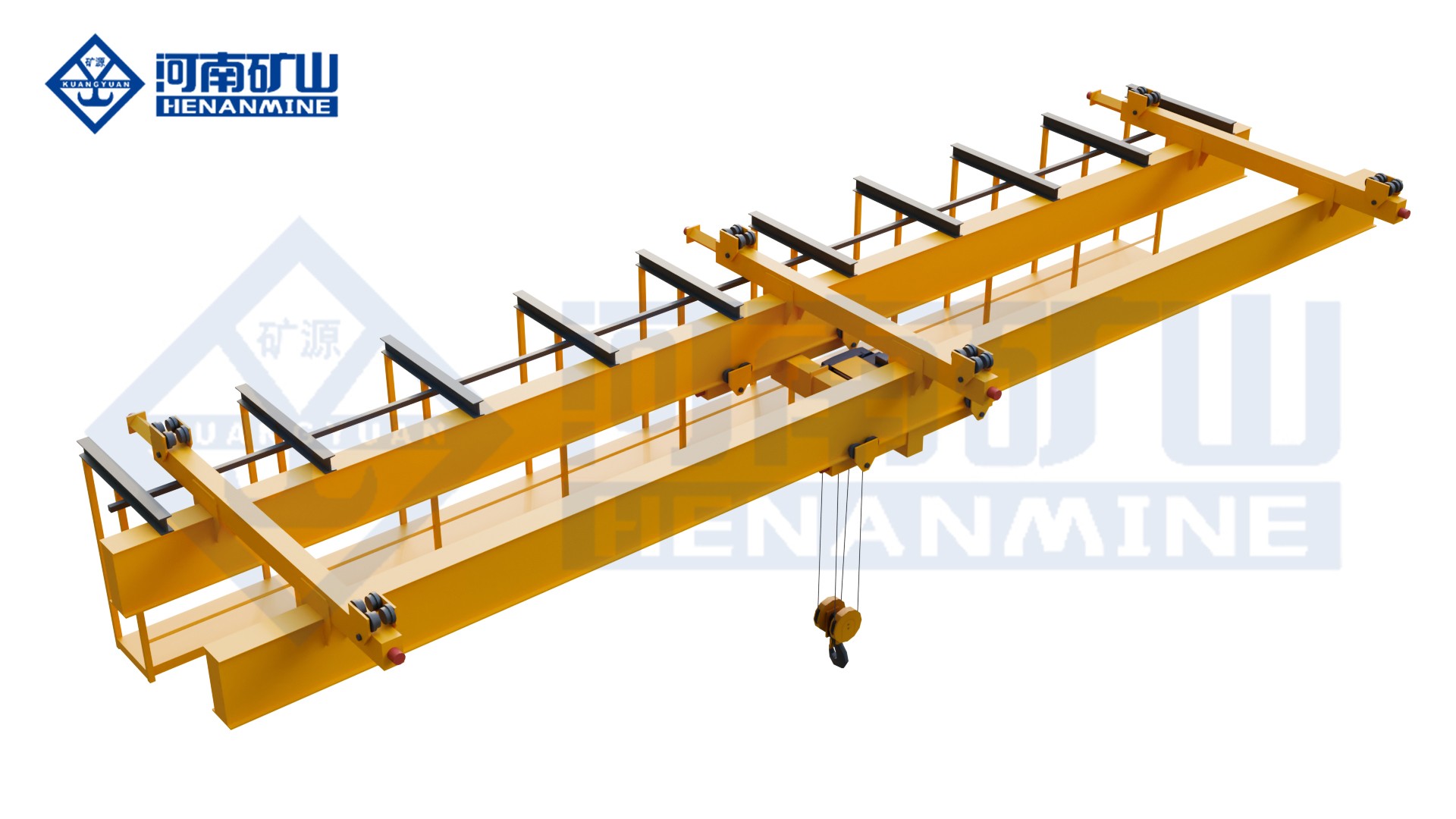
Single Girder vs Double Girder
| Crane Type | Load Capacity | Structural Features | Applicable Scenarios | Core Advantages |
| Single Girder Crane | Light to medium load (1-20 tons) | Simple structure, light self-weight, short installation cycle | Small hangars or projects with limited budget | Low cost, simple installation, low requirements on roof structure |
| Double Girder Crane | Heavy load (more than 20 tons) | Stable structure, double girder design, higher lifting height | Wide-body aircraft maintenance or high-frequency operation hangars | Stable structure, strong load-bearing capacity, precise load positioning, larger operating space |
Top Running vs Under Running
| Operation Mode | Load Capacity | Applicable Scenarios | Core Advantages | Core Disadvantages |
| Top Running (Top Operation) | Higher | Large hangars, high-frequency operation scenarios | Stable structure, suitable for high-frequency operations; convenient maintenance and easy component replacement | Requires special track beams, which may increase construction costs |
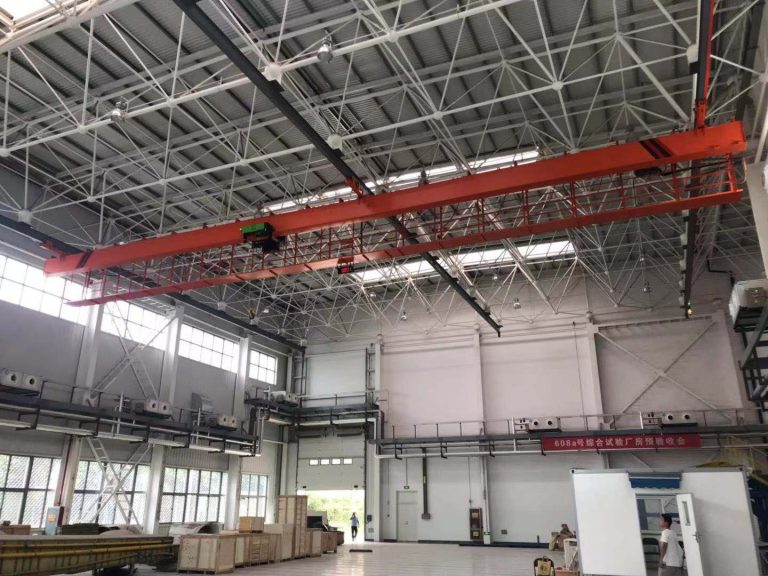
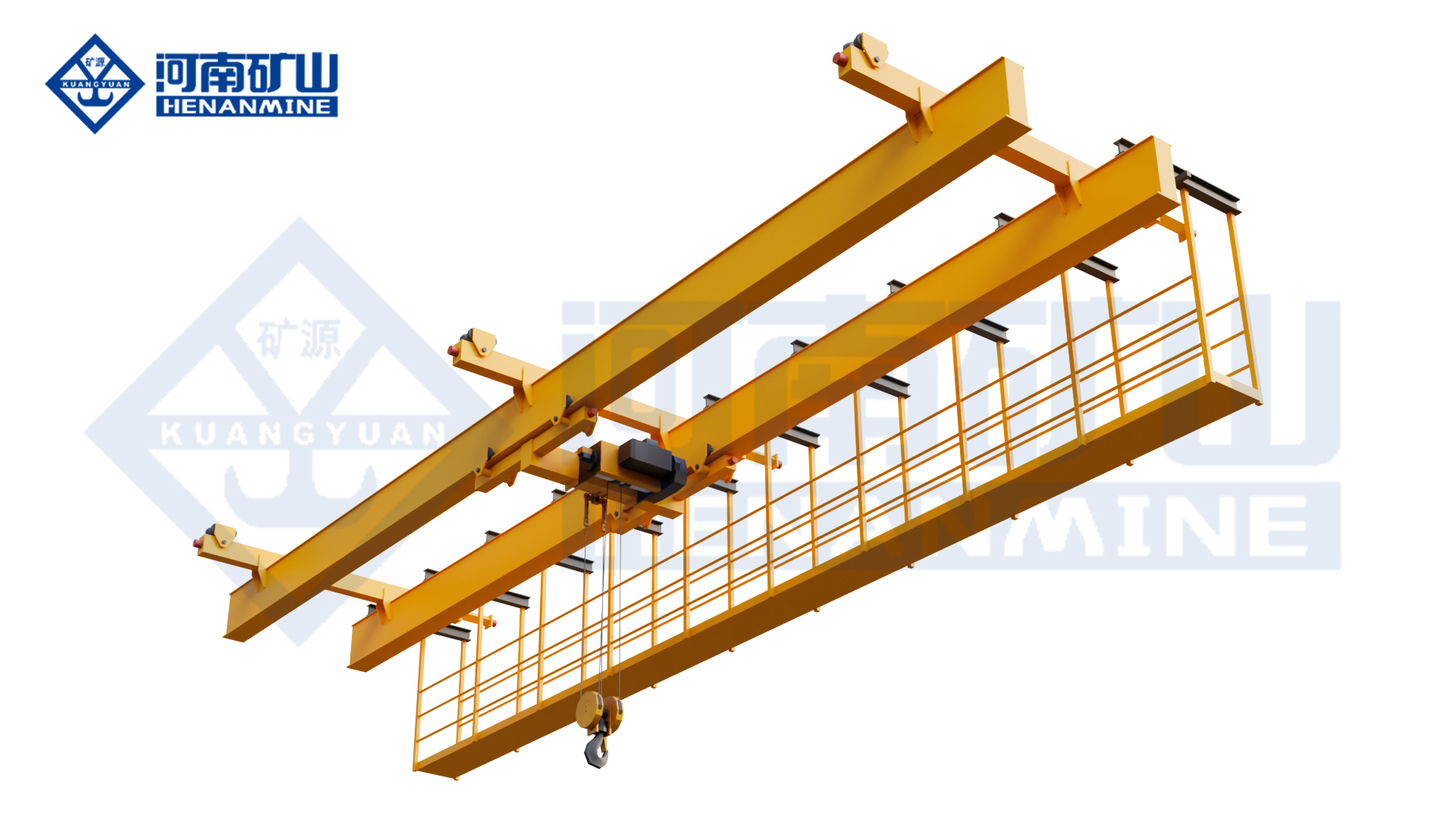
| Under Running/Underslung (Suspended Type) | Medium (usually no more than 15 tons) | Low headroom hangars, existing hangar renovation projects, environments with high noise requirements | Ideal low headroom solution to maximize operating space; installed under existing structures without additional track beams; little impact on roof structure; low operating noise | Load capacity is limited, not suitable for heavy-load operations |
Focus on Precision & Control (Critical for Hangars)
The precision of control of hangar cranes is directly related to the safety of assets, and poor control may cause huge losses.
Anti-Sway Technology
Load swaying is the main risk, hangar cranes need to be equipped with active or passive anti-sway systems, and high precision work is preferred to active anti-sway systems to ensure load stability.
Variable Frequency Drives (VFD)
VFD is the standard configuration for hangar cranes, which can realize smooth starting and stopping to avoid load swaying, and at the same time provide fine speed control to ensure positioning accuracy.
Control Options
| Control Type (Control Method) | Cost | Applicable Scenarios | Core Advantages | Core Disadvantages |
| Pendant Control (Handheld Button Control) | Lowest | Simple hoisting operations in hangars with low requirements | Low cost, simple operation, easy to get started | Limited control line length restricts operator's movement range; not suitable for complex hoisting requiring all-round visibility |
| Radio Remote (Wireless Remote Control) | Medium | Most hangar applications, especially complex hoisting such as engine installation | Maximum flexibility, operator can observe from the optimal position; supports multi-person collaboration; with multi-level safety protection | Higher cost than pendant control; requires regular inspection of remote signal stability |
| Cabin Control | Highest | Rarely used, only for extra-large hangars with long-time continuous operation | Comfortable operating environment, suitable for long-time operations | High cost and complex installation; limited visibility; not suitable for most aviation maintenance scenarios |
Define Duty Class & Usage Frequency
Crane duty class determines durability and service life, directly affecting long-term cost and reliability.
Understanding Duty Class (CMAA A-F)
Hangar cranes follow the CMAA A-F classification, ranging from very light duty (Class A) to very heavy duty (Class F), and should be selected based on frequency of use and load characteristics.
Matching Crane to Workload
Matching Crane to Workload: Select CMAA Class A-B for occasional use, Class D-E for frequent MRO operations, and Class F for special continuous operations, to avoid early failures caused by too low a class.
Safety & Compliance Standards
Hangar cranes need to meet strict safety standards to protect personnel and high-value assets.
International Standards
OSHA / CMAA (U.S.), ISO / FEM (international), MH / T 3012 (China), EASA (Europe) and other standards should be met, and multinational operations need to prioritize the selection of equipment that meets international standards.
Essential Safety Features
Overload protection, limit switches, emergency stops, collision avoidance systems and other safety devices are required. Paint spraying hangars need to be additionally equipped with anti-explosion and anti-static measures.
Power Supply & Environmental Considerations
The power supply and environmental conditions of the hangar directly affect the selection and operation of the crane.
Electrical Requirements
Voltage compatibility, power requirements, back-up systems and harmonic control need to be considered, and the planning stage needs to be coordinated with the airport electrical team to avoid retrofitting at a later stage.
Environment
Selection should be based on environmental conditions such as dust, humidity, temperature, corrosion risk, etc. Coastal airports need to be protected against corrosion and paint hangars need to be explosion-proof.
Lifecycle Cost vs Initial Price
Hangar crane procurement needs to focus on the full life cycle cost, rather than just look at the initial price, aviation industry downtime costs are extremely high, reliability is more important than the initial investment.
What Affects Total Cost
Total Life Cycle Cost is affected by equipment quality, maintenance frequency, spare parts availability, energy efficiency and other factors.
Why Cheapest ≠ Best
Cheapest equipment is prone to failure, resulting in high downtime costs, while high quality cranes have a high initial investment, but can reduce long-term maintenance costs, and need to consider the future scalability of the equipment.
Common Mistakes When Choosing Hangar Cranes
There are seven common mistakes to avoid when purchasing hangar cranes: looking only at price, ignoring structural constraints, underestimating hook heights, lack of precision control, failing to consider future expansion, ignoring maintenance needs, and not understanding aviation standards, with underestimating hook heights and ignoring structural constraints being the most likely to occur.
Quick Selection Checklist
Use the following checklist to quickly assess requirements:
✅ What is your maximum lifting capacity requirement?
✅ What is the span and height of the hangar? (to the nearest centimeter)
✅ What will you be lifting? (complete machine, engine, landing gear or other components)
✅ How often will the crane be used? (hours per day, days per week)
✅ Is high precision positioning required? (e.g. engine mounting, fuselage docking)
✅ Is it an existing structure or a new hangar? (affects crane type selection)
✅ What is the electrical capacity of the hangar? (voltage, power)
✅ Are there any special environmental requirements? (e.g. explosion protection, corrosion protection)
✅ What are the working class requirements? (CMAA A-F)
✅ What is the budget range? (including initial investment and long-term maintenance costs)
FAQs
What type of crane is best for aircraft hangars?
Overhead cranes are best suited for hangars, from single girder suspended cranes for small hangars to double girder top-running cranes for large commercial maintenance facilities, all with precision controls and anti-sway technology.
How much capacity is needed for a hangar crane?
The lifting capacity depends on the type of aircraft: 3-10 tons for regional aircraft, 10-15 tons for narrow-body airliners with engines (more than 20 tons for the whole aircraft), 15-25 tons for wide-body airliners with engines (more than 30 tons for the whole aircraft), and it is recommended to be 20% higher than the maximum expected load.
Can existing hangars install cranes?
Yes, they can, usually in suspended design. Before installation, the roof loading capacity needs to be assessed, and if necessary, reinforced or lightweight cranes should be selected, and multi-pivot suspension can spread the loads.
Henan Mine Crane Factory Custom
Henan Mine Crane offers a full range of hangar cranes that meet international standards and support customization, global installation and after-sales guarantee.