
Why Crane Prices Differ for the Same Tonnage – A Buyer Guide
Most crane buyers have serious price comparison misunderstandings, and the price of equipment is determined solely by tonnage, and the quotation of industrial cranes of the same tonnage is basically the same.In fact, the same tonnage crane different prices are the norm in the industry. The tonnage only represents the maximum rated lifting weight of the equipment, and cannot determine the configuration, adaptability to working conditions and service life.Crane price is determined by multiple crane price factors such as structure, working conditions, configuration, technology, and service. Low-price quotation is by no means cost-effective. Blind price comparison can easily cause poor adaptation and high operation and maintenance costs.
8 Key Factors That Make Crane Prices Different
The root cause of the price difference between cranes of the same tonnage is the differentiated superposition of multi-dimensional configurations and standards.For customers with commercial research and equipment procurement needs, accurately mastering the eight core price influencing factors is the key to learning how to compare crane quotations, avoiding procurement traps, and achieving cost-effective procurement.The following are the most core pricing factors in the industry, fully covering the core variables of industrial crane prices.
Crane type and structural design
The category and structural design of Henan Mine Crane Factory supply cranes are the basic factors that determine the price of equipment of the same tonnage. The production technology, steel usage, load-bearing design, and manufacturing difficulty of different structural forms vary greatly, which directly determines the core manufacturing cost. It is also the primary core index of crane price factors.First of all, there is a significant price difference between single-beam and double-beam cranes.Under the same tonnage conditions, double-girder cranes adopt a double-girder load-bearing structure. Compared with single-girder equipment, the steel consumption is greatly increased. At the same time, the main beam has stronger bending, torsional and load-bearing stability, and the production welding and assembly processes are more complex. It is suitable for heavy-duty and long-cycle operation scenarios, and the manufacturing cost and selling price are much higher than that of single-girder cranes.
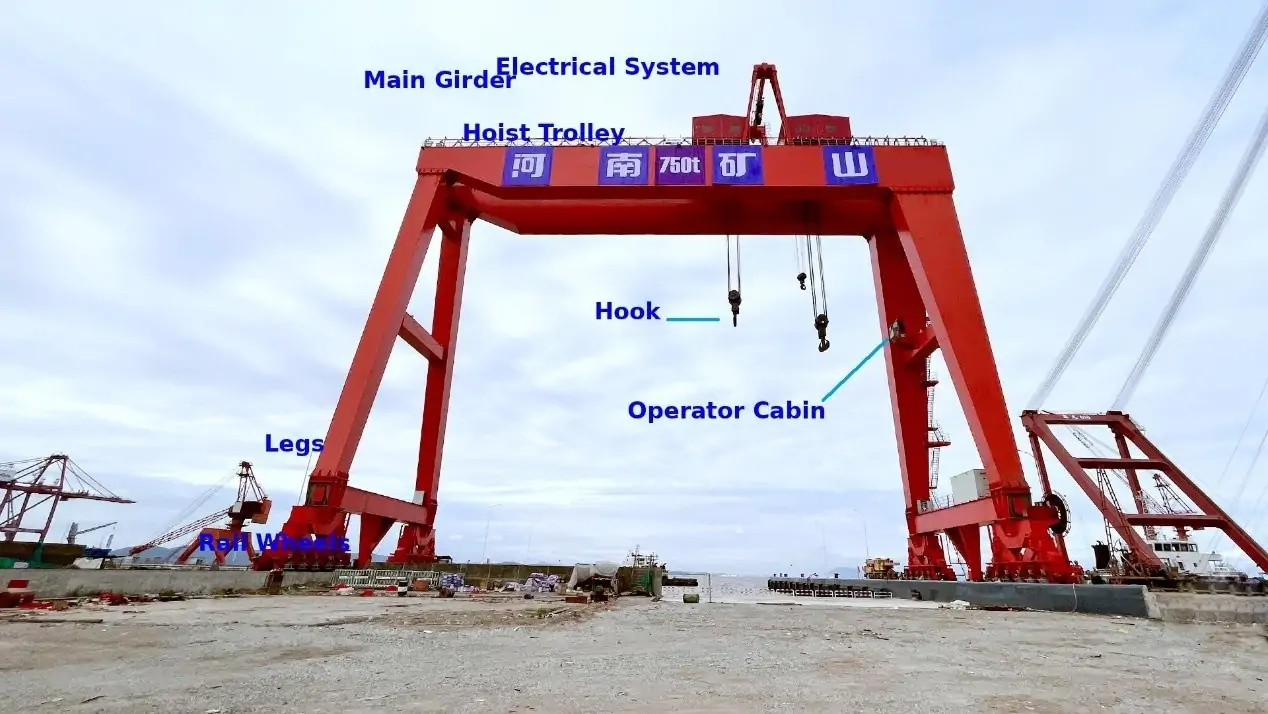
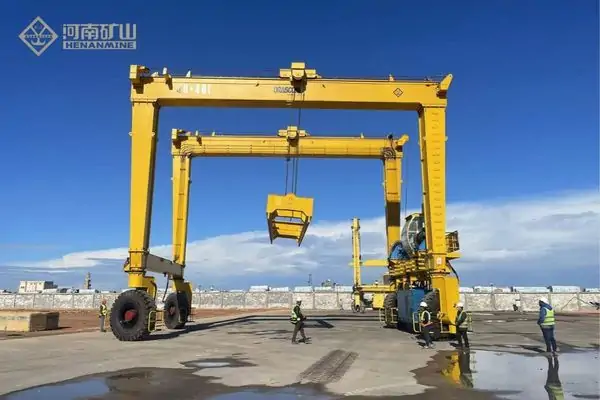
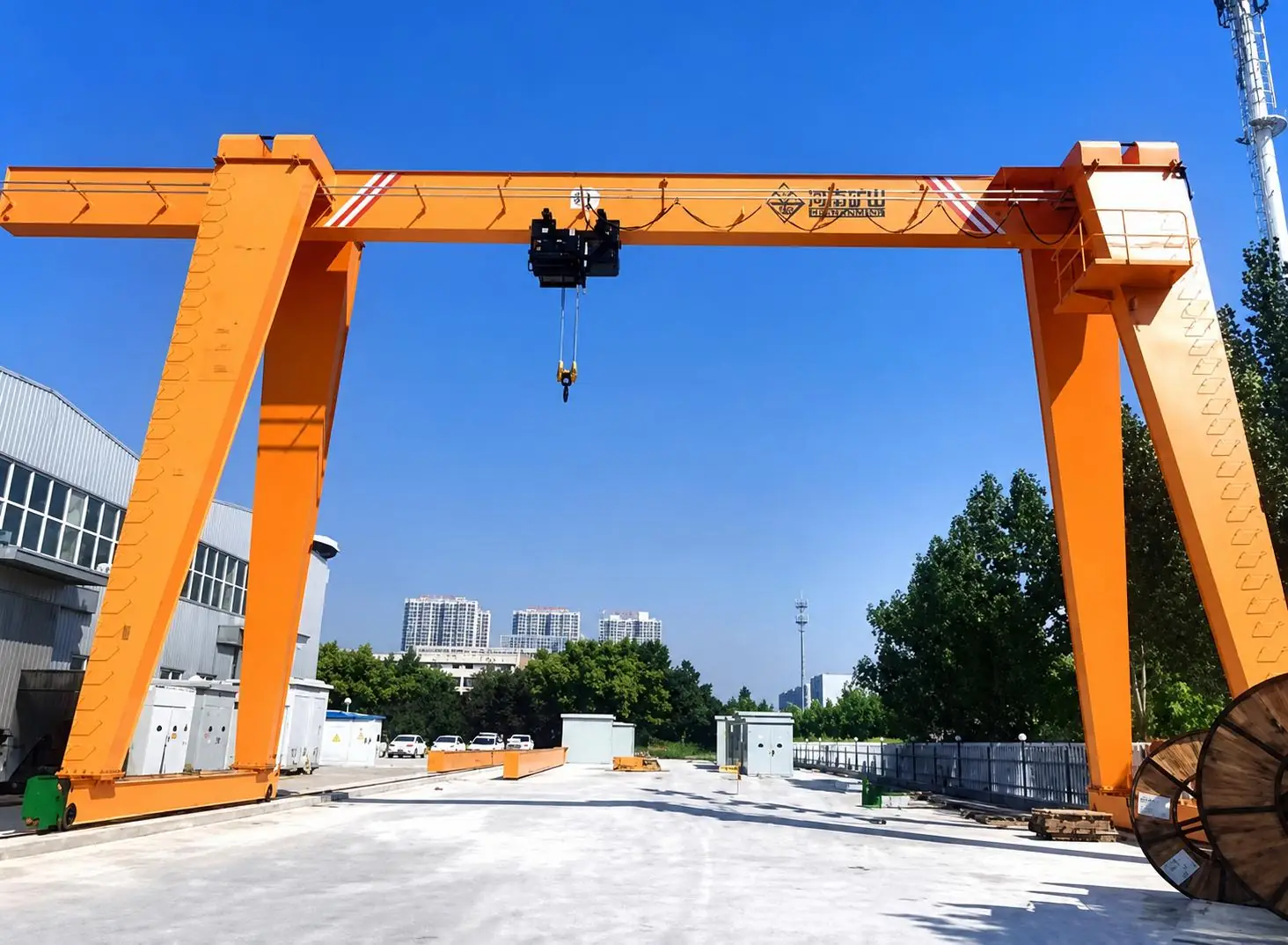
Secondly, the structure of bridge cranes and gantry cranes is significantly different.The bridge crane is installed on the steel structure track of the plant, and the structure is relatively streamlined.Gantry cranes require independent gantry support structures, the overall frame volume is larger, the amount of steel is more, and the production and processing standards of outdoor floor-standing designs are higher. The price of gantry cranes of the same tonnage is generally higher than that of bridge cranes.In addition, the top-up and bottom-up operating structures will also affect pricing.The operating mechanism of the top-mounted crane trolley is located above the main beam, with reasonable load-bearing layout, high structural strength, good operating stability, and higher requirements for the main beam technology.The bottom-mounted structure is streamlined, the process difficulty is low, and the cost is lower.Overall, the higher the structural strength, the more complex the process, and the stronger the stability of the crane, the higher the manufacturing investment, and the higher the terminal price.
Span and lifting height
Crane span and lifting height are the core shape parameters, and they are also price variables that can easily be ignored by purchasing personnel. The core logic is that under the same tonnage parameters, the larger the equipment size, the higher the manufacturing cost, which directly affects the positioning of industrial crane price.The span of the crane directly determines the design standard of the main beam and the amount of consumables.Under the same 20-ton rated load, the design of the main beam with an 18-meter span is completely different from that of the 30-meter span.The longer the span, the greater the bending moment and torque that the main beam needs to withstand. Thickened steel plates, optimized box-shaped structures, and reinforced ribs must be used to avoid the risk of deformation, shaking, and collapse in long-term operation, which will directly increase steel consumption and processing costs.
The lifting height determines the configuration specifications of the lifting mechanism such as the hoist, wire rope, pulley block, etc.The higher the lifting height, the longer the high-strength wire rope, the larger the rope capacity of the reel, and the more adaptable lifting drive components are required. At the same time, the stability and braking accuracy of the lifting system are higher.The configuration gap between the crane components of the Henan Mine Crane Factory supply crane with a lifting height of 6 meters and a lifting height of 12 meters is obvious, and the cost difference is intuitive.In addition, the on-site installation conditions of some factories are limited, and the main beam and support structure of the crane need to be reinforced and customized, or adapted to special track sizes, which will further increase the design and transformation costs.
Working duty and lifting frequency
The working level and lifting frequency are the core hidden factors that distinguish the cost performance and adaptability of cranes of the same tonnage, and they are also the core difference between professional procurement and ordinary inquiry. The vast majority of low-cost cranes of the same tonnage are low-profile models in light working conditions and cannot be adapted to high-frequency production scenarios.According to the international standards of FEM, ISO, and CMAA, the industry divides cranes into different working levels, and the core is divided into two types: light working conditions and heavy working conditions.Class A1-A3 cranes in light working conditions are suitable for occasional operations, single-day operations, and low lifting frequency scenarios, such as sporadic loading and unloading in warehouses, intermittent equipment maintenance, durability of accessories, low redundancy design of the whole machine, and low cost.The A4-A5 and above heavy-duty cranes are suitable for production line scenarios with multi-shift, all-weather, and high-frequency lifting operations. The equipment needs to have stronger anti-fatigue and anti-loss capabilities, and the core components are all customized with heavy loads. Configuration.
In simple terms, a 20-ton crane that lifts several times a day and operates intermittently, and a 20-ton crane that operates continuously on an assembly line, lifts dozens of times per hour, and runs in multiple shifts for 24 hours, are essentially not the same equipment.The former focuses on basic load-bearing, while the latter focuses on continuous stability and wear resistance. The fuselage structure, motor, brake, and transmission system have all been upgraded with heavy loads, and the manufacturing cost has been greatly increased. This is also the core hidden reason for the disparity in the price of equipment of the same tonnage. It is the main procurement point emphasized in the crane buying guide.
Hoist, trolley and drive system
The lifting mechanism, trolley operating mechanism and drive system are the core power core of the crane, and they are also the core details of the quotation difference. Under the same tonnage, the upgrade of the power configuration will directly open the price gap, which is the key verification module of crane cost comparison.The first is the difference in the configuration of lifting hoists. Different types of hoists have very different weight, load-bearing accuracy, and operating stability. Compared with ordinary civilian hoists, industrial-grade heavy-duty hoists have fully upgraded materials, craftsmanship, sealing, and durability, and the price gap is significant.At the same time, the customized adjustment of the lifting speed and the operating speed of the trolley will also affect the cost. High-frequency and high-speed operations need to adapt to high-precision motors and strengthen the gear transmission structure to avoid high-speed operation failures.
Secondly, the differences in the specifications of the three core transmission accessories, motor, gearbox and brake, are of vital importance.Ordinary low-profile equipment adopts standard universal accessories, which are suitable for low-speed and low-frequency operations.The high-end configuration adopts a special lifting motor, a hard gear gearbox, and an electromagnetic dual braking system, which has higher transmission efficiency, more accurate braking, and lower failure rate, and is suitable for long-term heavy-duty operation.In addition, the variable frequency drive (VFD) system is the core spread configuration.The basic low-profile crane adopts fixed-speed operation, with large start-stop impact, obvious shaking, and easy loss of equipment.Equipment equipped with VFD frequency conversion control system can achieve smooth start-stop and stepless speed regulation, reduce the impact of the fuselage and component wear, and greatly extend the service life of the equipment.The same 20-ton crane, with or without VFD system, the grade difference of drive accessories, can directly cause a price gap of thousands or even tens of thousands of yuan.
Steel structure and component quality
The steel material and the quality of the core accessories determine the service life, operation and maintenance cost and operating stability of the crane. It is also the core source of the difference in the price of different crane manufacturers. It is not that the expensive ones are good, but that different configurations are adapted to different use needs.At the steel structure level, high-quality manufacturers use national standard high-strength alloy steel materials with stronger toughness, load-bearing and deformation resistance. They strictly follow the national standard welding process and adopt automatic submerged arc welding and non-destructive flaw detection. The main beam has uniform welds, stable structure, and is not easy to deform and crack.The low-cost and low-configuration equipment uses ordinary carbon steel to simplify the welding process, without professional testing processes, and long-term heavy-duty operation is prone to deformation of the main beam and cracking of the welds.At the same time, high-end equipment adopts sandblasting and rust removal, multi-layer anticorrosive painting treatment, and its anti-rust and corrosion resistance far exceeds that of ordinary painting process equipment.
At the level of core accessories, the whole machine of regular major manufacturers is equipped with brand-specific motors, gearboxes, electrical components, and hoist components. The accessories have high accuracy, strong compatibility, low failure rate, long service life, long late maintenance cycles, and low replacement costs.Low-cost equipment mostly uses general-purpose miscellaneous brand accessories, with poor accuracy, fast loss, and frequent failures. It seems that the procurement cost is low, but in fact, the cost of late operation and maintenance, downtime and loss is extremely high.Buyers need to make it clear that the quality difference between steel and accessories corresponds to the all-round gap in equipment service life, failure probability, and operation and maintenance costs. They need to choose reasonably based on their own use cycle, rather than simply pursuing low prices.
Control system and automation level
The control system and degree of automation are the core manifestations of the intelligent upgrading of cranes, and they are also an important dimension to determine the price of equipment of the same tonnage. The higher the automation configuration, the more electrical components and the higher the technical cost, the higher the equipment price. Naturally.The basic configuration is handle operation control, which has a simple structure and low cost. It can only realize basic lifting and translation operations, and is suitable for simple low-frequency operation scenarios.The mid-range configuration is upgraded to wireless remote control, which gets rid of the shackles of cables, makes the operation more flexible, has a longer safe distance, and is suitable for complex operation scenarios.High-end models can be equipped with centralized control in the cab, which is suitable for large-scale heavy-duty, high-altitude and high-risk operations, with better operating vision and higher control accuracy.
At the level of intelligent automation configuration, VFD frequency conversion control and PLC programmable control system are the core upgrades, which can realize accurate speed regulation, intelligent start and stop of equipment, and operation data monitoring.At the same time, customized configurations such as anti-swing system, precise positioning system, and fully automatic intelligent lifting system can effectively avoid lifting shaking deviation, improve operating accuracy, and reduce manual operation errors.It is necessary to focus on reminding purchasing personnel that the upgrade of automated configuration will directly increase the initial procurement cost of equipment. If the enterprise only needs basic and simple operations, there is no need to blindly install high-end intelligent configuration to avoid cost waste caused by excessive procurement.For high-precision, high-frequency, and standardized production line operations, intelligent configuration can greatly improve operational efficiency, reduce safety risks, and have a higher long-term price ratio.
Working environment and special requirements
The operating environment and the special needs of customization are important special factors in the price differentiation of Henan Mine Crane Factory supply industrial cranes. Conventional standard equipment cannot be adapted to special working conditions. Customized transformation will directly increase the design, accessories, and process costs, covering all kinds of heavy-duty and special working conditions industrial lifting scenarios.Conventional indoor cranes at room temperature, dust-free and dry environments can meet the needs of use with standard configuration and the lowest cost.However, outdoor operating equipment needs to be adapted to changes in wind and rain, exposure, and temperature difference. Rainproof, sunscreen, and windproof devices must be installed, and the fuselage must be strengthened for weather resistance.In high-temperature, high-humidity, and dusty workshop scenarios, the motor, electrical box, and control components need to be sealed, dust-proof, moisture-proof, and high-temperature-resistant to improve the protection level of the equipment.
In the coastal salt spray and chemical corrosion environment, the crane needs to do a full set of anti-corrosion spraying and galvanized anti-corrosion treatment. The core accessories are made of special materials for corrosion resistance to avoid salt spray and chemical media from corroding the equipment structure and electrical system.In the operation scenarios of flammable and explosive workshops, mines, and chemical dangerous goods, explosion-proof cranes need to be customized, equipped with explosion-proof motors, explosion-proof electrical components, explosion-proof switches and other special accessories, and the whole machine meets explosion-proof safety standards. The manufacturing cost of such customized equipment is much higher than that of ordinary standard models.
Safety standards and certification
Safety standards and industry certifications seem to be differences in qualifications, but in fact they run through the whole process of crane design, production, testing, and delivery, directly increasing equipment manufacturing costs and compliance costs, which is the core reason why the price of regular brand cranes is higher than that of small workshop products.The production of formal industrial cranes strictly follows international general safety standards such as CE, ISO, FEM, and CMAA, and at the same time conforms to local safety regulations in various countries.Different safety standards have clear and hard requirements for the structural design redundancy of equipment, the configuration of safety accessories, load test standards, production technology, factory inspection, and data filing.
For example, high-standard compliance equipment must be equipped with a full set of safety accessories such as overload protection, limit protection, emergency braking, anti-collision device, and leakage protection. Multiple load tests and safety performance tests must be completed before leaving the factory, and a complete test report, compliance information, and certification documents must be issued at the same time.The low-cost non-standard equipment will simplify safety accessories, omit professional testing processes, and have no compliance certification information, which will significantly reduce production costs, but there are great safety risks.Therefore, the certification standard is not a simple endorsement of qualifications, but a manifestation of the whole process of production and testing costs. The safety, stability and compliance of high-priced equipment are far better than that of non-standard low-priced equipment.
What Is Usually Included in a Crane Quotation?
Many buyers are puzzled that the quotation gap between different manufacturers of the same tonnage crane is very wide. The core reason is not only the difference in configuration, but also the different scope of the quotation.Low-price quotations are often simple equipment quotations, and a large number of supporting projects are missing. Additional installation and construction are required in the later stage, and the final landing cost far exceeds expectations.In order to help buyers accurately check quotations and avoid invisible consumption, the following is a standard crane quotation checklist.
| Item | Included? |
| Main crane structure | ✓ |
| Hoist | ✓ |
| Trolley | ✓ |
| Electrical system | ✓ |
| Control system | ✓ |
| Safety devices | ? |
| Power supply system | ? |
| Installation | ? |
| Testing and commissioning | ? |
| Spare parts | ? |
| Transportation | ? |
| Warranty | ? |
It is clear from the quotation list that the infrastructure and core institutions are standard for all quotations, but most low-cost quotations for safety accessories, power supply systems, installation and commissioning, transportation, spare parts, and quality assurance services are not included.When purchasing and comparing, you can't just look at the unit price of bare metal. You must unify the scope of the quotation. This is the core basis of how to compare crane quotations.
How to Compare Crane Prices Correctly
Combining all the above price influencing factors and quotation rules, according to the commercial research and equipment selection needs of purchasing personnel, a set of standardized and landing crane price comparison procurement processes have been compiled to completely solve the misunderstanding of price comparison of equipment of the same tonnage, and accurately screen Henan Mine Crane Factory supply industrial cranes that are cost-effective and adapted to working conditions.
Step 1: Confirm the actual lifting requirements
Get rid of the misunderstanding that only the maximum tonnage is used as the selection standard, and accurately sort out the actual lifting requirements.Clarify the conventional lifting load and maximum limit load of the equipment, and distinguish between daily operating load and sudden heavy load requirements.Count the number of lifting times per day and hour, clarify the lifting frequency, distinguish between intermittent light working conditions and continuous heavy working conditions, and provide a basis for the selection of equipment working level, so as to avoid the problem of waste of high configuration and insufficient low configuration from the root cause.
Step 2: Confirm key dimensions
Accurately check the on-site installation size parameters and unify the price comparison standards.Focus on confirming the core dimensions such as the effective span of the crane, the maximum lifting height, the total length of the track operation, and the limit distance of the hook.All inquiry manufacturers must quote based on unified size parameters to avoid price errors caused by the deviation of span and lifting height, and to ensure the fairness and accuracy of price comparison.
Step 3: Define the working duty
Clarify the intensity of equipment operation and lock in the work level standards.Count the daily working time of the equipment, the number of working days per month, and the production shift, combined with the lifting frequency, to determine the FEM/ISO work level required by the equipment.Heavy-duty equipment must be selected for multi-shift high-frequency operations, and light-load models can be selected for low-frequency intermittent operations to control costs as needed.
Step 4: Define the working environment
Comprehensively sort out the on-site operating environment and confirm whether customized transformation is required.Distinguish between indoor or outdoor operation scenarios, verify the temperature, dust concentration, and humidity of the operating environment, confirm whether there are special working conditions such as corrosion, salt spray, flammable and explosive, and clarify customized requirements such as explosion-proof, anti-corrosion, dust-proof, and weather-resistant in advance, so that manufacturers can issue accurate quotations based on the actual environment to avoid price increases in later retrofits.
Step 5: Compare complete configurations
After completing the standardization of all parameters, carry out a full range of configuration price comparison, and refuse a single tonnage price comparison.Don't just compare bare metal quotations for cranes of the same tonnage, but comprehensively compare a full set of configuration and service plans, including all items such as rated tonnage, operating span, lifting height, working level, lifting mechanism, drive control system, safety configuration, installation and commissioning, transportation and quality assurance.Only when the parameters, configuration, services, and qualifications are completely unified can an accurate and effective crane cost comparison be achieved, and truly cost-effective lifting equipment can be selected.
Henan Mine Crane Factory Custom Custom
The price of a crane is never determined by a single tonnage.Even if the rated tonnage is exactly the same, the structure, operating span, lifting height, working level, core accessories, control system, and customized requirements for special working conditions will cause significant price differences.If purchasing personnel only compare tonnage quotations, it is easy to ignore hidden costs such as inefficient equipment, frequent failures, and shortened service life.If you want to accurately complete the crane cost comparison, the purchaser must comprehensively check the full set of technical parameters, the adaptability of actual working conditions and supporting services, so as to eliminate the one-sided misunderstanding of the price comparison of a single parameter.
As a professional industrial crane manufacturer, Henan Mine Crane Factory can provide standardized and customized lifting solutions according to the actual working conditions of customers, covering different working levels, operating spans, and lifting heights. At the same time, it supports explosion-proof, anti-corrosion and other special environmental customization, complete equipment qualifications, stable and reliable performance.We provide a full set of detailed and transparent quotations, including the structure of the whole machine, accessories, installation and commissioning, and quality assurance services, to eliminate the trap of low prices.If you need accurate crane quotation and professional procurement guidance, you can contact us at any time to obtain a highly adaptable and cost-effective exclusive solution.