
The Complete Guide to RTG Crane Specification & Application
Rubber Tyred Gantry Crane (RTG Crane) is the most mainstream specialized equipment in container yards around the world, which is widely used in seaport container yards, inland container yards, intermodal logistics parks and other scenarios. Most terminal operators, EPC contractors and equipment purchasers face the problem of selecting RTG Crane parameters when planning yard equipment.
Many procurement misunderstandings stem from focusing only on a single RTG crane capacity, ignoring span, lifting height, power supply mode, automation level and site suitability. A reasonable set of RTG crane specification must fully match the terminal throughput, yard layout, stacking density, operation cost and long-term expansion plan.
This article combines the practical experience of various overseas container terminals to systematically explain RTG crane application scenarios, core technical parameters, equipment classification, selection logic and full-cycle costs, and help overseas port projects accurately match the appropriate container yard crane equipment program.
What is RTG tire gantry crane?
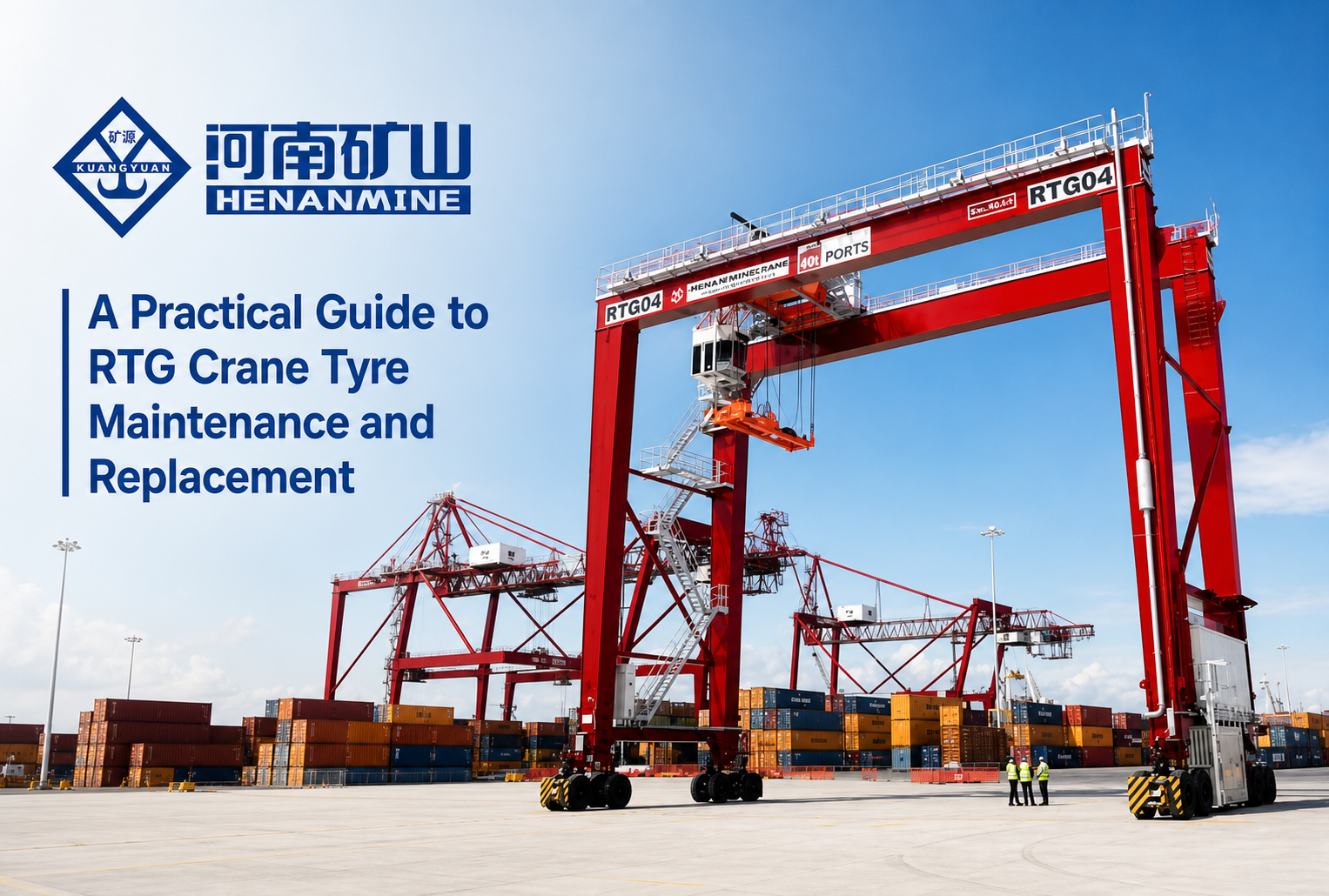
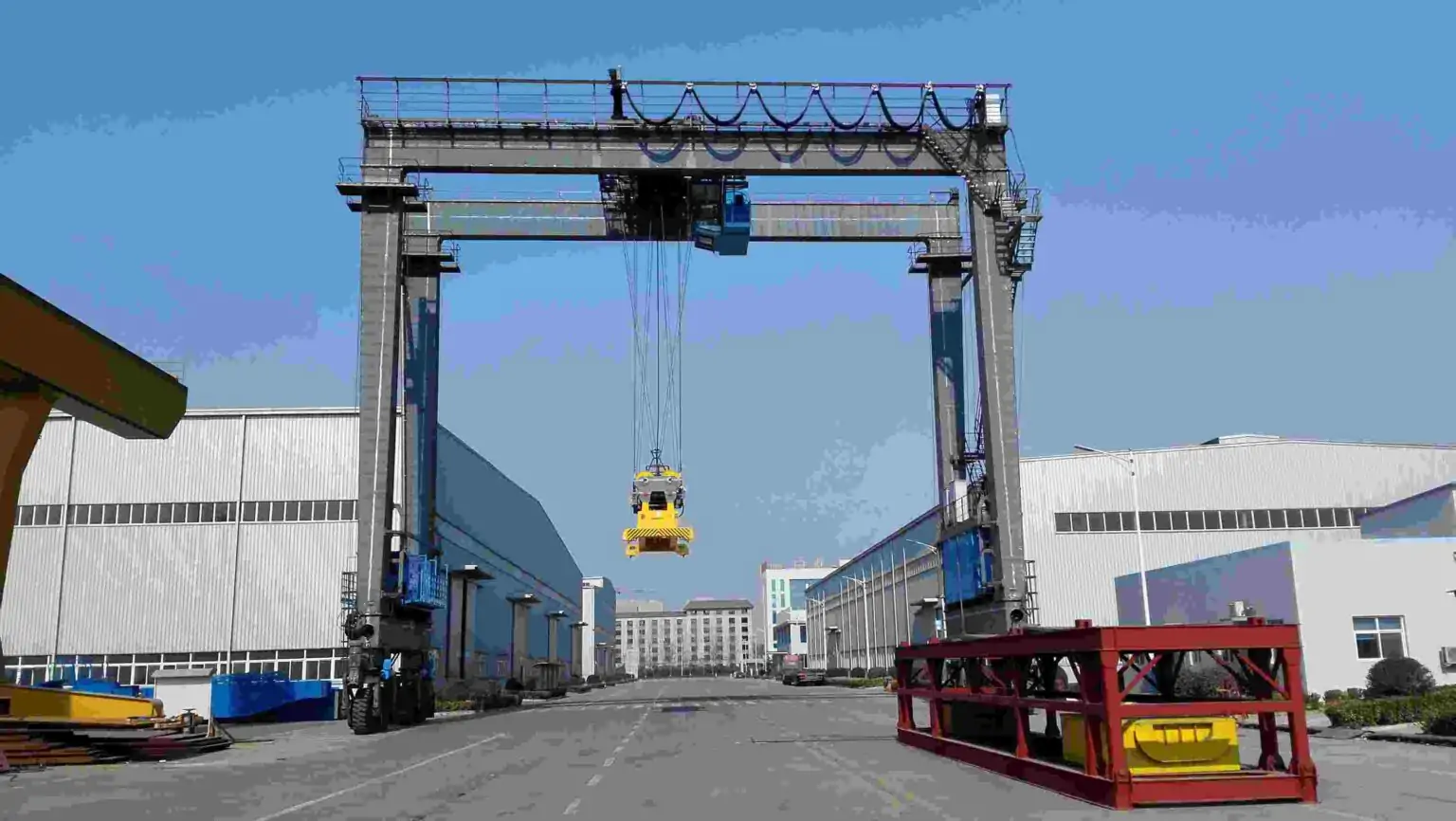
RTG Crane, known as Rubber Tire Gantry Crane, is a special yard equipment designed for container storage, transshipment, and container truck loading and unloading. Different from rail type gantry crane, rubber tyred gantry crane relies on rubber tires to travel, without the need of pre-buried fixed track foundation.
This structural feature makes RTG crane for container terminal has strong site flexibility, can be free across the area to change the block operation, suitable for yard layout adjustment and later expansion and transformation, is a small and medium-sized terminals and inland yards of the preferred equipment.
The core operating scenario of RTG Crane covers the whole process of container operation, and it can undertake the import and export containers transferred from the shore bridge, complete the work of stacking, sorting, and truck loading, etc. It perfectly connects with the STS shore bridge operation process, and improves the utilization rate of the whole terminal's yard.
Compared with fixed rail equipment, RTG equipment has lower infrastructure investment and faster deployment speed, which can be adapted to the stage of construction of the port project, and flexibly adapted to the needs of container turnover of different scales.
RTG crane mainstream application scenarios
Seaport container terminals are the most core application scenarios of RTG crane. In the specialized container port, RTG mainly with the STS shore bridge to complete the yard supporting operations, responsible for container reception, layered storage, box area sorting and container truck evacuation work.
Inland container yards, waterless ports and bonded logistics parks are also high-frequency use scenarios for RTG equipment. These sites have flexible layout and large fluctuation in throughput, and the trackless design of container yard crane can effectively enhance the storage density of the site and alleviate vehicle congestion.
Railroad intermodal transportation terminal is highly adaptable to RTG equipment. The equipment can complete the two-way transfer of containers between train cars, collector trucks and storage areas, meeting the flexible operational needs in intermodal transportation scenarios.
The customized RTG cranes can also be used in industrial bulky yards to lift heavy cargoes such as steel structures, wind power components, prefabricated beams, etc., breaking through the limitations of traditional container-specific equipment.
RTG Crane Core Selection Parameters (Essential for Overseas Procurement)
Terminal planning and equipment procurement, all RTG crane specification needs to be customized with the site conditions, the following are the most critical seven core parameters for overseas projects, which directly determines the equipment suitability and long-term operating results.
1. Rated lifting load
The rated load of RTG is not simply matched with the weight of the container, but also needs to be combined with the type of spreader, the need for double-box operation and the safety margin for a comprehensive calculation. Under the standard container operation scenario, the mainstream configuration is 40.5 tons under the spreader, which meets the conventional ISO container lifting demand.
For the terminal project of super-heavy containers and special non-standard boxes, RTG crane capacity customized model of 45 tons and above can be used to adapt to the special working conditions from the hardware level and avoid overloaded operation of the equipment.
2. Equipment span
RTG crane span determines the range of box area covered by the equipment in a single operation. The mainstream layout of the industry includes three specifications: 5 rows of containers + 1 lane, 6 rows of containers + 1 lane and 7 rows of containers + 1 lane, which can be customized according to the width of the yard.
Larger span can enhance the coverage area of the yard, but it will increase the self-weight of the equipment, tire load and turning space requirements, the site is narrow and small yards, blindly selecting a large span equipment will result in limited operations.
3. Lifting height and stacking layers
Lifting height directly determines the number of container stacking layers, common configuration for 1 stack 3, 1 stack 4, 1 stack 5, 1 stack 6. the higher the number of stacked layers, the higher the density of storage yard, the higher the land utilization rate.
Higher stacking has higher requirements on equipment anti-swaying, alignment accuracy and safety system, and high stacking configuration must be equipped with mature and stable control system to avoid problems such as box swaying and alignment deviation. 4.
4. Box adapted specifications
Standardized RTG spreader can be compatible with 20ft, 40ft, 45ft standard containers, and at the same time, it is suitable for the regular operation of reefer containers and general ISO containers. For terminals with special container operation requirements, special spreaders can be customized to suit non-standard working conditions.
5. Power supply mode
At present, the mainstream is divided into diesel RTG crane diesel type, hybrid RTG and electric RTG crane motor type (cable reel/slip line). Different power supply modes directly affect the preliminary infrastructure, later energy consumption and operation and maintenance costs.
6. Operation speed parameters
Including large traveling speed, small traveling speed, full load lifting speed, no load lifting speed. The speed parameter does not need to blindly pursue a high level, but needs to match the rhythm of the yard traffic, to avoid the safety hazards and equipment loss caused by too fast speed.
7. Tires and steering system
Tire specifications, steering mode determines the ability of equipment block change and site adaptability. Mainstream support straight, 90 ° steering, inclined mode, to adapt to different yard block changing operation needs, reduce tire wear and road pressure.
RTG Crane Core Specifications Comparison Table in English
| Specification Item | Standard RTG Crane Parameter |
| Rated Lifting Capacity | 40.5t / 45t (under spreader) |
| Common Span Layout | 5/6/7 container rows + 1 truck lane |
| Stacking Height | 1-over-3 / 1-over-4 / 1-over-5 / 1-over-6 |
| Applicable Container | 20ft / 40ft / 45ft / Reefer ISO container |
| Power Mode | Diesel / Hybrid / Electric (cable reel / busbar) |
| Gantry Travel Speed | 45–90 m/min |
| Trolley Travel Speed | 30–60 m/min |
| Hoisting Speed (Loaded) | 12–25 m/min |
Advantages and disadvantages of different power supply types of RTG Cranes
diesel RTG cranes do not require supporting grid infrastructure, relying on vehicle-mounted generator sets for power supply, flexible deployment, not subject to site power conditions. It is suitable for new temporary terminals, overseas ports with imperfect power facilities and phased operation projects.
The shortcomings of diesel RTG are high energy cost, high operating noise and high exhaust gas emission, and the overall operation and maintenance cost of large terminals with long-term high-frequency operation will continue to increase.
The electric RTG crane relies on external power to run, with lower energy cost, less noise and no exhaust emission, which is in line with the green port construction standard and suitable for large-scale specialized container terminals with long-term stable operation.
The electric RTG crane needs to lay power supply infrastructure in the early stage, the initial investment is higher, and the flexibility of the site is slightly lower than the diesel model, which is not suitable for frequent adjustment of the layout of the temporary yard.
Hybrid RTG is a compromise solution, combining the advantages of diesel and electric equipment, can effectively reduce fuel consumption, suitable for renovation and upgrading projects and working conditions fluctuations in the terminal, is a cost-effective choice for the upgrade of old yards.
RTG models according to automation level
Manual RTGs are operated manually by the driver's cab, with simple structure and convenient maintenance. They are suitable for small and medium-sized terminals, yards with moderate throughput and flexible operation modes, and are also the mainstream choice for overseas developing ports.
Semi-automatic RTG is equipped with anti-sway system, automatic alignment, stack area scanning and remote monitoring functions, which can reduce the error of manual operation and stabilize the operation rhythm, and is suitable for the capacity upgrading and transformation of medium and large-sized terminals.
Fully-automatic RTG can be docked with terminal TOS system to realize automatic stacking, OCR box recognition, anti-collision warning and remote unattended operation, which is suitable for smart ports with high throughput and overseas ports with high labor cost.
RTG crane vs RMG crane Selection Comparison
Many purchasers will confuse RTG vs RMG crane two types of yard equipment. RTG tire type design, no rail foundation, can be free to change the block, flexible adjustment of the layout of the yard, suitable for medium throughput, the need for continuous expansion of the terminal.
RMG rail type gantry crane fixed in the track path operation, alignment accuracy is higher, more suitable for full automation, suitable for the layout of fixed, ultra-high throughput of large standardized yard, but the site transformation flexibility is extremely poor.
RTG is preferred for projects that prioritize site flexibility, have limited budgets, and have undefined yard plans. hub terminals with fixed layouts, long-term automation upgrades, and ultra-high throughputs are more suitable for RMG equipment.
RTG configuration program for different types of terminals
Small container terminals are suitable for diesel or hybrid manual RTGs, which adopt conventional stacking height, low equipment investment, simple operation and maintenance, and are fully suitable for the daily operation requirements of small and medium throughput.
Medium-sized terminals can choose electric hybrid RTG, with anti-sway system and remote monitoring function, balancing the energy cost and operational stability, suitable for the steady expansion of the port development rhythm.
Large deep-water container terminals give priority to electric automated RTGs, docking TOS system to realize intelligent operation, reducing long-term energy consumption and labor costs, which is in line with the development trend of intelligent green ports.
Inland container yards focus on equipment flexibility and low infrastructure investment, and standard manual RTGs can be used, with emphasis on strengthening the tire system and anti-corrosion design to adapt to the changing working conditions inland.
Common Misconceptions in RTG Purchasing
Many purchasers only compare the lifting load and unit price of the equipment, ignoring the core parameters such as yard span, number of stacked layers, power supply adaptability, etc., which results in the equipment not being able to match the layout of the site after entering the yard, and the production capacity cannot reach the expectation.
Simply comparing the procurement price of diesel RTG and electric RTG, ignoring the long-term energy consumption, maintenance and emission compliance costs, it is easy to save money in the early stage, but high operation and maintenance costs in the later stage.
Neglecting coastal corrosion, high temperature, sand, strong wind and other working conditions, and failing to make targeted protection design, will significantly shorten the service life of the equipment and increase the probability of failure and downtime.
FAQ
What is the standard rated load of RTG Crane?
The industry's general standard is 40.5 tons under the spreader, and 45 tons and above can be customized for super-heavy container operations, which fully covers the global standard ISO container operation requirements.
How to choose between electric RTG and diesel RTG?
Large terminals with long-term stable operation, power infrastructure, and environmental compliance should choose electric RTG; terminals with imperfect power, temporary operation, and high requirements for site flexibility should choose diesel RTG.
What is the core difference between RTG and RMG?
RTG is tire-type, flexible and movable, low infrastructure; RMG is rail-type, high precision, suitable for automation, fixed layout, and the difference in suitable scenes is significant.
Conclusion
RTG rubber tyred gantry crane remains the most cost-effective and flexible container yard handling equipment for most global terminals. Proper RTG crane specification matching directly determines the terminal's performance. crane specification matching directly determines terminal throughput, yard density, operating cost and long-term expansion capability.
Henan Mine Crane provides customized diesel RTG crane, electric RTG crane, hybrid and automated RTG solutions for global container terminals and inland depots. We support full-set technical customization, anti-corrosion upgrade, installation guidance and after-sales service.
You can share your yard layout, stacking height, annual throughput and power conditions. Our engineering team will provide professional RTG crane selection and specification optimization proposals. Our engineering team will provide professional RTG crane selection and specification optimization proposals.