
How to Choose a Crane for Urban Rail Transit?
The construction of urban rail transit continued to expand, and projects such as new line construction, line reconstruction and station operation and maintenance were comprehensively promoted. As the core equipment for rail transit construction and operation and maintenance, crane selection is crucial. The rail crossing project has complex working conditions, strict construction accuracy, limited working space, insufficient adaptability of ordinary cranes, which is easy to cause problems such as potential safety hazards, time delay and cost overrun.
Crane selection accuracy directly determines the construction efficiency, safety quality and long-term economic benefits of rail crossing projects. Blind selection of low-cost general equipment is easy to cause frequent equipment failures, substandard hoisting accuracy, low utilization rate and other problems, greatly increasing the comprehensive operation and maintenance cost. The professional crane conforming to the exclusive working conditions of rail crossing can effectively reduce cost and increase efficiency, avoid risks, and provide core guarantee for high-quality landing and long-term operation of the project.
Understanding Crane Applications in Urban Rail Transit Projects
Construction applications
In the construction stage of urban rail transit engineering, Henan Mine Crane manufactured crane is the core main equipment of the whole process construction, covering the whole scene operation such as main construction, component installation, station construction, etc. Core hoisting tasks include accurate hoisting and positioning of precast concrete segments, large steel structural members, station main modules, track box girders, platform equipment and other heavy materials. Whether it is underground tunnel excavation supporting construction, subway station main body construction, elevated track bridge pavement, rail transit supporting infrastructure construction, cranes are responsible for key heavy load transfer and installation work.
Different from outdoor infrastructure projects, urban rail transit construction is mostly located in the core area of Urban area, with dense surrounding buildings, complex traffic flow and greatly reduced construction space. This requires the construction crane not only to meet the heavy lifting capacity, but also to have good site adaptability, to be able to operate stably in a narrow and low-regularity construction area, to ensure that all kinds of large components are in place quickly, accurately and safely, and to support the overall construction progress steadily.
Maintenance applications
After the rail transit project is completed and opened to traffic, the normal operation and maintenance is the core work to ensure the safe and stable operation of the line, and the crane is also indispensable in the operation and maintenance scenario. In daily maintenance operations, the crane is mainly responsible for the disassembly, transfer and installation of track heavy components, power supply catenary equipment, signal equipment and maintenance tools, covering various operation and maintenance scenarios such as track replacement, equipment maintenance, fault repair and component upgrading.
Most of the operation and maintenance operations of urban rail transit are time-limited construction that does not affect the normal operation, mostly concentrated in the night window period, with tight operation time, high standard and low fault tolerance rate. The special maintenance crane has the advantages of flexible mobility, stable start-stop and accurate positioning. It can quickly complete equipment disassembly, component replacement and fault disposal, efficiently cooperate with daily inspection, regular overhaul and emergency repair, minimize the downtime of operation and maintenance, and ensure the all-weather stable operation of rail transit lines.
Site requirements
Urban rail transit operation scenarios are divided into three core types: underground tunnel, elevated track and depot/maintenance workshop. The operation environment of different scenarios is very different, which directly determines the selection standard and performance requirements of cranes. The underground tunnel operation space is closed, the floor height is limited, the ventilation conditions are limited, the light is insufficient, and the surrounding pipelines are dense and the construction passage is narrow. Henan Mine Crane manufactured crane has extremely high requirements on the shape, operation flexibility, explosion-proof performance and accuracy. It is necessary to adapt to the operation in a narrow confined space to avoid equipment collision, component deviation and other problems.
Elevated track operation is in the high-altitude open-air environment, greatly affected by wind, rain, snow, temperature difference and other weather conditions, and the operation area is suspended without shelter, which has strict requirements on wind resistance, operation stability and safety protection performance of cranes. The depot and maintenance workshop are indoor fixed operation scenarios, with regular site and stable space, mainly focusing on continuous operation capability of equipment, precise controllability and span and lifting height parameters suitable for workshop layout. Environmental differences under different working conditions are the basic conditions that must be given priority in crane selection, which directly determines whether the equipment can adapt to the site and stabilize the operation.
Key Factors to Consider When Choosing a Crane for Urban Rail Transit
Load capacity
Rated load is the core basic parameter of rail transit crane selection, which directly determines whether the equipment can complete the core lifting task. Before type selection, it is necessary to comprehensively count the dead weight, fixture weight, additional load and other data of all lifting components of the project, accurately calculate the maximum lifting demand, and eliminate the misunderstanding of type selection based on experience. For ultra-heavy components such as subway segments, bridge steel structures, station heavy equipment, etc., it is necessary to match cranes with corresponding heavy load levels to ensure sufficient lifting bearing capacity.
At the same time, the construction standard of rail transit engineering is strict, sufficient safety margin must be reserved, and the general safety factor of the industry shall not be less than 1.2 times, so as to prevent full-load and overload operation. In addition, the type selection shall take into account the full-cycle requirements of the project, not only adapt to the current construction load, but also consider the potential heavy load requirements of later transformation, equipment replacement and operation and maintenance overhaul, so as to avoid insufficient performance and repeated procurement of equipment in a short period of time and reduce the comprehensive investment of the project.
Working conditions
The core characteristics of urban rail transit construction are complex working conditions and limited site, which are also the key to distinguish them from ordinary lifting operations. The construction site in Urban area is generally narrow and low in regularity. The surrounding area is close to residential areas, municipal roads and existing buildings. The working space is severely squeezed, and large conventional cranes cannot enter or operate. At the same time, high-density Urban area construction has strict control requirements on equipment noise, dust and operation scope, and equipment shall be adapted to fine construction standards.
Underground operation has the problems of height limit, width limit and poor airtight ventilation. Compact, lightweight and low-noise special lifting equipment shall be selected to avoid equipment size exceeding the standard and unable to adapt to tunnel and station foundation pit space. High altitude work needs to cope with strong wind, high altitude temperature difference, rain and snow weather interference, equipment needs to have excellent environmental adaptability and anti-interference ability. All type selection work must be based on the actual working conditions on site to ensure that the equipment can be successfully mobilized, stable operation and compliant construction.
Lifting precision
Rail transit engineering requires extremely high installation accuracy of components. Small deviations in rail splicing, steel structure docking and equipment installation may affect the overall engineering quality and later operation safety. Therefore, the hoisting accuracy of cranes is the core assessment index. Compared with the extensive hoisting of ordinary infrastructure, the installation of rail transit components requires millimeter positioning accuracy to ensure accurate alignment of prefabricated components, rail equipment and power supply devices and conform to engineering construction specifications.
Load swing, fuselage shaking and operation deviation in hoisting process will lead to component positioning deviation, rework, component damage and time delay. The high-quality rail transit crane is equipped with stable transmission system and control system, which can effectively suppress load swing, realize stable start and stop, precise fine adjustment, greatly improve the qualified rate of component installation, and ensure the construction accuracy and construction quality of the project.
Safety features
Urban rail transit construction personnel are dense, equipment is expensive, and working conditions are complex. Once a lifting safety accident occurs, it will cause serious casualties, property losses and time delays. Therefore, the safety protection function of equipment is the hard core index of type selection. Qualified rail transit cranes must be equipped with multiple safety protection devices, of which overload protection and emergency braking system are the basic configurations, which can stop quickly when the load exceeds the standard, abnormal operation and sudden failure, so as to eliminate overload operation and sudden accidents.
Modern high-end rail transit cranes are also equipped with intelligent monitoring system, anti-collision warning system, wind speed monitoring system and attitude sensing system, which can monitor the operation status of equipment, operating environment parameters and surrounding obstacles in real time. The system can predict risks in advance, actively warn and automatically limit, comprehensively avoid potential safety hazards caused by human operation errors, environmental interference and equipment failures, realize safe and controllable operation flow, and adapt to the construction requirements of high safety standards of rail transit.
Selecting the Right Crane Type for Urban Rail Transit Applications
Overhead cranes
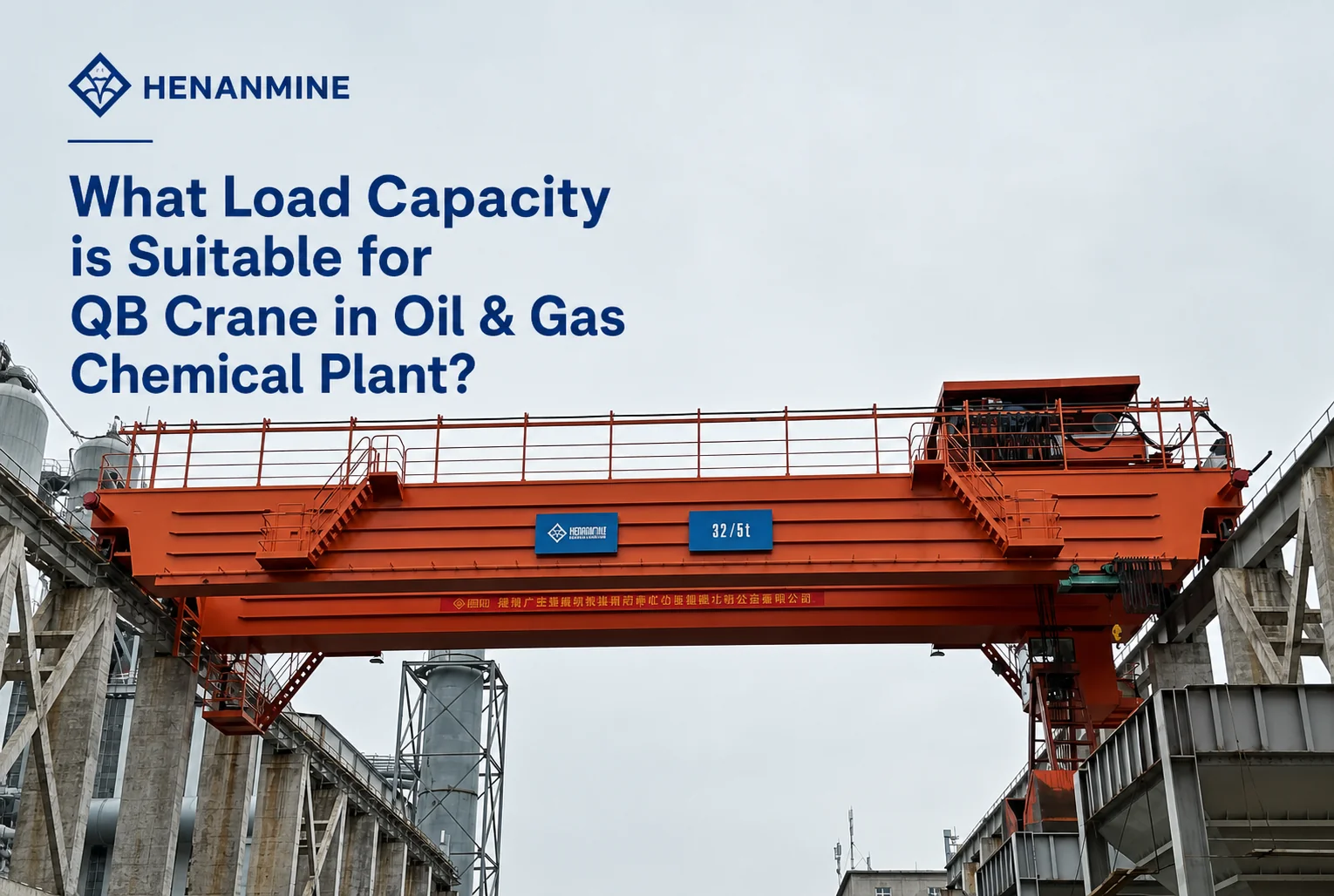
Henan Mine Crane manufactured bridge crane is the core special equipment of urban rail transit depot, maintenance workshop and equipment storage workshop, focusing on indoor standardization, high precision and high frequency operation scenarios. This kind of crane runs on the fixed track of the workshop, with regular operation scope, stable operation, accurate positioning and low failure rate, which is perfectly suitable for the normal operation of equipment maintenance, locomotive maintenance, component storage and parts transfer in the rail transit workshop.
Compared with other models, bridge crane indoor operation stability is very strong, no outdoor environmental interference, can achieve high-frequency, long-term continuous operation, can accurately complete locomotive parts disassembly, heavy equipment alignment, precision parts transfer and other high-precision work. At the same time, the equipment has low operation noise, convenient operation and simple maintenance, and is suitable for the closed operation environment of the workshop. It is an indispensable core lifting equipment in the rail transit operation and maintenance system.
Gantry cranes
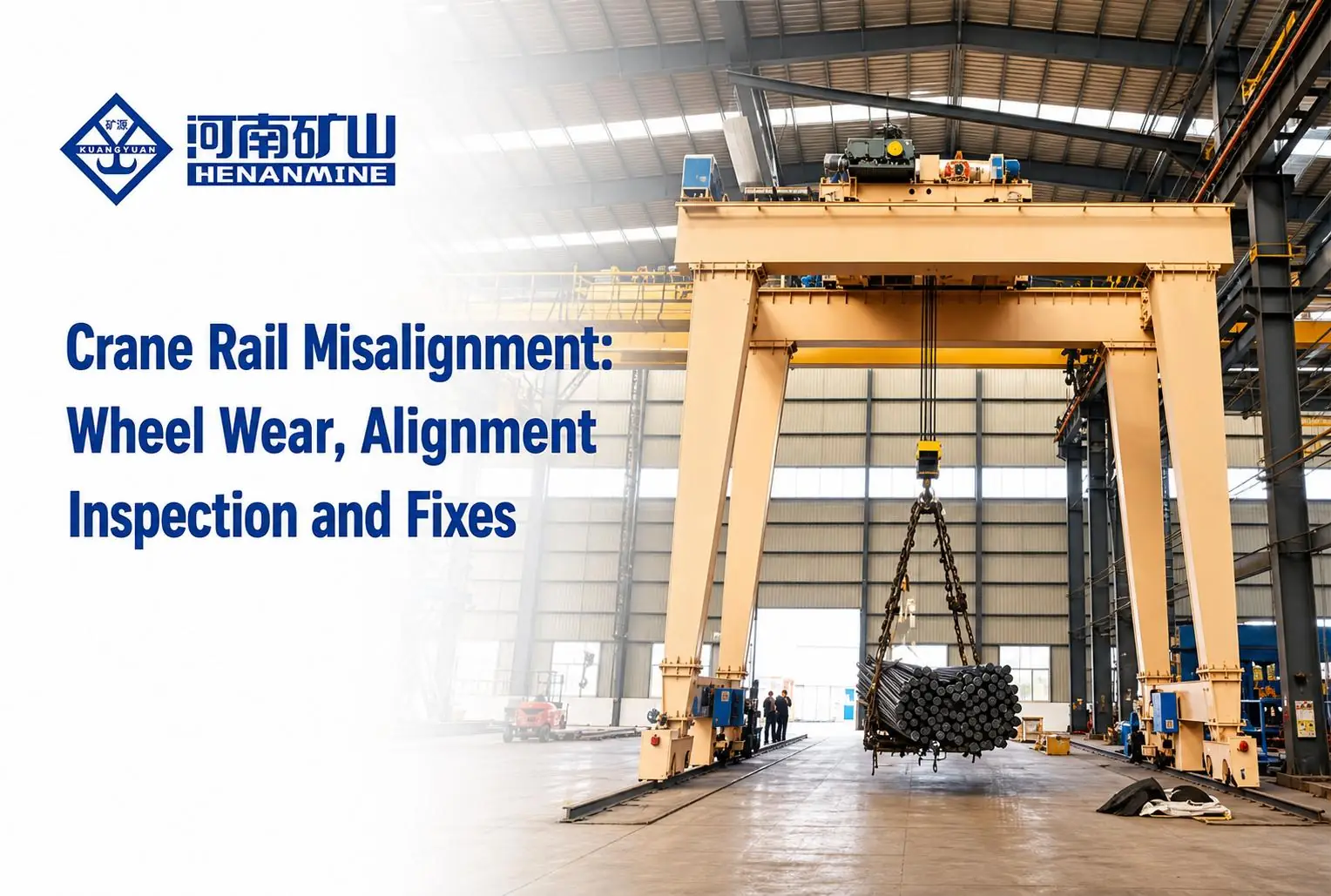
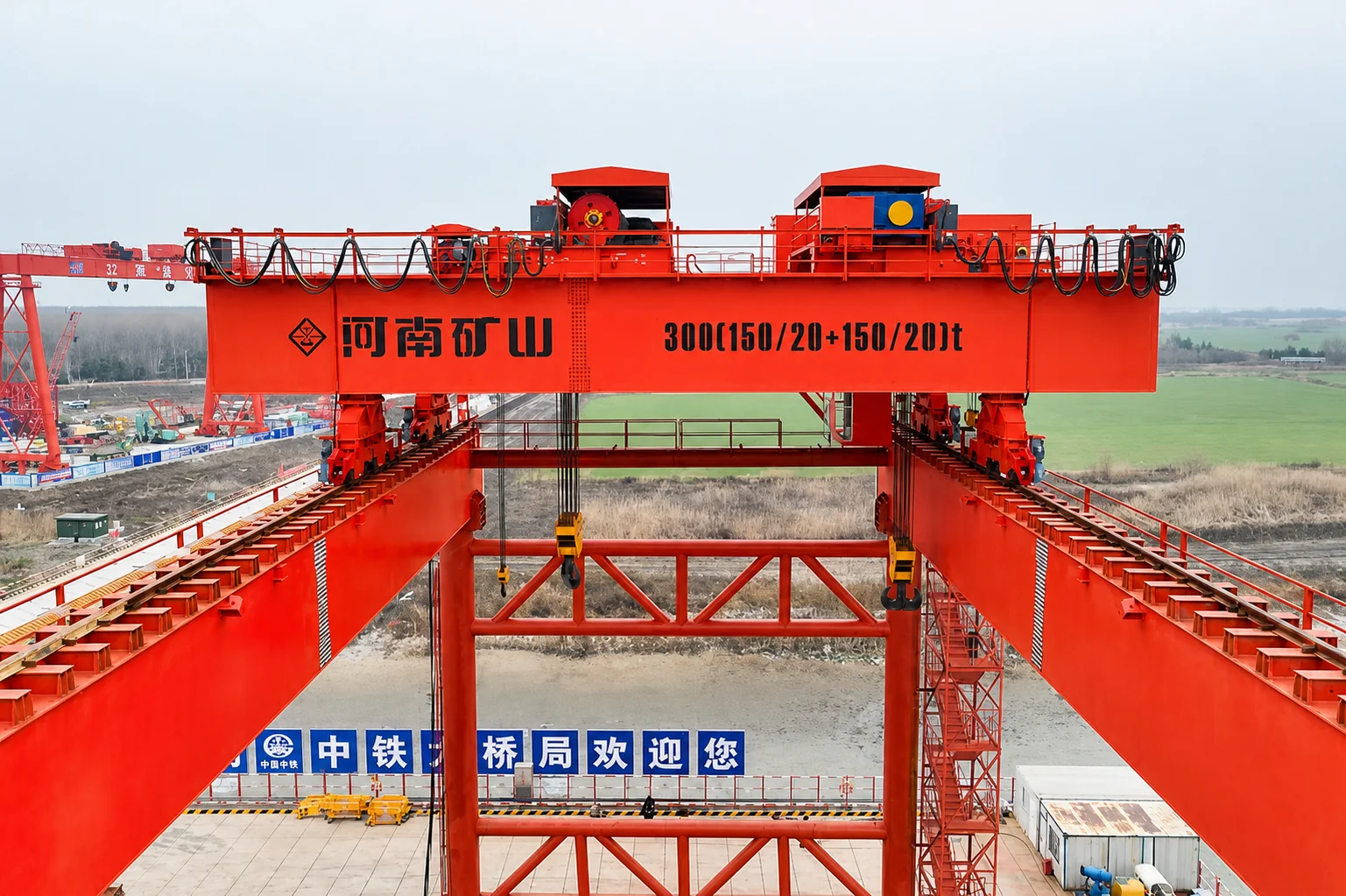
Henan Mine Crane manufactured gantry crane is widely used in rail transit outdoor construction site, prefabricated component storage yard, tunnel wellhead operation area, is the main type of civil construction stage. The equipment does not need to rely on the factory building structure, the ground track can support the whole machine operation, the site adaptability is very strong, and it can flexibly cover large outdoor operation areas such as station foundation pit, track construction site, component prefabricated yard, etc.
Gantry crane has excellent heavy load performance, which can adapt to the hoisting, transfer and stacking of heavy components such as concrete segments, large steel structures and track box girders, and can meet the requirements of high strength, heavy load and wide range of operations in the civil construction stage of rail transit. The equipment has stable structure, strong wind resistance and high operation efficiency, which can adapt to outdoor complex weather conditions, greatly improve the transfer and installation efficiency of components on the construction site, and ensure the advancement of civil construction period.
Portal cranes
Henan Mine Crane manufactured portal crane is mainly used in heavy load and large-scale operation scenarios of large-scale rail transit infrastructure projects, and is suitable for large-scale engineering projects such as elevated rail construction, large-scale station construction, rail transit hub infrastructure construction, etc. This model has the core advantages of super high lifting height, super large working radius and heavy load stability, and can complete the lifting operation of super heavy steel structure, large bridge component and integral station module.
In the open large-scale construction site, the portal crane can realize 360° large-range rotary operation, with wide operation coverage area, strong lifting capacity and stable operation, which can adapt to the overall hoisting construction of large-scale infrastructure of rail transit, effectively solve the problems of low hoisting efficiency and poor splicing accuracy of large-scale components, and greatly improve the construction efficiency and overall construction quality of large-scale infrastructure projects.
Rail maintenance cranes
Rail maintenance crane is a customized special equipment for rail transit. It is specially designed for rail inspection, fault repair, daily maintenance and line reconstruction scenarios. It has the core characteristics of flexibility, rapid deployment and adaptation to rail driving. Different from traditional lifting equipment, this model can travel directly on the operation track without additional construction of the operation foundation, and can quickly reach the fault point and operation area.
The equipment is small in size, flexible in operation, stable in start-up and shutdown, perfectly suitable for short-term maintenance window at night, and can efficiently complete refined operations such as track component replacement, catenary equipment maintenance, faulty component removal and installation, line cleaning, etc. At the same time, the equipment has strong adaptability, which can take into account the maintenance requirements of subway, urban rail transit, light rail and other rail transit lines. It is the core special equipment to ensure the normal and safe operation of the line.
How to Select Crane Specifications for Different Rail Transit Projects
Lifting capacity
Lifting tonnage matching is the primary core of rail transit crane selection, and the core principle is "accurate adaptation, sufficient allowance, and elimination of waste". Before type selection, it is necessary to comprehensively sort out the lifting requirements of the whole process of the project, calculate the maximum single component weight, tooling weight and additional operation load, and determine the rated lifting tonnage in combination with the safety factor of more than 1.2 times. For heavy load scenarios such as tunnel segments and bridge steel structures, large tonnage portal cranes and portal cranes are selected. For maintenance and light component transfer scenarios, small and medium-sized tonnage special maintenance cranes and overhead cranes can be selected.
It is necessary to strictly avoid two major mistakes in type selection: one is that the tonnage is too small, the equipment is operated at full load and overload for a long time, the failure is frequent, and the safety hazard is extremely large, which cannot meet the continuous operation demand. Second, tonnage surplus, equipment procurement costs, operation and maintenance costs increased significantly, equipment utilization rate is low, resulting in waste of funds and resources. Precisely matching load requirements is key to balancing project safety, efficiency and cost.
Span and lifting height
Crane span and lifting height directly determine the scope of equipment operation coverage, which should strictly conform to the actual space parameters of construction site, station and workshop. For underground tunnel and foundation pit construction scenarios, compact equipment with small span and low lifting height shall be selected according to tunnel height, foundation pit depth and operation width, so as to avoid equipment size exceeding the standard and unable to enter the site for operation. For elevated construction and outdoor prefabricated yard scenarios, large-span and high-lift models shall be matched to cover a large range of operation areas and meet the hoisting requirements of high-altitude components.
For indoor scenarios such as depot and maintenance workshop, the span and lifting height shall be determined in combination with workshop column spacing, workshop floor height and equipment layout, so as to ensure that there is no dead angle in operation, cover all maintenance stations, and avoid space waste caused by equipment size redundancy. At the same time, construction allowance shall be reserved to meet the operation requirements of site reconstruction and equipment upgrading in the later stage, so as to ensure the long-term adaptability of equipment.
Working duty class
The working level represents the operation frequency, continuous operation ability and durability of the crane, which directly determines the service life and adaptation scenario of the equipment. It is a key parameter that is easily ignored in the selection of rail transit. Rail transit projects are divided into two scenarios: high-frequency continuous operation and low-frequency intermittent operation: 24-hour shift operation of equipment in civil construction stage, extremely high frequency and large load fluctuation, so it is necessary to select high-level crane to adapt to high-intensity continuous operation to avoid fatigue damage of equipment.
Maintenance workshop and daily maintenance scenarios are intermittent operations with low operation frequency and stable load. Equipment suitable for medium and low working levels can be selected to balance cost and use demand. Accurate matching of working level can effectively improve equipment durability, reduce long-term loss, reduce failure probability, prolong overall service life of equipment, and avoid problems such as premature aging and frequent maintenance caused by insufficient working level.
Control system
At present, rail transit cranes are mainly divided into manual control, wireless remote control, intelligent automatic control three types of control mode, adapt to different operation scenarios and precision requirements. Manual operation is suitable for simple, low frequency, large margin extensive lifting operation, flexible operation, low cost, suitable for ordinary material transfer. Wireless remote control distance, easy to operate, allows operators to stay away from high-risk areas, adapt to high-altitude, underground, narrow dangerous conditions, greatly improve the safety of operations.
Intelligent control system is the first choice for high-end rail transit projects. It is equipped with precise positioning, automatic anti-swing, intelligent speed regulation, one-button alignment and other functions, which can realize high-precision and automatic lifting operation, perfectly adapt to high-standard scenarios such as precision equipment installation and accurate alignment of large-scale components. The control system shall be reasonably matched according to the construction accuracy, safety level and operation efficiency requirements of the project, taking into account the convenience of operation, operation safety and construction accuracy.
Advanced Features That Improve Urban Rail Transit Crane Performance
Smart monitoring
Intelligent monitoring system is the core upgrade configuration of modern rail transit crane, and it is also the key to realize long-term safe operation of equipment. The system can collect equipment operation data in real time 24 hours a day, covering core parameters such as lifting load, running speed, equipment attitude, motor temperature, fault code, operating environment wind speed, etc., realizing visual tracking of the whole process of equipment status.
Relying on big data monitoring and algorithm analysis, the system can realize predictive maintenance, predict potential faults such as wear and tear of equipment parts, aging of lines and performance attenuation in advance, push maintenance reminders in advance, and completely change the passive mode of traditional "maintenance after failure". Effectively reduce unplanned downtime, improve equipment attendance, reduce construction delay and safety risks caused by sudden failures, and adapt to the stringent requirements of continuous construction and normal operation and maintenance of rail transit.
Anti-sway technology
Anti-swing technology is the core function to solve the problem of high-precision lifting of rail transit. In the process of narrow urban working conditions, aerial operation and start-stop speed change, the hoisting components are easy to swing, which not only affects the positioning accuracy, but also collides with the surrounding structures and causes safety accidents, which is a common pain point in rail transit construction.
Henan Mine Crane manufactured crane equipped with intelligent anti-swing system can suppress load swing in real time through dynamic algorithm, automatically offset the swing deviation caused by start and stop, speed change and wind force, and control the swing amplitude of components in a very small range. Greatly improve component installation and positioning accuracy, reduce alignment adjustment time, avoid component collision damage and construction rework problems, effectively improve hoisting stability and operation efficiency under complex working conditions, and meet rail transit precision construction standards.
Automated operation
Automatic intelligent operation is the development trend of rail transit lifting equipment, which is specially built for complex, high-risk, high-precision and high-frequency operation scenarios. The equipment is equipped with intelligent control system, precise positioning system and remote control module, which can realize automatic operation functions such as remote control, automatic alignment, intelligent speed regulation, fixed-point start-stop, etc. without manual close operation.
In complex scenarios such as underground confined space, high-altitude high-risk area and unattended maintenance at night, automatic operation mode can completely avoid safety risks of manual operation and solve problems such as insufficient manual operation precision, fatigue operation and limited vision. At the same time, the automatic operation process is standardized and the efficiency is stable, which can greatly shorten the operation time, improve the standardization degree of construction, and meet the development requirements of intelligent construction and intelligent operation and maintenance of modern rail transit.
Common Mistakes When Selecting Cranes for Urban Rail Transit Projects
Choosing by price only
Most rail transit project selection errors are price-only theory, one-sided pursuit of low-cost procurement, ignoring equipment adaptability, performance quality and safety standards. Low-cost cranes mostly use inferior accessories, simplify the process, and delete safety configurations, which seems to reduce the initial purchase cost, but there are many problems such as poor performance, poor stability, lack of safety protection, and high failure rate.
From the perspective of the whole life cycle cost of the project, the operation and maintenance cost, maintenance frequency and failure shutdown loss of low-cost non-standard equipment are much higher than those of high-quality equipment. Frequent equipment failures will lead to delay in construction period, construction rework and safety accidents, which will not only greatly increase the comprehensive operation cost, but also affect the project acceptance and project reputation, and ultimately lose more than gain. Rail transit projects belong to high-standard and high-safety projects, and procurement costs must not be reduced at the expense of performance and safety.
Ignoring long-term service
Many purchasers only pay attention to the current performance parameters of the equipment when selecting models, ignoring the manufacturer's long-term after-sales and accessory support capabilities, which is a key misunderstanding affecting the long-term use of the equipment. The service life of rail transit cranes is as long as 10-20 years. Long-term high-frequency operation requires continuous after-sales support such as parts replacement, equipment maintenance, technical upgrading and fault repair.
If the manufacturer has no perfect after-sales system, no sufficient spare parts reserve, no professional technical team, no timely maintenance when the equipment fails in the later stage, and the spare parts procurement cycle is long, it will lead to long-term downtime of the equipment and seriously affect the construction and operation progress. At the same time, lack of technical support can not meet the needs of later project transformation and equipment upgrading, greatly shortening the service life of equipment and reducing the return on investment of equipment.
Using standard solutions
The working conditions of urban rail transit projects are very different. The construction space, load demand, operation environment and operation and maintenance standards of different cities, different lines and different stations are different. It is difficult for general standardized cranes to accurately adapt to all scenarios. If standard equipment scheme is directly applied, problems such as inconsistent equipment size, insufficient performance redundancy, lack of function and poor adaptability are easy to occur.
For example, the subway construction site in Laocheng District is narrow and strict, and standard large-tonnage equipment cannot enter the site. Special tunnel and elevated conditions require customized anti-swing, explosion-proof and wind-resistant configurations. Rail transit projects need customized solutions based on site conditions. Through targeted structural optimization, function installation and parameter adjustment, the equipment can fully meet the specific needs of the project and maximize the performance and value of the equipment.
How to Choose a Reliable Crane Manufacturer for Urban Rail Transit
Project experience
Rail transit lifting equipment is highly professional, and the industry project experience of the manufacturer is the primary consideration standard for selection cooperation. High-quality manufacturers shall have rich landing experience in similar projects such as subway, elevated rail transit, rail transit maintenance station, etc., and be familiar with rail transit construction standards, working condition pain points, acceptance specifications and safety requirements.
Before cooperation, it is necessary to focus on verifying the manufacturers 'past rail transit project cases, project landing scale and equipment operation reputation, and give priority to professional manufacturers who have served large-scale rail transit infrastructure projects and long-term deep cultivation in rail transit fields. Mature project experience can ensure that manufacturers can quickly and accurately match equipment solutions, avoid working condition adaptation loopholes, ensure that equipment fully conforms to industry standards and project requirements, and reduce selection risks from the source.
Engineering capability
Strong engineering R & D and customized manufacturing capabilities are the core competitiveness of high-quality rail transit crane manufacturers. The differentiated working conditions of rail transit projects determine that general equipment cannot meet the needs of high-end projects, and manufacturers must have the engineering capabilities of independent research and development, personalized customization, structure optimization and function upgrading.
Professional manufacturers can optimize equipment span, lifting height, safety configuration and intelligent system according to project site space size, load demand, environmental characteristics and precision standards, and provide exclusive customized lifting solutions. At the same time, it has perfect production technology and quality inspection system, and is manufactured in strict accordance with rail transit industry standards to ensure the stability, safety and durability of equipment and meet the long-term high-intensity operation requirements.
After-sales service
Perfect life cycle after-sales service is the core guarantee for stable operation of equipment, and it is also the key index for screening partners. High-quality rail transit crane manufacturers need to provide one-stop full-process services, including preliminary working condition survey, scheme customization, equipment production, on-site installation, commissioning and acceptance, operator training, lifetime maintenance, parts supply, technical upgrading and other complete services.
At the same time, it is necessary to have a fast-response after-sales team, which can realize rapid troubleshooting, on-site repair and regular inspection, so as to minimize the downtime of equipment. Sufficient original parts reserve, long-term technical support and localized service capability can ensure long-term stable operation of equipment, reduce operation and maintenance costs in the later period, and protect the full-cycle construction and operation and maintenance of rail transit projects.
Henan Mine Crane Factory Custom
Crane selection is the core and key work of urban rail transit project construction and operation, which directly determines the construction safety, operation efficiency, project quality and long-term economic benefit of the project. Rail transit operating conditions are complex, standards are strict, fault tolerance rate is low, so the selection work cannot be based on experience, blindly following the trend or simply comparing prices. It is necessary to comprehensively combine multiple factors such as project application scenarios, site operating conditions, load requirements, precision standards, long-term use planning, etc., scientifically screen equipment types, accurately match equipment parameters, and optimize intelligent safety configuration.
The customized Henan Mine Crane Factory crane can effectively solve the industry pain points of limited construction space, insufficient precision, high safety risk and high operation and maintenance cost of urban rail transit, assist rail transit projects to realize safe construction, efficient promotion and long-term operation and maintenance, and lay a solid foundation for high-quality construction and stable operation of urban rail transit infrastructure.