
What Safety Systems Are Essential for Quayside Container Cranes
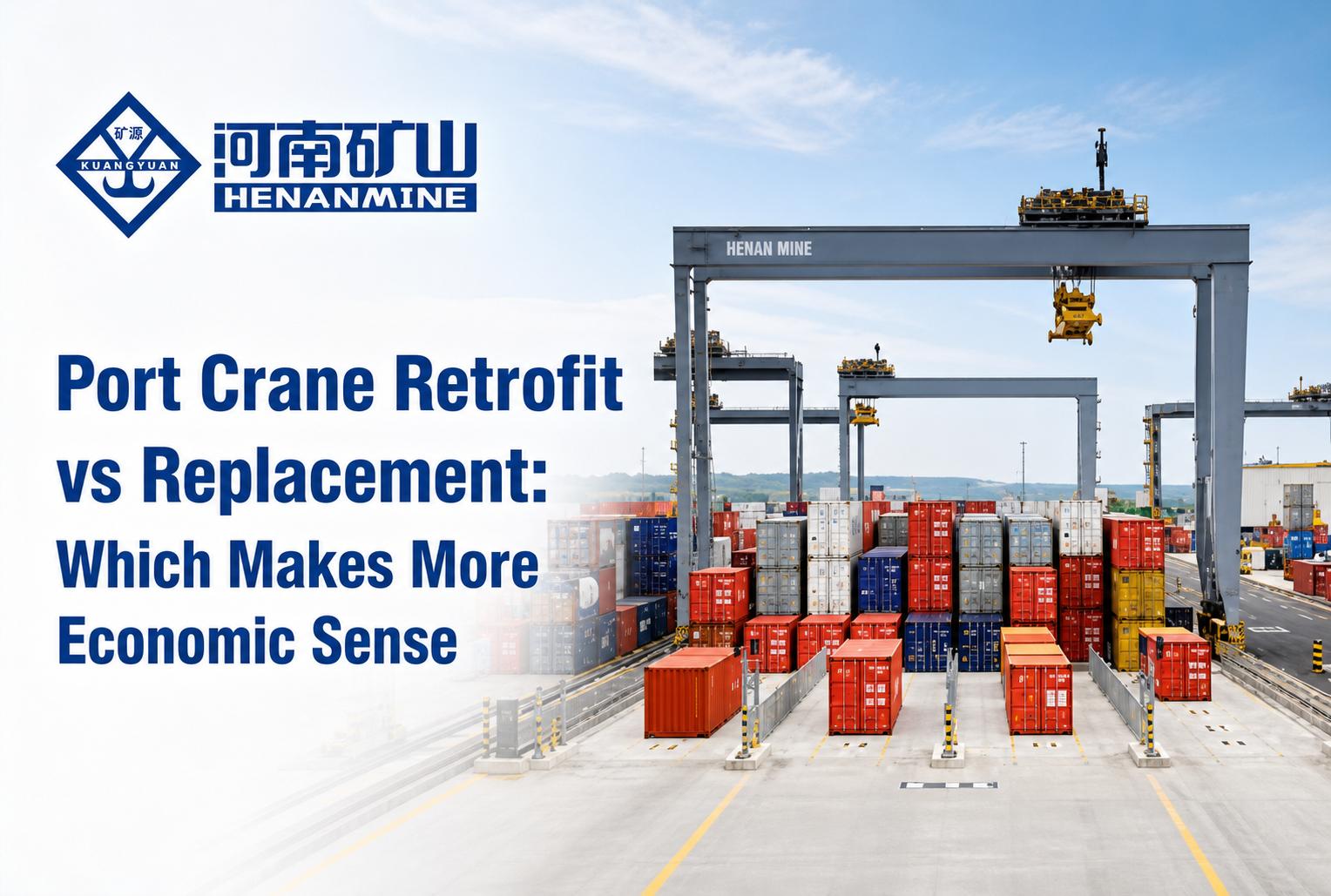
Quayside container cranes,also known as ship-to-shore (STS) cranes,are the backbone of global container logistics. Every hour one of these machines sits idle is an hour of lost throughput for a terminal, and every incident involving one carries the potential for catastrophic injury, multi-million-dollar equipment loss, and weeks of downtime. As vessels have grown from Panamax to Ultra Large Container Ships carrying over 24,000 TEU, quayside cranes have grown with them: taller, longer in outreach, faster in cycle time, and increasingly automated.
That growth has raised the operational stakes. Higher lifting speeds, longer booms, greater exposure to wind, and closer integration with automated guided vehicles and remote-operation systems all multiply the number of things that can go wrong. This is why quayside container crane safety systems are no longer an optional add-on, they are a core specification decision that determines whether a terminal can operate safely, meet international compliance requirements, and protect its multi-million-dollar capital investment over a 25- to 30-year service life.
This guide breaks down every major safety system found on modern STS cranes, the international standards that govern them, and what terminal operators and procurement teams should evaluate before buying, upgrading, or auditing a crane fleet. Whether you're specifying a new crane, retrofitting an aging fleet, or building an internal safety audit checklist, the goal is the same: understand not just which devices exist, but how they work together as a single, layered safety architecture rather than a collection of unrelated features.
Why Safety Systems Are Critical for Quayside Container Cranes
The High-Risk Environment of Container Ports
Container terminals are among the most demanding industrial environments in the world for lifting equipment. Quayside cranes routinely operate 24 hours a day, seven days a week, in a workspace shared by trucks, straddle carriers, AGVs, lashing crews, and pedestrian workers, often just meters from a moving crane structure.
Several factors compound the risk:
- Heavy lifting operations:single lifts of 40–80 tons under the spreader, and up to 120+ tons in twin-lift configurations
- High-speed trolley movement: trolleys travel the length of the boom at several meters per second to maximize crane productivity
- Continuous 24/7 operation: constant duty cycles accelerate wear on brakes, ropes, and structural components
- Personnel and vehicle interaction: ground crews, lashing gangs, and vehicle traffic operate directly beneath and around the crane's working envelope
Unlike a fixed factory crane operating in a controlled environment, a quayside crane's "workspace" changes with every vessel call: different ship geometries, different stack heights, different weather, and different crews. Henan Mine Crane manufactured STS crane that safely worked a Panamax vessel in calm conditions the previous week may face a ULCS with a completely different cell-guide layout and gusting coastal winds the next. This constantly shifting operating picture is precisely why safety systems on quayside cranes must be automated and sensor-driven rather than relying purely on operator judgment, no operator, however experienced, can track dozens of shifting variables across a 24-hour shift without technological support.
The scale of the equipment itself adds another layer of risk. Henan Mine Crane manufactured modern STS crane can stand well over 100 meters tall with an outreach of 40 to 80 meters, meaning the operator's cabin is frequently positioned tens of meters horizontally and vertically from the actual point of container placement. That physical separation between the person making decisions and the point where those decisions take effect is a fundamental safety challenge that every system on this list is, in some way, designed to close.
Common Hazards on Quayside Container Cranes
Understanding what can go wrong is the starting point for specifying the right safety systems. The most frequently documented hazard categories include:
- Container collisions:with the ship's cell guides, hatch covers, or adjacent stacks
- Crane-to-crane collisions:when multiple cranes work the same vessel in tandem
- Overloading:from misjudged container weights, twin-lift errors, or snagged loads
- High wind conditions:the single largest cause of catastrophic quayside crane loss globally
- Mechanical failures:brake, rope, or gearbox faults from fatigue and salt-air corrosion
- Human error:misjudged clearances, procedural shortcuts, and fatigue-related mistakes
- Electrical faults:short circuits, arc flash events, and grounding failures in the crane's high-voltage systems
Each of these hazard categories has a distinct root cause and requires a distinct engineering response, which is exactly why a single "safety feature" is never sufficient on its own, and why the systems described throughout this guide are designed to work as a coordinated set rather than independently.
Benefits of Comprehensive Safety Systems
A well-specified safety architecture pays for itself well beyond accident prevention. Terminals that invest in comprehensive, integrated safety systems typically see:
- Improved operational reliability:fewer unplanned stoppages caused by near-miss incidents or safety-triggered shutdowns
- Lower maintenance costs:early fault detection prevents small issues from becoming major structural or mechanical repairs
- Reduced accident rates:fewer lost-time injuries and equipment damage claims
- Better regulatory compliance:easier certification and insurance renewal under ISO, EN, and OSHA frameworks
- Increased terminal productivity:automated safety interlocks reduce the conservative, "better safe than sorry" slowdowns operators apply when they don't trust the equipment
Insurance and risk-management data from the marine cargo and port equipment sector consistently identifies wind damage as the single largest weather-related cost category for quayside cranes, and structural or tie-down failures, not routine mechanical wear , as the leading cause of total crane losses. That single data point underscores why comprehensive safety system coverage isn't a marginal improvement; it directly determines whether a multi-million-dollar asset survives its full design life or becomes a total loss during one severe weather event.
Essential Safety Systems Every Quayside Container Crane Should Have
Henan Mine Crane Factory supply modern STS crane is not protected by a single safety feature, it relies on a layered architecture of independent systems, each covering a different failure mode. Below are the systems considered essential on any quayside container crane specified today.
Anti-Collision System
Anti-collision protection is arguably the most safety-critical system on a quayside crane, given how close cranes, ships, and trolleys operate to one another. A modern anti-collision system typically includes:
- Crane-to-crane collision prevention:sensors that detect the position of adjacent cranes on the same rail and automatically slow or stop travel before contact
- Trolley collision avoidance:preventing the trolley from over-traveling into end stops or other equipment on the boom
- Ship structure protection:preventing the boom or spreader from striking the vessel's cell guides, hatch coamings, or superstructure
- Automatic slowdown and stopping:graduated deceleration zones rather than a single hard stop, which reduces mechanical shock loading
- Laser, radar, LiDAR, and sensor technology:the detection layer that feeds real-time distance data into the crane's control system
These systems are particularly important in automated and semi-automated terminals, where multiple cranes may be commanded by a central scheduling system rather than individually supervised by an operator in each cab.
Overload Protection System
Overloading is one of the most direct threats to both personnel safety and structural integrity. Overload protection systems combine several layers of monitoring:
- Real-time load monitoring:continuous measurement of the load on the hoist via load cells or strain gauges
- Safe working load limits:hard-coded thresholds tied to the crane's rated capacity
- Automatic lifting lockout:hoisting motion is disabled the moment a load exceeds the permitted threshold, typically around 110% of rated capacity
- Load moment protection:accounting for both load weight and outreach position, since the moment (not just the weight) determines structural stress
- Protection against structural damage:preventing cumulative fatigue damage to the boom, girder, and rope system from repeated overload events
Because container weights are frequently misdeclared or estimated, overload protection is one of the systems most likely to be triggered in daily operation, making its calibration and reliability essential.
Wind Monitoring and Storm Protection
Industry loss data consistently identifies wind as the single biggest cause of catastrophic quayside crane damage, more so than mechanical failure, overload, or collision combined. Insurer analyses of storm-related crane losses have repeatedly found that failure originates not in the main structure, but in the tie-down and stowage-pin systems meant to secure the crane when out of service. A complete wind protection package includes:
- Anemometers:real-time wind speed sensors mounted on the crane structure, feeding continuous data to the operator and control system
- Automatic wind alarms:audible and visual alerts when wind speeds approach operational limits (commonly around 20 m/s for normal lifting operations)
- Storm parking mode:a predefined, manufacturer-specified position for the trolley, boom, and structure when the crane is taken out of service ahead of severe weather
- Rail clamps:mechanical or hydraulic devices that grip the crane rail to prevent uncontrolled travel in high winds
- Tie-down systems:chains, slings, or turnbuckles connecting the crane's four corners to anchor points embedded in the quay pavement
- Anchoring devices:stowage pins and supplementary anchors designed to hold the crane stationary against extreme, storm-force wind loads
Because most quayside cranes are designed to a specific design wind speed with a defined recurrence interval, terminals in typhoon-, hurricane-, or cyclone-prone regions should periodically reassess whether current and forecast wind conditions still fall within the original design assumptions, particularly after any crane modification such as leg raising or boom extension.
Emergency Stop (E-Stop) System
The emergency stop system is the crane's last line of defense when any other safety system fails to prevent an unsafe condition. A properly specified E-stop architecture includes:
- Multiple emergency stop buttons:positioned at every operator and maintenance access point
- Remote emergency shutdown:allowing ground personnel or terminal control room staff to halt the crane without needing cab access
- Operator cabin controls:a primary E-stop within immediate reach of the operator's seat
- Ground-level emergency controls:accessible to lashing crews and maintenance staff working beneath the crane
- Restart procedures:a controlled, deliberate re-energization sequence that prevents accidental restart before the hazard is cleared
Limit Switch Protection
Limit switches are electromechanical or electronic devices that prevent crane components from traveling beyond their designed range of motion. On a quayside crane, this includes:
- Hoist upper/lower limits:preventing the spreader from over-hoisting into the boom structure or over-lowering into the ship's hold
- Trolley travel limits:stopping the trolley before it reaches the end of the boom or backreach rail
- Gantry travel limits:preventing the entire crane from traveling beyond the end of the quay rail
- Boom luffing limits:controlling the raising and lowering of the boom during stow and deploy sequences
- Preventing over-travel accidents:the cumulative function of all limit switches working together to keep every motion axis within its safe envelope
Rope Monitoring System
The hoisting wire rope is a critical, high-wear component subject to constant load cycling, and its failure can be catastrophic. Rope monitoring systems typically provide:
- Wire rope wear detection:visual or electromagnetic inspection technology that identifies surface wear, corrosion, and diameter reduction
- Rope tension monitoring:real-time measurement to detect abnormal loading or slack conditions
- Broken wire alarms:automatic alerts when individual strand breaks are detected, well before the rope reaches a critical failure threshold
- Remaining service life prediction:data-driven estimates of rope replacement intervals based on cumulative load-cycle history
Electrical Safety Protection
Henan Mine Crane Factory supply quayside cranes run on high-voltage shore power and contain extensive electrical control systems, making electrical protection a distinct safety category:
- Ground fault protection:detecting current leakage to prevent shock hazards
- Short-circuit protection:automatic circuit interruption to prevent equipment damage and fire
- Surge protection:safeguarding sensitive control electronics from voltage spikes, including lightning-induced surges
- Arc flash prevention:engineering controls and PPE requirements to protect maintenance personnel working on energized systems
- Power failure protection:ensuring the crane fails to a safe state (brakes engaged, no uncontrolled movement) during a power loss
- Backup power systems:supporting safety-critical functions such as lighting, communication, and controlled shutdown during outages
Operator Visibility and Monitoring Systems
Given the scale of a quayside crane and the operator's distance from the load, sometimes 40 meters or more below the cabin, visibility systems are essential for safe container placement and hazard awareness:
- HD cameras:providing views of the spreader, hatch covers, and landing zones that are not visible from the cab
- Blind spot monitoring:covering areas around the trolley, boom, and gantry legs where ground personnel may be present
- 360° surveillance:a complete situational awareness picture around the crane's base and rail corridor
- AI-assisted obstacle detection:automatically flagging personnel or vehicles that enter restricted zones
Fire Detection and Suppression System
With extensive electrical cabinets, motors, and hydraulic systems onboard, fire risk is a serious consideration for quayside cranes:
- Electrical cabinet protection:dedicated detection and suppression within control rooms and switchgear enclosures
- Engine room / machinery house fire detection:covering drive motors, transformers, and hydraulic power units
- Automatic suppression systems:clean-agent or gas-based systems that activate without risking further electrical damage
- Smoke detection:early warning before flame is visible
- Heat sensors:supplementary detection for areas where smoke may dissipate quickly due to wind exposure
Safe Access Systems
Beyond the crane's operational safety systems, personnel access and fall protection are fundamental to overall crane safety:
- Anti-slip walkways:treaded surfaces on machinery platforms and boom walkways, particularly important given constant marine spray and rain exposure
- Safety handrails:along all elevated walkways, ladders, and platforms
- Maintenance platforms:providing safe, stable access to the boom, trolley, and machinery house for inspection and repair
- Emergency escape routes:clearly marked paths and secondary means of egress from the cabin and machinery house
- Fall protection systems:anchor points and harness systems for work at height, particularly on the boom and headblock
These access-related systems are easy to overlook when the conversation focuses on high-tech collision avoidance and predictive analytics, but they account for a meaningful share of recorded port equipment injuries. A crane can have flawless anti-collision and overload protection and still expose maintenance staff to unnecessary fall or slip risk if walkway and access design is treated as an afterthought.
The Real Cost of Inadequate Safety Systems
Before moving into the technology itself, it's worth quantifying why this matters commercially, not just operationally. A single crane collapse or major structural failure typically results in:
- Total or near-total loss of the crane:quayside cranes routinely cost several million dollars each, and structural failures are rarely economical to repair
- Extended berth downtime:a lost crane at a busy terminal can mean weeks or months of reduced throughput while replacement or major repair is arranged
- Collateral damage:falling structures, swinging booms, and uncontrolled crane travel frequently damage adjacent cranes, vessels, and quay infrastructure
- Regulatory and insurance consequences:incidents involving inadequate or poorly maintained safety systems can affect insurability and invite regulatory scrutiny of the entire fleet
Engineering investigations into historical crane collapses have repeatedly found that the initiating failure was not the crane's primary structure, which is typically over-engineered relative to normal operating loads, but rather secondary systems such as tie-downs, stowage pins, or wheel brakes that were undersized, poorly maintained, or simply not deployed in time. This is a critical insight for procurement and maintenance teams: the systems most likely to determine whether a crane survives a major event are often the ones that receive the least day-to-day attention, precisely because they are rarely used.
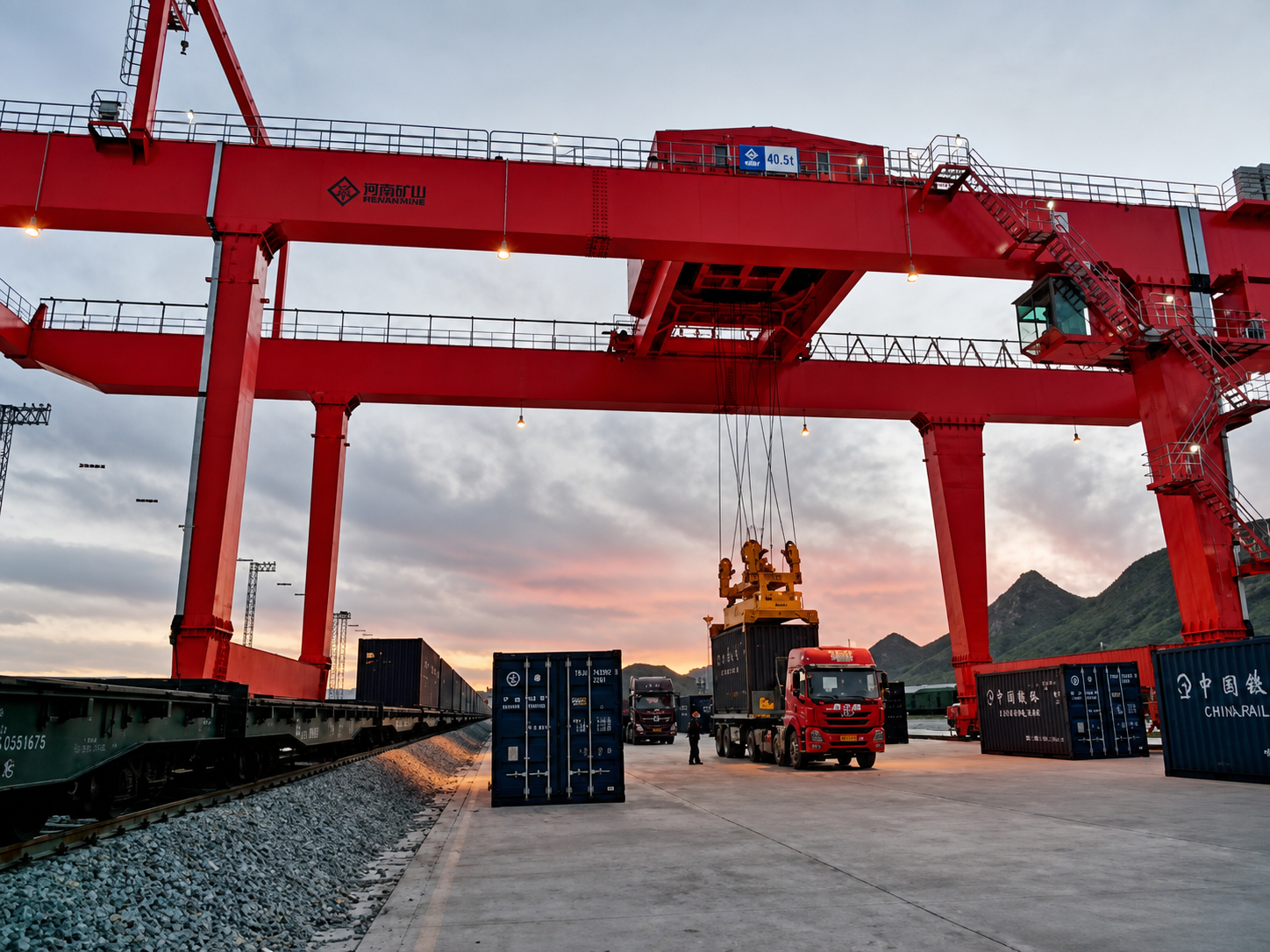
Smart Safety Technologies in Modern Automated Container Terminals
As terminals move toward semi-automated and fully automated operations, safety technology has evolved beyond mechanical and electromechanical devices into intelligent, data-driven systems.
AI collision avoidance takes the concept of distance sensors a step further; it incorporates machine learning based on data gleaned from terminal trajectories in order to avoid collision before it becomes imminent, rather than reacting to a set threshold.
An engineered digital twin monitor generates a real-time virtual representation of the machine’s structural and mechanical health, which engineers can then utilize to simulate stress conditions and discover anomalies without having to check each individual element on-site.
Predictive maintenance relies on monitoring the trends of sensors – vibration, temperature, current draw, detecting a developing problem so that failure can be anticipated, rather than scheduled.
The individual data points from hundreds of sensors located throughout the crane are combined into a centralized system that cross-references the readings, possibly revealing a problem before it occurs.
Remote monitoring of cranes enables engineering and safety teams (including maintenance support from the manufacturer) to investigate crane health details from another location, allowing faster diagnosis and less downtime.
Real-time health diagnostics provide a quick-up picture of the health status of each of the major subsystems, as opposed to requiring periodic human visual inspection.
Auto-fault Messages, enable the automatic notification of out of range readings to the responsible maintenance or safety engineer without the need to wait until the next scheduled inspection.
These smart technologies by themselves are not to suggest replacing the mechanical and electrical safety systems mentioned earlier; rather they provide an additional layer of prediction that can identify degradation before the safety event occurs.
International Safety Standards for Quayside Container Cranes
Adherence to recognized engineering standards isn’t simply a regulatory checkbox it’s the rule by which a crane’s safety systems are engineered, tested, and maintained to a common, reliable standard.
ISO Standards for Container Cranes
The classification of cranes by duty cycle and load spectrum as defined by ISO 4301 translates directly into design margins for structural parts, brakes and ropes. This classification allows two cranes of equal lifting capacity to operate with quite different safety margins depending on the load spectrum used an important consideration, for example, for high throughput, around the clock terminals versus lower velocity feeder ports.
FEM Design Rules
The FEM 1.001 rules (Fédération Européenne de la Manutention) provide detailed design guidance for hoisting appliances and remain widely referenced in Henan Mine Crane Factory supply STS crane structural engineering, even where regional standards have since evolved. Many quayside cranes still in service today were originally designed under FEM guidance, which is why understanding this legacy framework remains relevant for fleet audits and modification projects.
IEC Electrical Safety Standards
The electrical control system, motor drives and protection devices fitted on every quayside crane are governed by IEC standards, providing an equal level of safety performance between manufacturers and areas. This is crucial for terminals running mixed-vehicle manufacturers, where electrical safety behavior is always consistent between various quayside type and manufacturers, reducing maintenance and driver training effort.
EN Standards for Crane Safety
The design requirements for crane equipment listed on EN 13135 and associated EN standards. These covers safety-related design requirements for crane equipment (ranging from access equipment to control and monitoring devices.) and was then followed in 2001 by themangency of EN 13001 which adopted state of the art limit-state design as opposed to the old allowable-stress approach, so that the structural design of cranes conforms more closely to current Eurocode engineering principles. All crane equipment introduced into service in the EU has to be compliant with the EU Machinery Directive (2006/42/EC).
OSHA and Local Port Safety Requirements
In the US, nationwide OSHA rules govern crane operation and specify certification for operators and site personnel as well as jurisdiction-specific rules on wind thresholds, inspection frequencies, emergency procedures, etc. for OSHA certification, training, and responsible certification under 29 CFR 1926 Subpart CC, and wind and lightning-related cessation thresholds. Local port authorities and municipal jurisdictions especially those in hurricane and cyclone regions often pile their own requirements for wind-design and storm readiness directives onto the OSHA federal mandates.
Why Compliance Matters for Long-Term Reliability
Compliance to standards is not a one-off certification process. Since quayside cranes can operate over 25 to 30 years, standards-based design guarantees that safety systems, design limits, and maintenance procedures can be audited and verified not only throughout the life of the end product but also following any modification, such as boom extensions or the installation of automation retrofits.
How to Select a Quayside Container Crane with the Right Safety Features
Evaluate Operational Requirements
Start with the terminal's actual operating profile: vessel sizes served, throughput targets, wind exposure, and whether automation is planned now or in the future. Safety system specification should follow directly from these operational realities, not be treated as a generic checklist. A terminal in a typhoon corridor has fundamentally different wind-protection priorities than one in a temperate, low-wind region, just as a fully automated terminal has different visibility and collision-avoidance requirements than one relying on cab-based operators for every lift.
Verify Built-In Safety Systems
Confirm that anti-collision, overload protection, wind monitoring, and emergency stop systems are factory-integrated rather than aftermarket additions, since integrated systems typically offer more reliable data sharing and faster response times.
Consider Automation and Future Expansion
Even terminals not planning immediate automation should evaluate whether a crane's control architecture can support future upgrades, retrofitting safety and automation systems onto an older control platform is significantly more costly than specifying for it upfront.
Assess Manufacturer Experience and Technical Support
A manufacturer's track record with safety system reliability, spare parts availability, and technical support responsiveness matters as much as the specifications on paper, particularly over a multi-decade service life.
Key Buyer Checklist
- Anti-collision technology
- Overload protection
- Wind protection system
- Emergency stop functions
- Remote monitoring
- Intelligent diagnostics
- Safety certifications
- Spare parts availability
Preventive Maintenance for Quayside Container Crane Safety Systems
Even the most advanced safety system is only as reliable as the maintenance program behind it. Structured inspection and testing routines are what keep these systems functioning as designed over decades of continuous, high-cycle use.
Daily Safety Inspection Checklist
- Visual inspection of safety devices
- Emergency stop button testing
- Wire rope and hook inspection
- Brake system checks
Routine Testing of Safety Systems
- Anti-collision system verification
- Overload protection testing
- Limit switch functionality
- Wind monitoring calibration
Predictive Maintenance with Smart Monitoring
- IoT sensors tracking vibration, temperature, and load data continuously
- Real-time condition monitoring feeding centralized dashboards
- Early fault detection that flags anomalies before failure
- Reduced unplanned downtime by shifting from reactive to condition-based maintenance
None of these maintenance layers function in isolation. Daily checks catch the obvious, visible issues; routine functional testing verifies that safety systems still respond correctly under real conditions rather than just passing a self-diagnostic; and predictive monitoring catches the slow, gradual degradation that neither daily inspection nor periodic testing would reveal in time. Terminals that rely on only one of these three layers, for example, daily checks without routine functional testing, tend to discover safety system failures only after they've already caused an incident or a costly unplanned shutdown.
It's also worth noting that maintenance records themselves are a safety asset. Documented inspection histories, wind-event logs, and repair records provide the evidence base needed to validate that a crane's safety systems have performed as designed throughout its service life, information that becomes critical during insurance claims, regulatory audits, and end-of-life structural assessments.
Why Safety System Integration Matters More Than Individual Devices
A crane equipped with excellent individual safety devices can still be unsafe if those devices don't communicate with one another. Integration is what turns a collection of sensors into a coherent safety architecture.
Centralized PLC Safety Control
A central, programmable logic controller (PLC) safety layer manages all inputs from the anti-collision sensors, overload states, limit switches, and wind monitors so that there is no risk of one system giving conflicting commands to the safety control, which may be programmed as a series of conditional orders to keep clear of any objects in its path. Without the centralized safety logic, it could happen that two independent safety systems each give a conflicting response to an event, such as an anti-sway system commanding one particular motion while a wind alarm triggers an “immediate stop” command.
Data Sharing Between Safety Systems
If the overload data, wind speed, and collision-proximity values can be communicated system-to-system, then the control logic aboard the crane can respond smarter for example, automatically tightening collision-avoidance margins when wind speed exceeds a selected threshold, or modifying sway-control parameters so they are more appropriate for the current load weight instead of using them default at a given value. This is the sort of inter-system information sharing that distinguishes true intelligent safety architecture from a collection of separate devices that have all solved their problems but may have no knowledge that they are bound together.
Real-Time Diagnostics and Alarm Management
Effective integrated alarm management safeguards against “alarm fatigue,” in which operators are overwhelmed by large quantities of inconsequential alarms and fail to respond to an important alarm.
Reducing Operator Workload
Good integrated systems perform most of the safety checks and interlocks automatically. The operator is able to concentrate his attention on the lift rather than dozens of independant readouts.
Improving Equipment Reliability and Terminal Efficiency
Integration also has benefits for safety as well as improved throughput performance for example, benefits in terms of reduction in false-trigger shutdowns and unnecessary conservative slowdowns in terms of achieving terminal throughput rate targets.
Choosing a Quayside Container Crane with Advanced Safety Systems
Evaluate Safety Certifications and Compliance
Verify that the crane design and build are certified to ISO, EN, FEM and regional regulatory codes, and obtain evidence rather than manufacturer‘s marketing speak.
Assess Intelligent Safety Technologies
Focus on the future to include AI-enabled collision avoidance, digital twin monitoring, and predictive maintenance features that prolong the life of the crane and the safety systems.
Consider Future Upgrade Capabilities
Verify that the existing control architecture, sensor network, are compatible with future increases in automation levels and/or safety system upgrades so a new control system will not be necessary.
Partner with an Experienced Crane Manufacturer
A manufacture’s engineering track record withsafety system design, ie, how theircranesperformed under actual storm events and high cycle operations, can speak volumes to theirlong term reliability.Request references from terminals under similar climatic and throughput conditions, and see if they have documented performance or if they are just quoting published specifications.
Questions to Ask Before Purchasing
- What anti-collision technologies are included?
- Does the crane comply with international safety standards?
- Can safety systems be upgraded in the future?
- What remote monitoring functions are available?
- How are spare parts and after-sales service provided?
Henan Mine Crane Factory Custom
Today no single anti-collision device can claim to define quayside container crane safety an integrated safety architecture of anti-collision, overload, wind, intelligent diagnostics, predictive maintenance and internationally approved design and safety systems, is increasingly the overall defining factor. Achieving global safety and reliability standards from the outset allows terminals to mitigate risks and delays, and maximize equipment and port productivity.
Choosing the right crane for port expansion or crane upgrading is only part of the puzzle however, an industry leading crane manufacturer, such as Henan Mine Crane Factory or similar with the engineering experience, manufacturing strength, quality control and after-sales support will be able to extend port operations with appropriate ideal container crane solutions. Innovative crane technology and international project history will enable the industry partner to enhance automated safety, efficiency and productivity in the long term.
Frequently Asked Questions
What safety systems are essential for a quayside container crane?
The essential systems include anti-collision protection, overload monitoring, wind and storm protection (including tie-downs and rail clamps), emergency stop networks, limit switches, rope monitoring, electrical protection, operator visibility systems, fire detection, and safe access infrastructure. These work together as a layered safety architecture rather than standalone features, no single system is designed to catch every failure mode, which is exactly why terminals should evaluate the completeness of the full set rather than the strength of any one device in isolation.
How does an anti-collision system work on an STS crane?
Anti-collision systems employ laser, radar, LiDAR or other proximity sensors to monitor the spacing between the crane, neighboring cranes, ship and terminal equipment at all times. Upon arriving at a predetermined point, graduated deceleration and/or (if necessary) full stop before impact is commenced.
What wind speed is considered unsafe for container crane operations?
Most quayside cranes put normal lifting operations on hold at around 20 m/s (approximately 45 mph) sustained wind speed; however the specificity for each type of crane varies across manufactures and their individual rigs. Storm parking and tie-down operations will usually be initiated at a wind speed well below the maximum survival design speed of the crane.
Why is overload protection important for ship-to-shore cranes?
Overload protection prevents structural damage from loads exceeding the crane's rated capacity, which can occur due to misdeclared container weights or twin-lift errors. Beyond the immediate risk of rope or structural failure, repeated overload events cause cumulative fatigue damage that shortens the crane's operational lifespan.
How often should quayside container crane safety systems be inspected?
Functional and visual inspection of the main safety devices (E-stops, brakes, wire ropes) on a daily basis are undertaken as a norm. Additionally scheduled routine inspection is undertaken on anti-collision/overload /limit switch/wind monitor systems and continual predictive monitoring is conducted via IoT sensor systems for which they are installed.
How does predictive maintenance improve crane safety?
Predictive maintenance uses continuous sensor data, vibration, temperature, load cycling — to identify component degradation before it results in failure, shifting maintenance from a fixed calendar schedule to a condition-based approach that catches problems earlier and reduces unplanned downtime.