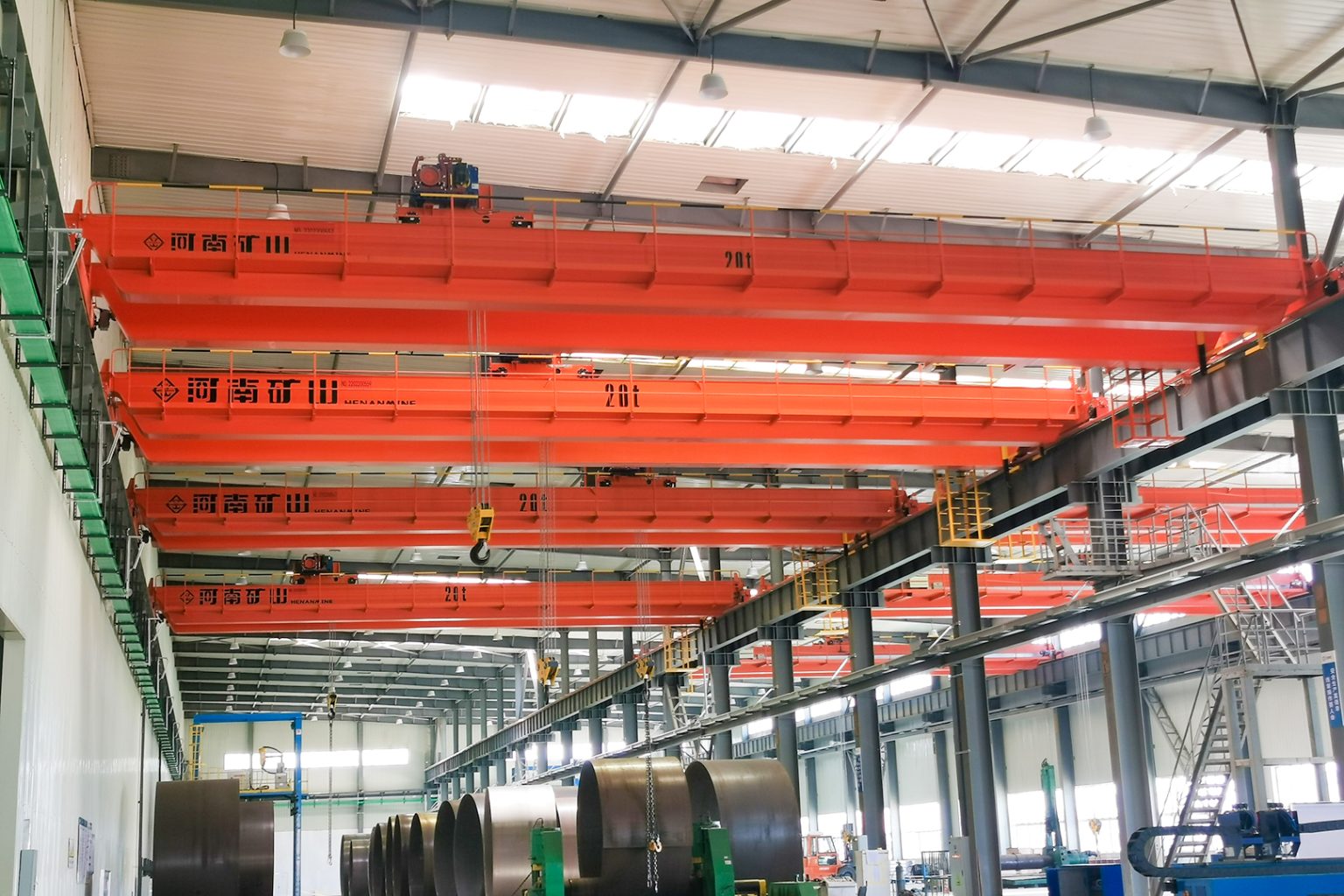

Casting Crane Specifications and Applications
In the steel plant for more than ten years, I know the casting crane (casting crane) on the production of the significance - it is not ordinary lifting equipment, is the core of the steel smelting plant, from the converter out of the steel, refining to continuous casting, each key link are inseparable from it.
Many customers in the preparation of RFQ procurement inquiry, the most headache is casting crane specifications (casting crane specification) to determine. The specification is not selected correctly, either to meet the production requirements, frequent downtime to rectify; or cause waste, high maintenance costs. More critically, molten metal lifting belongs to high-risk operations, improper specifications will also lay serious safety hazards.
Many customers have asked me, can we use ordinary overhead cranes instead of casting cranes? The answer is clear: absolutely not. Casting cranes and ordinary overhead cranes, seem to be lifting equipment, the core difference is very different - the former is tailored for molten metal lifting, the latter can only deal with ordinary materials, with the wrong equipment is not only a violation of the law, but also may lead to steel leakage, equipment collapse and other accidents.
Today, I will Henan Mine Crane first-line technical engineer identity, the casting crane specifications parameters, application scenarios, dismantled clearly. Do not talk about false theories, only practical details, to help you in the RFQ preparation stage, accurately determine the specifications, avoid misunderstandings, and select the equipment to match the working conditions of the steel plant, while taking into account the safety, durability and cost-effectiveness.
What Is a Casting Crane?
Definition
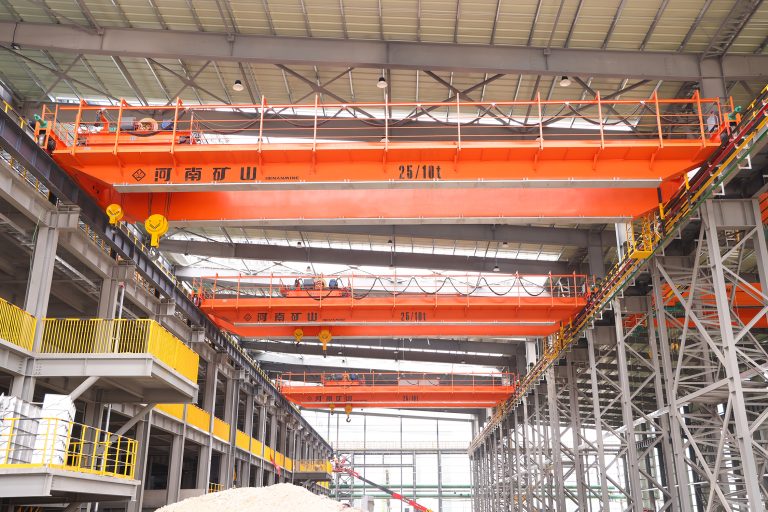
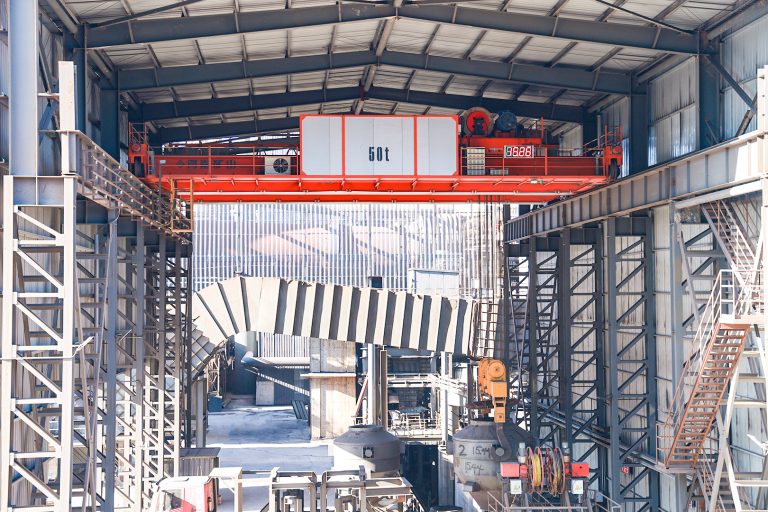
A casting crane, also known as ladle crane, is a heavy-duty double girder overhead travelling crane specially designed for lifting and transferring molten metal ladles in a metallurgical environment. The biggest difference between it and ordinary overhead cranes lies in the fact that all the components have been specially designed to adapt to the harsh working conditions of high temperature, dust and high-frequency operations in steel mills.
Henan Mine Crane produces casting cranes, all of which adopt double girder box structure, the core of which is to enhance rigidity, reduce deflection, and ensure that the ladle is lifted smoothly and without shaking. After all, a spoonful of steel at thousands of degrees Celsius, even a slight shake, may cause irreparable safety accidents.
Simply put, it is the steel mill “specializing in heavy work, dangerous work” lifting equipment, every specification design, are designed around the “safe lifting of molten metal” to start, which is the core difference between the ladle crane specification and the general This is the core difference between ladle crane specification and common crane specification.
Core Functions
The core function of a casting crane may seem simple - lifting ladles - but every function must be adapted to the actual production process in the steel mill.
The core function is to transfer the steel smelted in the converter smoothly to the refining furnace or continuous casting machine. This process requires a high degree of stability of the equipment, there can not be the slightest shaking, otherwise the molten steel is easy to spill, triggering fires or scalding accidents.
Secondly, it has to cooperate with the scrap loading operation, lifting the scrap hopper to the converter and electric furnace to ensure the stable supply of smelting raw materials. This requires the equipment's lifting mechanism to be responsive and able to quickly complete the loading and unloading action without delaying the smelting rhythm.
In the continuous casting process, it has to lift the ladle to the top of the crystallizer of the continuous casting machine and accurately align the ladle to ensure the smooth injection of steel and guarantee the production quality of slabs and billets. At the same time, it also has to undertake auxiliary lifting tasks for workshop equipment maintenance, such as lifting damaged motors and gearboxes to provide support for workshop overhaul.
In addition, some of the large steel mills casting cranes, but also take on the steel slag, slag transfer tasks, to achieve the smelting of the whole process of material lifting coverage, enhance the efficiency of the workshop operations.
Typical Applications of Casting Cranes
The applications of casting cranes cover almost the entire metallurgical industry, with the core focus on the need to lift molten metal. Different smelting scenarios, the specifications of the equipment are different, accurate matching scenarios, in order to maximize the value of the equipment.
Basic Oxygen Furnace (BOF) Operations
Basic Oxygen Furnace (BOF) workshop is the most important application scenario for foundry cranes. Here the operation is characterized by high frequency, high load, every day to complete dozens of times the steel lifting, from the converter out of the steel to the refining furnace feed, the whole process can not have any pause.
The casting cranes in the converter workshop have to be adapted to the lifting demand of large-capacity ladle, usually with a large lifting capacity, and also able to withstand the influence of high-temperature radiation of molten steel. Henan Mine Crane customized casting cranes for the converter workshop will be installed with heat-resistant protective cover under the main beam to avoid the high temperature of molten steel splash damage to equipment components.
Moreover, the operation of the converter shop is continuous for 24 hours, which requires a very high working level of the equipment, which must reach the FEM A8 level, in order to withstand the structural fatigue caused by high-frequency starting and stopping, forward and reverse rotation, and to avoid premature damage to the equipment.
Electric Arc Furnace (EAF) Steelmaking
Electric Arc Furnace (EAF) steelmaking workshop, the core role of casting cranes is scrap loading and molten steel transfer. When loading scrap, the heavy scrap hopper has to be lifted and accurately poured into the EAF, which requires the equipment to have enough power in the lifting mechanism and to be able to accurately align it to avoid spilling the scrap.
After the steel smelting is completed, the ladle is then lifted and transported to the refining furnace or continuous casting machine, and the whole process should be fast and smooth to match the smelting rhythm of the electric furnace. There is a lot of dust in the electric furnace workshop, and the sealing performance of the equipment should be well done to avoid the dust entering into the electrical parts and affecting the operation of the equipment.
Secondary Refining (LF/RH)
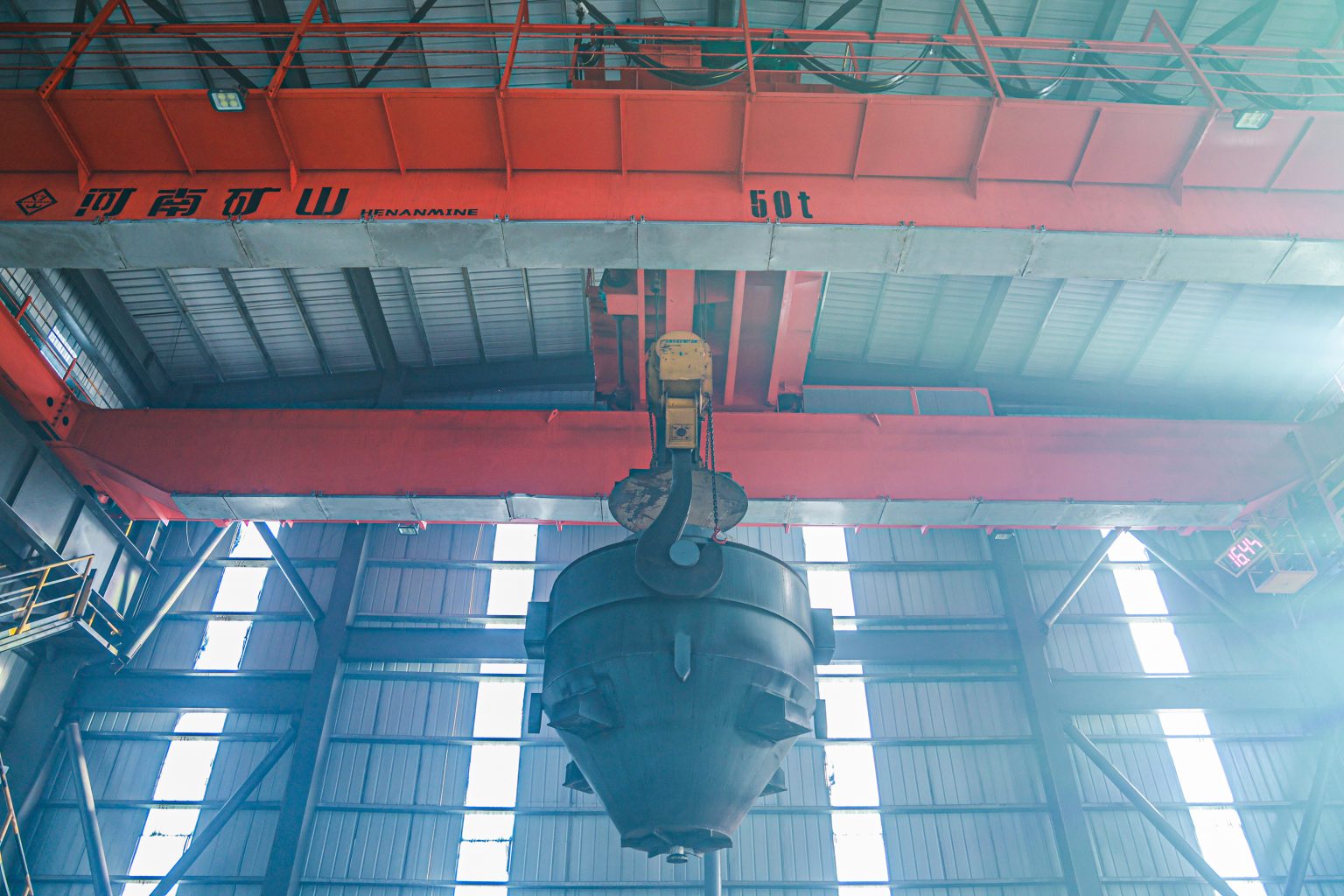
Secondary Refining (LF/RH) operations require the highest level of precision from the casting cranes. Here the steel needs to be adjusted for composition, and the ladle must be positioned accurately without deviation, otherwise it will affect the refining effect and lead to unqualified steel composition.
Therefore, the casting cranes in the refining workshop are usually equipped with an accurate positioning system to ensure that the ladle can be accurately aligned with the entrance of the refining furnace, while at the same time controlling the amplitude of the ladle's shaking to avoid collision between the steel and the furnace mouth, which may cause the steel to spill out or damage the equipment.
Continuous Casting Line
The casting crane of continuous casting line is mainly responsible for steel transportation and casting assistance. It has to transport the refined steel smoothly to the top of the crystallizer of the continuous casting machine and inject it into the crystallizer at a constant speed to ensure the molding quality of slabs and billets.
Continuous casting production line work rhythm is very fast, casting crane running speed to adapt to the continuous casting rhythm, can not be too slow, otherwise it will lead to steel cooling solidification, blocking the crystallizer; also can not be too fast, to avoid the steel shaking too much, affecting the casting accuracy.
Non-Ferrous Metallurgical Plants
In addition to steel mills, non-ferrous metal smelters (such as aluminum, copper smelting), will also make extensive use of casting cranes. The molten metal in this kind of scene, although the melting point is lower than that of steel, is more corrosive and requires higher anti-corrosion and heat-resistant performance of the equipment.
Henan Mine Crane will customize the anticorrosive treatment of spreader and equipment surface according to the characteristics of non-ferrous metals to avoid the molten liquid from corroding the equipment parts and prolong the service life of the equipment. For example, the casting crane in the aluminum smelting workshop will adopt corrosion-resistant high-temperature cables and sealing parts to meet the needs of aluminum melt lifting.
Casting Crane Structural Specification
The structural specification of the casting crane is the core to determine the stability and safety of the equipment, and every part of the design should be adapted to the needs of molten metal lifting, and there should not be the slightest sloppiness. Many customers have stepped on the structural design of the pit, such as the main beam rigidity is not enough, lifting the ladle shaking seriously, can only be reinforced at a later stage, delaying production and increasing costs.
Crane Configuration
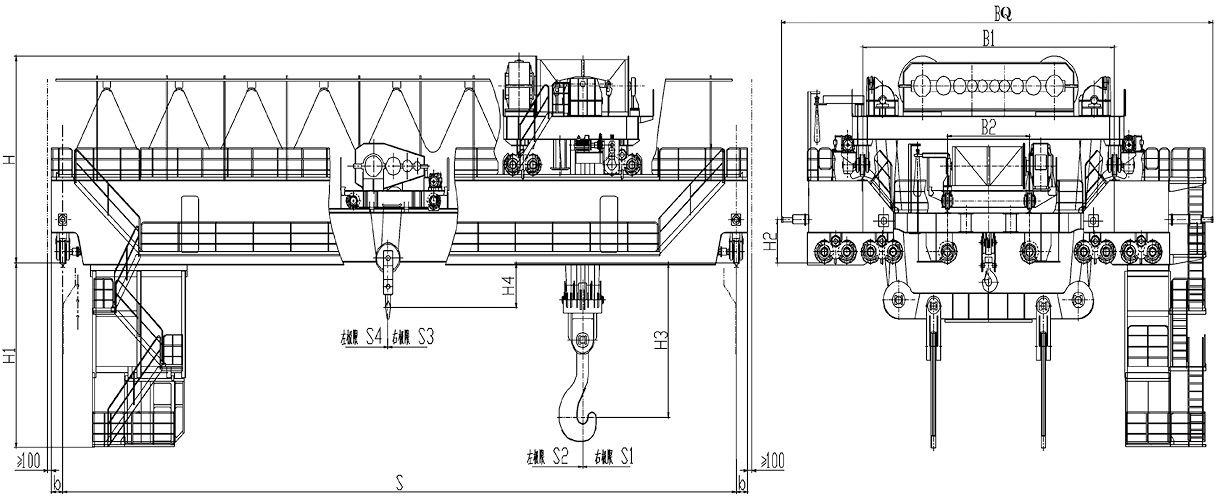
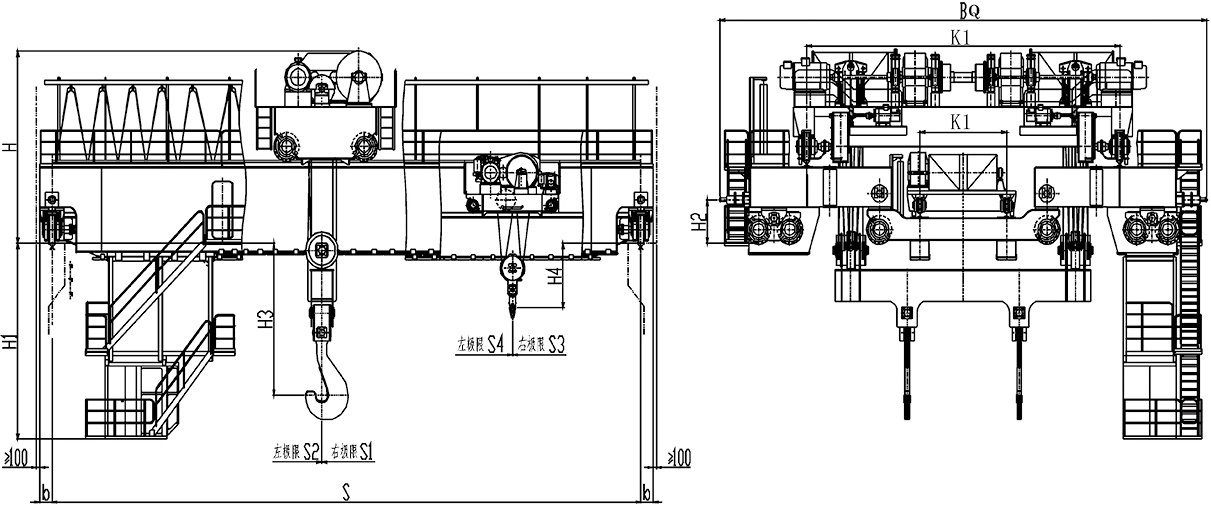
The main structure of the casting crane, commonly used double girder box structure, the rigidity of this structure, bearing capacity, can effectively reduce the deflection of the main beam in the lifting process, to avoid shaking ladle. Henan Mine Crane's casting cranes, the main girder adopts heavy-duty welding process, the use of high-strength steel, to ensure the stability of the structure, even if the long-term high load operation, there will be no deformation.
For large casting cranes with a lifting capacity of 125t or more, we will adopt a four-beam structure to further enhance the stability and load-bearing capacity of the equipment, which is suitable for large-capacity ladle lifting needs. At the same time, the outriggers of the gantry are widened to increase the stability of the equipment during operation and avoid tilting of the equipment due to partial loading of the ladle.
Main Hoisting Mechanism
The main hoisting mechanism is the “core power source” of the casting crane, and its specifications directly determine the lifting capacity and lifting capacity of the equipment. The rated lifting capacity of the main hoisting mechanism must include the weight of the ladle and spreader, and also leave a safety margin of 10%-20% to avoid long-term full-load operation of the equipment.
The main lifting mechanism of Henan Mine Crane adopts high safety coefficient steel wire rope with safety coefficient of not less than 6 times, which can effectively withstand the weight of ladle and the impact force during lifting. At the same time, it is equipped with redundant braking system, even if one set of brakes fails, the other set can brake the equipment in time to ensure the safety of the ladle.
According to JB∕T7688.5-2012 standard, for casting cranes lifting heavy tanks of steel and iron, the drive chain of the main hoisting mechanism must be equipped with a double driving device, or a safety brake must be installed on the steel wire rope reel to further enhance safety.
Auxiliary Hoist
Auxiliary Hoist is mainly used for workshop equipment maintenance and light load lifting, such as lifting maintenance tools, small parts, or with the main hoisting mechanism to dump steel slag, slag. Its lifting capacity is smaller than the main hoist, usually 1/3-1/2 of the weight of the main hoist, and it adopts independent control system, which does not affect the normal operation of the main hoist.
Many customers will ignore the importance of the secondary lifting mechanism, think that as long as the main lifting enough. However, in practice, the secondary lifting mechanism can greatly increase the utilization rate of the equipment, avoiding the need to call other lifting equipment in order to lift small parts, and saving the cost of workshop operation.
Trolley Configuration
There are two main types of trolley configurations: single trolley double lift and double trolley configuration. Single trolley double lifting, that is, a trolley is equipped with the main and secondary two lifting mechanism, compact structure, suitable for the workshop space is small scene, can save the space occupied by the equipment.
Double trolley configuration, that is, two independent trolleys, each equipped with lifting mechanism, can work alone, can also work together, suitable for large-scale steel mills, high-frequency operation of the scene, can enhance the lifting efficiency. For example, two trolleys can lift two ladles at the same time, or one can lift ladle and one can lift auxiliary materials, which can greatly improve the operation rhythm.
Key Technical Parameters in Casting Crane Specification
After determining the structural specifications, it is necessary to focus on the core technical parameters - these parameters directly determine whether the equipment can be adapted to your production needs, not the bigger the better, not the more advanced the better, the adaptation is the key.
Each parameter should be combined with your workshop layout and work intensity to determine.
Rated Lifting Capacity
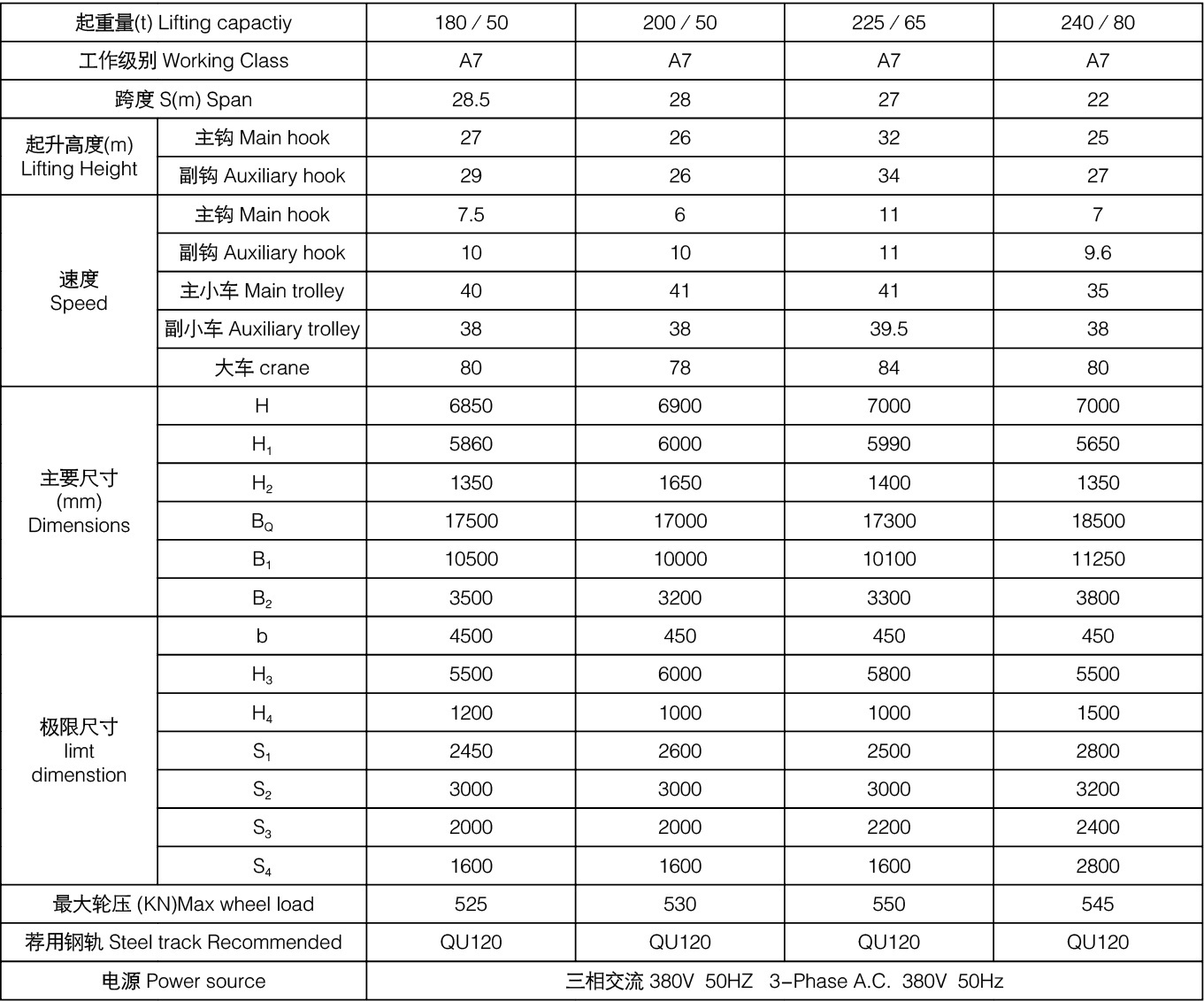
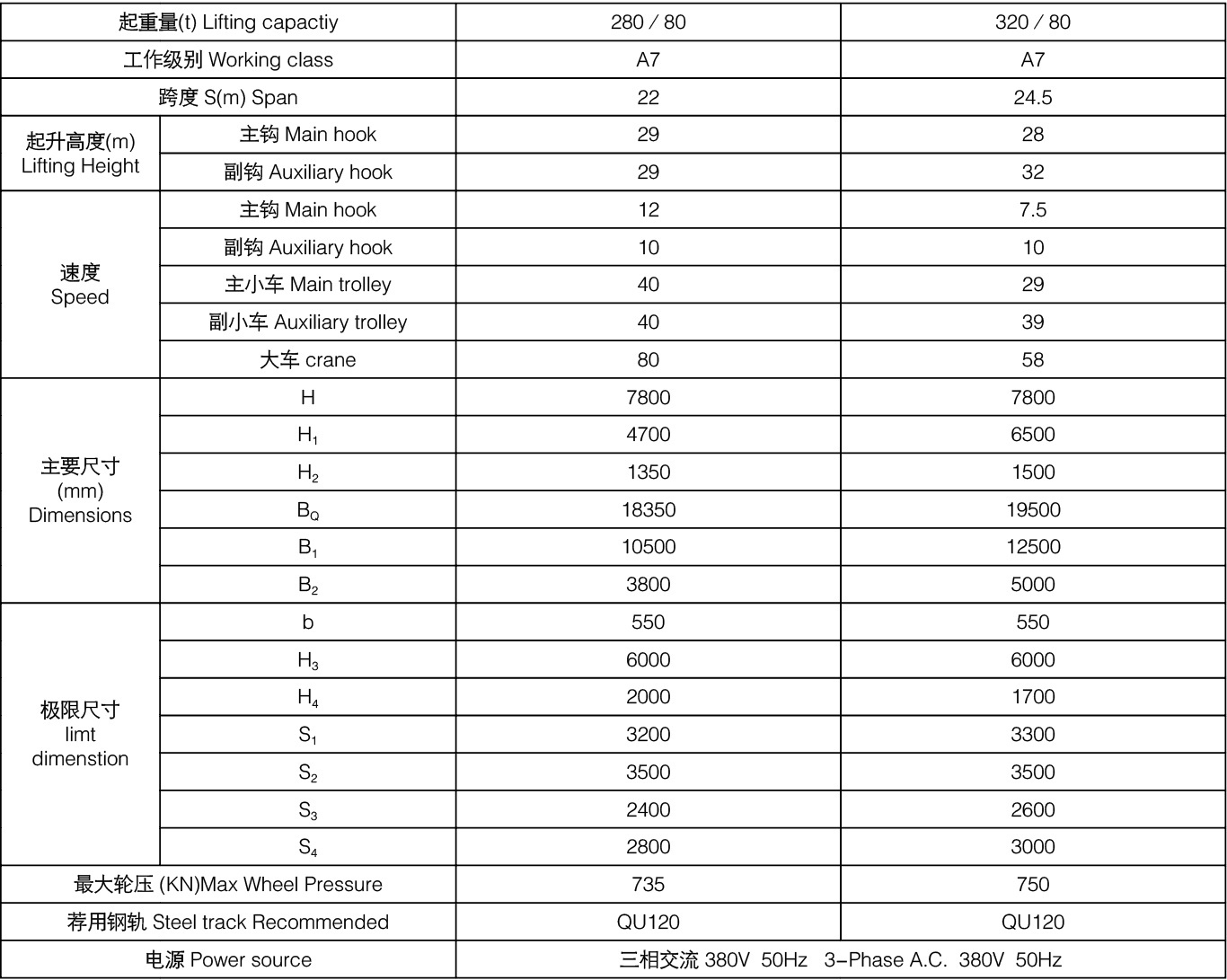
Rated lifting capacity is the core parameter of selection, and it must cover all the operation scenarios. Conventional steel converter workshop, ladle + steel weight is usually between 50t-125t, so the rated lifting capacity of casting cranes, the conventional range of 50t-500t +, depending on the size of the steel mill and ladle size.
Here we should pay attention to a misunderstanding: many customers only count the weight of molten steel, ignoring the weight of the ladle and spreader. For example, for 40t of molten steel, the ladle weight is about 12t, and the spreader weight is about 3t, then the rated lifting capacity of the crane should be at least 55t, in order to leave enough safety margin.
Span
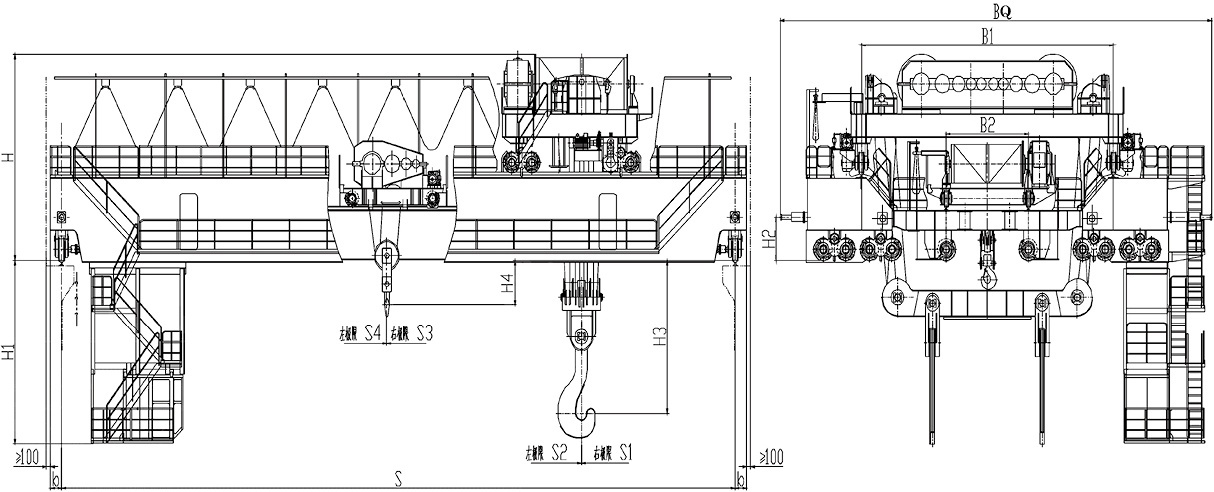
The determination of the span mainly depends on the width of the workshop and the layout of the ladle placement. For example, the span of the converter workshop is usually between 30-40 meters, to ensure that the ladle can be lifted smoothly from the top of the converter to the refining furnace without any obstruction in the middle. If the span is too small, the ladle can not be smoothly transferred, and the layout of the workshop can only be adjusted again, which will delay the schedule.
Lifting Height
For continuous casting workshop, the lifting height is also adapted to the height of the continuous casting machine, to ensure that the ladle can be smoothly aligned with the entrance of the crystallizer, and accurately complete the casting operation. If the lifting height is not enough, the ladle can not be put in place, so we can only adjust the equipment or the layout of the workshop, which will increase the extra cost.
Duty Classification
Duty Classification is the most neglected but critical parameter in casting crane specifications. Casting cranes in steel mills are basically 24-hour continuous operation, high-frequency start and stop, forward and reverse rotation, the structural fatigue strength of the equipment is extremely high.
In the common industry standards, the working level of casting cranes is usually FEM A7 or A8, ISO M7 or M8, CMAA Class E or F. Among them, FEM A8 crane is the first choice for 24-hour continuous operation in large steel mills, which can withstand high-frequency, high-load operation and avoid premature structural fatigue and wear of the equipment components.
Operating Temperature Range
The operating temperature of the casting crane should be adapted to the operating environment of the steel plant. The ambient temperature of a conventional steel workshop is between 40℃ and 60℃, plus the heat radiation of steel, the temperature around the equipment will be higher, and can even reach more than 80℃.
Safety Systems for Molten Metal Handling
Molten metal handling is extremely risky. Safety systems for casting cranes are the last line of defense for the safety of personnel, equipment and goods, and every safety configuration should not be omitted. These safety systems are also an integral part of the casting crane specification.
Dual Independent Brake System
Dual Independent Brake System is a mandatory requirement for casting cranes - the main hoisting mechanism must be equipped with two sets of independent brakes, one set of mechanical brakes and one set of electromagnetic brakes, which are independent of each other and do not affect each other.
Even if one set of brake failure, the other set can brake the equipment in time to ensure that the ladle will not fall. According to T/SXJP 001-2022 group standard requirements, lifting heavy tanks of steel, iron casting cranes, the main hoisting mechanism of each set of drive chain, must be installed with two sets of independent work brake.
Redundant Hoisting Design
With a two-rope system, two independent ropes are used in the hoisting mechanism, so that even if one rope breaks, the other can temporarily carry the weight of the ladle, buying time for the crew to deal with the fault. This redundant design is almost a must in large steel mills and high-risk operations.
Overload Protection
The overload protection system should be able to monitor the lifting load in real time and cut off the lifting power immediately once it exceeds the rated lifting capacity, and send out an alarm signal at the same time, so as to avoid overloading of the equipment, and to prevent accidents such as breakage of wire ropes and deformation of the main beam.
Emergency Power or Safe Lowering System
Sudden power failure is a common emergency situation in steel mills, once the power failure, ladle hanging in mid-air, very easy to cause safety accidents. Therefore, casting cranes must be equipped with Emergency Power or Safe Lowering System to ensure that the ladle can be smoothly lowered to a safe position in case of power failure.
Heat Protection System
High temperature is the biggest enemy of casting crane, the heat radiation of steel will not only damage the equipment components, but also affect the service life of the equipment. Therefore, a heat protection system is indispensable.
Heat shields will be installed under the main beam to block the high temperature and heat radiation from steel splashing; the electrical control cabinet will be insulated and equipped with cooling devices to avoid the aging of electrical components caused by high temperature; the cable will be of high-temperature resistant type, which is able to work stably for a long period of time under high temperature environment.
At the same time, the lower flange plate of the lifting beam of the spreader will be equipped with anti-radiation heat device and fixed with chain suspension to prevent falling when the connection is damaged, which is also a clear requirement in the standard of JB∕T7688.5-2012.
Standards and Compliance Requirements
The specifications of casting cranes must comply with the relevant industry standards and local regulations, otherwise they will not pass the acceptance, and may face penalties for safety regulation. Especially for export projects, standards compliance is a top priority.
FEM Standards
FEM standards also put forward clear requirements for the structural strength of cranes, braking systems, safety redundancy, to ensure that the equipment can be in high-frequency, high-load working conditions, long-term stable operation. Henan Mine Crane's casting cranes are all designed and produced in accordance with FEM standards to ensure compliance with internationally recognized requirements.
ISO Standards
Projects exported to Europe, Southeast Asia and other regions must comply with ISO standards, otherwise they will not be able to pass the local safety acceptance. Henan Mine Crane will customize the equipment to meet the local ISO standards according to the customer's export destination and provide the corresponding certification documents.
CMAA Specifications
If the customer's project is exported to North America, the specifications of the casting crane must comply with CMAA standards, especially in terms of working level, braking system, safety protection, etc., to ensure that the equipment can be adapted to the regulatory requirements of the North American region.
Local Metallurgical Safety Regulations
Metallurgical safety regulations in different countries and regions have different requirements for casting cranes. When Henan Mine Crane undertakes export projects, it will understand the local metallurgical safety regulations in advance to ensure that the equipment specifications and safety configurations meet the local requirements, so as to avoid compliance problems and delays in the project progress.
Automation and Modern Control Technologies
With the enhancement of the level of intelligence in steel mills, the automation and intelligent configuration of casting cranes have become an important part of the specification selection. These configurations not only improve operational efficiency, but also reduce the number of operators on site and minimize operational risks.
PLC and VFD Control Systems
PLC and VFD are the core control systems of modern casting cranes, PLC can realize precise control of the equipment, such as lifting, running speed adjustment, precise positioning of the spreader, and also can realize fault diagnosis and alarm function.
VFD frequency conversion control can realize smooth acceleration and deceleration of the equipment, reduce the shaking of the ladle, especially in the high lifting height and large span operation, it can improve the spreader alignment efficiency, and at the same time, reduce the wear and tear of the equipment components and prolong the life of the equipment.
Remote Operation Systems
Remote operation systems allow operators to remotely control the operation of casting cranes in the center control room without having to operate in the high-temperature, high-risk workshop site, which not only improves the working environment of the operators, but also reduces the risk of on-site operations.
Intelligent Monitoring Systems
Intelligent monitoring systems can monitor the operating status of the equipment in real time, such as load, vibration, brake wear, temperature and other parameters, once abnormal, immediately send out an alarm signal, so as to facilitate the staff to investigate and deal with the equipment in time, to avoid equipment with sick work.
Casting Crane vs Standard Overhead Crane
Many customers will confuse casting cranes and standard overhead cranes when selecting models, and even want to replace casting cranes with standard overhead cranes, which is very dangerous. The core difference between the two, reflected in each specification parameters and application scenarios, using the wrong equipment will only lose more than gain.
| Comparison Factor | Casting Crane | Standard Overhead Crane |
| Application | Molten metal handling (molten steel, molten iron, non-ferrous metal melts) | General material handling (steel, equipment, components, etc.) |
| Duty Class | FEM A7–A8, ISO M7–M8, CMAA E–F | Typically A3–A5, suitable for low-frequency, light to medium-load operations |
| Brake System | Dual independent brake with redundant design | Single standard brake without redundancy |
| Heat Protection | Essential (heat shields, high-temperature components, heat insulation treatment) | Usually not available, unable to withstand high-temperature environments |
| Safety Redundancy | High, with multiple safety systems (overload protection, redundant hoisting, emergency lowering) | Medium, only meeting basic safety requirements |
Simply put, the core of the design of ordinary overhead cranes is “to meet the ordinary material handling”, while the core of the design of casting cranes is "to cope with molten metal high-risk, high-load, high-temperature conditions. Using ordinary overhead cranes to lift molten metal not only violates the law, but also poses serious safety hazards, and later maintenance costs will also increase significantly.
Maintenance Strategy for Casting Cranes
The service life of a casting crane depends not only on the specification and quality of the equipment, but also on its maintenance. A set of scientific maintenance strategy can extend the service life of the equipment by 5-10 years, reduce the downtime rate and lower operating costs.
Daily Inspection
Daily inspection is the basis of maintenance. Every day before and after operation, the equipment should be fully inspected without slacking off. Before operation, check the sensitivity of the braking system, the wear and tear of the wire rope, and the anti-decoupling device of the hook to ensure that there is no abnormality.
After operation, clean up the dust and slag on the surface of the equipment to avoid impurities jamming the transmission parts; check whether the electrical wiring is firm to avoid short circuit caused by dust.
Monthly Structural Inspection
Monthly structural inspection of the equipment should be carried out, focusing on checking the main beam, leg welds, to see whether there are cracks, deformation and so on.
At the same time, the lifting beam of the spreader should be inspected, especially the wear and tear of the lower flange plate, and ultrasonic testing should be carried out on the load bearing parts with a plate thickness of more than 40mm to ensure that there are no structural defects, which is also required by the standard of JB∕T7688.5-2012.
Annual Overhaul
A comprehensive overhaul of the equipment should be carried out every year, focusing on overhauling the braking system, gear box, lifting mechanism, and replacing the parts with serious wear and tear; the electrical system should be comprehensively inspected to check the electrical insulation, and replace the aging cables and electrical components.
Predictive Maintenance Tools
With the help of predictive maintenance tools, we can foresee the hidden faults of the equipment in advance and reduce the sudden stoppage. The heat sensor can monitor the temperature of the equipment components to avoid overheating and damage.
Henan Mine Crane provides customers with customized maintenance manuals, specifying the maintenance cycle and standards for each component, and also conducts regular inspections to help customers check for hidden faults and ensure the long-term stable operation of the equipment.
Common Mistakes in Casting Crane Specification
Combined with so many years of project experience, I summarized the casting crane specification selection, the most common 5 misunderstandings, many customers have stepped on these pits, I hope you can avoid.
Underestimation of the working level requirements, is the most common misunderstanding. Many customers only look at the lifting capacity, ignoring the working level, selected the equipment below FEM A6, even if the lifting capacity is enough, with a few years there will be structural fatigue, serious wear and tear of components, maintenance costs rise sharply.
Neglecting safety redundancy requirements is also a common problem for many customers. In order to save costs, omit double braking, redundant lifting and other configurations, it seems to save money, in fact, buried the safety hazards, once the failure, the consequences are unimaginable. According to the T/SXJP 001-2022 standard, cranes for lifting heavy tanks of molten metal must be equipped with a complete safety redundancy system.
Failure to consider the effects of heat radiation and selecting equipment without heat protection leads to rapid aging of motors and electrical components, especially in converter and electric furnace workshops, where heat radiation is extremely strong and heat protection should never be omitted.
Choosing suppliers without metallurgical project experience is also a big mistake. Casting crane specifications design, production, requires extensive experience in the metallurgical industry, many suppliers do not have relevant project cases, the production of equipment can not be adapted to the working conditions of the steel plant, the later emergence of a variety of problems, the after-sales can not be followed up in a timely manner.
Only look at the purchase price, ignoring the whole life cycle cost, also undesirable. Low-priced equipment often cut corners on steel and components, and later maintenance costs and downtime losses are much higher than the initial purchase price, which is not worth the loss.
Casting Crane Specification Checklist (For RFQ)
In order to facilitate your preparation for RFQ procurement inquiry, I have compiled a list of casting crane specifications, fill in against, you can clearly sort out their needs, to avoid omission of demand, so that the supplier's offer is more accurate, but also to avoid the problem of specification discrepancies in the later stage.
- Rated lifting capacity (need to include the weight of the ladle, spreader, leave a safety margin)
- Crane span, lifting height, hook limit distance
- Working class requirements (FEM/ISO/CMAA, clear A7/A8 or E/F class)
- Configuration of hoisting mechanism (single trolley double lift/double trolley, whether redundant design is required)
- Braking system requirements (whether dual independent braking is required)
- Operating environment temperature, heat radiation intensity
- Safety configuration requirements (overload protection, emergency descent, heat protection, etc.)
- Automation control requirements (whether PLC, remote operation, intelligent monitoring are required)
- Applicable standards and certification requirements (FEM/ISO/CMAA, and local regulations)
- Installation, commissioning requirements, and after-sales, spare parts support
Frequently Asked Questions
Q1: What is the difference between a casting crane and a ladle crane?
In fact, there is no difference between the two in essence, they are both specialized cranes for lifting molten metal ladles, just called differently. Casting crane is the common name, ladle crane (ladle crane) is more focused on the function of “lifting ladle”.
Q2: Why is FEM A8 classification important?
FEM A8 is a high working class standard, which ensures that the crane can withstand 24 hours of continuous, high-frequency, high-load operation. For casting cranes in steel mills, only A8 classification equipment can resist structural fatigue.
Q3: Can casting cranes be fully automated?
Yes, it can. Henan Mine Crane can customize the automation solution according to the customer's intelligent demand, which can be adapted to the automated production line of steel mills.
Q4: How long does a casting crane last?
The service life of a casting crane usually reaches 20-30 years under the premise of appropriate specifications and standardized maintenance. Henan Mine Crane's casting cranes are made of high-strength steel and high-quality components, coupled with scientific structural design, and as long as they are well-maintained on a regular basis, they can operate stably for a long time, saving the cost of replacing the equipment for the steel mills.
Q5: Is redundancy mandatory for molten metal cranes?
Dual braking, redundant lifting and other configurations can avoid single point of failure resulting in safety accidents, and many countries' metallurgical safety regulations also clearly require that casting cranes must be equipped with redundant safety systems to ensure operational safety.
Conclusion
Selection of casting crane specifications is one of the most critical aspects of steel procurement - it directly determines production safety, operational efficiency and long-term operating costs.
When selecting a casting crane, you can't just look at the surface parameters of lifting capacity and span, but also pay attention to the working level, safety redundancy, heat protection, standards compliance, and even more importantly, you should avoid the common selection mistakes. Specification selection is right, in order to guarantee decades of stable operation.
Henan Mine Crane Factory Custom
Henan Mine Crane has been focusing on the design, production and service of heavy metallurgical cranes for more than twenty years, witnessing the development of countless steel mills and accumulating rich experience in specification selection. We will accurately customize the casting crane specifications for you according to your workshop layout, operating intensity, export demand, and provide professional support throughout the process from RFQ demand combing to equipment installation and after-sales maintenance.
Choosing a casting crane with appropriate specifications and high quality is not only a purchase investment, but also an investment in the production safety and long-term development of the steel plant.
Only by choosing the right equipment, can we reduce downtime, lower maintenance costs, and make production smoother and safer.