
How to Choose Intelligent Crane for High-Density Warehouse?
High-density warehouses are reshaping modern logistics, manufacturing, and distribution. As land and labor costs climb, operators are turning storage upward instead of outward, packing more inventory into the same footprint while demanding faster throughput and tighter inventory accuracy. An intelligent crane sits at the center of that shift , the single piece of equipment that can reach 30-plus meters into a rack structure, place a pallet within millimeters of its target, and report its own health back to a control room in real time.
But intelligent crane is not one product. It's a category that spans overhead bridge cranes, automated stacker cranes, gantry cranes, and monorail systems , each suited to different building shapes, load types, and automation goals. Choosing the wrong one is an expensive mistake: crane systems run into six and seven figures, and a poor fit shows up for a decade in wasted cycle time, bottlenecked throughput, or a system that can't scale with the business.
This guide breaks down what an intelligent crane actually is, why high-density warehouses need one, the main crane types currently on the market, and the ten factors that should drive your final decision , so you can walk into a vendor conversation asking the right questions instead of simply receiving a sales pitch.
What Is an Intelligent Crane?
Definition and Core Functions
Henan Mine Crane manufactured intelligent crane is a computer-controlled lifting and transport system that combines mechanical crane hardware with sensors, drives, and software to move loads with minimal or no human intervention. Unlike a manually operated bridge crane, an intelligent crane makes its own micro-decisions , where to position the hoist, how fast to travel, and when to slow down for an obstacle , based on continuous data rather than an operator's judgment.
Core functions typically include:
- Automated lifting and positioning: the crane travels to a programmed X/Y/Z coordinate without operator steering
- Intelligent motion control: acceleration, deceleration, and anti-sway logic are calculated in real time
- Real-time monitoring: load weight, position, motor temperature, and cycle status are tracked continuously
- Data collection and analytics: every movement becomes a data point for throughput analysis and capacity planning
- Remote operation and diagnostics: technicians can view crane status or intervene from outside the building or off-site
Key Components
Beneath the software layer, Henan Mine Crane manufactured intelligent crane still relies on proven mechanical building blocks:
- Overhead bridge structure or mast: the load-bearing frame that spans the aisle or bay
- Hoist and trolley (or telescopic fork on stacker cranes): the mechanism that lifts and extends to the load
- Servo drive systems:precision motors that replace simple on/off contactor control
- PLC control system: the onboard "brain" executing motion commands and safety logic
- Sensors and encoders: laser rangefinders, rotary encoders, and proximity sensors that give the system positional awareness
- Industrial communication network: typically Ethernet/IP or a similar protocol linking the crane to the plant network
- Human-machine interface (HMI): a touchscreen or dashboard for manual override, diagnostics, and maintenance
How Intelligent Cranes Differ from Conventional Cranes
The difference isn't cosmetic , it changes what the equipment can be trusted to do unsupervised:
- Automated operation: replaces manual joystick or pendant control for routine cycles
- Higher positioning accuracy: often within a few millimeters, versus operator-dependent placement
- Reduced manual intervention: one technician can oversee multiple aisles instead of one operator per crane
- Integration with digital warehouse systems: the crane executes tasks assigned by a WMS or WCS rather than a verbal work order
- Predictive maintenance capabilities: vibration and temperature trends flag a failing bearing weeks before it fails, instead of after a breakdown halts the aisle
Why High-Density Warehouses Need Intelligent Cranes
Maximizing Vertical Storage Space
Floor space is finite; ceiling height is comparatively cheap to build into. Intelligent cranes , particularly stacker cranes in narrow aisles , routinely enable storage heights that a counterbalance forklift or reach truck simply cannot reach safely, letting operators convert unused overhead air into revenue-generating pallet positions. Facilities that switch from wide-aisle manual racking to narrow-aisle crane-served racking commonly report meaningfully higher pallet density in the same building envelope.
Improving Material Handling Efficiency
A well-specified crane executes a consistent, repeatable cycle time regardless of shift, fatigue, or staffing gaps. That consistency compounds: predictable cycle times make it possible to model throughput accurately, schedule inbound and outbound waves with confidence, and eliminate the variability that manual fleets introduce during peak periods.
Reducing Labor Costs
Labor is the largest controllable operating cost in most warehouses, and it's also the least predictable , turnover, absenteeism, and seasonal hiring all create risk. An intelligent crane doesn't need a shift schedule. It shifts labor from repetitive lifting tasks toward higher-value supervisory, maintenance, and exception-handling roles, which is especially valuable in tight labor markets where warehouse staff are hard to find and retain.
Enhancing Workplace Safety
Manual high-reach operations , forklifts working at height in narrow aisles — are among the riskier tasks in a warehouse. Intelligent cranes remove the operator from the point of lift entirely for automated cycles, and modern safety layers (light curtains, area scanners, interlocked access gates) reduce the chance of a person entering an active aisle undetected.
Supporting 24/7 Automated Operations
Cranes don't need breaks, and with proper maintenance scheduling they can run through multiple shifts, including unattended overnight cycles for replenishment or order-picking preparation. That extended operating window effectively adds capacity without adding building square footage.
Increasing Inventory Accuracy
Every crane movement is logged against a specific rack location and SKU. Combined with a WMS, this turns the crane into an inventory control tool as much as a material handling one , cycle counts, location audits, and slotting decisions all become more reliable when the system, not a person's memory, is recording every put-away and retrieval.
Types of Intelligent Cranes Used in High-Density Warehouses
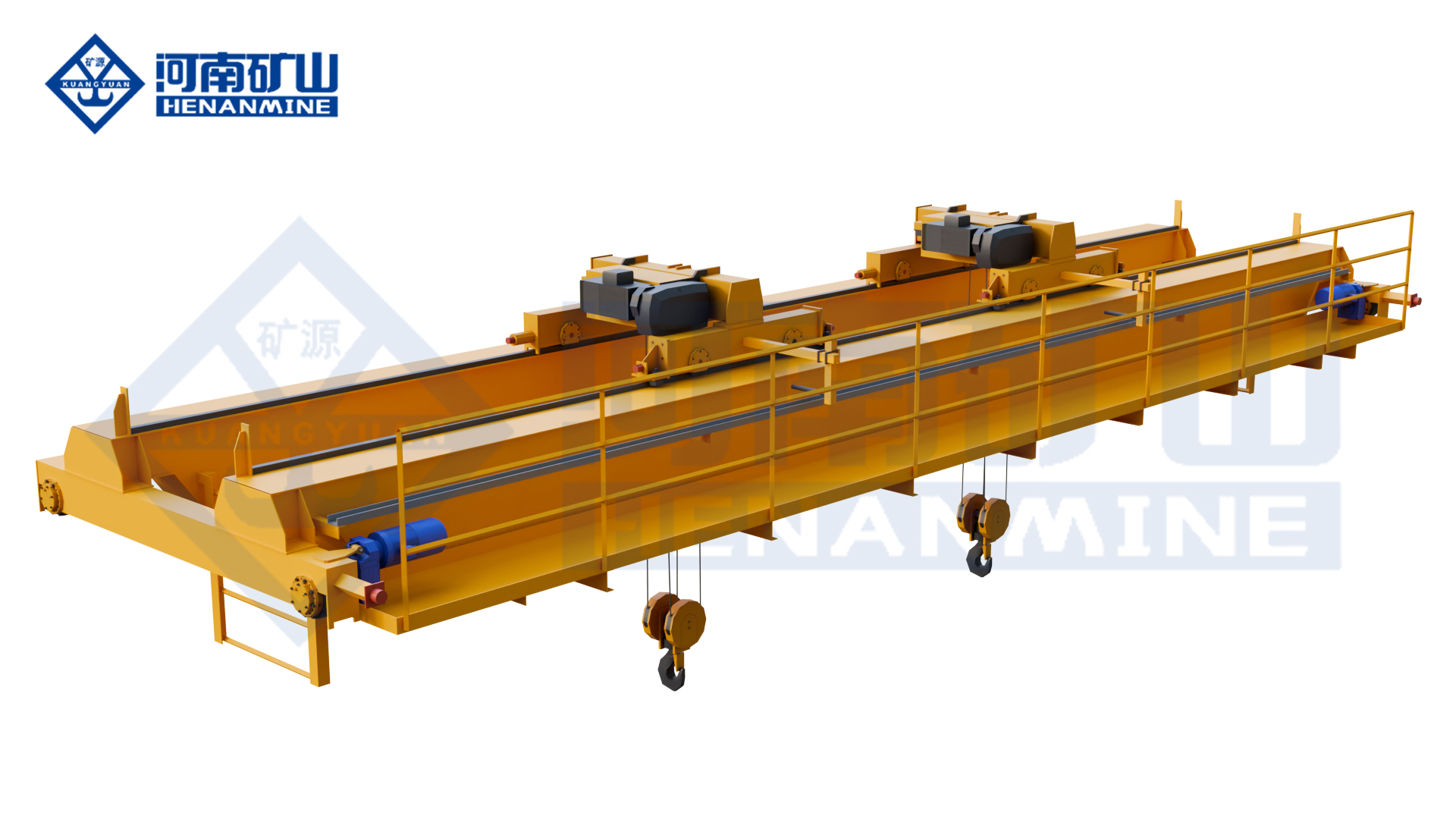
Intelligent Overhead Bridge Crane
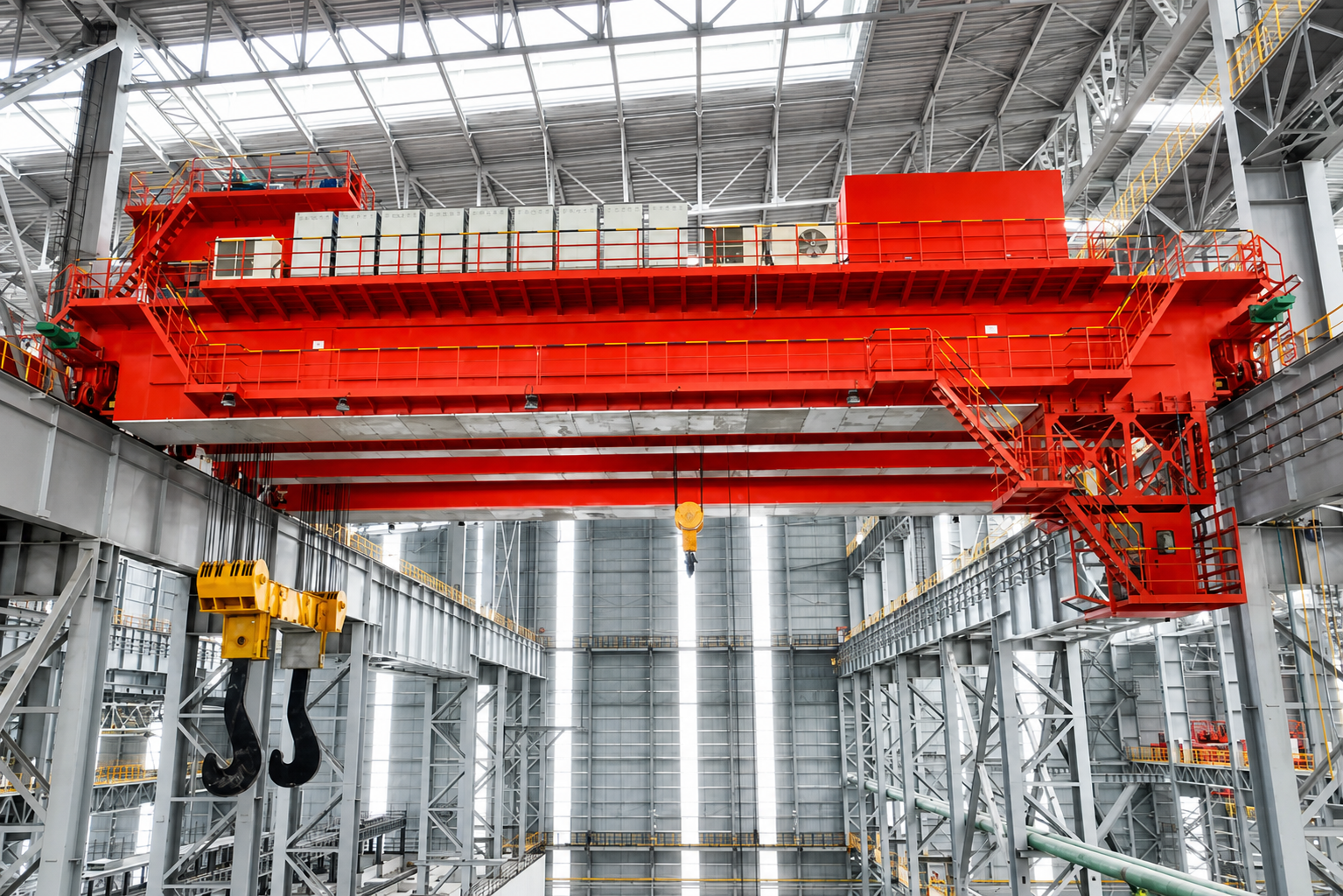
Henan Mine Crane manufactured bridge crane rides on rails at the top of the building and spans the full width of the structure, lifting and moving loads via a trolley-mounted hoist.
Best for:
- Manufacturing warehouses handling large or irregular loads
- Heavy industrial storage (coils, machinery, structural components)
- Assembly plants where the crane also feeds production lines, not just racking
Automated Stacker Crane (AS/RS)
The workhorse of automated high-bay storage, a stacker crane runs on a fixed rail within a single aisle, lifting a mast-mounted carriage and extending telescopic forks into single-, double-, or multi-deep rack positions. Stacker cranes are typically the default choice when the goal is maximum storage density within a purpose-built or retrofitted high-bay structure.
Applications:
- Automated warehouses with high SKU counts
- High-bay storage exceeding 12–15 meters
- Distribution centers running continuous inbound/outbound cycles
Intelligent Gantry Crane
A gantry crane is essentially a bridge crane supported on floor-mounted legs rather than building rails, which makes it suitable for spaces without the structural steel to support an overhead runway.
Suitable for:
- Outdoor storage yards
- Large logistics parks with mixed indoor/outdoor storage
- Heavy equipment or oversized-load storage
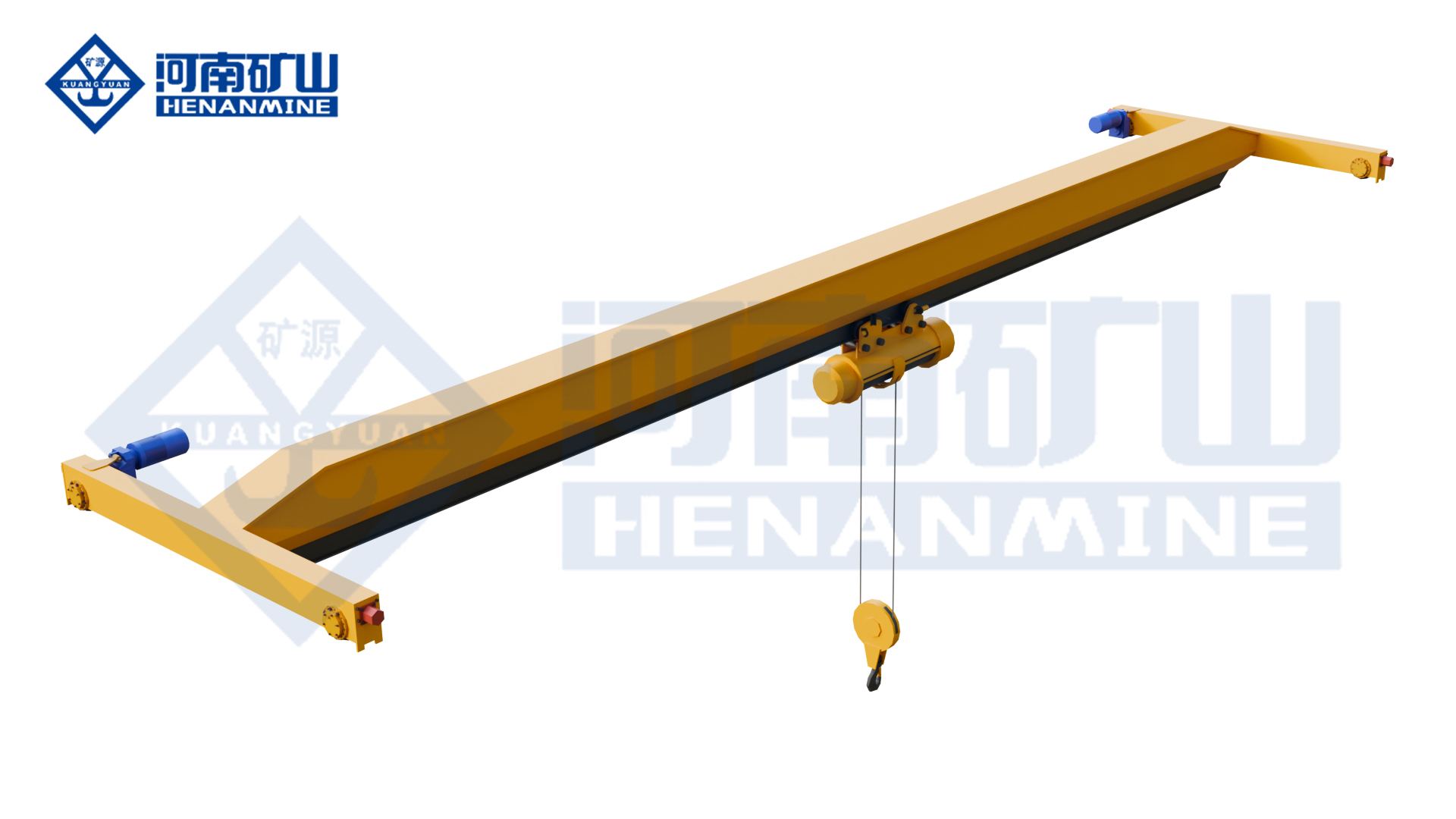
Monorail Intelligent Crane
A monorail system runs a motorized hoist along a single fixed overhead track, often looping between storage, production, and shipping zones.
Ideal for:
- Production lines requiring point-to-point transfer
- Component transfer between fixed stations
- Compact warehouse layouts where a full bridge crane's footprint isn't justified
10 Key Factors to Consider When Choosing an Intelligent Crane
1. Warehouse Layout and Available Space
Start with the building itself, not the crane catalog. Building dimensions, clear ceiling height, column spacing, and existing rack arrangement all constrain which crane types are even physically viable. Travel paths also matter: a stacker crane needs a dedicated straight aisle, while a bridge or gantry crane needs clear overhead runway support. Retrofitting an existing building is usually more constrained than designing a greenfield facility around the crane from day one.
A full layout assessment should also account for floor loading capacity , crane rails and high-bay racking both introduce significant point loads that older slabs weren't necessarily designed to bear. Fire suppression clearances, existing dock positions, and any conveyor hand-off points the crane will interface with should be mapped before specs are finalized. Skipping this step is one of the most common causes of change orders once installation begins, because a design that looks fine on paper often collides with an as-built column, beam, or sprinkler line that wasn't captured in the original drawings.
2. Load Capacity Requirements
Specify both the average load your operation actually handles and the maximum load you need to accommodate, including outliers like oversized pallets or non-standard containers. Build in headroom for future capacity expansion , undersizing a crane to save on upfront cost is one of the most common regret-inducing decisions buyers make, because retrofitting a heavier-duty mast or hoist later is far more disruptive than specifying it up front. Load dimensions (not just weight) also determine mast clearance and fork/spreader design.
It also helps to separate typical load profiles from the edge cases that show up a handful of times a year , a seasonal SKU, an oversized promotional display, or a returned pallet with irregular wrapping. Vendors will size the crane to the numbers you give them, so if those numbers only reflect the median day, the system may struggle on the busiest one.
3. Lifting Height and Span
Storage rack height, maximum hook height, and bridge span selection all need to be matched precisely to your racking design , not approximated. A crane specified a few meters short of your top rack level is a hard failure, not a minor inconvenience, so this figure should come from a surveyed building drawing, not an estimate.
4. Automation Level
Not every operation needs, or can financially justify, full automation on day one. Compare:
- Semi-automatic: operator-assisted with automated positioning aids
- Fully automatic: no operator involvement for standard cycles
- AI-assisted operation: dynamic route and task optimization layered on top of automated control
- Remote-controlled systems: an operator supervises from a fixed station rather than riding the crane
Many operators phase in automation, starting semi-automatic and upgrading control software as volume and confidence grow.
5. Positioning Accuracy
High-density racking has tighter tolerances than conventional pallet racking, so positioning technology matters more than it might first appear:
- Laser positioningfor absolute location reference
- Encoder systemsfor continuous travel and lift feedback
- Anti-sway technologyto stabilize suspended loads during acceleration and deceleration
- Automatic path optimizationto shorten travel distance across combined X/Y/Z movement
6. Speed and Throughput
Evaluate hoisting speed, trolley speed, and bridge (or crane) travel speed together, not in isolation , a fast hoist paired with a slow travel speed still bottlenecks overall cycle time, since the crane's actual cycle time is governed by whichever axis is slowest for a given movement, not by the fastest spec on the sheet. Ask vendors for a cycle time figure based on your actual rack dimensions and load profile, not a generic spec sheet number, and model how that cycle time translates into daily warehouse productivity at your required order volume. It's also worth asking how throughput changes under a mixed workload of simultaneous inbound and outbound tasks, since single-cycle numbers rarely reflect real operating conditions during peak periods.
7. Software Integration
A crane is only as useful as the systems that tell it what to do. Confirm compatibility with:
- Warehouse Management System (WMS): inventory and location logic
- Warehouse Control System (WCS): real-time task dispatch to equipment
- Manufacturing Execution System (MES):for facilities feeding production lines
- ERP platforms: for order and inventory data at the enterprise level
- IoT platforms: for condition monitoring and analytics dashboards
Software integration is consistently one of the more time-consuming parts of a crane project , industry data on automation rollouts points to the WMS-to-equipment handshake as a leading cause of project delays — so ask vendors for reference integrations with your specific WMS/ERP stack before signing. Where possible, request a proof-of-concept or sandbox test of the crane's task-dispatch interface against your actual WMS version, not just a generic API document. Budgeting a contingency of 15–20% of total project cost for integration work, on top of the hardware quote, is a realistic planning assumption rather than a worst-case one.
8. Safety Features
At minimum, expect:
- Obstacle detection
- Anti-collision systems (crane-to-crane and crane-to-structure)
- Overload protection
- Emergency stop functionality accessible from multiple points
- Load monitoring
- Access control at aisle entry points
- Defined safety zones with interlocked gates or light curtains
These aren't optional extras, they're what makes unattended, high-speed automated operation defensible from a liability and insurance standpoint.
9. Energy Efficiency
Cranes run long hours in high-density facilities, so efficiency compounds over the equipment's life , a marginal difference in per-cycle power draw becomes a meaningful number once multiplied across tens of thousands of annual cycles. Look for:
- Variable frequency drives (VFDs)for smoother, lower-draw acceleration
- Regenerative brakingthat feeds energy back into the system during descent
- Intelligent power managementthat reduces draw during idle periods
- Energy consumption monitoringto track and benchmark usage over time, and to flag drive or motor wear before it shows up as a full failure
10. Maintenance and Serviceability
A crane that can't be serviced quickly becomes a single point of failure for an entire aisle. Evaluate:
- Predictive maintenancecapability, not just scheduled maintenance
- Remote diagnosticsso issues can often be triaged before a technician is dispatched
- Spare parts availability,ask about lead times for critical components, not just a general parts list
- Cloud monitoringfor fleet-wide visibility across multiple cranes or sites
- Service response timecommitments in the vendor's service-level agreement
What a Typical Implementation Timeline Looks Like
Buyers are frequently surprised by how long a crane project takes from signed quote to full-speed operation. A realistic mid-complexity project generally moves through four phases:
- Assessment and design (4–8 weeks):facility audit, throughput analysis, and system design, where the vendor's proposed solution gets validated against your actual operation rather than a generic spec sheet
- Procurement and site prep (8–16 weeks):equipment lead times vary widely, and crane-based AS/RS components typically sit at the longer end of that range, with site prep for rails, power, and racking running in parallel
- Installation and integration (6–12 weeks): hardware installation is usually the easy part; software integration between the WMS, WCS, and crane controls is where most schedule risk lives
- Testing and ramp-up (4–8 weeks):expect reduced throughput in the first week, scaling toward full capacity by roughly the fourth week, with staff training running concurrently
Altogether, a mid-complexity crane project commonly takes five to eleven months from kickoff to full-speed operation, and larger crane-based AS/RS installations can run longer. Building that timeline into your planning, rather than assuming a Henan Mine Crane Factory supply crane can be ordered and running within a quarter, avoids the operational strain of expecting capacity before it actually exists.
Intelligent Crane Technologies That Improve Warehouse Performance
Beyond the base crane hardware, several technology layers separate a merely automated crane from a genuinely intelligent one:
- AI-based motion optimization: dynamically recalculates travel paths to minimize cycle time across multiple simultaneous task requests
- Machine vision systems: verify load presence, pallet condition, or barcode/label orientation before a movement executes
- Digital twin technology: a virtual model of the crane and racking used to simulate layout changes or new SKU profiles before committing physical changes
- IoT-based equipment monitoring: continuous sensor data streamed to a central dashboard for fleet-wide health tracking
- RFID and barcode integration: automatic load identification without a manual scan step
- Automatic load identification: the crane confirms it has picked up the correct item before releasing it from the source location
- Cloud-based fleet management: centralized oversight when a site runs multiple cranes across several aisles or buildings
These technologies are increasingly bundled into mid-tier and premium crane packages rather than sold as pure add-ons, so it's worth asking which are standard versus optional in any vendor quote, and which require a separate licensing or subscription fee beyond the initial hardware purchase.
Intelligent Crane vs Traditional Overhead Crane
| Feature | Intelligent Crane | Traditional Crane |
| Automation | High | Manual |
| Positioning Accuracy | Excellent | Operator dependent |
| Labor Requirement | Low | High |
| Safety | Advanced | Standard |
| Productivity | High | Moderate |
| Inventory Traceability | Yes | Limited |
| Remote Monitoring | Yes | No |
| Predictive Maintenance | Yes | No |
| Initial Investment | Higher | Lower |
| Long-Term ROI | Higher | Moderate |
The pattern here is consistent: traditional cranes win on upfront cost, intelligent cranes win on nearly everything measured over the equipment's operating life. For a warehouse that expects to run at high density and high volume for a decade or more, the higher initial investment is generally the smaller risk of the two options.
Industry Applications
Henan Mine Crane Factory supply intelligent cranes serve a wide range of sectors, each with its own priority factor:
- E-commerce Fulfillment Centers: prioritize cycle speed and SKU-level accuracy for high order volumes
- Automotive Manufacturing: need tight integration with production line sequencing
- Steel Coil Warehouses:require heavy load capacity and specialized coil-handling attachments
- Paper Roll Storage:need precise, gentle handling to avoid product damage
- Cold Storage Warehouses:require components rated for sustained sub-zero operation
- Aerospace Manufacturing:prioritize positioning accuracy and full traceability for regulated components
- Electronics Production:often need cleanroom-compatible crane designs
- Pharmaceutical Warehouses:require strict lot traceability and validated, auditable movement logs
Across these sectors, the common thread is that the crane rarely operates in isolation. It's usually one node in a larger material flow that includes conveyors, shuttle cars, AMRs, or production line feeds, which is exactly why the software integration factor above tends to carry more long-term weight in the decision than the mechanical specs alone.
Common Mistakes When Selecting an Intelligent Crane
Even experienced operations teams fall into predictable traps:
- Choosing based only on initial cost:the cheapest quote rarely accounts for integration, training, and long-term maintenance costs, and a lower sticker price often just defers those costs to later in the project rather than eliminating them
- Ignoring software compatibility:a crane that can't talk cleanly to your WMS/ERP becomes a manual-override system in disguise, requiring staff to babysit tasks the automation was supposed to handle
- Underestimating future warehouse expansion:sizing the crane for today's volume instead of the next five years leaves no headroom when order volume or SKU count grows faster than planned
- Overlooking maintenance requirements:assuming automated means "maintenance-free," which it never does; a crane with no service plan in place is a single point of failure waiting to happen
- Selecting insufficient load capacity:trying to save money on a lighter-duty mast or hoist that can't handle real-world load variability, which shows up as unplanned downtime the first time an outlier pallet arrives
- Ignoring safety compliance:treating safety systems as add-ons rather than baseline requirements, which creates liability exposure and can delay commissioning if inspectors flag gaps
- Failing to evaluate supplier support:a great crane from a vendor with weak regional service coverage is a long-term liability, since a multi-day wait for a technician means a multi-day loss of aisle capacity
Future Trends in Intelligent Warehouse Cranes
The category is still evolving quickly, and several trends are worth tracking when planning a crane investment meant to last a decade or more:
- AI-driven autonomous cranescapable of dynamic task prioritization without operator input
- 5G-enabled remote operationssupporting lower-latency remote control and monitoring
- Digital twin-based maintenanceplanning, simulating wear patterns before physical inspection
- Collaborative human-machine operations, where automated cranes and human staff share the same aisles safely
- Carbon-efficient lifting systemsdesigned around energy recovery and reduced peak draw
- Smart energy managementthat shifts non-urgent crane cycles to off-peak electricity periods
- Fully automated smart warehouseswhere cranes, shuttles, and AMRs operate under a single orchestration layer
Frequently Asked Questions
How does an intelligent crane improve warehouse efficiency?
It delivers consistent, repeatable cycle times regardless of shift or staffing, maximizes vertical storage density, and integrates with the WMS to keep inventory data accurate in real time — all of which reduce bottlenecks compared to manual handling.
Can intelligent cranes integrate with WMS and ERP systems?
Yes. Most intelligent crane systems are designed to receive task instructions from a WMS or WCS and report status back to ERP and MES platforms, though the depth of integration varies significantly by vendor and should be confirmed before purchase.
What industries benefit most from intelligent cranes?
E-commerce fulfillment, automotive manufacturing, steel and paper storage, cold storage, aerospace, electronics, and pharmaceutical warehousing all rely heavily on intelligent cranes, each for slightly different reasons ranging from throughput to traceability.
Are intelligent cranes suitable for retrofit projects?
Often yes, though retrofits are more constrained by existing building dimensions, column spacing, and floor loading than greenfield builds. A structural and layout assessment should always precede a retrofit crane purchase.
How much maintenance does an intelligent crane require?
Intelligent cranes still require scheduled preventive maintenance, lubrication, rail and wheel inspection, cable and encoder checks, on a routine cycle similar to any industrial equipment. What changes is how issues are caught: predictive maintenance features such as vibration monitoring and remote diagnostics typically flag a developing problem, like a bearing running slightly hot, weeks before it would surface through manual inspection alone, which meaningfully reduces unplanned downtime over the equipment's life.
What safety technologies are standard in intelligent cranes?
Obstacle detection, anti-collision systems, overload protection, emergency stops, load monitoring, and interlocked access zones are standard baseline features on most modern intelligent crane systems.
Henan Mine Crane Factory Custom
The right intelligent crane, has less to do with the lifting capacity, but is more to do with building a solution that fits the specific needs of your layout, flexibility, storage density, automation plan and future business growth. Properly engineered intelligent crane systems increase productivity, reduce safety issues, easily interfaces with a warehouse management platform and sustains performance throughout the service life.
Being an experienced crane manufacturer, Henan Mine Crane Factory offers customer-specific intelligent lifting solutions for high density warehouses, manufacturing plants, logistics centers and automated storage systems. All solutions are tailored to meet customers’ precise operational requirements, thereby enabling them to increase efficiency and reduce operating costs and forthcoming investment over the long term.