
Single Girder Overhead Crane vs Double Girder Overhead Crane
Single girder overhead crane and double girder overhead crane are two of the most commonly used overhead cranes in workshops, warehouses, machine shops and all types of heavy industry.
Many buyers have difficulty quickly determining which crane is better suited to their production situation.
Depending on the plant structure, lifting capacity and frequency of operation, the appropriate type of crane varies greatly.
In this article, we will compare the structure, performance, cost and scope of application of these two types of equipment from the perspective of practical application to help you clarify your selection ideas.
What is a single girder overhead crane?
Basic structure
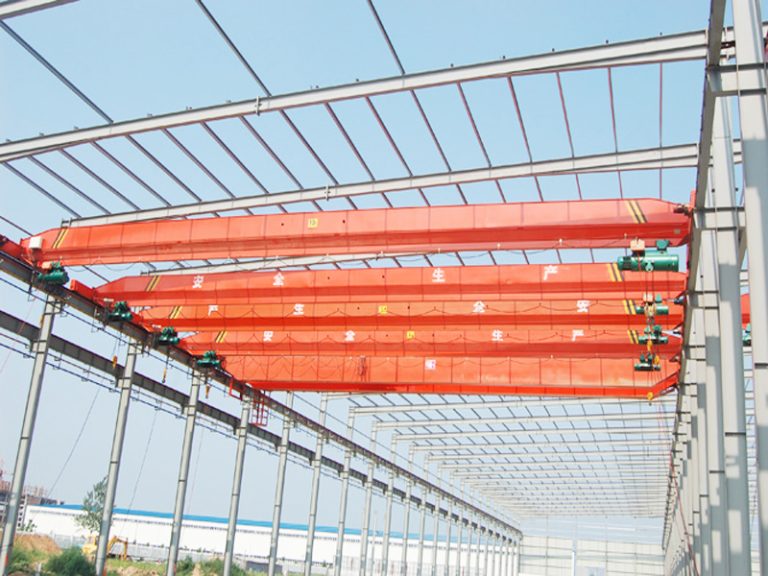
The core load-bearing part of single girder overhead crane is the main girder, and the overall frame consists of the main girder and the end girders on both sides.
Most of the crane is installed under the main girder and moves horizontally along the main girder track.
There are no extra complex parts, the overall assembly logic is simple, and it is a light lifting equipment commonly used in workshops.
Main Features
The equipment itself is light in weight and will not cause excessive pressure on the load-bearing structure of the workshop.
Simple structural design, production, processing and on-site installation procedures.
The initial purchase and installation of the overall investment is low, suitable for projects with limited budget.
Mainly used for light and medium lifting operations, can meet the basic handling needs of most traditional workshops.
Typical applications
Parts transfer and assembly in general mechanical engineering workshops.
Lifting, stacking and short distance transfer of goods in warehouses.
Auxiliary lifting and dismantling of parts in equipment maintenance areas.
Small material handling in light manufacturing workshops.
What is a double girder overhead crane?
Basic structure
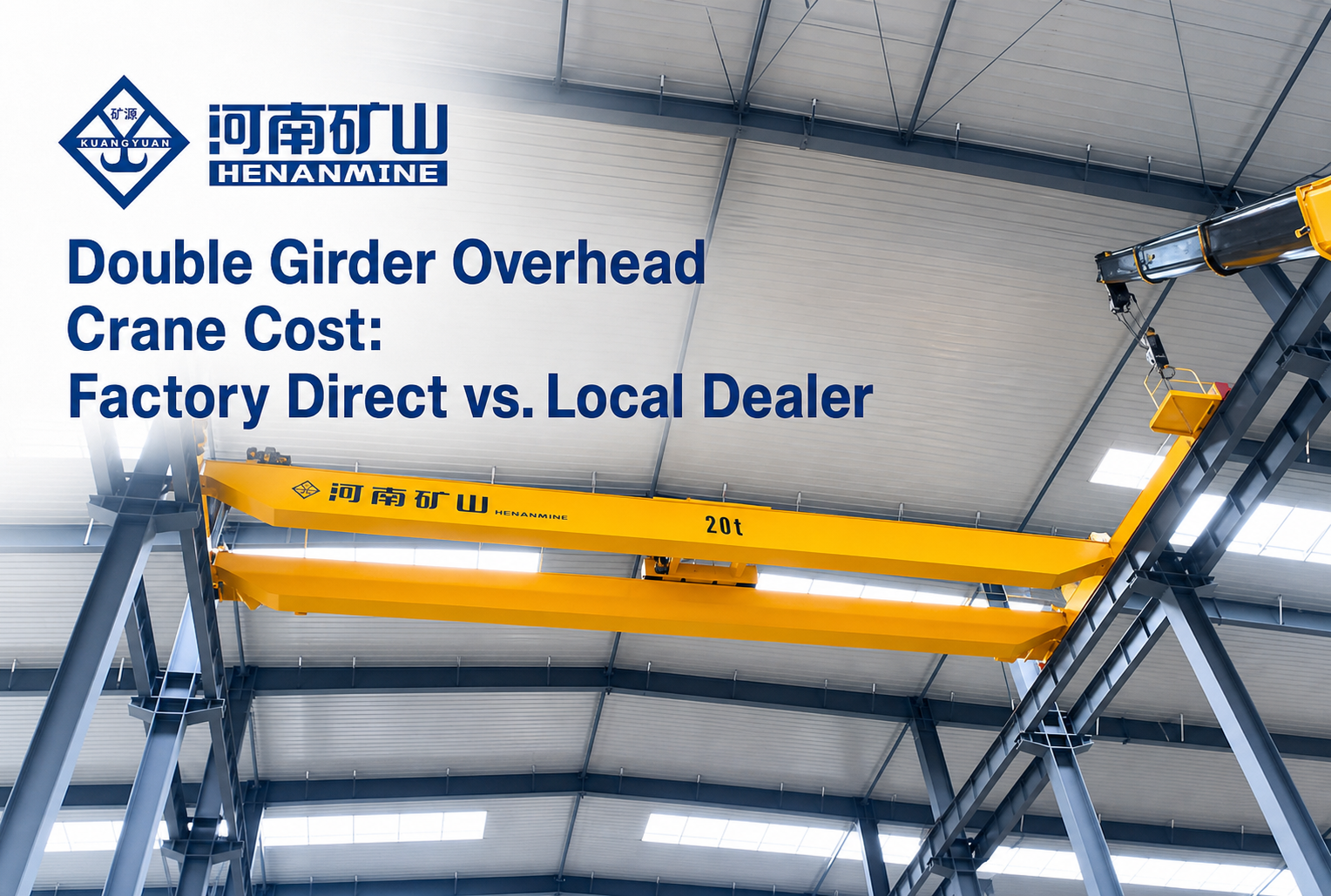
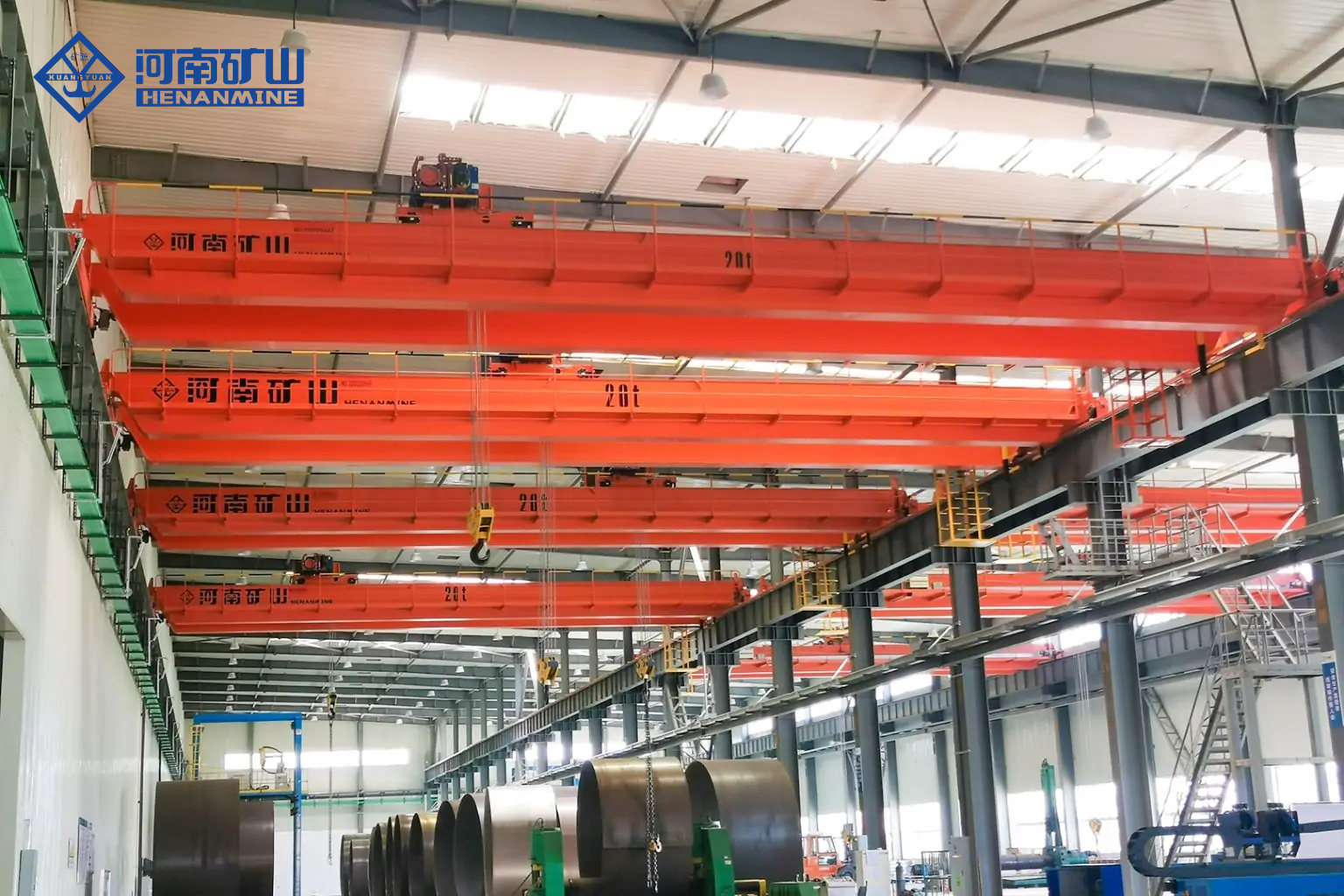
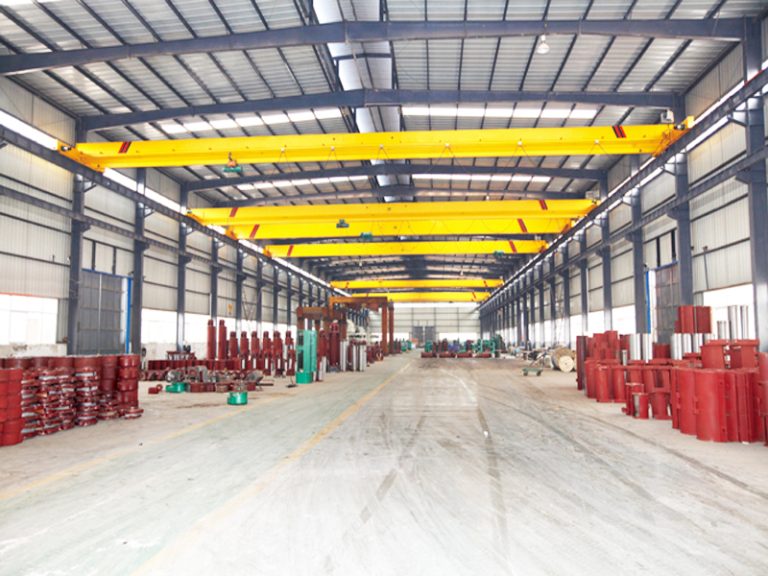
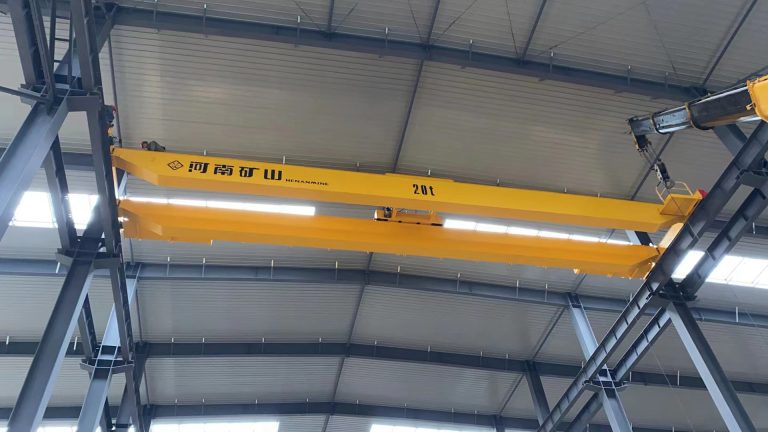
Double girder overhead crane adopts two parallel main girders as the core load-bearing structure and combines with end trolleys to form a stable traveling bridge.
The lifting trolley is directly arranged on the upper track of the two main girders, which makes the running track more stable.
Compared with the single girder type, the overall structural rigidity is higher, the load-bearing foundation is more solid, and it is suitable for heavy-duty operation.
Main features
The upper limit of rated lifting capacity is higher, which can cope with the continuous lifting of heavy materials.
The effective lifting height of the hook is larger, which can fully utilize the vertical space of the workshop.
Adapt to a larger working span, to meet the requirements of the lateral operation of large workshops.
Easy to install accessories such as grabs, electromagnetic suction cups and special spreaders to expand the scope of use.
Typical applications
Transfer of profiles and billets in steel processing enterprises.
Assembly of large equipment components in heavy machinery workshops.
Lifting of concrete components in precast production plants.
Handling and loading of large diameter paper rolls in paper mills.
Handling and loading of large diameter paper rolls in paper mills Heavy and high frequency lifting in foundries and large industrial plants.
What are the main differences between single girder overhead cranes and double girder overhead cranes?
Structural differences
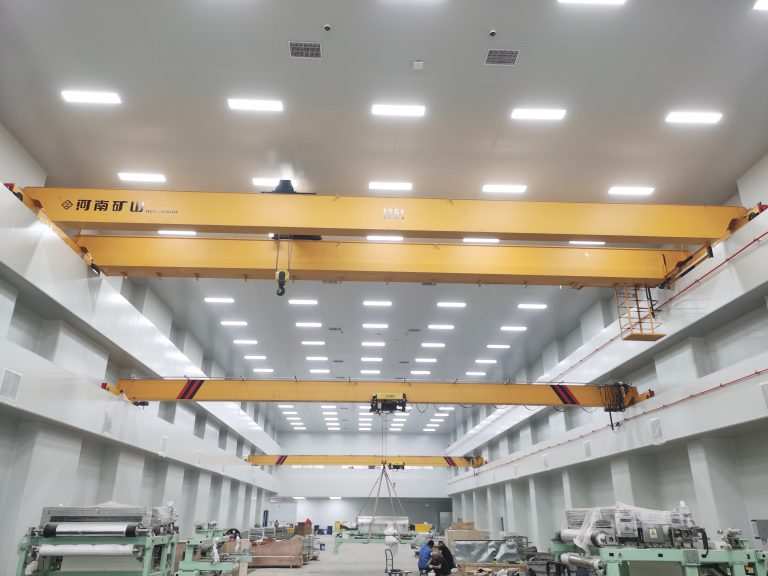
The most intuitive difference between the two types of equipment is the number of main girders: single girder overhead cranes have only one main girder, while double girder overhead cranes have two main girders.
The number of main girders directly determines the load carrying capacity and overall structural rigidity of the equipment, and also affects the stability of subsequent operations.
Lifting mechanism and trolley arrangement
The lifting mechanism of single girder overhead crane adopts the lower suspension type, which is located below the main girder and occupies part of the vertical space.
The trolley of double girder overhead crane is arranged on the top of the main girder, with a more regular running track and more reasonable space utilization.
Overall Performance Differences
Influenced by structural differences, double girder overhead cranes have obvious differences in lifting capacity, lifting height, running span, utilization level and running stability.
These parameters are not paper data, but directly affect the actual operating efficiency and service life of workshop equipment.
Detailed comparison between single girder overhead cranes and double girder overhead cranes.
| Comparison Items | Single Girder Overhead Cranes | Double Girder Overhead Cranes |
| Lifting Capacity | Focus on light to medium load range; not suitable for long-term heavy-duty lifting | Wider lifting capacity range; mainstream choice for heavy-duty lifting scenarios |
| Span | Suitable for small to medium span workshop layout; easy to shake with excessive span | Adaptable to longer spans; stable for cross-area operation in large workshops |
| Lifting Height | Lower effective lifting height due to under-slung hoist; occupies vertical space | Higher space utilization; hook can reach closer to the roof with the same workshop clear height |
| Duty Class & Working Frequency | Suitable for moderate daily operation frequency; not for continuous heavy-duty work | Higher structural strength; adaptable to high-frequency, all-weather continuous heavy-duty operation |
| Crane Self-weight | Lighter weight; easier to transport and install | Heavier weight; higher requirements for workshop runway beams and overall load-bearing |
| Cost | Lower purchase and installation costs; controllable later maintenance costs | Higher initial investment; better long-term comprehensive cost-effectiveness in heavy-duty, high-frequency scenarios |
| Maintenance & Access | Simple structure; convenient replacement of conventional wearing parts and daily inspection | Equipped with special maintenance platforms; easier maintenance of large components such as trolley and bridge |
| Customization Capability | Limited customization space; mostly suitable for standard lifting needs | Strong customization adaptability; can be modified for special industry needs |
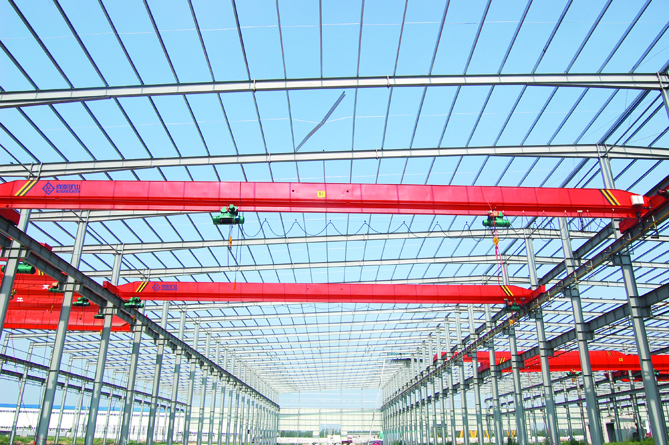
Advantages of single girder overhead crane
Lower initial purchase cost, suitable for small and medium-sized workshops with limited budget.
Lower wheel loads, reducing wear and stress on the workshop track beams.
Lower requirements on the load-bearing capacity of the workshop building, which can be easily adapted to the remodeling of the old workshop.
Simple installation process, short construction period, can be quickly put into use.
It can fully meet the standard lifting operation of traditional workshop and adapt to most light load handling situations.
Advantages of double girder overhead crane
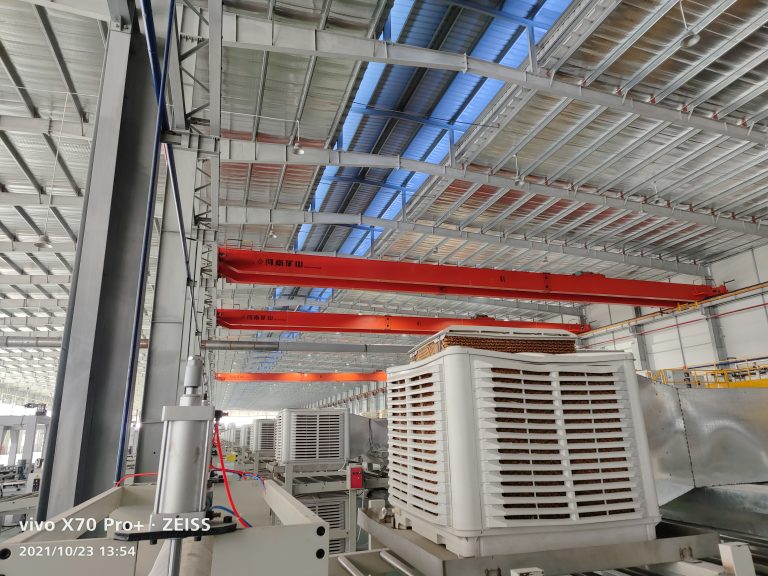
Wider range of lifting capacity to cope with all kinds of lifting needs from conventional to heavy duty.
High vertical space utilization and better effective lifting height performance.
Better operational stability and durability at large spans and high load levels.
Customized adaptability to meet the precise lifting requirements of special industrial production.
Sufficient structural rigidity to maintain good use in long-term heavy load operation.
When to choose a single girder overhead crane?
Applicable working conditions
Daily lifting of materials with light to medium loads, without the need for overweight lifting.
The project budget is limited, and you want to control the initial investment in equipment.
The layout of the workshop is conventional, with no special space constraints or complex operation requirements.
The frequency of daily operation is moderate, not a continuous high-intensity heavy-duty operation.
Daily operation frequency is moderate, not a continuous high-intensity heavy-duty operation. Only used for regular material lifting, no need to install special spreaders or accessories.
Application Examples
Lifting and loading and unloading of small parts in machinery assembly workshop.
Transferring, stacking and accessing of spare parts in warehouses.
Routine material handling operations in small fabrication shops.
Equipment dismantling and component lifting assistance in general maintenance workshops.
When to choose a double girder overhead crane?
Suitable conditions
Heavy materials need to be lifted and the lifting capacity is medium to heavy duty.
The daily operation frequency is high and belongs to the continuous heavy load operation mode.
The workshop has a large span or requires a large effective lifting height.
Need to cooperate with special spreader to complete precise lifting or special process operation.
Considering the future expansion of production capacity, the equipment needs to reserve space for upgrading and remodeling.
Application Examples
Handling of heavy steel and billets in steel warehouses and fabrication shops.
Lifting and changing of large molds in mold shops.
Assembly of complete machines and docking of components in heavy equipment assembly workshops.
Handling of large diameter paper rolls and loading and unloading of production lines in paper mills.
Full process material lifting and transfer operations on large industrial production lines.
Key factors to consider before selection
Lifting Capacity
First calculate the maximum weight of material to be lifted in the workshop per day, taking into account the weight of the spreader and slings.
Reserve a reasonable safety margin. Don't blindly choose large tonnage, and don't affect production due to insufficient tonnage.
Do not blindly choose a large tonnage, nor should production be affected by insufficient tonnage.
Accurately measure the distance between the two columns in the workshop to determine the required span size of the equipment.
Improperly matched spans will not only affect operational efficiency, but also pose a safety hazard.
Lifting height
Combine the net height of the workshop, the stacking height of materials and the travel of the spreader to calculate the actual lifting height required.
Avoid that the lifting height is not enough to complete the lifting operation after the equipment is installed.
Workshop structure
Understand the load-bearing capacity of the workshop, the specification of track beams and the installation conditions.
When remodeling an old workshop, focus on checking the building load-bearing data to avoid overweighting the equipment.
Daily working time and working level
Select the equipment with the appropriate working class according to the daily working time and frequency.
Using low load rating equipment under high frequency operation will accelerate equipment aging and increase the probability of failure.
Budget
Comprehensively consider the full-cycle costs of initial purchase, installation and post maintenance.
Do not focus only on the initial price and ignore the hidden costs of long-term use.
Future Production Needs
Consider the possibility of future capacity increases and material weight increases.
Reserve space for equipment upgrades or remodeling in advance to avoid repeated investment at a later stage.
Reserve space for equipment upgrading or remodeling in advance to avoid repeated investment at a later stage.
If there are special environments such as high temperature, dust, corrosion, explosion-proof, etc. in the workshop, the equipment with corresponding protection level should be selected.
The special environment will affect the selection of equipment and configuration plan, and can not be generalized.
Common mistakes made by buyers when comparing single girder cranes and double girder cranes
Selection based on initial price only
Compare only the price, ignoring the quality of the equipment, working level, adaptability and after-sales guarantee.
Low price choices may seem to save money, but subsequent failures and frequent downtime will add more costs.
Ignoring workshop height restrictions
Without prior calculation of the lifting height, the equipment is installed and the hook is found to be unable to reach the specified height.
The space occupation of single girder underslung hoists is a detail that many buyers tend to overlook.
Neglecting the working load
Using equipment with a low working load rating for high-frequency heavy-duty operations leads to fatigue of the equipment structure and rapid wear of components.
This not only shortens the service life of the equipment, but also increases the safety risk during lifting.
No consideration for future expansion
Only meet the current production demand. After the future capacity increase, the equipment can not adapt to the new operating requirements.
The equipment can only be replaced, resulting in a waste of resources and delays.
Assuming that double girder is always a better choice
Blindly choosing double girder cranes in small and light workshops will cause budget waste and space occupation.
The core of selection is to adapt to local conditions, and not blindly pursue high-end equipment.
Mismatch between crane type and actual application
The use of single girder for heavy loads and double girder for light loads will reduce operational efficiency.
Mismatch between equipment and working conditions will also increase the difficulty of maintenance and the cost of use.
What information should you provide to the crane supplier?
Basic technical details
Specify the rated lifting capacity, running span and effective lifting height of the equipment.
Inform about the length of the trolley run, the voltage and frequency of the workshop power supply.
These basic parameters are the core basis for the manufacturer's customized solutions.
Workshop details
Provide architectural drawings of the workshop, indicating the location, dimensions and load-bearing data of the runway beams.
Indicate the available clear height of the workshop and attach site photos.
Facilitate the manufacturer to judge the feasibility of equipment installation and give a reasonable installation plan.
Application details
Describe the type, shape and unit weight of the lifted material.
Inform the frequency of daily operation, working environment and shift arrangement.
If special lifting gears such as grabs and electromagnetic chucks need to be installed, please state the special needs in advance.
Frequently Asked Questions
Is a double girder crane necessarily stronger than a single girder crane?
In terms of structural rigidity and load capacity, double girder is indeed more advantageous.
However, under the regular situation of light load and low frequency, qualified single girder equipment can also operate stably, and there is no absolute difference between strong and weak.
Is the maintenance cost of single girder crane lower?
Single girder has a simple structure, easy replacement of wearing parts, and lower labor hours and costs for routine maintenance.
It is suitable for workshops with limited budget and only basic lifting needs.
Which crane has a higher hook height?
In the case of the same net height of the workshop, double girder overhead crane has higher space utilization and better effective lifting height.
While single girder cranes lose some vertical space due to insufficient lifting height.
Can single girder cranes be used for heavy duty work?
The upper limit of lifting capacity of single girder crane is limited. The upper limit of lifting capacity of single girder crane is limited. Prolonged heavy-duty work will damage the structure, so it is not recommended for heavy-duty occasions.
To ensure safety and equipment longevity, double girder overhead cranes are preferred for heavy duty work.
Which type is more suitable for new workshop projects?
When choosing a crane for a new workshop, a comprehensive judgment should be made based on capacity planning, material weight and span size.
Choose single girder for light conventional production and double girder for heavy or large workshops, which can be reserved for upgrading in advance.
There is no absolute difference between single girder and double girder.
There is no absolute difference between single girder overhead cranes and double girder overhead cranes.
The final choice depends on the workshop's lifting capacity requirements, the structure of the workshop, the frequency of operation, the project budget and the long-term production planning.
The equipment that suits your working conditions can improve lifting efficiency, reduce costs and minimize potential safety hazards.
It is recommended to consult with professional crane manufacturers before selecting a model to get targeted technical solutions.
Henan Mine Crane can provide free accurate span measurement, selection advice and customized technical solutions for your overhead crane project, helping you to avoid selection errors and choose the most suitable lifting equipment.