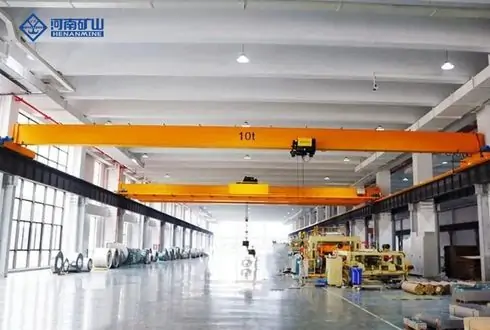

Marine Gantry Crane Height Requirements for Shipbuilding Projects
Shipbuilding conditions differ from those of general industrial lifting operations, as they involve a wide range of working heights, variable component sizes, and numerous on-site obstacles. If the height of a shipbuilding gantry crane is undersized, problems such as the inability to lift components into position, insufficient lifting space, and difficulties in maneuvering may arise. This not only slows down construction progress but also creates unnecessary safety hazards.
There is no standardized lifting height for shipyard gantry cranes, as it varies depending on the ship types built at each facility. Purchasers must precisely match the height specifications of the marine gantry crane to their specific project requirements.
Primary Application Scenarios for Shipyard Gantry Cranes
Lifting height requirements differ significantly across various construction scenarios. Clarifying the operational context is essential for accurately determining the required lifting height of the crane.
Hull Section Assembly Area
Modern ships are constructed using a method of prefabricating sections and then assembling them into a whole. Large hull sections are massive in volume and have significant heights. Gantry cranes must lift prefabricated sections smoothly and position them precisely for assembly, which requires the equipment to have sufficient lifting height to avoid obstruction from bottom cradles and foundation fixtures.
Shipyard Steel Prefabrication Area
The shipyard’s daily production involves a wide variety of marine steel plates, structural steel, prefabricated modules, and steel support frames, all stacked at varying heights. Routine material handling and component assembly operations place consistent and sustained demands on the Crane’s basic lifting height, ensuring the smooth operation of the production line.
Dry Dock and Shipyard Berth Operations
Dry docks and open-air shipyard berths serve as the core areas for the overall assembly, shaping, and maintenance of vessels. Throughout the shipbuilding process, the stacking of multi-layer structures, the installation of high-altitude components, and the handling of heavy-duty components all require Cranes with sufficient lifting height to cover the entire operational range.
Installation of Heavy Equipment in Engine Rooms
Core equipment such as main engines, generator sets, and large pumps must be lifted from the ground, hoisted over the ship’s deck, and precisely positioned at installation points within the engine room. These operations impose stringent requirements on effective lifting height; insufficient height directly prevents equipment from being properly positioned, delaying the installation process.
Ship Repair and Refitting Projects
Operational scenarios for post-delivery ship inspections, structural modifications, and component replacements are more flexible. Repair work requires adaptation to high-altitude disassembly and assembly across different ship types and locations; Crane lifting height must include ample margin to accommodate variable repair conditions.
Offshore Engineering Module Prefabrication Sites
The assembly heights of offshore platforms, jacket structures, and deep-sea engineering modules far exceed those of standard ship components. The heavy-duty shipyard crane used in such offshore projects generally require higher lifting heights to meet the hoisting and assembly demands of large, irregularly shaped modules.
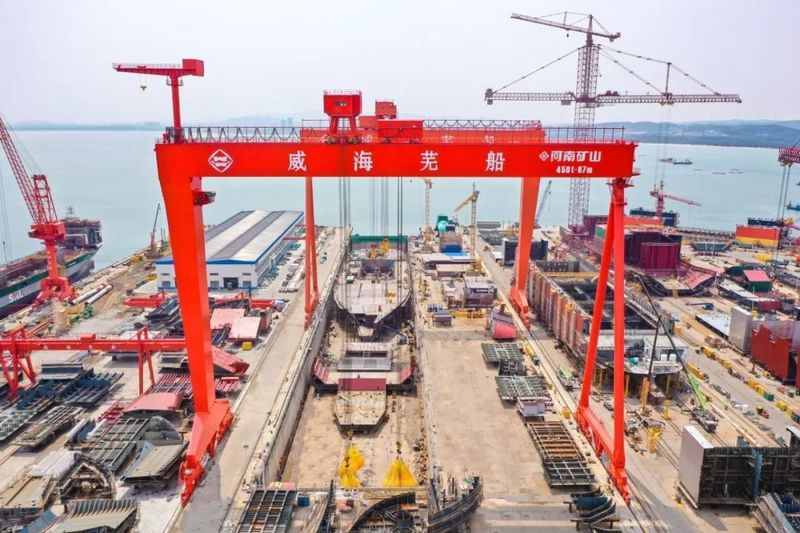
Core Requirements for Lifting Height in Shipbuilding Projects
Shipyards’ requirements for crane height go beyond simply meeting the needs of a single lift; they must also accommodate the overall site layout, long-term construction, and future project iterations.
Adapting to Large Sections and High-Altitude Assembly Operations
Once large hull sections and high-level steel structures are assembled, the overall height increases significantly. The Crane’s effective lifting height must fully clear the assembled structures to ensure components can be smoothly repositioned, closed, and installed without height interference issues.
Adapting to Large Open-Air Work Areas
Shipyard open-air work areas are expansive, requiring the Crane’s lifting height to be coordinated with equipment span, hook travel, and lifting paths. Meeting a single parameter is far from sufficient; only when the entire set of parameters works together rationally can a complete and safe lifting operation space be established.
Adapting to Different Ship Types and Project Scales
Small fishing boats, inland waterway vessels, large ocean-going cargo ships, and offshore engineering platforms all require vastly different assembly heights. Maintenance and light construction projects at small shipyards do not require excessive lifting heights, whereas large ocean-going vessel projects demand lifting heights that are significantly higher.
Standard Lifting Height Ranges for Shipyard Gantry Crane
There is no universally accepted standard for lifting heights on the market; all parameters are determined based on specific project conditions. Drawing on a large number of completed projects both domestically and internationally, standard heights can be categorized into three groups to facilitate quick comparison and reference for purchasers.
Lifting Heights for Standard Projects at Small and Medium-Sized Shipyards
Small and medium-sized shipyards specializing in small vessel repairs, light steel structure prefabrication, and inland waterway vessel construction have relatively low lifting height requirements. In these scenarios, the lifting height of shipyard crane typically ranges from 8m to 12m.
This height range is sufficient to meet daily material handling, small section assembly, and routine equipment maintenance operations, catering to the lightweight, high-frequency construction needs of basic shipyards.
Standard Ship Section Construction Height
Mainstream medium-sized shipyards primarily focus on the construction of ocean-going ship sections and the assembly of standardized modules, representing the most widely applied operating conditions today. The standard lifting height for such projects generally ranges from 12m to 20m.
This range covers the vast majority of hull section closing, deck equipment installation, and mid-level steel structure assembly processes, balancing construction efficiency with site adaptability, making it the most versatile height specification.
Height Requirements for Large Vessels and Offshore Engineering Projects
Large container ships, bulk carriers, and offshore platform module construction projects involve massive components and extremely high assembly clearances. The corresponding heavy-duty shipbuilding cranes typically have lifting heights of 20m–35m, and even higher specifications can be customized for certain ultra-large drydock projects.
Extremely high lifting heights allow for complete clearance of obstructions caused by large ship hulls and multi-story offshore structures, meeting the stringent requirements of high-altitude hoisting, integrated module relocation, and the installation of super-heavy equipment.
Why There Is No Standardized Height
Crane lifting height is influenced by multiple factors, including ship dimensions, section prefabrication processes, dry dock depth, on-site obstacles, and hoisting paths. Even for cranes of the same tonnage, the selected height parameters will vary significantly depending on the specific layout of the shipyard.
Selecting a crane based solely on generic parameters can easily lead to mismatches between the equipment, the site, and the construction process. This is the primary reason why professional manufacturers perform one-on-one height calculations based on the drawings.
The Difference Between Effective Lifting Height and Total Equipment Height
Many buyers tend to confuse these two key parameters. The effective lifting height of the hook refers to the effective working distance from the ground to the highest point of the hook—it is the actual usable construction height.
In contrast, the total equipment height is the maximum dimension of the Crane’s entire structure, encompassing the combined height of the main girder, trolley, and electrical equipment; it cannot be directly applied to lifting operations. Relying solely on total equipment height during selection can lead to a severe misjudgment of actual operational capacity.
Mainstream Crane Models Suitable for Different Height Requirements
Different models feature distinct structural designs, each suited to specific lifting height ranges and operational scenarios. Selecting the right model based on specific needs maximizes equipment performance.
Double-girder Shipyard Crane
The double-girder structure offers high overall rigidity and stable load-bearing performance, supporting high-lift and heavy-load operations. It can accommodate medium-to-high lifting heights of 12 meters or more, making it the primary model for hull section assembly and heavy module lifting in medium-to-large shipyards.
Rail-mounted Crane
The equipment operates along fixed tracks, ensuring structural stability and precise positioning, with height parameters available for standardized customization. It is suitable for standardized shipyards with organized layouts and assembly line operations, perfectly matching the construction needs of fixed assembly areas.
Semi-gantry Crane
Supported by a single-sided workshop structure, these Cranes feature a compact design and a small footprint. They are primarily used for medium-to-low-height lifting operations in auxiliary and maintenance areas of shipyards, suitable for conventional lifting heights ranging from 8m to 12m.
Customized Shipbuilding Gantry Crane
Non-standard customization is available for special operating conditions such as ultra-high lifting heights, multi-hook synchronized lifting, and special path avoidance. These crane can precisely meet the specific height requirements for the high-level assembly of oversized offshore modules and large vessels, and are suitable for various complex shipyard conditions.
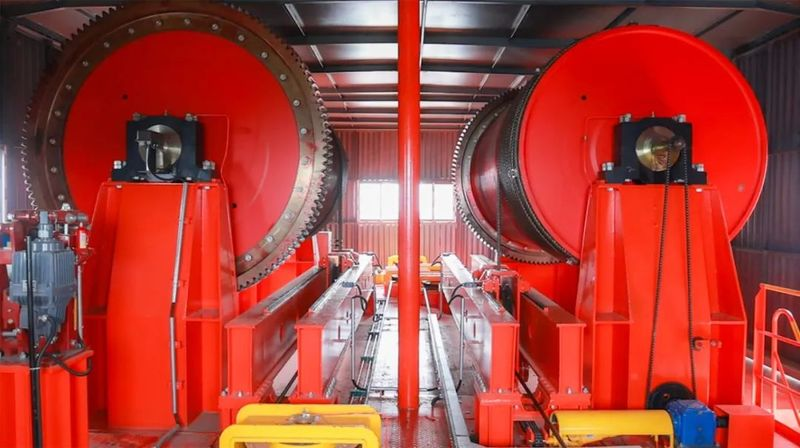
Core Technical Parameters to Verify During Procurement
Lifting height is not a standalone parameter; it must be coordinated with other configurations to ensure the equipment can be put into normal operation.
Effective Lifting Height
A core selection parameter, it must be comprehensively calculated based on the highest lifting point on-site, the maximum component height, and the height of obstacles, with sufficient safety margins reserved to prevent operational interference.
Rated Lifting Capacity
Selection is based on the maximum dead weight of ship sections, offshore modules, and heavy equipment. As lifting height increases, so do stability requirements for heavy-load operations; tonnage matching must be precise and error-free.
Equipment Span
The span must match the dry dock width and assembly area layout. Together with lifting height, it determines the overall working space, ensuring no lifting blind spots across the entire site.
Hook Travel and Effective Working Range
The nominal height does not equal the actual usable height. It is necessary to calculate the upper and lower limits of hook travel and the end clearance distance to verify the actual usable height range.
Overall Operating Length
This determines the Crane’s site coverage area. Combined with the lifting height, it enables comprehensive, full-height coverage of lifting operations throughout the facility.
Number of Hooks
Configurations involving main and auxiliary hooks or multiple hooks alter the method of high-level synchronized lifting, indirectly affecting the utilization of effective height. These must be matched to the specific construction process.
Equipment Operating Speed
High-level lifting operations demand greater stability; lifting and travel speeds must be reasonably balanced to ensure both construction safety and operational efficiency.
Configurations for Outdoor Conditions
Coastal environments with strong winds, salt fog, and high humidity can affect the stability of equipment during high-altitude operations. Corresponding anti-corrosion, wind-resistant, and electrical protection configurations must be designed in tandem with the Crane’s height and lifting capacity.
On-site Structural Clearance Requirements
The heights of existing factory buildings, slipways, ship hulls under construction, and shore facilities must be assessed in advance to ensure no collisions or obstructions occur during high-altitude Crane operations.
How to Select a Reliable Shipyard Crane Supplier
Accurate height selection relies on the manufacturer’s professional engineering calculation capabilities and practical project experience.
Verify Physical Manufacturing Qualifications
Physical manufacturers can customize non-standard height parameters based on on-site conditions, ensuring structural strength and manufacturing precision. Trading companies can only provide standardized finished products and cannot optimize designs for specific height requirements.
Verify Experience with Similar Shipyard Projects
High-quality manufacturers understand the logic behind height selection for different ship types and assembly processes. They are well-versed in the structural reinforcement and stability control requirements for high-altitude lifting, enabling them to avoid compatibility issues across various operating conditions.
Assess Professional Engineering Calculation Capabilities
A professional team can accurately calculate the optimal lifting height based on shipyard drawings, lifting paths, and obstacle layouts, while providing reasonable margin recommendations to avoid parameters that are either excessive or insufficient.
Verify the Complete Set of Technical Drawings and Documentation
Reputable manufacturers provide a full set of documentation, including height diagrams, assembly drawings, hoisting path analysis diagrams, load parameters, and electrical schematics, ensuring that specifications are transparent, verifiable, and acceptable upon delivery.
Confirm Core Component Specifications
High-altitude heavy-load operations place higher demands on the quality of winches, motors, brakes, and wire ropes. Verifying the brands and specifications of core components effectively reduces the likelihood of failures during high-altitude operations.
Verify the Factory Quality Inspection System
Before shipment, the equipment must undergo no-load and full-load high-altitude hoisting tests to verify stability at maximum operating heights. Complete inspection records must be retained to ensure the equipment is ready for immediate use upon delivery.
Clarify the Scope of Installation and Commissioning Services
The installation of high-altitude gantry crane demands extremely high precision. The manufacturer must provide professional on-site installation, commissioning, and alignment services to ensure that height parameters fully comply with design standards.
Verify After-Sales Support and Spare Parts Availability
Maintenance and spare part replacement for high-reach equipment are more challenging. Reliable after-sales support and a well-stocked inventory of spare parts can minimize equipment downtime.
Common Misconceptions in Equipment Selection
Many equipment compatibility issues stem from oversights during the selection phase, particularly misjudgments regarding height parameters.
Focusing solely on lifting capacity while completely ignoring lifting height can result in equipment that meets tonnage requirements but fails to perform critical high-altitude lifting operations.
Confusing the hook’s effective lifting height with the equipment’s total structural height, resulting in calculation errors, causes the equipment to be incompatible with on-site conditions after installation.
Selecting equipment based solely on current standard construction heights without considering the highest assembly requirements leads to immediate limitations during high-altitude operations.
Focusing only on current construction needs without allowing for future ship model upgrades means equipment specifications will fall behind project requirements within just a few years.
Neglecting hook travel and end clearance results in nominal heights that appear sufficient but severely insufficient usable height in practice.
Directly applying standard model height parameters without customization or optimization based on shipyard layout and hoisting paths leads to extremely poor adaptability.
Failure to provide complete site drawings and operational data prevents manufacturers from accurately calculating heights, resulting in poor compatibility between the equipment and the site.
Frequently Asked Questions
What is the standard lifting height for shipyard gantry crane?
Small to medium-sized repair and light-duty construction projects typically use 8–12 m; standard ship section construction generally ranges from 12–20 m; large ships and offshore engineering projects often use 20–35 m, with custom height increases available for special conditions.
How can the required lifting height for a project be accurately calculated?
Calculations should be based on the height of the tallest on-site component, clearance from obstacles, safety margin for lifting operations, and the height of the lifting frame, combined with an analysis of the lifting path. It is recommended to have the manufacturer’s engineering team perform precise calculations using the drawings.
Are lifting height and total equipment height the same parameter?
No. Effective lifting height refers to the vertical distance within which the hook can operate and is a practical parameter; total equipment height refers to the maximum height of the entire machine structure and serves only as a reference for site installation—it cannot be used as a basis for selecting a Crane.
Do large ship types always require taller Crane?
Most likely. Large ship sections are taller and have more assembly levels, requiring greater vertical working space; standard heights cannot meet the demands of section joining and equipment installation.
How much height allowance should be reserved during selection?
For standard projects, a safety margin of 1–2 m is recommended. For projects involving large offshore modules or future ship upgrades, a margin of 3–5 m should be reserved to avoid constraints during future operational upgrades.
Can a single gantry crane handle both shipbuilding and ship repair operations?
Yes. As long as the lifting height, span, and tonnage parameters cover both the high-altitude requirements of shipbuilding and the flexible needs of repair work, a single unit can accommodate both scenarios.
What drawings should be provided during the quotation phase?
Site layout plans, dry dock dimension drawings, drawings of the largest components, and site obstacle distribution maps are required to enable the manufacturer to accurately calculate the required height, span, and operational range.

Summary
There is no uniform standard for the lifting height of shipyard gantry cranes; all selections must align with ship specifications, section dimensions, assembly processes, and site layouts. Simply selecting based on generic parameters can easily lead to operational limitations, equipment idleness, or the need for rework and modifications.
When selecting and purchasing equipment, one must not focus solely on lifting capacity but must also verify the effective lifting height, hook travel, on-site headroom, and future expansion requirements. Prioritize manufacturers with shipyard project experience who can provide professional engineering calculations and customized solutions.
A reliable shipyard gantry crane manufacturer does more than just supply standardized equipment; they can customize height, span, and full sets of parameters based on project drawings, while providing comprehensive technical documentation and full-cycle after-sales support.
Henan Mine Crane specializes in providing lifting equipment for shipyards and offshore engineering projects worldwide. We can precisely calculate the optimal lifting height based on specific project conditions and customize dedicated gantry crane solutions.
If you are unsure about the appropriate crane height for your project, please provide the required lifting capacity, maximum component dimensions, dry dock layout, and on-site conditions. Our engineering team will then provide you with a precise selection proposal.