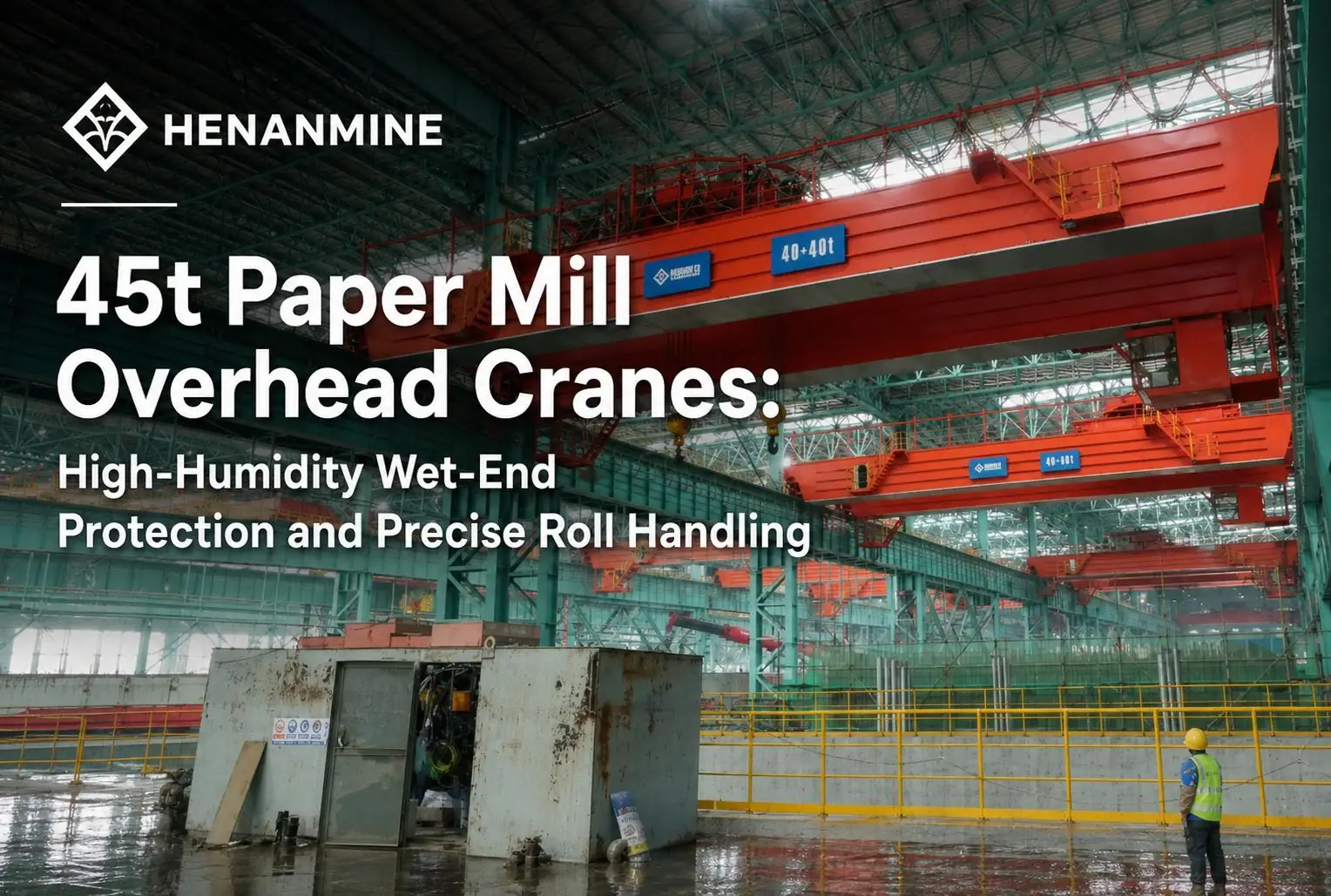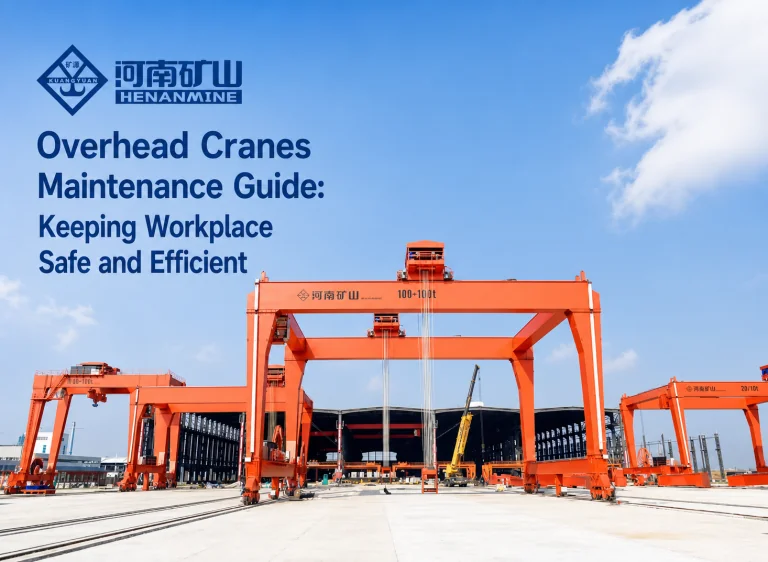

Overhead Crane Buying Guide: How to Choose the Right Crane for Your Facility?
Henan Mine Crane has been doing sales and technical support for over twenty years, I have received customers from all over the world, from small manufacturing plants in Southeast Asia to large heavy industrial enterprises in Europe and the United States, and I have seen too many cases of improper selection of equipment and stepped on the pit.
Purchasing overhead crane buying guide is never simply buying a piece of equipment, but a long-term investment that affects production for many years. It is directly related to the production rhythm of the workshop, the safety of the workers, the layout of the plant to match, but also determines the long-term operating costs of high and low.
Many customers only focus on the purchase price at the beginning, ignoring their own working conditions and long-term demand, and as a result, buy back the crane either insufficient load, or unstable operation, or frequent maintenance, but increased additional investment.There are also some customers are not clear about their actual needs, by the variety of models, parameters confused, do not know where to start.
Today I will take the engineer's perspective, combined with Henan Mine Crane's project experience, step by step to teach you how to choose the right bridge crane for your plant, avoiding those common selection mistakes, taking into account the practicality and cost-effective.
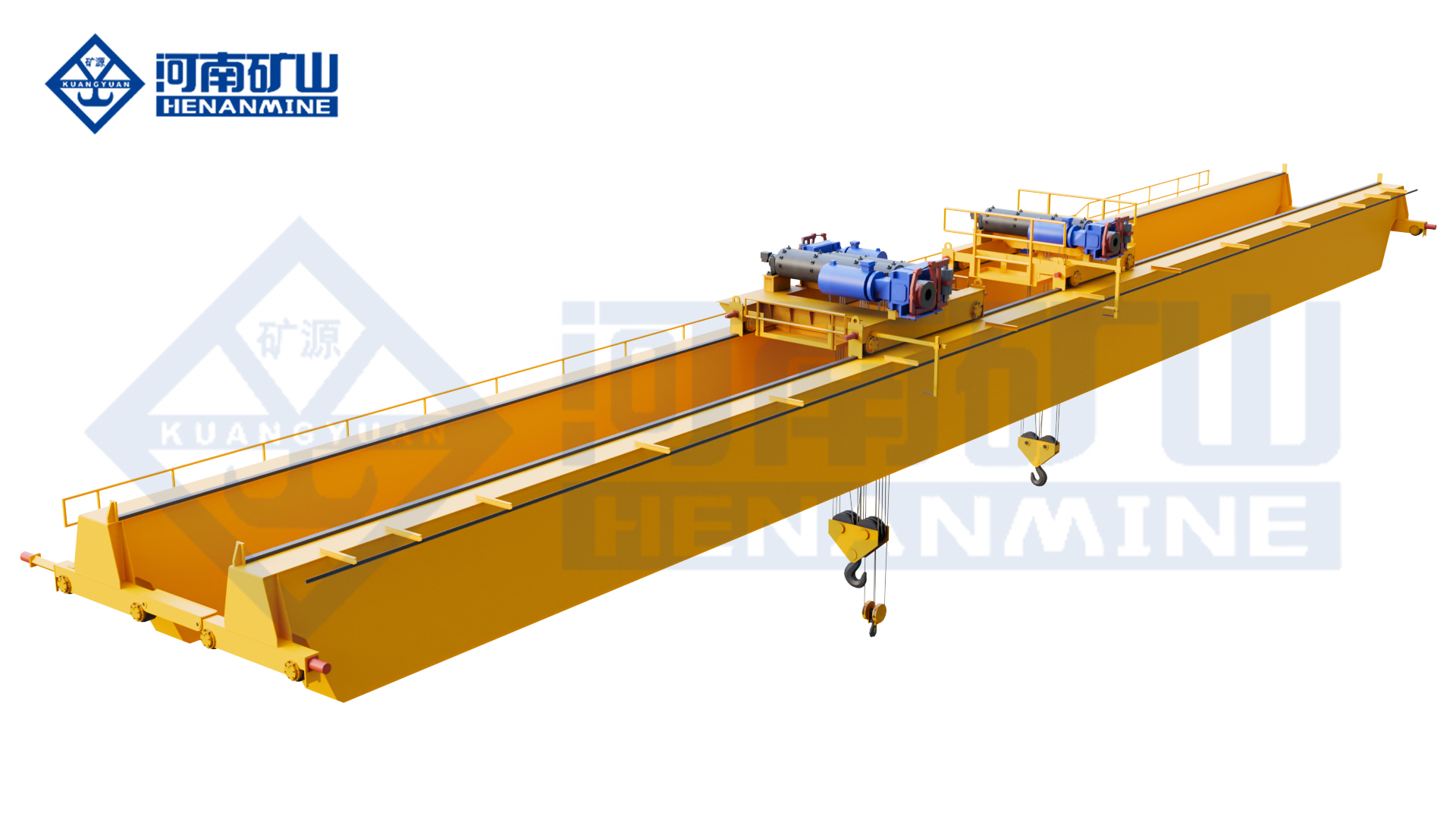
Dual trolley explosion-proof bridge crane
Step 1 - Identify Your Lifting Requirements
The first step in choosing a crane is not to look at the model and compare the price, but to find out your lifting requirements first. Requirements are not determined, and then how to choose is a waste of effort.
This is like building a house first foundation, foundation is stable, the subsequent selection will be accurate, to avoid rework later, the trouble of replacing equipment.
Load Capacity
There is only one core question: what is the maximum load you need to lift? This directly determines the tonnage of the crane selection, but also the most can not be wrong.
Load demand varies greatly from industry to industry, I combined years of experience, organized the most common load range of global customers, for your reference.
Light manufacturing industry, such as electronics factories, small processing plants, the load is mostly in 1-20 tons, mainly used for small materials, parts and components transfer, the tonnage of the crane does not require high.
Heavy industry, like machinery manufacturing, mining, the load is generally 20-100 tons, need to lift large equipment, heavy workpieces, the crane's structural strength requirements are higher.
And steel mills, power plants, such scenes, the load is often more than 100 tons, need to lift steel ladle, heavy equipment parts, must use large tonnage, high strength of the special cranes.
Here is a key reminder: be sure to reserve a safety margin. For example, your maximum load is 20 tons, it is recommended to choose 25 tons of crane, to avoid long-term full-load operation of the equipment, to extend the service life, but also to cope with the sudden demand for heavy loads, which is also the core principle of overhead crane capacity selection.
Span Length
Span is the distance between the two ends of the crane rail, that is, the distance between the two runway rails in the plant, this parameter should be combined with the actual width of the plant to determine.
Many customers tend to ignore the importance of the span, either choose a big waste, or choose a small can not cover the entire operating area, affecting productivity.
First of all, the actual width of the plant should be measured to ensure that the span of the crane can completely cover the operating range, to avoid the blind spot of lifting.
Also consider the structural support of the plant, the installation of the track needs to correspond to the load-bearing structure, the selection should be communicated with the plant designer to ensure that the track is stable and safe after installation.
In addition, if you have future plans for plant expansion, it is recommended to reserve a certain span margin in the selection, to avoid later expansion, the crane can not be adapted to the new operating range.
Lifting Height
The choice of lifting height depends on two aspects: the maximum height you need the hook to lift, and the space limitations of the plant.
First determine the maximum hook height, that is, the distance from the ground to the highest position of the hook, to ensure that it can meet the needs of material lifting, equipment installation, such as tall equipment in the workshop, you need a higher lifting height.
Also consider the headroom height of the plant, that is, the distance from the roof to the ground, to avoid the crane to touch the roof when lifting, resulting in equipment damage or safety hazards.
Some of the old plant headroom height is limited, can not be installed conventional lifting height of the crane, then you need to customize, such as shortening the height of the crane itself, adapted to the space of the plant, which is also one of our Henan Mine Crane often do customized services.
Working Duty Classification
Working Duty Classification, simply put, is the crane's “work intensity”, which is based on the frequency of lifting, load ratio, the number of hours of annual operation to classify, which directly determines the service life and reliability of the crane.
There are three global standards: ISO 4301, FEM classification and CMAA A-F class, the logic of different standards is slightly different, but the core is to match the intensity of work.
For example, ISO 4301 and FEM standards, according to the time utilization rate and load spectrum coefficient, the crane will be divided into 1M-8M a total of 8 levels, of which 6M-8M belongs to the heavy continuous operation level, suitable for steel mills, ports, and other high-frequency, heavy-duty scenarios; 1M-3M belongs to the lightweight level, suitable for construction sites, such as auxiliary lifting and other low use rate scenarios.
CMAA standard is divided into A to F class, A class is light load intermittent operation, F class is continuous heavy duty operation, such as heavy industrial workshop, most of the need for E class or F class cranes.
Crane duty classification is a point that many customers tend to ignore, many people think that as long as the tonnage is enough, the result is to choose a low working level crane, in high frequency, heavy duty operation scenarios, less than a year on the main girder fatigue, wear and tear of the components of the serious problems, but the loss is not worth the gain.
Step 2 - Choose the Right Overhead Crane Type
After defining their own needs, the next step is to choose the right type of crane. The most common on the market is single girder, double girder, as well as the top row, bottom row of these four, they have their own adaptable scene, there is no absolute good or bad, only whether it is suitable.
Many customers will be entangled single girder vs double girder crane, top running vs under running crane, in fact, as long as the combination of their own load, span and plant conditions, you can quickly make a choice.
Single Girder Overhead Crane
The Single Girder Overhead Crane, the most economical and practical type, is suitable for light to medium load scenarios and is the preferred choice for many small and medium sized businesses.
Its advantages are obvious: low cost, much cheaper than the same tonnage double girder crane, can effectively control the initial investment; lightweight structure, light weight itself, the load-bearing requirements of the plant is not high; simple installation, short construction period, can be quickly put into use.
However, it also has limitations: limited load capacity, mostly below 20 tons, unable to meet the demand for heavy-duty operations; span is also relatively small, generally no more than 22 meters, suitable for small plants.
If your plant is not big, the load is within 20 tons, and the operation frequency is not high, the single girder crane can fully meet the demand and has the best cost performance.
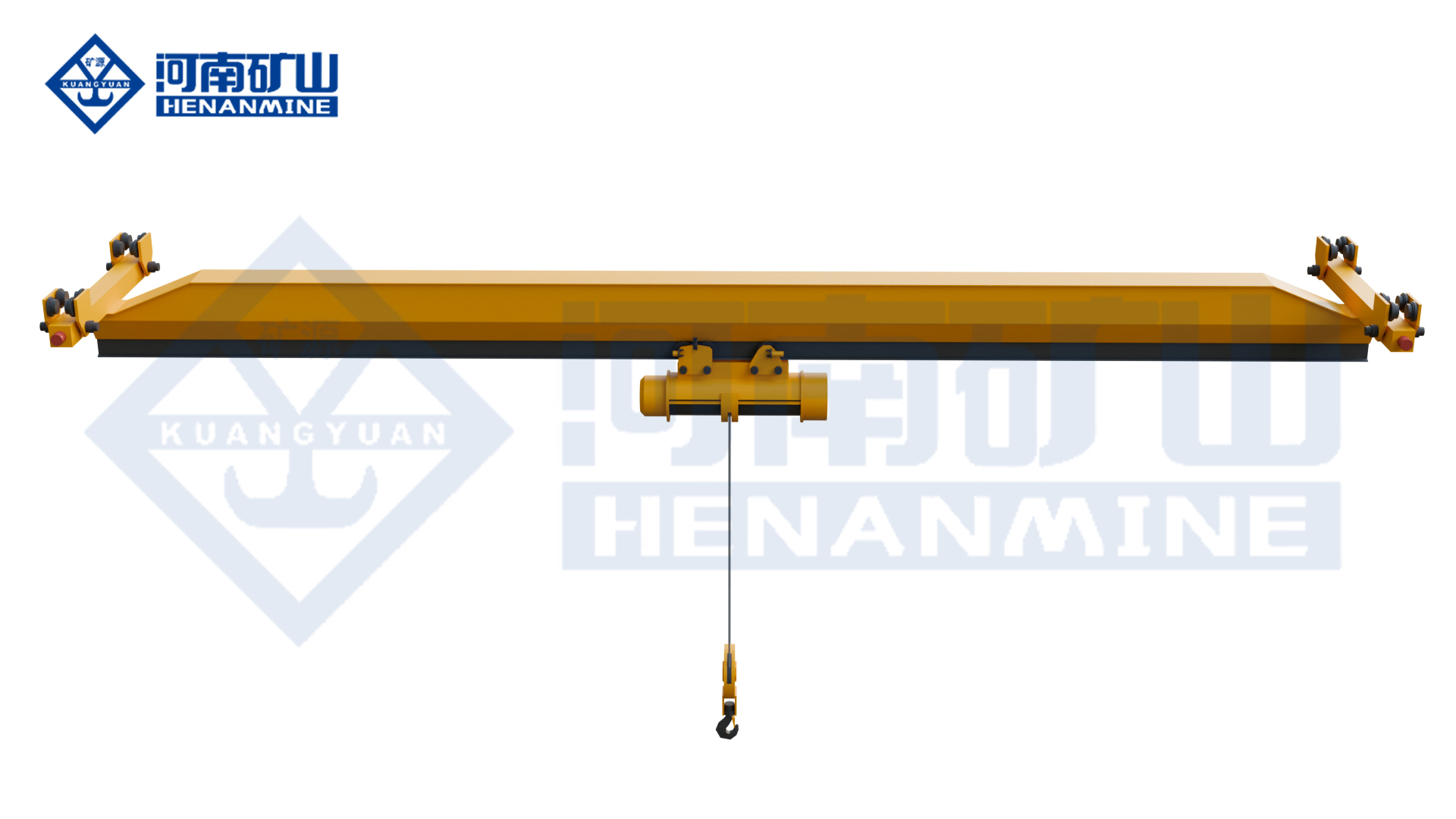
Electric Single-Girder Overhead Crane
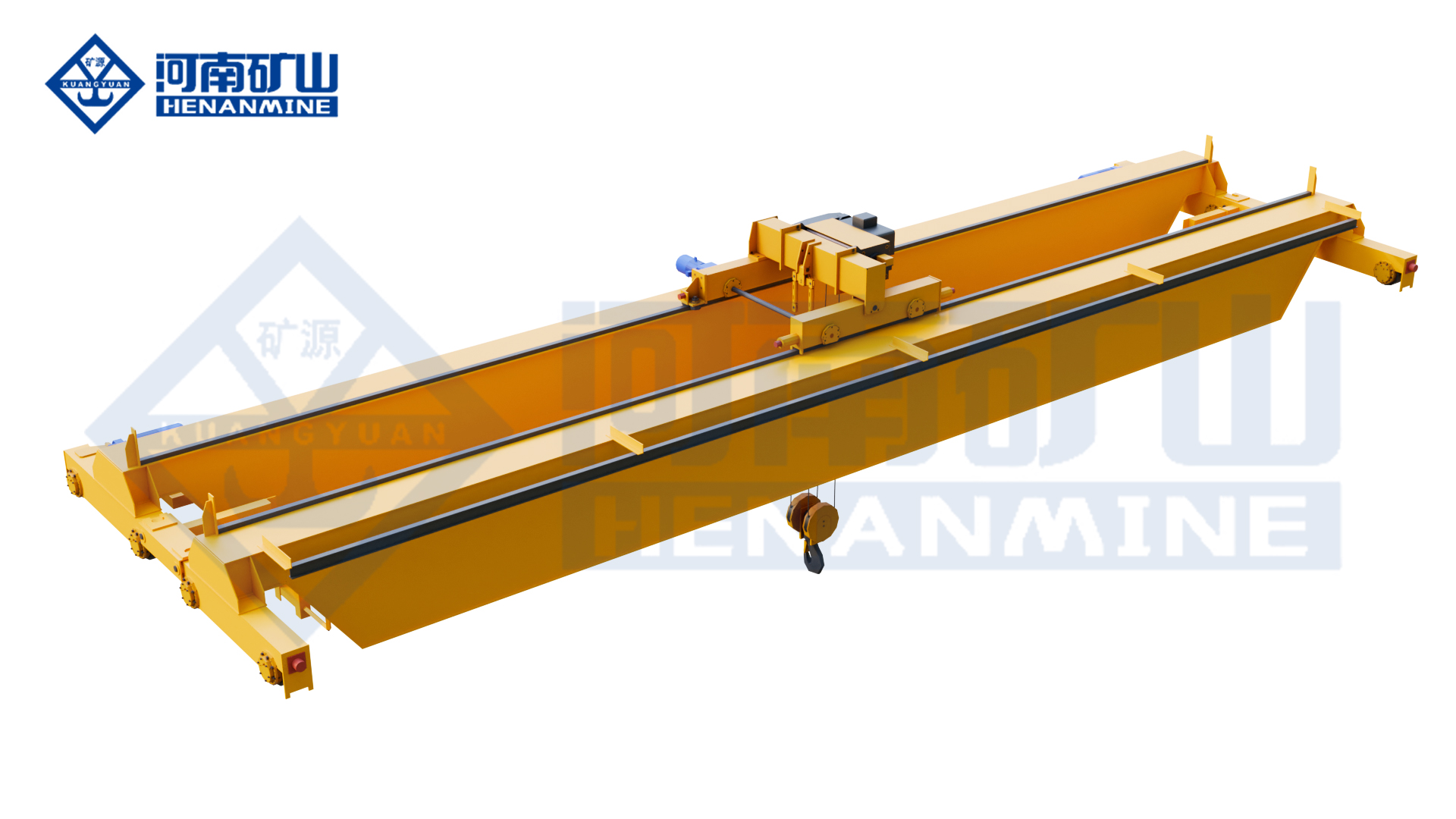
Double Girder Overhead Crane
Double Girder Overhead Crane, mainly used in heavy duty operation scenarios, is also the core lifting equipment of large industrial enterprises.
Its advantages are strong load capacity, which can reach more than 100 tons, suitable for lifting heavy equipment, steel ladles, etc.; large span, which can reach a maximum of more than 35 meters, can cover the operating range of large plants; better stability, smoother operation, suitable for high-frequency, heavy-duty continuous operation.
Although its initial purchase cost is higher than single beam, but the service life is longer, it can reach more than 20 years, which is more cost-effective in the long run.
For example, Henan Mine Crane provides double girder cranes to European and American steel mills, most of them are 50-100 tons, suitable for continuous operation conditions, and many customers have used them for 15 years, and they are still running stably, with almost no major failures.
Top Running Crane
Top Running Crane, that is, the rail is installed on the top of the runway beam, is the most common type in industrial plants, and is suitable for almost all heavy-duty operation scenarios.
Its advantages are strong load capacity, adaptable to large tonnage cranes, large operating space, higher lifting height, and not subject to excessive restrictions on plant headroom.
Whether it is heavy manufacturing, steel mills, or large warehouses, top row cranes are the first choice and can meet the lifting needs of most industrial scenarios.
Henan Mine Crane exports more than 70% of the cranes in the world, especially in Europe, America, the Middle East, heavy industrial customers, almost all choose the top row cranes, suitable for their large plants and heavy load demand.
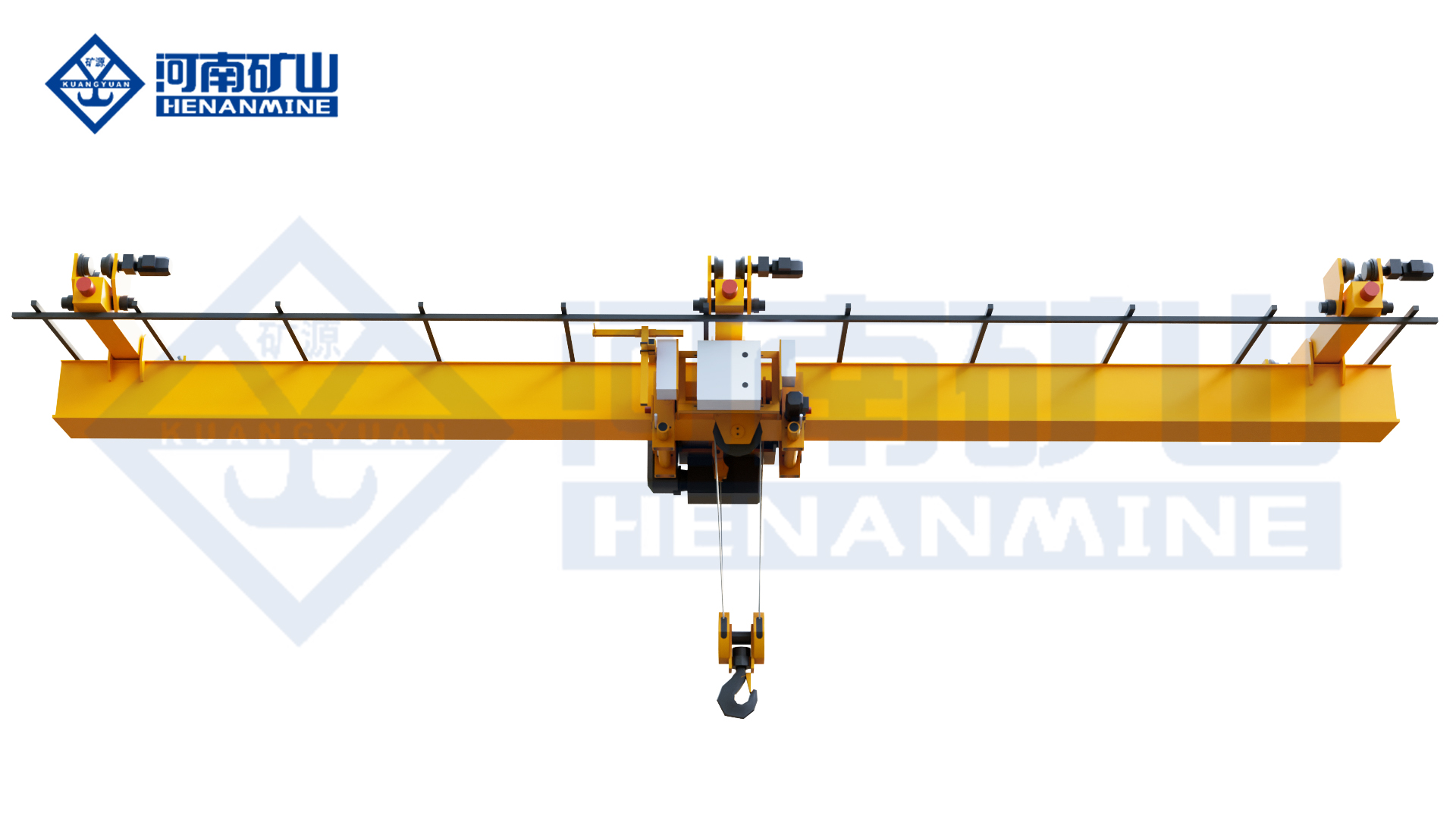
Multi-Point Electric Single-Girder Suspended Crane
Under Running (Underslung) Crane
Under Running (Underslung) Crane, the track is installed under the runway beam, mainly suitable for the scene of limited space, but also a lot of small plant choice.
Its advantages are space-saving, low height, suitable for the old plant with limited headroom height, will not take up too much space in the plant; flexible installation, and lower load-bearing requirements for the plant.
However, its limitations are also obvious: limited loading capacity, mostly below 10 tons, can only be used for light operations; smaller span, unable to cover the large operation area.
If the headroom of your plant is not high enough and the load is light, such as small processing plants and warehouses, the bottom row crane is a more suitable choice.
Step 3 - Consider Your Industry Application
The operating conditions of different industries vary greatly, and the selection of cranes must also be adapted to the needs of the industry, not a generalization.
The same 10-ton crane, used in electronics factories and steel mills, the requirements are completely different - electronics factories need precise positioning, steel mills need to be resistant to high temperatures, dust, which is one of the core points of selection.
Manufacturing Plants
Ordinary manufacturing plants, such as machining plants, automotive parts factories, the operating conditions are relatively mild, belonging to the medium work cycle, mainly used for workpiece assembly, transportation.
This type of scene on the requirements of the crane, focusing on accurate positioning, such as assembly line parts transfer, the crane needs to run smoothly, accurate positioning, to avoid collision damage to parts.
Most of them use 10-20 tons of single-girder or double-girder cranes, working level in ISO 4M-5M, CMAA C-D level can be, do not need too high configuration, taking into account the practicality and cost.
Warehouses & Logistics
Warehouses and logistics centers lifting operations, the most important feature is the high frequency of lifting, mainly used for palletized goods, the transfer of packaging boxes, there are certain requirements for speed.
This type of scene is suitable for light and medium-sized cranes, 1-10 tons of single girder cranes or bottom row cranes are more suitable, the working level in ISO 3M-4M, focusing on the operating speed and operational efficiency.
Many logistics customers will require cranes with fast running function to reduce the material transfer time and improve the turnover efficiency of the warehouse, which is also the place we will focus on optimizing in the customization.
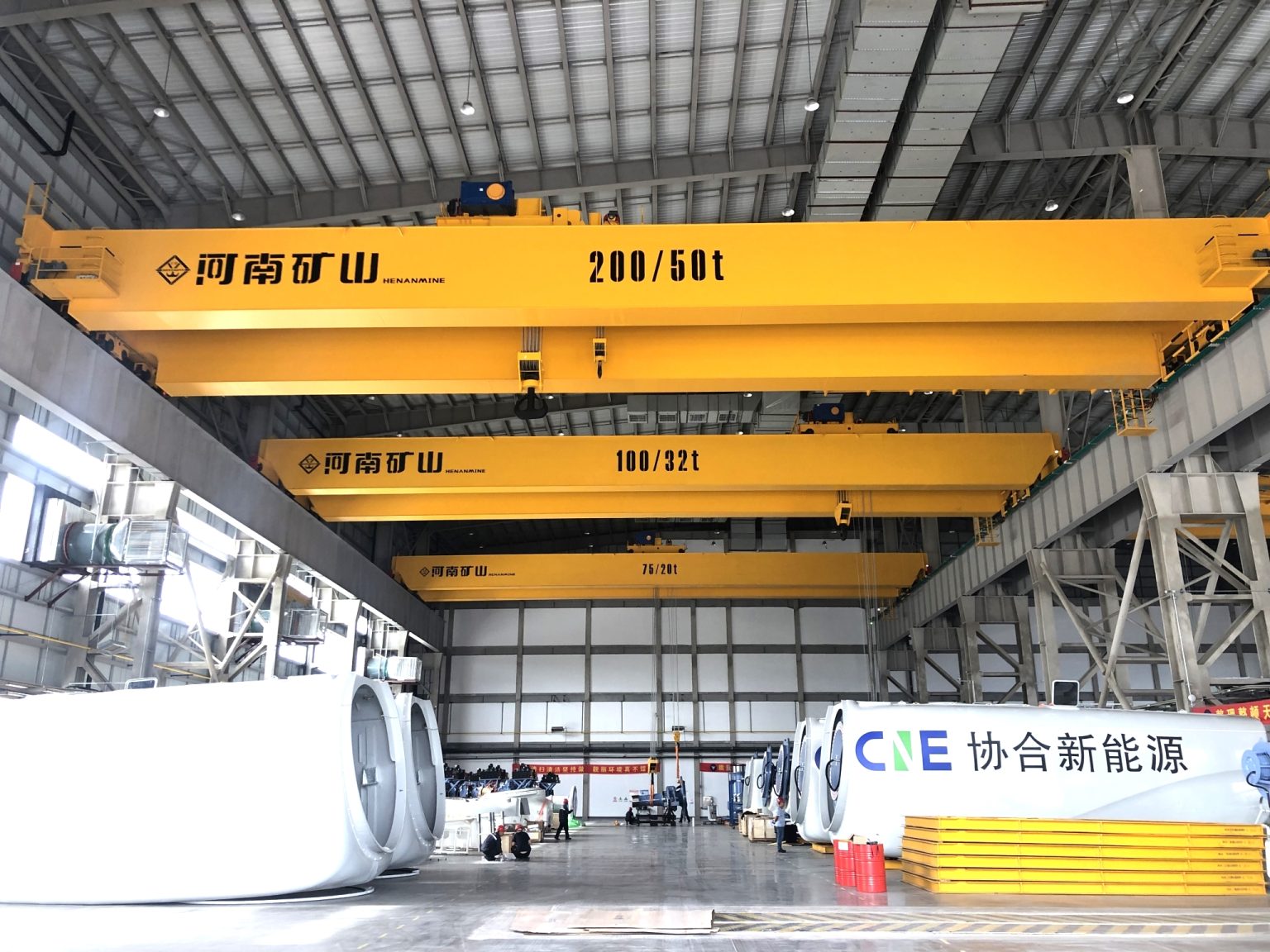
Henan Mine-Manufactured Double-Girder Bridge Crane
Steel & Heavy Industry
Steel mills and heavy manufacturing plants are the most demanding operating environments, with high temperatures, dust, heavy loads, and continuous operation, making cranes extremely demanding.
Operation will face high temperature radiation, molten metal splash, and a lot of dust, iron oxide, which requires cranes with high temperature, dust, impact resistance.
Most of the loads are over 50 tons, requiring double girder overhead cranes, the working level must reach ISO 6M-8M, CMAA E-F class, the structure needs to be strengthened treatment, and at the same time, equipped with a perfect safety protection system.
Cranes for this type of scenario cannot be cost-saving and must be specialized metallurgical cranes, otherwise frequent failures will seriously affect production and even lead to safety accidents.
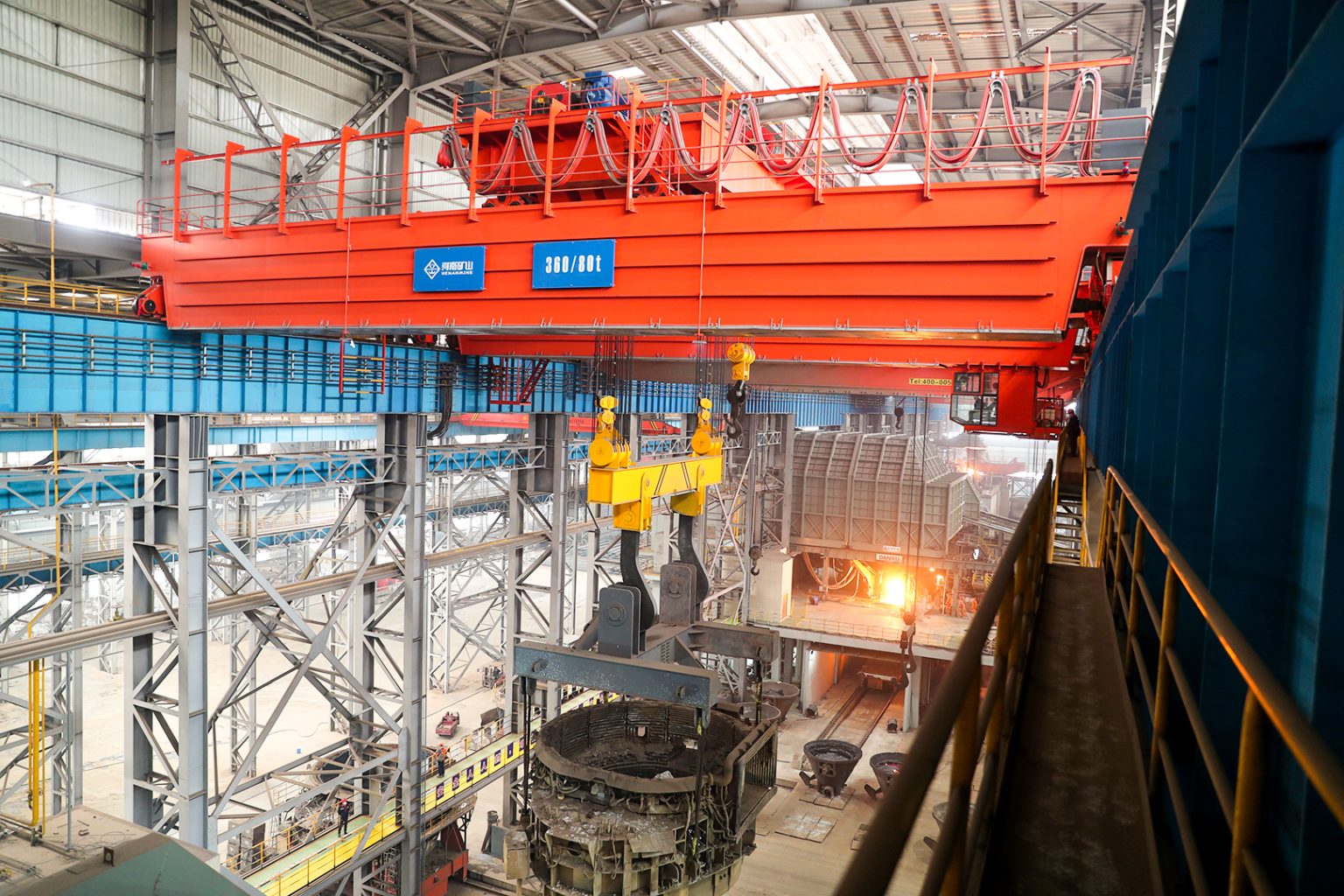
Steel Mill Casting Specialized Crane Manufactured by Henan Mine
Step 4 - Evaluate Safety Features
The safety of lifting operations always comes first. Regardless of the industry, the safety configuration of the crane can not be compromised, even if it costs a little bit more, but also to avoid late safety hazards and accident losses.
Many customers in order to save costs, omit some safety configurations, the result of overloading, collision, brake failure and other problems, not only damage to the equipment, but also may cause injuries and deaths, the loss is not worth it.
The following safety components are essential for all cranes:
Overload protection device, which can monitor the load weight in real time, and once it exceeds the rated load, it will automatically stop running to avoid equipment overload damage;
Emergency stop system, regardless of the operator on-site operation, or remote control, can quickly trigger an emergency stop to deal with unexpected situations;
Anti-collision system, when multiple cranes are working together, it can avoid collision between the equipment, and at the same time prevent the crane from hitting the structure of the plant;
Limit switch, which can limit the lifting height and operating range of the crane to avoid over-range operation and damage to the equipment;
Brake redundancy system, also known as dual brake design, when a single component fails, the backup brake can take over in time to avoid the load falling, which is especially important in heavy load and high risk scenarios.
At the same time, cranes must also comply with international safety standards, such as ISO, FEM, CMAA, as well as local safety regulations, otherwise they can not pass the safety inspection and acceptance, and can not be put into use.
All cranes from Henan Mine Crane will undergo strict safety testing before leaving the factory to ensure that each safety configuration meets the standards and is suitable for different regions of the world.
Step 5 - Analyze Lifecycle Cost
This is the most easily overlooked point by customers: many people only look at the initial purchase price when purchasing, thinking that cheap is a good deal, but ignored the long-term operating costs, and in the end, but spent more money.
Crane life cycle is generally 15-20 years, the selection of the “long-term account”, a comprehensive assessment of the full life cycle cost (TCO), rather than just look at the immediate purchase price.
CAPEX
Initial investment (CAPEX) mainly includes four parts: the crane's main girder structure, hoisting winch system, electrical control system, and on-site installation and commissioning costs.
The initial input varies greatly for different configurations of cranes, such as double girder cranes are more expensive than single girders, large tonnage is more expensive than small tonnage, and customized configurations are more expensive than standard configurations.
But here is a reminder: do not choose inferior components or simplify the configuration in order to save the initial investment, such as replacing special motors with ordinary motors, and replacing double-layer wire ropes with single-layer wire ropes, which will cause frequent failures in the later stage and increase the maintenance cost.
OPEX
Operation cost (OPEX) is the core of long-term expenditure, mainly including energy consumption, regular maintenance, spare parts replacement, and failure and downtime loss, which accounts for 60%-70% of the whole life cycle cost.
Energy consumption, different configurations of crane energy consumption varies greatly, for example, the replacement of traditional wire-wound asynchronous motors with permanent magnet synchronous motors, energy consumption can be reduced by 20%-35%, a 16-ton crane, annual operation of 3,000 hours, you can save 12-192,000 yuan in electricity costs.
Maintenance and spare parts costs, mainly depends on the quality and durability of the equipment, high-quality cranes have a low frequency of replacement of wearing parts, maintenance costs are also low; while poor-quality cranes, not only the frequent replacement of wearing parts, but also may be a major failure, maintenance costs are very high.
Loss of downtime is the most invisible cost, especially in continuous production factories, crane failure downtime of one hour, may cause hundreds of thousands or even millions of capacity loss, which is also an important part of industrial bridge crane cost.
Total Cost of Ownership (TCO)
Low-priced cranes have a low initial investment, but the later maintenance costs, downtime losses will be very high, and short service life, may need to be replaced in 5-10 years;
While high-quality cranes, although the initial investment is slightly higher, but low maintenance costs, less downtime, long service life, 15-20 years do not need to be replaced, more cost-effective in the long term.
Henan Mine Crane customers, many of them are the second purchase, they feedback, the first time to buy a low-priced crane, the later trouble, the second time to choose our equipment, although a little more expensive, but in the long run, but saved a lot of cost.
Step 6 - Consider Automation & Smart Upgrades
With the development of industry 4.0, more and more factories began to promote automation transformation, crane automation upgrades have also become a trend, especially high-frequency, high-risk operation scenarios, automation upgrades can bring a lot of convenience.
But here to explain: automation upgrade is not a “gimmick”, but to combine their own needs, do not need to blindly pursue high-end configuration, suitable for their own is the best.
At present, the common automation upgrade configuration are these:
Remote control operation, the operator can be away from the operating area of the control room, complete all the operations of the crane, suitable for high temperature, high-risk scenarios, reduce personnel safety risks;
Anti-swaying technology, retrofitted with electronic anti-swaying system or mechanical anti-swaying device to reduce hook sway, shorten the alignment time, improve operational efficiency, traditional crane alignment takes 1-2 minutes, with anti-swaying system can be shortened to 30-40 seconds;
Intelligent positioning, through the laser or encoder positioning, to achieve accurate lifting of materials, to avoid collision, suitable for scenes requiring high positioning accuracy, such as electronic factories, precision manufacturing plants;
MES system integration, to realize the automatic issuance and scheduling of crane operation tasks, integrated into the factory's intelligent production system, to improve the overall production efficiency;
Predictive maintenance monitoring, real-time collection of equipment operation data through sensors, advance prediction of component loss, the development of planned maintenance, to avoid sudden failure downtime.
If your factory is promoting automation transformation, or operating scenes of high frequency, high risk, these upgrades are worth considering; if it is just a simple material transfer, the basic configuration is sufficient, without additional costs.
Common Mistakes When Buying an Overhead Crane
Combined with these years of project experience, I have summarized the 5 selection mistakes most often stepped on by customers around the world, and many customers have spent a lot of money because of these mistakes, which also affect the production.
Only look at the price, ignoring the quality and suitability. This is the most common mistake, many customers are greedy for cheap, choose low-priced cranes, the results of frequent failures in the late stage, maintenance costs, downtime losses far more than the money saved in the early stage.
Neglect the working level, with low-level equipment instead of high-level. For example, in high-frequency, heavy-duty scenarios, using ISO 4M level cranes instead of 6M level, the equipment is overloaded for a long time, and component damage will soon occur.
Underestimation of future expansion needs, selection without reserve margin. For example, if the plant is to be expanded in the later stage, the span and load of the crane are not enough to adapt to the new operational requirements, and the crane can only be re-procured, resulting in waste.
Ignore the plant structure load-bearing capacity. Some customers are only concerned about the parameters of the crane, without considering the load-bearing capacity of the plant, after the crane is installed, the plant structure can not withstand, can only be rectified, delaying production.
Do not verify the experience of the supplier. Some suppliers do not have project experience in the relevant industry, can not provide a suitable program, equipment installed after the emergence of various problems, the later after-sales service can not be guaranteed.
Questions to Ask Your Crane Supplier
When purchasing, be sure to ask the supplier a few key questions to avoid stepping on the pit, to ensure that you buy the right equipment for you, and at the same time to protect the later after-sales service and maintenance.
The first question: according to my working conditions, what working level of crane do you recommend? This will show whether the supplier is professional and understands your needs.
The second question: can this crane be upgraded later? For example, if you want to increase the automation configuration or expand the load or span in the later stage, can it be realized through transformation to avoid re-procurement in the later stage.
The third question: what safety redundancy configurations are included in the equipment? Especially for heavy loads and high-risk scenarios, it is important to confirm that the configurations such as double braking and overload protection are complete.
Fourth question: What is the expected service life of the equipment? How many years can it be used under normal maintenance, and what is the warranty period of the core components.
The fifth question: Is there a comprehensive maintenance program? What do I need to pay attention to in the later maintenance, and can the supplier provide on-site maintenance service.
Sixth question: Is it easy to get spare parts? Especially for export customers, make sure the supplier has a local spare parts warehouse, or can quickly send spare parts to avoid failure and can not be repaired in time.
Overhead Crane Buying Checklist
In order to facilitate your quick check, I have compiled a purchasing checklist, check against the selection, you can avoid most of the pits, to ensure that the selection is accurate.
1. Define the rated load you need, and reserve a reasonable safety margin. 2;
2. Measure the width of the plant, determine the appropriate span, and consider the need for future expansion;
3. determine the lifting height of the crane by combining with the headroom height of the factory building;
4. Determine the appropriate working level according to the operating frequency and load ratio;
5. Combine with the industry conditions, select the appropriate type of crane (single girder/double girder, top row/bottom row);
6. Confirm that the safety configuration is complete, in line with ISO, FEM, CMAA and other international standards;
7. Evaluate their own automation needs to determine whether they need to upgrade the relevant configuration;
8. Account for the whole life cycle cost, not just the initial purchase price.
Frequently Asked Questions
What is the difference between single and double girder cranes?
The core difference is in load capacity, span and stability. Single girder cranes are suitable for light and medium loads, small spans, low cost, simple installation, but limited loads and spans;
Double girder cranes are suitable for heavy loads, large spans, good stability, long service life, can be adapted to high-frequency continuous operation, but the initial cost is higher, which is the core difference between single girder vs double girder crane.
How long does an overhead crane last?
Under normal maintenance, the service life of a quality crane is usually 15-25 years. The exact lifespan depends on the level of work, frequency of operation and maintenance.
For example, light duty operation, maintenance in place, the service life can reach more than 25 years; heavy duty continuous operation, the life of the general 15-20 years, many of our Henan Mine Crane's old customers, the equipment has been used for 20 years, is still running normally.
Is duty classification important?
Very important, it directly determines the service life and reliability of the crane. Work level mismatch, will lead to long-term overloaded equipment, frequent failure, and even shorten the service life.
For example, high-frequency, heavy-duty operations, with a low level of cranes, may need to be replaced in 5 years, while the corresponding level of cranes, can be used for more than 15 years, which is the core meaning of the crane duty classification.
Can overhead cranes be customized?
Yes, it is possible. Crane load, span, lifting height, safety configuration, automation upgrades, can be customized according to your actual needs.
Henan Mine Crane has done a lot of customized projects, such as low headroom cranes for old plants and high temperature cranes for steel mills, all of which can be customized according to the conditions of the customer's plant and operational needs.
How much does an overhead crane cost?
There is no fixed price, it mainly depends on the load, span, configuration and automation level, which is also the core influence factor of industrial bridge crane cost.
For light single girder crane, the price is relatively low; for heavy double girder crane, especially with automation configuration, the price will be higher. The specific price needs to be combined with your needs, do a detailed program accounting.
Henan Mine Crane Factory Custom
The core of overhead crane buying guide is “fit” - fit to your load, fit to your plant, fit to your industry, fit to your long-term planning.
Henan Mine Crane manufactured more than 20 years, familiar with the working conditions and safety standards of different industries around the world, can provide customized crane solutions for customers around the world, from the preliminary demand survey, parameter customization, to on-site installation and commissioning, maintenance and upgrading, to provide full-process technical support.
Whether you are a small manufacturing plant, a large heavy industrial enterprise, or a logistics warehouse, no matter which region of the world you are in, we can help you choose the right crane according to your needs, less detours, and realize long-term stable production operations.