
How to Specify a Truss Gantry Crane for Outdoor Yards
Choosing the wrong crane for an open-air yard rarely shows up on day one. It shows up six months later, as rust on the end trucks, sway in a gust, or a duty-cycle failure on the hoist motor. Henan Mine Crane manufactured truss gantry crane is one of the most reliable answers for outdoor lifting because its open-lattice main beam sheds wind load instead of fighting it, but truss alone doesn't make a crane outdoor-ready. The structure, the wind rating, the coatings, the electrical enclosures, and the documentation all have to be specified together.
This guide walks through a complete, nine-step specification process for sourcing a truss gantry crane for an outdoor yard, covering load profile, span, wind engineering, corrosion protection, mobility, hoist selection, electrical safety, foundation requirements, and the inspection documentation you should request from any supplier before you sign a purchase order.
What Is a Truss Gantry Crane?
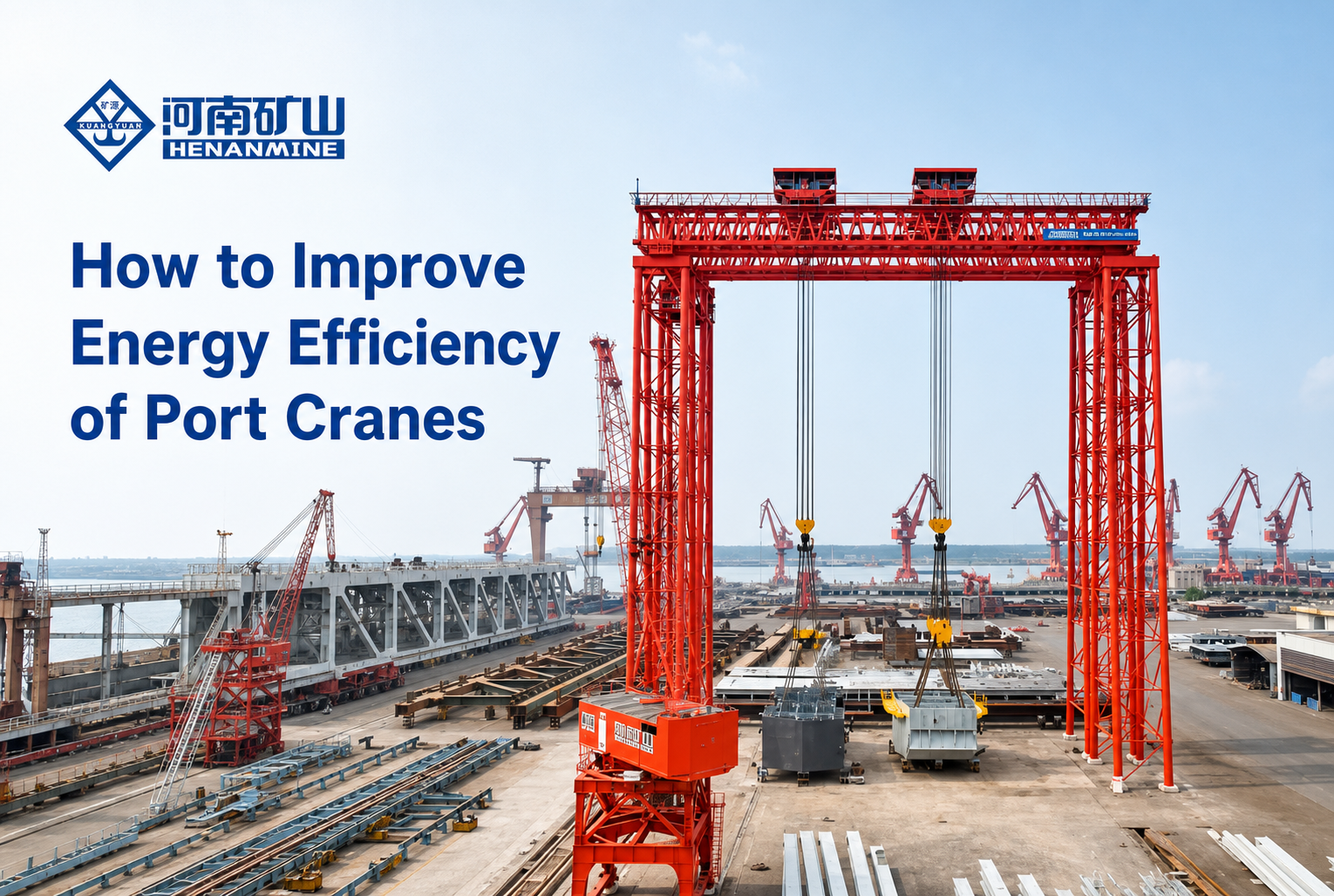
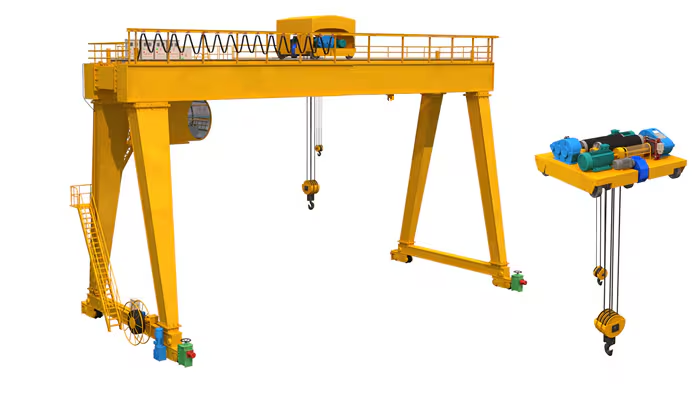
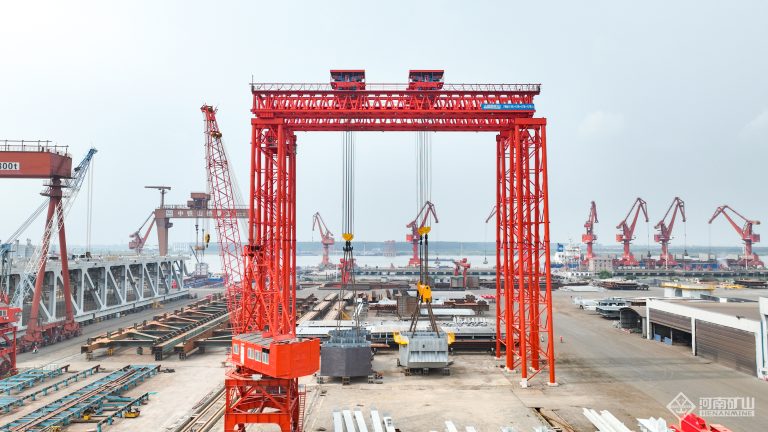
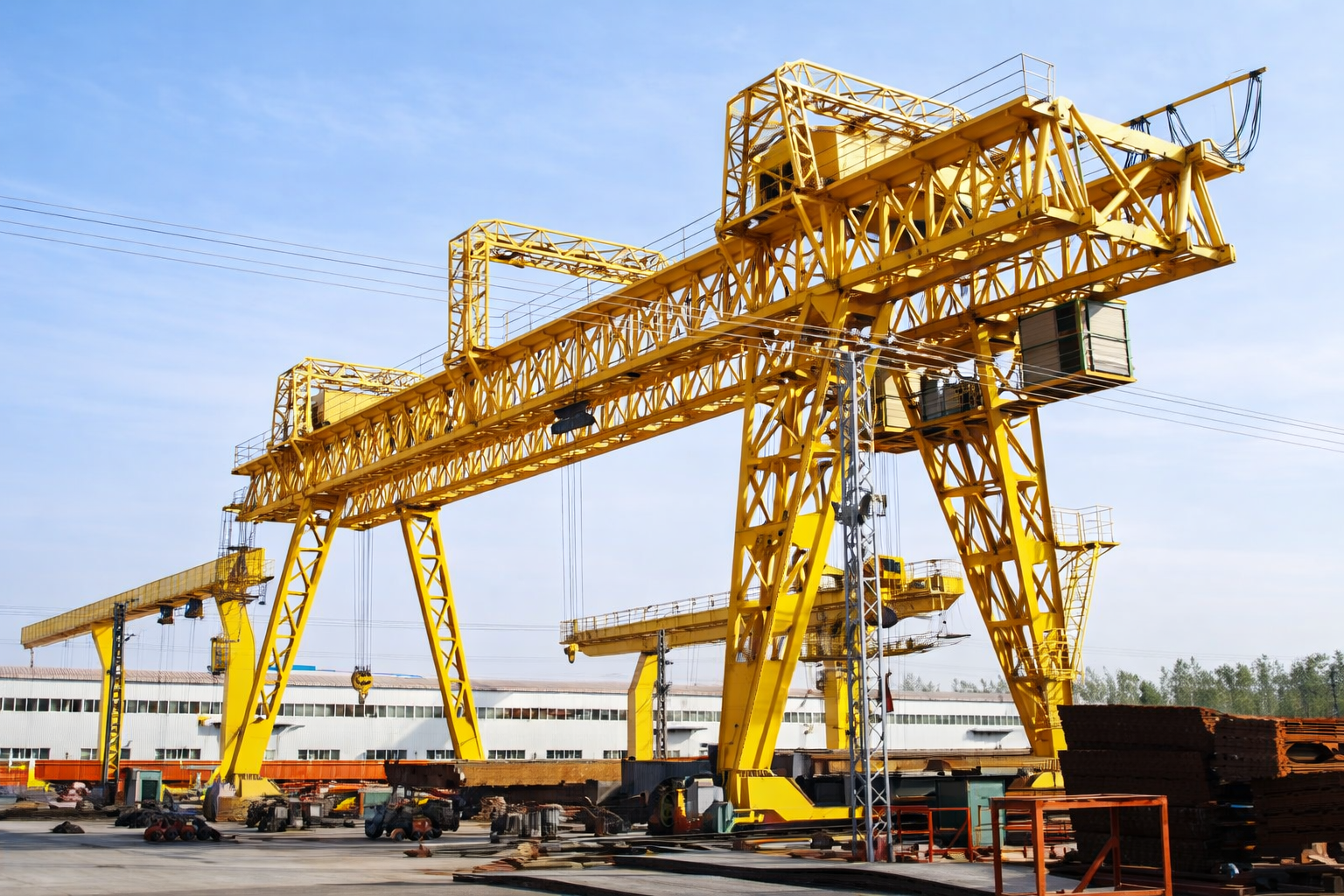
Henan Mine Crane manufactured truss gantry crane is a gantry crane whose main beam is built as an open lattice of welded steel members, angle steel, I-beam sections, or steel bar, rather than a single solid box girder. The crane runs on two or more legs along ground-level rails or, in mobile configurations, on wheels or rubber tires. Because the truss is open rather than solid, wind passes through the structure instead of pushing against a flat surface, which reduces lateral load on the legs, rails, and foundation.
The design trades a small amount of rigidity for a significant reduction in self-weight and wind-exposed surface area. That trade-off is exactly what makes truss gantry cranes well suited to outdoor yards, where wide spans and open exposure are the norm rather than the exception.
Truss gantry cranes are most commonly specified for:
- Steel and metal yards:moving slabs, billets, coils, and structural sections across long storage rows
- Lumber and timber yards:handling long, awkward bundles across wide stacking areas
- Precast concrete yards:lifting beams, panels, and segments between casting and storage zones
- Ports, rail yards, and logistics terminals:covering wide, exposed lay-down areas
- Scrap and recycling yards: handling irregular, heavy loads in dusty, high-wear conditions
In each case, the same underlying logic applies: large open spans, heavy exposure to weather, and a need to keep structural self-weight — and therefore foundation cost — under control.
Truss vs. Box Girder: Why Truss Wins in Outdoor Yards
Box girder gantry cranes use a closed, welded steel box as the main beam. They're the default choice indoors, where rigidity and minimal deflection matter more than wind exposure. Outdoors, the calculation changes.
| Factor | Truss Girder | Box Girder |
| Wind-exposed surface area | Low — open lattice lets wind pass through | High — solid face catches full wind load |
| Self-weight | Lighter for the same span | Heavier, requires stronger foundations |
| Span capability | Strong for long, open spans | Strong but heavier at long spans |
| Rigidity / deflection | Slightly more flexible, more weld points to inspect | Stiffer, fewer joints |
| Best fit | Open yards, coastal/windy sites, long spans | Indoor halls, heavy/precise repetitive lifts |
| Maintenance focus | Periodic weld and joint inspection | Periodic coating and corrosion checks |
Neither structure is universally better, the decision depends on your wind exposure, span, and duty cycle. As a rule of thumb: if your yard is open, spans exceed roughly 25–30 meters, or your site sees regular high winds, a truss girder is usually the more cost-effective structural choice. If you're running heavy, frequent, high-precision lifts in a more sheltered yard, a box girder may justify its added weight and rigidity.
Step 1: Define Your Load Profile and Safety Margin
Every specification starts with load, and load is more than a single number. Maximum lifting capacity is the heaviest single item the crane must lift, but the crane also needs to handle that lift safely thousands of times over its service life.
Work through three questions before talking to a supplier:
- What is the heaviest individual load?Identify the actual heaviest item, not an estimate, and add a 10–20% safety margin above it.
- How often will the crane lift near that maximum?Frequent near-capacity lifting demands a higher duty classification than occasional peak loads.
- How is the load distributed?Concentrated, off-center, or swinging loads (long timber, irregular scrap) place different stresses on the structure than evenly distributed loads like palletized goods.
Duty classification ties these answers together. Outdoor industrial cranes are typically rated using FEM (European) or ISO 4301 duty classes, or the equivalent CMAA classes used in North America — generally split into light duty, medium duty, and heavy duty bands based on how often and how heavily the crane is loaded. Ask your supplier to state the duty class explicitly and to provide a load curve or duty-cycle chart, not just a maximum tonnage figure. A crane rated for occasional light lifting will wear out quickly if it's actually running near-continuous heavy cycles.
Step 2: Map Span, Lift Height, and Hook Coverage to Your Yard
Span is the distance between the crane's two rail centerlines, lifting height is the vertical travel of the hook from its lowest to highest position. Both numbers come from your yard's physical layout, not a catalog default.
To size span and lift height correctly:
- Measure the full working width: Including stacking or storage zones on both sides, plus clearance to avoid the crane catching on stored material.
- Identify the tallest stack or load:The crane needs to clear, and add roughly 0.5 meters of working clearance above it.
- Check for obstacles:Adjacent buildings, light poles, overhead lines, or other cranes — that limit usable span or height.
- Plan for growth:If the yard is likely to expand, oversizing span slightly now is far cheaper than retrofitting later.
Henan Mine Crane Factory supply truss gantry cranes commonly cover spans from roughly 12 meters up to 40 meters or more in double-girder configurations, with lifting heights typically in the 6–30 meter range depending on yard requirements, but these are starting points for a conversation with your supplier, not fixed limits. Longer spans generally push buyers toward a double-girder truss for added rigidity and load distribution across more support points.
Step 3: Engineer for Wind — Operational vs. Survival Ratings
Wind is the single biggest difference between specifying an indoor crane and an outdoor one, and it's also where regulatory requirements get specific. In the United States, OSHA's crane standard (29 CFR 1910.179) requires that outdoor storage bridge cranes be fitted with automatic rail clamps and a wind-indicating alarm device that warns the operator at a pre-set wind velocity. That single requirement should shape how you read any supplier's wind specification.
A proper wind specification distinguishes two separate numbers:
- Operational wind rating:the maximum wind speed at which the crane can safely lift and move a load.
- Survival (non-working) wind rating:the maximum wind speed the parked, secured crane can withstand without sustaining structural damage, typically well above the operational figure.
Truss structures help on both fronts: because the open lattice lets wind pass through rather than load up a solid face, Henan Mine Crane Factory supply truss gantry cranes generally achieve lower lateral wind forces than an equivalent box girder at the same span. Even so, a truss design is not a substitute for proper wind engineering. Before finalizing a spec, confirm:
- The site's actual local wind data (not a generic estimate)
- Whether the supplier's stated operational and survival ratings meet or exceed that data
- Whether rail clamps, anchoring points, and a wind alarm are included as standard or need to be specified separately
- Compliance with relevant regional standards (ANSI/ASME B30.2 in North America; FEM or EN standards in Europe and many export markets)
Skipping this step is one of the most common, and most expensive, outdoor crane specification mistakes.
Step 4: Specify Corrosion and Weather Protection
Outdoors yards put the steel in rain, open to uv ray exposure, test in temperature fluctuations, and in the case of coastal, chemical, or dusty atmospheres experience accelerated corrosion. So many welds between the countless members of a truss structure makes corrosion protection critical, water can collect at connections if coatings or seals are not effective.
A solid weather-protection specification typically includes:
- Hot dip galvanising of structural members at seawater, humid, or chemically aggressive sites ensuring permanent sacrificial protection from corrosion.
- Topcoats generally epoxy or polyurethane to protect outdoor durability and UV resistance of the primary structure.
- Sealed /IP rated enclosures for motors, gearboxes and control panels specify at least IP55 for normal outdoor application, and IP65 for dust, washdown, or salt spray application.
- Beams and trolley tracks drainage detailing so that rainwater doesn’t stand at structural connections.
- Use of stainless steel/coated fasteners/pins at joints that are difficult to inspect or replace once installed.
Match the level of protection with the actual environment, rather than default to the specification for a standard coating package. A yard handling dry steel coils (for inland use) has a different set of needs to a coastal container terminal or a yard storing de-icing salt or cement.
Step 5: Choose Girder Configuration and Mobility
Once the load, span and environment are known then the next consideration is the structural configuration and how will the crane traverse the yard.
Single girder vs. double girder:
- Single girder truss cranes are lighter, are easier to install and are cheaper to purchase ideal for moderate loads and medium to short spans.
- Double girder truss cranes are used for heavier loads and longer spans with better load distribution and greater lateral stability at a cost of higher initial investment and heavier foundations.
Mobility configuration:
- Rail-mounted Gantry cranes run on fixed rails, suitable for yards that have a predetermined, repetitive travel route. This is the typical type used in, steel, lumber, precast yards.
- Rubber-tired gantry (RTG) cranes Lack of a dependence on fixed rails means they are ideal where the lifting zone changes over time or there are constraints on laying rail.
- Semi-gantry crane one support on a building structure or runway and other on a ground leg. This is a combination of the two above options and is a perfect solution for a yard that is located next to an old structure and there is not enough room for the full gantry footprint.
The choice among configurations is significant because each has subsequent effects on foundation design. This should be made prior, not subsequent, to start of foundation engineering.
Step 6: Select Hoist, Trolley, and Control System
A hoist and trolley will govern the real lifting and moving of the loads. The correct one to use will depend on the type of load as much as the amount of lift.
- Wire rope hoists are better for heavier loads, and longer lifting heights, and have the endurance to last through multiple cycles of high-capacity lifting taking place in steel and precast yards.
- Chain hoists, however, are more suited to lighter, less frequent lifts where size and cost are the principal requirements rather than maximum capacity.
- Lift speed and motor rating should be suited to your work rate, high throughput yards require motors and controls rated for continuous duty, not “just“peak lifting force.
- The speed at which the trolley travels seems crucial to its efficiency; the faster the rotation between stacks the better, but if it cant maintain the load it‘s not helping out.
A pendant control is suitable for short spans with minimal operator travel, radio remote control can allow operators to move about and have a clear view of an expansive open yard, and a cabin control is useful for heavy, long span or high movement work where visibility from the elevated cabin improves safety and accuracy.
Step 7: Specify Electrical Systems and Outdoor Safety Devices
This area is often where many outdoor-rated specifications that otherwise work flawlessly fail, due to the fact that indoor-rated devices cannot tolerate yard conditions.
At minimum, an outdoor truss gantry crane specification should address:
- Power supply compatibility ensure the voltage, phase (most outdoor cranes are three-phase) and frequency are compatible with your electrical infrastructure before commissioning.
- IP rated enclosures for motors, junction boxes, control panels, etc. of a size corresponding to the dust and moisture levels specified in Step 4.
- Variable frequency drives for smoother acceleration, reduction of load swing and mechanical stresses on the structure and hoist.
- Protect against overload and limit switch for over-travel and over-lifting capacity.
- Anti-collision systems where several crane or vehicles use common rails or run ways.
- Provides lightning protection and grounding particularly an issue for tall structures in areas with frequent storms.
- The wind alarm and automatic rail clampreferenced in Step 3 confirming they are wired in, and tested, not merely listed as optional accessories.
- Accessible by emergency stop buttons from for both the ground and the operator cabin.
Request that the suppliers itemize all of these explicitly in the technical proposal rather than assume agreement on the broad weatherproof design statement.
Step 8: Confirm Foundation, Rail, and Site Readiness
A correctly specified crane can still underperform, or fail, if the foundation underneath it wasn't engineered for the actual loads involved.
Before installation, verify:
- Foundation and rail capacity: Against the crane's total weight plus dynamic loads during lifting and travel, not just static weight.
- Ground and soil conditions:Since compacted soil, gravel, and concrete foundations all carry load very differently.
- Track gauge and alignment:Which must match the crane's wheelbase precisely — misalignment accelerates wheel and rail wear.
- Site leveling:Since even minor slopes can cause uneven load distribution, wheel binding, or rail-clamp failure under wind load.
- Anchoring points:For the automatic rail clamps and any storm-anchoring hardware specified in Step 3.
A site survey involving both your structural engineer and the crane supplier, conducted before finalizing the order, is the most reliable way to catch foundation gaps while they're still inexpensive to fix.
Step 9: Plan Inspection, Maintenance, and Supplier Documentation
A complete specification doesn't end at delivery. OSHA's crane standard requires periodic inspection of overhead and gantry cranes, with frequency depending on usage intensity, and a documented inspection program is part of responsible outdoor crane ownership, not an optional extra.
Before accepting delivery, request the following documentation from your supplier:
- Structural calculations:Confirming the truss design meets your specified load, span, and wind ratings.
- Duty class certification:(FEM, ISO 4301, or CMAA-equivalent) Matching what was quoted.
- Weld inspection records:Given the higher number of welded joints in a truss structure compared to a box girder.
- Load testing certificates:Confirming the crane was tested at or above rated capacity before shipment or after installation.
- A maintenance and inspection schedule:Including lubrication points, wear-component replacement intervals, and recommended inspection frequency for your duty class.
- Spare parts availability:Particularly for motors, hoist components, and wheels that will need replacement over the crane's service life.
Suppliers who hesitate to provide this documentation are a warning sign worth taking seriously before, not after, the purchase order is signed.
Common Specification Mistakes That Cause Downtime or Failure
Even experienced buyers fall into predictable traps when specifying outdoor truss gantry cranes. Watch for these:
- Sizing capacity to the average load instead of the peak load:Occasional heavy lifts still need to be covered by the rated capacity and safety margin.
- Treating wind rating as a single number:Confusing operational and survival wind ratings leads to cranes that are either over-built and expensive or under-built and unsafe.
- Skipping a site-specific wind and soil survey:Generic regional estimates miss local microclimate and ground conditions that materially affect the design.
- Under-speccing electrical enclosures:An IP-rating chosen for general outdoor use may not hold up in coastal, dusty, or chemically aggressive yards.
- Ignoring weld inspection requirements:Truss structures have more joints than box girders, and those joints need a documented inspection plan from day one.
- Choosing mobility type after foundation design is underway:Rail-mounted, RTG, and semi-gantry configurations each demand different foundation engineering — get this decision settled early.
Henan Mine Crane Factory Custom
Defining a truss gantry crane for an outdoor yard is a structural decision, not merely a tonnage decision. Good ones balance load profile, span, wind engineering, corrosion protection, girder and mobility configuration, hoist and electrical systems, foundation readiness, inspection paperwork through out, in that order, taking site-specific data at every step instead of catalog defaults.
The reward to being that careful is a crane that will support years of wind, weather, and heavy cycling without adding maintenance burden. The devil is in the detail, and where it counts you will see the difference in engineering depth and manufacturing capability where every structural feature is crafted for your true operating conditions not any generic yard assumption.
Henan Mine Crane Factory is able to fully customize every aspect of a truss gantry crane system for difficult outdoor applications such as steel yards, precast facilities, ports and logistics terminals. Simply communicate your lifting needs and on-site conditions with our design staff, and we will engineer a custom solution complete for a long life of trouble-free operation.