
Gantry Crane Installation and Erection Guide for Industrial Projects
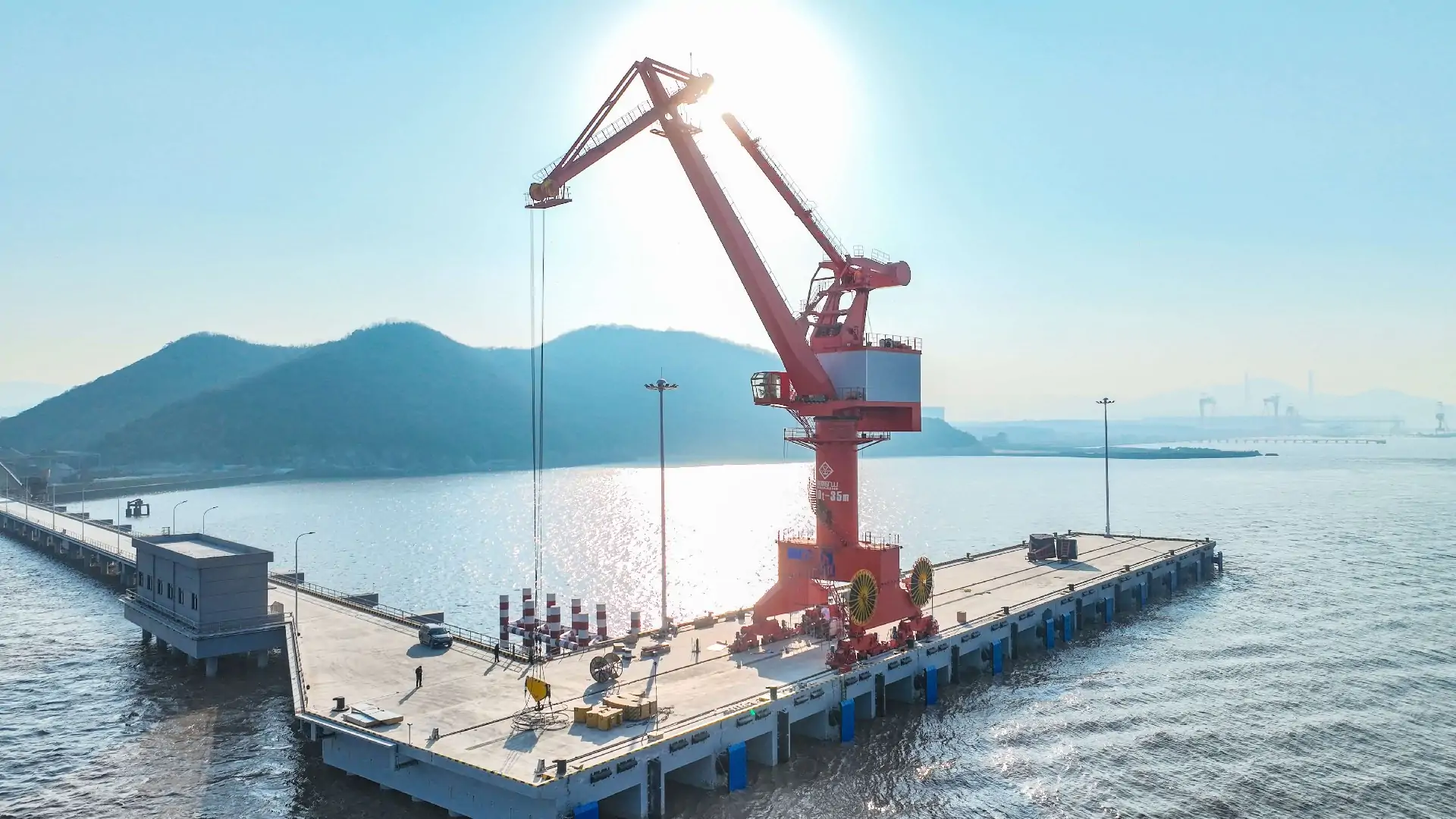
Gantry cranes, as the core key equipment for heavy load handling and material turnover in industrial projects, are widely used in many core scenarios such as harbor loading and unloading, factory production, warehouse storage and transportation, shipyard operation and so on.
The standardization of the installation process and the professionalism of the operation directly determines the safety, structural stability and long-term service life of the equipment, and also affects the productivity and operational safety of the entire industrial project.
This article will provide a set of complete and detailed step-by-step installation guidelines to help project managers, installation teams, site engineers and supervisors accurately grasp the key points of the installation to ensure that the entire installation operation is compliant, efficient and safe.
Pre-Installation Planning & Site Preparation
Pre-Installation Planning & Site Preparation is the basis for safe installation of gantry cranes, which needs to be deployed in four aspects: technology, site, tools, and compliance, to lay the foundation for subsequent operations.
Technical Preparation
The installation team needs to carefully review the equipment design drawings, installation manuals and other relevant information, carefully check the equipment rated lifting capacity, span and other key parameters, combined with the actual working conditions at the site to develop a scientific and feasible installation plan, and at the same time, organize the entire staff to carry out technical briefings and safety training, to make clear the key points of the operation, to ensure that each staff member is proficient in the operation of the norms.
Site Assessment & Foundation Preparation
Comprehensively survey and clean up the obstacles at the installation site, reasonably demarcate the exclusive operation area and set up warning signs to ensure that the ground's bearing capacity is not less than 200kPa, and if the test finds that the bearing capacity is insufficient, it is necessary to take reinforcement measures in time; use reinforced concrete to pour the installation foundation, and accurately control the foundation dimensions, elevation and other key parameters to ensure that the foundation is stable.
Tools, Equipment & Parts Inspection
Prepare all kinds of tools required for installation in advance, check the performance of tools one by one to ensure that they are normally available; comprehensively check all parts of the crane, carefully check the model specifications, count the number of missing or unqualified parts in a timely manner to replenish and replace, so as to avoid affecting the progress and quality of the installation.
Permits & Regulatory Compliance
Apply for installation permits and submit relevant information to the special equipment regulatory authorities, comply with local safety standards, and commission a third party to carry out on-site hazard assessment to ensure operational compliance.
Key Components & Tools for Gantry Crane Installation
Proficiency in the use of the core components of the gantry crane and the installation of the required tools and the use of norms, is to ensure that the installation operation is accurate and efficient completion of the key, the following details of the installation process of the necessary components and tools.
Core Crane Components
The core components of the gantry crane mainly include four categories: one is the metal structure, as the skeleton of the equipment, covering the main beam, outriggers, lower beam, of which the main beam is the core load-bearing parts, outriggers are used to support the main beam and connect to the foundation, and the lower beam is used for connecting the two sides of the outriggers and fixing the track; the second is the lifting system, including the winches, hooks, ropes, which is responsible for the realization of the lifting and lowering of the heavy loads; the third is the operation system, consisting of the track and trolley, which guarantees the equipment's safety and reliability.
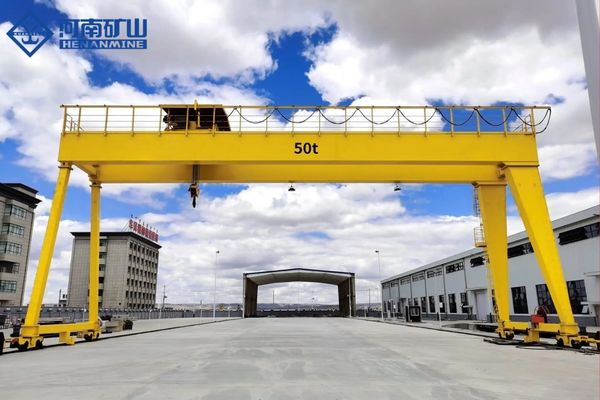
The third is the running system, which is composed of rail and cart to guarantee the horizontal movement of the equipment; the fourth is the electrical system, which includes the control cabinet, limit switch and so on, to control the various actions of the equipment. In addition, it also includes auxiliary parts such as base plate and foot bolts, which are used to fix the equipment and connect the core components to ensure the overall stability of the equipment.
Must-Have Installation Tools
Installation tools are divided into three categories according to their functions, which need to be standardized for selection and operation: lifting tools (automobile cranes, wire ropes, etc.) are used for lifting parts; adjustment tools (hydraulic jacks, leveling instruments, etc.) are used to ensure the accuracy of the installation; and electrical tools (cable bridges, testers, etc.) are used for the installation and debugging of the electrical system to ensure the safety of operation.
Personal Protective Equipment
Gantry crane installation is a high-risk operation, the installation personnel need to wear a full range of personal protective equipment (PPE) as required, the core including helmets, cut-resistant gloves, non-slip safety shoes, safety belts for overhead work (overhead work needs to be fixed correctly), the welding personnel need to be additionally equipped with protective masks to protect personal safety.
Step-by-Step Gantry Crane Erection Process
Gantry crane erection should strictly follow the core principle of “from bottom to top, from foundation to the whole, from static to dynamic”, and advance in an orderly manner according to the following steps, and strictly control the installation accuracy throughout the whole process, so as to ensure that all components are firmly connected and run smoothly.
Track Installation
The track is the foundation for horizontal movement of the equipment. When installing the track, it is necessary to accurately fix the base plate in the designated position of the foundation according to the requirements of the design drawings to ensure that the base plate is firmly installed and the positional deviation is in accordance with the specifications. After that, lay the track and adjust the level and straightness of the track. Finally, special track clamps are used to fix the track on the base plate, and the joints of the track are checked to ensure that the joints are smooth and the gaps are even, so as to avoid bumps and rattles when the equipment is running.
Outrigger & Lower Crossbeam Assembly
Lift the lower crossbeam to the track datum line and level it to fix it, then lift the outrigger to the designated position, check the verticality with a latitude and longitude meter and adjust it to the standard, then fasten it with high-strength bolts, and at the same time, temporarily fix the outrigger with a steel wire rope or a special support piece to prevent it from tipping over and to ensure the stability of the lower structure.
Main Beam Installation
Main beam installation is the key link, before lifting, we need to check the lifting equipment, wire rope and lifting point to avoid hidden danger. The two machines were used for coordinated lifting, the trial lifting was 1-2 meters and stayed for more than 5 minutes, after confirming that there was no abnormality, the main beam was lifted to the top of the outrigger, leveled and aligned and then fastened with high-strength bolts, and finally, the arch was adjusted to comply with the specifications to ensure the load bearing performance.
Hoist System & Trolley Installation
The winch is lifted and fixed at the designated position of the main beam and leveled and aligned, then the cart is placed on the track of the main beam and fastened, the winch is connected to the hook, the wire rope is threaded and leveled according to the specification and the tension is adjusted, and finally, the rotating parts are lubricated and the reliability of the brake of the winch is checked.
Electrical System Installation & Wiring
Setting up special stable power supply and installing leakage and overload protection devices; standardizing the installation of control cabinets and electrical components, wiring neatly and firmly and marking; installing limit switches and emergency stopping devices, and finally conducting insulation and grounding tests on the electrical lines and system debugging to ensure normal operation.
Safety Measures & Risk Management During Installation
Gantry crane installation is subject to various safety risks such as fall from height and object strikes, so it is necessary to establish a safety protection system, standardize the operation, investigate hidden dangers, and ensure the safety of the operation.
Critical Safety Rules
Core safety rules: wind speed over 13m/s or bad weather prohibit lifting; designate a person to unify the command; daily inspection of lifting tools, prohibit the use of unqualified equipment; prohibit unauthorized modification of the installation program, need to be adjusted by the audit.
Stability & Anti-Tipping Protection
Stability & Anti-Tipping Protection of the equipment: tighten the base and ground bolts, strictly control the weight and lifting points, set up temporary support for the key parts, designate the forbidden zone and set up warnings to prevent accidents.
Wire Rope & Component Safety
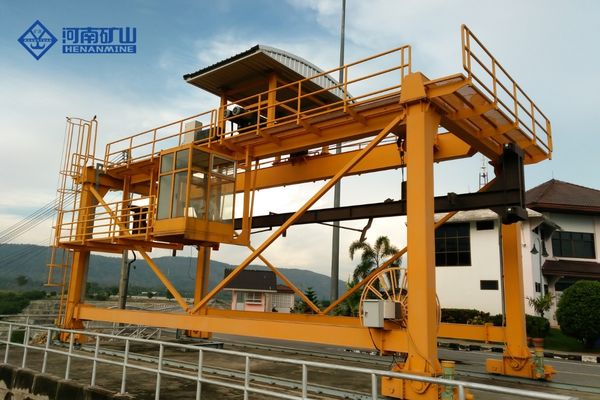
Regularly check the wire ropes, and strictly prohibit the use of damaged wire ropes exceeding the standard; standardize the bundling method and adjust the tension; regularly check the fasteners and metal structures, and promptly fasten, rectify or replace the unqualified components.
Testing, Commissioning & Final Acceptance
No-Load Test
No-Load Test checks the flexibility of equipment movement and the stability of electrical system, tests the hook, cart movement and electrical components, records the data, and finds the problem timely rectification.
Static Load Test (125% Rated Load)
Static Load Test (125% Rated Load) to check the load carrying capacity and structural stability, lifting the weight to a height of 100-200mm to stay for 10-15 minutes, check the deformation, loosening and cracks, to confirm that there is no permanent deformation after passing.
Dynamic Load Test (110% Rated Load)
Dynamic Load Test (110% Rated Load) to check the dynamic stability and braking reliability, simulate the actual operation action, check the abnormal noise, vibration and other problems, rectify and retest when abnormal.
Safety System Validation
Verify the reliability of safety system, test emergency stop, overload protection, limit switch and grounding device, simulate failure scenarios to ensure effective emergency response.
Final Acceptance & Handover
Organize relevant information and prepare acceptance checklist, organize multiple parties to carry out on-site acceptance, sign the report after qualified verification, handle handover procedures and transfer equipment and information.
Post-Installation Maintenance & Best Practices
Daily & Periodic Inspections
Establish a combination of daily and periodic inspections: operators check the key components of the equipment every day to detect simple hidden dangers; professionals carry out monthly, semi-annual and annual inspections according to the plan, and form reports and rectify the problems in a timely manner.
Preventive Maintenance
Preventive maintenance is the key to extend the service life of the gantry crane and reduce breakdowns and stoppages: according to the frequency of use of the equipment, the operating environment to develop a scientific lubrication plan, regular chains, bearings, rails and other rotating parts of the appropriate lubricating oil or grease, to effectively reduce the wear and tear of the components and operating resistance; regular comprehensive inspection of wire rope, hooks, fasteners and other wear parts, once found worn, aged or damaged exceeds the standard, and promptly carry out maintenance.
Once wear, aging or damage exceeding the standard is found, timely replacement is carried out to prevent equipment failure caused by the failure of wearable parts; at the same time, the control devices and safety protection devices of the equipment are regularly calibrated to ensure their precision and reliability, to avoid abnormalities in the operation of the equipment from the source, and to ensure the stable operation of the equipment for a long period of time.
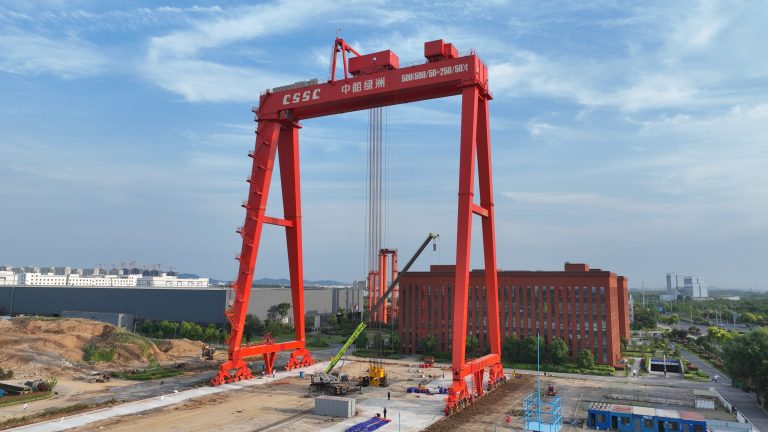
Operator Training
Strengthen operator training, explain the safety operation standard, strictly prohibit illegal operation, carry out emergency response training, and establish an assessment system to ensure that the operators have qualified operation capability.
Pro Tips for Successful Gantry Crane Installation
Combined with many years of practical experience in gantry crane installation in industrial projects, the following 5 practical tips are summarized:
- Strictly control the foundation strength and levelness, foundation construction and testing should be carried out in strict accordance with the specifications to avoid subsequent installation deviation due to foundation problems;
- With the help of professional measuring instruments such as leveling, latitude and longitude, real-time monitoring of the installation accuracy of each component to ensure accurate assembly and eliminate the operation of experience;
- Standardize the electrical wiring process, and do a good job in the line insulation treatment and marking, to avoid the aging of the line, short-circuiting and other potential electrical hazards;
- Commissioning work in a step-by-step manner, in strict accordance with the “no load → static load → dynamic load” order to promote, without skipping any test link; 5. Keep complete installation and test records, the formation of the installation file, for subsequent maintenance, overhaul and troubleshooting to provide reference.
Conclusion
Gantry crane installation is a key complex project in industrial projects, and its quality is related to equipment safety, life and project efficiency. This paper describes the core points of the whole installation process, to provide guidance for relevant personnel. Need to be installed by a professional qualification team in accordance with industry standards, acceptance before use, the use of units need to do a good job in the later maintenance, to protect the long-term safe operation of equipment.
Henan Mine Crane Factory Custom
If you are preparing for the installation of gantry cranes and are not sure whether the site meets the installation standards, or you need a professional, compliant installation program, you can submit your site layout and equipment parameters, our professional engineers will provide you with free assessment of the installation conditions of the service, the whole one-on-one follow-up guidance.
Henan Mine Crane Factory, as a professional crane manufacturer, integrating R&D, design, production, sales and after-sales service, is committed to providing customers with one-stop crane customization solutions.
Welcome to contact us at any time, we will provide you with free design drawings, on-site surveys and other intimate services to help you efficiently promote the project.