
How to Reduce Container Handling Costs in Modern Ports?
In recent years, the operating pressure of global container terminals has continued to rise, labor costs have risen, fuel prices have fluctuated, container arrivals have steadily increased, stricter environmental emission requirements and shorter ship turnover requirements have been superimposed, and the reduction of container handling costs directly determines the market competitiveness and actual profitability of terminals.
When many terminals mention cost reduction, the first reaction is to lower the purchase price of equipment.However, from the perspective of long-term operation, the purchase price difference of a single equipment is far less than the long-term expenses caused by unreasonable selection, inefficient scheduling, high energy consumption and high downtime.As a professional port lifting equipment manufacturer, Henan Mine Crane has served port projects of different scales around the world. The real cost adjustment is the entire chain improvement covering yard planning, equipment selection, energy structure, and maintenance system.This content collates practical operation strategies that can be implemented to help operators reduce long-term operating expenses on the premise of ensuring operational capability.
Cost components of container handling
Many operating costs are only procurement and fuel, in fact, the complete cost includes three categories.
The first category is equipment investment cost, namely CAPEX, covering the procurement, installation and commissioning of STS quayside crane, RTG tire gantry crane, RMG rail gantry crane, container straddle carrier, dock tractor and other equipment, as well as supporting infrastructure investment.
The second category is operating costs, that is, OPEX, the highest proportion of energy costs, diesel, electricity, charging costs are included; followed by labor costs, drivers, maintenance personnel compensation expenses; there are maintenance spare parts, tire wear and tear such daily expenses, tire wear and tear for RTG, straddle transport such tire equipment, is a fixed expenditure that can not be ignored.
The third category is hidden costs that are easy to ignore, such as truck waiting time, ship delay fines, idle equipment, efficiency losses caused by yard congestion, and downtime losses caused by sudden failures, which are often higher than book expenses.
Optimize yard layout
Unreasonable yard planning will make the equipment travel distance longer, fuel consumption increased, but also cause a large number of dumping operations, increase the workload of equipment for nothing.
When planning the container area, it is necessary to divide the area according to the flow direction of the container, arrange the inlet container and the outlet container separately, set up the exclusive operation area for the refrigerator and dangerous goods container, store the empty containers in a centralized way, and minimize the trans-regional long-distance transfer.The cold chain container port area and dangerous goods container yard shall be divided into separate operation scope to reduce the extra distance caused by cross-transfer.
The core is to reduce repeated dumping of boxes. Many storage yards have to empty two or three stacked boxes for one box due to chaotic planning, which consumes both energy consumption and time.Reasonable stacking planning can greatly reduce ineffective removal, reduce equipment operating load, and naturally reduce the cost of single box operation.This is also the core value of port yard layout optimization.
Opt-in equipment configuration
Different handling equipment adapts to completely different scenarios, and selecting the wrong model will directly increase long-term operating costs.The equipment selection of container terminal is the basis of cost reduction.
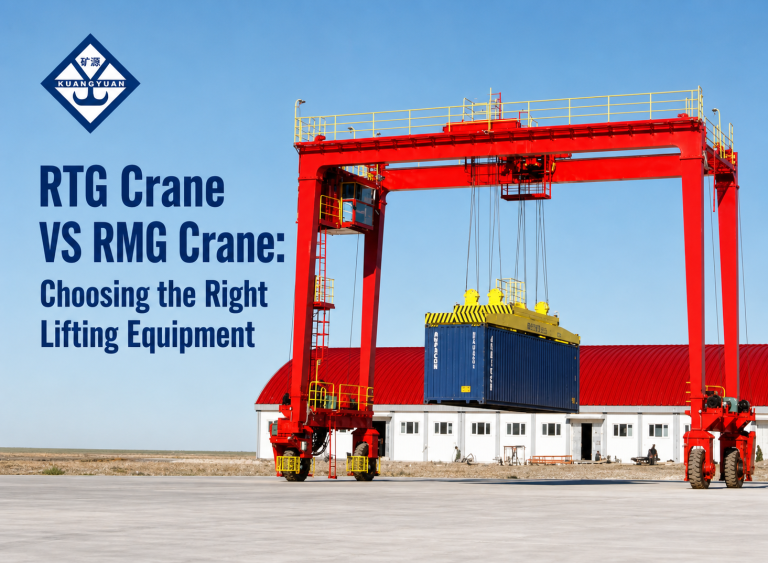
RTG tire gantry crane is the main equipment of many storage yards, and the cost reduction space is also the largest.Existing diesel equipment can be modified by electric RTG, or electric RTG crane can be purchased directly, with hybrid system, remote control and automatic alignment function, which can not only reduce energy consumption, but also improve operation efficiency.
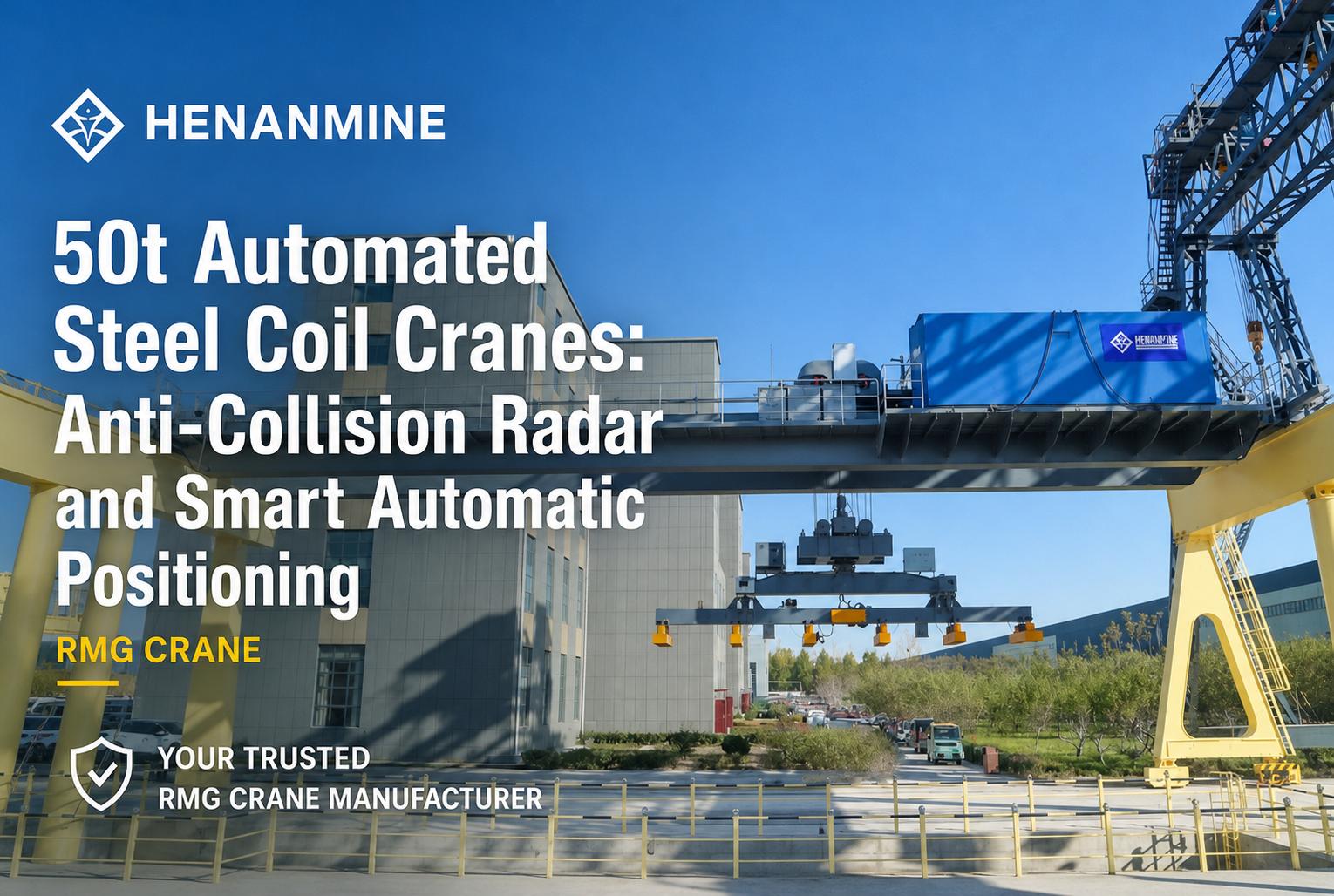
RMG rail gantry crane is suitable for large-scale fixed storage yard, with higher stacking density, lower labor demand, low electrification operation cost and great automation upgrade potential. It is a common choice for large-scale hub ports and railway intermodal container stations. The long-term cost advantage after RMG automation upgrade is more obvious.
Container straddle carriers are more flexible and suitable for storage yards with fast turnover and frequent adjustment of container areas. Small and medium-sized container terminals and inland dry port storage yards can be preferred.Through fleet optimization, replacement of electric models and adjustment of driving routes, straddle efficiency can also be improved and costs reduced.
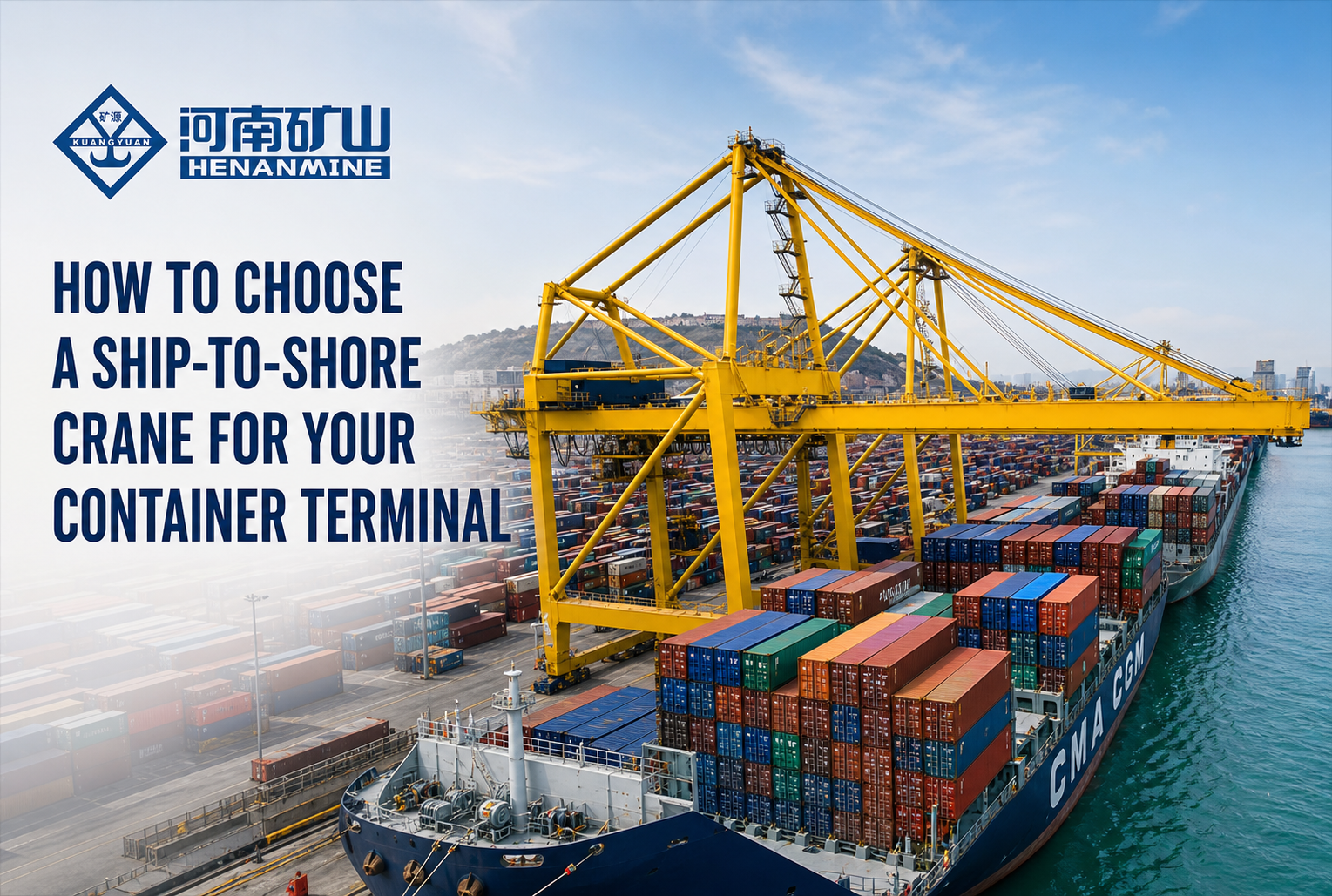
The efficiency of STS quayside crane directly affects the ship's time in port. Upgrade crane anti-swing technology, crane automatic alignment and remote control functions, which can shorten the operation cycle of single ship, reduce ship delay loss and improve berth utilization rate.
Common Container Handling Equipment Comparison
| Equipment Type | Initial Investment | Energy Cost | Labor Demand | Stacking Height | Flexibility | Best Application |
| Diesel RTG | Medium | High | Medium | 4-6 layers | Medium | Medium-sized conventional yards |
| Electric RTG | Medium-high | Low | Medium | 4-6 layers | Medium | Yards with stable power supply |
| RMG Crane | High | Very low | Low | 5-7 layers | Very low | Large fixed yards & rail terminals |
| Straddle Carrier | Medium | Medium | Low | 2-4 layers | Very high | High-turnover flexible yards |
Advancing Electrification Transformation
The volatility of diesel prices, coupled with tighter carbon emission controls in various regions, has led to higher operating costs for diesel equipment and risks of emission compliance.Electrification is the most direct way to reduce terminal energy consumption cost.
The most mature scheme is to change diesel RTG into electric one. After the transformation, the energy consumption cost of single box is obviously reduced, and the equipment maintenance items are also less.For storage yards without fixed power supply conditions, hybrid port equipment can be used for transition first to gradually reduce fuel consumption.
Lithium battery container straddle carriers and dock tractors are also very mature, suitable for short-distance high-frequency transfer scenarios.When calculating energy-saving benefits, it is necessary to combine the annual operation time, fuel consumption, local electricity price, and then calculate the battery life cycle to obtain a clear return cycle.
This is also the core component of the green port equipment scheme. In many areas, there are policy subsidies for low-carbon ports, which can further dilute investment.
Increase equipment utilization
When equipment is idle, depreciation and fixed costs are always incurred, and the cost of single box operation is naturally high.To improve the utilization rate of port equipment, we can undertake more operations without adding new equipment.
Equipped with container equipment fleet management system, real-time scheduling and operation dispatch, reduce equipment idle driving and waiting time.If conditions permit, AI yard scheduling system can be used to dynamically allocate equipment according to workload to avoid uneven busy and idle.
Daily attention shall be paid to key operation indicators, such as hourly operation volume of single machine, equipment availability rate, empty driving ratio, energy consumption of single box, downtime, and improvement space shall be found with data to gradually improve overall operation efficiency.
Automation and intelligent maintenance reduce labor and downtime costs
The initial investment of automatic container terminal scheme is not low, but in the long run, it can greatly reduce manpower dependence, reduce equipment damage and cargo damage caused by human operation error, and have stronger operation stability.Instead of one step in place, we can start with remote port control transformation and automatic stacking, and gradually upgrade to realize port automation cost reduction.
The maintenance end has changed from "repair after failure" to predictive maintenance of port equipment, monitoring motor temperature, vibration, braking state and hydraulic pressure through sensors, detecting fault signs in advance, and arranging scheduled maintenance.
This can not only reduce the production loss caused by sudden shutdown, but also prolong the service life of equipment, and the cost control effect of port equipment maintenance is obvious.Equipped with equipment remote monitoring system, overseas projects can also quickly troubleshoot, reducing the time and cost of field service.
Common Mistakes in Cost Reduction
Many docks are easy to take detours.The most common is to focus only on the purchase price, low-cost equipment often high energy consumption, more failures, short life, full-cycle costs are higher.
Some terminals are blindly automated, but they do not sort out the operation flow first. The problems of the flow itself are not solved, and the automation cannot play an effective role.
There are also many projects that ignore long-term electrification planning and purchase all diesel equipment. In a few years, emission restrictions will be encountered, and the transformation will cost a sum of money.
A total cost of ownership analysis of port equipment, including all expenditures over 10 to 15 years, can truly judge the economics of the proposal.Our port TCO analysis service can also help customers calculate long-term income accounts.
FAQ
How can ports effectively reduce container handling costs?
It can be promoted from several dimensions: yard layout adjustment, equipment electrification transformation, automation upgrading, predictive maintenance and scheduling improvement. It can not be realized by one item alone, but system adjustment should be made in combination with its own working conditions.
Are automated terminals cheaper to operate?
The initial investment is higher, but in the long run, the labor cost is lower and the operation efficiency is more stable. The cost advantage of the whole life cycle will gradually appear. The specific return cycle depends on the operation volume and labor cost level of the terminal.
Are electric RTGs cheaper than diesel RTGs?
The purchase price is slightly higher, but the energy consumption and maintenance cost are lower, and the terminal with sufficient operation time can usually recover the price difference in a few years, so it is more cost-effective to operate for a long time.
epilogue
Reducing container handling costs is never by buying the cheapest equipment, but by adjusting the whole chain from yard planning, equipment selection to operation maintenance.
Future container terminals will develop in the direction of smarter, lower energy consumption and less manual intervention. Only by laying out reasonable equipment schemes and operation systems in advance can we maintain cost advantages in long-term competition.
Customized terminal cost optimization scheme
Henan Mine Crane professional port crane equipment supplier, we can provide you with container terminal cost optimization assessment.You only need to provide annual throughput, existing equipment, yard layout, energy cost and automation goals, and our engineering team will issue targeted improvement solutions, covering RTG/RMG upgrade, straddle carrier selection, electrification route planning, smart port solutions and more.
You can also contact us for free to receive the "Modern Port Container Handling Cost Reduction Self-Inspection List" to help you quickly sort out the improvement space of existing operations.