
Selecting Cranes for Modular Steel Construction & Prefabricated Assembly
Modular steel structure assembly construction has the advantages of short construction period, high precision, stable quality, and green environmental protection, and is widely used in modern construction projects.The process is based on factory prefabrication, overall transportation, and on-site assembly, and is highly dependent on lifting equipment.
Therefore, the reasonable selection of cranes for modular steel construction directly determines the construction efficiency, installation accuracy, operation safety and full cycle cost of the project.This article streamlines and combs the core requirements, mainstream models, selection parameters, safety specifications and common misunderstandings of modular hoisting, and provides accurate selection reference for engineering construction.
Why Crane Selection Matters in Modular Steel Construction
Steel module hoisting has the characteristics of large size, eccentric load, high frequency hoisting, and high precision installation, which is far stricter than traditional civil hoisting.Improper selection can easily cause misalignment of modules, damage to components, delays in construction, safety accidents and rising operation and maintenance costs. Accurately adapted lifting equipment is the key to the efficient landing of the project.
Special hoisting requirements for prefabricated steel modules
- Large size and concentrated load: The overall size of the steel module is huge, and the load is concentrated at a small number of hoisting points, which is not evenly subjected to force, which puts forward higher standards for the rated load, structural stability and overall carrying capacity of the crane. Requirements.
- Risk of center of gravity offset: The module has built-in pipelines, decorations, and supporting components, which are prone to uneven weight distribution and center of gravity offset. The lifting process is prone to tilt and shaking. It needs to be equipped with special spreaders and lifting equipment adapted to eccentric loads.
- High-frequency cycle operation: modular prefabricated production and on-site assembly are continuous assembly operations, with high hoisting frequency and strong repeatability, which requires the crane to have excellent fatigue resistance and high-frequency working conditions adaptability.
- Ultra-high installation accuracy: The splicing tolerance standards of steel structure modules are strict, and the alignment accuracy is extremely high. The crane is required to achieve smooth start and stop and stepless fine-tuning to ensure that the modules are accurately in place and avoid splicing deviations.
Difficulties in core operations on the construction site
- Site space is limited: urban renewal and dense plot projects generally have narrow operating surfaces and limited lifting and maneuvering space, which require strict requirements for crane mobility and small-scale operating capacity.
- Dynamic changes in construction working conditions: With the stacking and splicing of modules, the on-site assembly layout is continuously updated, and the lifting height and operating point are constantly changing, which requires the crane to have good adaptability to working conditions.
- Multi-process cross-interference: Multiple types of simultaneous cross-operation on the construction site. If the crane responds slowly and shifts cumbersome, it can easily cause the process to stall and form an overall construction bottleneck.
- High pressure on construction period control: The overall construction period of modular construction is compact, the processes are closely connected, and the operating efficiency of lifting equipment is insufficient or sudden failure and shutdown will directly disrupt the rhythm of material distribution and assembly, causing delays in the construction period.
Precise selection of project gain
- Improve hoisting efficiency and compress construction period: Equipment adapted to working conditions can maximize the effective hoisting cycle, reduce idle and adjustment time, significantly improve the construction cycle, and effectively compress the total construction period of the project.
- Ensure the accuracy of placement and reduce rework: equipped with frequency conversion speed regulation and intelligent anti-swing system, it can achieve smooth and fretting alignment, effectively control the offset error of the module, and greatly reduce the probability of assembly rework and component damage.
- Stabilize the pace of construction and reduce downtime: match the cranes corresponding to the working condition level according to the frequency of operation, and the equipment has stronger fatigue resistance, which can significantly reduce the probability of failure and shutdown, and ensure the continuity of assembly line construction.
- Strengthen safety protection and avoid risks: standard and perfect overload, partial load, limit and anti-collision protection mechanisms are equipped to avoid hoisting safety hazards from the source and comprehensively improve the safety level of on-site operations.
- Optimize the whole cycle cost and extend the life of the equipment: more adaptable lifting equipment has lower energy consumption and longer maintenance cycles, which can effectively reduce the whole life cycle operation and maintenance costs, and improve the overall service life of the equipment and the return on investment.
Main Crane Types for Modular Steel Construction
Modular construction is divided into two scenarios: indoor factory prefabrication and outdoor on-site installation, and the models need to be matched as needed.
Bridge crane
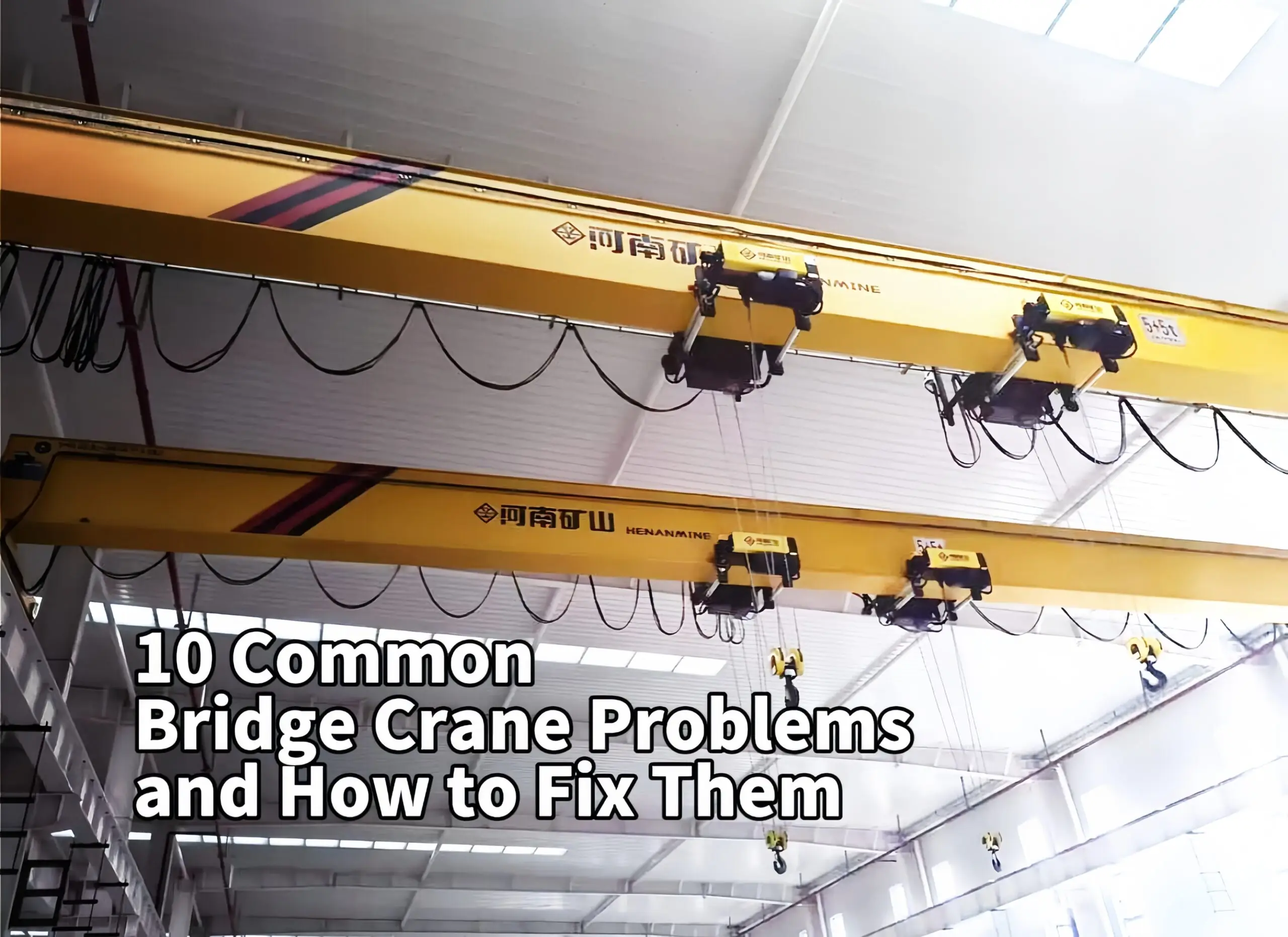
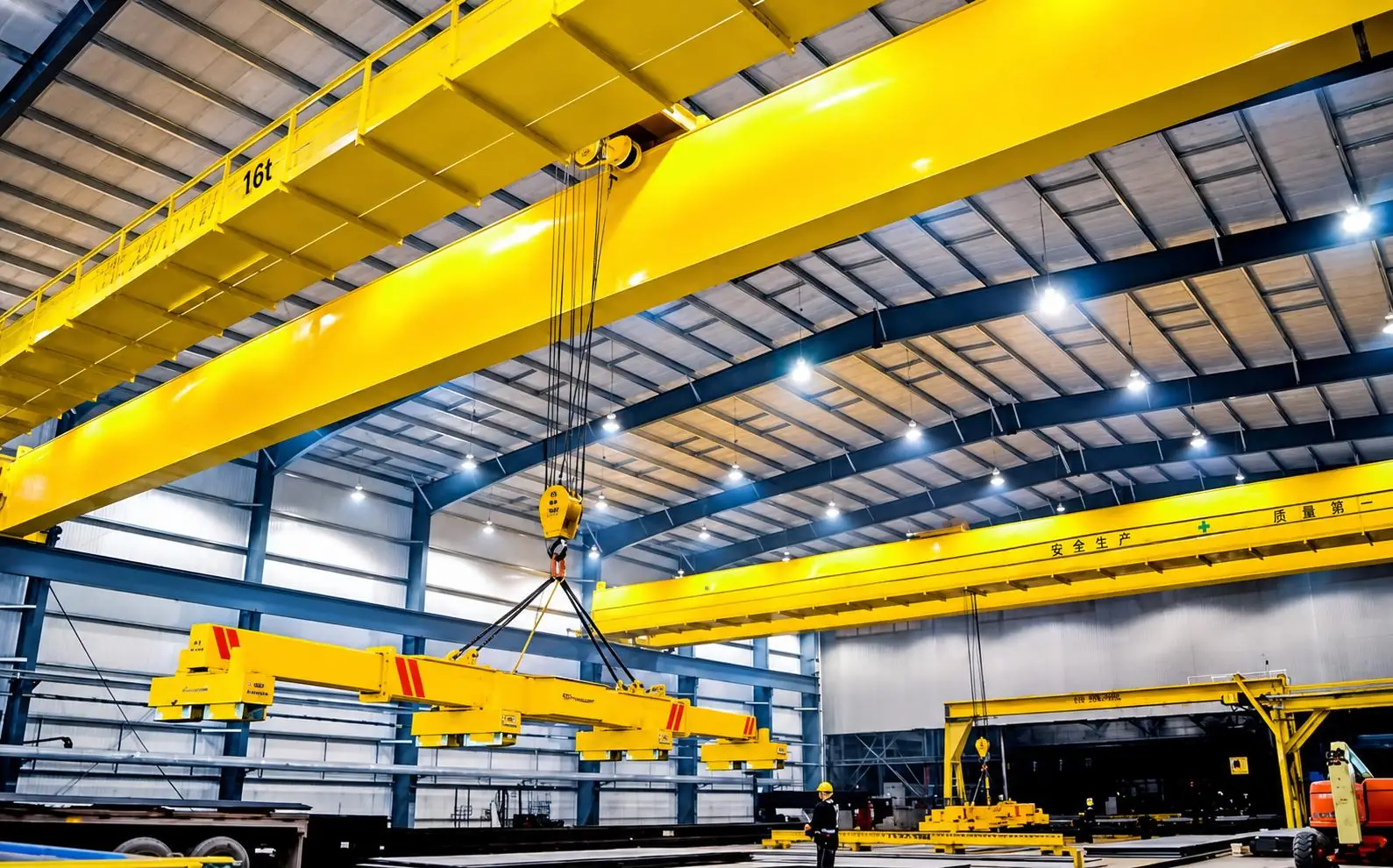
The bridge crane is the core main equipment of the steel structure prefabricated workshop. It has stable operation and high positioning accuracy, and can be perfectly adapted to the high-frequency circulating hoisting conditions of the assembly line.Among them, the single-beam bridge crane is cost-effective and lightweight, which is suitable for the transportation and assembly of small and medium-sized steel components.;
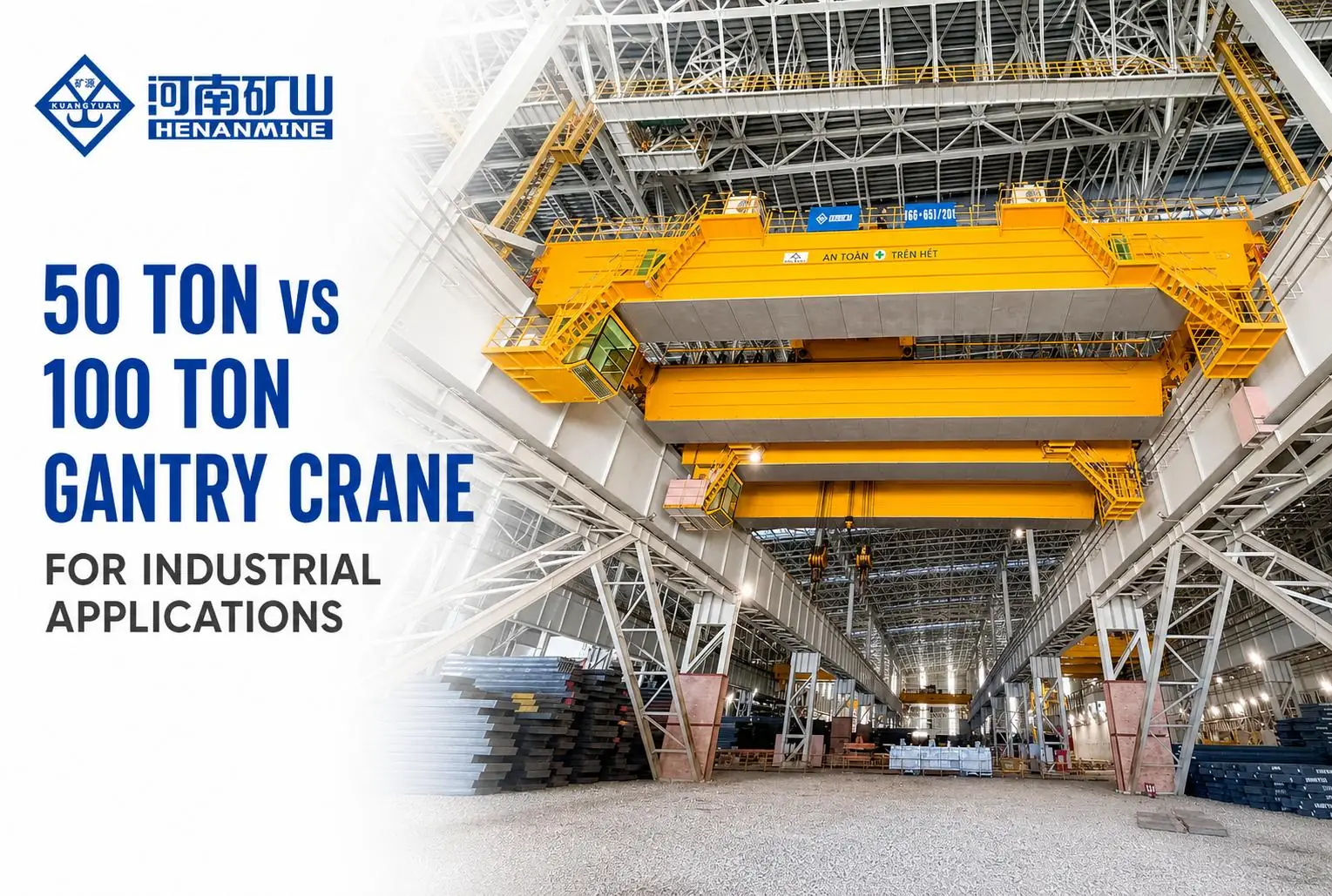
The double-girder bridge crane has stronger structural rigidity, greater rated load, and better operating stability. It can meet the high-precision hoisting needs of heavy-duty and oversized steel modules, but its operating range is fixed and it is only suitable for indoor fixed prefabricated working conditions.
Gantry crane
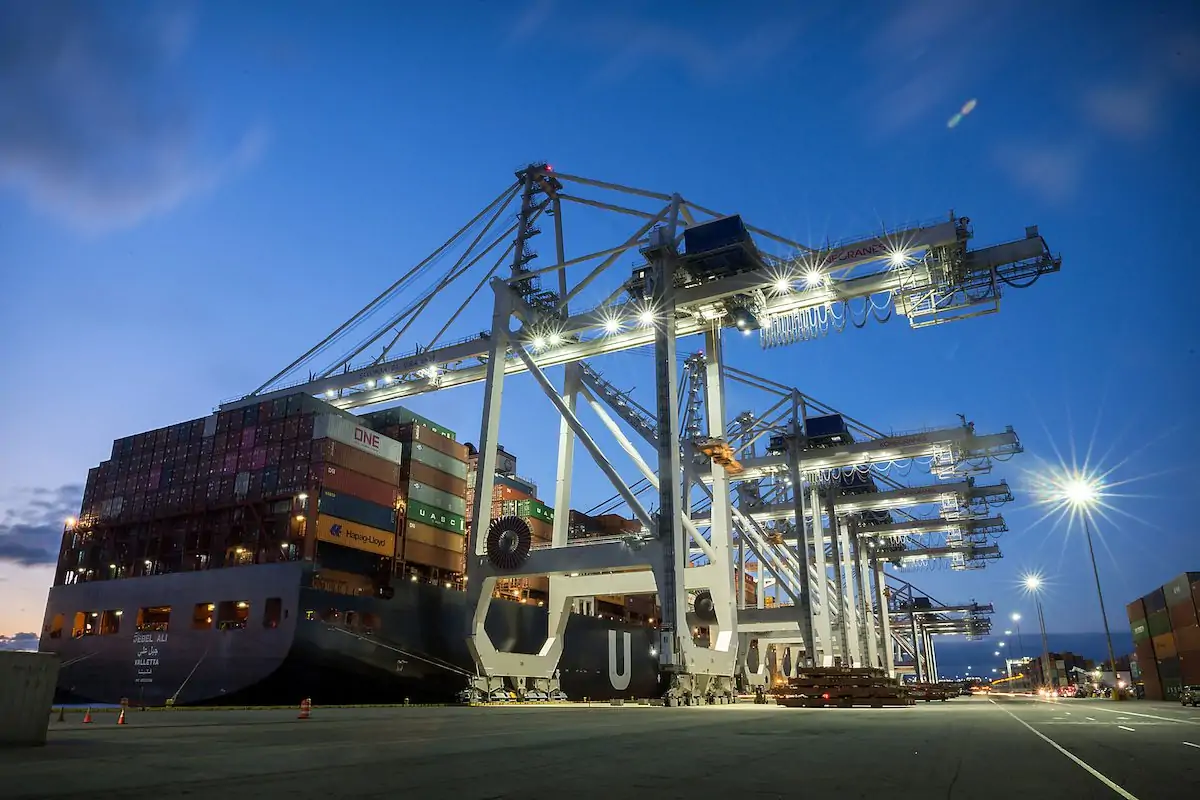
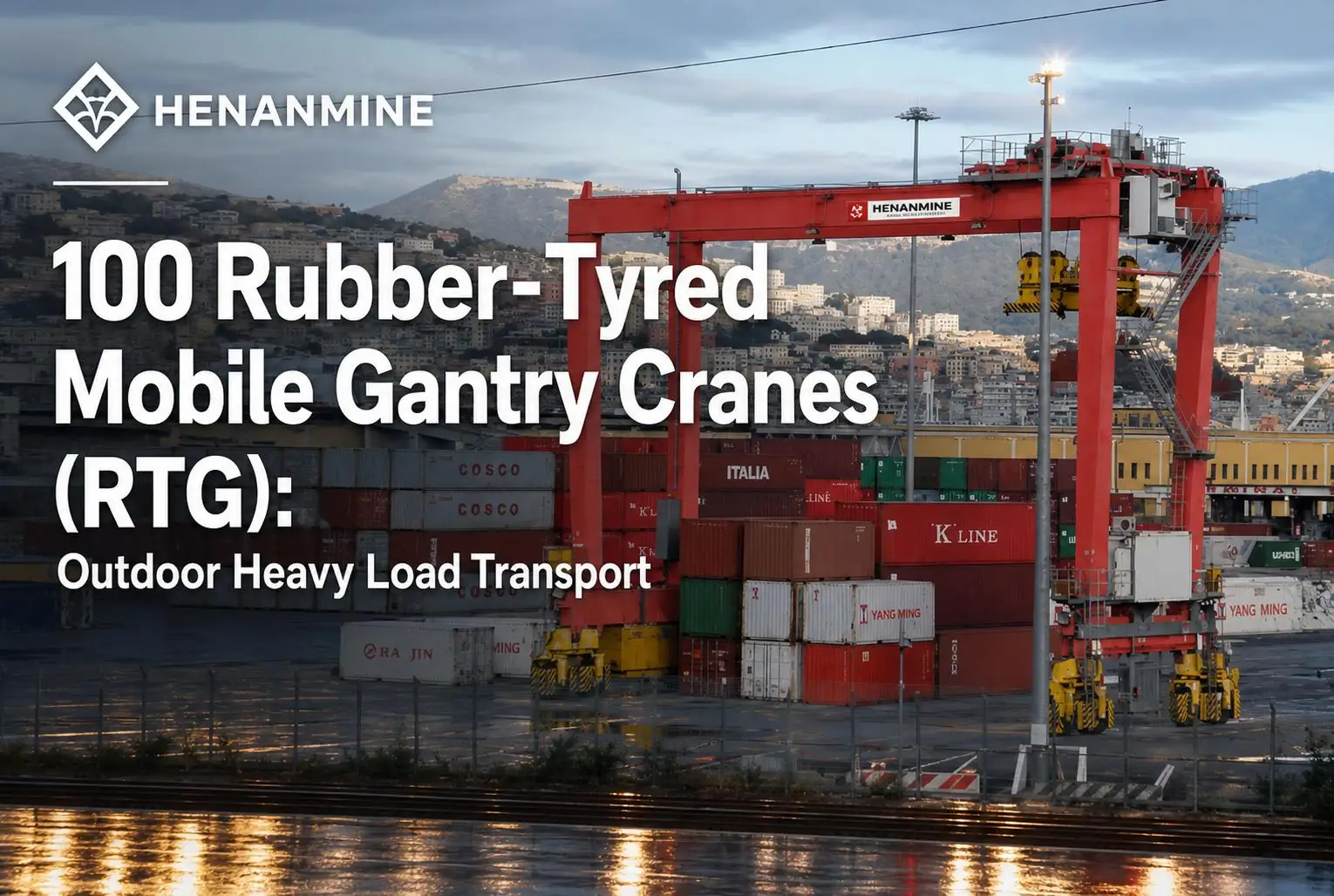
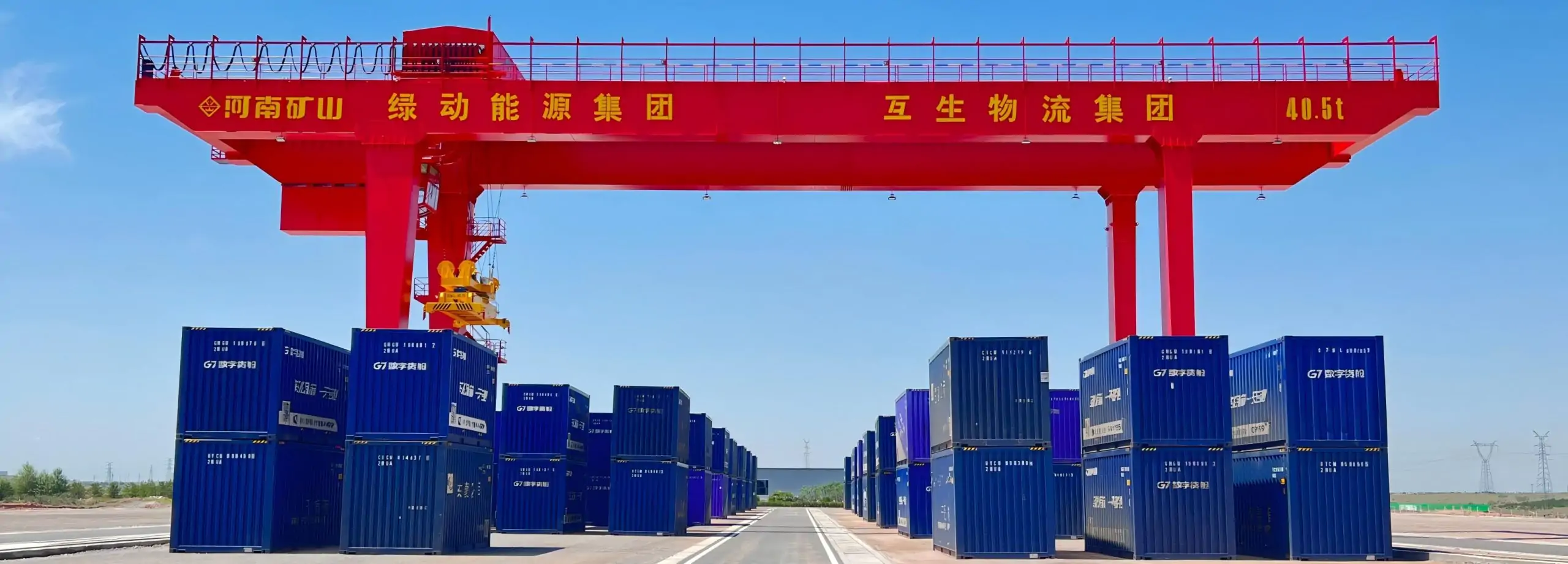
The gantry crane adopts a self-supporting gantry structure, which does not need to rely on the beams and columns of the plant to bear the load, and can be flexibly adapted to outdoor steel yards, open-air prefabricated processing and other work scenarios without building support.Among them, the full-gantry crane has a large span, strong carrying capacity, and wide operating coverage. It is suitable for open-air assembly, welding and centralized storage of large steel modules;
Combined with the one-sided support of the building structure, the semi-gantry crane occupies a smaller area and has stronger adaptability. It is suitable for outdoor prefabricated conditions where the site is limited and one side is adjacent to the wall of the plant. It is the core hoisting equipment for outdoor modular construction.
Jib crane
Jib crane is a lightweight auxiliary hoisting equipment, which has the advantages of sensitive control, fixed-point operation, and fast response. It mainly serves the refined operation of workshop stations and is suitable for short-distance transportation and assembly of small steel components, connecting accessories and sub-components.Limited by the rated load and operating radius, the equipment cannot undertake the large-scale lifting task of the overall steel module, and is only used as auxiliary lifting equipment for the production line.
Mobile and crawler cranes
Mobile cranes and crawler cranes are the core main equipment for the final installation of modules on the construction site, and they have the outstanding advantages of strong mobility, convenient deployment, and wide adaptability.Among them, the car crane transition speed is fast, and it is more suitable for conventional construction scenarios where the site is flat and the ground is hardened;
Crawler cranes have a large grounding area and low grounding pressure, which can adapt to the complex construction site environment of soft and uneven, and can flexibly adapt to the dynamically changing hoisting points and operating conditions of the construction site.
Intelligent automated lifting system
The intelligent automated lifting system is specially designed for high-volume, standardized module prefabricated processes, and integrates automatic and precise positioning, intelligent anti-swing, remote real-time monitoring and operation data acquisition functions.The equipment can be deeply linked with the factory's intelligent manufacturing system, effectively avoiding manual operation deviations, continuously optimizing the stability of hoisting, and comprehensively improving the operation accuracy and production efficiency of modular assembly.
Key Factors When Selecting a Crane
- Approval of hoisting load: The total hoisting load must cover the weight of the steel module and the weight of a full set of spreaders, hoisting beams, rigging and other ancillary equipment.It is strictly forbidden to operate at full load during construction. It is recommended that the actual working load be controlled at 75%-85% of the rated load of the equipment, so as to reserve sufficient safety redundancy for dynamic impact loads and center of gravity offsets.
- Effective lifting height: The selection of lifting height needs to cover the full stroke height from the lowest reclaiming base surface to the highest stacking installation position, and reserve a safe operating gap.At the same time, the special working conditions of indoor floor height restrictions, top pipeline arrangement and multi-layer module stacking construction are comprehensively considered to eliminate the problem of insufficient height.
- Operating span and working radius: Bridge and gantry cranes need to ensure that there is no dead angle coverage in the workshop and yard operations; mobile and crawler cranes need to meet the maximum lifting operating radius on site.In the early stage, it is necessary to comprehensively investigate obstacles such as building columns and equipment stacking to completely eliminate blind spots in hoisting.
- Operation level and hoisting frequency: Modular prefabricated production is a typical medium and high frequency cycle operation condition, and must match the lifting equipment of medium and heavy-duty work standards.If light-grade equipment is misused, it will exacerbate structural and mechanical fatigue, cause premature aging and frequent failures of the equipment, and significantly shorten the service life of the equipment.
- Hoisting operation speed: Hoisting operations follow the principle of ”stability first, efficiency first".Equipped with a frequency conversion speed control system, it can realize flexible start-stop, high-speed transfer, and low-speed fretting alignment, effectively balancing construction efficiency and positioning accuracy, and suppressing problems such as swing and positioning offset of hanging objects from the root cause.
Crane Requirements for Prefabricated Steel Assembly
- High-precision positioning ability: The equipment supports three-axis independent fine-tuning control, and is equipped with intelligent anti-swing technology, which can greatly suppress the shaking and offset of the hanging object, effectively meet the strict tolerance requirements of millimeter-level precision splicing of steel structure modules, and ensure that the components are accurately in place.
- High-strength structural rigidity and stability: the main beam and end beam need to have excellent structural stiffness, and the deflection deformation under heavy load is strictly controlled.Among them, the double-beam box-shaped structure has outstanding deformation resistance and lateral impact resistance, and can be fully adapted to the heavy-duty hoisting conditions of heavy-duty steel modules.
- High-reliability lifting system: equipped with durable transmission hoist and high-strength steel wire rope, it adopts a redundant safety design with dual brakes, and has the dual protection functions of power-off self-locking and emergency braking. It can completely avoid major safety risks such as slip hooks and falling objects, and ensure the safety and stability of heavy-duty hoisting.
- Professional adaptation of hoisting aids: supporting customized hoisting beams, special fixtures and high-strength slings, which can effectively disperse single-point concentrated loads, accurately adapt to the eccentric center of gravity of steel modules and special-shaped structural characteristics, and prevent component deformation, hoisting tilt and other problems from the source.
Safety Considerations for Modular Steel Lifting
Strictly control overload and partial load
Before construction, it is necessary to accurately verify the actual weight of the module, accurately calculate the position of the center of gravity of the components, and scientifically optimize the arrangement of spreaders and rigging.At the same time, fully consider the dynamic load increment caused by the impact of equipment start and stop, on-site wind load and other factors, eliminate overload and partial load operations, and avoid safety hazards such as lifting capsizing and component offset from the source.
Braking and emergency protection
The equipment comes standard with a failure protection brake system, which supports automatic brake locking after power failure, effectively eliminating the risk of the spreader slipping out of control.The whole machine is equipped with an emergency stop device at multiple points, which can stop and brake instantly under sudden abnormal working conditions, quickly block safety risks, and provide a full range of passive safety protection for hoisting operations.
Limit and anti-collision protection
The equipment comes standard with multiple protection switches such as the upper and lower limits of the hook and the operating limits of the whole machine, which effectively eliminates the risk of over-range operation.Under multi-machine collaborative working conditions, an intelligent anti-collision system can be installed, which can monitor the spacing of equipment in real time, automatically slow down and stop urgently when the hazard threshold is triggered, effectively avoid equipment scratches and collision accidents, and ensure the safety of multi-equipment parallel operations.
Optimize the control field of view
During the operation process, priority is given to the use of wireless remote control with the hook visual monitoring system to effectively eliminate blind spots in the hoisting field of vision; for high-risk scenarios such as high-altitude and intensive operations, remote control mode can be used to achieve man-machine safety isolation and ensure the personal safety of on-site operators in all directions.
How Automation Improves Modular Steel Assembly
- Automated and precise positioning function: The intelligent lifting system abandons the traditional manual control alignment mode and relies on intelligent sensing and positioning technology to realize automatic correction and precise placement of steel modules throughout the hoisting process, effectively avoiding the alignment deviation caused by manual operation, meeting the high-precision assembly requirements of steel structures, and greatly improving the pass rate of component splicing.
- Intelligent anti-swing stability control: The system is equipped with an intelligent anti-swing algorithm, which can dynamically monitor and suppress the shaking of the hoisting object in real time, effectively offset the swing offset caused by the start and stop of the equipment and the wind load, and ensure the stability of the hoisting operation throughout the process, and adapt to high-precision and high-stability modular assembly conditions.
- Real-time load monitoring and early warning: The equipment has a 24/7 real-time load monitoring function, and can dynamically collect hoisting load data. Once abnormal conditions such as overload and partial load occur, early warning and automatic protection mechanisms are triggered immediately to avoid hoisting safety accidents from the source and ensure the safety of equipment and construction.
- Full-process data linkage empowerment: The system can be deeply connected to the factory's intelligent manufacturing management system, and collect core information such as equipment operation data, hoisting frequency, and operation duration in real time, so as to realize the data exchange and linkage of the whole process of prefabrication, transportation, and hoisting, helping to standardize and control the construction process, and comprehensively improve the efficiency and intelligence level of modular construction.
Common Crane Selection Mistakes to Avoid
- Heavy-duty and light-duty operating condition levels: The selection only focuses on the rated load, ignoring the working level and fatigue resistance of the equipment, and cannot be adapted to modular high-frequency cyclic operations, which can easily cause premature aging of the equipment structure and frequent failures, greatly shortening the service life.
- Ignoring the eccentric load characteristics of the module: the size and eccentric center of gravity of the steel module are not accurately calculated, and the layout of the spreader is unreasonable, which can easily cause the lifting tilt and shaking offset, resulting in component alignment deviation and assembly accuracy is not up to standard.
- Underestimation of operating space parameters: insufficient estimation of on-site lifting height, operating span and radius of gyration, blind areas for hoisting appear in the late stage of construction, which cannot cover the full operating conditions and restrict the development of construction.
- One-sided pursuit of operating speed: blindly choose high-speed configuration, ignore the stability requirements of hoisting, insufficient start-stop buffer, large swing of the hoisting object, sacrifice the core installation accuracy, and increase the probability of rework.
- No reserved margin for expansion: it only matches the current construction needs, and the equipment performance and operating capacity are not reserved for redundancy. It cannot be adapted to the upgrading of working conditions and large-scale construction needs in the later stages of the project, and the equipment reuse is poor.
- Ignoring the attributes of late maintenance: the selection only looks at the cost of equipment, ignoring the structural design, the versatility of accessories and the convenience of maintenance, resulting in the difficulty of late maintenance and the high cost of operation and maintenance.
- Weaken the safety protection configuration: treat safety configurations such as limit, anti-collision, and overload warning as optional accessories, reduce the investment in safety configuration, and leave behind major safety hazards such as overturning, collision, and falling objects.
Crane Selection Checklist for Modular Steel Projects
- Verification of load and working condition parameters: verify the total lifting weight of the steel module and the spreader, and reserve a reasonable load safety margin; match the lifting frequency of the project, confirm the working condition level of the crane, and ensure that the equipment is adapted to high-frequency cyclic operations to avoid premature equipment fatigue.
- Verification of spatial operating parameters: accurately check the effective lifting height, operating span and radius of gyration of the equipment, and investigate the blind spots of hoisting based on the distribution of obstacles on the site to ensure that the operating range of the equipment can fully cover the full working conditions of prefabrication and installation.
- Equipment performance accuracy verification: check the speed regulation system, micro-motion alignment and anti-swing performance of the equipment, and confirm that the equipment can meet the requirements of millimeter-level precision assembly of steel structure modules to ensure the accuracy and construction stability of hoisting in place.
- Verification of on-site construction conditions: combined with the indoor and outdoor operating environment of the project, verify the basic bearing capacity, operating space, ground flatness and other conditions of the site, match the adapted models, and avoid the construction problems caused by site constraints.
- Safety protection configuration verification: Check the core safety configurations such as overload early warning, limit protection, anti-collision, emergency braking, power failure and self-locking one by one to ensure that the protection system is complete and meets the safety specifications of modular hoisting.
- Intelligent functional requirements verification: According to the project's prefabricated production capacity and construction standards, confirm whether it is necessary to configure intelligent systems such as automatic positioning, intelligent monitoring, and data linkage to adapt to standardized and intelligent construction requirements.
- Late-stage operation and maintenance expansion verification: verify the versatility of equipment accessories, maintenance convenience and manufacturers' after-sales guarantee capabilities, reserve equipment performance and capacity expansion space, and adapt to the needs of late-stage project upgrades and reuse.
- Full cycle cost verification: comprehensively account for the whole life cycle costs of equipment procurement, leasing, operation and maintenance, energy consumption, etc., abandon the thinking of single low-cost selection, and balance equipment performance and economic benefits.
Conclusion
The selection of modular steel structure cranes requires a comprehensive trade-off between load, working conditions, environment, safety and cost.Bridge-type and door-type models are preferred for indoor use, and mobile and crawler-type equipment are adapted for outdoor use, and intelligent control systems and safety protection devices are configured as needed.The selection of models needs to be combined with professional evaluation of on-site parameters to eliminate the selection of models based on experience and price alone, and ensure that the equipment is adapted to the construction needs.
As a professional lifting equipment manufacturer, Henan Mine Crane can provide bridge, gantry and customized lifting solutions according to the lifting needs of modular steel structure projects.If you are planning a modular construction project, please contact us for professional selection suggestions and customized quotations.