
How to Choose an RMG Crane for Container Terminal?
Anyone who operates a container terminal knows very well that the loading and unloading efficiency of the yard directly determines the throughput and profitability of the entire terminal. The rail-mounted gantry crane (RMG), is the core of the container yard, especially high-density storage, automated operations of the terminal, RMG selection of the right, directly affect the subsequent years or even more than ten years of operation.
When purchasing RMG, many terminals focus on the lifting capacity and price as the surface parameters, and have stepped on a lot of big pits. Some have miscalculated the wheel pressure, and spent millions of dollars on reworking the civil engineering foundation.
Some did not consider the automation compatibility, later want to do smart terminal, equipment to be replaced; there are also underestimated the intensity of the operation, selected a low working level of equipment, used three to five years on the frequent breakdowns, delaying the ship schedule.
These problems, in essence, is the selection of the time, did not start from the actual operational needs of the terminal, only look at the paper parameters.
Today I will combine Henan Mine Crane in the harbor lifting field more than twenty years of experience, the RMG selection of the whole process, the key points, to avoid the pit skills, with the first-line practical perspective to make it clear, to help you choose the real fit for their own terminal equipment.
What Is an RMG Crane?
Definition
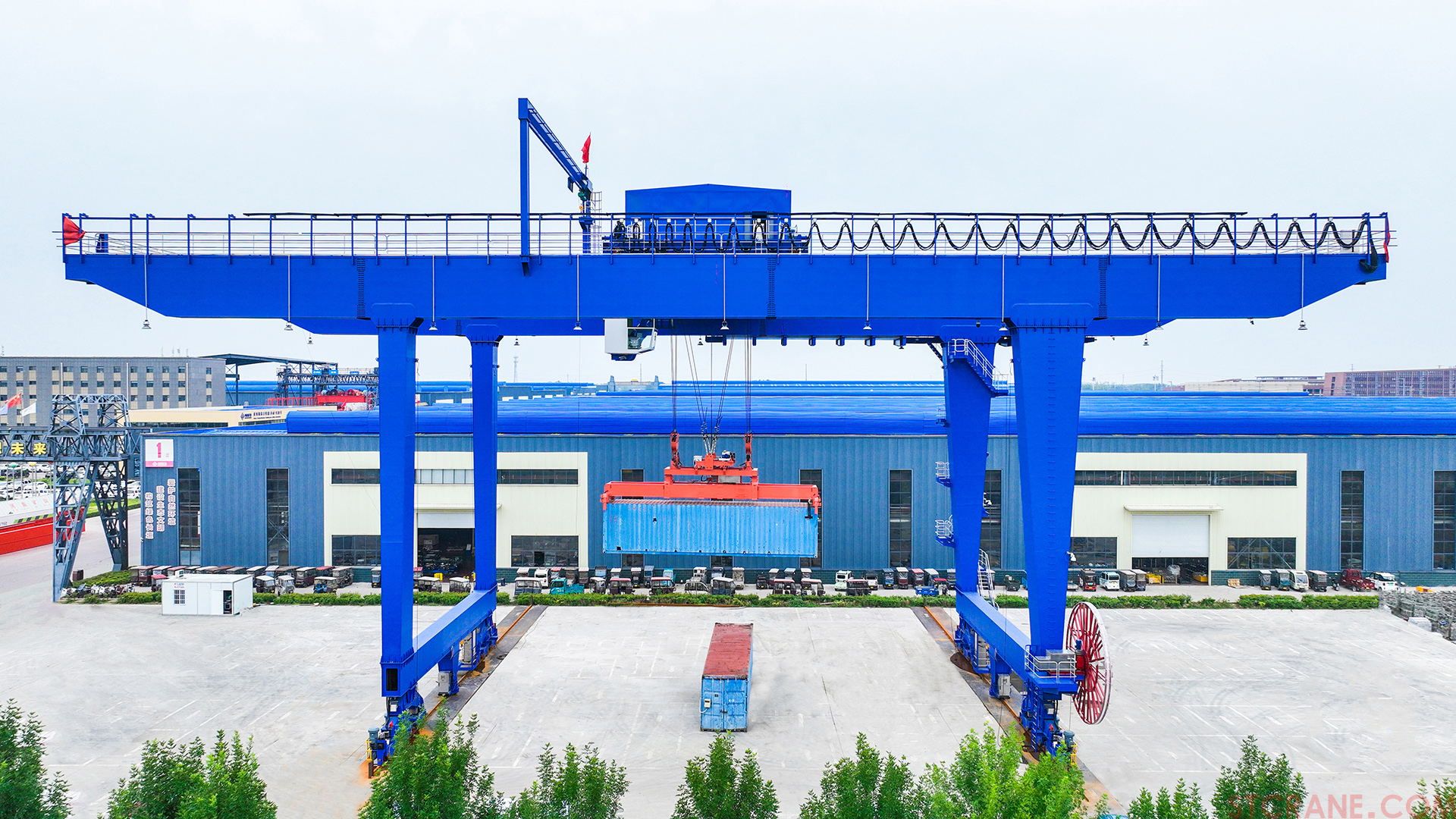
Simply put, a rail-mounted gantry crane (RMG) is a stacking device that runs along a fixed track and is specially designed for container yards. Its gantry structure spans the entire container area, relying on the ground to realize the longitudinal movement of the paved rails, the trolley with the spreader in the main beam transverse movement, to complete the storage, loading and unloading of containers, transshipment operations.
Different from ordinary gantry cranes, RMG is tailor-made for high-frequency and high-density container operations, and can be adapted to 24-hour continuous operation of the terminal conditions, and is also the core of the main equipment of the automated container terminal.
Typical Applications
The core application scenarios of RMG focus on the whole chain of container handling. The most mainstream are container terminals in seaports and river ports, which are responsible for container storage from the front of the terminal to the yard, as well as the loading and unloading of container trucks.
Railroad intermodal yard is also an important application scenario of RMG, which can cross both railroad lines and container trucks, completing the direct transfer of containers between trains and container trucks without the need for secondary backhauling, and significantly improving the efficiency of intermodal transportation.
Automated container yards and inland container depots also commonly use RMG equipment. Its fixed track operation mode can realize precise positioning, which is perfectly suited for automated and unmanned operation requirements.
Step 1 - Define Operational Requirements
The first step in the selection process is never to look at the parameters of the equipment, but rather to understand the operational requirements of your terminal. The selection of all parameters should be centered on your actual operational scenarios, and there is no point in separating the parameters from the requirements.
Throughput Requirements
Calculate the annual TEU handling capacity of the terminal, which is the basis of all the selection. More critical is the peak hour container handling efficiency, such as peak season shipping schedule concentration, peak throughput before and after holidays, can not be calculated only according to the average annual volume.
I have seen a lot of terminals, according to the average throughput selected equipment, the peak season will be blocked, container trucks in front of the yard in a row of several kilometers, is because it did not take into account the peak demand. When selecting the model, we should leave enough margin for peak operation, otherwise, the equipment will be running at full capacity for a long time, which will not only fail to improve the efficiency, but also accelerate the wear and tear of the parts.
Yard Layout and Block Configuration
To clarify the planning of the yard's box area, how many rows of containers in each box area, the number of columns directly determines the span of the equipment. It is also necessary to plan the location and width of the truck lanes, whether it is a single lane or double lanes, and whether the lanes should cross the tracks or not, all of which will affect the gauge and structural design of the RMG.
If it is a railroad intermodal terminal, but also consider the demand for railroad line connection, RMG need to cross several railroad lines, train loading and unloading operation range, all of these should be determined before the selection of the type, otherwise the equipment is done only to find that the span is not enough, it can not be used at all.
Stacking Height
Stacking height is the core parameter that determines the utilization rate of the stacking yard, and the industry often uses such expressions as 1-over-4, 1-over-5, 1-over-6. Many people will get confused when they first contact with it. 1-over-4 means that the spreader can cross the 5th layer of containers and grab the 4th layer of boxes, which can actually stack 5 layers.
The choice of stack height, the core depends on your land costs. The tighter the land, the higher the land price of the port, the more suitable to choose the configuration of the high stacking layer, maximize the use of vertical space, to enhance the capacity of the yard per unit area. However, the higher the stacking level, the higher the requirements for the lifting height, structural stability and anti-shaking performance of the equipment, so you can't blindly pursue a high stacking level.
Step 2 - Key Technical Parameters to Evaluate
After figuring out the operational requirements, you can look at the core technical parameters of the equipment. Each parameter should be adapted to your operation scenario, not the bigger the better, not the faster the better, adaptation is the key.
Span and Rail Gauge
Span is the total length of both ends of the RMG main girder, which should completely cover the width of your box area, the width of the collector truck lane, and also leave enough safety margin. Rail Gauge is the center distance between two running rails, which directly determines the structural stability of the gantry, the wider the rail gauge, the more stable the operation of the equipment, but also the higher the requirements of civil construction.
Also focus on accounting for the headroom height and width of the collector truck lane, to ensure that the collector truck can drive smoothly under the gantry, and will not interfere with the legs and beams. Many terminals have stepped on this pit, the width of the lane is left narrow, the trucks can't get in, and they can only re-adjust the layout of the box area, which delays the schedule.
Lifting Capacity
The choice of lifting capacity should cover all your operational scenarios. Conventional 40-foot standard container weight is not big, but we have to consider 45-foot tall container, reefer container, dangerous goods heavy container scenario, the weight of these boxes will be far more than the standard box, we must leave enough margin.
If your terminal has the demand of double box spreader, that is to say, two 20-foot containers can be lifted at one time, the lifting capacity has to be doubled directly, and the situation of double box partial load has to be considered, the structural requirements of the trolley and the gantry will be higher. Henan Mine Crane's RMG equipment will customize the lifting mechanism and spreader configuration according to the actual box ratio of the terminal, avoiding the problem of “big horse pulling a small car” or “small horse pulling a big car”.
Lifting Height
Lifting height should match the number of stacking layers, in addition to meet the highest stacking layer lifting needs, but also leave enough safety margin. For example, when the spreader rises with the box, it should keep a safe distance from the bottom of the main beam to avoid collision; it should also consider the future expansion of the yard, whether to increase the number of stacked layers or not, and reserve the lifting height in advance, so that you don't have to replace the equipment later.
Travel Speed & Hoisting Speed
Traveling speed includes hoisting speed, small car running speed, big car running speed, not the faster the better. If the speed is too fast, the container will shake more seriously, especially in the high stacking operation, the spreader will be more difficult to align, which affects the efficiency; if the speed is too slow, it will not be able to keep up with the loading and unloading rhythm of the terminal.
Conventional terminal operations, the lifting speed to match the stacking height, the speed of large and small vehicles, to match the length and width of the box area, as well as the peak hour loading and unloading capacity. 24-hour continuous operation of the automated terminal, but also consider the stability of the speed, can not fluctuate, affecting the life of the equipment.
Duty Classification
Duty Classification is the most neglected but critical parameter in RMG selection. Container terminal RMG, basically 24 hours of continuous operation, high-frequency start and stop, forward and reverse, the industry's common FEM standards, generally to choose A7 or A8 duty class.
If you choose a low level of equipment, even if the lifting capacity and span are enough, within a few years there will be structural fatigue, serious wear and tear of components, and maintenance costs will rise sharply. For export projects, pay attention to local ISO and CMAA standards to ensure that the working class of the equipment meets local regulatory requirements.
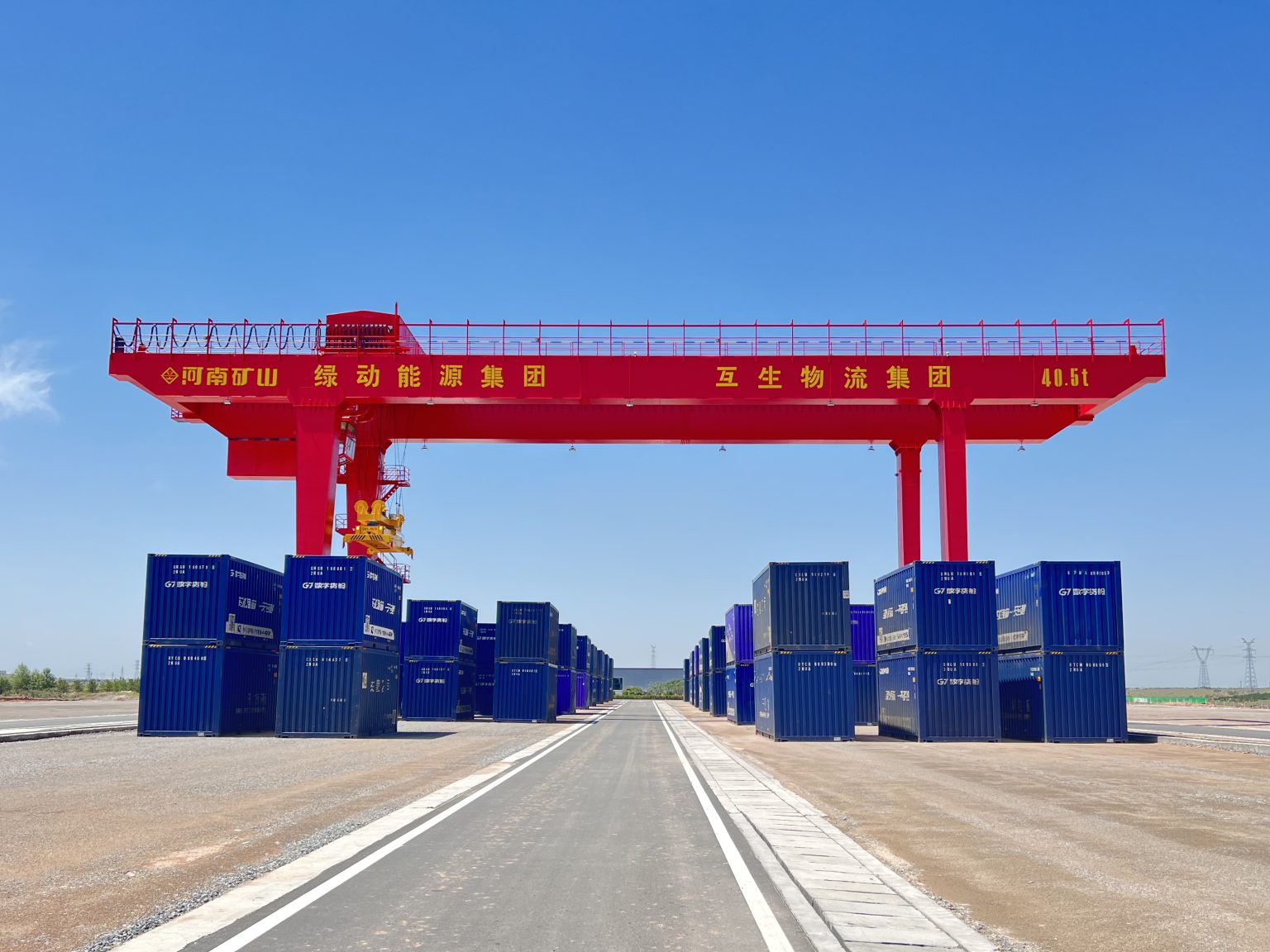
Henan Mine Rail-mounted Container Gantry Crane
Step 3 - Structural and Civil Considerations
This is the easiest part of RMG procurement. Many people only focus on the purchase price of the equipment, but ignore the cost of civil construction. If the wheel pressure is calculated incorrectly, the subsequent cost of foundation rectification may be more expensive than the equipment itself.
Wheel Loads and Rail Design
Wheel pressure is the maximum pressure of each wheel on the track and foundation when the equipment is running. When calculating the wheel pressure, the full load weight, wind load, dynamic load and partial load should be included, not only the static load.
The maximum wheel pressure directly determines the selection of rails and the design of rail bearing beams. The larger the wheel pressure is, the higher the requirements for civil construction and the cost of civil construction will be doubled. When Henan Mine Crane designs RMG, it will optimize the structure to reduce the wheel pressure as much as possible under the premise of guaranteeing the strength, helping the terminal to save the civil construction cost.
Also pay attention to the alignment tolerance of the rail, the straightness of the rail, height difference, gauge deviation, there are strict standards, tolerance exceeding the standard, the equipment operation will be gnawing the rail, the wheel wear too fast, and serious will lead to the deformation of the gantry.
Foundation Requirements
The foundation core of RMG is rail bearing beam, and the cross-section and reinforcement of concrete rail bearing beam should be designed according to the maximum wheel pressure and soil bearing capacity. Especially for coastal and inland river soft ground, it is necessary to do foundation reinforcement to control the settlement, otherwise, within a few years, the bearing beam will have uneven settlement, track deflection, and the equipment can't run normally at all.
I have contacted a southern inland waterway terminal, the procurement only look at the equipment offer, selected the wheel pressure exceeds the standard 30% of the equipment, the results of the site can not withstand the soft ground foundation, with less than a year, the bearing beams on the settlement, track deflection, equipment to chew the rails seriously, and finally just the basis of the rectification spent nearly two million, more than the initial savings of the money of the equipment a number of times.
Wind Load Design
Most of the ports are located along the coast and rivers, and the wind load is a key factor to be considered. To separate the accounting of the working state and non-working state of the wind load, the working state to ensure that the equipment in the specified wind speed can operate normally, non-working state to be able to withstand typhoons, strong convective weather.
The supporting storm anchoring device and hydraulic rail clamp must be matched with the wind load design of the equipment, and in coastal ports where typhoons are common, windproof cable and emergency anchorages should also be installed, so that the equipment can be firmly fixed on the rail in extreme weather to avoid being blown or tipped by the wind.
Step 4 - Automation and Smart Terminal Integration
Nowadays, domestic terminals are promoting smart and automation transformation, the automation compatibility of RMG directly determines the future upgrade space of the terminal, and must be considered in advance when selecting the model, and not only look at the immediate needs of manual operation.
Manual vs Semi-Automated vs Fully Automated RMG
The choice of the three modes depends on the scale of the terminal, work volume and labor cost. Manual RMG with cab is suitable for small and medium-sized terminals, inland ports with small operation volume, low investment and flexible operation.
Semi-automated remote operation mode, suitable for medium and large-scale terminals, an operator can control multiple equipments at the same time in the central control room, which significantly reduces the number of operators on site, lowers the labor cost, and also improves the working environment of the operators.
Fully automated unmanned RMG, suitable for large hub ports and fully automated terminals, can be fully connected to the terminal automation system to realize unmanned stacking, loading and unloading operations, with more stable operating efficiency and 24-hour continuous operation, which is also the development trend of future ports.
Integration with Terminal Operating System (TOS)
Whether semi-automated or fully automated, RMG equipment must be able to seamlessly integrate with the terminal's TOS system (Terminal Operating System). When selecting the model, it is necessary to set up a good data interface protocol to ensure that the equipment can realize real-time data interaction, container positioning and tracking, and automatic issuance of operating instructions with the TOS system.
Many terminals have stepped on this pit, bought equipment only to find that, and they are using the TOS system is not compatible with the later change the interface, change the control system, spent hundreds of thousands of dollars, but also delayed the automation of the transformation of the schedule. Henan Mine Crane's RMG equipment, reserved for the general system interface, can be adapted to the mainstream TOS system on the market, without the need for secondary transformation.
Anti-Collision and Safety Systems
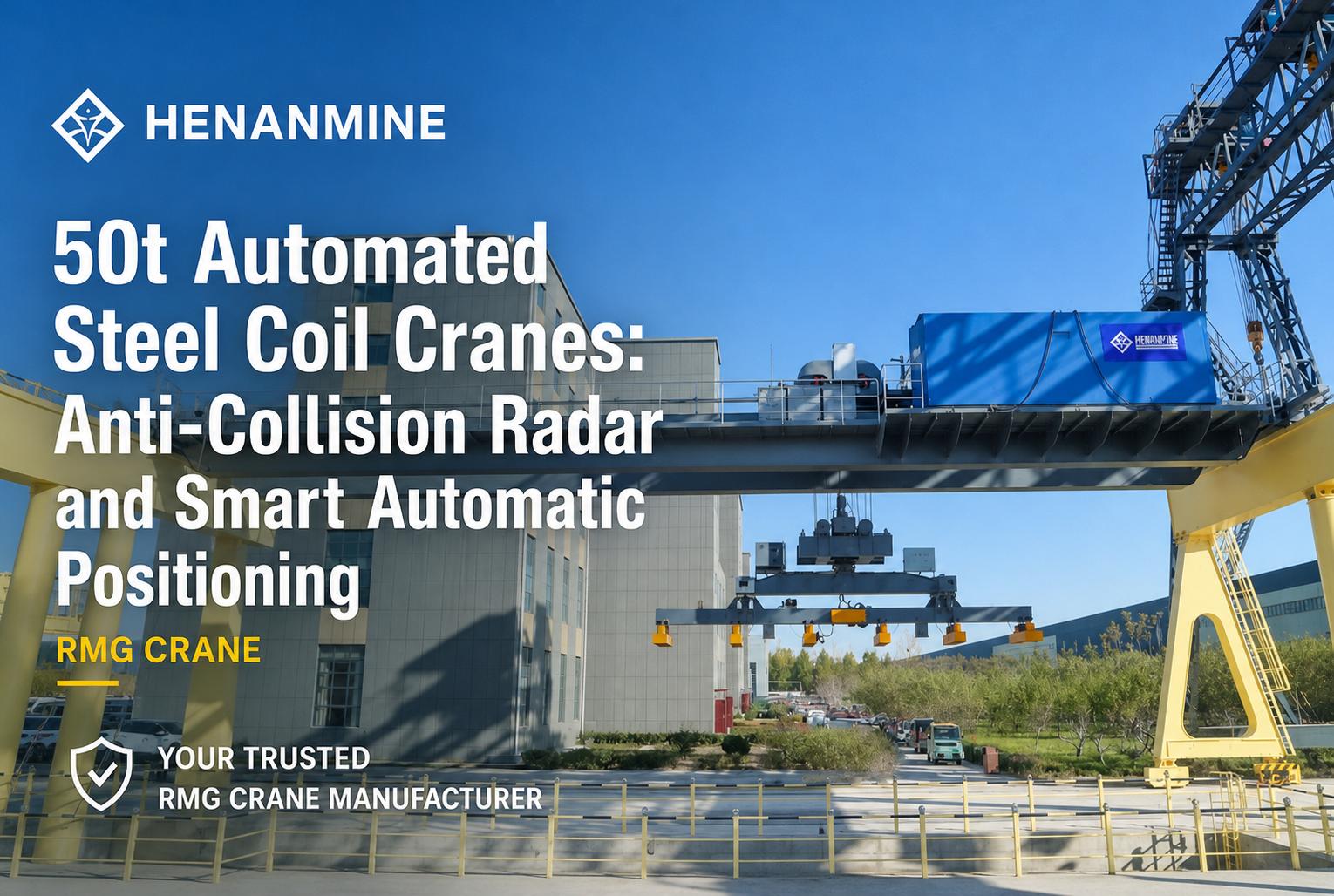
The core of automated operation is the safety protection system. The laser positioning system can realize millimeter-level positioning accuracy to ensure that the spreader is accurately aligned with the container; the obstacle detection radar can identify the collector trucks and people under the gantry, and automatically slow down or stop to avoid collision accidents.
There is also a gantry skew correction system, which can monitor the synchronization of the operation of the large vehicle in real time, avoiding the distortion of the gantry and the gnawing of the rail caused by the unsynchronization of the wheels on both sides; and a spreader anti-shaking system, which can reduce the shaking of the containers, enhance the efficiency of the alignment, and avoid the collision of the containers.
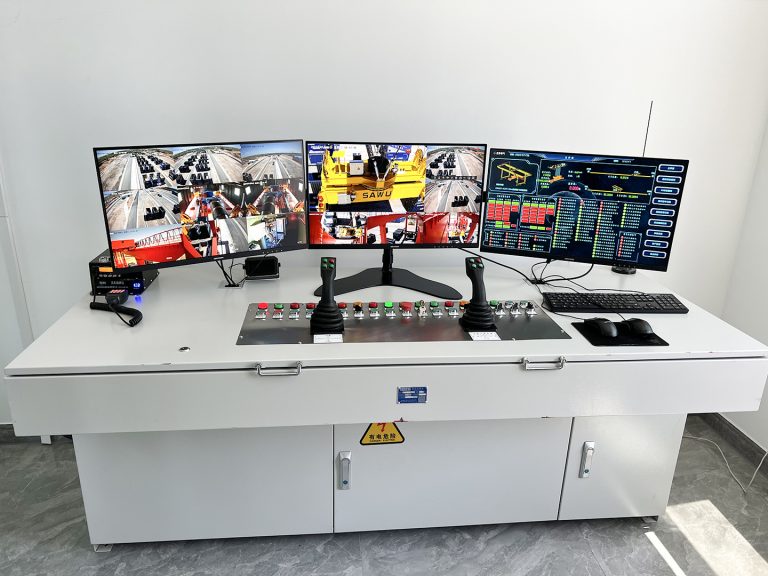
Henan Mine Rail-mounted Container Gantry Crane
RMG vs RTG - Which Is Better for Your Terminal?
Many terminals will be entangled between RMG and RTG (tire-type gantry crane) when selecting the model, in fact, there is no absolute good or bad, only the difference between the adapted scenarios. I use a table to make the core differences clear, you will be able to choose according to their own terminal situation.
After looking at the differences it is clear that these scenarios are preferred RMG: large hub port with high annual throughput, planning to do automation/semi-automation transformation of terminals, railroad intermodal terminals, high land costs require high-density storage yards. In these scenarios, the long-term operational efficiency and cost advantage of RMG will be much more obvious than RTG.
| Comparison Factor | RMG (Rail-Mounted Gantry Crane) | RTG (Rubber-Tyred Gantry Crane) |
| Mobility | Runs along fixed rails with a fixed movement range | Tire-driven, freely movable for cross-block operations |
| Automation Readiness | High, fixed rails enable precise positioning and are suitable for unmanned operations | Moderate, limited tire positioning accuracy and high automation transformation cost |
| Infrastructure Cost | Higher, requiring the pouring of rail-bearing beams and laying of steel rails | Lower, only needing a flat and hardened site without rails |
| Energy Performance | Electrically driven, low energy consumption and low operating cost | Mostly diesel-driven with high energy consumption; electric drive is also optional but flexibility is limited by cables |
| Yard Layout Flexibility | Limited, can only operate along fixed rails, and yard block layout is difficult to adjust after fixation | High, can adjust operation blocks at any time to adapt to temporary yards and irregular layouts |
Lifecycle Cost Analysis
When purchasing RMG, you can't just look at the purchase price of the equipment, but also the cost of the whole life cycle. Many terminals choose cheap equipment in order to save hundreds of thousands of dollars at the initial stage, but as a result, the maintenance, energy consumption and labor costs in the later stage are so high that the whole cycle costs more money.
Initial Capital Investment
Initial capital investment mainly includes three parts: equipment purchase price, track installation cost, civil engineering cost. rmg initial investment is really higher than rtg, mainly in civil engineering and track, especially in soft ground terminal, foundation reinforcement and track bearing beam cost will account for a small proportion.
However, it is important to note that the initial investment is one-time, not only focus on this figure, but also with the subsequent operating costs for more than ten years.
Operating Costs
Energy consumption is the most important part of operating costs, as RMG is powered by electricity, the cost of electricity is much lower than the cost of diesel fuel for RTG, especially nowadays when the oil price fluctuates a lot, in the long run, the advantage of electricity cost will become more and more obvious.
As for the maintenance cost, RMG's track type operation, the wear and tear of wheels and parts is much smaller than tire type, the daily maintenance only needs to check the track and lubricate the parts regularly, so the maintenance frequency and cost is much lower than RTG, and the cost of spare parts, RMG's structure is much more stable, the frequency of replacement of wearing parts is low, so it can save a lot of money in the long run.
Long-Term ROI
The long-term return on investment of RMG mainly comes from three aspects: firstly, the improvement of throughput, the positioning of RMG is more accurate, the operation efficiency is more stable, especially the automation operation, which can greatly improve the handling capacity of the yard; secondly, the reduction of labor cost, remote operation, unmanned operation, which can reduce more than 80% of the on-site operators; thirdly, the saving of energy consumption and maintenance cost, more than ten years of operation, can save a small amount of money. Third, energy consumption and maintenance cost savings, after more than ten years of operation, can save a considerable amount of money.
We have made calculations for many terminals in China. For the same scale of yard, the whole life cycle cost of RMG will be lower than that of RTG after 5-6 years of operation, and the longer the operation time, the more obvious the cost advantage.
Safety Features to Prioritize
The operation of port terminals is a 24-hour continuous operation, the safety features of RMG are directly related to the safety of personnel, equipment and cargo, these core features should never be omitted when selecting the model.
Dual braking system is a must, the lifting mechanism and the big car running mechanism, should be equipped with redundant dual braking system, even if one set of braking failure, the other set of timely braking equipment, to avoid slipping hooks, sliding car accidents.
Anti-shaking control can not be less, especially high stacking operations, container shaking not only affects the efficiency of the alignment, but also may occur crashing boxes, falling boxes of accidents, a good anti-shaking system that can control the container shaking amplitude in a very small range, to enhance the safety of operations.
The whole line of emergency stop system, equipment, cab, center control room, gantry ends, trolley ends, should be set up emergency stop button, encountered an emergency situation, can be pressed in any position emergency stop, cut off the power of the equipment.
Storm protection devices, coastal ports must focus on, in addition to conventional rail clamps, but also equipped with storm anchoring devices, wind speed monitoring system, the wind speed exceeds the safety threshold, can be automatically alarmed, to remind the operator to stop the operation of the equipment will be anchored fixed.
There is also a real-time monitoring system for the equipment, which can monitor the operating status, structural stress, and wear and tear of the components, so as to detect potential faults in advance, avoid equipment operation with disease, and minimize unexpected downtime.
Maintenance Strategy for RMG Cranes
The service life of RMG is not only related to the quality of the equipment itself, but also directly related to the maintenance strategy. A comprehensive maintenance program can extend the service life of the equipment by 3-5 years and significantly reduce the downtime rate.
Preventive Maintenance Planning
According to the intensity of the equipment, to develop a preventive maintenance program, not to wait for the equipment broken and then repair. Daily pre-shift inspection, weekly lubrication and maintenance, monthly component inspection, and annual comprehensive flaw detection should be formed into a fixed process, and the responsibility should be assigned to the person.
Henan Mine Crane customizes a maintenance manual for each RMG project, specifying the maintenance cycle and standards for each component, and also provides regular inspection services to help the terminal nip any hidden faults in the bud.
Rail Alignment Inspection
Rail is the foundation of RMG operation. Regular inspection is required to check the straightness, height difference, gauge deviation of the rail, and the tightness of the fixed pressure plate. Especially for the terminals with soft ground, the rail settlement inspection should be done once every half a year, and the uneven settlement should be adjusted and rectified in time to avoid the equipment from chewing the rails and deformation of the gantry.
Structural Fatigue Monitoring
RMG is a 24-hour continuous high-frequency operation, the steel structure will be fatigue damage, especially the main beams, legs of the weld position, should be done once a year ultrasonic flaw detection, cracks, defects found, timely repair. For high load equipment in large hub ports, it is recommended to install online structural stress monitoring system to monitor the status of the steel structure in real time.
Electrical and PLC Diagnostics
The electrical system and PLC program are the core of RMG automation. It is necessary to regularly check the insulation of the electrical wiring, the tightness of the terminals, and the running status of the PLC program, and back up the program parameters in order to avoid system failures that may lead to equipment downtime.
Spare Parts Inventory Planning
According to the wear and tear cycle of the equipment components, we should establish a reasonable spare parts inventory, such as wheels, bearings, wire rope, brakes and other wear parts, we should have a safety stock, to avoid the damage of components, because of the waiting for spare parts to cause equipment downtime for a long period of time, which affects the operation of the terminal.
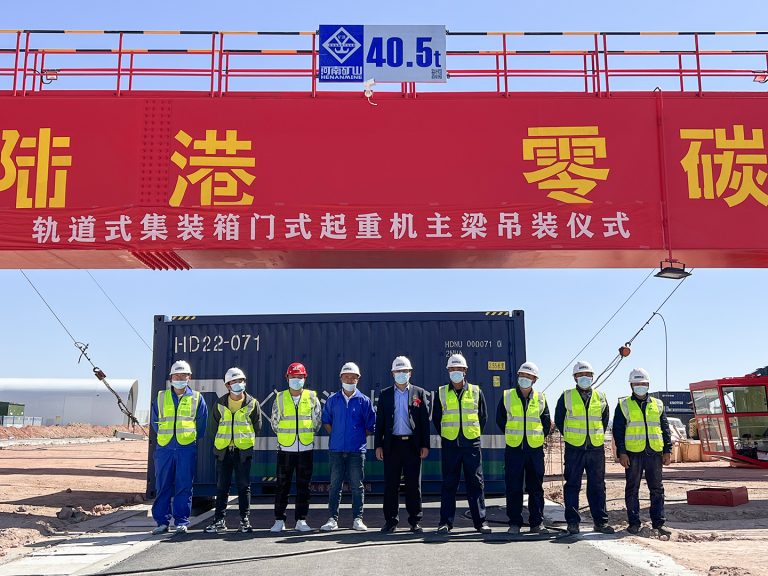
Henan Mine Rail-mounted Container Gantry Crane
Common Procurement Mistakes to Avoid
Combined with so many years of project experience, I have summarized the 5 most common misconceptions in RMG procurement, as long as you avoid these, you can avoid 90% of the detours.
The first pit, underestimate the impact of wheel pressure on civil construction. Many people only look at the equipment offer, ignoring the wheel pressure, the result is that the wheel pressure exceeds the standard, doubling the cost of civil construction, and even foundation settlement, equipment can not run the problem, the final loss is not worth it.
The second pit, ignoring automation compatibility. Even if you don't do automation now, you have to reserve space for automation upgrades, or else when you want to remodel later, the control system of the equipment, the positioning system is not compatible, and you can only change the equipment, which is a huge loss.
The third pit, do not consider the future expansion planning. Terminal throughput is a year-on-year growth, when selecting the type, to the next 3-5 years of development to leave enough margin, such as stacking height, lifting capacity, level of work, or with a three or five years, the equipment can not keep up with the growth of throughput, can only be re-procured.
The fourth pit, ignoring the wind requirements. Especially coastal ports, typhoons, strong convective weather, wind design is not up to standard, storm protection device configuration is insufficient, extreme weather is easy to equipment dumping, damage to major accidents.
The fifth pit, only look at the price to choose the supplier. RMG is a heavy-duty special equipment, not fast-moving consumer goods, low-priced equipment will often be in the steel, electrical components, structural design shrinkage, with a three or five years on the frequent failures, the later maintenance, downtime losses, far more than the initial savings. When choosing a supplier, it is important to look at its port project experience, technical strength and after-sales capability, not just the price.
RMG Crane Selection Checklist (For RFQ Preparation)
We have compiled a RMG Selection Checklist for you, when you do RFQ procurement inquiry, you can fill in against it, so that you can make the demand clear and avoid the inconsistency of supplier's quotation, and also avoid the deviation of demand in the later stage.
- Rated lifting capacity (including single box, double box demand)
- Equipment span, gauge, number of stacking layers, lifting height
- FEM/ISO/CMAA working level requirements
- Maximum wheel pressure data, rail specification requirements
- Automation level (manual/remote/full automation)
- Operating environment (coastal/inland, wind speed requirements, corrosion protection grade)
- Power supply mode and requirements
- System interface requirements (TOS system interface protocol)
- Required industry certifications, export certifications
Frequently Asked Questions
What is the typical lifting capacity of an RMG crane?
The rated lifting capacity of a RMG crane for a conventional container terminal is generally between 40.5 and 61 tons, which covers the lifting requirements of a single 40-foot heavy lift container as well as a double 20-foot container. If there is a need for special heavy containers, the lifting capacity can be customized to over 80 tons.
How many containers can an RMG stack?
The mainstream RMG models are routinely configured as 1-over-4 to 1-over-6, i.e. they can stack 5 to 7 layers of containers. In order to improve the utilization rate of the stacking yard, large hub ports will use 1-over-7 or even higher configurations, which can stack 8 layers of containers. The specific number of layers to be stacked should be determined by the cost of land and operational requirements of the terminal.
What is the difference between RMG and RTG?
The core difference between RMG and RTG is in the operation mode and adaptable scenarios: RMG runs along the fixed track, high positioning accuracy, adaptable to automation, low energy consumption and maintenance cost, but the initial investment in infrastructure is high, and the flexibility is limited; RTG runs on tires, high flexibility, able to operate across the container area, low initial investment, but high energy consumption and maintenance cost, poor adaptability to automation.
Are RMG cranes suitable for automated terminals?
RMG cranes are suitable for automated terminals because of their fixed track operation mode, millimeter-level accurate positioning, and core equipment for automated container terminals. Nowadays, all the mainstream fully automated terminals in the world adopt RMG as their yard stacking equipments, which can perfectly connect with the TOS system and ECS system of the terminal to realize the unmanned operation of the whole process.
How long does an RMG crane last?
Under the premise of normal use and standardized maintenance, the service life of RMG can reach 20-25 years. If it is a large hub port with extremely high operational intensity, it can be used for more than 20 years with good preventive maintenance. The service life of the equipment depends on the design of the steel structure, the manufacturing process, and the later maintenance.
Conclusion
For container terminals, RMG is never a simple lifting equipment, but a core asset that determines the yard's operational efficiency, throughput and profitability.
The correct selection of RMG is never to pile up high parameters and compare with low price, but to start from the actual operational needs of the terminal, taking throughput, yard layout, automation planning, civil engineering conditions, and full-cycle cost into account, and selecting the equipment that is truly suitable for your terminal.
A reasonably configured and high quality RMG can ensure the stable operation of the terminal for more than ten years or even twenty years, improve the operational efficiency of the yard, reduce the long-term operating costs, and ultimately enhance the competitiveness of the terminal in the market.
Henan Mine Crane Factory Custom
If you are preparing for the procurement of RMG equipment for your terminal and are not sure about the layout of the yard and how to set the parameters, you may send us your yard layout and annual throughput demand, and Henan Mine Crane's engineering team will give you a free technical evaluation to help you avoid the pit of selecting the right type.
You can also contact us directly to apply for a customized RMG crane solution, we will combine with your terminal operating scenarios, from structural design, automation configuration to civil optimization, to give the whole process solution.