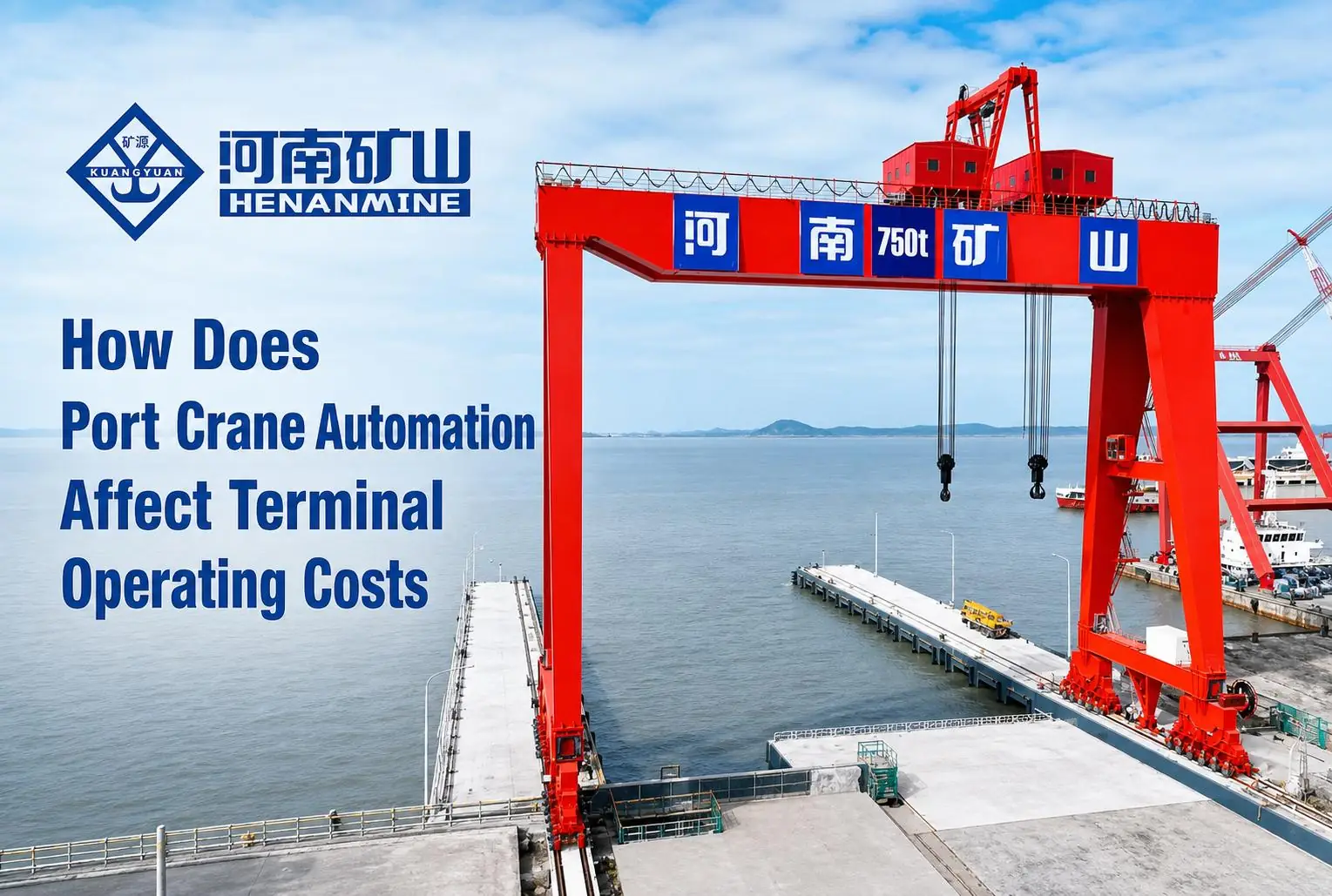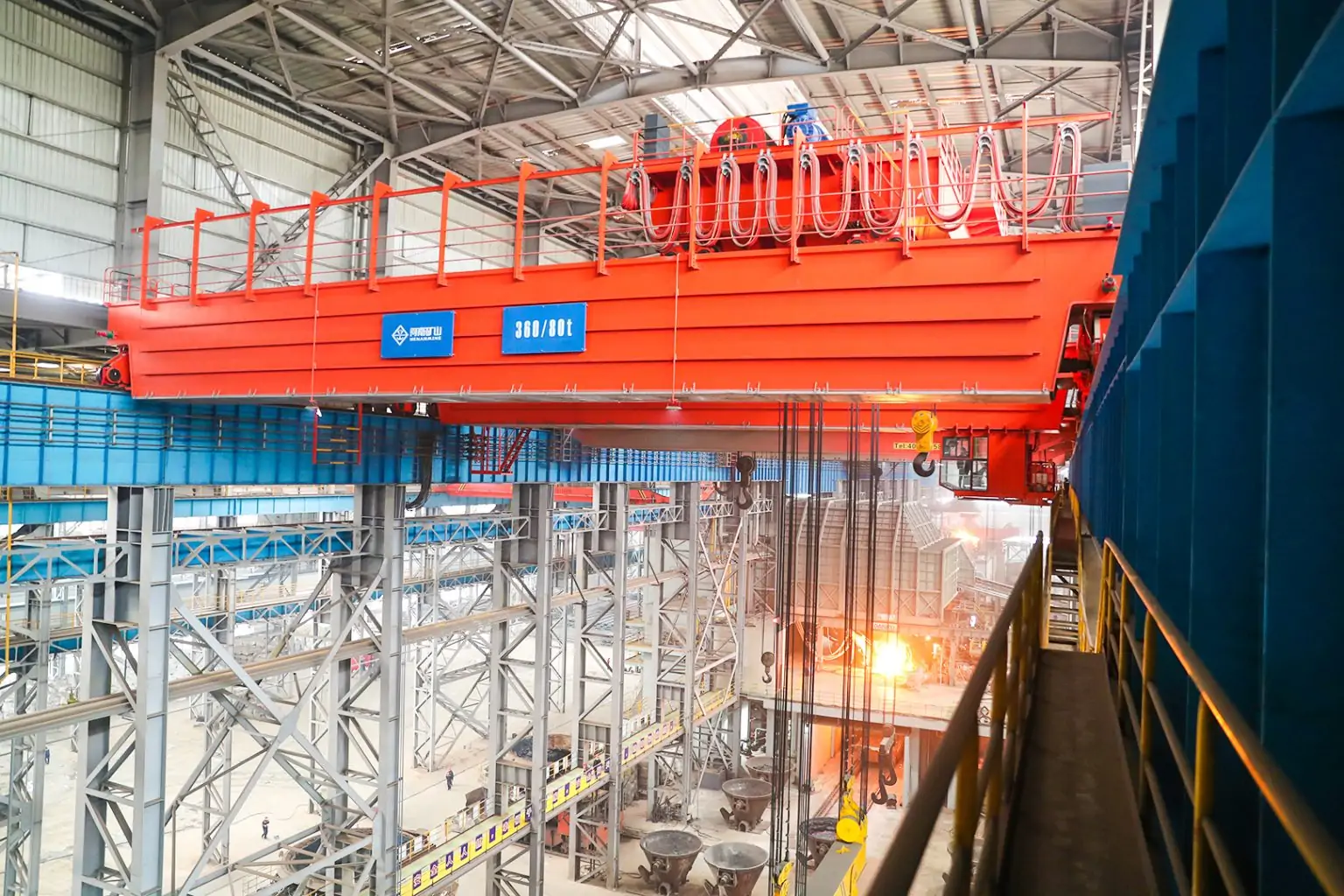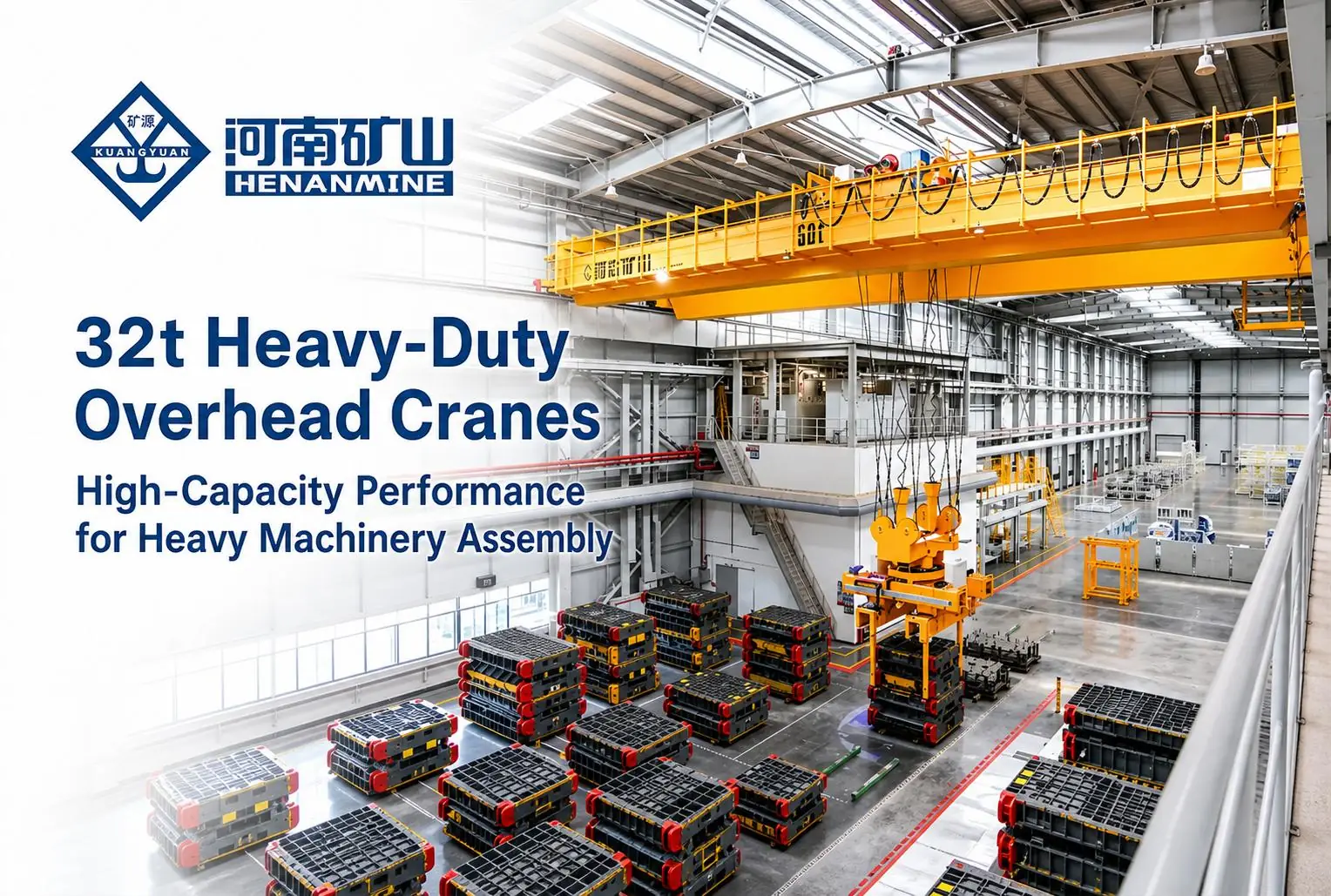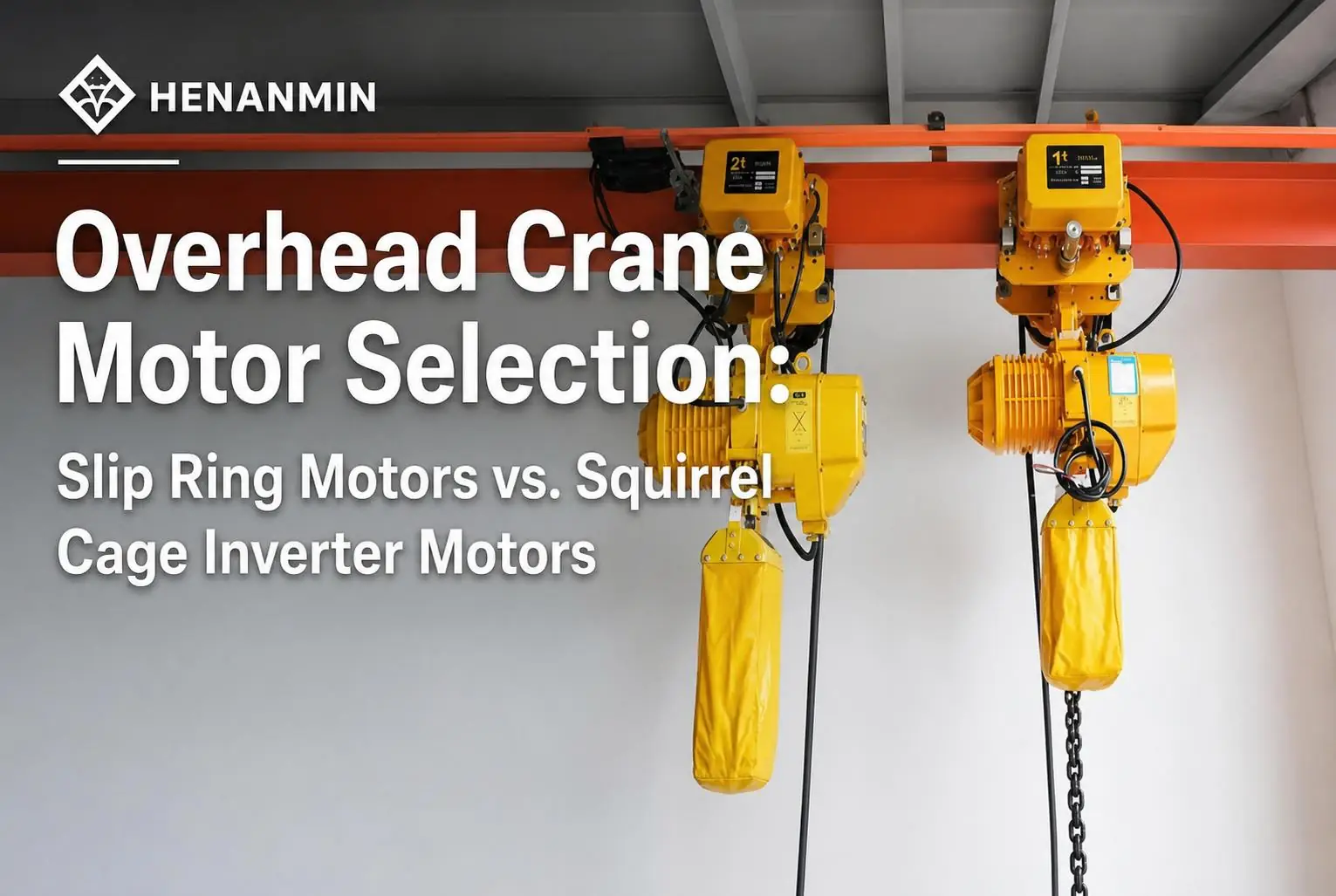

What Is a Gantry Crane? Types, Applications and Key Advantages
Gantry cranes are the core equipment for outdoor heavy-duty operations and are widely used in ports, construction, manufacturing and other fields. Many people will confuse it with bridge crane, in fact, the two are very different in structure, installation and use scenarios.
This article will help you fully understand the gantry crane from the basic definition, type division, practical applications and core advantages, and will teach you how to choose the right model for your own conditions, as well as the key difference between the bridge crane and the gantry crane.
| Crane Type | Key Advantages | Ideal Applications | Lifting Capacity | Typical Span | Cost Level |
| Single Girder Gantry Crane | Light self-weight, simple structure | Light/medium-duty workshop handling | 5–30 tons | ≤ 20 m | Low |
| Double Girder Gantry Crane | High rigidity & stability, heavy-load capacity | Heavy industry, port lifting, bridge construction | 30–500+ tons | 10–50 m | Medium–High |
| Rail Mounted Gantry Crane (RMG) | High positioning accuracyong-term wear | Container yards, fixed large industrial yards | 20–50 tons | 20–40 m | Medium–High |
| Rubber Tyred Gantry Crane (RTG) | No fixed rail required, high mobility | Ports, temporary yards, precast concrete yards | 20–50 tons | 15–30 m | Medium |
| Portable / Mobile Gantry Crane | Adjustable height & span | Small workshops, maintenance bays | 1–20 tons | 3–12 m | Low |
| Full Gantry Crane | Fully independent structur | Open yards, ports, construction sites | 5–500+ tons | 5–50 m | Medium |
| Semi-Gantry Crane | Saves space | Factory outdoor warehouses, workshop edge handling | 5–30 tons | 5–25 m | Low–Medium |
What Is a Gantry Crane?
Basic Definition
A Gantry Crane, also known as a Gantry Crane, is a lifting device supported by a portal frame. Its main beam is supported by both sides of the outriggers, and the bottom of the outriggers is equipped with a walking mechanism, which can move on the ground track or tires to realize the horizontal movement of the whole machine.
Unlike overhead cranes, gantry cranes do not need to be attached to the columns or roof structure of the plant, its support is completely independent, installation and site adaptability is stronger. Whether it is an open yard or a workshop with certain space limitations, as long as there is a level working surface, it can basically be deployed.
Main Components
There are not many core components of gantry cranes, but each of them has a direct impact on operational safety and efficiency. The first is the main girder, which is divided into single and double main girders. It is the core structure for carrying heavy loads and determines the maximum lifting capacity and span of the crane.
Next is the supporting leg, connecting the main beam and traveling mechanism, transferring the weight and load of the whole machine, common L-type, C-type design, C-type outriggers will be done tilted or curved processing, the purpose is to leave a larger lateral space, so that the extra-wide cargo smoothly through the outriggers underneath.
Then the lifting mechanism, responsible for the lifting and lowering of heavy loads, mainly consists of motors, reels, wire ropes, hooks, etc. It is the core power unit to realize the lifting operation. Walking mechanism is divided into two types: rail type and tire type, rail type runs on a fixed track by steel wheels, and tire type relies on rubber tires to achieve movement.
Finally, there is the control system, which is divided into wired handle, wireless remote control and cab operation, and is responsible for controlling the lifting, traveling, luffing and other actions, and at the same time integrates all kinds of safety protection devices to ensure the safety of operation.
How It Differs from an Overhead Crane
Many people can’t tell the difference between a gantry crane and an overhead crane, but the core difference between the two is in the structural support and installation conditions. Overhead cranes, also known as overhead cranes, run on the columns and roof rails of the plant, with the main beams suspended under the roof rails, without independent legs, and can only work inside the plant.
Gantry cranes, on the other hand, are independent portal frames with outriggers directly on the ground without the need for the plant to provide support, which means that they can be used in non-fixed construction environments such as open fields, temporary yards, and outdoor construction sites, whereas overhead cranes can only be deployed in scenarios with fixed plants.
From the point of view of the scope of operation, the mobile range of bridge cranes is limited by the span of the plant, while the span of the gantry crane can be flexibly customized according to the site, from a few meters to dozens of meters can be achieved, and can even be made to do a double cantilever design, to expand the area covered by the operation.
In addition, there are differences in installation costs. Overhead cranes need to renovate the plant and lay special tracks, with high renovation costs and a long cycle; gantry cranes only need to level the site, lay simple tracks or directly deploy tire-type, with faster installation and commissioning, and less alteration to the existing site.
Types of Gantry Cranes
There are many ways to categorize gantry cranes, the most commonly used is according to the main girder design, movement mode and structural form, different types are suitable for different working conditions and loads.
By Girder Design
Single Girder Gantry Cranes
Single girder gantry crane has only one main girder, which usually adopts I-beam or combined cross-section, and the height of cross-section is generally between 0.5-1.2 meters, which is lighter in dead weight, lower in manufacturing cost, and more convenient in installation. Its trolley mostly adopts the under-hanging design, hanging directly below the main beam track operation.
This type of crane is suitable for light to medium load operation scenarios, such as small workshop equipment maintenance, small cargo handling, lifting capacity is generally between 10-30 tons, the span is also relatively small, usually not more than 20 meters.
Its advantages are simple structure, low cost, easy maintenance; disadvantages are limited carrying capacity, overall stability is not as good as double main girder, easy to shake in heavy load or large span operation, not suitable for long-term high-intensity heavy operations.
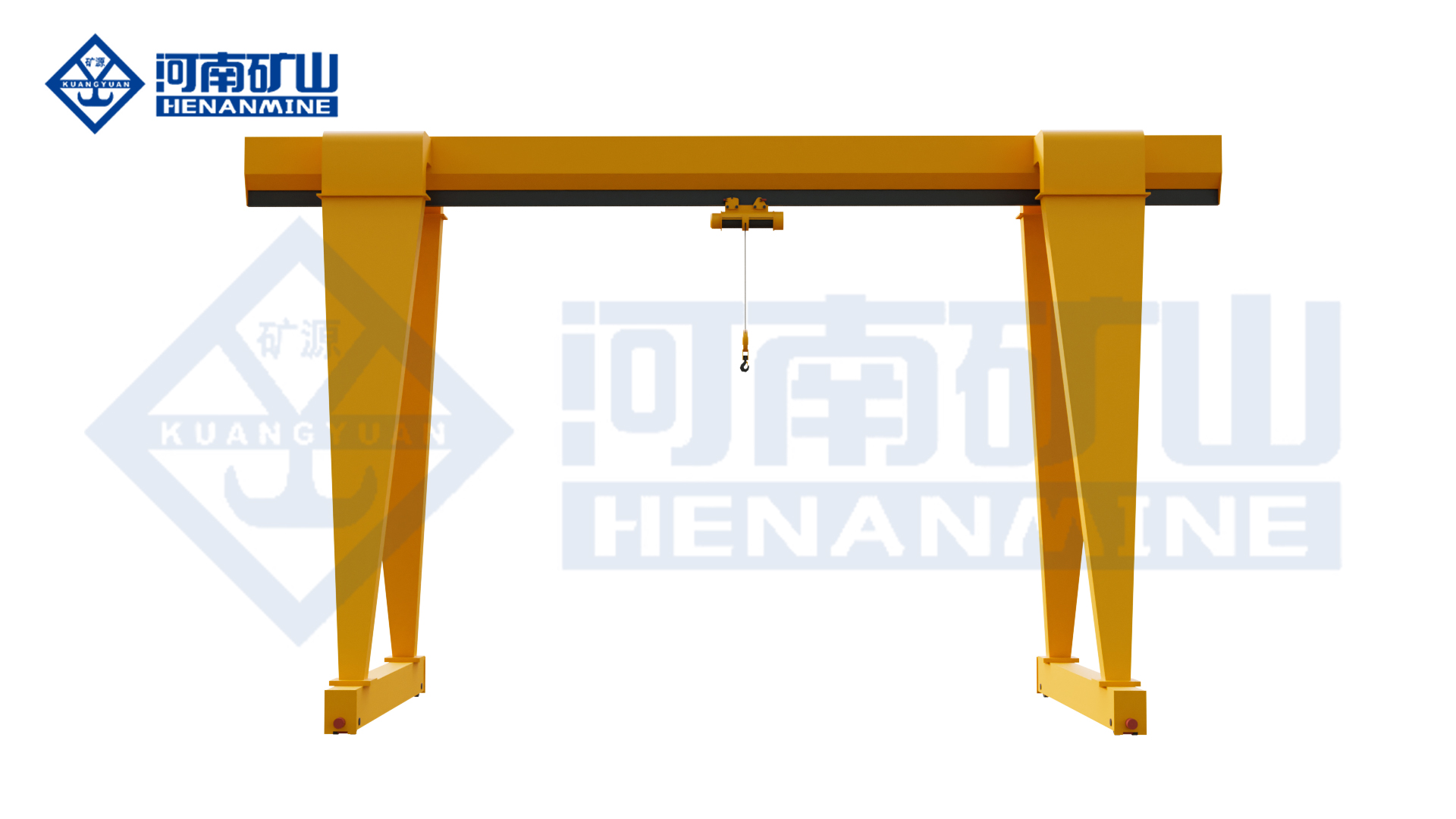
Single-girder gantry crane manufactured by Henan Mine
Double Main Girder Gantry Crane
Double main girder gantry crane consists of two parallel main girders, mostly using box beam or truss structure, box beam has the characteristics of large stiffness and good stability, suitable for large tonnage operations. Its supporting legs and main girder are more firmly connected, and the overall structure is more stable.
This type of crane has strong load carrying capacity and large span, the maximum lifting capacity can reach more than 500 tons, and the span can reach 50 meters, which is suitable for heavy and ultra-heavy operations, such as harbor container storage, bridge girder lifting, shipbuilding module lifting, and so on.
Its disadvantages are self-importance, higher cost than single main girder, slightly longer installation and commissioning cycle, and slightly higher energy consumption. However, in long-term high-intensity, high-load operations, the stability and safety of the double main girder is more secure, and it is the first choice for heavy-duty working conditions.
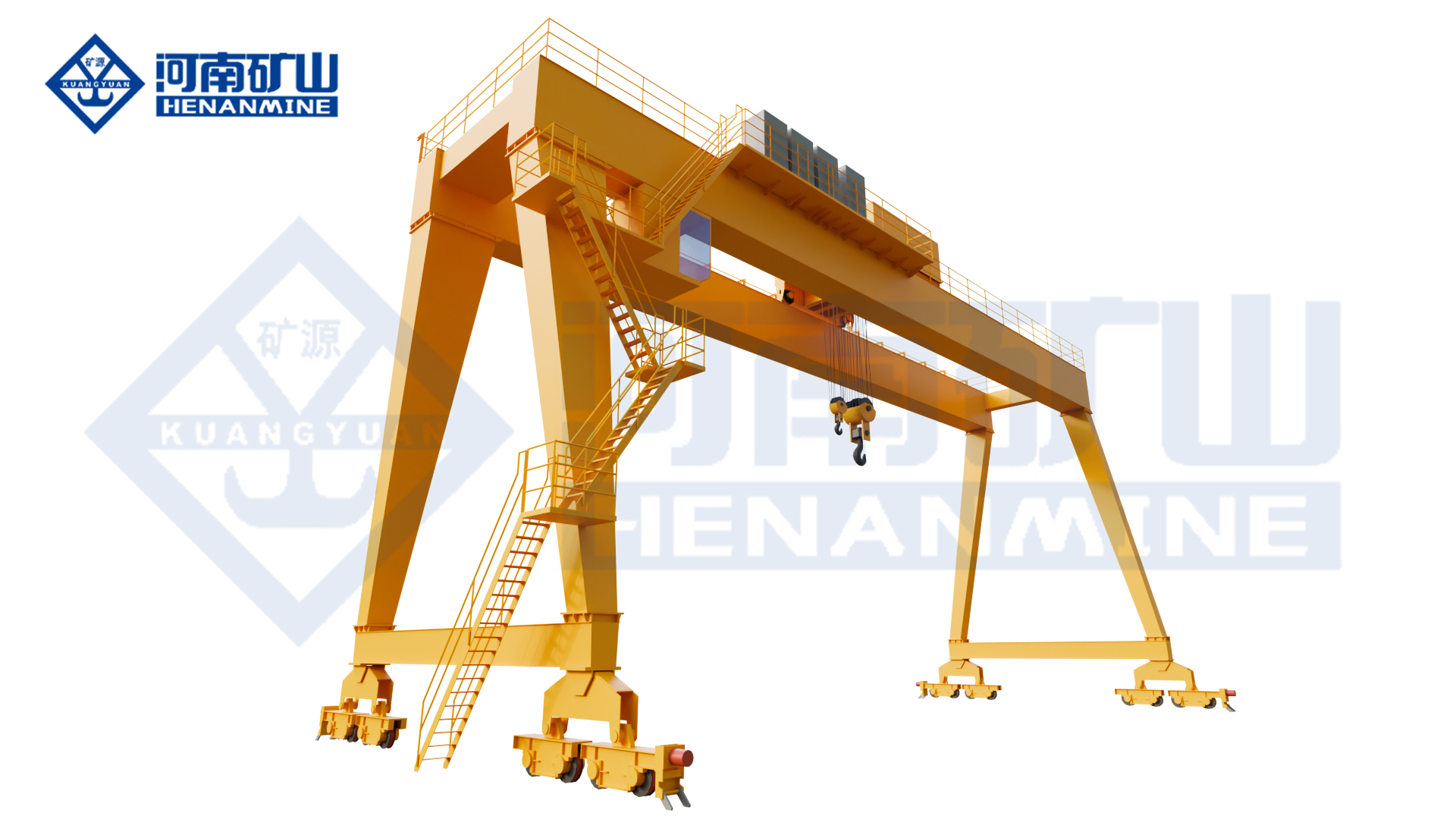
Henan Mine’s MG double girder gantry crane
By Mobility and Running Method
Rail Mounted Gantry Cranes (RMG)
Rail Mounted Gantry Crane (RMG) is a gantry crane that runs on a fixed rail. Its outriggers are equipped with steel wheels at the bottom, which travel on the pre-buried track, and the running path is completely limited by the track, so it can only move in a straight line along the track.
The core advantage of RMG is its high positioning accuracy, up to centimeter level, which is suitable for high-density stockpiling operations, such as container yards in ports and raw material yards in large factories, and can realize accurate stacking and fast access of containers. It has strong carrying capacity, can be designed with larger span and cantilever, suitable for single cantilever, double cantilever and other configurations, with low difficulty of automation transformation, suitable for intelligent yard deployment.
Its disadvantages are poor mobility and flexibility, unable to trans-regional transfer, once the track laying is completed, the operating range is fixed, the site is difficult to transform, the initial infrastructure costs are high, the need to lay special tracks and power supply systems.
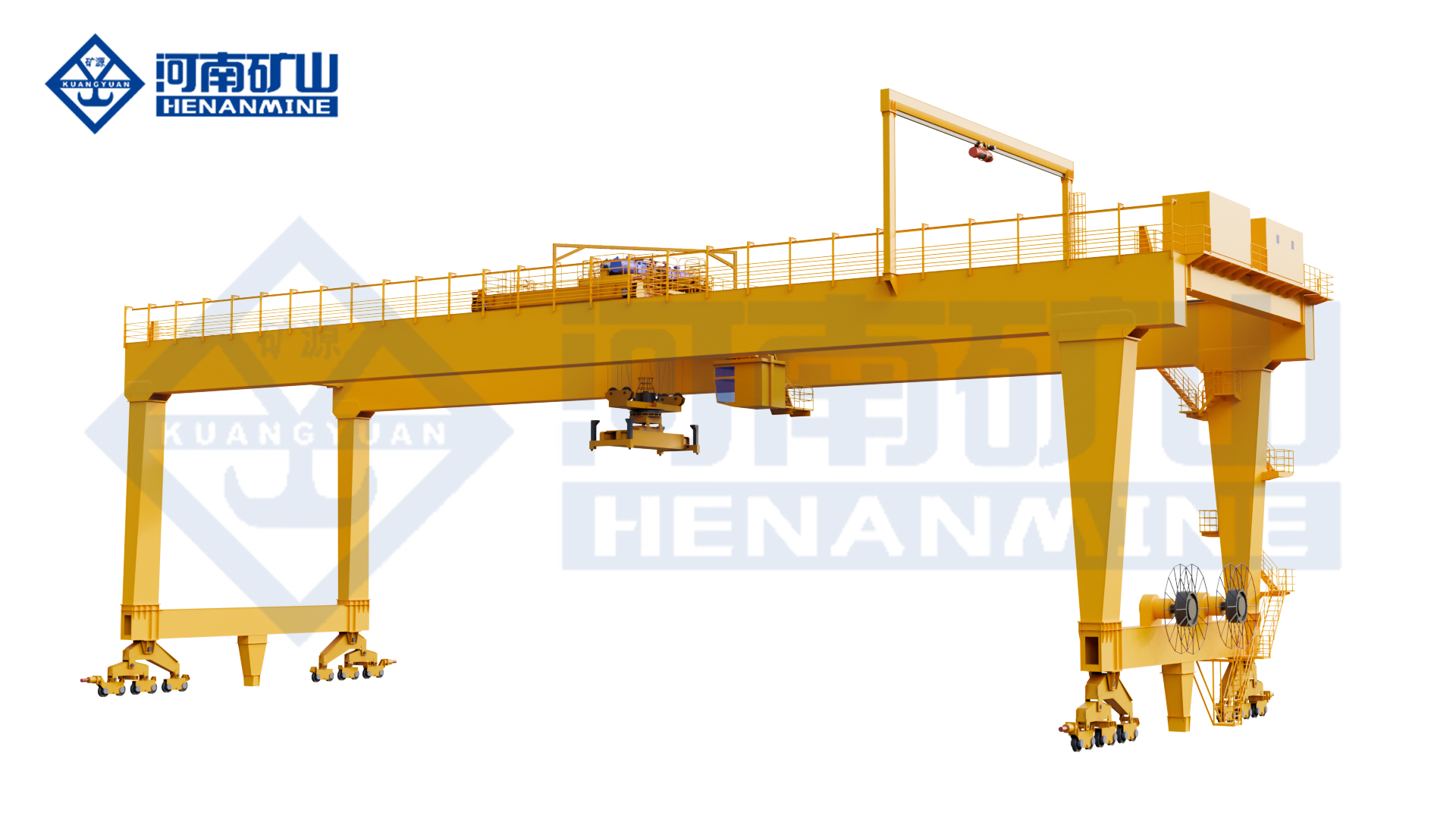
Henan Mine rail-mounted container gantry crane
Tire Gantry Crane (RTG)
Tire Gantry Crane, called Rubber Tyred Gantry Crane in English, or RTG for short, relies on rubber tires to achieve mobility, there is no fixed track limitations, and it can be moved freely on a level site, and it is very flexible for cross-box and cross-area operations.
The advantage of RTG is that it has excellent site adaptability, does not need to lay tracks, and can be quickly deployed in old yards and temporary yards, with low site modification costs. It can also be driven by diesel, electric or hybrid power, and is suitable for scenarios where the site is irregular and the operation area is frequently adjusted, such as port bulk yards and prefabricated parts processing plants.
Its disadvantages are slightly lower operational accuracy than RMG, slightly lower stockpiling density and single-unit operational efficiency, lower capacity ceiling per unit area of yard, and higher energy consumption and operational costs for long-term use.
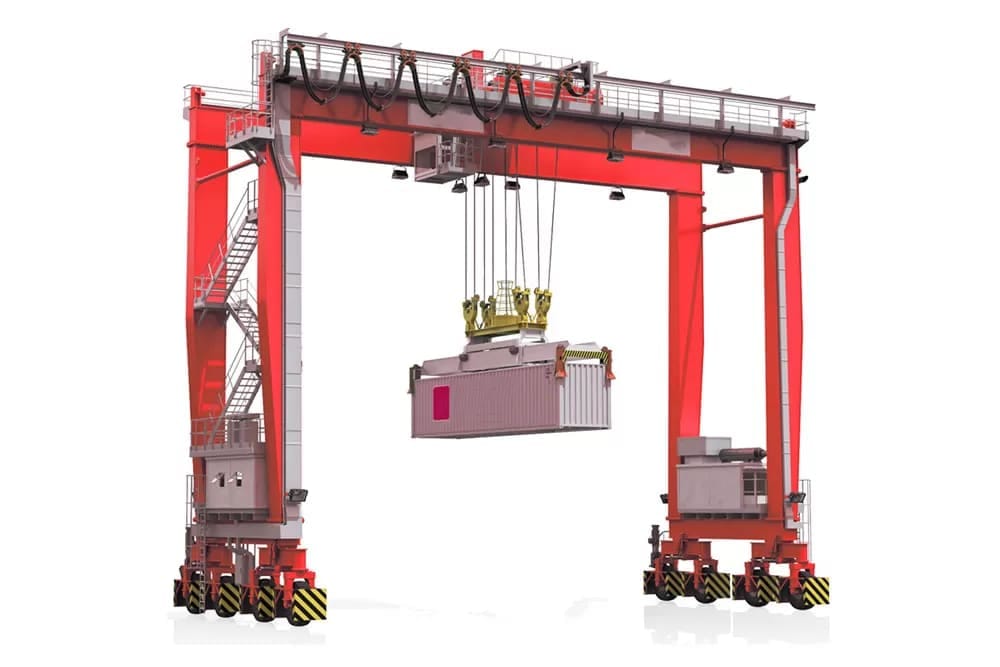
Portable/Mobile Gantry Cranes
Portable gantry crane, also called mobile gantry crane, is a small gantry crane with flexible height and span adjustment, mostly with detachable design for easy transportation and installation. It has a small lifting capacity, generally between 5-20 tons, suitable for small workshops, maintenance workshops, equipment maintenance, as well as temporary small cargo handling operations.
With simple structure and light weight, these cranes can be moved to any working position by forklift or trailer, and no professional tools are needed for installation and easy operation, making them ideal for small-scale operation scenarios.
By Structural Design
Full Gantry Cranes
Full Gantry Crane is the most common type of gantry crane. It has two supporting legs, and the two ends of the main girder are connected to the supporting legs to form a complete gantry frame, and the whole machine is completely independent of the site, not attached to any building structure.
Its operating range covers the whole area under the main beam, suitable for open open yard, harbor, construction site and other scenes, can realize all-round material handling, wide range of carrying capacity and span, from light to heavy duty operations can be adapted.
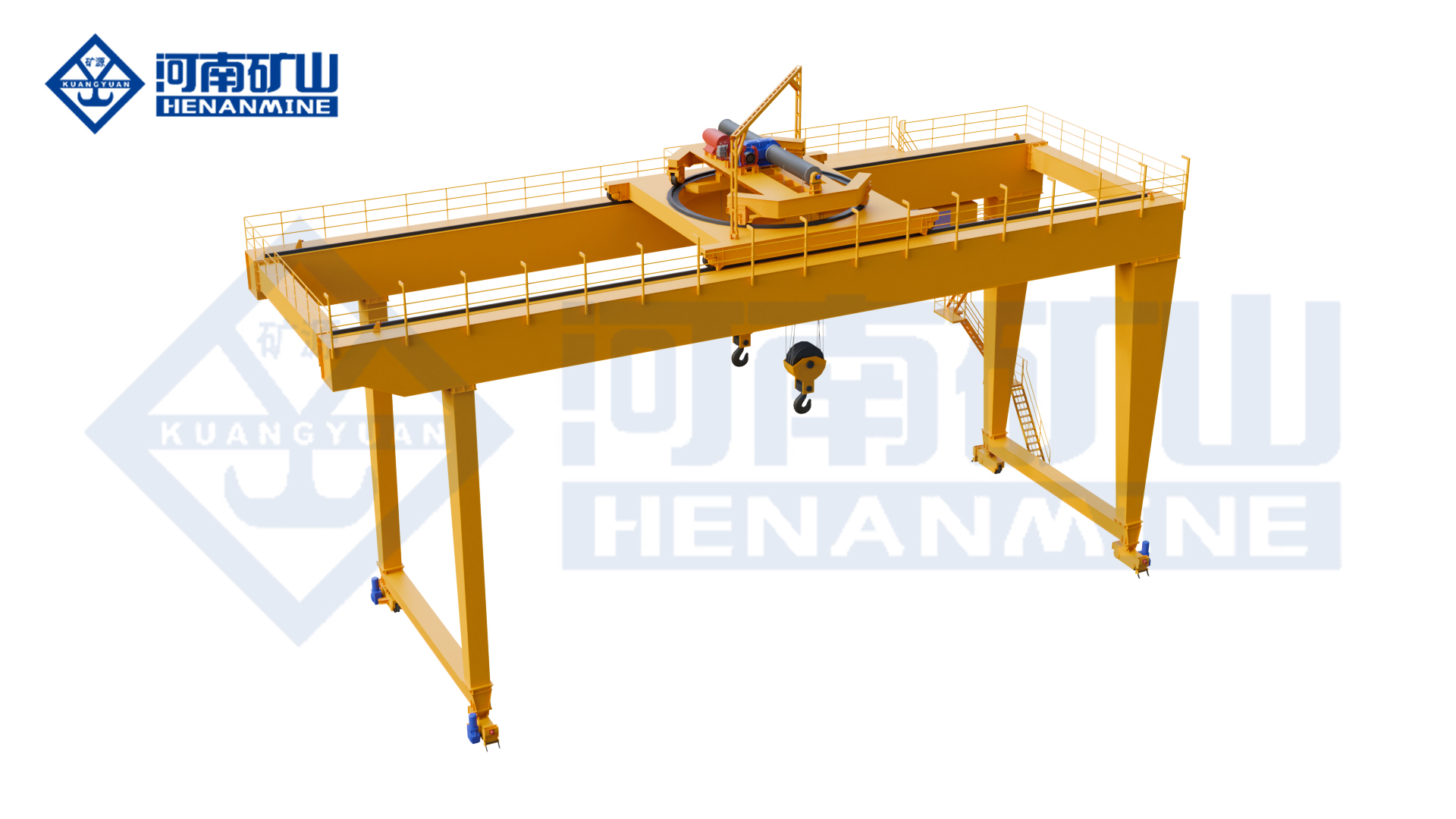
MC Electromagnetic Gantry Crane
Semi-portal Crane
Semi-gantry cranes, also called half-gantry cranes, have only one supporting leg, while the other outrigger is attached to the column or ground track of the plant, and one end of the main girder is supported by the outrigger, while the other end is hung on the track of the plant.
It is a cost-saving design, suitable for both plant and open yard scenarios, utilizing the existing structure of the plant to reduce the number of outriggers, reducing the cost of equipment and site modification costs. Its operating range is mainly in the yard outside the plant, and it is suitable for material handling around the plant, such as the loading and unloading of the factory’s finished product warehouse.
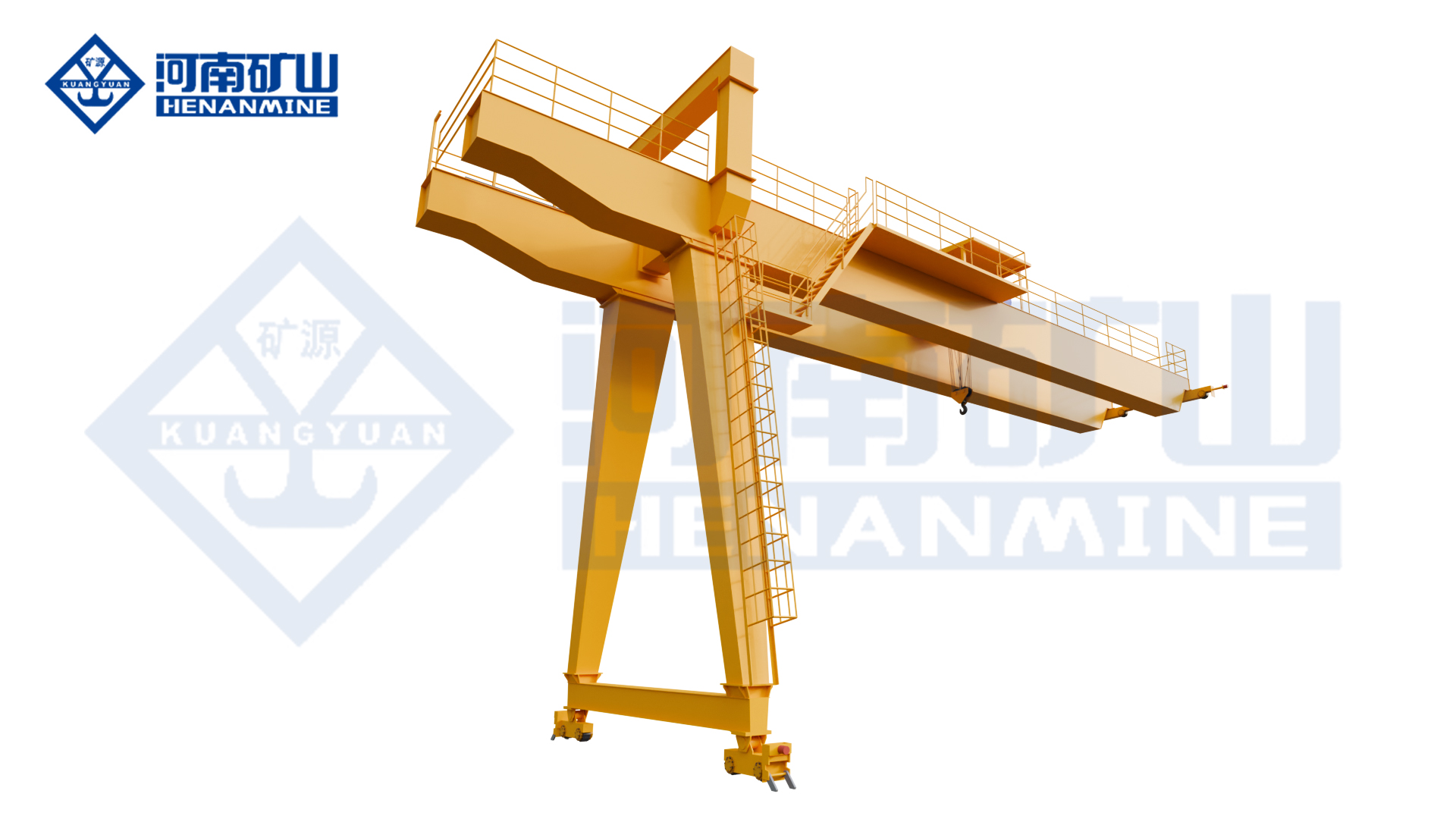
The MGB semi-gantry crane manufactured by Henan Mine
Main Applications of Gantry Cranes
Gantry cranes have become the core lifting equipment in many industries due to their flexible installation methods and powerful loading capacity, and the following are the most common application scenarios.
Ports and Container Terminals
Ports and container terminals are the core application scenarios of gantry cranes, especially RMG and RTG, which are almost the standard equipment in container yards. In container yards, gantry cranes are mainly responsible for stacking and transferring containers, stacking containers unloaded by shore cranes to designated locations, and also quickly removing containers according to instructions to complete loading and unloading operations.
The complexity of the operating environment in the port, container weight, high frequency of operation, the stability and efficiency of the crane requires a very high degree of RMG is suitable for a high degree of automation, high stockpiling density of large ports, to achieve accurate stacking and fast access; RTG is suitable for small and medium-sized ports or temporary yards, the flexibility of the mobile mode can be adapted to the different stockpiling layout.
In addition to containers, gantry cranes can also be used for handling bulk cargoes and general cargoes in ports, such as coal, ores, steel, etc. By replacing the lifting gears (such as grabs and electromagnetic suction cups), different materials can be handled, which is suitable for handling multiple types of cargoes in ports.
Construction and Infrastructure
In construction and infrastructure projects, gantry cranes are the main equipment for lifting heavy components, especially in bridge projects and prefabricated parts processing plants. In bridge construction, gantry cranes are mainly responsible for lifting and installing bridge girders. Large-span double girder gantry cranes can easily lift girders of dozens of tons or even hundreds of tons, and accurately place them in the designated positions.
In precast concrete component processing plants, gantry cranes are responsible for the handling and stacking of precast panels, precast columns and precast girders, lifting precast components from the production line, transferring them to the yard for storage, or loading them directly for transportation. The flexible mobility of the tire gantry crane can be adapted to the material handling needs of different production areas in the processing plant.
In addition, in large-scale construction projects, gantry cranes are also used for the lifting of structural steel components and the installation of large equipment, such as the lifting of steel roof frames in factories, and the installation and dismantling of tower cranes, to ensure the safety of high-altitude heavy-duty work by virtue of their stable load-bearing capacity.
Manufacturing and Fabrication
In manufacturing and steel fabrication plants, gantry cranes are mainly responsible for the transportation and assembly of heavy equipment and steel structure parts. In steel processing plants, gantry cranes lift steel plates and profiles to processing stations, complete cutting, welding, assembly and other processes, and then lift the assembled steel structure parts (such as plant frames and bridge components) to the finished product yard.
In large equipment manufacturing enterprises, gantry cranes are responsible for the handling and installation of heavy equipment, such as machine tools, generators, large pressure vessels, etc. The equipment is lifted from the production workshop and transferred to the installation site, or the assembly and commissioning of the equipment is completed in the workshop.
Single girder gantry cranes are suitable for small and medium-sized manufacturing enterprises for light-duty operations, while double girder gantry cranes are suitable for large manufacturing enterprises for heavy equipment handling, with a stable structure, to ensure the safety of high-precision equipment handling, to avoid damage to the equipment due to shaking.
Shipbuilding and Marine Industry
In shipbuilding and marine engineering, gantry cranes are the core equipment for lifting heavy modules and hull components, especially in large shipyards. In the shipbuilding process, gantry cranes are responsible for the assembly and lifting of hull segments, lifting the segments to the ship’s platform, completing the welding assembly and forming a complete hull structure.
Shipbuilding, hull segments of large weight and size, the crane’s carrying capacity and span requirements are extremely high, double main girder gantry cranes are the preferred equipment, some of the oversized tonnage shipbuilding gantry cranes, the lifting capacity can reach hundreds of tons, the span can cover the entire ship platform, to achieve the precise lifting and positioning of the segments.
In addition, in marine engineering, gantry cranes are also used for the lifting of offshore platform modules, port equipment installation and maintenance, with a strong load-bearing capacity and stable structure, to adapt to the harsh operating environment of marine engineering.
Key Advantages of Gantry Cranes
Gantry cranes are widely used in various industries because of their flexibility, cost advantage and strong working ability, the following are the core advantages.
Flexible Installation
One of the biggest advantages of gantry cranes is their flexible installation, which does not depend on fixed buildings. It does not need to be attached to the columns or roof of the plant, but only needs a flat working site, it can be quickly deployed, whether it is an open yard, temporary site, or existing plant, can be adapted.
Rail gantry cranes only need to lay a simple track, tire gantry cranes do not even need a track, driving directly on the level ground, the installation and commissioning cycle is short, usually within a few days to complete the deployment, compared with the bridge crane plant modification, the installation cost and time are significantly reduced.
In addition, the span and height of the gantry crane can be flexibly customized, according to the size of the operating site and the size of the material, adjusting the span of the main girder and the height of the lifting height, to adapt to the operational needs of different scenarios, and will not be affected by the site limitations of the operational efficiency.
Cost-Effective for Outdoor Operations
For outdoor operations, the cost advantage of gantry cranes is very obvious. The first is the installation cost, does not require large-scale transformation of the site, no need to lay complex track and power supply system, especially tire-type gantry cranes, almost no need for site modification, can be deployed directly.
High Load Capacity
Gantry cranes have a wide range of load capacity, from light loads to super heavy duty operations can be adapted. Single girder gantry cranes are suitable for light load operations of 10-30 tons, while double girder gantry cranes can achieve super-heavy operations of more than 500 tons, with spans ranging from a few meters to dozens of meters, to meet the load requirements of different scenarios.
Scalability and Customization
Gantry cranes support a high degree of customization, according to the user’s operational needs, adjusting the span, lifting height, lifting capacity, travel mode and other core parameters to adapt to different working conditions. For example, if a port yard needs a double cantilever design, or a shipyard needs a large span and tonnage, all can be realized through customization.
In addition, the spreader of gantry cranes can be flexibly replaced. By replacing the spreader such as hooks, C-hooks, electromagnetic suction cups, grabs, etc., different materials can be handled, from containers and steel to bulk cargo and prefabricated parts, all of which can be adapted to enhance the versatility of the equipment.
Mobility Options
Gantry cranes provide a variety of mobility options to suit different sites and operational scenarios. Rail gantry cranes run along a fixed track with high positioning accuracy, suitable for high-density stockpiling and automated operations; tire gantry cranes can be moved freely and are flexible in cross-area operations, suitable for irregular site scenarios.
How to Choose the Right Gantry Crane
To choose the right gantry crane, you can’t just look at the lifting capacity, but also combine various factors such as operating scenes, load characteristics, site conditions and budget, etc. The following are the core selection factors.
Key Selection Factors
First of all, it is necessary to clarify the required lifting capacity, which is the basis for selection, but not only the weight of the cargo itself. The weight of the spreader (e.g. grab, electromagnetic suction cup, C-hook) should also be taken into account, so as to avoid inadequate selection, which may lead to failure of normal operation.
For example, the daily handling of 20 tons of containers, if with 5 tons of spreader, you need to choose the lifting capacity of not less than 25 tons of gantry cranes, to reserve a certain margin of safety, while avoiding excessive selection of cost waste.
Next is the span and lifting height, these two parameters are directly determined by the operating site. The span should match the actual width of the site to ensure that the main beam of the crane can completely cover the operating area, while also reserving the outriggers and the site columns, equipment safety clearance.
Lifting height is determined according to the height of the goods stacked, the height of the equipment, to ensure that the goods can be lifted smoothly, without collision with the top structure of the site, other equipment, while a small amount of space can be reserved to cope with the future operational needs of the slightest adjustment.
Work level should not be ignored, it is directly related to the service life and stability of the crane. Working level is determined by the frequency and duration of operation, outdoor heavy-duty operations, high-frequency operations need to choose a higher working level to avoid premature wear and tear of the equipment, frequent failures.
For example, port container yard gantry cranes, continuous operation for more than 10 hours a day, high frequency of operation, you need to choose A6 and above the level of work; and small workshop maintenance cranes, the frequency of operation is low, A3-A4 level can meet the demand.
Also consider the working environment, outdoor operations need to pay attention to wind, dust, corrosion performance, coastal ports to choose high corrosion grade equipment, windy and snowy areas in the north need to be configured with windproof devices; indoor operations focus on space adaptability, to avoid height, span and plant conflict.
Frequency of operation will also affect the selection, high-frequency continuous operation is recommended to choose double girder gantry cranes, the structure is more stable, more durable; low-frequency, light load operation, single girder or portable cranes have more cost advantages.
Finally, the budget and full life cycle cost, can not just look at the initial purchase price. Consideration should be given to installation costs, operating costs (energy consumption, maintenance fees), spare parts costs and downtime losses. For example, electric gantry cranes have a slightly higher initial investment, but lower long-term energy consumption, which is suitable for long-term stable operation.
Gantry Crane vs Overhead Crane – Which One Is Better?
Gantry cranes and overhead cranes are both core equipment for industrial lifting, but there is no absolute “better”, only “more suitable”. The differences between the two are mainly focused on the structure, cost, application scenarios, combined with their own working conditions to choose, in order to avoid waste and inconvenience.
|
Comparison Item
|
Gantry Crane
|
Overhead Crane
|
|---|---|---|
|
Structural Support
|
Independent gantry frame, supported by legs on the ground
|
Depends on factory columns and roof rails, no independent legs
|
|
Installation Cost
|
Low, no factory modification needed; tire-type requires no track
|
High, needs factory reinforcement and roof track laying
|
|
Application Scenario
|
Outdoor yards, ports, construction sites, no fixed factory
|
Indoor workshops, manufacturing plants, fixed indoor sites
|
|
Long-term Flexibility
|
High, adjustable span/lifting height, movable and reusable
|
Low, limited by factory structure, hard to adjust or move
|
|
Positioning Accuracy
|
Good (especially RMG), suitable for high-density stacking
|
High, suitable for indoor high-precision operations
|
Structural comparison
The core structural difference lies in the different support methods. Gantry crane adopts independent portal frame, the main girder is supported by both sides of the outriggers, the outriggers directly to the ground, does not rely on any building structure, the whole machine can run independently.
Overhead Crane (Overhead Crane) does not have independent legs, the main beam is suspended on the roof track of the plant, relying on the plant columns to carry the weight of the whole machine, can only be moved within the track inside the plant, and can not be extended to the outside of the plant operations.
In terms of structural rigidity, the rigidity and stability of double girder gantry cranes are no less than that of overhead cranes, while the rigidity of single girder gantry cranes is slightly inferior, but is sufficient to meet the needs of light and medium-sized operations; the main girder of the overhead cranes is mostly of double girder design, which has a more uniform rigidity and is suitable for high-precision operations inside the plant.
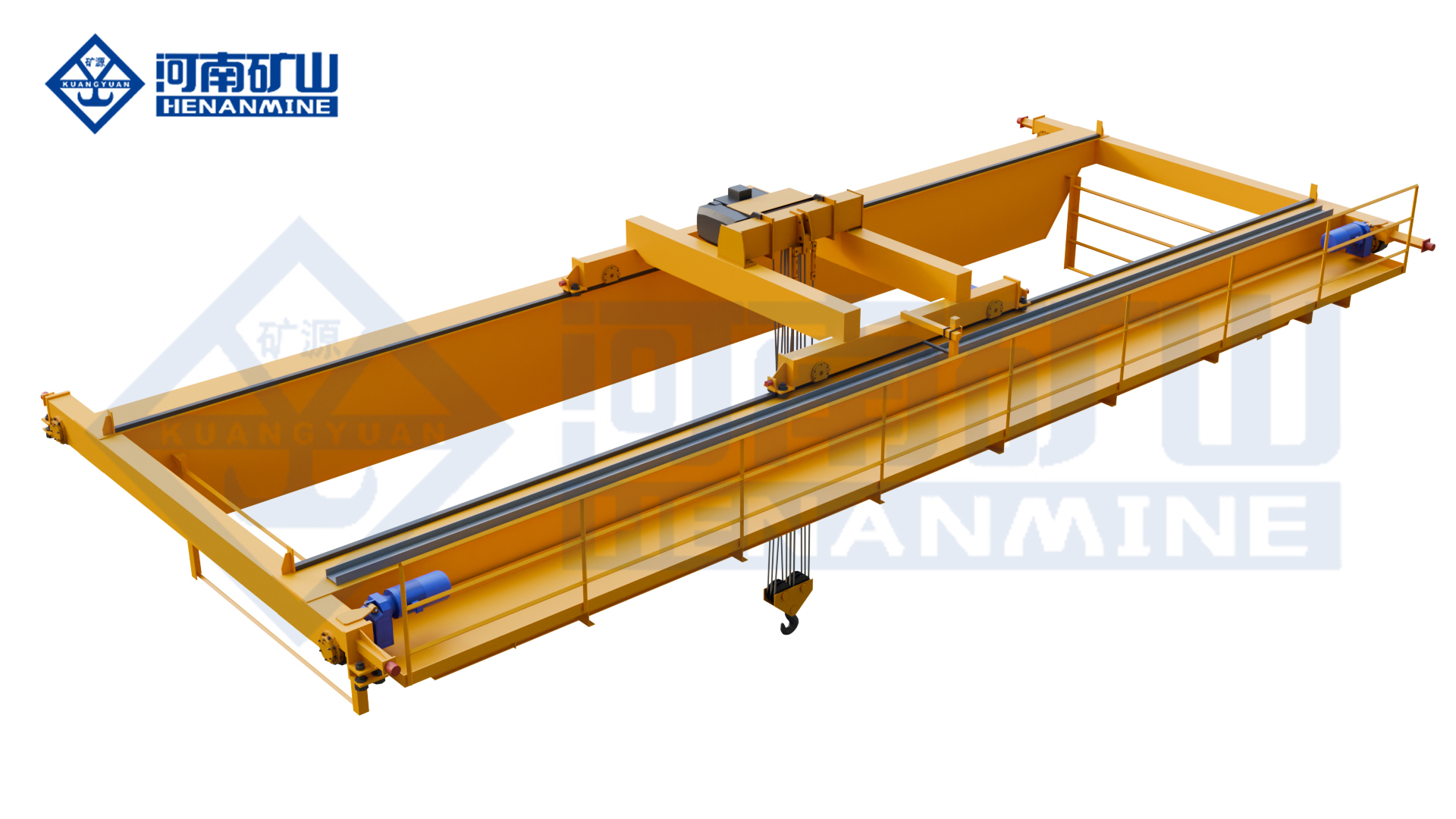
ZJJB Cleanroom Explosion-Proof Overhead Crane
Installation cost differences
Installation cost differences mainly come from site remodeling and equipment deployment. The installation cost of gantry cranes is relatively lower, especially for tire-type gantry cranes, which do not need to lay tracks, and can be installed and commissioned in a few days by just leveling the site.
Although rail-type gantry cranes need to lay tracks, they do not need to remodel the existing building, and the cost of track laying is controllable; whereas overhead cranes must be attached to the plant, and need to reinforce the plant and lay roof tracks, with high remodeling costs and a long period of time, especially in old plants, which may require additional reinforcement of the columns, further increasing the cost.
In addition, gantry cranes can be disassembled and transferred flexibly, and if the site is subsequently relocated, the equipment can be utilized twice to reduce long-term investment; bridge cranes, once installed, are almost impossible to move, and the risk of idle equipment is higher.
Application suitability
The core advantage of gantry cranes is outdoor suitability, suitable for open yards, ports, construction sites and other scenarios without fixed plant, whether it is container storage, bridge lifting, or bulk cargo handling, can be flexibly adapted to the span and height can be freely customized.
Bridge cranes are more suitable for plant operations, such as manufacturing workshops, steel processing plants, mainly used for workshop equipment maintenance, material handling, component assembly, the scope of work is restricted by the plant, but the positioning accuracy is high, suitable for indoor high precision, high frequency operations.
Simply put, for outdoor work, inter-area movement and no fixed plant, choose gantry cranes; for indoor fixed sites, high-precision work and reliance on plant structure, choose overhead cranes.
Long-term flexibility
Long-term flexibility of gantry cranes is stronger, whether it is the span, lifting height, or mobile mode, can be adjusted according to the subsequent operational needs, for example, rail-type gantry cranes can extend the track to expand the operating range, and tire-type gantry cranes can be shifted to the operating area at any time.
If the subsequent site expansion, operational load adjustment, gantry cranes can be adapted through the transformation of the main girder, replacement of spreaders, etc., without the need for a complete replacement of equipment; bridge cranes are restricted by the structure of the plant, and once the plant is fixed, the span and lifting height can not be adjusted, and if the operational requirements change, only to re-procure the equipment, which is less flexible.
Comparison Table
Comparison Item Gantry Crane Overhead Crane
Structural Support Independent gantry frame, supported by legs on the ground Depends on factory columns and roof rails, no independent legs
Installation Cost Low, no factory modification needed; tire-type requires no track High, needs factory reinforcement and roof track laying
Application Scenario Outdoor yards, ports, construction sites, no fixed factory Indoor workshops, manufacturing plants, fixed indoor sites
Long-term Flexibility High, adjustable span/lifting height, movable and reusable Low, limited by factory structure, hard to adjust or move
Positioning Accuracy Good (especially RMG), suitable for high-density stacking High, suitable for indoor high-precision operations
Safety Features to Consider
Gantry cranes are mostly used for outdoor heavy-duty operations in complex environments with large loads. Safety features are the core of selection and use, and the following key safety devices are indispensable and indispensable.
Overload protection
Overload protection is the most basic and important safety device, which is used to prevent the crane from overloading. It can detect the lifting load in real time, and when the load exceeds the rated lifting capacity, it will automatically cut off the lifting power and stop the lifting action, so as to avoid safety accidents such as deformation of the main beam and breakage of the wire rope due to overloading.
Especially for outdoor heavy-duty work, the weight of goods may have errors, overload protection can effectively avoid such risks, it is recommended to choose the equipment with overload alarm function, once close to the rated load, it will send out an alarm to remind the operator to pay attention.
Anti-sway control
Outdoor work is easily affected by wind, and the goods are easily shaken after lifting, which not only affects the operation efficiency, but also may collide with the equipment and personnel, resulting in potential safety hazards. Anti-sway control device can effectively inhibit cargo shaking, so that the cargo can be lifted and moved smoothly.
For outdoor scenes such as ports and construction sites, it is recommended to prioritize the configuration of anti-shaking control, especially for large-span and high lifting height gantry cranes, the anti-shaking function can significantly improve operational safety and efficiency, and reduce the probability of collision damage to the goods.
Limit switches
Limit switches are divided into hoisting limit and traveling limit, which are used to limit the operating range of the crane and prevent the equipment from exceeding the safety boundary. The lift limit prevents the hook from rising too high and hitting the main girder or other components, while the travel limit prevents the crane from traveling to the end of the track and being derailed.
Limit switches need to be checked regularly to ensure sensitivity, and once a fault occurs, they need to be shut down immediately for maintenance to avoid safety accidents caused by limit failure. Some of the higher-end machines are also equipped with double limit switches to further enhance safety.
Wind protection systems
Outdoor gantry cranes must be equipped with wind protection systems, especially in coastal ports and open construction sites, where the wind is strong and can easily cause the crane to shift and tip over. Common windproof devices include rail clamps, anchoring devices, windproof cables and so on.
The rail clamp can fix the crane wheels on the track to prevent the wind from pushing the equipment to move; the anchoring device can fix the crane to the ground, which is suitable for long-term parking in windy weather; the windproof cable can assist in fixing the main beam to reduce the impact of the wind on the equipment.
Emergency braking
Emergency braking device is an emergency safety guarantee, when the crane fails and the personnel is in danger, the operator can cut off the power supply of the equipment immediately through the emergency stop button and stop all the actions to avoid the expansion of the accident.
Emergency braking button should be installed in the operator’s easy to reach position, such as cab, wireless remote control, ground operator station, and at the same time, should be tested regularly to ensure that it can work properly in an emergency situation, no stalling, failure.
Frequently Asked Questions
The following are the most frequently asked questions when you understand and purchase gantry cranes, combined with the actual working conditions, to give easy-to-understand answers to help you quickly clear up your doubts.
What is the difference between RMG and RTG cranes?
The core difference between RMG and RTG cranes is the way of movement, RMG is a rail-mounted gantry crane, relying on a fixed track to run, with a fixed operating range and high positioning accuracy, suitable for high-density stockpiling, such as large container terminals; RTG is a tire-mounted gantry crane, relying on rubber tires to move without a track, with a high degree of flexibility, suitable for small and medium-sized ports, and temporary storage yards.
In addition, RMG has higher stockpiling density and operational efficiency, and is suitable for automation; RTG has low site modification costs and can operate across regions, but its positioning accuracy and stockpiling density are slightly lower than that of RMG.
What industries use gantry cranes the most?
The most widely used gantry cranes are in ports and container terminals, where RMG and RTG are indispensable in almost all container yards; followed by the construction and infrastructure industries for bridge lifting and prefabricated parts handling; and the manufacturing industry and steel fabrication factories, where they are commonly used for the handling and assembly of heavy equipment and components.
In addition, shipbuilding and offshore engineering, mining, bulk yards and other industries will also use a large number of gantry cranes, especially double girder gantry cranes, suitable for heavy-duty operations.
How much does a gantry crane cost?
There is no fixed standard for the price of a gantry crane, which mainly depends on the lifting capacity, span, working level and configuration, and there is a big difference. Small portable gantry cranes, lifting capacity 5-10 tons, span 5-10 meters, the price is about tens of thousands of yuan; single girder gantry cranes, lifting capacity 10-30 tons, span 10-20 meters, the price is more than ten to hundreds of thousands of yuan.
Double main girder gantry cranes are more expensive, with a lifting capacity of 30-100 tons and a span of 20-30 meters, priced at tens to millions of yuan; oversized tonnage and large span port or shipbuilding gantry cranes can cost up to several million or even tens of millions of yuan. In addition, the higher the configuration (such as anti-shaking, automation, windproof device), the price will increase accordingly.
What is the maximum capacity of a gantry crane?
The maximum lifting capacity of a gantry crane does not have a fixed upper limit and can be customized according to demand. Conventional gantry cranes, with a lifting capacity of 5-100 tons, are suitable for most industrial scenarios; for heavy-duty operation scenarios such as ports, shipbuilding, etc., double girder gantry cranes with a lifting capacity of 500 tons or more can be customized.
Currently on the market, super large tonnage gantry cranes with a lifting capacity of up to 1,000 tons or more are mainly used in large shipbuilding, ocean engineering, heavy equipment manufacturing and other industries, which have large spans and complex structures and require professional design and manufacturing.
Can gantry cranes be customized?
Yes, and customization is one of the core advantages of gantry cranes. Almost all parameters can be customized according to the user’s working conditions, such as span, lifting height, lifting capacity, working level, as well as the mode of movement (rail, tire), spreader (hook, grab, electromagnetic suction cup), control system (remote control, cab) and so on.
For example, if the port needs double cantilever design, the double cantilever main beam can be customized; if the coastal area needs anti-corrosion, the equipment can be customized with high anti-corrosion grade; if the small workshop needs compact layout, the miniaturized and detachable gantry cranes can be customized, which can be fully adapted to their own operational needs.
Conclusion
The core value of gantry cranes lies in their flexibility, durability and strong heavy-duty capability. They do not need to be attached to a fixed building, and can be adapted to a variety of complex working conditions such as outdoor, temporary sites, etc., making them indispensable lifting equipment for ports, construction, manufacturing and other industries.
The key to choosing a gantry crane is not how high the parameters are, but whether it is suitable for your own operating environment, load requirements and budget. Different types of gantry cranes have their own advantages, single main girder is suitable for light and medium operations, double main girder is suitable for heavy operations, RMG is suitable for high-precision stockpiling, RTG is suitable for flexible mobility, to find their own working conditions, in order to choose the most cost-effective equipment.
It is worth noting that the safety and long-term reliability of gantry cranes are more important than the initial purchase price. Reasonable configuration of safety devices, choose the appropriate level of work, pay attention to the whole life cycle cost, can effectively reduce the loss of downtime, prolong the service life of the equipment, so that the equipment for the long-term stability of production services.
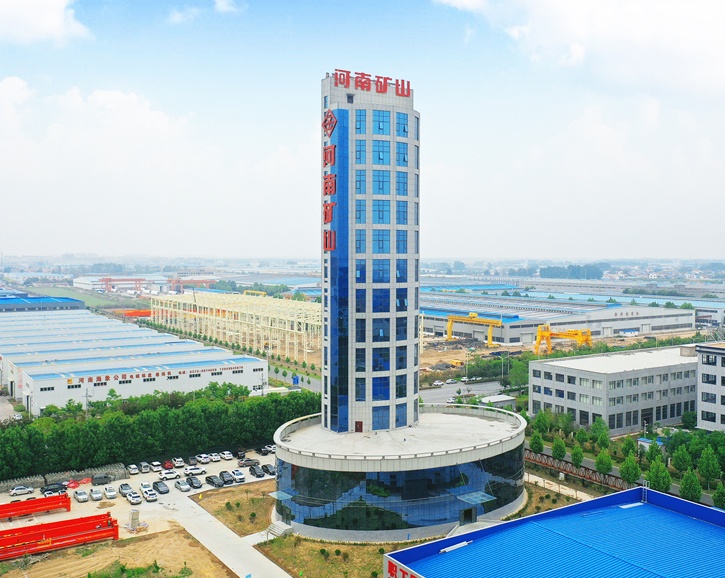
China Crane Museum
the conclusion: for your project to choose the most suitable gantry crane
Gantry crane types, each type is suitable for specific scenes. The key to selecting the type is to clarify their operational needs, and combined with the budget and installation conditions.
If the needs of special, customized gantry crane is more suitable. Whether you choose a standardized or customized model, please contact us directly for a precise selection plan.