
Gantry Crane Safety Essential Guidelines for Port and Shipyard Operations
A single dropped container can cost a terminal operator millions of dollars, shut down a berth for days, and, in the worst cases, end a worker's life. Gantry crane safety is not a compliance checkbox. It's the operational backbone of every port and shipyard that depends on these machines to move thousands of tons of cargo every day.
Crane-related incidents remain among the costliest and most preventable categories of workplace accidents. Industry data shows that the majority of crane accidents trace back to human error, poor rigging, or skipped inspections, not equipment that failed without warning. That means most incidents are avoidable with the right combination of training, maintenance, and technology.
The next few sections will cover the essential safety principles of this type of work that ensures it is performed effectively and safely. You will understand how to identify the hazards, know what inspections and maintenance must be done, operate the units effectively during adverse weather conditions and take advantage of modern safety equipment to prevent incidents and reduce downtime.
Why Gantry Crane Safety Is Critical
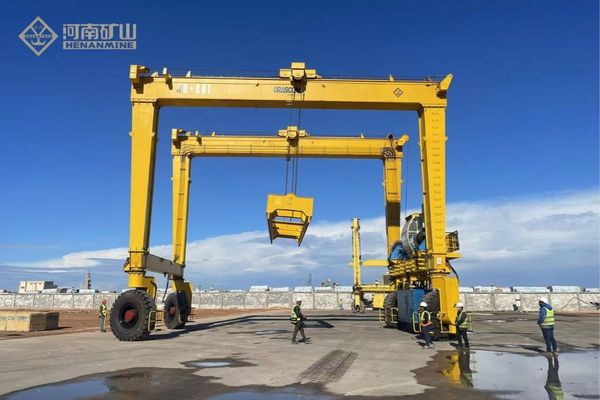
Henan Mine Crane manufactured Gantry cranes, including rail-mounted gantry (RMG), rubber-tired gantry (RTG), and ship-to-shore (STS) cranes, are the workhorses of container terminals and shipyards. They operate continuously, often in three shifts, moving loads that can exceed 60 tons at heights of over 100 feet. Port gantry crane safety matters because the operating environment combines heavy loads, moving vessels, high winds, and dense pedestrian and vehicle traffic in a single workspace.
Common Hazards in Port & Shipyard Operations
Several hazards are specific to, or intensified within, port and shipyard settings:
- Heavy suspended loads:Despite the crane‘s rated capacity containers, plant and break bulk are often delivered approaching its limits leaving no margin for error of rigging or calculation. A container shown as net 20 ton on the bill of lading can actually be much more than the stated weight and reading of the weighing device or load moment indicator is therefore not a safeguard but absolutely essential. An error of a few hundred pounds at this stage can rapidly change into an overload.
- High winds:Coastal and open-yard environments expose tall gantry structures to sustained winds and sudden gusts that can destabilize loads or the crane itself. Because ports are frequently sited on open coastlines or estuaries with no natural windbreaks, gust loading can appear with little warning even on days that start out calm. Wind acting on a suspended container functions like a sail, amplifying swing forces well beyond what the same wind would do to an unloaded hook.
- Vessel movement:Due to time-varying tides, currents, and mooring offsets it is impossible for the load path for shore based ship to shore cranes to be perfectly at rest. As a vessel heaves with the tide or swings in its mooring chains the position change of the crane spreader relative to the container stack requires a continual series of micro-coordinates during a shift.
- Limited visibility:Cab operators 100+ feet in the air at night or in fog can‘t always see their ground crew and must depend on cameras or direct signals. Glare from floodlights, rain streaked across cab glass, and blind spots of the spreader itself adds to the problem, making camera system and hand signals a functional necessity and not a luxury.
- Multiple cranes operating simultaneously:Container terminals frequently run several RTGs or RMGs in adjacent lanes, raising the risk of boom or spreader collisions. High-throughput terminals may operate a dozen or more Henan Mine Crane manufactured gantry cranes within the same yard block, and without anti-collision sensors and disciplined travel protocols, a momentary lapse in attention during a shift change or handover is enough to bring two machines into contact.
Consequences of Poor Safety Management
When gantry crane safety programs fail, the fallout extends well beyond the immediate incident:
- Equipment damage: repairing a damaged boom, spreader, or rail system can take a crane out of service for weeks, and replacement structural components for large STS or RMG cranes are rarely held in local inventory, often requiring shipment from the original manufacturer.
- Cargo loss: dropped or crushed containers can destroy high-value cargo and trigger costly claims, and depending on the contents, a single incident can also create secondary hazards such as chemical spills or fire that extend the disruption well past the initial event.
- Worker injuries: struck-by and caught-between injuries are frequently severe or fatal given the size of loads involved, and even non-fatal incidents often result in long-term disability given the crushing forces a multi-ton container or steel coil can exert.
- Operational downtime: a single incident can halt operations across an entire berth while investigations are conducted, and depending on the jurisdiction, regulators may require the crane and surrounding work area to remain frozen in place until the investigation is complete, sometimes for days.
- Regulatory penalties: safety violations can result in six-figure fines and, in cases of willful violations causing death, criminal liability for responsible parties. Beyond the direct fine, a serious incident typically triggers heightened inspection scrutiny across the rest of the terminal's crane fleet, multiplying the compliance burden well beyond the original event.
Main Safety Risks Associated with Gantry Cranes
Understanding the specific failure modes behind gantry crane incidents helps safety teams prioritize controls.
Load Swing and Dropped Loads
Uncontrolled load swing ,caused by sudden stops, wind gusts, or improper rigging, is one of the leading causes of dropped loads and struck-by injuries. Once a container or bulk load begins to swing, the pendulum forces involved can exceed what a hoist brake or sling was ever designed to arrest, particularly if the operator attempts to correct the motion with abrupt counter-movements rather than letting it settle. Anti-sway control systems, which use sensors to automatically dampen trolley and hoist movement, and disciplined lift planning that accounts for wind and travel speed in advance, significantly reduce this risk.
Crane Collision Risks
Terminals running multiple RTGs or RMGs on shared or adjacent rails face real collision risk, particularly during shift changes, poor-visibility conditions, or when cranes travel at higher speeds than conditions allow. Because these machines often share a single rail corridor or operate in tightly packed yard blocks, even a short lapse in spacing discipline between adjacent units can result in a boom, spreader, or gantry-leg collision that takes both cranes out of service simultaneously. Anti-collision sensors, using laser, radar, or ultrasonic detection to enforce a minimum separation distance automatically, are now considered standard equipment on modern port cranes rather than an optional upgrade.
High Wind Hazards
Tall, exposed gantry structures act like sails, and the larger the surface area of a suspended container or bulk load, the more wind force is transferred into the hoist and trolley system. Beyond a crane's rated wind speed, structural stability, load control, and even the crane's ability to remain on its rails can be compromised, and in extreme gusts an unanchored crane can be pushed along its rails or, in the worst documented cases, overturned entirely. This is why wind monitoring, automated shutdown thresholds, and anchor devices are treated as core safety infrastructure rather than supplementary equipment at coastal terminals.
Structural Fatigue and Metal Failure
Repeated loading cycles over years of operation cause microscopic fatigue in structural steel, particularly at welds, bolted connections, and other stress-concentration points that absorb the greatest share of cyclical load. Because fatigue cracks typically begin below the visible surface and grow slowly before reaching a critical size, a crane can appear structurally sound during a routine visual inspection right up until failure. Without scheduled non-destructive testing and structural inspection at defined intervals, fatigue failures can occur with little visible warning, which is why periodic crack detection is treated as a mandatory maintenance task rather than a discretionary one.
Electrical Hazards
Henan Mine Crane manufactured Gantry cranes draw substantial power to operate hoist motors, trolley drives, and control systems, and shipboard or dockside cranes operating near overhead lines, in wet marine environments, or in proximity to saltwater spray face elevated shock and short-circuit risks. Corrosion from salt air also accelerates the degradation of electrical enclosures and connections faster than in typical inland industrial settings, meaning port cranes generally require more frequent electrical inspection than their onshore industrial counterparts to maintain the same safety margin.
Mechanical Brake Failure
Hoist and travel brakes are safety-critical components; they are the last mechanical line of defense preventing an uncontrolled load descent or a runaway crane after a stop command is issued. A worn brake lining, incorrect adjustment, or contamination from oil or grease can silently reduce braking torque well below its rated capacity long before the brake shows any obvious external sign of failure. Because brake performance cannot be reliably judged by sight alone, load testing on a fixed schedule , not just visual inspection, is the only way to confirm braking capacity is intact.
Human Error
Consistent with the 90% figure cited above, miscommunication, fatigue, complacency, and skipped procedural steps remain the dominant contributing factor across nearly all serious incidents. Long shifts, repetitive tasks, and production pressure to keep cargo moving all create conditions where experienced operators can normalize small deviations from procedure over time, skipping a pre-shift check that "was fine yesterday," or accepting a load estimate instead of confirming it on the load chart. Because human error is rarely a single dramatic mistake but rather an accumulation of small procedural shortcuts, addressing it requires consistent enforcement of checklists and standard procedures, not just initial training.
Poor Communication During Lifting
Ambiguous hand signals, unclear radio communication, or a signal person losing line of sight with either the load or the operator has caused numerous documented incidents, particularly during blind lifts where the operator cannot see the landing zone directly. A single misinterpreted signal during a critical phase of the lift, such as the final seconds before a container is set down, can be enough to cause a struck-by or caught-between injury among ground crew. Standardized signal protocols, a single designated point of communication authority per lift, and a clear stop-work rule whenever line of sight is lost are the core controls that address this risk.
Essential Safety Features Every Modern Gantry Crane Should Have
Modern intelligent Henan Mine Crane Factory supply gantry crane systems combine mechanical safeguards with digital monitoring to reduce reliance on manual vigilance alone.
- Overload Protection System : shuts down the crane if the load is above capacity - the single most widelyacknowledged reason for crane accidents. The latest systems offer warning signals as the load nears the limit, allowing operators to reconsider the lift without the equipment stopping.
- Anti-Collision Technology :employs a laser or radar sensing between cranes in multi- crane yards to avoid collisions between booms and trolleys. Such anti-collision systems tend to automatically implement a preset minimum margin, to decrease or stop crane movement well in time, even if a distracted or tired crane operator makes a misestimation.
- Wind Speed Monitoring:System--anemometers that are connected to automated alarms warn operators as winds near dangerous levels; networked systems enable a crane yard to have one set of readings that are sent to every crane operator, rather than just a single measurement from anemometer directly connected to their machine.
- Emergency Stop Devices:presence of easily accessible, well labeled e-stop buttons at the operator station as well as ground level so that the operation can be stopped pronto in the event of danger. In conventional cars, shouts and hand signals are visible either from within the cab or from the ground, and so we should have redundant e-stop stations so as to be able to put a stop any time a ready person on either side sees an impending danger.
- Travel and Hoist Limit Switches:these protection devices are designed to guard against over-travel, and over-hoisting which could otherwise damage the structure, or drop the load, especially the phenomena known as “twoblocking” in which the hook is pulled into the boom tip to the extent of severing the hoist line completely.
- Load Moment Indicators:give instant readouts of load weight compared to capacity, warning the operator of approaching overload situations before they happen. These are not a load chart, which gives maximum safe working limits for different boom lengths at various radii; load moment indicators automatically recalculate capacity limits at the boom angle/radius/configuration in effect as the lift is taking place.
- CCTV and Blind Spot Monitoring:camera systems that allow the operator to ‘see’ across the entire span of the crane where their cab window cannot, often an important feature on tall STS and RMG cranes where the spreader/load may be out of view during landing.
- Intelligent PLC Safety Controls PLCs:that incorporate safety interlocks, such as prevents possible unsafe control combinations, like simultaneous hoist and travel commands producing an operating envelope beyond that of the crane.
- Remote Monitoring & Predictive Maintenance Sensors:connected by the Internet of Things monitor factors such as vibration, temperature and cycle load levels so sensors can forecast emerging faults well in advance of the failure. Maintenance can thus be arranged at a time convenient to the production schedule, rather than as an emergency remedy upon encountering a late-shift breakdown.
Modern intelligent cranes reduce accident risk while lowering long-term maintenance costs. By catching mechanical issues before they escalate into failures, predictive maintenance systems reduce unplanned downtime alongside the safety benefit, a rare case where safety investment and cost efficiency point in the same direction.
Daily Gantry Crane Safety Inspection Checklist
A disciplined gantry crane inspection checklist is the single highest-leverage control available to any terminal or shipyard. OSHA's general industry standard for overhead and gantry cranes recommends pre-shift inspections specifically to catch mechanical or structural issues before they compromise safe operation.
Before Operation
- Wire ropes: checked for fraying, kinking, birdcaging, or wear beyond manufacturer tolerances; even a small number of broken wires within a single lay length can signal that a rope is approaching the end of its safe service life.
- Hooks: safety latch integrity, deformation, or cracking; any measurable throat opening beyond the manufacturer's specified tolerance is grounds for immediate removal from service.
- Spreader: twist-lock function and structural condition; twist-locks that fail to engage fully are one of the most common causes of a container being dropped during lifting.
- Brakes: hoist and travel brake response, checked with a no-load test run before any lift begins.
- Hydraulic systems: fluid levels, pressure readings, and leak checks around hoses, fittings, and cylinders.
- Tires or rails: wear patterns, alignment, and pressure for RTGs, or rail surface condition and wheel flange wear for RMGs and STS cranes.
- Electrical cables: insulation damage, connection integrity, and evidence of chafing where cables pass through moving joints or festoon systems.
- Warning devices: horns, lights, and alarms functioning correctly, including any wind-speed or overload alarm integration.
During Operation
- Atypical vibration in the hoist, trolley, or gantry structure; abnormalities here might foreshadow bearing damage, gear failure, or an emerging structural problem, months prior to it manifesting visibly.
- Unusual sounds emanating from the motors, gearbox or brakes including grinding, squealing, knocking noises that are not characteristic of the normal operating profile of the equipment.
- Observe the load stability in the lift as it travels along the path; ensure that the load continues to be stable and check the load itself for signs of swing, rotation or movement.
- The wind conditions relative to the rated operating limits of the crane, monitored constantly rather than visually recorded at the beginning of a shift as wind speed can vary greatly within a few hours.
After Operation
- Parking procedure:locking down the crane as per site procedures by engaging the travel brakes and rail clamps, as applicable.
- Lockout procedures:ensure the power is isolated before access for maintenance, by following a documented lockout/tagout step sequence so the crane cannot be energized when personnel are working on it.
- Visual inspection:walk-around at the shift‘s end to identify any new damage received that wasn‘t visible during operation.
- Maintenance records :Recording information for the next shift and maintenance crew, has anything borderline, not necessary to shut down at the time, but need watching in the future.
| Inspection Item | Frequency | Risk if Ignored |
| Wire ropes and slings | Daily (pre-shift) | Sudden load drop, struck-by fatality |
| Hook and safety latch | Daily (pre-shift) | Load disengagement mid-lift |
| Brakes (hoist/travel) | Daily + monthly load test | Uncontrolled load descent or crane runaway |
| Limit switches | Daily | Over-travel, structural damage, two-blocking |
| Structural steel/welds | Monthly / annual | Fatigue crack propagation, structural failure |
| Electrical systems | Monthly | Shock hazard, fire, control malfunction |
| Rail alignment | Quarterly | Derailment, uneven load distribution |
| Anti-wind/anchor devices | Before storm season | Crane displacement or overturning in high wind |
Any gantry crane that has been idle for more than six months should receive a full inspection consistent with monthly inspection procedures before it's returned to service, with results documented in the crane's inspection record.
Safe Operating Procedures for Gantry Cranes
Safe lifting operations depend on procedural discipline applied consistently, lift after lift.
- Lift planning before every operation:Confirm load weight, center of gravity, and travel path before the hook touches the load. For non-routine or unusually heavy lifts, a documented lift plan reviewed by a competent person should be completed in advance rather than worked out on the fly.
- Load capacity verification:Never rely on visual estimation , use load charts and weighing devices to confirm the load falls within rated capacity, and treat any discrepancy between a cargo manifest and an actual weighed reading as a stop-work condition until resolved.
- Proper rigging practices:Remove slack from slings or chains before lifting, and make a preliminary lift of a few inches to confirm the load is balanced before proceeding. This brief pause is one of the simplest and most effective checks available, since it reveals rigging errors while the load is still low to the ground and easy to correct.
- Safe travel speed:Avoid sudden acceleration or deceleration, which induces load swing, and reduce travel speed further when operating near the edges of the crane's rated wind envelope or in congested yard areas.
- Maintaining safe clearance:Keep clear of live electrical cables, other cranes or staff inside the swing radius at all time. Do not presume that warning with voice is enough; use physical cell barriers and/or clearly marked cell limits to establish it.
- Communication between operator and ground crew:Basic standard hand signs or radio communications should be used in a consistent manner so that there is one clear voice of communication at any one time during a lift.
- Emergency shutdown procedures:All personnel involved in a lift should know how to trigger an emergency stop and what to do if a load becomes unstable mid-lift, including a pre-agreed default response, typically to stop all motion and let the load settle rather than attempting a rushed correction.
Weather Safety: Operating Gantry Cranes in Extreme Conditions
Ports are disproportionately exposed to weather-related crane risk, which is why shipyard crane safety programs must treat weather monitoring as a core operational function, not an afterthought.
Maximum Safe Wind Speeds
Every gantry crane has a manufacturer-rated maximum operating wind speed, beyond which lifting operations must stop and, at higher thresholds, the crane must be secured against travel. These thresholds account not just for the crane's own structural stability but for the increased swing forces acting on a suspended load, which means the safe operating limit for lifting is typically lower than the limit for simply leaving the crane parked and idle. Wind readings should be taken at crane height rather than at ground level, since wind speed increases significantly with elevation and a ground-level reading can understate the actual force acting on the boom and load.
| Crane Type | Typical Operating Wind Limit | Storage/Survival Wind Limit |
| Rubber-Tired Gantry (RTG) | ~20 m/s (45 mph) | ~50 m/s (112 mph), rail-clamped |
| Rail-Mounted Gantry (RMG) | ~20 m/s (45 mph) | ~55 m/s (123 mph), anchored |
| Ship-to-Shore (STS) | ~16–20 m/s (36–45 mph) | ~60 m/s (134 mph), storm-pinned |
Figures are illustrative industry norms; always defer to the specific manufacturer's rated limits for your equipment.
Rain and Reduced Visibility
Heavy rain reduces both visual range and traction for rubber-tired cranes, and standing water on rails or yard surfaces can also affect braking performance for both RTGs and RMGs. Operations should slow or pause when visibility drops below safe signaling distance, and additional caution is warranted at night or during fog, when rain further degrades an operator's already limited sightlines from the cab.
Lightning Precautions
Tall steel crane structures are natural lightning targets, and a strike can damage sensitive electronic control systems even if it doesn't cause direct physical harm to personnel. Sites should have a documented lightning action threshold, commonly based on a detected strike within a set radius of the terminal, that halts operations and moves personnel to shelter until a defined all-clear period has passed without further activity.
Storm Parking Procedures
Before any operational shutdown for severe weather, cranes should be moved to designated storm parking positions and secured using rail clamps or anchor devices. Storm parking locations are typically chosen in advance based on wind exposure and structural bracing, and the sequence for securing a crane, engaging brakes, applying clamps, and confirming anchor engagement, should be rehearsed well before a storm is actually forecast, since these procedures often need to be completed under real time pressure.
Typhoon and Hurricane Preparation
Coastal terminals in typhoon- or hurricane-prone regions rely on anti-wind and anti-skid devices, rail clamps, anchor devices, and iron shoes, to prevent cranes from being blown off their rails. Best practice calls for concentrated inspection and repair of these devices before storm season begins, along with annual anti-typhoon drills that specifically test the operation of wind-protection equipment. Tall outdoor cranes should also carry anemometers and wind-speed alarm systems calibrated to trigger before the crane's design wind threshold is reached.
Gantry Crane Maintenance for Long-Term Safety
A structured crane maintenance checklist extends equipment life while closing the gap where most mechanical-cause incidents originate.
- Preventive maintenance schedule:Daily, monthly, and annual tasks should be documented and tracked against a fixed calendar, not performed reactively, with a clear owner assigned to each task so nothing falls through the cracks during shift or personnel changes.
- Lubrication requirements:Wire ropes, bearings, and gearboxes require manufacturer-specified lubrication intervals to prevent premature wear, and marine environments typically demand more frequent lubrication cycles than inland industrial settings because salt air accelerates the breakdown of protective coatings.
- Structural crack detection:Periodic non-destructive testing,dye penetrant, ultrasonic, or magnetic particle inspection , on high-stress structural poin ts catches fatigue before failure, and the specific inspection points should be identified in advance based on the crane's design, focusing on welds and connections that experience the highest cyclical stress.
- Rail alignment inspection:Misaligned rails accelerate wheel wear and increase derailment risk for RTGs and RMGs, and because ground settlement can occur gradually over months or years, rail alignment should be re-surveyed on a fixed schedule rather than assumed stable once installed.
- Wire rope replacement criteria:Ropes should be replaced according to documented wear thresholds , broken wire counts, diameter reduction, and corrosion, not by visual judgment alone, since a rope can appear serviceable on the outside while individual wire strands beneath the surface have already failed.
- Brake system testing:Hoist and travel brakes should be load-tested on a defined schedule, not only inspected visually, since braking torque can degrade well before any external sign of wear becomes apparent.
- Electrical system maintenance:Insulation resistance testing and connection tightness checks reduce fire and shock risk over the crane's service life, and salt-air corrosion around terminal connections should be checked more frequently at coastal sites than standard maintenance intervals would otherwise suggest.
Henan Mine Crane Factory Custom
Gantry cranes safety is not only inspection or safety device but also depend on quality, good safety system and procedures, condition and maintenance of equipment, operator skill, awareness and motivation. These elements combine efficiency and safety of port and shipyard operation and enhancing machinery performance and reliability. ports/shipyards should keep in mind safety as investment in costs and development but also loss/lost of lives and operation.
As expert at gantry crane design and manufacture, Henan Mine Crane Factory supplies lifting equipment for ports, terminals and shipyards all over the world. All of the company‘s crabs are designed for the highest safety and performance standards. Whether replacing existing equipment or designing a brand new project, selecting a trusted manufacturer leads to greater safety and efficiency over the lifetime of the facility.