
Diesel RTG vs Electric RTG Crane in Middle East Ports: Which Is More Cost-Effective?
In Henan Mine Crane's years of RTG crane sales and technical service, I have run through the major ports of Dubai, Jeddah, Doha, and witnessed the transformation of the Gulf ports from traditional operations to global transshipment hubs.
Nowadays, almost every port operator in the Middle East, when equipment renewal or expansion, will fall into the same knot: choose diesel RTG or electric RTG, after all, the price of diesel here has an advantage all year round, but the sustainable development goals of the countries are constantly tightening.
Many people make decisions based on the initial purchase price alone, which is actually a misunderstanding. RTG's service life can reach 15-20 years, in the Middle East's high temperature, sand and dust environment, the cost-effectiveness is never a short-term comparison of inputs, but to calculate through the full life cycle of more than ten years of accounts.
Today, I will combine Henan Mine Crane's practical experience in serving Middle East ports, not playing with false theories, but only talking about real costs, suitability and long-term benefits, to help you clarify the logic of choosing two kinds of equipment in the Middle East scenarios.
Middle East Port Context: Unique Decision Factors
Fuel Pricing in Gulf Countries
The price of diesel fuel in the Middle East has always been the core advantage of diesel RTG. Compared with Europe, where the price is often more than $1 per liter, the price of diesel here is much lower, and the retail price of diesel in Saudi Arabia is even as low as $0.2/liter, and many countries implement government-regulated pricing.
This pricing model makes the volatility of diesel prices much lower than in Europe, without having to frequently deal with the fluctuations in operating costs caused by soaring oil prices. In the short term, it is true that diesel RTGs have a more controllable and attractive energy bill.
However, it is important to note that this advantage is only in the short term. As global pressure to reduce carbon emissions intensifies and countries in the Middle East gradually adjust their energy policies, the price advantage of diesel is likely to diminish in the long term.
Electricity Pricing Structure
The difference in industrial electricity price among Middle East countries is not small, the industrial electricity price in Saudi Arabia is between 0.053-0.08 USD/kWh, and the electricity price in UAE, Qatar and other countries are also different, which is mainly determined by the energy policy and power supply structure of each country.
More noteworthy is that Saudi Arabia, the United Arab Emirates and other countries are increasing investment in renewable energy. Saudi Arabia's “City of the Future” NEOM's Oksargon Port, plans to rely entirely on solar, wind and other renewable energy supply, the UAE's Khalifa Port is also in the layout of the solar power supply system.
This means that the cost of electricity for electric RTGs in the future has a lot of room to fall. Once connected to the renewable energy grid, the long-term energy cost advantage of electric RTGs will be more obvious, and they will be better suited to the trend of regional energy diversification.
High-Temperature Operating Environment (45-55°C)
With summer temperatures in the Middle East often exceeding 45°C, and in extreme cases reaching 55°C, this environment is a huge test for RTG operation, and both diesel and electric models need to be adapted.
For diesel RTGs, high temperatures put great pressure on the engine. Long-term operation of the engine in a high-temperature environment will accelerate the wear and tear of components, and even overheating and shutdown, greatly affecting the continuity of operations.
The cooling load of electric RTGs will increase dramatically. Electrical components are easy to deteriorate and short-circuit under high temperature, requiring additional cooling system to maintain normal operation, which will also indirectly increase the energy consumption and maintenance workload a little.
It can be said that no matter which form of power is chosen for RTGs in Middle East ports, desert heat adaptation is an essential part of the process, which is also a key factor affecting the life of the equipment and operating costs.
Sand & Dust Conditions
Middle East ports are generally faced with sand and dust, which is more insidious and long-lasting to RTGs than high temperatures. In many ports, neglecting to protect against sand and dust has led to frequent equipment failures and high maintenance costs.
For diesel RTGs, sand and dust will frequently block the air filter, which needs to be replaced frequently, otherwise it will lead to insufficient engine air intake, power loss, and even wear out generator parts, shortening the service life of the engine.
The core danger of electric RTG is in the electrical control cabinet. If sand enters the control cabinet, it will lead to poor contact and short circuit of the electrical components. Therefore, the sealing performance of the electrical cabinet is crucial, and it must reach a high IP protection level in order to resist the intrusion of sand and dust.
CAPEX Comparison Under Gulf Conditions
Diesel RTG Capital Investment
Based on the equipment purchase price alone, the initial investment for a diesel RTG is indeed lower. Diesel RTGs with the same specifications are 15-25% less expensive than electric RTGs, which is attractive to ports with limited capital budgets.
More critically, diesel RTGs do not require additional investment in yard electrification infrastructure. There is no need to build a substation, lay slip lines or make cable trenches; the equipment is delivered to the site, commissioned and ready to go.
This is particularly important for many ports in the Middle East that are expanding rapidly. Some medium-sized ports, for example, need to replenish yard capacity quickly, and diesel RTGs can be deployed quickly to meet capacity expansion needs without having to wait for lengthy infrastructure work.
It is also suitable for temporary or flexible yard layouts, such as short-term leased yards and temporary transfer points, without the need to invest in fixed infrastructure, and with the flexibility to transfer the equipment at the end of the project, thus minimizing investment risk.
Electric RTG Capital Investment
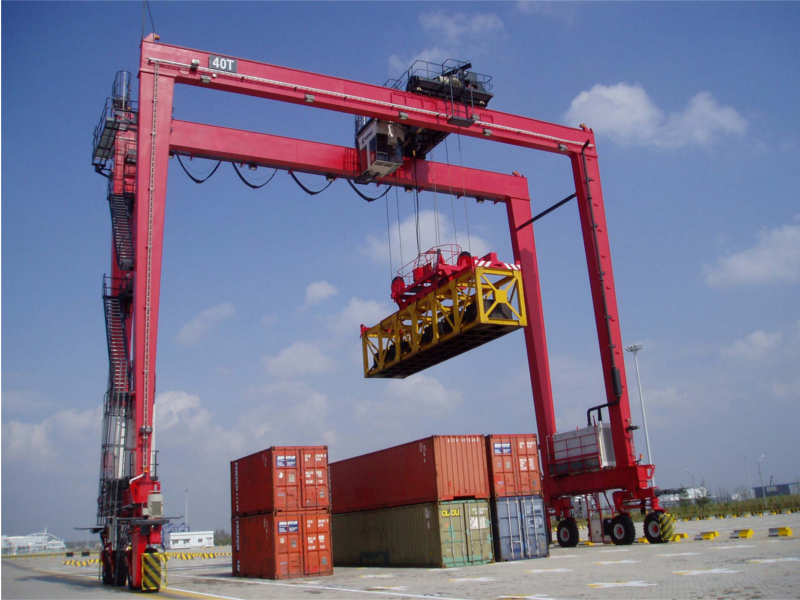
The initial investment of electric RTG is much higher, which includes not only the equipment itself, but also a whole set of supporting electrification infrastructure.
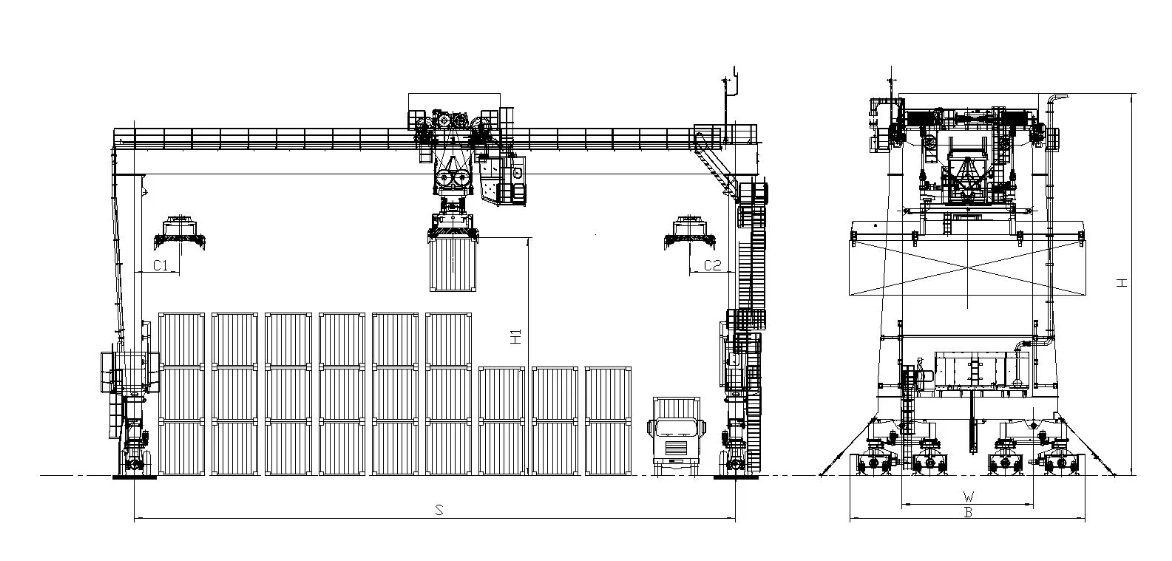
Firstly, the purchase price of the equipment, electric RTG needs to be equipped with variable frequency drive system, power supply receiving device, etc., the cost of the whole machine is higher than the diesel model. Secondly, there is the infrastructure investment, including substation construction, laying of slip wire or cable reel system, yard trenching and cable protection.
The infrastructure cost will be higher especially when retrofitting an existing operating terminal (brownfield project). It is necessary to remodel the existing yard pavement and operation area, but also to avoid affecting the normal operation, the construction difficulty and cost will be greatly increased.
Henan Mine Crane once did electric RTG retrofit for an existing terminal in the United Arab Emirates, and only the infrastructure investment of substation and slip wire accounted for more than 30% of the whole project cost, which is the core reason why many old terminals are hesitant to electrify.
OPEX Comparison in the Middle East
Fuel Cost vs Electricity Cost
Diesel fuel is indeed cheaper in the Middle East, which makes the short-term energy cost of diesel RTGs look more advantageous, but the situation is different when it comes to high-utilization terminal scenarios.
We have done a real test, for the same size RTG, to complete one TEU lifting operation, the diesel model needs to consume 2-2.2 liters of diesel, while the electric model only needs to consume 2-3 kWh of electricity. According to the diesel and electricity price in Saudi Arabia, the energy cost of single operation of electric RTG is 30%-50% lower than that of diesel model.
Especially in high throughput hubs such as Dubai, Jeddah and Khalifa ports, where the annual operating hours of RTGs can reach more than 4,000 hours, this cost difference will be magnified infinitely. Over the course of a year, an electric RTG can save hundreds of thousands of dollars in energy expenses.
And while diesel prices are less volatile than in Europe, they are still at risk of rising in the long term, while electricity prices are relatively stable, especially with the spread of renewable energy, and the energy costs of electric RTGs will be more manageable.
Maintenance Cost in Desert Climate
In the hot and dusty environment of the Middle East, the difference in maintenance cost between the two types of RTGs is very obvious, and this is the biggest headache for many ports in the later stages.
The maintenance of diesel RTGs focuses on the engine. The high temperature will accelerate the engine wear, need to do frequent maintenance, every 100 hours or so to change the oil, filter, every 1,000 hours to do a major maintenance, a few years but also to do an engine overhaul, a single overhaul costs can reach hundreds of thousands of dollars.
Sand and dust will also increase the maintenance workload, air filters, fuel filters need to be replaced often, otherwise it will lead to engine failure. For one of our Saudi customers, the filter replacement frequency for diesel RTGs is more than double that of temperate regions.
An electric RTG is much simpler to maintain. It does not have a diesel engine, eliminating all engine-related maintenance, no oil changes, no injector repairs, and maintenance focuses on the electrical and cooling systems.
Although the electrical and cooling systems of electric RTGs need to be checked regularly, the overall maintenance frequency and cost is 30%-50% lower than that of diesel RTGs, which can save a lot of money in the long run.
Equipment Availability Rate
For high throughput transshipment hubs in the Middle East, the equipment availability rate of RTGs has a direct impact on the efficiency of the port's throughput, and a minute of downtime can be costly.
Electric RTGs typically have a higher availability rate. It has fewer mechanical parts and fewer points of failure, especially since there are no diesel engines that are prone to problems, and engine-related downtime is virtually non-existent.
Diesel RTGs, on the other hand, are often down due to engine overheating, clogged filters, worn components, and other issues, and the rate of downtime rises significantly, especially during the hot summer months.
For example, at Dubai's Jebel Ali Port, after replacing electric RTGs, equipment availability increased from 88% to more than 95%, reducing congestion and losses caused by downtime, which is one of the core reasons why many large hub ports tend to choose electric RTGs.
15-20 Year Lifecycle Cost Modeling (Gulf Scenario)
Key Variables in ROI Model
To truly determine which is more cost-effective, diesel RTGs or electric RTGs, it is necessary to establish a 15-20 year Total Lifecycle Cost (TCO) model, in which there are several key variables that directly determine the return on investment for both types of equipment.
The first is the annual hours of operation. In large transshipment hubs in the UAE and Saudi Arabia, the annual operating hours of RTGs are generally over 4,000-5,000 hours, and the larger the operating volume, the more obvious the cost advantage of electric RTGs; if it is a small or medium-sized port, with less than 3,000 operating hours per year, the short-term advantage of diesel RTGs will be more prominent.
Secondly, there is the risk of fuel price escalation. Although the Middle East diesel prices are low now, but in the long run, with the carbon emission reduction policy to promote, diesel prices may rise, while the price of electricity will decline with the popularization of renewable energy, which will further widen the cost gap between the two.
There are also maintenance cycles in high-temperature environments, and trends in carbon regulations. Environmental regulations are tightening in the Middle East, and in the future diesel RTGs may have to pay a carbon tax, which will also increase long-term operating costs.
Break-Even Analysis (Typical Gulf Scenario)
Many Middle East port customers ask how long it will take for electric RTGs to pay back the high initial investment. Based on our experience in the Middle East, the break-even point depends on the annual operating hours of the RTG.
If the annual operating hours of RTGs are above 4,000-5,000 hours, the payback period of electric RTGs is usually 4-7 years under the electricity and diesel price levels in Saudi Arabia and the UAE.
The higher the operating volume, the faster the payback. For example, in Abu Dhabi's Khalifa Port, where RTGs operate more than 5,000 hours a year, the payback cycle for electric RTGs took just over four years, with significant savings in operating costs every subsequent year.
However, for small and medium-sized ports with less than 3,000 hours of operation per year, the payback period can stretch to 7-10 years or more, in which case the short-term economics of diesel RTGs are more favorable.
ESG, Sustainability & Vision 2030 Impact
Saudi Vision 2030
Saudi Arabia's “Vision 2030” sets out clear requirements for the sustainability and intelligent transformation of ports, which is a core factor that must be taken into account when selecting RTGs for Saudi ports.
This is also the core factor that must be considered when choosing RTGs for Saudi ports. The vision clearly puts forward the need to build smart ports and green logistics corridors, get rid of dependence on oil, and promote economic diversification. And electric RTGs, as low-emission and environmentally friendly equipment, are an important support for realizing this goal.
Saudi Arabia spent $500 billion to build the Port of Oksargon, as the “City of the Future” NEOM core component, it is planned to use fully automated, renewable energy-driven equipment, electric RTG has become the preferred model of the port, the future will also realize the whole process of automated operations.
For Saudi ports, the choice of electric RTGs is not only a cost consideration, but also an inevitable choice in line with the national strategy to obtain more policy support and resources.
UAE Green Port Initiatives
The UAE Green Port Initiatives are more forward-looking than Saudi Arabia's, especially the ports in Dubai and Abu Dhabi, which are already promoting electrification on a large scale.
Dubai Ports World (DP World) has a clear sustainability roadmap with the goal of achieving carbon neutrality in port operations, and electric RTGs are a key piece of equipment to achieve this. Khalifa Port, the UAE's core port, has deployed 20 electric RTGs and has also built a solar-powered system to further reduce carbon emissions.
What's more, green port projects in the UAE can be supported by green financing. Many international financial institutions offer low-interest loans to ports that adopt environmentally friendly equipment, which can significantly reduce port financing costs.
ESG Financing Advantage
With ESG concepts now commonplace around the world, electric RTGs can bring significant financing advantages to Middle East ports that are unmatched by diesel RTGs.
Electric RTGs can significantly reduce a port's Scope 1 emissions, improve its ESG rating, and attract more international investors. At the same time, ports equipped with electric RTGs are more likely to qualify for green bond issuance and broaden financing channels.
The high emissions of diesel RTGs, on the other hand, will expose ports to long-term regulatory risks. In the future, if the Middle East countries introduce stricter carbon emission regulations, diesel RTGs may be restricted or even phased out, bringing additional losses to ports.
Grid Stability & Infrastructure Challenges
Grid Capacity in Industrial Zones
The normal operation of electric RTGs cannot be achieved without stable grid support, which is also a key consideration for Middle East ports when choosing electric RTGs.
In major industrial hubs such as Dubai, Abu Dhabi and Jeddah, there is sufficient grid capacity and stable power supply to meet the demand of electric RTGs without worrying about grid overload.
However, in some remote ports with limited grid capacity and less stable power supply, large-scale deployment of electric RTGs will face grid pressure. In this case, if electric RTGs are chosen hastily, there may be insufficient power supply and the equipment may not be able to operate normally.
Substation Investment Planning
Substation construction is a significant investment in electric RTG infrastructure, and requires advance planning to reduce long-term costs.
If it is a new port (greenfield project), planning the electric RTG substation and power supply line in the planning stage can significantly reduce the infrastructure cost and avoid the trouble of later renovation.
When we made a plan for a new port in the Middle East, we synchronized the construction of the substation with the overall port infrastructure, which saved 25% of the cost and shortened the commissioning cycle of the project compared with the additional construction later.
For the renovation of existing terminals, the construction of substations needs to take into account the compatibility of the existing site and power supply lines, which makes the construction more difficult and costly, so detailed planning and calculations need to be done in advance.
Hybrid Transition Strategy
For many Middle Eastern ports, the transition from diesel RTG to pure electric RTG is not only costly, but may also face challenges in terms of power grid and technology. A diesel-electric hybrid RTG is a good transition option.
Hybrid RTG combines the advantages of diesel and electric, which can be powered by diesel when the grid is insufficient and switch to electric mode when the grid is stable, reducing energy costs and emissions.
Moreover, hybrid RTGs can be upgraded to pure electric RTGs at a later stage without having to replace the entire equipment, only the power system needs to be modified, which can help ports save a lot of equipment replacement costs. This transition strategy is ideal for ports that have long-term electrification plans, but short-term capital or infrastructure shortfalls.
Desert Climate Engineering Considerations
Hisilicon K3
Diesel RTG Adaptation
The desert climate of the Middle East places high demands on diesel RTG adaptations, and equipment that is not properly adapted will have a much higher failure rate and a shorter service life.
First of all, the cooling system must be equipped with a heavy-duty cooling system to increase the radiator area and improve the cooling efficiency in order to prevent the engine from overheating and shutting down under high temperature. For the diesel RTGs we give to our Middle East customers, the cooling systems are customized to adapt to the extreme high temperatures of 55℃.
Next is the engine oil, which must be selected as a high-temperature special oil, which can maintain good lubrication performance in high-temperature environments and reduce the wear and tear of engine parts.
The filtration system should also be strengthened by adopting multi-stage air filtration and frequent replacement of filters to prevent sand and dust from entering the engine, thus avoiding engine wear and malfunction.
Electric RTG Adaptation
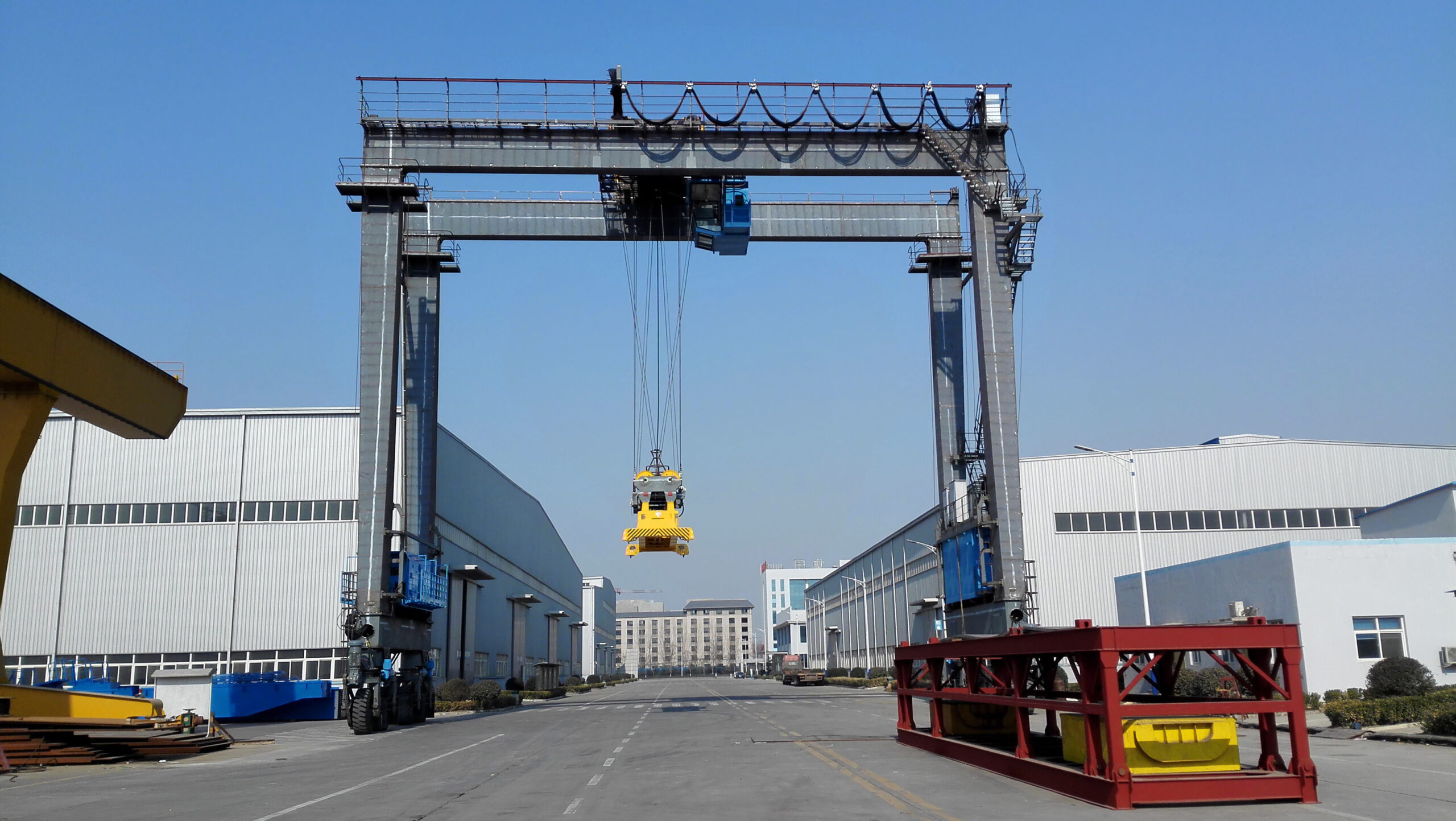
The desert adaptation of electric RTG focuses on the protection of the electrical system, the core of which is to resist high temperature and sand and dust.
The electrical control cabinet must be equipped with an air conditioning system to keep the temperature inside the cabinet stable and prevent the electrical components from aging and short-circuiting under high temperature. At the same time, the use of heat-resistant insulating materials to enhance the high-temperature resistance of the electrical system, as in the case of the ultra-high-temperature sand and dust units designed for the Middle East environment, to ensure that key components operate reliably at high temperatures.
The sealing performance of the electrical cabinet is also crucial, and it must be designed with IP67 and above grade sealing to create sand-proof IP-rated enclosures to prevent sand and dust from entering and protect the electrical components.
In addition, cables must also be protected, using high-temperature-resistant, anti-abrasion cables to avoid aging and breakage caused by sand, dust and high temperatures.
Strategic Decision Matrix for Gulf Ports
| Scenario | Recommended Option |
| Rapid yard expansion | Diesel RTG |
| High-volume transshipment hub | Electric RTG |
| Vision 2030 alignment | Electric RTG |
| Remote port with limited grid | Diesel RTG |
| Long-term ESG financing strategy | Electric RTG |
This decision matrix, which is summarized from our practical experience with dozens of ports in the Middle East, can help you quickly match your own scenario. The core logic is: diesel for short-term expansion, electric for long-term development; diesel for remote ports, electric for core hubs.
Common Mistakes in Gulf Projects
These years of service in the Middle East ports, I have seen a lot of projects because of selection errors, resulting in a substantial increase in the cost of late, summarized, there are several common mistakes, we must avoid.
The first mistake, just because the diesel fuel is cheap, blindly choose diesel RTG, ignoring the long-term ESG pressure and maintenance costs, many ports with 5-6 years, because of the tightening of environmental regulations and maintenance costs are too high, have to replace the electric RTG, but increased investment.
The second mistake, underestimated the impact of high temperature on the engine. Many ports use conventional diesel RTGs without high-temperature adaptation, resulting in frequent engine overheating and shutdown in summer, seriously affecting operational efficiency, and later additional transformation costs.
The third mistake is that there is no planning for electrification infrastructure when building new ports. Many new ports try to save trouble by deploying diesel RTGs first, and when they want to upgrade electric RTGs later, they find that there are no locations reserved for slip lines and substations in the yard, which makes it extremely difficult to transform, and the cost has doubled several times.
The fourth mistake is that they only compare the unit price of the equipment and ignore the TCO at the system level. many ports only look at the cheapness of diesel RTGs when they buy them, but they do not calculate the fuel and maintenance costs for more than ten years or the long-term energy-saving benefits of electric RTGs, and then make the wrong decision.
Decision Checklist for Middle East Port Operators
In order to facilitate your quick decision-making, I have organized a simple checklist, against which you can avoid most of the selection pits.
1. What is the annual operating hours of RTGs in your port? If it is more than 4000 hours, give priority to electric RTG.
2. What are the local diesel price and industrial electricity price? The greater the difference between the two prices, the more obvious the advantage of electric RTG.
3. Does your port have sustainability goals that are aligned with Saudi Vision 2030, UAE Green Ports Initiative? If so, electric RTGs are more appropriate.
4. Do you have a 15+ year plan for port expansion? Electric RTGs are more cost stable in the long run.
5. is green financing important to your port? Electric RTG can help you get more green financing support.
6. Is your yard a new construction or a retrofit of an existing yard? New yards are prioritized for electric RTG infrastructure, while existing yards may consider a hybrid transition.
Frequently Asked Questions (Middle East Focus)
Is diesel still cheaper in Gulf countries?
In the short term, yes. The price of diesel in the Middle East is regulated by the government and is cheaper than in many parts of Europe and Asia, so short-term operating costs are indeed lower.
But in the long run, the cost advantage will gradually shrink. While the price of diesel is likely to rise in line with carbon policies, the cost of electricity for electric RTGs will fall as renewable energy becomes more widely available, and electric RTGs have lower maintenance costs, making them more advantageous in terms of whole life costs.
Is electric RTG practical in 50°C?
Yes, as long as it is properly adapted to the desert. The electric RTGs we have supplied to our customers in Dubai and Saudi Arabia have been retrofitted for high temperature and dust resistance.
Equipped with air-conditioned electrical control cabinets, heat-resistant insulation and sand-proof seals, and optimized cooling systems, electric RTGs are able to operate stably at extreme temperatures of up to 55°C, with an equipment availability rate of more than 95%, which is the same as that of diesel RTGs.
How long is the ROI in Saudi or UAE ports?
It mainly depends on the annual operating hours of the RTG. In the high throughput ports of Saudi Arabia and UAE, the annual operating hours of RTGs are more than 4,000 hours, and the payback period of electric RTGs is usually 4-7 years.
The higher the operational capacity, the faster the payback. For example, Khalifa Port's electric RTGs, which operate over 5,000 hours per year, recouped the additional initial investment in just over four years, with significant annual operating cost savings to follow.
Can diesel RTGs be retrofitted later?
Can diesel RTGs be retrofitted later? Yes, and there are very mature retrofitting programs now, just like Konecranes' skid line retrofitting program, and Henan Mine Crane has also done oil-to-electricity and hybrid retrofitting of diesel RTGs for many Middle East ports.
By removing the diesel genset and adding an electric drive system and power receiving devices (such as skid lines and cable reels), diesel RTGs can be converted to hybrid or electric RTGs without replacing the whole equipment, which can save a lot of investment.
Which option aligns better with Vision 2030?
There is no doubt that an electric or hybrid RTG system is the way to go. Saudi Arabia's Vision 2030 is centered on sustainable development and smart ports, and electric RTGs, with their low emissions and environmentally friendly features, are perfectly suited to this goal.
Electric RTGs have become the centerpiece of smart ports in Saudi Arabia, as in the case of the Port of Oksargon, and choosing electric or hybrid RTGs will also allow the port to receive more policy support and resources.
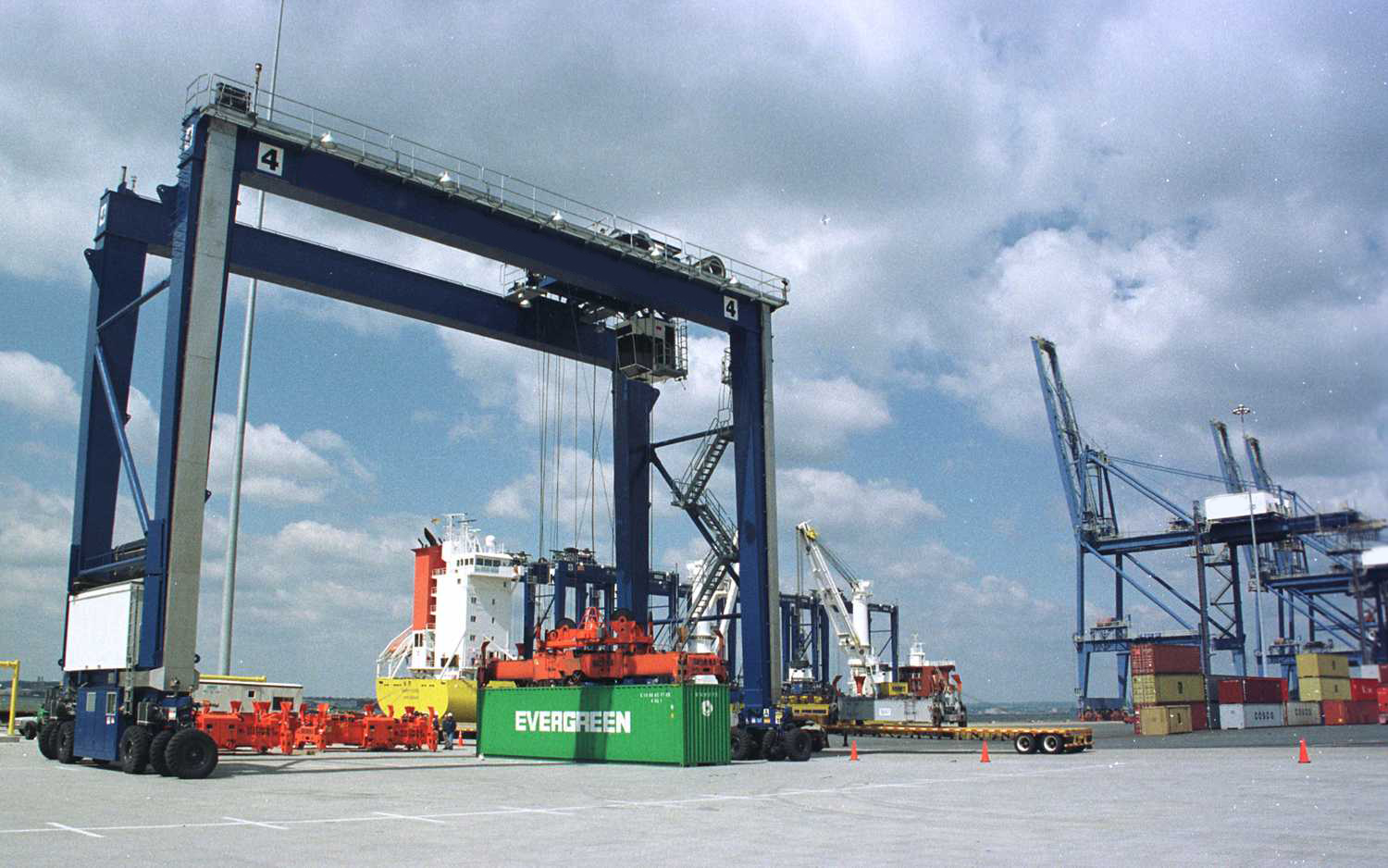
Conclusion
Back to the original question: which is more cost-effective for Middle East ports, diesel RTG or electric RTG? In fact, there is no absolute answer, the core depends on your port scenario and long-term planning.
The advantages of diesel RTG are clear: low initial investment, fast deployment, no dependence on the grid, suitable for rapid expansion, remote ports, or small and medium-sized ports with short-term financial constraints. Its short-term economics are outstanding, but it will face high maintenance costs and environmental compliance risks in the long term.
Electric RTGs have high initial investment and infrastructure requirements, but the long-term advantages are clear: low energy and maintenance costs, environmental compliance, adaptability to smart port transformation, and access to green financing. Especially in high throughput hubs like Dubai and Jeddah, the full life cycle cost advantages of electric RTGs will become increasingly obvious.
Henan Mine Crane Factory Custom
Henan Mine Crane has been doing port lifting equipment for more than 20 years, and has provided equipment supply and transformation programs for diesel RTGs and electric RTGs to dozens of ports in the Middle East, so it is familiar with the Middle East's climate, policies, and port operation characteristics.
We will not simply push a certain type of equipment for you, but according to your port throughput, annual operating hours, local oil and electricity prices, long-term planning, to give you a complete life cycle costing, to help you choose a truly suitable program.
Whether you are a new port to do equipment planning, or old ports to do equipment renewal, renovation, you can contact our engineering team, we will give you free cost estimates and program planning, to help you avoid the selection of the pit, to achieve long-term revenue maximization.