
How to Choose a QDY Casting Crane for Molten Metal Handling
QDY casting crane is suitable for molten metal lifting operation under high temperature and heavy load conditions in foundry.According to the requirements of on-site production, the load, working level and safety system can be reasonably matched, and the molten steel and molten iron transfer and pouring procedures can be stably completed to ensure safe and efficient production.The scientific selection method will be introduced below to assist accurate supporting equipment.
What Is a QDY Casting Crane?
A QDY casting crane (also called a ladle crane or casting ladle crane) is a double-girder overhead crane engineered specifically to lift and transport ladles filled with molten iron or steel. Unlike a standard bridge crane, it is built to survive continuous radiant heat, dust, and the catastrophic consequences of a dropped load.
QDY series ladle cranes transport molten iron ladles to the basic oxygen furnace, or transfer molten steel from the basic oxygen furnace and electric arc furnace to the continuous casting machine, and can also be used for teeming and casting.As with charging cranes, safety and reliability come first because the crane is handling molten steel.
Design and Standards
QDY bridge foundry cranes with hooks are used wherever molten metal is lifted, with the complete machine rated to working class A7, and a thermal-protective coating added to the bottom of the main girder. Casting ladle crane design and manufacture conforms to the notification requirements of JB/T7688-1 and JB/T7688, along with the National Quality Supervision Bureau's opinions on metallurgy lifting machinery.
Where QDY Sits in The Product Range
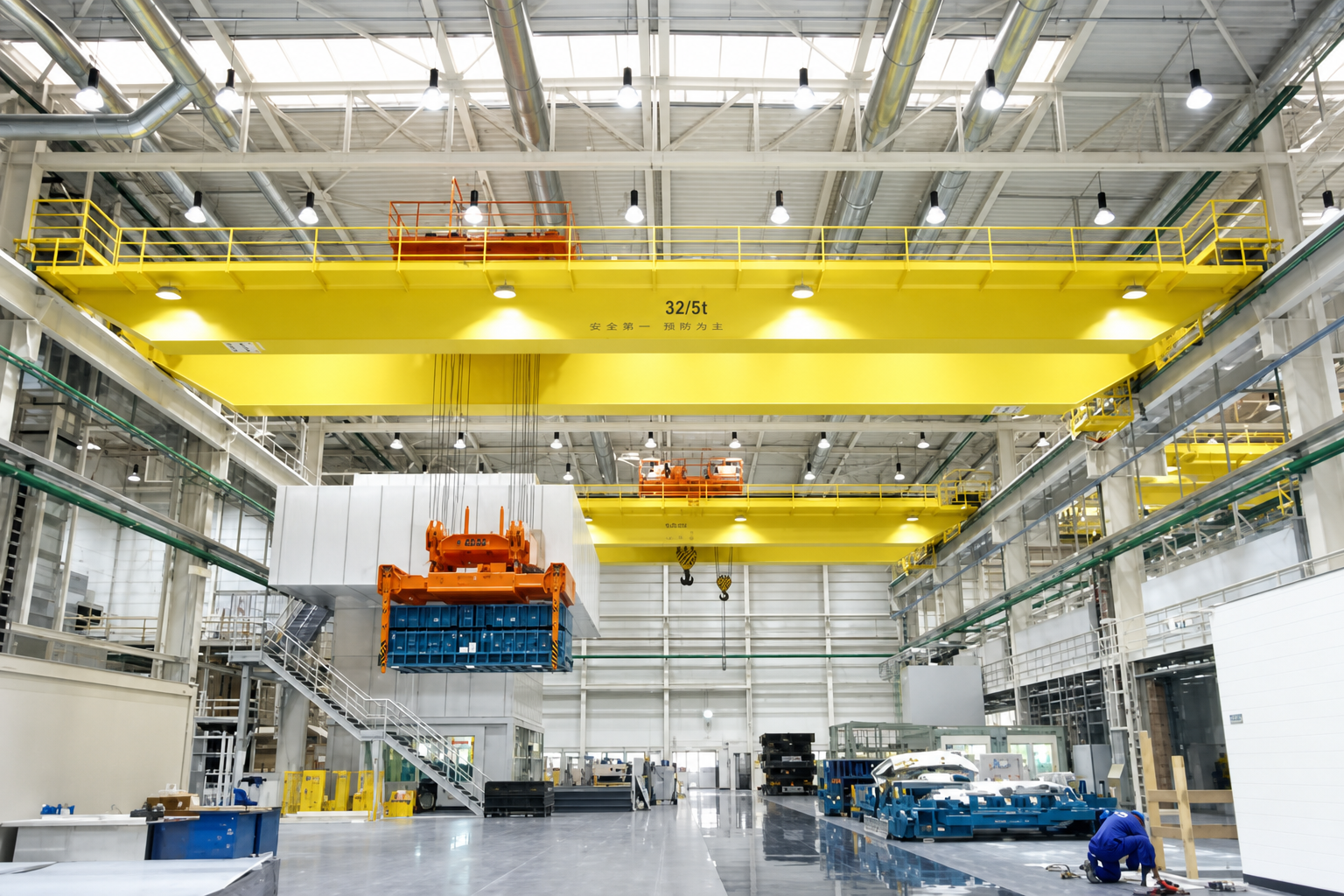
Casting overhead cranes for hot ladle handling are typically available as single girder up to 10 tons, double girder from 5 to 75 tons under the QDY series, 75/20 to 125/32 tons under the YZ series, and 125/32 to 320/80 tons under the four-girder YZS series. If your ladle capacity exceeds roughly 74–75 tons, you're generally shopping for a YZ or YZS crane, not QDY.
Key Applications in Molten Metal Handling
QDY cranes appear at nearly every hot-metal handoff point in a steel plant or foundry:
- Charging operation: Responsible for the transfer of molten iron after tapping from the blast furnace. The ladle is carried by lifting equipment to smoothly lift and transfer the high-temperature molten iron from the blast furnace discharging station to the designated charging station of the oxygen top-blown converter for subsequent steelmaking. The smelting process provides raw material guarantee and is the core transfer process at the front end of steel smelting.
- Refinery transfer operation: Throughout the whole process of steelmaking production, it can complete the processes of converter molten iron charging, crude steel lifting and refining, and molten steel transportation to continuous casting turntable, realizing efficient connection between smelting and continuous casting processes and ensuring continuous and stable operation of production lines.
- Casting and forming operation: It belongs to the core process of metal forming. Through precise operation of lifting equipment, qualified molten metal is poured into ingot mold or continuous casting equipment to complete metal shaping and stably produce finished products such as ingot and billet.
- Casting workshop pouring station operation: adapt to the high temperature, heavy load and high frequency operation conditions of the casting workshop, mainly complete the cross-station transfer of molten metal in the workshop, fixed-point lifting, and the handling of heavy molds and tooling components, so as to ensure the efficient and continuous development of the casting process.
Because the crane also has to tip the ladle to pour, most QDY units pair a main hoist with an auxiliary hoist. The main hook works as the primary lifting device for the ladle, while the auxiliary hook works with the main hook to dump the molten iron and perform other subsidiary lifting operations.
Core Selection Criteria: Load Capacity and Span
Capacity is the first filter, but it's not just about the ladle's dead weight you need headroom for future production growth.
QDY ladle double girder bridge cranes are rated from 5 to 74 tons and used in metallurgy, casting, and other molten-metal-lifting applications, classified as working level A7. QDY cranes in this range typically span 10.5m to 31.5m.
When sizing capacity, account for:
- Load value shall be calculated according to ladle dead weight + full load total weight of molten metal. It is strictly prohibited to calculate the weight of molten metal alone, so as to ensure that the rated load of equipment completely covers the actual lifting total load and eliminate potential safety hazards caused by load calculation deviation.
- The rated lifting capacity shall reserve sufficient safety margin on the basis of the maximum casting load, and the mature selection standard of the industry shall be 10%-20% higher than the actual rated demand, so as to effectively cope with unexpected situations such as fluctuation of working conditions and instantaneous overload, so as to ensure the safety and stability of high temperature and heavy load lifting operation.
- Taking into account future capacity expansion: the initial cost of double-beam cranes is higher, but compared with single-beam models, the bearing capacity is stronger, the stability is better, the life is longer, and it is more suitable for enterprise capacity upgrading. The long-term comprehensive value is higher.
Span and lifting height must match your bay's rail-to-rail distance and the vertical clearance from furnace floor to runway beam get this wrong and the crane simply won't clear your pouring pits or furnace tops.
Duty Class and Working Environment
Duty classification (also called working class or FEM grade) tells you how much continuous stress the crane is engineered to absorb, critical for 24-hour steelmaking operations.
QDY cranes are typically rated at working level A7, while heavier YZ series cranes above 74 tons are rated A7 to A8. The working class of the complete QDY machine is FEM 4M.
Temperature tolerance is equally important and varies by manufacturer: some QDY series cranes are rated for a temperature range of -20°C to +60°C, while others specify -10°C to +50°C. Confirm the manufacturer's rated ambient range against your plant's actual worst-case shop-floor temperature, not the average.
Safety Systems That Matter Most
Given that a single dropped ladle can be fatal and shut down a plant for weeks, safety hardware is where buyers should spend the most scrutiny not the least.
Redundant Braking and Lifting
The main hoisting mechanism uses double motors and double brakes on a single drum, and steel-core wire rope rated for high-temperature environments provides a high safety factor. <cite index="10-1">Double sets of independent crane brakes are used on the lifting mechanism to ensure high safety.
Overload and Limit Protection
Lifting mechanisms are equipped with overload limit protection and double limit protection with rising limit, at a safety protection level higher than an ordinary double-beam bridge crane. <cite index="10-1">Heavy hammer and rotary lifting position limiters, plus down position limiters, are installed when hoisting height exceeds 20 meters.
- Anti-sway and load monitoring.Anti-sway controls reduce lateral movement of the ladle during travel, improving control and reducing spill risk, and integrated load monitoring systems continuously measure the weight of the molten metal, alerting operators to overloads or imbalances.
- Emergency stop and fault protection.Positive and negative contactors are installed to prevent dangerous conditions in case of a power outage, and emergency stop buttons plus limit switches guard against overload.
Structural and Material Requirements for High Heat
Radiant heat from a 1,500°C+ ladle degrades ordinary crane components fast, so the structure itself needs heat-specific engineering.
An insulating layer is installed at the bottom of the main girders to prevent thermal radiation from molten steel damaging the structure and to extend the girders' service life. The radiation temperature reaching the forging hook and plate hook should not exceed 300°C even under full load.
Other structural specs to verify with any supplier:
- The main beam adopts 16Mn high-strength steel plate welded box structure, which has high overall rigidity, stable structure and excellent fatigue resistance. It can withstand high-frequency, heavy-duty and reciprocating operations in the foundry industry for a long time, and the structure is not easy to deform.
- The trolley system is equipped with high temperature resistant special power supply cable, which can adapt to the continuous high temperature radiation environment of the casting workshop. It has the characteristics of high temperature resistance, aging resistance and difficult breakdown, and ensures the safety and stability of the equipment power supply.
- The cab adopts integral heat insulation and sealing design and is equipped with air conditioning system, which can effectively block external high temperature heat radiation and hot air intrusion, create a constant temperature and comfortable operating environment, reduce high temperature fatigue, and ensure safe operation of operators.
- The core transmission components such as motors, reducers and bearings adopt fully sealed protection structure, which effectively isolates dust, water vapor and corrosive smoke from foundry workshops, avoids component stagnation, wear and corrosion, and significantly improves equipment durability and operation reliability.
Control Systems: Cabin, Remote, and PLC Options
Control method affects both operator safety and cycle efficiency. >Ladle cranes can use advanced speed control methods such as stator voltage regulation or frequency conversion, with PLC control used to display speed, crane work status, and safety faults; remote control is also an option to better reflect the crane's performance.
- Cab control: The operator works in the insulated air-conditioned cab, the environment is comfortable, the vision is clear, especially suitable for continuous high-frequency casting conditions, accurate visual alignment can be ensured, and the lifting casting accuracy and operation stability can be guaranteed.
- Wireless/handle remote control: keep operators away from high temperature heat radiation areas, avoid high temperature operation risks from the root, and have higher safety factors. It is the preferred solution for casting enterprises that pay attention to safety production.
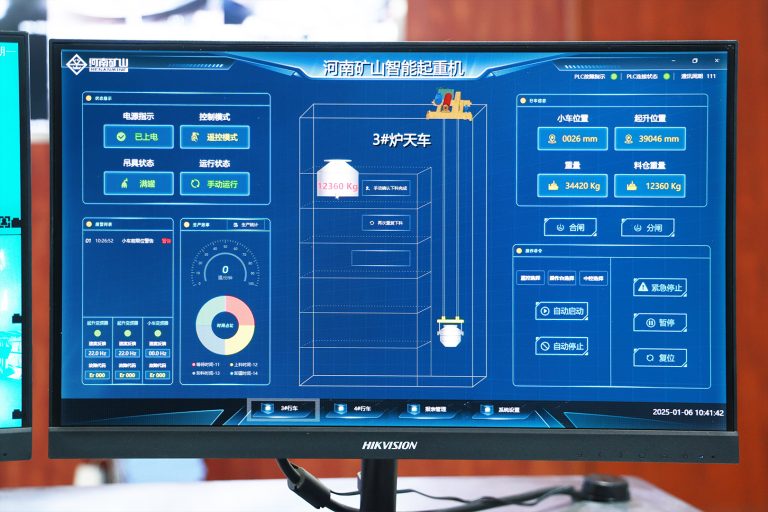
- PLC intelligent automation control: support automatic recording and storage of load data, equipment failure, operation cycle and other operation data, provide data support for production control, and lay an intelligent foundation for subsequent access to the Internet of Things and predictive maintenance of equipment.
QDY vs. YZ vs. YZS: Which Series Do You Need?
| Feature | QDY Series | YZ Series | YZS Series |
| Capacity | <cite index="6-1">5–75 tons | <cite index="6-1">75/20–125/32 tons | <cite index="6-1">125/32–320/80 tons |
| Girder configuration | Double girder | Double girder | Four girder |
| Typical duty class | A7 | A7–A8 | A8 |
| Best for | Small-to-mid foundries, standard steel mills | Mid-to-large steel mills, higher-capacity ladles | Very large integrated steel plants |
The takeaway: QDY is the right call for most foundries and mid-sized steel mills. Once ladle weight or throughput pushes past the mid-70-ton range, budget for a YZ or YZS solution instead of over-stretching a QDY crane's design limits.
Total Cost of Ownership and Maintenance
The purchase price is only the entry cost. Ladle bridge cranes require higher safety performance than ordinary bridge cranes, which makes them more expensive driven not just by design and motor specification but by operating-system customization and ongoing maintenance, with maintenance being one of the main contributors to overall lifetime cost.
Before signing a contract, evaluate the supplier on:
- Accessibility for inspection: choose a crane with easily accessible components for inspection and servicing, clear maintenance manuals and lubrication schedules, and a modular design for quick replacement of worn parts
- Local parts and service support: availability of local service technicians and spare parts inventory should factor directly into the purchase decision
- Predictive maintenance readiness:sensors monitoring temperature, vibration, motor current, and lubrication in real time can predict failures before they occur, reducing unplanned downtime
- Energy efficiency:variable frequency drives regulate motor speed to load requirements, cutting unnecessary power use and extending motor life, while regenerative braking can capture and reuse kinetic energy
Standards and Certification Checklist
Don't take a supplier's safety claims on faith verify against recognized standards:
- Domestic industry standards: strictly follow JB/T7688-1, JB/T7688 series standards, fully meet the design specifications and manufacturing acceptance technical requirements of domestic casting ladle cranes, equipment structure, performance parameters and production processes are in line with industry official standards.
- European FEM standard: standard EN 14492-2 and other authoritative lifting equipment standards and FEM classification specifications, strictly control the safety performance and operation stability of equipment, can meet the strict use and acceptance standards of overseas high-end projects.
- American ASME/OSHA standard: adapt to American market operation code, strictly comply with ASME B20.1 bridge and gantry crane safety standard, OSHA 1910.179 safety regulations, and complete operator training system and preventive maintenance program to ensure overseas compliance and safe production.
- Special equipment production qualification: The equipment strictly complies with the national special equipment safety supervision management regulations, has the formal special equipment manufacturing license, the complete set of design documents has passed the type test certification, and the qualification is complete and the compliance is reliable.
Ask any shortlisted supplier for certificates, not just brochure claims, and request references from plants running a similar tonnage and pour frequency to yours.
What to Prepare Before Requesting a Quote
Suppliers can't give you an accurate quote or the right crane without complete operating data. Before you reach out, gather:
- Rated lifting capacity: check the rated load of equipment according to the maximum total weight of ladle full load, comprehensively cover the extreme full load lifting conditions, eliminate the hidden danger of insufficient load, and ensure the safety of heavy load operation.
- Span and lifting height: accurately confirm the center span of crane track and effective lifting height of hook, conform to the actual space size of workshop, and meet the travel requirements of field lifting operation.
- Operating track conditions: verify the installation of on-site running track. If there is no supporting track on site, the manufacturer can provide professional track specifications, design and complete supporting solutions.
- Power supply parameters: define the core electrical parameters such as on-site power supply voltage, frequency and phase number to ensure that the crane electrical system accurately adapts to the on-site working conditions and realizes stable and safe operation.
- Operating conditions: Clarify the material type of molten metal lifting, high temperature environment parameters, provide accurate basis for equipment working level, protection configuration, material selection, and adapt to severe casting conditions.
- Site drawings: provide workshop civil engineering, station layout, equipment layout and other related drawings, convenient for manufacturers to quickly complete customized design, effectively shorten equipment production and project delivery cycle.
Suppliers commonly ask for exactly this information, span length, lifting height, power supply specs, and the material and temperature being lifted, plus plant drawings, before they can propose a suitable design and solution. Preparing it in advance shortens your procurement cycle significantly.
Conclusion
QDY casting crane selection is very important, related to plant safety production, production efficiency and equipment life.The model selection shall be combined with load, heat resistance, structural strength, safety configuration and maintenance conditions, adapt to metallurgical casting high temperature and heavy load conditions, effectively avoid operation risks, reduce shutdown failures, and ensure long-term stable operation of equipment.
Henan Mine Cranes offers customizable QDY cast-steel cranes, gantry and overhead cranes, electric hoists, and smart lifting equipment, suitable for heavy industry applications such as steel, metallurgy, and foundries. With its professional technical team, the company provides one-stop services including operational condition analysis, structural design, and safety assessments to create safe, efficient, durable, and stable lifting systems for its customers.