
The Complete Guide to Carbon Material Crane Anti-Static Design for Safe Handling
Many factories, when selecting handling equipment, only focus on the basic lifting parameters such as the load and span of the Crane, ignoring the risk of electrostatic detonation of carbon material dust.
Conventional industrial Crane operation process, friction, suspended dust contact, component insulation isolation, etc., will produce electrostatic buildup. If it can not be released in time to dissipate, electrostatic sparks may ignite the suspended carbon dust, triggering safety accidents.
Carbon material Crane anti-static design is an indispensable safety configuration for carbon material production, processing and transfer workshop. We dismantle in detail the application of this type of anti-static Crane scenes, working condition requirements, design principles, selection parameters and procurement to avoid the pit points.
Carbon material anti-static Crane mainstream application scenarios
Not all carbon material operating scenes need high antistatic cranes, equipment configuration standards depend entirely on the material form, dust concentration and operating environment. Powder concentration, ventilation restrictions, dust suspension of large working conditions, is the core of the anti-static Crane application scenarios.
Carbon black production and packaging production line
Carbon black production, filling and packing area will continuously generate a large amount of fine carbon black dust, and the concentration of dust in the air is very easy to reach the critical hazardous value.
Workshop equipment maintenance, material tonnage bag handling, production line equipment lifting operations, all need special anti-static lifting equipment.
Carbon material handling Crane in this scenario, need to control the entire static electricity generation and accumulation, to eliminate static sparks, to protect the packaging workshop continuous safe production.
Graphite and carbon powder deep processing workshop
High-purity graphite, ultra-fine carbon powder processing, screening, transfer workshop, belongs to the closed dust-free working environment. The space is relatively closed, the dust can not spread quickly, and the risk of electrostatic detonation is extremely high when it is suspended in the operation area for a long time.
Raw material transfer, hopper lifting, equipment maintenance lifting operations in the workshop must rely on anti-static Overhead Crane to complete, from the equipment level to avoid static electricity safety hazards.
Lithium battery carbon material production plant
The production process of new energy battery anode carbon material and composite carbon material requires high safety of the production environment. In addition to the demand for dust explosion prevention, the purity of materials can not be affected by impurities and static electricity generated by the operation of the equipment.
Anti-static cranes suitable for this scenario can control the risk of static electricity, but also reduce the equipment dust, wear and tear of parts debris, taking into account the production safety and material quality.
Coal and Coke Processing Workshop
Raw coal refining, coke milling, coal powder transfer operation area, dust combustible properties, high risk level of the operating environment. The equipment maintenance, material transfer and workpiece lifting in the workshop require lifting equipment suitable for anti-explosion and anti-static working conditions.
Activated Carbon and Fine Chemical Carbon Materials Plant
Food-grade and industrial-grade activated carbon processing, as well as various types of fine chemical carbon material preparation processes, mostly completed in a controlled closed workshop. Powder lifting, equipment maintenance process, the slightest static potential may cause safety problems, anti-static design is the standard equipment requirements.
Dust-sensitive storage and transfer station
Carbon material finished product warehousing, tonnage bag transfer, distribution conveying area, although there is no continuous production of dust, but the operation process will disturb the residual dust, the formation of the stage of suspended dust environment. This type of scenario also requires lifting equipment with static electricity prevention and control capabilities to avoid the safety risks associated with intermittent operations.
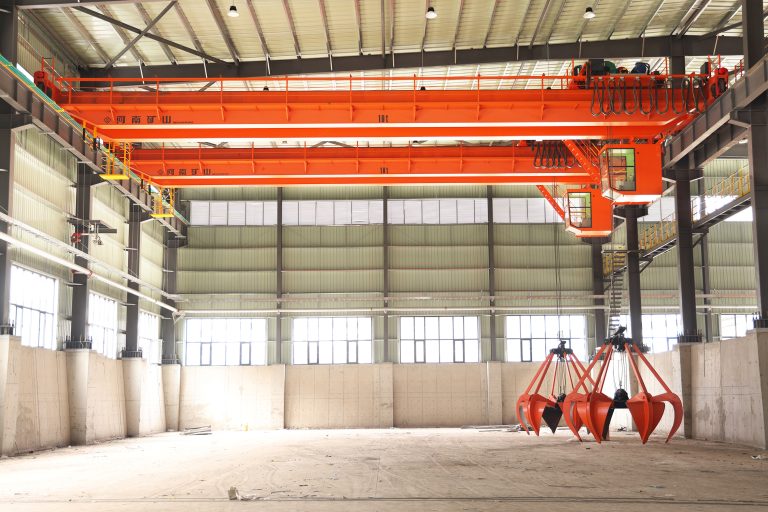
Core equipment requirements for carbon material handling conditions
Carbon dust conditions of the equipment selection criteria, and ordinary industrial lifting conditions are completely different. Conventional Crane to meet the load and durability needs, while carbon material special cranes, the core around the electrostatic prevention and control, dust control, safety pocket design.
Perfect static electricity control ability
When the Crane is running, the friction between the wheels and the track, the wire rope expansion and contraction, the operation of the electrical components, the material shaking friction, will generate electrostatic charge. Ordinary equipment can not release the charge, the long-term accumulation will form high-voltage static electricity.
Carbon special cranes need to build a complete charge dissipation channel to avoid localized accumulation of charge, and reduce the probability of electrostatic discharge and sparks from the source.
Dust explosion risk prevention and control
All types of refined carbon dust are combustible dust, in a confined space, suitable concentration, dry environment, as long as there is a tiny ignition source, it may cause an explosion. Crane as a high-frequency operation equipment, must eliminate the possibility of becoming an ignition source.
The overall design of the equipment needs to be adapted to high-risk dust conditions, strict control of friction sparks, electrostatic sparks, electrical sparks, three types of core risk points.
Reliable grounding and jumper system
Many manufacturers of simple anti-static design only do the whole machine grounding, ignoring the moving parts of the cross-connect conduction. Crane main beam, trolley, hoist, traveling mechanism and other independent moving parts, must all do conductive cross-connection.
Only all metal components, moving parts to form a continuous conductive path, and then access to the plant grounding system, in order to truly realize the zero buildup of static electricity, which is the core of the Crane grounding anti-static design key.
Low dust disturbance design
Crane operation, start and stop, alignment process, can not produce strong airflow disturbance, to avoid stirring the ground, equipment surface dust, exacerbating the workshop dust suspension concentration.
At the same time, the surface of the equipment adopts smooth sealing design, which is not easy to accumulate dust, easy to clean, and reduces the secondary static electricity hidden danger caused by dust adhesion.
Adaptability to high-risk zoning conditions
Part of the carbon deep processing workshop will be divided into explosion-proof high-risk areas, such areas of equipment standards far beyond the ordinary anti-static requirements. According to the level of hazardous areas in the plant, customized anti-explosion and anti-static lifting equipment to match the safety specifications of the zoning.
Convenient testing and maintenance conditions
Antistatic structure is not a one-time configuration, long-term use will appear ground aging, wear and tear of conductive parts, line oxidation and other issues. Equipment design needs to be reserved for convenient detection points, convenient daily inspection, resistance testing, component replacement, to protect the long-term effectiveness of anti-static function.
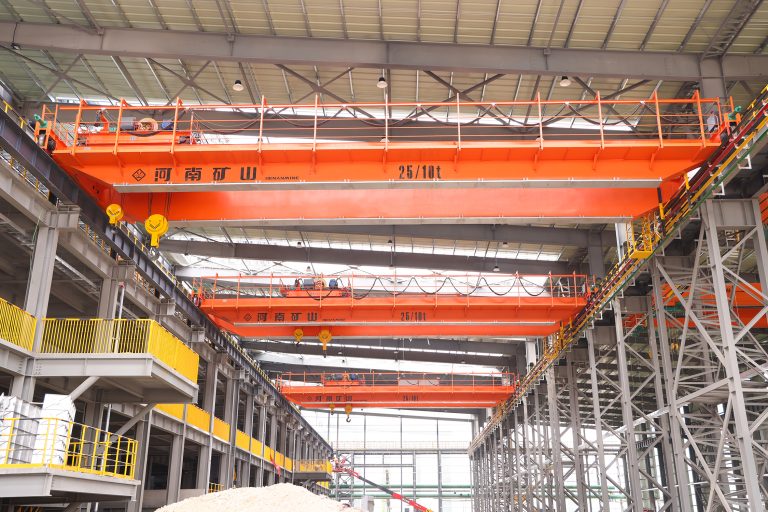
Carbon material working conditions suitable for mainstream anti-static Crane models
Different plants have different site layouts, operating frequency and risk levels, and different anti-static Crane models are suitable. Selecting the model according to the needs can not only meet the safety standards, but also reasonably control the equipment procurement costs.
Anti-static Overhead Crane
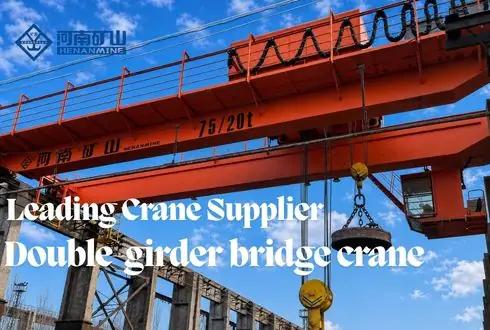
This is the mainstream model for carbon indoor production workshop, suitable for material transfer, equipment maintenance, material lifting operations in the closed plant. The whole machine adopts fully sealed anti-static design, complete conductive path, smooth operation and low dust disturbance.
Widely used in carbon black, graphite, battery carbon material and other indoor standardized production lines, is the most versatile anti-static Overhead Crane model.
Anti-static Gantry Crane
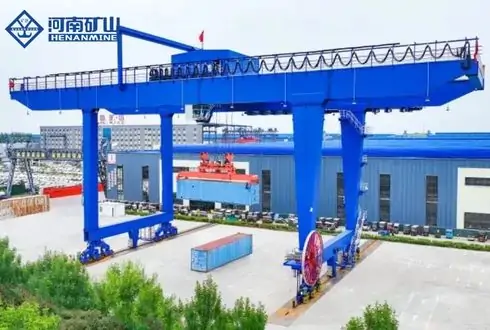
Suitable for outdoor and semi-outdoor carbon material yard, open-air transfer area, outdoor equipment maintenance site. Optimized grounding protection and component sealing design for dry, windy and dusty outdoor conditions.
It can effectively resist the influence of outdoor environment and maintain stable static electricity prevention and control ability, suitable for bulk carbon material handling operations in the yard.
Low headroom anti-static Crane
The height of some old carbon material factories and confined deep-processing workshops is limited, and the conventional Crane structure will occupy too much headroom. Low headroom anti-static hoist cranes optimize the structural layout to save vertical space.
Under the premise of not lowering the anti-static and anti-dust standards, it is suitable for the lifting needs of low-rise plants.
Customized explosion-proof cranes for high-risk areas
For high-risk workshops with extremely high dust concentration and strict explosion-proof level, ordinary anti-static equipment cannot meet the requirements. Need to customize the explosion-proof anti-static integrated Crane, electrical components of the explosion-proof sealing, structure of the frictionless spark design.
This type of carbon material explosion-proof Crane is specially adapted to high-risk dust explosion conditions, fully adapted to the factory explosion-proof norms.
Carbon material equipment maintenance Crane
Specialized for carbon production line mixer, hopper, feeder, dust removal equipment maintenance lifting, low frequency, fixed working conditions. The equipment focuses on static electricity prevention and control and precise alignment, and is suitable for production line operation in narrow space.
Procurement must verify the core technical parameters
Carbon material antistatic Crane selection, can not only refer to conventional lifting parameters, electrostatic prevention and control, conductive design, working conditions to adapt to the parameters is to determine the core of the safety of the equipment, the procurement stage must be verified one by one.
Rated lifting load
According to the material tonnage bags, raw materials, hoppers, production equipment, fittings and accessories of the actual weight of the selection, set aside a reasonable load margin. Avoid overloading of equipment, which may lead to secondary risks such as increased mechanical friction and heating of components.
Equipment span
Accurately match the working width of the workshop, the layout of the production line, and the range of material transfer to ensure that the equipment covers the whole working area, and reduce the dust disturbance and component friction caused by frequent traveling.
Effective lifting height
Combined with the workshop headroom, material transfer path, and equipment maintenance height, it can meet the space requirement of high lifting and equipment disassembly, and at the same time avoid the risk of static electricity accumulation brought by high level operation.
Working level
Distinguish between equipment use scenarios, production line high-frequency transfer operations need to use high working level equipment, workshop low-frequency maintenance operations can be used for conventional working level. Different working levels of equipment, parts wear-resistant, conductive stability design varies greatly.
Grounding and cross-connection design
Focus on verification of the main beam, traveling trolley, hoist, rail, cable system, all moving parts of the cross-connection, to confirm that the entire machine without isolated metal components, conductive path continuous without breaks, grounding resistance in line with industry safety standards.
Anti-static accessories selection
Wheels, cables, seals, contact points, surface coatings and other accessories that are prone to static electricity, must use special anti-static, conductive materials. Eliminate the accumulation of static electricity in ordinary insulated fittings, and control the generation of static electricity from the source of fittings.
Manipulation
The high-risk dust workshop prioritizes the use of wireless remote control, reducing the personnel close contact with high-risk areas. Conventional workshop can choose handle control, all control parts are anti-static, dustproof sealing treatment.
Adaptation conditions for on-site working conditions
Combined with the workshop dust concentration, air humidity, ventilation conditions, explosion-proof zoning level to adjust the equipment configuration. Dry, high dust, closed without ventilation of high-risk conditions, need to upgrade a full set of anti-static explosion-proof configuration.
Surface treatment and sealing level
The whole equipment adopts smooth dustproof coating, which is not easy to accumulate dust and easy to clean. Electrical components and transmission structure are all sealed to avoid dust from entering the internal parts and affecting the conductivity and operation of the equipment.
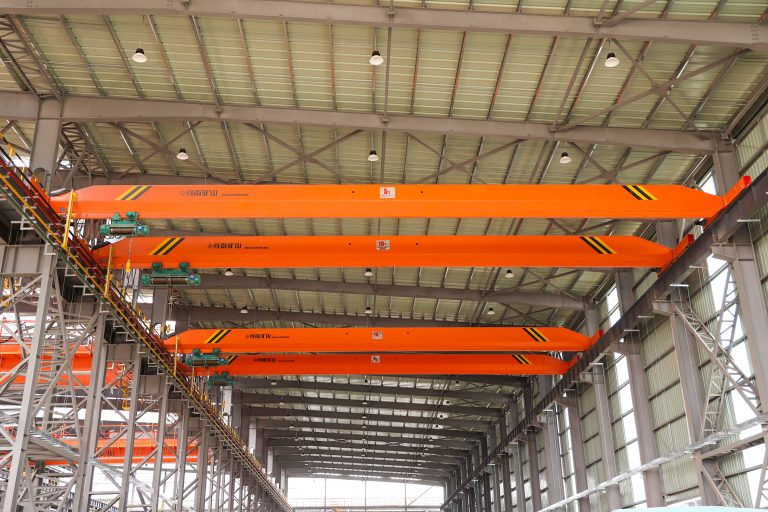
Carbon material crane anti-static core design principle
The core logic of anti-static Crane is not to eliminate the generation of static electricity, but through scientific design, so that the generated static electricity can be quickly and safely dissipated to avoid the accumulation of discharge, suitable for high-risk working conditions of carbon dust.
Grounding design of the entire structure
All metal load-bearing structures and traveling structures of Crane are reliably connected to the special grounding network in the factory to establish a stable charge release channel. The static electricity generated by equipment operation can be directly channeled into the earth, avoiding the accumulation of electricity in the machine body.
Grounding point, grounding material, grounding resistance will directly affect the anti-static effect, but also the core focus of the equipment acceptance project.
Conductive spanning of moving parts
Crane main beam and trolley, trolley and hoist, fixed rail and walking mechanism are relative moving parts, there is an insulation gap. Through the special conductive jumper, conductive cable, all the independent components connected to a single conductive system.
Completely eliminates the potential difference between different components, avoiding sparks generated by electrostatic discharge between components.
Reduce the source of static electricity
Optimize the structure and material of equipment operation, reduce the friction coefficient of components. Choose low-friction, anti-static wheels, wire ropes and sealing accessories to reduce the probability of friction and electricity generation.
At the same time, optimize the logic of equipment operation to achieve smooth start-stop and even-speed travel to reduce sudden shaking and friction brought about by static electricity increment.
Electrical protection for dusty working conditions
All electrical control components, motors and brakes adopt dustproof sealing structure to prevent dust from accumulating on the surface of electrical components. This prevents dust from causing short-circuits, discharges, heat generation and other potential safety hazards.
Adaptation to the overall safety system of the plant
Crane anti-static design needs to be matched with the plant dust removal system, ventilation system, explosion-proof control system. Equipment static electricity prevention and control, workshop dust management, environmental ventilation control synergies, in order to avoid the risk of dust explosion.
Antistatic Crane supplier screening points
Carbon material special anti-static crane belongs to non-standard customized safety equipment, ordinary crane manufacturers can only produce general-purpose models, are not familiar with the dust explosion, static electricity prevention and control of professional design standards, it is very easy to design loopholes.
Verification of manufacturers of carbon material working conditions professional experience
Priority is given to manufacturers with long-term service in carbon black, graphite, battery carbon materials, fine chemical dust projects. This kind of manufacturers are clear about the dust characteristics of different carbon materials, risk level, and can optimize the equipment anti-static program.
Checking the cases of similar projects on the ground
Field to see the manufacturers of powder materials plant, explosion-proof workshop, carbon processing project landing cases, real project experience, is a direct reflection of the equipment safety design capabilities.
Evaluation of professional engineering customization capabilities
High-quality manufacturers will first verify the plant process, dust concentration, explosion-proof zoning, grounding conditions, and then targeted design of equipment structure, grounding system, accessories configuration, rather than applying the general anti-static template.
Verification of a full set of professional and technical information
Regular manufacturers can provide a full set of equipment assembly drawings, grounding cross-connection schematic diagrams, electrical drawings, anti-static accessories list, adaptive instructions for working conditions, daily maintenance specifications and other acceptance information to meet the factory safety supervision, explosion-proof acceptance standards.
Confirmation of core parts configuration standards
Check one by one the core accessories such as motor, brake, anti-static cable, conductive wheels, grounding connectors, surface coating, etc., to eliminate the substitution of common accessories for special anti-static accessories, and safeguard the performance of the equipment from the source.
Clear factory testing and acceptance standards
Before leaving the factory, the equipment must complete the whole machine grounding continuity test, resistance test, electrical sealing test, no-load full-load test run, and issue a complete test report to ensure that the anti-static function is up to standard.
Confirmation of the scope of working condition compliance
Confirm the compliance level of the equipment according to the different standards of ordinary areas, dusty and high-risk areas, and explosion-proof zones in the plant, and match the anti-static or anti-explosion anti-static configurations according to the needs to avoid insufficient configurations or excessive redundancy.
Verify long-term after-sales operation and maintenance capability
Anti-static components are wear and tear parts that need to be regularly tested and replaced. Reliable manufacturers can provide long-term inspection, resistance testing, parts replacement, upgrading and transformation of working conditions and other after-sales support to ensure the long-term safe operation of the equipment.
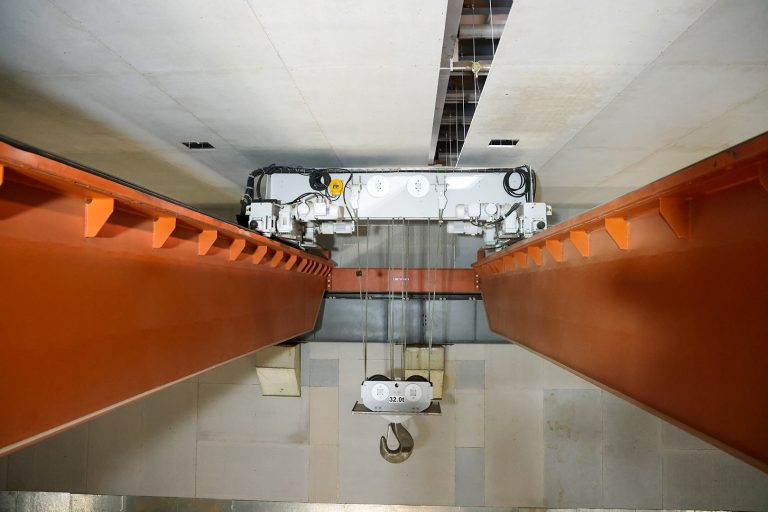
Purchasing selection of high-frequency misunderstanding
Carbon Crane safety hazards, mostly from the selection stage of cognitive bias, seemingly minor omissions, will be buried for a long time static electricity and explosion-proof risk.
Only focus on lifting tonnage, span and other basic parameters, completely ignoring the static electricity prevention and control, dust explosion-proof core configuration, ordinary Crane for carbon dust high-risk conditions.
Subjectively believe that ordinary cranes can be adapted to carbon workshop with simple modification, without realizing the hidden risks brought by isolated components, grounding breaks and common accessories.
Neglecting the explosive properties of carbon dust, only focusing on the basic safety of equipment, ignoring the risk of electrostatic sparks as the core ignition source.
Failure to clarify the level of hazardous zoning in the plant, the uniform selection of low or high equipment, either safety is not up to standard, or a waste of cost.
Only do the whole machine grounding, ignoring the moving parts across the connection, resulting in localized electrostatic buildup of equipment, there is a potential risk of discharge.
Only look at the manufacturer's “anti-static” publicity rhetoric, do not verify the specific grounding design, accessories, materials, test reports, equipment in name only.
Crane design does not combine the plant dust removal, ventilation system, equipment operation and plant safety system does not match, the prevention and control effect is greatly reduced.
There is no regular anti-static testing and maintenance program, the equipment is used for a long time after the aging of the conductive parts fail, the risk continues to accumulate.
Frequently Asked Questions
What is a carbon material-specific antistatic crane?
This is a special lifting equipment customized for carbon dust combustible working conditions, through the complete grounding across the connection, anti-static accessories, sealed dust-proof structure, smooth operation design, control of static electricity generation and buildup, to eliminate dust safety accidents caused by static electricity sparks, specifically for all types of carbon material powder handling scenarios.
Do all carbon material factories need anti-static Crane?
No, they don't. Only powder suspension, dry confined, there is a risk of dust explosion process needs to be configured. Lumpy carbon materials, storage without dust diffusion, and open-air low-dust operation scenarios can be simplified according to the actual working conditions.
Are anti-static design and explosion-proof design the same thing?
No, they are not. The core of anti-static design is to control the risk of static buildup and discharge, while explosion-proof design is to eliminate electrical, friction, static electricity and all kinds of ignition sources. High-risk dust workshop needs to be equipped with both anti-static + explosion-proof dual design, ordinary dust conditions only need anti-static design can be.
What is the difference between equipment grounding and component cross-connection?
Grounding is the whole machine charge into the earth, is the overall discharge channel; across the connection is connected to all the independent moving parts, eliminating the potential difference between the components, to avoid partial discharge. The two are indispensable, together form a complete electrostatic prevention and control system.
Crane which parts of the most important static electricity prevention and control?
Traveling wheels, conductive cables, movement across the joints, grounding terminals, electrical sealing components, surface coating is the core components, but also the most likely to generate static electricity, the key position of the conduction breakpoints, is the focus of routine testing and maintenance.
Can ordinary industrial Cranes be converted to anti-static equipment?
Low-dust, low-risk conditions can do simple transformation, but high-risk explosion-proof conditions can not be transformed to replace. Ordinary equipment insulation accessories, open structure can not be completely rectified, there are permanent safety hazards, must be the original factory customized special anti-static models.
What information do I need to provide to the manufacturer before requesting a quotation?
Material type and dust concentration, operating area explosion-proof grade, equipment load, span, lifting height, workshop layout drawings, frequency of operation, to facilitate manufacturers to accurately match the anti-static configuration and customized solutions.
Summarize
Carbon material Crane antistatic design is not a dispensable additional configuration, but to adapt to high-risk working conditions of powder, to ensure the core of the plant's safe production. Its core value is to control the risk of static electricity from the end of the equipment, to eliminate the potential danger of dust explosion, matching the special safety requirements of carbon material production.
Equipment selection should not only focus on the lifting capacity, but should also be combined with the characteristics of the material dust, the workshop hazard level, plant safety system, matching the corresponding static electricity prevention and control, grounding across, dust sealing design. Reasonable equipment configuration can not only avoid safety risks, but also avoid the cost waste caused by excessive investment.
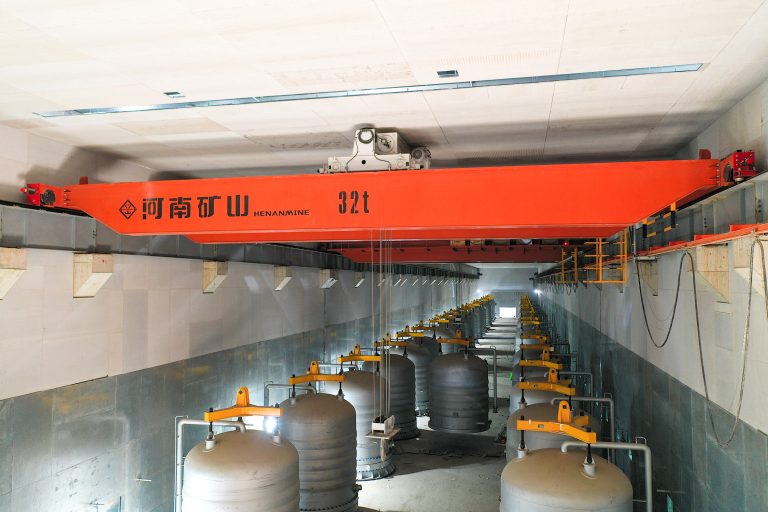
Henan Mine Crane has been engaged in dust explosion-proof, anti-static lifting equipment customization for many years, familiar with all kinds of carbon materials, powder chemicals, new energy materials, the risk of working conditions, can be targeted to the design of carbon materials Crane anti-static program, supporting the complete testing information and long-term operation and maintenance services, suitable for global high-risk powder operation projects.
If you are not sure whether your project needs anti-static Crane, need to match what kind of configuration, you can provide material parameters, workshop conditions, equipment requirements, our engineering team will provide you with an exclusive safety fit program.