
How to Select a Large-Span Gantry Crane for Bridge Construction
Choosing the wrong crane can be the most costly mistakes of a bridge contractor. A large-span gantry crane that is under capacity for the beam weight, or configured for the wrong erection sequence, will not simply slow the program, it can result in yard reconfiguration on the fly or a safety incident.
Selecting a large-span gantry crane for bridge construction involves separating five related variables span, load, terrain, erection method, and regulation, from your actual project, not just the biggest number in a spec sheet.
In this article we explain each of those five variables, demonstrate the proper way to determine load capacity, compare each of the three key gantry variations, and highlight the terminological rules and common errors that can result in bridge equipment purchase failures.
What Is a Large-Span Gantry Crane?
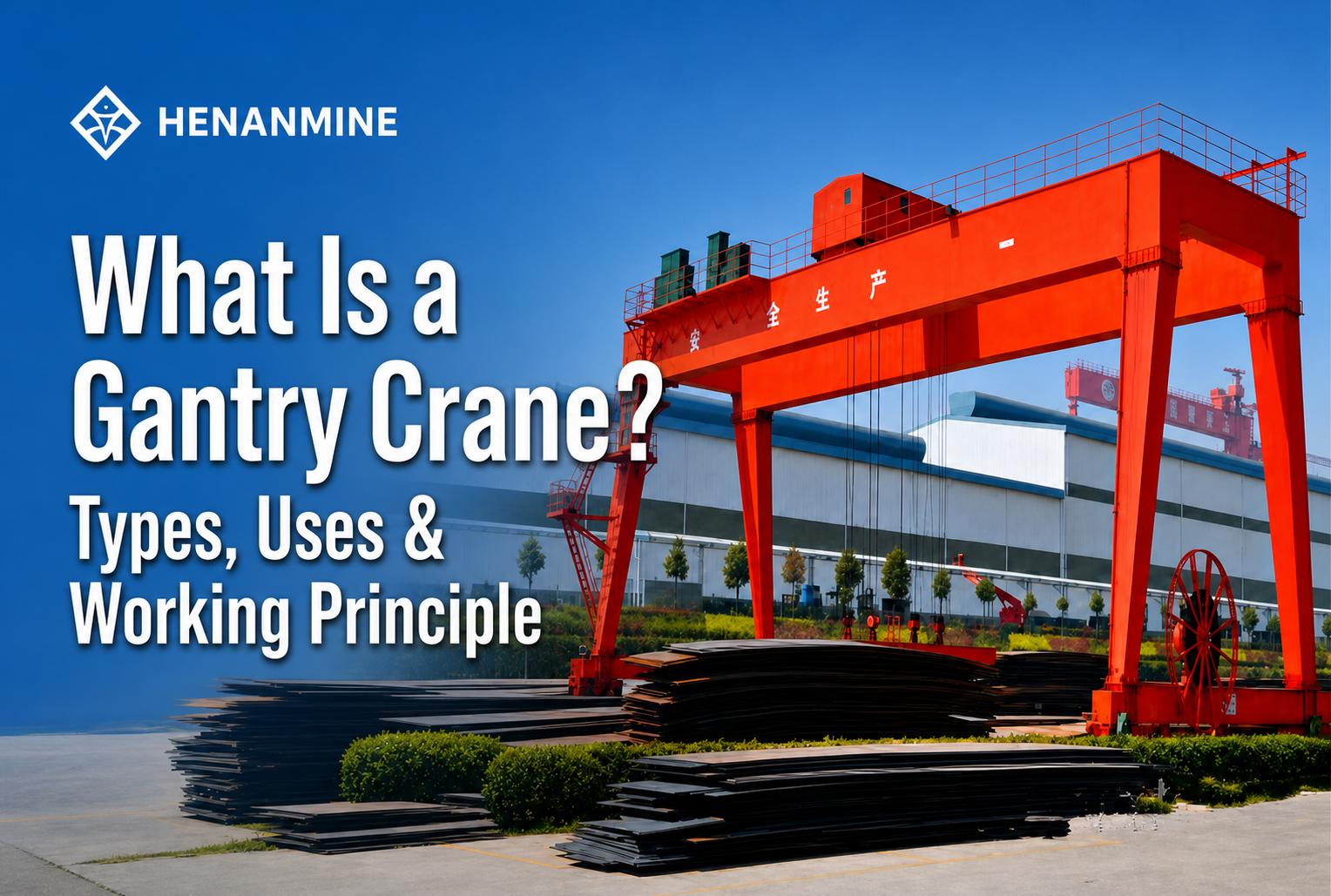
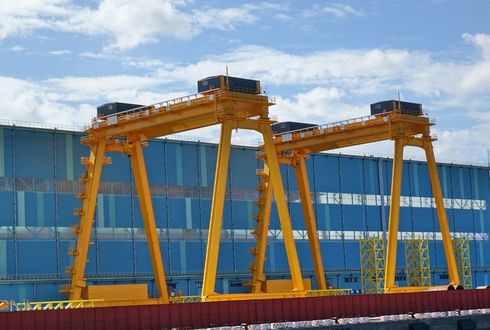
Long-span gantry crane is self-supporting lifting equipment, using truss or box beam structure, without attachment to the building structure can achieve long-span operation.In bridge construction, portal crane and bridge erecting machine are similar in appearance, but their uses are significantly different.
Gantry crane of beam yard is mostly used for lifting and loading transfer of beam slab of prefabricated yard; bridge erecting machine is special bridge building equipment, which can move forward by itself relying on the built pier, and directly complete the erection construction of bridge span beam section by the bridge bearing fuselage.
Both types of equipment support single/double beam, truss/box beam structures.Truss type light weight, good wind resistance, suitable for outdoor large-span construction; box beam overall stiffness is higher, more suitable for large-tonnage heavy lifting operations.
Key Applications in Bridge Construction
Large-span gantry crane can be adapted to multiple construction stages of bridge engineering, equipment selection needs to be accurately matched according to the specific construction scenario, the application scenarios are as follows:
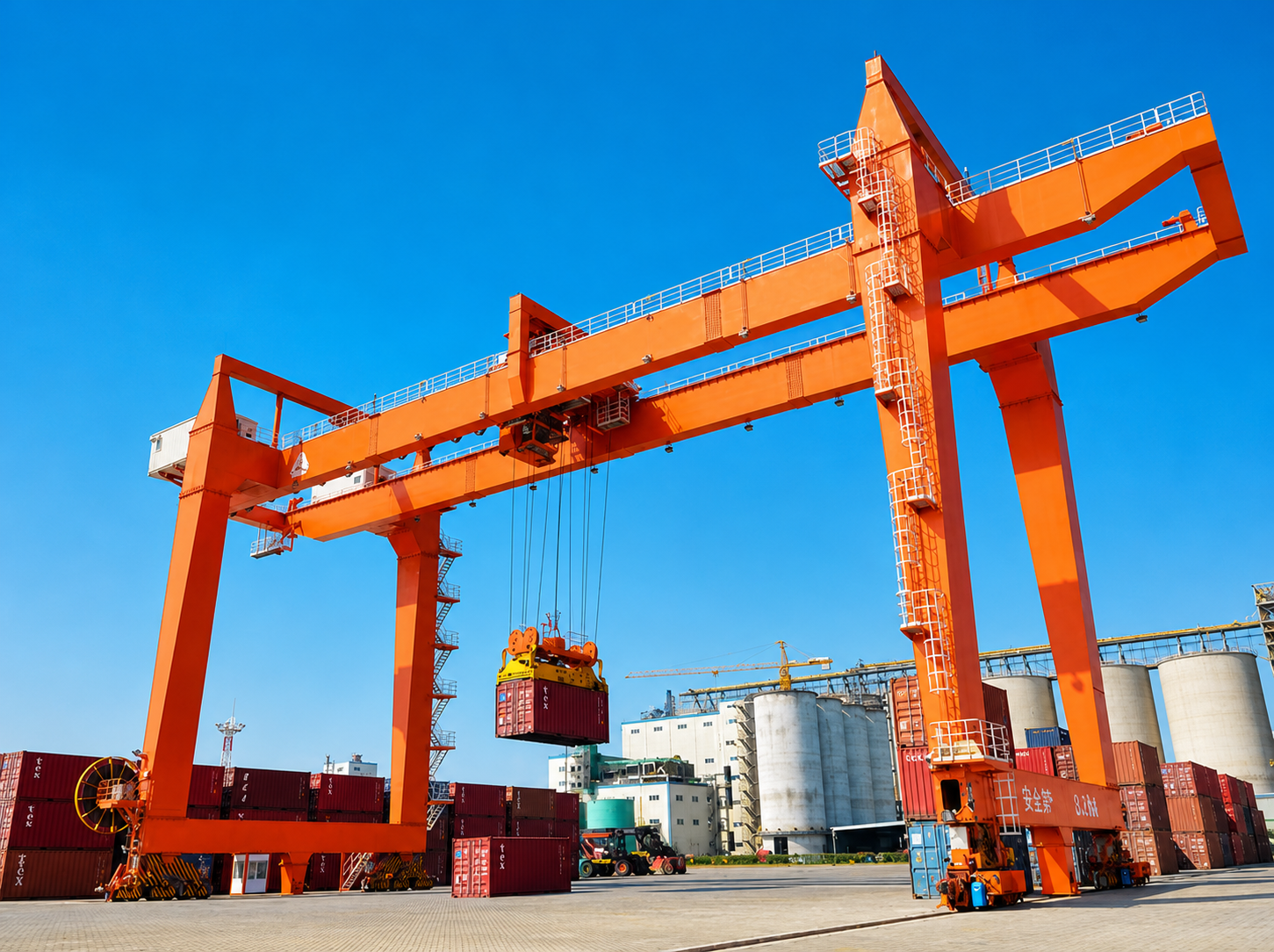
- Transfer operation of prefabrication yard: conventional beam lifting gantry crane is used to complete the transfer operation of beam body and segment components from prefabricated pedestal to storage area or transfer equipment, which is the core equipment for standardized construction of prefabrication factory area.
- Whole span erection construction: one-time integral hoisting and erection of whole span prefabricated beam body, mostly used for highway and railway repetitive bridge projects. This construction method can ensure the stability of the project quality, effectively reduce the on-site labor input, and improve the degree of construction standardization.
- Segmental assembly construction: self-propelled bridge gantry crane is adopted, and prefabricated segments are assembled span by span or balanced cantilever to complete the construction of bridge span. The process is widely used in urban viaducts, curved bridges and projects with limited traffic and narrow construction space.
- Viaduct and viaduct construction: for viaduct structure, viaduct construction scene, gantry crane can carry heavy prefabricated components along the bridge body longitudinal walking operation, adapt to the construction site space is limited, bridge line bending and other complex conditions.
The 5-Factor Selection Framework
Before comparing various types of crane models, a standardized SLTMS selection framework can be relied on for evaluation. The framework covers the core elements 5 span, load, site, construction method and specification, and can accurately determine the gantry crane configuration scheme of the suitable project:
- Span : refers to the effective operation coverage distance between the legs or piers of the equipment, which is the core parameter to determine the fuselage specifications, walking layout and overall adaptation scheme of the gantry crane.
- Load: Based on the actual self-weight of construction components such as beams and segments, and in combination with industry standards, the safety redundancy factor is superimposed to accurately check and approve the rated hoisting load of equipment to ensure operation safety.
- Site: Comprehensive evaluation of the construction site foundation bearing capacity, pier height, line curve radius and site traffic conditions, in order to match the equipment support structure and walking operation plan.
- Method: Combined with the established construction scheme of the project, adapt to the mainstream technology such as whole-span erection, span-by-span assembly, balanced cantilever construction, etc., and match the equipment operation mode and construction logic.
- Specifications (Standards): Equipment selection and operation shall strictly conform to the project territorial safety standards, industry compliance requirements and project exclusive technical specifications to ensure compliance and control throughout the construction process.
The following will be the 5 selection of the core elements of the detailed dismantling and professional analysis.
Matching Span Length to Crane Configuration
Span requirements are very different from one type of crane to another and therefore getting this right at an early stage avoids the need for re-design later on. Conventional beam-lifting and double-girder launching gantries generally have span lengths of between 20 and 50 meters and therefore will cater for most highway bridges built with pre-cast T-beam, U-beam or standard box girder segments.
For longer spans, balanced-cantilever launching gantries can span 100m or more, as the gantry extends out from a central pier steadily, with segments laid on each side in alternate movements, keeping the gantry in balanced condition. This type of gantry can be used for deep valleys, high piers and curved alignments which shorter span gantries are incapable of.
Segmental launching gantries for complete suspension assembly can launch single spans of around 50 meters made with an upward-type configuration that has no constraint in pier height beneficial where the first and last line spans are constructed of piers that are lower than the whole alignment.
Guideline: if your longest span is greater than 50m, or your alignments has very sharp curves or very irregular pier heights, build your structure around a segmental/balanced-cantilever gantry rather than a traditional double-girder type unit.
Calculating Load Capacity Correctly
In the purchase of bridge erecting machine, the most common error with the biggest economic loss is the underweight type selection.General core selection standard of senior construction party in the industry: the rated lifting tonnage of equipment shall not be equal to the actual weight of the beam body, and it shall be configured according to 1.2 - 1.25 times of the actual weight of the beam body and section, so as to cover the dynamic load in lifting, slewing and positioning operations, rather than only adapting to the static lifting weight.
144 - 150 ton bridge erecting machine shall be selected for 120 tons prefabricated beam, and 120 tons nominal equipment shall not be selected.Pure theoretical static load selection of equipment can not adapt to the dynamic construction conditions on site, easy to cause problems such as site reconstruction in the middle of construction, secondary purchase of equipment, etc., resulting in additional costs far exceeding the cost of reasonable selection in the early stage.
The common tonnage range of different structure types of bridge erecting machine is as follows:
- Single beam erection machine: rated tonnage 50 - 100 tons, suitable for conventional highway bridge light T beam, U beam erection construction.
- Double-beam bridge erecting machine: rated tonnage 120 - 300 tons, suitable for medium and heavy construction scenarios, can meet the erection requirements of heavy prefabricated components.
- Segmental erection machine: rated tonnage 700 - 900 tons, designed for large-scale box girder segmental erection projects.
For high-precision lifting operation scenarios, the modern rail-type gantry system can realize 50 - 65 tons of double-load lifting, and the positioning accuracy can reach millimeter level; while the steel strand jack system used for complex segment construction can synchronize more than 100 lifting points.In high-precision infrastructure projects, the importance of this precise control system is no less than the rated lifting tonnage of the equipment.
Erection Method: Full-Span vs. Span-by-Span vs. Balanced Cantilever
Before the project lifting tonnage and equipment selection, the established bridge erection method must be determined. The construction method directly determines the type of adaptation of the gantry crane, which is the pre-core condition for equipment selection.
- Whole span erection: the entire prefabricated bridge span is hoisted in place at one time, which is suitable for standardized repeated bridge span construction along roads and railways. The beam body is prefabricated in the controlled environment of the factory, and the construction quality is stable and reliable, which can greatly reduce the on-site operation personnel and the open-air construction process.
- Span-by-span assembly and erection: relying on the lifting trolley on the gantry crane truss, multiple prefabricated segments are assembled into a complete bridge span. After the prestressed tensioning process is completed, the equipment is moved forward to carry out the construction of the lower 1 span. The construction method is extremely efficient, and large-scale highway projects can achieve a single-span two-day erection cycle as soon as possible, which is very suitable for projects with tight construction periods.
- Balanced cantilever erection: take the pier as the center, extend and assemble symmetrically to both sides section by section, and maintain the structural balance during construction through bilateral alternate hoisting. This method is suitable for complex terrain conditions such as long-span bridges, curved bridges and deep valleys, and has wider applicability, but the overall construction progress is more gentle than span-by-span assembly.
- Engineering example: Sydney western M7 highway project a total of 150 bridges, more than 2700 prefabricated segments, the project combined with the site conditions, the simultaneous use of span-by-span assembly and balanced cantilever two kinds of erection process. Large-scale infrastructure projects are usually based on bridge span parameters and site conditions, flexible with a variety of construction methods.
Site and Terrain Assessment
Before finalizing a gantry order, walk through the site conditions that determine whether the machine can actually operate as specified:
- Ground bearing capacity— soft or variable subgrade may require ground improvement or a rail-mounted system to distribute load, since inadequate bearing capacity is a common cause of gantry instability.
- Pier height variability— upward-type segmental gantries designed for self-erection at low first-and-last-span piers avoid the pier-height restrictions that trip up standard configurations.
- Curvature and alignment— tight horizontal curves down to roughly 100-meter radii require specially hinged gantries, in some cases with up to six hydraulically regulated hinge points, to travel smoothly through the kinked sections of the girder during segment placement.
- Access and headroom— confirm travel path clearance, working space, and whether the site is indoor, outdoor, or exposed to significant wind loading, since this affects the choice between truss and box-girder frame designs.
Projects on deep valleys or high-pier terrain particularly favor launching gantries over ground-based cranes, because the gantry supports itself on the completed structure rather than needing stable ground access beneath every span.
Safety Systems and Compliance Standards
A large-span gantry crane operating over active construction zones, traffic, or waterways needs safety systems well beyond a basic overload cutoff. At minimum, evaluate whether a candidate machine includes:
- Foundation bearing capacity: weak, uneven bearing capacity of the subgrade need to do foundation reinforcement treatment, or the use of rail-type equipment to disperse the load, the lack of foundation bearing capacity is a common cause of the instability of the bridge machine.
- Pier height difference: the upper-mounted self-assembling segmental bridge erecting machine can be used to adapt to the low piers of the head and tail spans and avoid the pier height limit of conventional models.
- Alignment and curvature: small curvature sections with a radius of about 100 meters of horizontal curve shall be equipped with multi-hinge hydraulic adjustment bridge erecting machine.
- Operating space and clearance: it is necessary to verify the equipment clearance and construction operation space, and distinguish indoor and outdoor operating scenes and strong wind load environment, so as to determine the selection of truss type or box beam type fuselage structure.
The engineering project of deep valley and high pier terrain is more suitable for bridge erecting machine operation, which is better than ground crane. The bridge erecting machine relies on the stress operation of the completed bridge structure, and does not need to have stable foundation conditions under each span, which is suitable for complex terrain construction.
Single-Girder vs. Double-Girder vs. Segmental Launching Gantry
| Feature | Single-Girder Gantry | Double-Girder Gantry | Segmental Launching Gantry |
| Typical capacity | 50–100 tonnes | 120–300 tonnes | 700–900 tonnes |
| Typical span | 20–35 meters | 30–50 meters | Up to 100+ meters (balanced cantilever) |
| Best-fit beam type | T-beam, U-beam | Heavier precast beams | Precast box girder segments |
| Erection method | Full-span, lighter loads | Full-span, medium loads | Span-by-span, balanced cantilever |
| Structural design | Light, basic frame | Higher rigidity | Truss or hinged, self-launching |
| Ideal project type | Standard highway bridges | Medium-duty highway/rail bridges | Long-span, curved, or high-pier viaducts |
| Relative cost tier | Lowest | Mid-range | Highest |
Buy vs. Rent and Cost/ROI Considerations
Equipment strategy should be driven by project duration and utilization rate, not budget in advance. In general, it is stated that purchasing will be economically justified for multi-year programs with a utilization rate of approximately 60% or more, so the equipment remains in use long enough to recover investment funding. Contractors bidding on a one-off bridge for a shorter or single-span project are more likely to favor renting or initial procurement of a dedicated subcontract package.
Consider also being prepared to look outside the sticker. Equipment purchase decisions in bridge work act as the convergence of a production and transportation and installation budget selecting an undersized gantry to minimize the initial purchase cost of a piece of equipment routinely adds the cost of downtime, safety exposure, yard rework various “industry sources estimate” that these separate factors can amount to a sum “many times” that of the remaining difference in purchase price between optimally sized and undersized equipment.
Think of the purchase price as just one line item in the entire cost of ownership and operation, including mobilization, site preparation, field operator training, and schedule delay costs, if the machine does not perform as needed.
Frequently Asked Questions
Q: What span can a large-span gantry crane cover in bridge construction?
Most conventional single- and double-girder gantries have spans between 20 and 50m. Balanceds cantilever segmental launching gantries, which are over 100m have become the default option on long span or curved alignments.
Q: How much safety margin should I add above the actual beam weight?
Industry practice sets rated capacity at 1.2 to 1.25 times the actual beam or segment weight, accounting for dynamic loads generated during lifting and positioning rather than just static weight.
Q: What's the difference between a beam-lifting gantry and a launching gantry?
A beam-lifting gantry operates in the casting yard, moving precast beams onto transporters. A launching gantry self-launches across completed piers and places segments directly into the span, supported by the bridge structure itself rather than the ground.
Q: Can a launching gantry handle curved bridge alignments?
Yes, if set up for it. Some special-hinged gantries a few with up to six hydraulically controlled hinges can trace curves to about 100 m radius, a typical need on an urban viaduct or LRT line.
Q: Should I buy or rent a bridge launching gantry?
Buying generally becomes cheaper for multi-year projects with utilization over say 60%. Shorter or single bridge projects are usually more economic with rental or a subcontracted erection package.
Q: What safety systems should a large-span gantry crane include as standard?
As a minimum: wind speed/direction monitoring, with automatic power cut-off, overload limiters, electrical fault protectionand mechanical safety devices such as hydraulic cylinder lock devices.
Conclusion
The selection of large-span gantry crane should be comprehensively judged by span, load, construction method, site, operation grade and industry specifications, not only tonnage.Accurate engineering verification in the early stage can effectively reduce risks, control costs and improve the full-cycle utilization rate of equipment.
The working conditions of each bridge project are quite different, and the terrain, beam parameters, hoisting process and construction period requirements are different.Relying on professional lifting equipment manufacturers, we can break the limitations of general equipment and obtain customized equipment configuration solutions for project-specific working conditions.
Henan Mine Crane can provide a full range of lifting equipment such as portal cranes and bridge erecting machines, adapt to bridge infrastructure, rail transit, port heavy industry and other scenarios, and support personalized customization.At the same time, it can provide working condition analysis, structural design, load verification and full-process technical support, and build a safe and efficient lifting operation system in one stop.