

5-Ton Lifting Solution
5 Ton Overhead Crane
A 5 ton overhead crane gives workshops, warehouses and production lines a fixed lifting capacity of 5,000 kg while keeping the floor area clear. Henan Mine Crane configures the bridge structure, hoisting mechanism, span, lifting height, duty and controls around the building and the actual handling cycle.
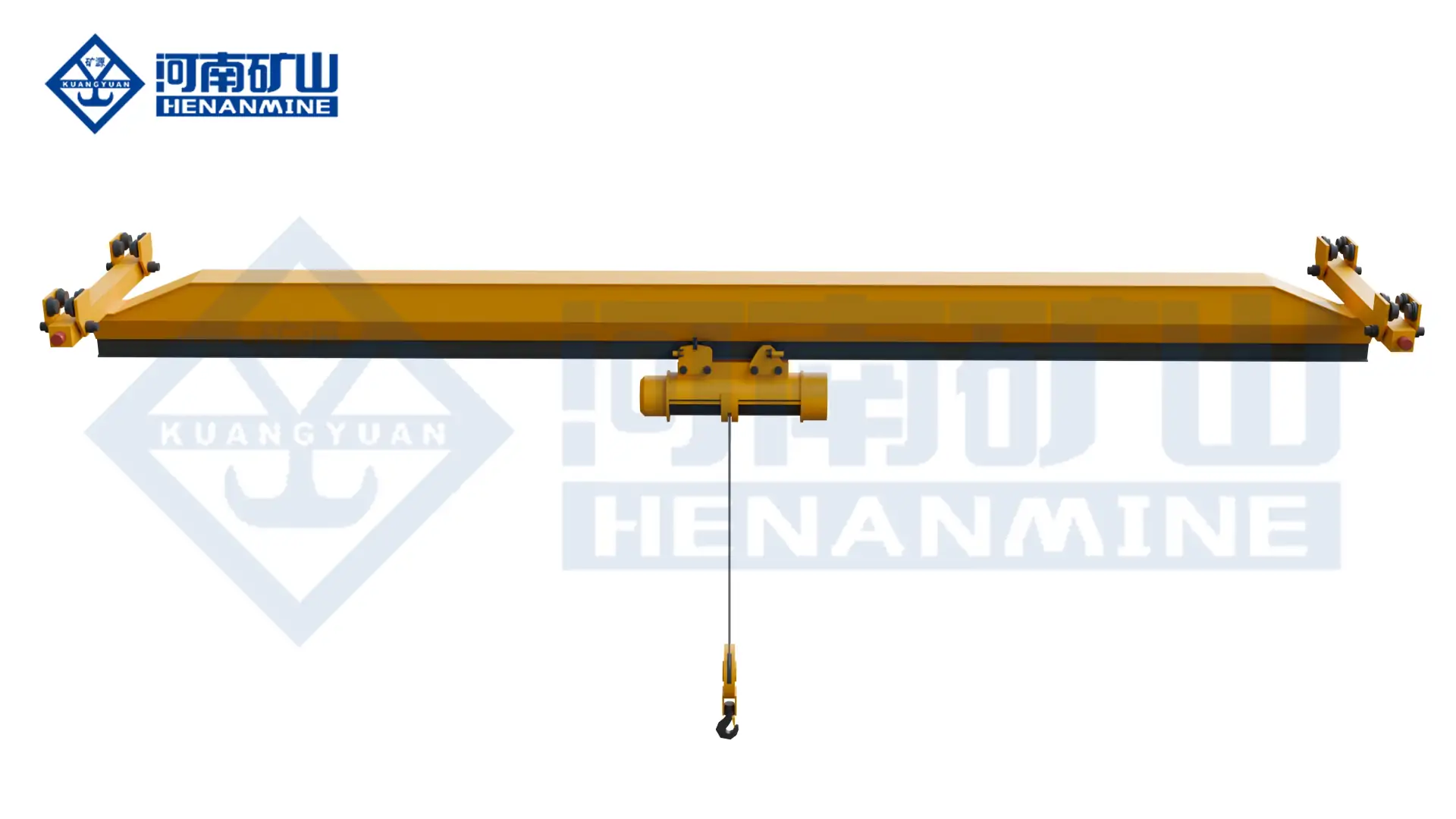
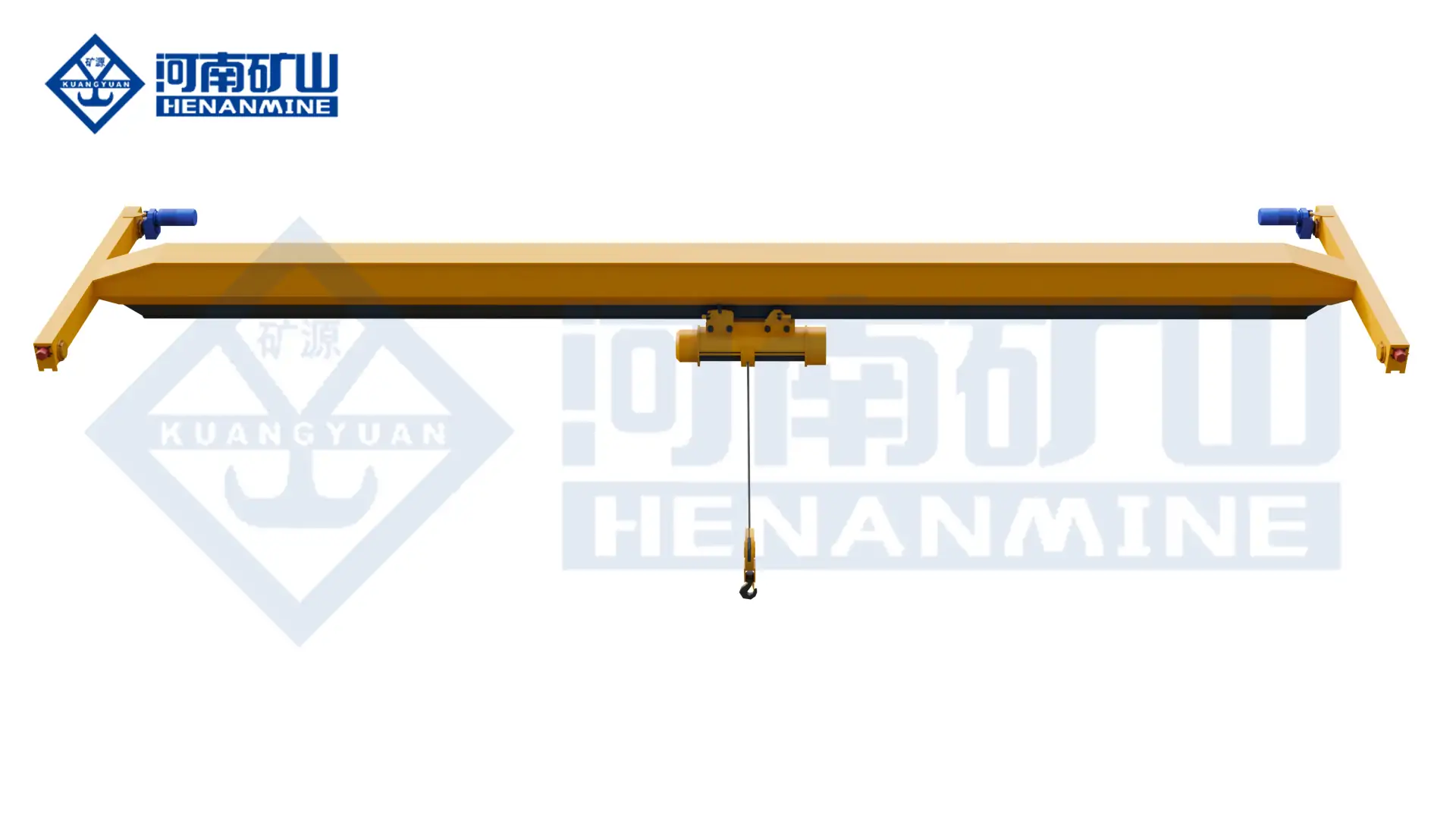
For a general indoor workshop, a single-girder electric-hoist crane is often the starting configuration. Double-girder, underhung and special-purpose designs are selected when headroom, runway conditions, operating frequency, environment or load-handling method requires a different solution.
5 t / 5,000 kg
Single Girder + Electric Hoist
Double Girder, Underhung, Special Purpose
Span, Lift, Duty, Control, Environment
Capacity And Application
Is A 5 Ton Overhead Crane The Right Capacity?
Choose the rated load from the maximum lifted load, below-the-hook device and required design margin—not from the average load alone.
A 5 ton bridge crane can handle machinery components, dies, steel fabrications, maintenance assemblies, packaged materials and other loads within its engineered limit. It is commonly considered when lighter shop cranes do not provide enough capacity, but a 10 ton system would add unnecessary equipment and building loads.
Define These Conditions Before Selection
- Maximum load, typical load and load dimensions
- Runway centerline span and required hook travel
- Available headroom and hook approach at both ends
- Lifts per hour, travel frequency and operating shifts
- Existing runway, new building or roof-suspended support
- Indoor or outdoor location and ambient conditions
- Pendant, radio remote, cabin or automated control
- Hazardous, high-temperature, dusty or corrosive exposure
Configuration Comparison
5 Ton Overhead Crane Configurations Compared
The same 5 ton rated capacity can be delivered by different crane structures. The correct choice depends on the building, lifting cycle, clearance and material-handling process.
| Configuration | When It Fits The Project | Engineering Implication | Product Detail |
|---|---|---|---|
| Single-Girder Overhead Crane | General workshop and warehouse lifting with a straightforward 5 ton handling cycle. | Uses an electric hoist travelling on or beneath the main girder; normally the first configuration evaluated for a standard indoor application. | View Single-Girder Crane → |
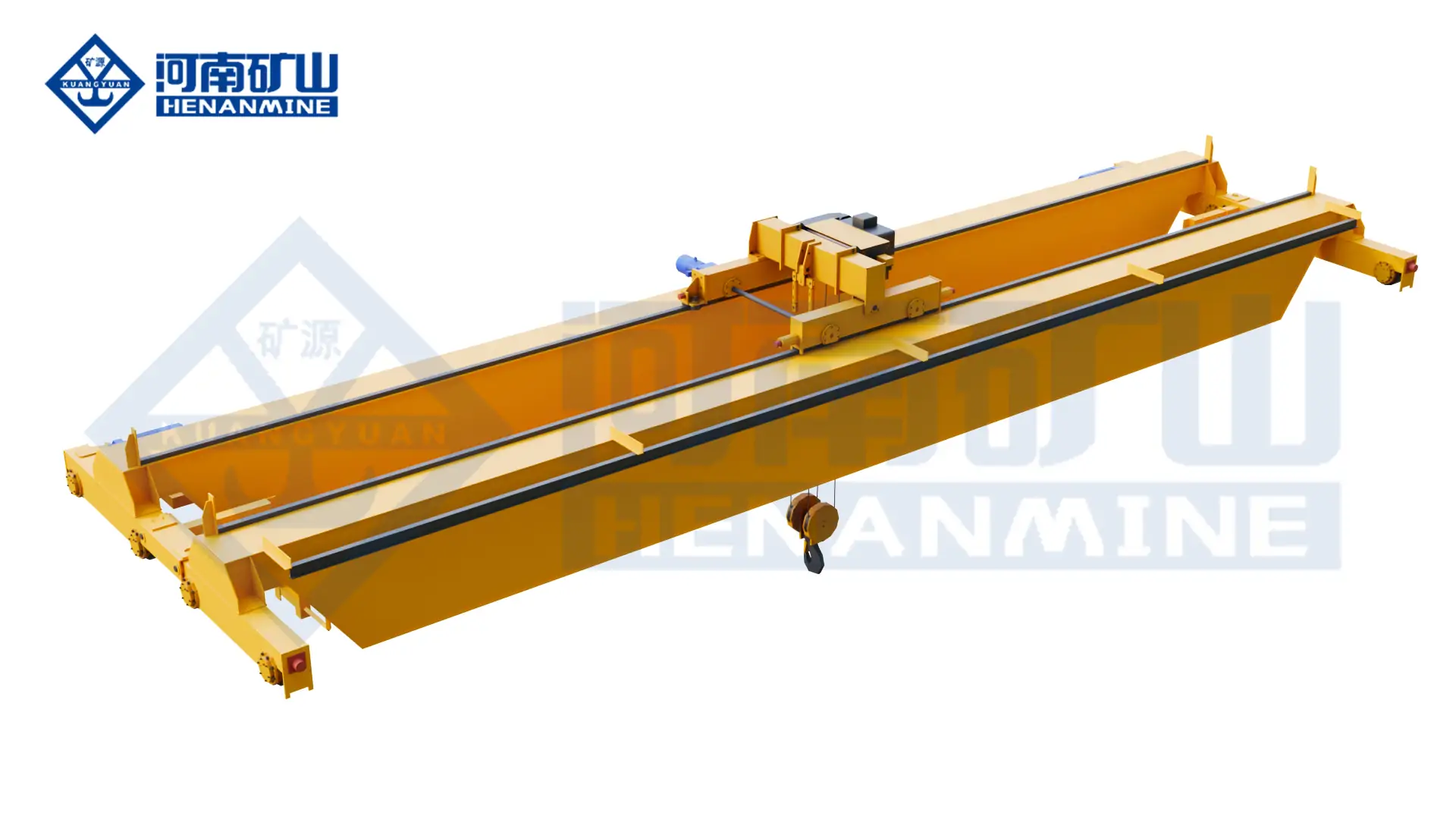
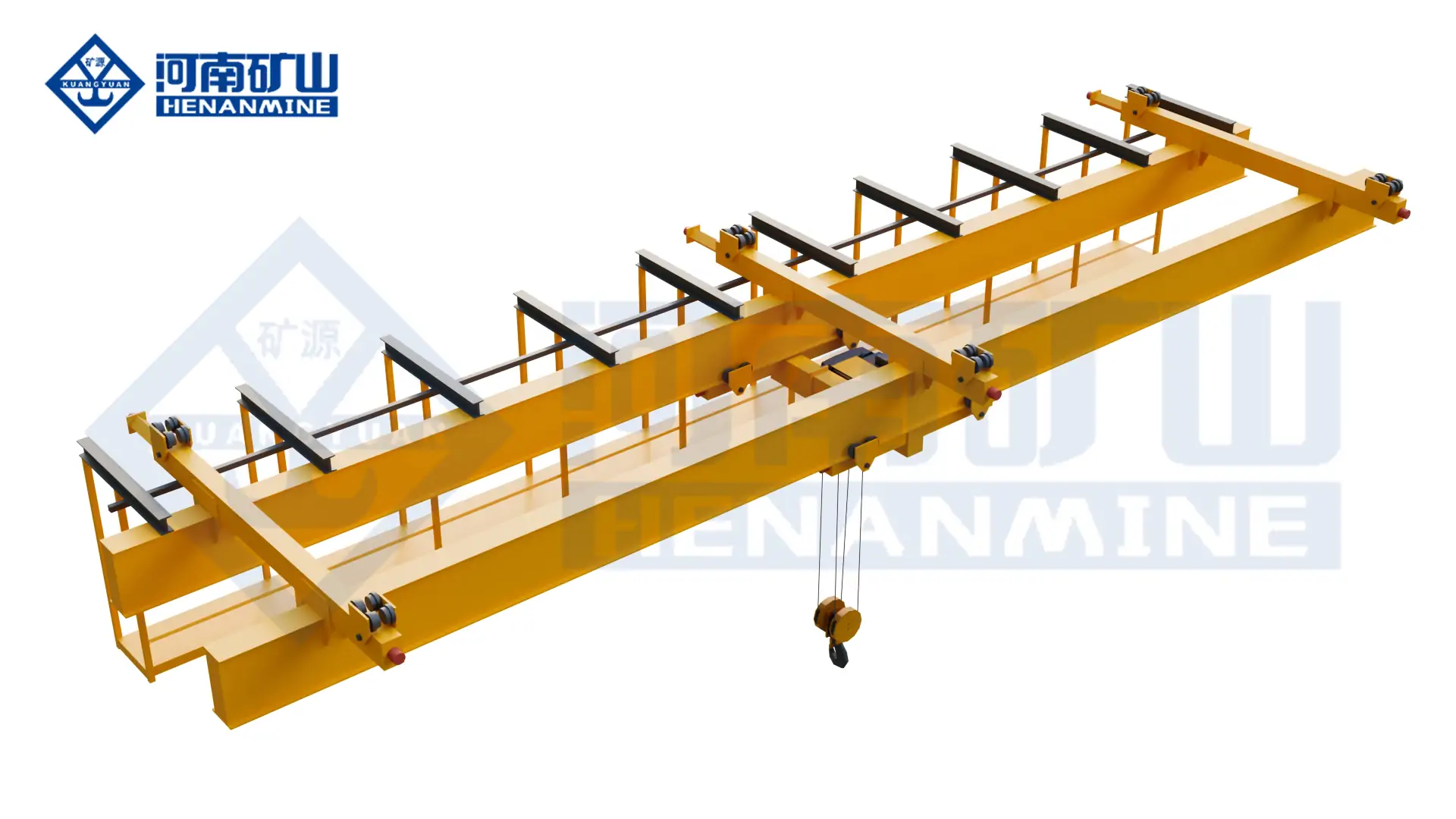
| Double-Girder Overhead Crane | Projects requiring a different hook arrangement, improved hook approach, higher-duty configuration or additional crane features. | Two main girders support the hoisting arrangement; crane depth, building clearance and runway loads must be checked together. | View Double-Girder Crane → |
| Underhung Overhead Crane | A suitable runway can be suspended from the roof structure and floor columns are undesirable. | The supporting building must be verified for suspended crane loads, and the runway geometry must match the underhung end-carriage design. | View Underhung Crane → |
| Explosion-Proof Overhead Crane | The working area has a formally defined hazardous gas or vapor classification. | Explosion-protection level, temperature class, electrical components and installation details must match the project classification. | View Explosion-Proof Crane → |
| Grab Overhead Crane | The crane handles loose bulk material rather than a suspended piece load. | Grab self-weight, material density, filling condition and required throughput affect capacity and mechanism selection. | View Grab Crane → |
| Electromagnetic Overhead Crane | Ferromagnetic steel plates, sections, scrap or similar loads are handled with a lifting magnet. | The magnet, electrical system, retained-load strategy and total suspended weight must be defined as one handling system. | View Electromagnetic Crane → |
| Metallurgical Overhead Crane | The crane works around molten metal, high heat or a metallurgical production process. | A general-purpose 5 ton crane is not a substitute. Thermal protection, safety architecture and working duty require a dedicated design. | View Metallurgical Crane → |
Typical Project Paths
Three Common Ways To Configure A 5 Ton Crane
Preliminary Specification
5 Ton Overhead Crane Specifications
Rated capacity is fixed at 5 tons. The remaining values must be engineered from the site dimensions and operating requirement; they should not be copied from a generic table.
| Rated lifting capacity | 5 t / 5,000 kg |
| Crane structure | Single girder, double girder, underhung or special-purpose configuration |
| Hoisting arrangement | Electric wire-rope hoist or project-specific trolley/mechanism |
| Span | Project-specific; confirm the distance between runway rail centerlines |
| Lifting height | Project-specific; confirm the required vertical hook travel and available headroom |
| Working duty | Selected from load spectrum, starts per hour, travel frequency and operating shifts |
| Hoisting and travel speeds | Single speed, dual speed or variable-frequency control according to process needs |
| Control method | Pendant, radio remote, operator cabin or automated control as applicable |
| Power supply | Matched to the destination country and facility power system |
| Operating environment | Standard indoor, outdoor or specially engineered for the declared conditions |
Operating Logic
How The Crane Moves The Load
A complete overhead crane coordinates three motions so the hook can serve the rectangular working area beneath the runway.
Hoisting Motion
The hoist raises and lowers the load. Brake selection, rope reeving, hook travel and speed control are matched to the handling cycle.
Cross Travel
The hoist or trolley moves across the bridge, positioning the hook between the runway sides.
Long Travel
The bridge travels along the runway, carrying the load between workstations, storage zones or production areas.
Protection And Control
Safety Features Defined Around The Application
Hoisting Protection
Overload protection, upper and lower travel limits, braking and emergency stop functions are selected and verified for the hoisting system.
Travel Protection
Buffers, travel limits, end stops and anti-derailment or wheel-protection details are applied according to the crane and runway design.
Controlled Motion
Dual-speed or variable-frequency control can reduce abrupt starts and load swing where smoother handling is required by the process.
Application-Specific Measures
Hazardous areas, molten-metal handling, lifting magnets and grabs require protection beyond a general-purpose 5 ton crane specification. Redundant braking, backup power or retained-load measures are defined where the application risk requires them.
Installation Readiness
Runway And Site Checks Before Installation
The crane can only perform as intended when the supporting runway and electrical system are ready. For an existing workshop, a site survey should confirm the actual rail gauge, elevation, straightness, clearances and access conditions rather than relying only on old drawings.
- Verify runway geometry and structural capacity
- Confirm clearances above, beside and below the crane
- Plan unloading, assembly and lifting access
- Prepare crane power feed and safe isolation
- Coordinate erection sequence with production and site safety
- Test crane motions, protection devices and rated-load performance before handover
Maintenance Focus
Maintain The Complete Lifting System
Inspection intervals should follow the applicable project requirements, operating intensity and manufacturer instructions. Typical checks include:
- Wire rope, hook and below-the-hook attachments
- Hoist brake and motion limit devices
- Wheels, rails, buffers and end stops
- Gearboxes, couplings and lubrication points
- Electrical enclosures, cables and controls
- Fasteners, weld areas and structural condition
Price And Scope
What Determines A 5 Ton Overhead Crane Price?
A reliable price requires more than the capacity. Two cranes rated at 5 tons can have different structural weight, mechanisms, controls, protection, installation scope and shipping requirements.
- Single-girder, double-girder or underhung structure
- Span, lifting height, hook approach and headroom
- Working duty and required motion speeds
- Standard or special operating environment
- Power supply, control method and automation level
- Runway, busbar, installation, commissioning and freight scope
Frequently Asked Questions
5 Ton Overhead Crane FAQ
Is a 5 ton overhead crane the same as a 5 ton bridge crane?
In common industrial usage, both terms describe a crane whose bridge travels on a fixed runway above the working area. “Overhead crane” is the broader market term, while “bridge crane” emphasizes the travelling bridge structure. A 5 ton EOT crane is also an electric overhead travelling crane in this same equipment family.
Should I choose a single-girder or double-girder 5 ton crane?
A single-girder electric-hoist crane is commonly evaluated first for routine workshop lifting. A double-girder arrangement may be more appropriate when the hook position, duty, clearance, maintenance access or additional features require it. The building section and operating cycle should decide the structure.
Can the span and lifting height be customized?
Yes. The span is engineered from the runway rail centerlines, while lifting height is based on the required hook travel and available headroom. Providing a workshop cross-section helps confirm both values.
How much does a 5 ton overhead crane cost?
Price depends on structure, span, lifting height, duty, speeds, controls, environment, electrical scope, runway scope, installation and freight. A project-specific quotation is more useful than a capacity-only price.
Can a 5 ton crane be installed in an existing workshop?
It can be considered after checking the existing runway, columns or roof supports, clearances, electrical supply and installation access. A site survey or accurate as-built drawings are important before final engineering.
Can I use a standard 5 ton crane in a hazardous or high-temperature area?
Not without a dedicated engineering review. Hazardous locations require a defined explosion-protection specification, while metallurgical and high-temperature processes require application-specific protection and safety design.
What should I send to receive a quotation?
Send the maximum load, span, lifting height, operating frequency, building drawing, power supply, control preference, environment, destination and required supply scope. Include the weight and type of any magnet, grab, lifting beam or other attachment.
How long does delivery take?
Delivery depends on final engineering, crane configuration, special components, production schedule, inspection requirements and transport route. The delivery plan should be confirmed after the technical scope is agreed.
Project Enquiry
Request A 5 Ton Overhead Crane Quote
Share your span, lifting height, load details, working frequency, building drawing and destination. Henan Mine Crane will configure the structure and scope around your actual lifting requirement.