
How Ship to Shore Cranes are Revolutionising Port Operations Around the World
How Ship to Shore Cranes are Revolutionising Port Operations Around the World
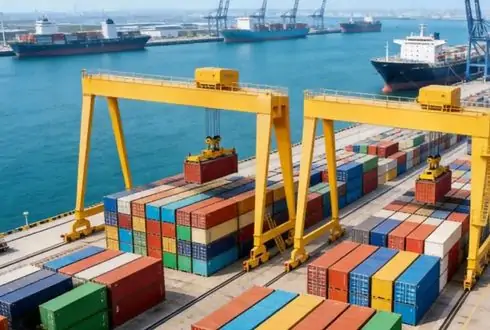
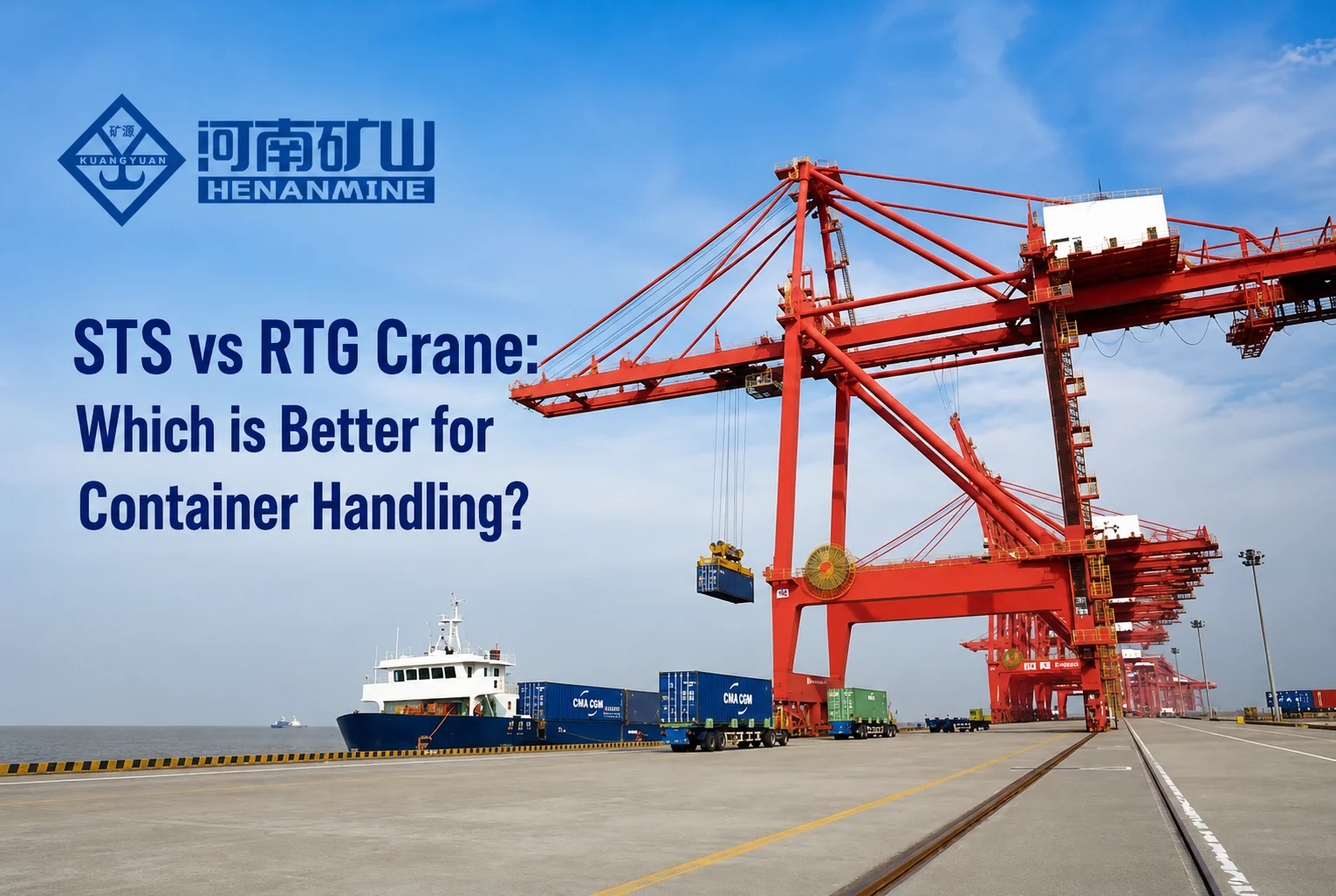
The continuous expansion of global trade and the accelerated large-scale container ships have made efficient, intelligent and stable loading and unloading capabilities the core competitive barriers for ports.The new generation of Ship-to-shore Crane subverts the traditional port stagnation, inefficiency, and congestion operation shortcomings. Relying on large-load performance, fast loading and unloading technology, intelligent anti-swing, and automatic control technology, it effectively improves the ship turnover speed and the overall throughput of the terminal, comprehensively optimizes the operation process of the port area, helps modern smart ports accurately adapt to the berthing needs of large ships, and continuously improves the efficiency of cross-border logistics operations.
Why Ship-to-Shore Cranes Are Transforming Modern Port Operations
The core competitiveness of modern ports has long been transformed from a simple number of berths and site scale to comprehensive capabilities such as ship turnover speed, container throughput efficiency, and operational stability.The traditional old port loading and unloading cranes have a limited operating radius, slow loading and unloading speed, and a single adapted ship type, which is completely unable to match the current pace of development of the global shipping industry.Relying on the core advantages of customization, high performance and high adaptability, modern ship and shore port cranes accurately crack the pain points of modern port operations, become the core driving force for the digitization and large-scale transformation of smart ports, and enable high-quality port operations in all directions.
Larger vessels
At present, ocean-going shipping has fully entered the era of large-scale ships, and 24,000 TEU ultra-large container ships have become the main force of shipping. Their wide decks and high-rise container stacking requirements make it difficult for traditional small port shore bridges to adapt, which can easily cause problems such as large ships being stuck in port and low berth utilization.Henan Mine Crane manufactured self-developed new-generation large-scale ship-to-Shore Crane has undergone special structural upgrades. It has a large extension distance, ultra-high lifting height and large rated load. It can realize the loading and unloading of large ships without dead ends in all compartments, and is perfectly adapted to the operation of ultra-large container ships. Comprehensively enhance the port's ability to undertake large-scale routes.
Faster turnaround
Ship turnover efficiency is the core competitiveness of the port. The traditional old STS shore bridge has slow start and stop, poor alignment accuracy, and high failure rate, which can easily cause ships to stay in port for a long time and drive up shipping logistics costs.Our modern and intelligent ship-to-Shore Crane is equipped with an optimized transmission structure and an intelligent control system, which runs smoothly, has fast loading and unloading speed, accurate alignment, and supports 24-hour uninterrupted and stable operation.Multi-equipment collaborative operation can greatly compress the length of single-ship operation, effectively avoid manual errors and equipment downtime problems, and significantly improve the berth turnover rate and the overall logistics timeliness of the port.
Higher throughput
As the global container trade volume continues to rise and the frequency of shipping continues to increase, the operating efficiency of traditional port lifting equipment is short, which seriously restricts the increase in port throughput, resulting in idle waste of terminal berths and site resources.Our new generation of efficient Ship-to-Shore Crane has been fully upgraded in performance, relying on faster loading and unloading speed, wider operation coverage and stable continuous operation capabilities, and with a smart port intelligent dispatching system, it can fully tap the potential of berth operations.Practical cases of landing in multiple smart ports have proved that the annual throughput of the terminal can be significantly increased after upgrading the equipment, helping the port to break through the upper limit of capacity.
How Ship-to-Shore Cranes Improve Container Handling Efficiency
Container loading and unloading is the core link of port operations, and the efficiency of loading and unloading directly determines the overall operation level of the port and the customer experience.Traditional container loading and unloading operations have cumbersome processes, slow alignment, site congestion, and high loss rates, which not only slow down the pace of operations, but also increase port operation and maintenance and logistics costs.Through the optimization of mechanical structure, simplification of operating processes, and the empowerment of intelligent technology, the new generation of automated ship-to-Shore Crane upgrades the efficiency of port container handling in all directions from the three dimensions of loading and unloading speed, operating range, and site circulation, and realizes refined and efficient operation of port operations.
Faster loading cycles
The traditional manual operation of the shore bridge relies on manual operation, the movement connection is blunt, the alignment is repeatedly adjusted, the loading and unloading cycle takes a long time and the stability is poor, which seriously drags down the rhythm of port operations.Our newly upgraded high-speed ship-to-Shore Crane is equipped with an intelligent frequency conversion control system and a dual-car collaborative structure to realize multi-action synchronous linkage, and cooperate with the precise positioning assistance system to automatically complete the alignment, lock the box and drop the box operations, greatly compressing the invalid operation time.The overall loading and unloading efficiency of the equipment has been greatly improved, the operation has been smoother and more stable, and the whole process of loading and unloading of containers in the port has been effectively accelerated, helping the port to significantly increase the volume of single-hour operations.
Greater outreach
The extension distance of the traditional old fixed shore bridge is too small to cover the wide deck operating area of large container ships, and it needs to be shifted and adjusted frequently. Not only is the operation efficiency low, but it will also exacerbate equipment wear and breed safety hazards.Our optimized structural design of a new generation of large out-of-reach ship-to-Shore Crane has a large operating out-of-reach, which can fully cover the deck operating area of ultra-large ships without frequent movement of the whole machine, completely eliminating invalid processes such as operation blind spots and repeated alignment.The larger operation coverage has streamlined the terminal operation process, optimized the equipment layout, and improved the overall loading and unloading efficiency of the port in all directions.
Reduced congestion
The unstable rhythm of port loading and unloading, container accumulation, and congestion of transportation vehicles are the core pain points that restrict the efficiency of terminal circulation. Traditional inefficient port lifting shore bridges can easily cause a vicious circle of operations.Henan Mine Crane manufactured modern and intelligent dispatching Ship-to-Shore Crane has a stable and efficient loading and unloading rhythm, which can realize the instant unloading and transfer of containers, and the instant loading and leaving, so as to prevent the accumulation and retention of goods from the source.The equipment can be seamlessly connected to the smart port dispatching system, intelligently match the yard inventory and vehicle movement lines, rationally allocate operating resources, avoid vehicles getting together and waiting, effectively dredge the terminal operation link, greatly reduce the probability of congestion in the port area, and make the port logistics flow more efficient and smooth.
How Automation Is Changing Ship-to-Shore Crane Operations
With the rise of the global wave of smart port construction, automation and intelligent technology have become the core directions of the iterative upgrading of the port Ship-to-Shore Crane.The traditional manual operation mode has many shortcomings such as high labor intensity, high labor costs, large operating errors, and restricted operations in bad weather. The full implementation of automation technology has completely reconstructed the operation mode of the port shore bridge, realizing the transformation of port loading and unloading operations from manual leadership to intelligent autonomy, greatly improving operation safety, stability and efficiency.
Remote operation
The traditional high-altitude manual operation mode of port lifting machinery has a difficult environment and high labor intensity. It not only has great safety risks, but it is also vulnerable to severe weather such as heavy rains and strong winds, and cannot guarantee all-weather operations.Our remote control ship-to-Shore Crane is equipped with high-definition transmission and high-precision remote sensing system, which supports remote automatic control of the ground central control room, with clear pictures and accurate alignment throughout the process.The new operating mode completely avoids the risk of high-altitude operations, is not limited by extreme weather, can achieve 24-hour uninterrupted operation, and can also realize single-person multi-machine control, greatly reducing the labor operation cost of the port.
Anti-sway technology
Container shaking is a common problem in the operation of traditional port shore bridge equipment. It can easily slow down the progress of the operation and damage the cargo equipment. The stability of the operation depends entirely on the experience of the driver and cannot be standardized and controlled.Our new-generation Ship-to-Shore Crane, equipped with intelligent anti-swing technology, can monitor container swing data in real time through high-precision sensors, and dynamically adjust equipment operating parameters relying on intelligent algorithms to quickly offset swing inertia.The technology adapts to various types of wind and operating scenarios without manual intervention, greatly shortens the time to stabilize the box, improves the alignment accuracy, effectively reduces the operation error rate and equipment loss, and significantly improves the safety of port loading and unloading and operating efficiency.
Smart monitoring
The traditional old-fashioned shore bridge relies on manual inspection and post-mortem maintenance. The investigation of hidden dangers is not timely, and frequent equipment failures can easily cause the terminal to shut down and operations to be interrupted.We configure a full set of intelligent monitoring systems for intelligent monitoring ship-to-Shore Crane, equipped with multiple types of high-precision sensors, and continuously collect data on equipment operation, mechanical loss and working conditions 24 hours a day.The system predicts potential failures through intelligent analysis of big data, gives early warning and guides accurate maintenance, completely changes the passive operation and maintenance mode, effectively reduces the equipment failure rate, extends the service life of the equipment, and guarantees the continuous and stable operation of port loading and unloading operations in all directions.
How Ship-to-Shore Cranes Support Global Trade Growth
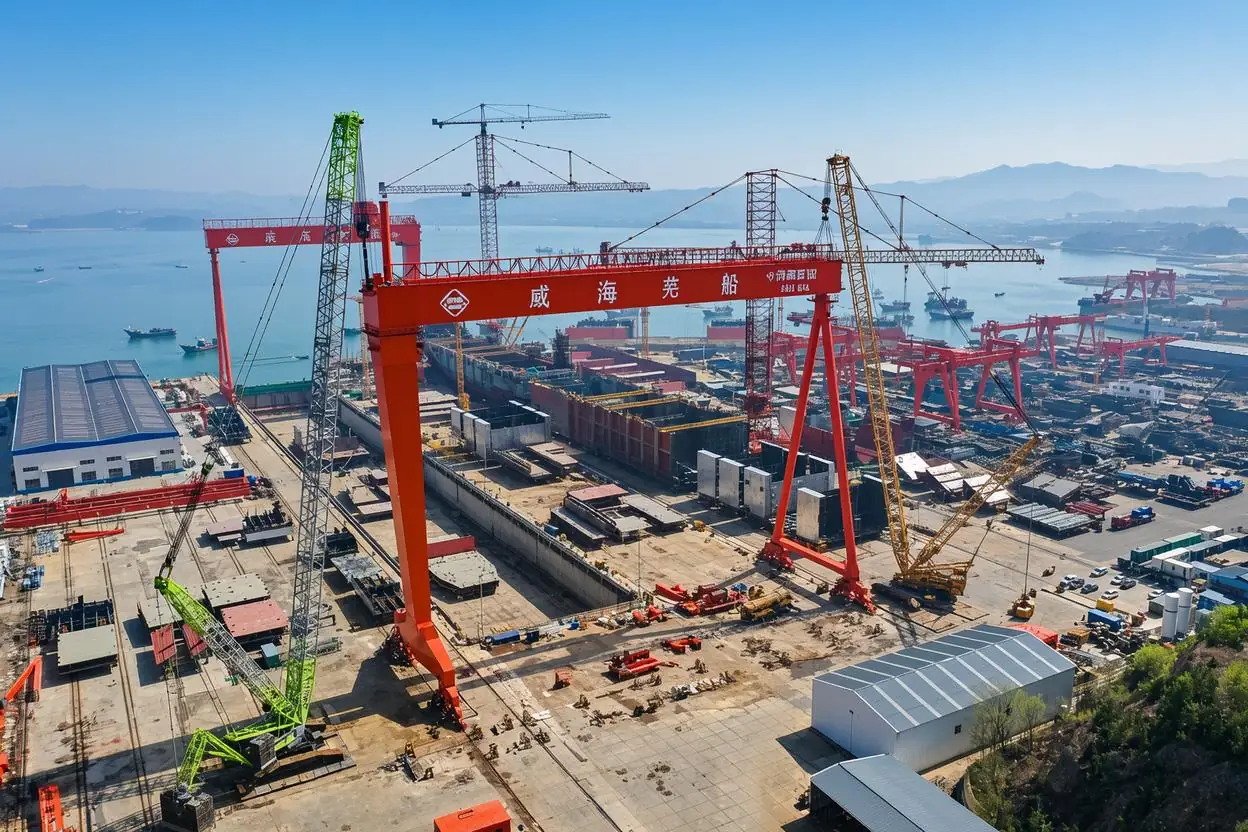
The continuous growth of global trade is inseparable from the efficient support of port logistics.With the continuous expansion of cross-border e-commerce, ocean-going trade, and global supply chain layout, global container traffic has maintained a steady growth trend all year round.As the core loading and unloading equipment of the port, the intelligent Ship-to-Shore Crane's performance upgrades and technological iterations directly match the large-scale and efficient development needs of global trade, and it has become an important hardware support for driving global trade circulation and stabilizing the supply chain system.
Growing container volumes
The volume of global container trade has skyrocketed year by year, and the demand for all kinds of cross-border cargo transportation has continued to rise, putting forward higher requirements for the ability of ports to load and unload quickly and efficiently. It is difficult for traditional old port lifting equipment to withstand peak operating pressure.Our modern high-throughput ship-to-Shore Crane has high-intensity, continuous operation capabilities, stable operation and high throughput efficiency. It can calmly cope with the large workload during the peak trade season and effectively avoid problems such as cargo backlogs and route delays.With reliable operating performance, it adapts to the incremental needs of global container trade in all directions, and provides solid equipment support for the efficient logistics and circulation of ports.
Larger container ships
The shipping industry has fully entered the era of large-scale ships, and 20,000 TEU-class super-large ships have become the main force of ocean-going transportation, but the old and small port shore bridge equipment cannot be adapted to its operating needs, resulting in most small and medium-sized ports unable to undertake ocean-going main routes.Henan Mine Crane manufactured high-end customized Ship-to-Shore Crane we developed has large loads, ultra-wide extensibility and high stacking capabilities, which can be perfectly adapted to all kinds of ultra-large container ship loading and unloading operations.Help ports open more ocean-going routes, increase the volume of cargo per voyage, reduce overall logistics costs, and effectively promote the large-scale and intensive development of regional and global trade.
Higher terminal capacity
Most traditional ports have sufficient berths and yard resources, but they are limited by the performance of old equipment, there is a significant upper limit on terminal throughput capacity, and the resource utilization rate is extremely low.Our new generation of large-scale intelligent ship-to-Shore Crane relies on the core advantages of efficient loading and unloading, intelligent control and stable operation to fully tap the idle potential of terminal berths and yards, and greatly increase the operating capacity per unit time and area.The upgrading of port shore bridge equipment can comprehensively improve the terminal's freight undertaking capacity and cargo distribution efficiency, strengthen the port's trade radiation capacity, and provide core hardware support for global trade expansion and cross-border supply chain stability.
Key Challenges When Upgrading Ship-to-Shore Cranes
The upgrading and transformation of ship-to-shore Crane is the core measure of the intelligent and efficient transformation of the port, which can enhance the competitiveness of port operations in all directions, but in the process of actual upgrading and landing, port enterprises generally face multiple practical problems.Issues such as terminal infrastructure adaptation, port shore bridge parameter customization, construction and installation planning, etc. directly affect the upgrade cost, construction cycle and landing effect, and need to be combined with the actual working conditions of the terminal for scientific planning and precise landing.
Terminal infrastructure
Henan Mine Crane manufactured modern large-scale intelligent ship-to-Shore Crane has been greatly upgraded in weight, load and size, and has strict requirements for infrastructure standards such as dock foundation, track, power supply and communication.Most old port infrastructure is built according to small traditional equipment, with insufficient carrying capacity and aging supporting facilities, which cannot be adapted to the operating needs of new equipment.Direct replacement of equipment can easily cause safety failures, and large-scale refurbishment will drive up costs and shut down work.We can combine the original infrastructure data and equipment parameters of the terminal to customize a lightweight adaptation and transformation plan, taking into account the operation safety, transformation cost and construction efficiency of the shore bridge equipment.
Crane specifications
The customization of ship-to-shore Crane parameters is the core key of port upgrading. The berthing conditions, ship type structure, and operating volume of different terminals vary greatly, and there is no universal adaptation to port shore bridge equipment.Too small parameter selection will cause efficiency bottlenecks, and too large selection will cause excess performance and waste of resources. At the same time, it is necessary to take into account the compatibility of the equipment with the terminal dispatching system.Relying on our rich experience in port machinery manufacturing, we can accurately customize parameters such as lifting height, extension distance, and intelligent configuration according to the short-term operating needs of the port and long-term expansion planning to avoid upgrade risks and ensure maximum equipment benefits.
Installation planning
Ship-to-Shore Crane is a super-large port machinery equipment. The installation process is cumbersome and the technical threshold is high. The port cannot stop construction for a long time, which brings great challenges to equipment upgrading.The demolition of old equipment, the hoisting and wiring of new equipment, intelligent debugging, and safety calibration require rigorous process planning and professional technical teams.We have a mature on-site construction plan for the installation of port shore bridges, which can scientifically arrange the construction procedures, strictly control on-site safety and installation accuracy, and complete the installation and commissioning of equipment while minimizing the impact of port operations to ensure that new equipment is put into operation quickly and stably. Efficiency increase.
The Future of Ship-to-Shore Cranes in Smart Ports
The construction process of global smart ports continues to accelerate, and greening, intelligence, efficiency and energy saving have become the core trends in the development of port equipment.As the core loading and unloading equipment of the port, the technological iteration of the intelligent Ship-to-Shore Crane has never stopped. In the future, it will continue to upgrade in the three directions of deep automation, low-carbon energy-saving, and modular customization, fully adapting to the future unmanned, green, and high-capacity operation needs of smart ports, and continue to lead the innovation of the global port format.
Advanced automation
Smart ports are iterating towards completely unmanned operations, and traditional semi-automated port shore bridges still require manual intervention, which is difficult to adapt to the future development needs of high-end terminals.In the future, automated Ship-to-Shore Crane will deeply integrate 5G, artificial intelligence, machine vision and digital twin technologies to realize unmanned and autonomous operation of the whole process of loading and unloading operations.The equipment can automatically complete ship alignment, container identification, precise operations and exception handling, and can also be linked and coordinated with various smart devices in the terminal, cooperate with AI independent learning to continuously optimize the operation logic, adapt to complex working conditions in all directions, and create an efficient and intelligent unmanned terminal operation system.
Energy efficiency
Under the dual-carbon policy, green energy conservation has become the core standard for the construction of smart ports. The high energy consumption and large carbon emissions of traditional old-fashioned ship and shore bridges are not in line with the development trend of the industry.In the future, the new energy-saving ship-to-Shore Crane will focus on low-carbon energy-saving design, equipped with a frequency conversion energy-saving control system and an energy recovery device, which can recycle redundant energy during operation and significantly reduce energy consumption and carbon emissions.At the same time, it is equipped with a lightweight structure, low-loss accessories and a silent system to achieve low-energy, low-noise and zero-pollution operations, helping the port to build a green and low-carbon operation model and reduce long-term operation and maintenance costs.
Future-ready designs
Port shipping technology and market demand continue to iterate, and the traditional fixed port shore bridge function is difficult to cure and upgrade, and it is easy to be quickly eliminated by the industry.In the future, the new generation of modular ship-to-Shore Crane adopts a forward-looking modular design, and the high-strength lightweight steel structure is adapted to various terminal infrastructure scenarios. At the same time, an intelligent upgrade interface is reserved, which can flexibly expand functions and update the system according to the needs of port development, without the need to replace equipment as a whole.Standardized general-purpose accessories greatly simplify late-stage operation and maintenance, effectively reduce the cost of the whole life cycle of equipment, and adapt to the development needs of long-term iterative upgrading of smart ports.
Henan Mine Crane Factory Custom
Ship-to-Shore Crane is the core equipment for the upgrade and iteration of modern smart ports. It has effectively solved various operational problems such as inefficient traditional port operations, congestion, and poor adaptability. With the outstanding advantages of intelligent automation, energy saving and high efficiency, and adaptation to large ships, it comprehensively empowers the development of global ports and cross-border trade.As a professional port crane manufacturer, Henan Mine Crane Factory is deeply engaged in ship-to-shore crane research and development customization, which can solve the upgrading problems of terminal infrastructure adaptation, installation and commissioning, parameter selection, etc. in a targeted manner, and provide high-adaptability and long-life high-quality port shore bridge equipment to help major ports reduce costs and increase efficiency, and embrace the future development trend of intelligence and greening.