
What Port Crane Design Is Best for High-Wind Coastal Areas
Coastal high-wind ports are affected by typhoons, strong gusts of wind and alternating land and sea monsoons all year round, and complex working conditions such as high salt spray and strong wind pressure are superimposed, which can easily cause high-wind-resistant port cranes to slip and shift, structural deformation, stagnation or even overturn, directly affecting the safety of coastal terminal operations and the efficiency of port operations.For coastal deep-water ports, lingang depots and various coastal operating bases, the selection and design of port cranes in high-wind areas are essential. Reasonable port crane models and professional wind-resistant configurations can effectively avoid extreme weather risks, reduce the loss of large-scale port machinery and equipment, stabilize the port's all-weather operating capacity, and reduce the long-term operation and maintenance costs of coastal port aircraft. It is the core key to the deployment of high-wind coastal port equipment.
How High Winds Affect Port Crane Design and Operation
The coastal high-wind marine environment is not simply windy weather, but a composite load condition that includes continuous monsoons, sudden gusts of wind, typhoon-level strong winds, and wind vibration shocks. It will comprehensively affect the design standards of cranes in coastal ports and the daily operation mode of terminals from the three dimensions of structural force, overall machine stability, and operating specifications.The general design scheme of ordinary port cranes is completely unable to adapt to the special marine environment of high wind pressure, high wind vibration, and strong turbulence along the coast. This is also the core reason for the frequent failures and insufficient stability of port machinery and equipment in high-wind coastal areas.
Wind loads
The wind load of coastal ports is the core control index of the design of wind-resistant port cranes. Compared with ordinary inland working conditions, the coastal wind pressure is higher and the wind fluctuation is stronger. Accompanied by the effect of high-frequency wind vibration, the national standard stipulates that the wind speed of the non-working design of high-wind coastal port cranes can reach 55m/s, and the ultimate wind pressure load is significantly higher.Continuous wind will produce thrust and pull torque on the main beams, door frames and other structures of the port machinery, causing fatigue deformation. Sudden gusts of wind can easily cause structural resonance and component damage. The corrosion effect of coastal salt spray will continue to weaken the wind-resistant bearing capacity of port lifting equipment and accelerate the aging and damage of large port machinery equipment.
Crane stability
The high-wind coastal environment will completely break the force balance of port crane operations, seriously damage the static and dynamic stability of port machinery and equipment, and greatly increase the risk of capsizing of coastal port machinery.During hoisting operations, the center of gravity offset caused by floating hoisting is superimposed on the lateral wind, which will continue to increase the overturning torque of the crane in the coastal port. The orbital port crane is susceptible to horizontal wind and will slip, derail and deform the track, while the mobile port crane will experience uneven force on the outriggers, tilt of the fuselage, and loss of control of the hoisting. Problems.Long-term wind vibration will also loosen the anchor bolts and anchoring structure, completely damaging the stable foundation of the special port machinery for high winds.
Operational limits
High coastal wind and weather will strictly limit the operating conditions and operating time of port cranes, which directly restricts the overall operating efficiency of coastal ports. Industry regulations clearly state that the critical wind speed for coastal port crane operations is 15m/s, and the fixed lifting equipment must be stopped immediately after the wind speed exceeds the standard.During the high incidence of monsoons and typhoons, coastal ports need to be frequently closed and shut down, and the effective operation time is greatly reduced, and high winds will cause the hoisting swing to get out of control and the accuracy of hoisting alignment to decrease, making it impossible to complete standardized port loading and unloading operations.Frequent downtime inspections and maintenance of port machinery and equipment have further increased terminal operating costs and reduced port throughput efficiency.
Which Port Crane Designs Perform Best in High-Wind Areas?
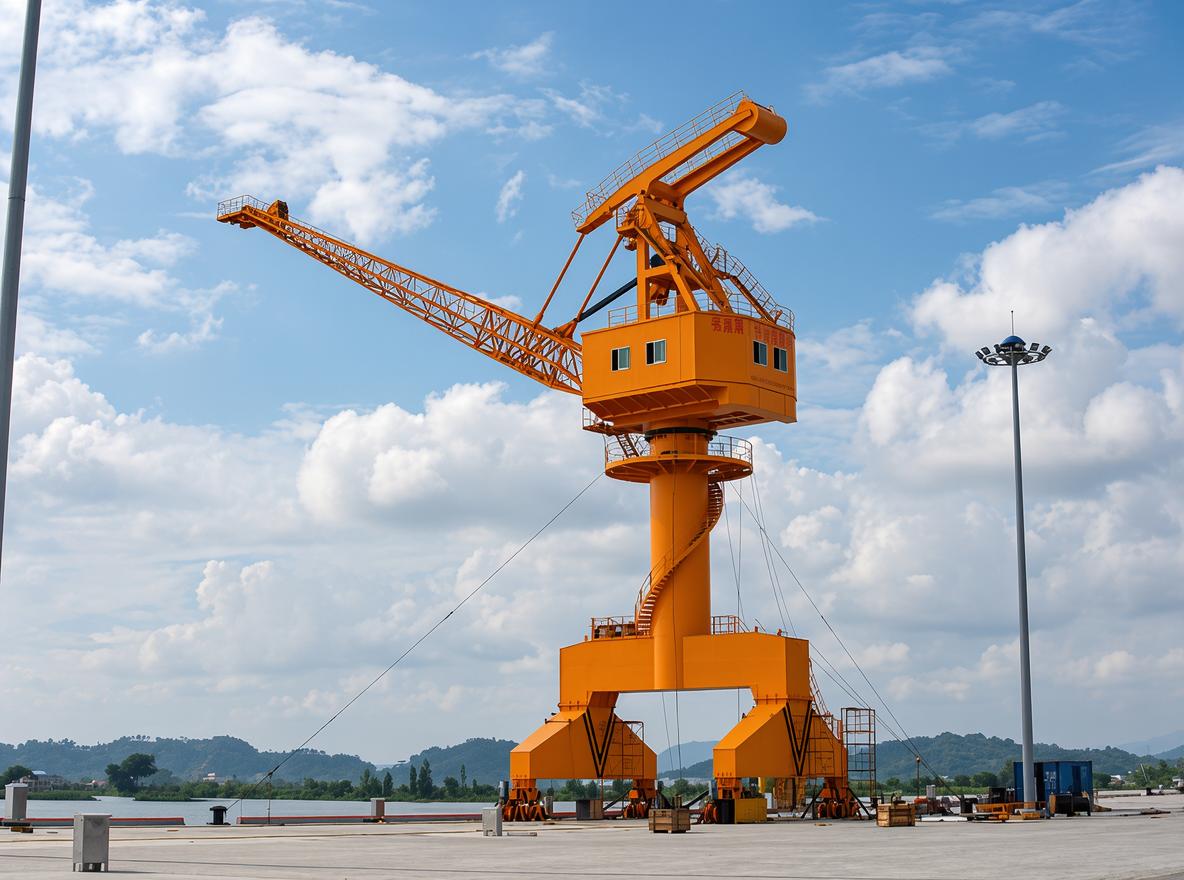
The wind resistance coefficient, structural stability, and wind resistance carrying capacity of Henan Mine Crane Factory supply port cranes of different structural types vary greatly, and the adapted high-wind coastal working conditions are also different.Combined with many years of experience in the landing of coastal port projects, wind-resistant gantry cranes, mobile port cranes, and ship-shore bridge cranes have become the mainstream and preferred port machinery models in high-wind coastal areas due to their differentiated structural advantages, which are suitable for different coastal terminal sizes and port loading and unloading operations.
Gantry crane design
Wind-resistant gantry port crane is the preferred wind-resistant equipment for small and medium-sized coastal terminals and bulk cargo depots. The integrated frame structure has uniform and symmetrical force, low center of gravity, small wind resistance, and excellent anti-overturning performance. It can effectively disperse coastal wind loads and wind vibration shocks.Coastal custom gantry cranes use streamlined main beams to reduce the windward area, with double rigid legs to enhance structural stiffness, and with a full set of port machinery windproof and anti-skid devices, they can maintain zero equipment slippage at high wind speeds of 35m/s, adapt to coastal gusts and monsoon conditions, and have stable port operation capabilities and low port machinery operation and maintenance costs.
Mobile harbor cranes
Henan Mine Crane Factory supply wind-resistant mobile port crane is suitable for coastal temporary docks and multi-berth rotating operation scenarios. The chassis counterweight sinking structure has excellent anti-overturning ability, without the need for fixed tracks and civil foundations.Gaofeng customized mobile port aircraft optimized the boom structure, shortened the length of the windward cantilever, and equipped with an adaptive outrigger balance system, which can adjust the support force in real time and keep the fuselage stable.In the non-operating state, the boom can be quickly retracted and the walking mechanism can be locked. It is equipped with a simple port aircraft anchoring device, which can effectively resist medium-intensity typhoons, taking into account the flexibility of port operations and the adaptability of the high-wind marine environment.
Ship-to-shore cranes
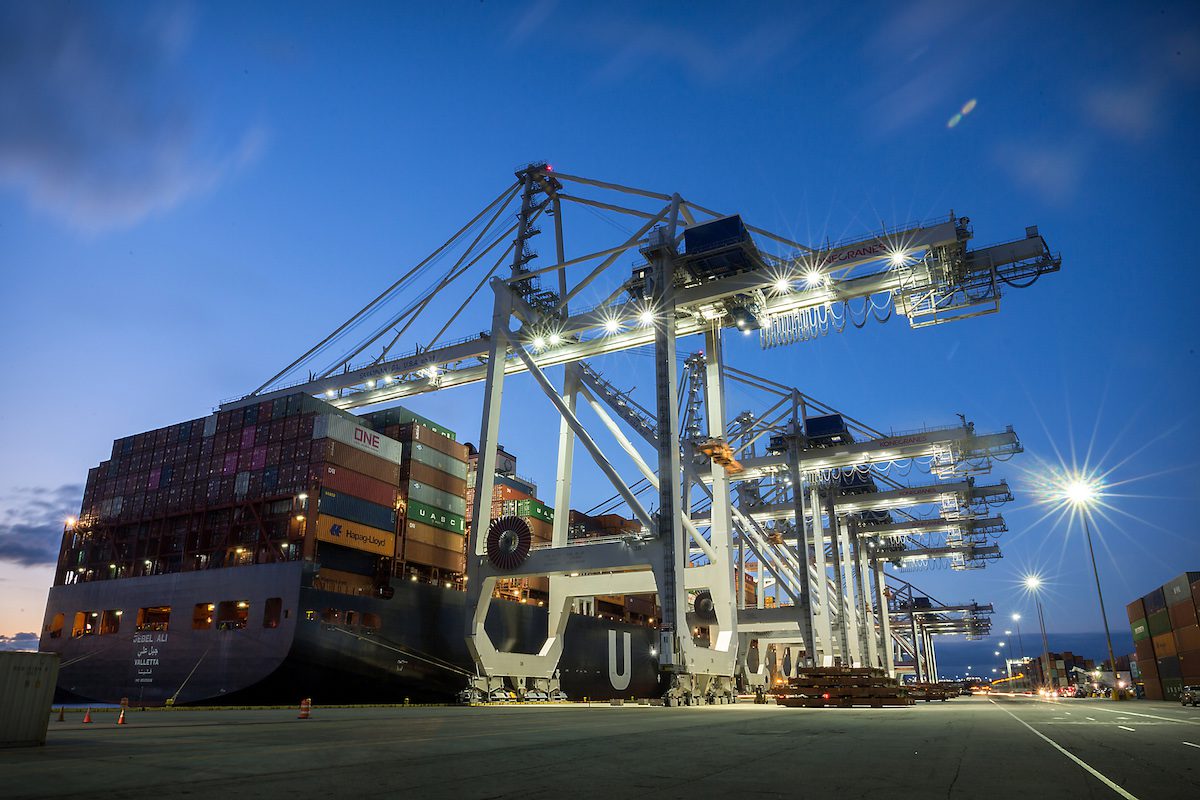
The ship-shore bridge crane is the core loading and unloading equipment of large-scale deep-water container coastal ports. The original large-span and high-fuselage design has excessive wind resistance, but after special port machinery wind resistance optimization, it can be adapted to high-typhoon coastal working conditions.The equipment adopts high-strength box-shaped main beam and reinforced door frame to strengthen the overall structural stiffness and resist wind vibration and resonance. The boom can be completely retracted in non-operating conditions to minimize the windward load.With intelligent windproof, track locking and multiple anchoring devices, it can withstand typhoon-level wind speeds above 55m/s, taking into account the loading and unloading capacity of large-tonnage ports and the operating stability of port aircraft in extreme weather.
What Features Make a Port Crane More Wind-Resistant?
The wind resistance of port cranes does not rely on a single structural optimization, but on a comprehensive combination of structural design + windproof system + locking device.Ordinary inland port aircraft can only meet conventional breeze conditions, while port aircraft adapted to coastal high-wind environments must be equipped with exclusive wind-resistant configurations, from the three dimensions of active windproof, passive protection, and emergency locking, to build a full-scene wind-resistant protection system.
Anti-wind systems
The port smart windproof system is the core configuration of the active windproof of port cranes. It relies on high-precision wind speed sensors, intelligent control and sound and light early warning equipment to realize 24-hour real-time coastal wind monitoring, data collection and working condition identification.The system can accurately capture gusts of wind, sustained high winds and the precursor of typhoons. When the wind speed reaches 12m/s, it will automatically warn of shutdown, and if it exceeds 15m/s, it will be forced to interlock and lock the operating mechanism to eliminate the risk of illegal operation of coastal port machinery.The high-end wind-resistant port aircraft model is equipped with a wind vibration damping system, which can offset the structural resonance and effectively adapt to the coastal high-frequency wind power industry environment.
Strong structural design
The high-strength structural design is the core foundation of coastal port cranes to withstand strong coastal winds. The special wind-resistant type adopts national standard high-strength alloy steel, which has deformation and bending resistance far beyond ordinary steel, and can withstand the impact of high coastal wind pressure.The high-wind special port machine adopts a streamlined hollow layout to reduce windward resistance as a whole, the main beam, outriggers and other core force parts are thickened and reinforced, and the key welds are tested by non-destructive flaw detection to eliminate structural defects.At the same time, it is equipped with hot-dip galvanized and multi-layer anticorrosive coating to resist coastal salt spray corrosion. After wind load simulation and verification, it can be stably adapted to extreme coastal working conditions of typhoons.
Rail clamps
The port machinery rail clamp is an essential windproof and non-slip core component of rail-type port cranes. It is mainly used to lock the walking track and prevent slippage, derailment and collision accidents of coastal port machinery and equipment caused by strong winds.In coastal high-wind conditions, hydraulic automatic rail clamps are preferred, which can be intelligently linked with the wind speed monitoring system, and automatically clamped and locked in windy weather, so as to achieve zero slippage of port machinery and equipment in the 15-35m/s wind speed range.Compared with ordinary models, the special rail clamp for high winds has stronger clamping force and comes with a self-locking anti-loosening structure, which can withstand typhoon-level continuous wind shocks for a long time, and fully complies with the safety regulations of coastal ports.
Anchoring systems
The port machinery anchoring system is the ultimate protective device for port cranes to deal with extreme typhoon weather. It consists of embedded anchors, high-strength anchors and locking mechanisms, which can rigidly connect coastal port machinery equipment with the concrete foundation of the terminal.When a typhoon comes or the equipment is down for a long time, the anchoring system can effectively offset the horizontal thrust and pull-up force generated by strong winds, and eliminate the hidden dangers of slippage and overturning of port machinery and equipment from the root cause.Large coastal port cranes are equipped with multiple sets of evenly distributed anchor positions, with balanced and stable force, which can meet the protection requirements of the whole machine at the limit wind speed of 55m/s. It is the core windproof configuration of coastal port cranes.
How to Choose a Port Crane for Coastal Wind Conditions
The selection of cranes in high-wind coastal ports cannot blindly pursue large tonnage and high configuration. They must be combined with local wind conditions, port operation requirements, terminal site conditions, and industry safety standards to accurately match and adapt to port aircraft models and professional wind-resistant configurations, taking into account equipment safety, practicality and project cost performance.The following four core selection dimensions cover the port aircraft selection requirements of all high-wind coastal port projects.
Wind speed
The wind speed parameters of the port location are the core basis for the selection of coastal port aircraft. It is necessary to delineate equipment configuration standards based on the perennial monsoon wind speed, extreme gusts and typhoon extreme wind speed.Standard wind-resistant lifting equipment can be used in breeze coastal areas. In areas with high monsoon wind speeds, the reinforced structure of the port machine and the automatic rail clamping device need to be upgraded. In areas with frequent typhoons, the high wind speed area needs to be equipped with the whole machine reinforced structure, intelligent windproof system and multiple anchoring devices.Strictly distinguish between operating and non-operating wind speed standards, which can accurately match the working conditions of Henan Mine Crane Factory supply port cranes to avoid safety risks and cost waste.
Crane capacity
The lifting tonnage and operating span of the port crane directly determine the wind area and wind resistance stability of the port crane, which are the key parameters for the selection of high-wind port cranes.Small tonnage, small-span lifting equipment with low center of gravity and low wind resistance, suitable for bulk cargo and small-piece hoisting operations at small and medium-sized terminals, and stable wind resistance.Large-tonnage, long-span shore bridges and gantry port machinery have a large wind-affected area, longer cantilevers, and stronger wind-loaded shocks. They must be equipped to strengthen the main structure and upgrade the clamping rail and anchoring device.The selection of models must follow the principles of tonnage and span adaptation, taking into account the needs of port operations and the safety of high wind conditions.
Site conditions
The foundation of the terminal site and the operating environment directly constrain the selection of coastal port machinery and windproof design. The orbital deep-water terminal is suitable for wind-resistant gantry and shore bridge port cranes, relying on fixed tracks and embedded anchoring foundations to ensure high wind stability.The trackless temporary terminal is more suitable for mobile wind-resistant port machinery, relying on the optimization of counterweight and outriggers to achieve stable operation.The wind at the open and unobstructed terminal is stronger, and a full set of windproof configurations of port aircraft need to be upgraded. The configuration of sheltered berths can be moderately streamlined. At the same time, the anti-corrosion design of coastal high-salt spray sites must be strengthened to avoid structural corrosion and weaken the wind resistance of port cranes.
Local standards
The selection and design of coastal port machinery must strictly follow the relevant specifications of international lifting machinery design and port machinery wind and anti-skid resistance, and at the same time adapt to the special management standards for wind and platform protection in local ports.Key typhoon prevention and control areas will further increase the wind resistance design threshold and protection configuration requirements of port cranes. Localized compliance standards need to be checked in advance during the selection stage to ensure that the equipment structural strength, windproof and non-slip, anchoring protection and other parameters meet the standards.Priority is given to the selection of compliant wind-resistant lifting equipment with complete inspection reports to ensure the smooth acceptance and safe operation of port projects.
How to Improve Port Crane Safety During Severe Weather
Even if the highly adaptable Henan Mine Crane Factory supply high wind-resistant port crane is selected, if there is a lack of scientific extreme weather operation and maintenance plan, equipment safety risks may still arise.Severe weather such as coastal typhoons, strong monsoons, and sudden gusts of wind need to pass standardized preliminary preparations, standardized shutdowns, and emergency protection systems to improve the safety level of coastal port machinery operations in all directions and prevent port safety accidents.
Storm preparation
Systematic preparation before the storm is the key to avoiding wind damage to coastal port machinery. It is necessary to rely on the normalized meteorological early warning mechanism to start the wind protection work of port cranes 24 hours in advance.Fully detect the wind speed sensor, rail clamp, anchoring device and braking system to ensure that all windproof components of the port aircraft are sensitive and reliable.Clean up loose debris at the pier in a timely manner, gather the spreaders and cantilevers to reduce the windward area, do a good job of windproof and waterproof protection of electrical equipment, arrange special personnel to monitor wind changes in real time, implement emergency protection plans in advance, and build a strong safety line of defense for port equipment in extreme weather.
Safe parking
After the warning of extreme high winds and typhoons is issued, all cranes in coastal ports need to stop operating immediately and transfer to an exclusive safe parking area to avoid wind-concentrated areas such as the tuyere and edge of the terminal.The orbital port machine accurately aligns the anchor point, synchronously locks the rail clamp and the anchoring device to achieve dual protection; the mobile port machine completely retracts the boom, flattens the spreader, expands all the legs to consolidate the support, locks the walking mechanism, and minimizes the center of gravity of the lifting equipment.After the parking is completed, review all port aircraft locking structures to eliminate safety hazards caused by loosening and offset.
Emergency systems
A perfect emergency protection system is the key to reducing the loss of port crane equipment and avoiding safety accidents under extreme wind conditions. The standard windproof interlock and emergency braking device of coastal high-wind port machinery can quickly stop and lock the operating structure when the wind speed exceeds the standard to prevent the risk of crane loss of control.The port is equipped with an exclusive emergency operation and maintenance mechanism, equipped with a professional emergency repair team and reinforcement equipment. After the typhoon, the structure, track, windproof device and electrical system of the port machinery are comprehensively tested, and hidden dangers such as deformation and damage are investigated. After confirming safety, port operations can be resumed, and the windproof operation and maintenance system of the port machinery can be continuously optimized.
Why Custom Port Crane Design Matters in Coastal Projects
Standardized general-purpose port cranes are only suitable for conventional inland working conditions, and cannot be accurately adapted to the complex high-wind, high-corrosion, and high-load composite working conditions along the coast.The working conditions of coastal port projects are extremely differentiated, with different wind levels, typhoon frequencies, terminal foundations, and operating requirements in different regions. Customized wind-resistant port machinery design has become the core guarantee for the safe landing and long-term operation of high-wind coastal port projects.
Project-specific design
The working conditions of coastal ports are extremely unique, and it is difficult for general port machinery to adapt to differentiated high wind conditions, terminal sites and port operation needs.The customized project design of port machinery can combine exclusive parameters such as site limit wind speed, salt spray level, terminal foundation, operating tonnage and span to optimize the structure and wind protection configuration of port crane equipment in a targeted manner.Redundant configurations can be increased or decreased according to the strength of regional wind conditions, equipment safety and project costs can be balanced, and the berth operation mode can be accurately matched to achieve a high degree of compatibility between the performance of wind-resistant port machinery and the working conditions of coastal projects.
Wind-resistant solutions
Customized wind-resistant solutions for port machinery can accurately solve the pain points of various high-wind working conditions in coastal ports, which are different from the standardized configuration of general equipment, and can be flexibly matched with intelligent wind speed linkage, multiple anti-skid locking, enhanced anchoring and streamlined drag reduction structure according to site working conditions.Strengthen the wind vibration suppression structure in areas with frequent wind gusts, thicken the main beam of port cranes in areas with high typhoon incidence, upgrade the anchor position, and optimize the counterweight layout of equipment in the open air outlet area to solve the problems of port machinery slippage, overturning, structural deformation, etc. in an all-round way, and adapt to all kinds of extreme high-wind coastal working conditions.
Long-term reliability
Customized wind-resistant port cranes can significantly improve the long-term operating reliability of coastal equipment and reduce the operation and maintenance costs of the whole life cycle of port machinery.The service cycle of port lifting equipment can reach 15 to 20 years. General-purpose equipment is in high-wind and high-corrosion coastal conditions for a long time, and it is prone to structural aging, windproof device failure, frequent failures and shutdowns, etc., and the cost of later transformation is high.Customized equipment is adapted to coastal working conditions in all dimensions from material selection, structure to protection, and the failure rate is greatly reduced, which can ensure the continuous and stable operation of the port, reduce downtime losses, and make long-term economic benefits more prominent.
Henan Mine Crane Factory Custom
The stability and safety of port cranes in high-wind coastal ports directly determine the efficiency of terminal operations and the operating life of equipment. The customized wind-resistant port crane design adapted to working conditions is far more suitable for complex coastal wind conditions than general-purpose equipment.Deeply cultivating the field of port lifting equipment, it can tailor high wind resistance and high stability port cranes for different coastal wind speeds, terminal sites and operating needs, with a full set of professional windproof protection configurations and safe operation and maintenance solutions to avoid the root causes of port machinery equipment failures and safety hazards caused by high winds, and help coastal ports achieve long-term stable and low-cost normalized operations.