
How Much Does an Industrial Overhead Crane Cost?
Bridge cranes vary widely in price, with prices influenced by tonnage, configuration, working conditions, and degree of intelligence. Light shop models have a base price of $4,000, and heavy-duty complete systems for heavy industry and ports cost over $300,000 USD. This article will refine the tonnage offer, installation support costs, and provide a complete budget case, for equipment procurement and construction budget to provide reference.
What Is an Overhead Crane?
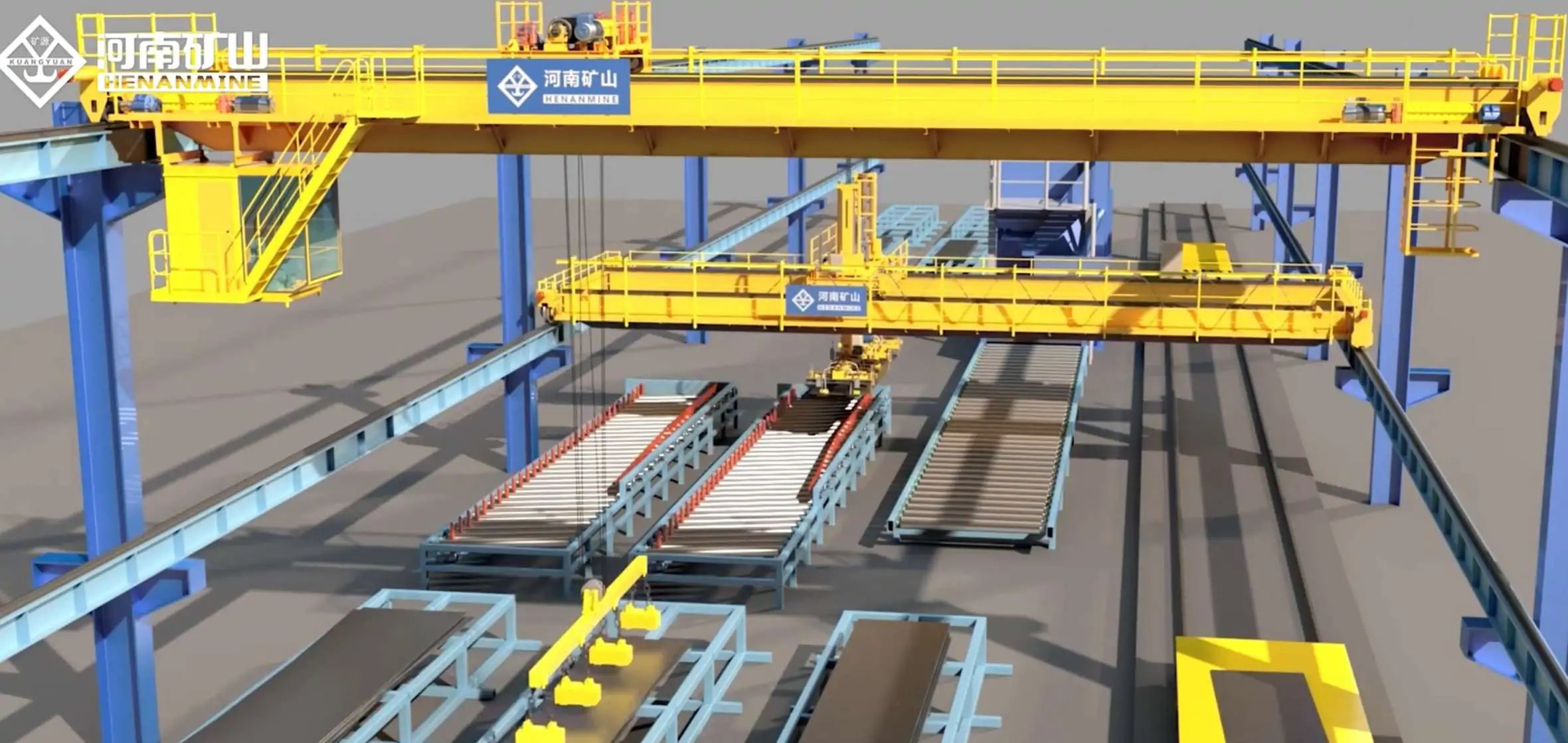
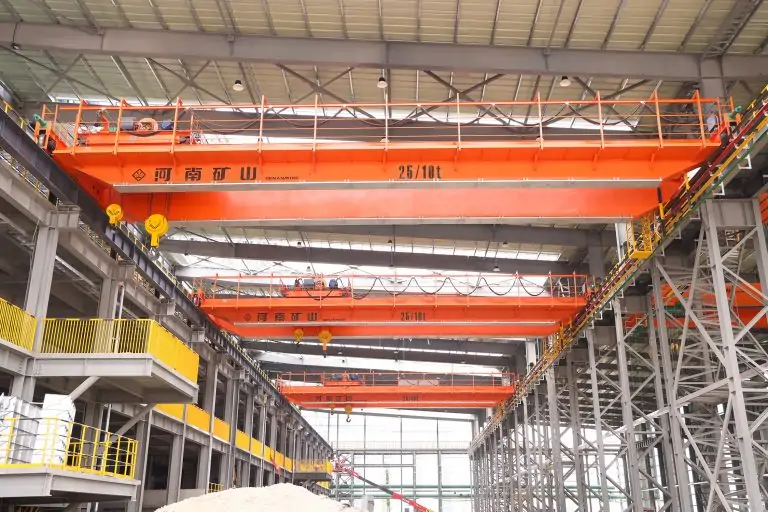
An overhead crane (also called a bridge crane) is a material handling system that moves loads horizontally along a bridge beam suspended above the work area, supported by runway rails on either side of the building. It's the standard lifting solution in manufacturing plants, steel mills, warehouses, and assembly lines.
Overhead crane cost typically ranges from $4,000 for a light-duty 1-ton unit to $300,000 or more for a heavy-duty 50+ ton system, before installation. The biggest price drivers are lifting capacity, span length, girder configuration, and duty class and most buyers underestimate how much installation, runway, and electrical work add on top of the crane itself.
This guide breaks down real pricing by tonnage, compares single vs. double girder costs, and shows a full project budget so you can plan accurately before requesting quotes.
What Determines Overhead Crane Cost?
No two crane quotes look alike, even for the same rated capacity, because price is driven by a combination of engineering variables rather than a flat catalog number.
- Rated lifting capacity: the rated lifting capacity is the core influence factor of crane cost. 1-10 tons of light equipment can use standard steel and common accessories, 50 tons and above heavy equipment need to strengthen the structure, more custom box beam, the cost increases significantly.
- Track span: track span directly affects the main beam steel consumption. 15 meters or less can use standard steel, 30 meters or more span needs to be customized box-type main beam and reinforced support, steel consumption will increase by 30%-50% or more.
- Main girder structure: single main girder and double main girder structure selection, directly determines the maximum load limit of the crane, but also an important factor affecting the overall pricing of the equipment.
- Work level: crane work level (CMAA/FEM) corresponds to the intensity of operation and frequency of use, light load low-frequency working conditions equipment cost is lower, steel mills, foundries, high-frequency heavy-duty working conditions of the equipment cost is higher.
- Hoist type affects the cost of equipment: chain hoist adapted to light load, cost-effective; wire rope hoist load capacity, speed and durability is better but more expensive; magnetic suction, explosion-proof, clamp and other special hoists, the price of the standard model of 1.5-3 times.
- Control system: crane control system is divided into wired handle, wireless remote control, fully automated system, the price level by level. The automated system costs the most, but can effectively improve the accuracy of repetitive operations.
Overhead Crane Cost by Capacity (1–100+ Tons)
Here's what to expect for the crane unit itself, based on current market pricing (installation, runway, and freight are separate see below).
| Capacity | Typical Price Range | Common Use Case |
| 1–5 tons | $4,000 – $15,000 | Small workshops, warehouses, maintenance bays |
| 6–10 tons | $8,000 – $30,000 | Machine shops, general manufacturing |
| 11–20 tons | $18,000 – $65,000 | Structural steel shops, auto production lines |
| 21–30 tons | $35,000 – $90,000 | Foundries, steel processing, large assembly |
| 31–50 tons | $60,000 – $150,000 | Steel mills, shipbuilding, energy infrastructure |
| 50+ tons | $100,000 – $300,000+ | Continuous heavy-duty industrial operations |
Within any single tonnage band, the spread is wide because span and lifting height move independently of capacity. An 80-foot, 20-ton double girder crane costs significantly more than a 40-foot, 10-ton crane, even though both fall in "medium duty" territory the longer span alone can add tens of thousands of dollars.
Use these ranges to set a planning budget, but request a formal quote with your specific span, duty cycle, and environment before committing generic tonnage pricing can be off by 2–3x for non-standard configurations.
Single Girder vs. Double Girder Cost Comparison
Single girder cranes use one bridge beam to support the trolley and hoist. They're simpler, lighter, and cheaper to manufacture and install generally used for loads up to 20 tons. Expect single girder pricing in the $4,000–$65,000 range depending on capacity and span.
Double girder cranes use two parallel beams, allowing higher lifting capacity, greater lifting height (the trolley sits on top of the girders rather than underneath), and better long-term durability under heavy cycling. Double girder systems generally start where single girder capacity tops out around 20 tons and scale up into the hundreds of tons, with proportionally higher prices.
The practical rule: if your facility needs more than 20 tons of capacity, or you need maximum hook height in a fixed building, double girder is usually the right call despite the premium. For lighter, intermittent-use applications, single girder delivers the same lifting function at a fraction of the cost.
Installation Costs: What to Budget Beyond the Crane Itself
The crane price quoted by a manufacturer typically does not include installation, runway, or site work and this is where many buyers get caught off guard.
- Runway systems.Most overhead cranes need a runway (the rails the bridge travels on). Pre-engineered runway packages can add $5,000 to $20,000 to project cost, more if structural reinforcement of the building is required.
- Site preparation and structural modifications.If your building wasn't originally designed to support crane loads, you may need foundation work, column reinforcement, or load-bearing upgrades these can range widely depending on facility condition.
- Labor and commissioning.Installation labor including assembly, alignment, and commissioning typically runs $5,000 to $30,000, with full installation projects (including structural work) landing between $10,000 and $50,000 for standard systems, and $15,000–$25,000 being a common midpoint for moderate-complexity jobs.
- Electrical and control systems.A basic electrical/control setup costs $5,000–$20,000; advanced systems with automation, wireless controls, or anti-sway technology can add $10,000–$50,000 on top.
- Oversized crane components often ship as freight, adding $500–$3,000 depending on size and distance.
Total Project Cost: All-In Budget Example
To show how these pieces stack up, here's a realistic all-in estimate for a 10-ton, 20-meter span, double girder crane one of the most common industrial configurations:
| Cost Component | Estimated Range |
| Crane unit (10-ton, double girder) | $18,000 – $65,000 |
| Runway system | $5,000 – $20,000 |
| Installation labor & commissioning | $10,000 – $30,000 |
| Electrical/control system (standard) | $5,000 – $20,000 |
| Freight | $500 – $3,000 |
| Total project cost | $38,500 – $138,000 |
Buyers should plan for 20–40% on top of the bare crane price to cover runway, installation, and electrical work a margin that's easy to overlook if you're only comparing manufacturer quote sheets against each other.
New vs. Used vs. Refurbished Crane Pricing
New cranes: carry the highest upfront cost but come with full warranty coverage, current safety compliance (OSHA, ASME B30.2), and predictable parts availability generally the safer long-term investment for continuous-use applications.
Used cranes: can cost 40–60% less than new, but carry risk: unknown maintenance history, potential need for re-certification, and possible incompatibility with your span or runway. A pre-purchase inspection is essential.
Refurbished cranes: sit in the middle rebuilt with new wear components (hoist, wiring, brakes) and re-certified, often at 50–70% of new-crane cost. This is a reasonable option for budget-conscious buyers who still want documented safety compliance.
The right choice depends on duty cycle: for light, occasional use, a well-inspected used or refurbished crane can be a smart way to control costs. For heavy, continuous, or safety-critical operations, the warranty and compliance certainty of a new crane usually justifies the premium.
How to Get an Accurate Crane Quote
Generic price ranges are useful for budgeting, but actual quotes depend on details specific to your facility. Before contacting manufacturers, have this information ready:
- Rated lifting capacity: the maximum rated load that the crane is allowed to carry is the core selection parameter, including the total weight of workpiece, material and spreader. Selection needs to match the site's maximum lifting demand, reserve a safety margin, to avoid the risk of overloading, to ensure the safe and stable operation of the equipment.
- Span: the center distance between the center lines of the running tracks on both sides of the crane, which determines the coverage of the equipment operation. This parameter needs to be adapted to the plant track installation spacing, affecting the stability of the equipment and operation area, is the core basis for equipment customization and plant layout adaptation.
- Lifting height: the effective vertical travel of the hook from the ground reference surface to the maximum lifting position. Need to be combined with plant headroom, material stacking and lifting process comprehensive selection to meet the height of various types of material lifting, handling, landing operation needs.
- Work level: Measure the frequency of crane operation, load intensity of the industry grading standards, which directly affects the service life of the equipment. According to the CMAA A-E or FEM corresponding level, combined with the length of operation, start-stop frequency, load conditions selection, to adapt to different light and heavy operating scenarios.
- Operating environment: Covering indoor and outdoor operating scenarios, it needs to take into account the climatic conditions such as high and low temperatures, wind, rain, sand and dust, and at the same time, check whether there are special working conditions such as corrosion, dust, flammable and explosive in the operating area. According to the environment matching anticorrosion, explosion-proof, temperature-resistant and other special configurations to ensure the safe operation of the equipment.
- Plant constraints: equipment installation and operation of the building constraints, mainly including plant beams and columns bearing capacity, headroom height, column spacing, ground loading and so on. Selection and installation need to be adapted to the existing building conditions, to avoid space and structure interference problems, and to ensure that the equipment is installed and operated in a compliant manner.
- Control mode selection: three mainstream modes can be selected according to operational requirements. Wired handle control is stable and economical, suitable for regular working conditions; wireless remote control operation is flexible and unfettered, suitable for a wide range of operations; full-automatic control is highly accurate, suitable for standardized, high-frequency intelligent lifting scenarios.
Supplying this upfront typically cuts quote turnaround from weeks to days, and lets you compare apples-to-apples across suppliers rather than vague "starting at" pricing.
Conclusion
The price of overhead travelling crane is affected by a number of factors such as lifting capacity, span, lifting height, working level, configuration, installation conditions and site conditions. Procurement selection needs to take into account the cost of equipment and the value of the whole life cycle, taking into account the stability of the equipment, energy consumption, maintenance and after-sales service, to achieve the optimal investment benefits.
Henan Mine Crane can provide customized bridge crane solutions for manufacturing, warehousing, steel, electric power and other industries, providing one-stop service from design, manufacturing, installation to after-sales service, to provide customers with cost-effective, safe and stable lifting equipment.
If there is a demand for new crane construction or remodeling project, you can contact our technical team. We will combine the plant layout, lifting needs and production goals, to provide you with exclusive customized offer and professional selection advice.