
What Are the Different Types of Lifting Hooks and Sling Hooks?
Lifting hooks and sling hooks are the core components of lifting and hoisting operations, and their functions are focused on each other: lifting hooks directly connect heavy loads to the lifting system, while sling hooks work with slings to fix heavy loads.
As the “connecting hub” of the operation, they determine the safety and efficiency of the operation, and are key tools in industry, construction, logistics and other fields.
This article aims to popularize the types, differences and application scenarios of lifting hooks and sling hooks, to provide practical selection guidelines, and to sort out their safety points and best practices, so as to provide references for safe and standardized lifting operations.
What Are Lifting Hooks?
Lifting hook is a key component of lifting system used to connect heavy loads with lifting equipment, and its core purpose is to securely suspend heavy loads through its own structure, so as to realize the lifting and moving of heavy loads and other operations.
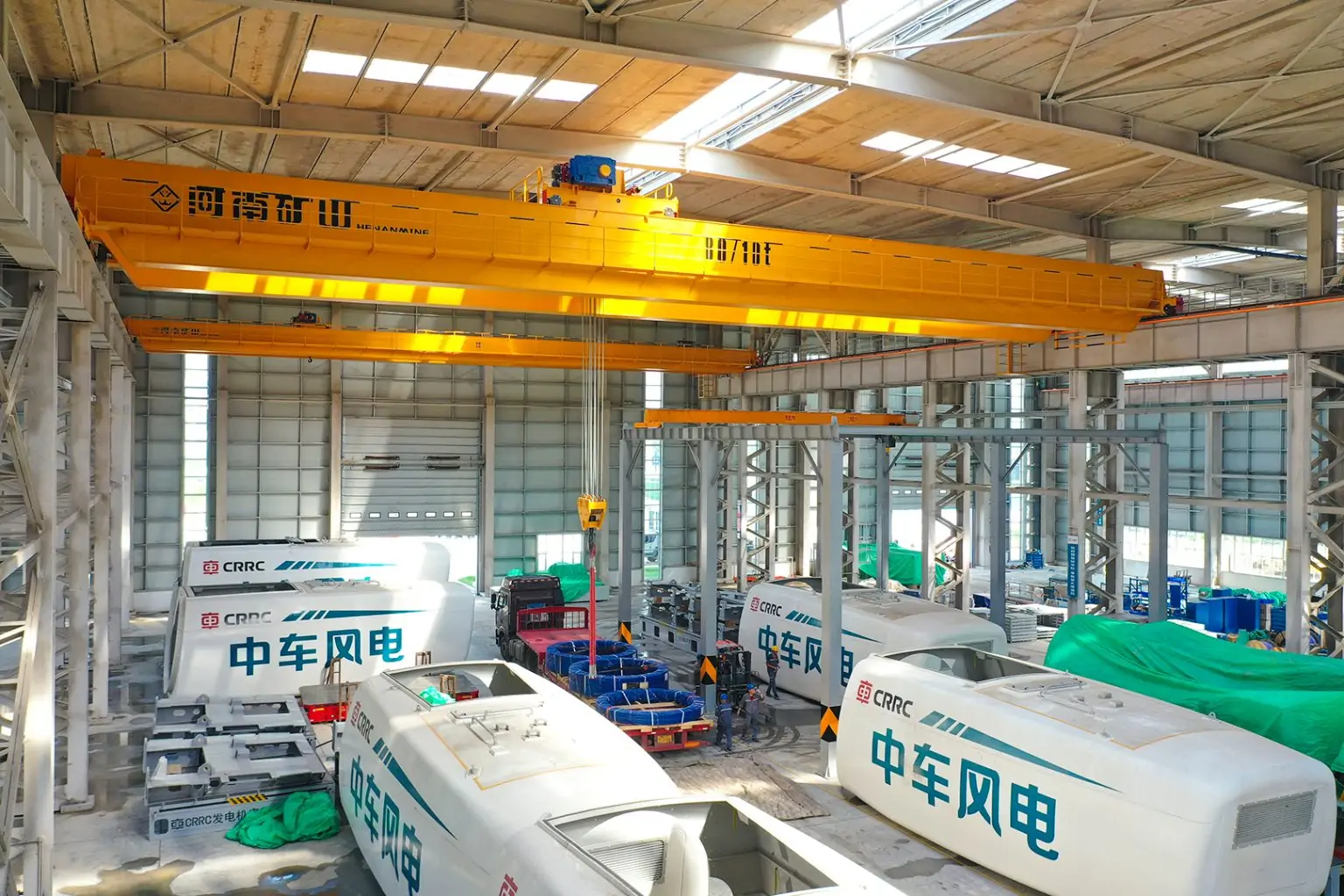
It is the direct connection carrier between the lifting machine and the heavy load, widely used in all kinds of lifting equipment, such as bridge cranes, tower cranes, electric hoists, etc., is the core foundation to ensure the smooth operation of lifting operations.
Core Features
- The design and manufacture of lifting hooks need to meet the two major requirements of high strength and high durability in order to adapt to heavy loads under different working conditions and to ensure the safety and stability of lifting operations.
- Most of the lifting hooks adopt curved design, which can evenly distribute the load force to avoid local stress concentration, and at the same time, it is easy for operators to quickly complete the hooking and unhooking operations to enhance operational efficiency.
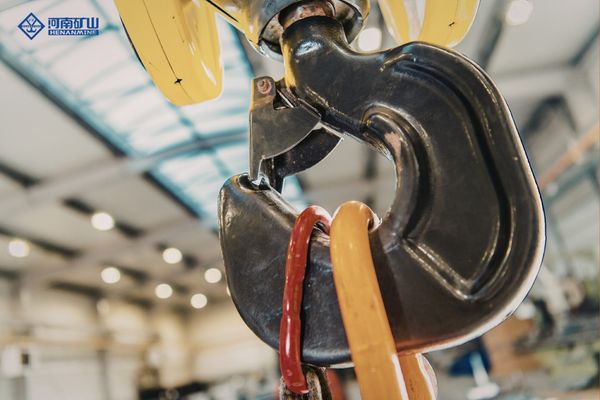
- Crane hooks are usually made of high-strength alloy steel or high-quality carbon steel, which have excellent load-carrying capacity, abrasion resistance and impact resistance, and can withstand huge static and dynamic loads to meet the needs of the harsh working conditions of industrial lifting.
- Durability is one of the core features of lifting hooks, through heat treatment, anticorrosion treatment and other processes, the hook can be adapted to the humidity, high temperature, corrosive and other complex industrial environments, effectively extend the service life and reduce the cost of routine maintenance.
What Are Sling Hooks?
Sling Hook is a kind of hook component specially used in conjunction with sling, and its core purpose is to firmly connect heavy objects with sling (chain sling, wire rope sling, synthetic fiber sling, etc.) to realize the lifting operation of heavy objects.
Unlike lifting hooks, sling hooks are not directly connected to the lifting equipment, but are used as a connecting medium between the sling and the heavy load, and are widely used in scenarios requiring flexible lifting and multi-point lifting, such as the lifting of large-sized components and the transfer of irregular heavy loads.
Key Differences Between Sling Hooks and Lifting Hooks
Connection Object
Lifting hook: directly connected to the lifting equipment (such as crane hook set), as a lifting machine and heavy loads between the direct connection carrier, without the need to use the sling as an intermediate medium, can be directly realized heavy hanging and lifting.
Sling Hook: not directly connected to the lifting equipment, specially adapted for use with various types of slings (such as chains, ropes, etc.), as the connection medium between the sling and the heavy load, indirectly realize the lifting and fixing of heavy loads.
Usage Scenario
Lifting Hook: The core focus is on “direct loading, fixed lifting”, applicable to simple structure, lifting a single point of conventional lifting operations, without the need for flexible adjustment of the lifting angle or point.
Sling Hook: focusing on “adapting sling, flexible lifting”, it can adapt to different shapes and weights of heavy loads, especially suitable for multiple lifting points and irregular lifting scenarios, such as lifting of large components and transferring of shaped heavy loads.
Design Focus
Lifting Hook: The design focuses on load strength and structural stability to meet the core requirements for direct lifting of heavy loads, without the need for additional adapted sling specifications, and is suitable for all types of direct lifting scenarios.
Sling Hook: The design focuses more on the compatibility with all kinds of slings, its opening size, connection structure, etc. need to accurately match the specifications of the corresponding slings, so the overall operational flexibility is much better than ordinary lifting hooks.
Different Types of Lifting Hooks
Standard Lifting Hooks
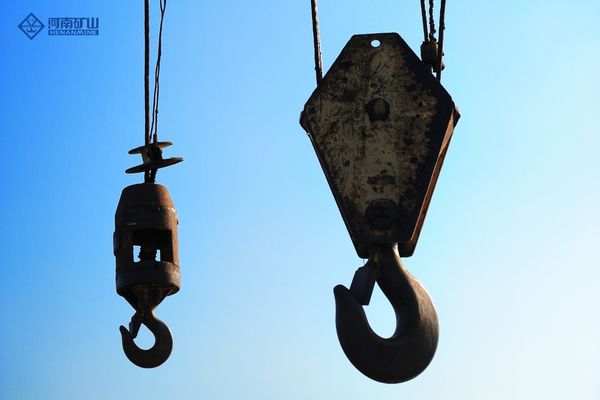
Standard lifting hooks are the most common and widely used type of lifting hooks. They are general-purpose hooks and are suitable for most conventional lifting operations. They are simple in design and structure, usually adopting a one-piece curved structure, without complicated additional devices, and are easy to operate, and can quickly complete the hooking and unhooking operations.
Standard lifting hooks have a wide range of load capacity, from light loads to medium loads, and are widely used in workshops, warehouses, construction sites and other scenes of conventional lifting operations, such as steel, cement, small equipment lifting.
Swivel Lifting Hooks
The core feature of the Swivel Crane Hook is the rotatable center pivot around which the load can be freely rotated to adjust the lifting direction. The advantages of this design are obvious:
On the one hand, it can flexibly adjust the attitude of the heavy load during the lifting process, avoiding tilting and twisting of the heavy load due to the fixed direction, and reducing the stress impact on the lifting equipment and hook;
On the other hand, it can effectively eliminate the torsional stress of the sling, prevent the sling from tangling, and extend the service life of the sling and hook.
Rotary lifting hooks are mainly used in dynamic lifting scenarios, such as irregular heavy lifting, operations that require frequent adjustment of the direction of the load, such as the assembly of large mechanical components, the transfer of shaped components and so on.
Safety Lifting Hooks
Safety lifting hooks are a type of hooks designed for high safety scenarios. Their core feature is that they are equipped with safety guards, commonly safety latches, locking pins and so on.
These safety devices can be automatically locked after the hook is hooked, preventing the heavy load from accidentally slipping off, falling off, and maximizing the protection of operational safety.
The design of safety lifting hooks focuses on “accident prevention”, and is suitable for lifting operations with extremely high safety requirements, such as heavy equipment lifting, overhead lifting, precision instrument lifting, flammable and explosive materials lifting, etc., which can effectively reduce the probability of safety accidents.
Clevis Lifting Hooks
Clevis Lifting Hooks (Clevis Lifting Hooks) have a core structure with a fork base and a pin (fork pin), through which the hooks are connected to lifting equipment, spreaders, etc., which are firmly connected and easy to dismantle.
Its structural design emphasizes stability and detachability, and it can be adapted to a variety of lifting systems, with a flexible connection method that allows the hook to be quickly replaced or the angle of the connection adjusted according to operational requirements.
Fork lifting hooks are widely used in heavy lifting operations in the industrial and construction fields, for example, used in conjunction with shackles and rings for the lifting of large steel structures, heavy machinery and equipment, construction materials, and so on.
Different Types of Sling Hooks
Single and Double Hook Sling Attachments
Single hook and double hook sling connectors are the most basic classifications of sling hooks, the core difference between the two being the number of hooks and the way they carry the load.
- Single hook sling connectors have only one hook, simple structure, convenient operation, suitable for simple lifting operations, mainly used for light, medium-sized heavy single-point lifting, such as small goods, parts, small equipment, etc. Double hook sling connectors, on the other hand, have two hooks;
- Double hook sling connector has two hooks, can realize two-point lifting, the force is more uniform, stronger stability, suitable for large, heavy heavy lifting operations, can effectively disperse the weight of the heavy object, to avoid the single point of excessive force caused by the damage to the hook or tilt of the heavy object, for example, large-scale steel, heavy machinery parts, etc. lifting.
Grab Hooks
The core design of Grab Hooks is a specially shaped opening, which is reinforced to securely “grip” the load or sling and prevent it from slipping away. The most important feature is the strong grip and outstanding load carrying capacity, which can be adapted to the needs of heavy load lifting, especially suitable for irregular, easy to slide heavy loads.
The grappling hook is widely used in heavy industrial lifting operations, such as mines, harbors, steel mills and other scenarios, for lifting steel, ores, large machinery parts and other heavy loads that require additional grip force, which can effectively prevent heavy loads from sliding in the lifting process and ensure operational safety.
Reeving Sling Hooks
Reeving Sling Hooks are hooks specially designed for the Reeving Sling System, which can be used with multiple slings to form multiple lifting points to achieve balanced lifting of heavy loads.
Its structure is designed to meet the needs of wrap-around lifting, and it can flexibly wrap around the slings to form a stable lifting system, which is suitable for the multi-point lifting of large and heavy loads, such as large equipment, bridge components, steel structures in factories, and so on.
The advantage of the wrap-around sling hook is that it can disperse the load through multiple lifting points, reduce the force on a single hook, improve the stability and safety of lifting, and avoid the damage of heavy objects due to excessive force on a single point.
Self-locking Sling Hook
The core feature of self-locking sling hooks is that they are equipped with an automatic locking mechanism. When the hook is hooked to a heavy load, the locking mechanism will automatically close, forming a self-locking mechanism, and the hook can only be unhooked after being manually unlocked.
This design can minimize the risk of accidental dislodgement of heavy loads, which is extremely safe and especially suitable for sensitive and high-risk lifting scenarios.
Self-locking sling hooks are widely used in lifting precision instruments, working at height, lifting flammable and explosive materials, lifting personnel (such as rescue at height) and other scenarios, which can provide double safety protection for operators and equipment.
Factors to Consider When Choosing Lifting and Sling Hooks
Load Capacity
Load capacity is the core factor in choosing lifting hooks, it must be ensured that the rated load of the hook is greater than or equal to the actual weight of the loaded object, and overloading is strictly prohibited. Overloading will lead to deformation and breakage of the hook, which in turn will cause serious safety accidents such as falling of heavy objects.
When selecting the hook, not only the static weight of the load should be taken into consideration, but also the dynamic load (such as the impact force generated during lifting and braking) during the lifting process should be taken into consideration, and a certain safety margin should usually be reserved.
In addition, the load rating of the hook should be checked regularly to ensure that it is used within its rated range and to avoid potential safety hazards due to a decline in load capacity caused by long-term use.
Material and Durability
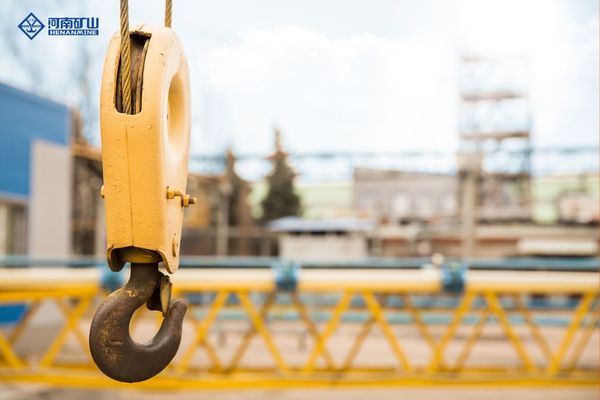
The material of the hook directly determines its load capacity, durability and applicable environment. Common hook materials include carbon steel, alloy steel, stainless steel, etc. Carbon steel hooks are less costly and more durable than stainless steel hooks.
- Carbon steel hooks have lower costs and are suitable for lightweight, conventional lifting operations;
- Alloy steel hooks have high strength, good impact and abrasion resistance, and are suitable for heavy and complex lifting operations, and are the most widely used material in the industrial field;
- Stainless steel hooks have good corrosion resistance, suitable for wet, corrosive environment (such as chemical, marine, food processing and other fields), can effectively prevent rust and corrosion, prolong service life.
When choosing the material, it is necessary to combine the humidity, corrosiveness, temperature and other factors of the operating environment to choose the appropriate material to ensure the durability and safety of the hook.
Safety Features
Safety features are important considerations in hook selection, especially in high-risk lifting scenarios. Hook safety devices (e.g. safety tabs, locking pins, self-locking mechanisms, etc.) can effectively prevent heavy loads from accidentally slipping off and reduce the probability of safety accidents.
When selecting hooks, priority should be given to products equipped with perfect safety devices, and the flexibility and reliability of the safety devices should be checked to ensure that they can work properly. In addition, it is necessary to choose the hooks that meet the relevant national standards and have been certified, avoiding the use of poor quality and unqualified products, and safeguarding operational safety from the source.
Type of Rigging System
The selection of hooks should be adapted to the type of lifting system, especially for sling hooks, and the corresponding hooks should be selected according to the type of sling (chain sling, wire rope sling, synthetic fiber sling, etc.). Different types of slings have different connection methods and sizes, and the corresponding hook openings and connection structures need to be matched, otherwise it will lead to a weak connection and cause safety hazards.
For example, chain slings need to choose a grappling hook or a special hook that matches the specifications of the chain, while wire rope slings need to choose a hook that prevents the wire rope from slipping off.
In addition, it is also necessary to choose the corresponding hook type in conjunction with the lifting method of the lifting system (single-point lifting, multi-point lifting, wrap-around lifting, etc.) to ensure the stability and safety of the lifting system.
Best Practices for Using Lifting and Sling Hooks
Inspection and Maintenance
Regular inspection is a prerequisite for safe hook use, and is centered on the timely detection of potential safety hazards. Before each use, the hook should be thoroughly inspected:
- carefully inspect the surface of the hook to make sure whether there are various defects such as wear, cracks, deformation, rust and corrosion;
- check the flexibility and reliability of the safety devices (e.g. safety tabs, locking pins, etc.) to ensure that they can play their protective role normally;
- confirm the connection parts of the hook one by one to ensure that the connection is firm without looseness or hidden danger.
If any of the above defects is found during inspection, stop using the hook immediately, replace it in time or have it professionally repaired and processed, and strictly prohibit the use of unqualified hooks to carry out hoisting operations, so as to avoid safety risks from the source.
Check whether the safety devices (e.g. safety latch, locking pin) are flexible and reliable;
Confirm whether the connecting parts of the hook are firm.
If any defects are found, stop using the hook immediately, replace or repair it in time, and strictly prohibit the use of substandard hooks.
Routine maintenance can effectively extend the service life of the hook and reduce the risk of use. Regular maintenance should be carried out on the hook, including cleaning, lubrication and anticorrosion treatment, etc., so as to avoid degradation of the hook’s performance due to corrosion and abrasion; at the same time, inspection and maintenance records should be made, and detailed information on the hook’s usage status should be retained to facilitate subsequent tracing and management.
Proper Hooking Techniques
Correct hooking method can effectively avoid problems such as uneven force on the hook and slipping off of heavy loads, thus guaranteeing the safety of lifting operation.
When hooking, it should be ensured that the hook is firmly connected with the load and the sling, and the stress point of the hook should be located at the center of the hook to avoid partial loading and prevent the hook from deformation and breakage due to uneven stress;
At the same time, it is necessary to ensure that the center of gravity of the heavy load coincides with the centerline of the hook, to avoid tilting and twisting of the heavy load, and to reduce the stress impact on the hook and lifting equipment. In addition, the hook needs to be checked again after the connection parts, confirm that there is no loosening, slipping off before starting the lifting equipment for lifting operations.
In the process of lifting, it is necessary to operate smoothly, avoiding sharp starting, stopping and turning to prevent inertial impact and damage to the hook.
Conclusion
Lifting hooks and sling hooks are the core components of lifting and hoisting operations, which directly determine the operational safety and efficiency. This article introduces in detail the four main types of each of the two types of hooks and the applicable scenarios, sorting out the selection of key factors and the use of best practices, to provide practitioners with a comprehensive reference.
Safety is the first and foremost principle in lifting and hoisting operations. Selection and use of hooks should strictly follow the standards, prioritize safety and adaptability, strictly prohibit illegal operation, and strengthen the training of operators to ensure that they operate in a standardized manner to fundamentally reduce the risk of safety accidents.