
Crane Factory Direct vs. Distributor: Which Should You Choose?
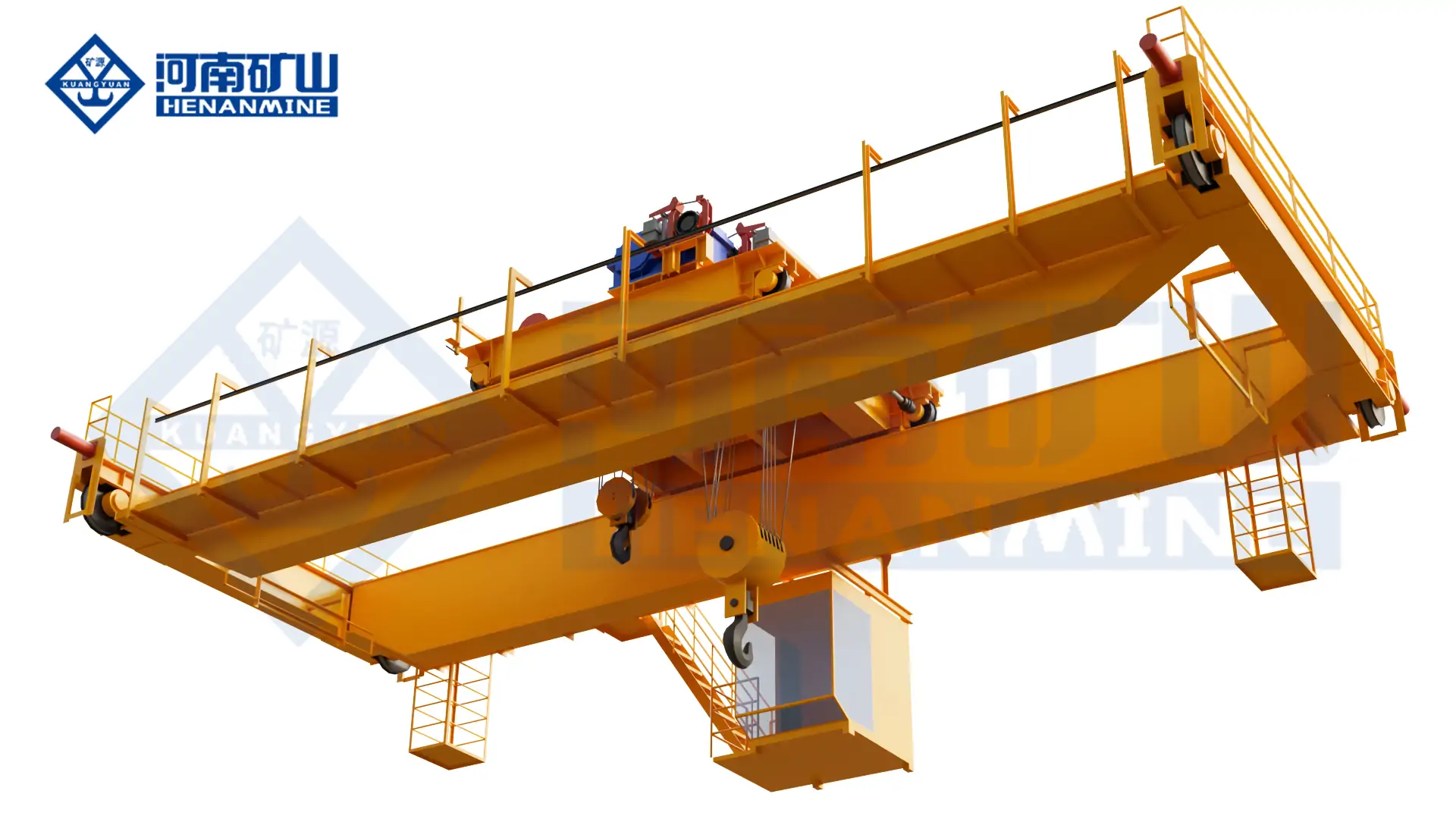
Buying a crane is rarely a small decision. A single overhead crane can run from the low five figures into six figures, and the wrong sourcing choice doesn't just cost money up front it can cost you in lead time, downtime, and years of frustrating parts orders. The crane factory direct vs. distributor decision sits at the center of that risk, and most buyers make it without fully understanding what they're trading away.
This guide breaks down exactly what separates a factory-direct purchase from a distributor purchase, where the real cost differences come from, and how to decide which model fits your facility, budget, and timeline.
Quick Answer: Factory Direct vs. Distributor at a Glance
| Factor | Factory Direct | Distributor |
| Upfront cost | Generally lower (no middleman markup) | Higher (includes distributor margin) |
| Lead time | Longer (built to order) | Often shorter (stocked or regional inventory) |
| Customization | High direct engineering input | Limited to what the OEM allows the dealer to configure |
| Brand/model choice | Locked to one manufacturer's line | Often multi-brand |
| Local service & parts | Depends on manufacturer's own network | Usually stronger, especially for established dealers |
| Communication | Direct with engineers, but can be slower across time zones | Faster local point of contact |
| Best for | Large, complex, or specialized orders | Smaller, faster, or first-time purchases |
If you need a highly customized, high-volume, or specialized crane and have flexibility on timeline, factory direct usually wins on cost and control. If you need something installed soon, want a single point of local contact, or aren't sure exactly which brand fits your application, a distributor is usually the safer path.
What Factory Direct Actually Means in the Crane Industry
Factory-direct purchasing means buying straight from the company that designs, engineers, and manufactures the crane with no dealer, trading company, or sales intermediary in between. You're working directly with the OEM's sales engineers from quote to delivery.
This model is most common with manufacturers who are vertically integrated, meaning they control most of the production chain steel fabrication, electrical systems, hoists, and final assembly in-house rather than buying in finished subassemblies from third parties. Vertical integration matters because it gives the manufacturer (and indirectly the buyer) more control over the supply chain that would otherwise be diluted at each outside vendor stage.
Factory-direct doesn't automatically mean "small operation" or "no support." Many large OEMs run factory-direct sales teams precisely because they want to control specification accuracy, pricing, and the engineering relationship with the end user particularly on custom or heavy-duty cranes where a generic dealer questionnaire isn't enough to capture the application's real requirements.
What it does mean is that you are the manufacturer's only point of contact. There's no dealer absorbing communication gaps, smoothing over scheduling conflicts, or stepping in if the OEM is slow to respond.
Whether you're comparing factory-direct suppliers or local distributors, selecting the right partner is just as important as selecting the right crane.
Henan Mine Crane offers customized crane solutions, engineering consultation, factory inspections, international shipping support, and technical assistance for customers worldwide. Contact our team to discuss your lifting requirements and receive a tailored solution with competitive pricing and reliable long-term support.
What a Crane Distributor Does and Doesn’t Do
Crane dealer is an intermediate service provider connecting equipment manufacturers and end-users, responsible for purchasing and reselling complete cranes and accessories, relying on regional inventory, local sales and after-sales team to provide customers with one-stop services such as installation, maintenance and so on.
Dealers can provide customers with three core service advantages:
Multi-brand Product Selection Channels
Customers can rely on a single dealer docking multi-brand crane product line, without having to dock one by one to the original equipment manufacturers. Can be completed within a unified docking channel of different brands of equipment, technical parameters, configuration and price comparison, effectively simplify the pre-selection process, reduce communication costs, significantly improve the efficiency of procurement selection.
Localized Service Capability
Dealers in the industry generally adopt a grid-based regional layout, equipped with licensed, systematic training of technicians around the manufacturer to ensure that customers can quickly arrive at the scene around the plant.
Relying on the advantages of nearby service, we can efficiently complete the equipment site survey, supervision of the installation process, acceptance and commissioning and emergency repair of unexpected failures and other on-site work, so as to achieve a rapid response to the needs of closed-loop problem solving and minimize the loss of equipment downtime.
Integrated Package Service Program
Dealers can provide customers with integrated packaged services, packages covering the whole chain of services such as equipment installation, commissioning, operator skills training, long-term maintenance contracts.
All services are delivered in a unified and integrated manner, one-stop landing, without the need for customers to docking, separate negotiations, greatly simplifying the procurement and operation and maintenance of the cooperation process, so that the full cycle of the use of equipment to ensure a more complete and efficient.
Dealers do not have the original R & D authority, can not independently complete the non-standard customization, need to be forwarded to the original factory to deal with, more communication links, customization cycle is longer. Most of the crane manufacturers to the distribution model instead of the terminal direct sales, with the dealer's localization advantages, to provide customers with pre-sales assessment, after-sales operation and maintenance and parts protection services.
Some mainstream crane manufacturers rely entirely on dealer sales, not directly facing the end customer, in order to protect the dealer's service and parts revenue, solid local customer relations, to maintain the service quality of the entire distribution system and operational stability.
Cost Comparison: Where the Price Difference Really Comes From
The headline difference buyers care about most is price and on paper, factory direct is almost always cheaper. Direct manufacturer purchases tend to offer lower costs and direct communication with engineers, while dealer purchases typically carry higher prices due to the added markup of the middleman.
That markup isn't arbitrary. It funds:
- Local inventory carrying costswarehousing, regional staff, and showroom or yard overhead
- Pre-sale technical consultationtime spent by sales engineers helping you spec the right machine
- Post-sale service infrastructuretechnicians, service trucks, and parts stock held closer to your facility
For commoditized, standard-spec equipment, that markup can feel like pure overhead. For complex or first-time purchases, it's effectively prepaid consulting and risk insurance.
There's a parallel pattern in other industrial sourcing categories that maps almost exactly onto cranes: buyers closer to the source of production get more control over specification, pricing, and packaging decisions, while distributor buyers are paying for the convenience of inventory that's already landed, already cleared, and ready to ship.
Factory-direct sourcing puts the buyer closer to raw material selection, production scheduling, and packaging decisions, while a distributor buys inventory from factories and resells it from local or regional stock a difference that changes the entire purchasing process. Neither model is universally cheaper;
it depends on order complexity and volume. Factory-direct purchasing tends to become more attractive as order complexity and volume increase, while distributors remain the more practical choice for buyers who need a small quantity immediately or don't want to manage production coordination themselves.
Lead Times and Customization: Direct’s Biggest Advantage
If your facility has an unusual bay width, a non-standard hook path, or specific duty-class requirements, factory direct gives you a real advantage: you're talking to the people who will actually engineer the machine, not a sales rep relaying your requirements secondhand.
That said, direct orders typically take longer to reach delivery. Direct manufacturer purchases come with the tradeoff of potentially longer lead times and communication barriers, compared to the faster access and broader guidance a dealer can offer. Custom-engineered cranes require structural calculations, sometimes coordination with your existing building records, and a full design review before fabrication even starts.
A genuinely capable manufacturer direct or through a distributor should walk through a structured technical process before finalizing your spec, not just take a paint-color and hook-height order. Look for a partner who confirms span, lifting height, travel speed, hook path, and control interface against your actual facility data, and who can coordinate structural integration if you have an existing runway system already in place.
If your facility already has crane infrastructure and you're not changing duty class or capacity significantly, a distributor's stocked or semi-stocked inventory may get you running again faster which matters enormously if you're replacing a failed crane mid-production rather than planning a new installation.
Service, Parts, and Warranty Support: Distributor’s Strongest Case
This is where the distributor model earns its markup back. Dealer purchases typically come bundled with expertise, guidance through the buying process, and structured after-sales support. The core advantage of dealer purchases is access to a range of brands and models, hands-on expertise and guidance, and after-sales support while direct purchases can come with limited brand options and potential communication barriers down the line.
Warranty servicing is a particularly underrated factor. If something goes wrong post-installation, you want a clear, fast escalation path. Buying through an established local dealer generally means a technician is a phone call away, while factory-direct warranty claims may have to route through a national or even international support desk, depending on where the manufacturer is based.
There's a real difference, too, between buying from a manufacturer or dealer versus a third-party trading company. Going through a trading company can introduce extra friction specifically around warranty coordination, since claims may need to route through the trading company rather than straight to the manufacturer. Warranty claims and servicing arranged through a trading company can become more complex, since they have to be coordinated through that company rather than handled directly with the manufacturer.
This is also where the proprietary parts issue becomes relevant, regardless of which sourcing path you choose. Many cranes are built with OEM-exclusive components that can only be sourced through that manufacturer or an authorized distributor. Proprietary parts are components designed and manufactured by the original equipment manufacturer and exclusive to that brand, meaning they're typically unavailable through third-party distributors and must be purchased directly from the OEM or an OEM-authorized distributor.
If you go factory direct on a brand with heavy proprietary parts reliance, you may find yourself permanently dependent on that single relationship for every future repair.
Hidden Risks Each Model Carries
Factory direct risks:
- Single-brand lock-in.You only see one manufacturer's product line, so there's no built-in comparison shopping unless you run a separate RFQ process yourself.
- Proprietary parts dependency.As noted above, OEM-exclusive components can leave you tied to one supplier for the life of the equipment.
- Geographic service gaps.If the OEM's own service footprint is thin in your region, a warranty claim or emergency repair may take longer than a local dealer relationship would.
Distributor risks:
- Markup stacking.On large or repeat orders, dealer margin adds up fast this is where the cost gap with factory direct becomes most noticeable.
- Limited customization authority.Dealers can typically only configure what the OEM allows in their dealer agreement; truly custom engineering requests still have to go back to the factory.
- Variable quality of the dealer itself.Not every distributor offers the same level of technical competence vetting the dealer matters as much as vetting the manufacturer.
A useful gut check either way: ask who is actually designing and manufacturing the core components structural steelwork, electrical panels, hoists, gearboxes versus assembling bought-in parts under a single nameplate. That answer affects both pricing leverage and long-term parts availability, no matter which sourcing channel you use.
A Practical Decision Framework: 5 Questions to Ask Before You Buy
- How standard is my spec?If you need a catalog-spec crane at a common capacity and span, the customization advantage of factory direct mostly disappears go with whichever option gets you better service and faster delivery.
- How fast do I need it installed?If a crane failure has stopped production, distributor inventory and quicker installation crews usually beat the lead time of a built-to-order direct purchase.
- What's my parts and service runway look like?Confirm in writing what proprietary components exist, who stocks the replacement parts, and how far the nearest qualified technician is from your facility.
- What's the real order volume?Single-unit buyers often do better working with a distributor's expertise; buyers with recurring, multi-unit, or fleet-level orders typically get enough cost benefit from factory direct to justify the longer relationship management.
- Can I verify the manufacturer's actual capabilities?Ask for current certifications ISO 9001 and CE marking are the common baseline internationally and ask which core components are made in-house versus sourced from third parties. A manufacturer who cannot produce current certification documentation on request is one whose quality claims can't be trusted, and asking which core components structural steelwork, electrical panels, hoists, gearboxes are designed and built on-site is a direct way to verify real manufacturing capability.
Total Cost of Ownership
Sticker price comparisons miss the cost that matters most over a crane's working life: downtime. Production losses from an idle crane compound fast, and the financial stakes vary sharply by industry. A 2023 industry report found average downtime costs surging past $2 million per hour in automotive manufacturing, with general manufacturing averaging closer to $260,000 per hour.
That number should reshape how you weigh the factory-direct-vs-distributor decision. A slightly cheaper direct purchase that takes longer to repair after a failure because parts have to ship internationally, or because the nearest qualified technician is hours away can erase its upfront savings in a single extended outage.
This is also where commercially available components matter. Crane systems built primarily around commercial, off-the-shelf parts motors, gearboxes, VFDs, standard control stations give you more flexibility to use independent service providers and shop around for pricing, rather than waiting on a single OEM channel. The tradeoff between proprietary and commercial components affects total cost of ownership directly, regardless of whether you bought direct or through a dealer, because it determines how quickly and cheaply you can get the crane running again after a failure.
When comparing quotes, ask both factory-direct and distributor candidates to break out:
- Expected lead time to delivery and installation
- Standard warranty length and what voids it
- Parts availability and typical replacement lead time for wear components
- Whether routine maintenance can be performed by your in-house team or requires the OEM/dealer
A true cost comparison includes all four, not just the invoice total.
Conclusion
Crane procurement can be selected according to need: customization, large quantities, need technical support for the project is suitable for the original factory direct procurement, standard equipment can be quickly picked up through the dealer, enjoy local service. Procurement decisions should focus on the full life cycle value of the equipment, comprehensive quality, qualification, technology, spare parts and after-sales advantages, cost reduction and risk avoidance.
Henan Mine Crane focuses on all kinds of lifting equipment and intelligent customized solutions, serving end customers, general contractors and global dealers, providing consulting, production, logistics, installation, after-sales full chain of one-stop service, to help customers achieve safe and efficient material handling operations.