
How to Choose a Crane for Outdoor Heavy-Duty Applications
Outdoor heavy-duty lifting punishes equipment in ways indoor facilities never do. Wind, salt spray, UV exposure, temperature swings, and constant high-load cycles all combine to shorten the life of a poorly specified crane and increase the risk of a costly failure. Choosing the right crane for outdoor heavy-duty applications means looking past lifting capacity alone and evaluating duty class, environmental protection, mobility, and site conditions together.
This guide walks through the engineering and operational factors that matter most when selecting an outdoor heavy-duty crane, so you can avoid overspending on the wrong system or underspecifying one that fails early.
What Makes Outdoor Heavy-Duty Crane Selection Different
Indoor cranes operate in a controlled environment with no wind, minimal corrosion exposure, and a fixed building structure to support the runway. Outdoor heavy-duty applications remove all of those advantages. The crane itself must provide structural stability, weather resistance, and safety systems that an indoor crane simply doesn't need.
Industry bodies including the Crane Manufacturers Association of America (CMAA), ASME, and OSHA stress that proper selection starts with an engineering-driven evaluation of load requirements, duty cycle, operating environment, and site constraints not simply matching a price point to a tonnage figure.
Common outdoor heavy-duty environments include:
- Shipyards and ports
- Precast concrete and steel fabrication yards
- Construction sites
- Oil, gas, and petrochemical facilities
- Power generation plants
- Rail yards and intermodal terminals
Each of these settings adds its own combination of wind exposure, corrosive elements, and ground conditions that shape which crane type will actually hold up.
Define Your Load and Lift Profile
Before comparing crane types, quantify exactly what you need to lift.
- The maximum load capacity of the equipment is based on the single maximum lifting load as an accounting standard, not with reference to the average load. Equipment selection and operation planning should be based on the peak load judgment, to eliminate overloading operations, to prevent equipment damage and safety accidents.
- Below the hook of the lifting beam, slings, lifting beams and other supporting lifting gear, self-weight should be included in the effective lifting load. Load accounting should be superimposed on the total weight of the workpiece and spreader to ensure that the value is compliant and accurately matches the rated load of the equipment.
- Before operation, according to the lifting height, hook stroke, check the site safety headroom, material stacking height, check all kinds of obstacles, to avoid space interference in the process of operation, to protect the safe and smooth lifting operations.
- Lifting equipment span, for the equipment support structure between the horizontal working distance to be covered, is the key parameter of equipment selection, site planning, station layout, need to combine with the site operating conditions accurately determined.
- Frequency of lifting operations need to count the total number of cycles in a single shift, and at the same time verify the concentration of peak load and duration, so as to match the load of equipment, pre-judgment of loss, and rational planning of operations and maintenance work.
A simple "top 10 lifts" table listing weight, pick point, travel path, and frequency for your most common lifts aligns engineering, safety, and operations before you start evaluating vendors. Don't size the entire system around a rare peak load; a crane built to handle a once-a-year outlier lift is usually overspecified and overpriced for daily use.
Match the Crane to the Right Duty Class
Duty class is one of the most commonly overlooked factors in crane selection and one of the leading causes of premature equipment failure when ignored. CMAA assigns duty classes from A through F, ranging from light, occasional use up to continuous, severe-impact service.
- Class A-B: Light duty class, suitable for low frequency, intermittent auxiliary lifting operations with light loads and shorter duration of use. The equipment has limited fatigue resistance and heavy load reserve capacity, and is not suitable for outdoor high-intensity, large load and continuous heavy load regular production operations.
- Class C: Medium regular operation level, suitable for standardized, cyclical daily lifting operations. It can stably withstand regular loads to meet the workshop's normalized lifting needs, but it does not support long-time continuous operation, cannot withstand high-frequency impact loads, and is only suitable for small and medium-intensity intermittent work conditions.
- Class D: Heavy duty grade, suitable for high frequency, high intensity industrial lifting conditions. Frequent starting and stopping, continuous cyclic operation, excellent impact resistance and fatigue resistance, suitable for processing plants, steel mills and other conventional heavy-duty production scenarios.
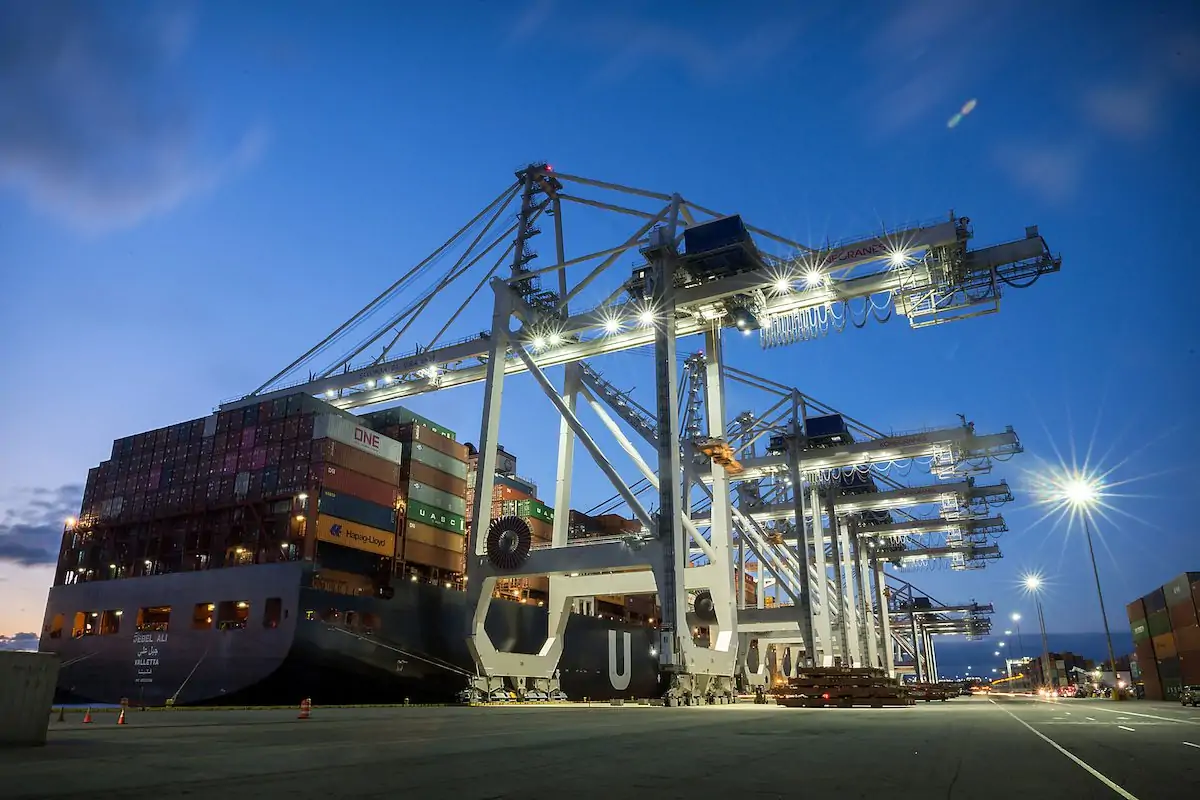
- Grade E-F: Ultra-high severe operation grade, supporting all-weather full-load continuous operation. With strong structural strength and durability, it can withstand harsh working conditions such as high loads, strong impacts and corrosion, and is suitable for extreme working environments such as heavy industry, ports and ocean engineering.
Most outdoor heavy-duty applications shipyards, precast yards, steel processing fall into Class D or E. Underspecifying duty class doesn't just shorten component life; it directly increases downtime and safety risk under sustained outdoor stress.
Choose the Right Crane Type for Outdoor Use
Different crane configurations suit different outdoor scenarios. Here's how the main types compare for heavy-duty outdoor work.
Gantry Cranes
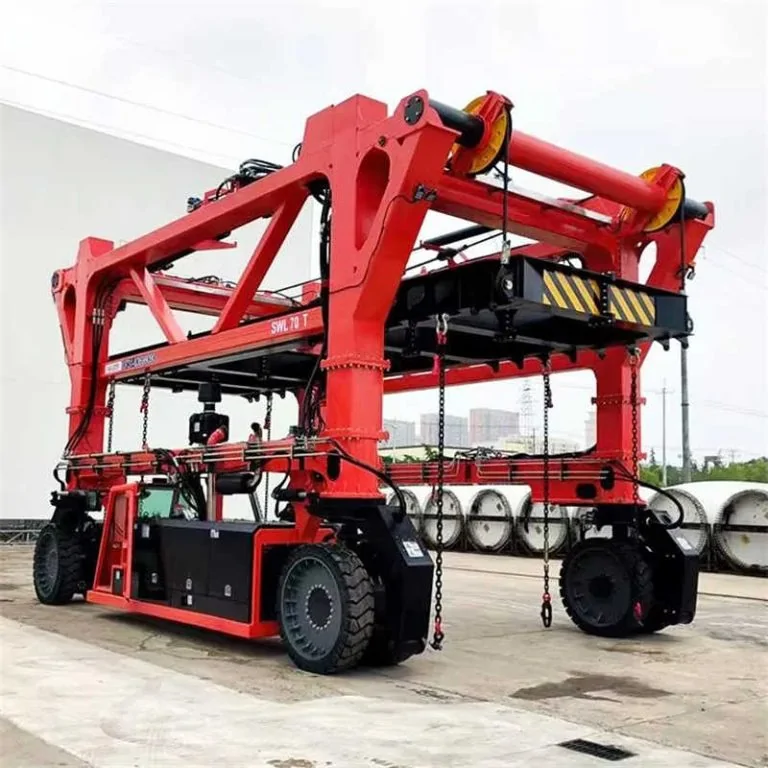
Gantry cranes are supported by freestanding legs rather than a building runway, which makes them the default choice for outdoor yards, construction sites, and facilities without structural support. They can be track-mounted for repeated linear movement or caster-mounted for portability. Heavy-duty industrial gantry systems can reach lifting capacities up into the hundreds of tons, with truss-girder designs offering reduced wind resistance compared to solid box girders.
Overhead Cranes
Bridge cranes travel along runway beams and are typically used indoors, but outdoor-rated versions exist for facilities with exposed runway structures. Double-girder configurations handle heavier loads and wider spans than single-girder systems, making them suitable for steel production, shipbuilding, and large-scale manufacturing where a permanent structure is available.
Mobile Cranes (Rough Terrain, All-Terrain, Crawler)
For temporary or multi-site work, mobile cranes offer flexibility a fixed system can't match.
- Rough Terrain Crane: Equipped with heavy-duty single axle and rough terrain tires, it adapts to outdoor construction sites with limited space and uneven ground, and has excellent site mobility, but it is limited to the internal work of the construction site and is not allowed to drive on the road.
- All Terrain Crane: Combining cross-country passability and legal road driving ability, it can adapt to complex construction site conditions, and can also quickly transfer between various project sites by itself, with higher cross-site operational efficiency and wider scope of application.
- Crawler crane: Crawler traveling structure, large grounding area, good adhesion, excellent stability of the whole machine, can be in the soft, muddy, poor bearing capacity of the complex ground operation, mostly used for large-scale infrastructure, bridges and large-scale lifting projects.
Jib and Davit Cranes
Jib cranes provide rotational lifting (180°-360°) for localized, repetitive tasks and typically top out around a few tons not a fit for heavy-duty work, but useful as a supplement to a larger system. Davits are lightweight, portable, and well suited to light-duty outdoor lifting such as watercraft or equipment handling.
Engineer for Wind Load
Wind is one of the biggest structural threats to outdoor cranes, capable of causing lateral thrust, overturning risk, or track derailment. Heavy-duty outdoor cranes should be engineered against recognized wind standards such as ASCE 7, Eurocode 1, or FEM, with wind-area type and gust speeds factored into the structural design.
Practical wind-mitigation features to look for:
- Wind speed alarm device: It can issue timely warning prompts when the ambient wind speed reaches the preset limit value, which is in full compliance with OSHA 1910.179 mandatory specifications for outdoor overhead cranes, effectively avoiding the safety risks of lifting under windy conditions.
- Automatic rail clamp: It can automatically lock the crane rail position under windy conditions, firmly fixing the position of the equipment, eliminating the problem of equipment slipping and shifting, and greatly improving the stability of the equipment for windy operation.
- Truss main girder structure: adopting permeable lattice truss design, it can realize smooth airflow penetration, and compared with solid box main girder, it can effectively reduce the lateral wind load, and reduce the interference of wind on the operation of the equipment and lateral thrust.
- Reinforced end beams and anchoring structure: The crane end beams and anchoring base are reinforced to improve the overall rigidity and overturning resistance of the equipment, which is suitable for open and unobstructed high wind operation sites.
OSHA 1910.179 requires outdoor storage bridges to include both wind indicators and automatic rail clamps a baseline safety requirement, not an optional upgrade.
Plan for Corrosion and Weather Exposure
Rain, salt spray, humidity, and UV exposure all accelerate wear on outdoor crane structures and components. Corrosion protection should be matched to your site's environment using the ISO 12944 corrosion category system (C3-C5), with coastal and industrial sites generally requiring the higher end of that range.
Common protection methods include:
- Hot dip galvanizing process: through the formation of a stable zinc layer protective structure, the equipment provides long-lasting rust and corrosion resistance, especially for coastal, high humidity and other corrosion-prone harsh operating environments, and can effectively slow down the corrosion and aging of the metal structure.
- Epoxy primer + polyurethane topcoat system: double-layer composite coating process, both excellent weather resistance and anti-corrosion performance, able to withstand outdoor sun, rain, temperature changes and other environmental erosion, long-term protection of the equipment substrate structure.
- Powder coating process: the formation of the coating is uniform and dense, high hardness, with good anti-scratch and anti-corrosion properties, taking into account the protection of equipment and the appearance of cleanliness, applicable to the value and durability of the equipment requirements of the scene.
- IP protection grade electrical box: adopting fully sealed structure design, it can effectively prevent water vapor and dust from intruding into the interior of the equipment, comprehensively protect the motor, control components and wiring system, and guarantee the stable and safe operation of the electrical equipment.
Sites with extreme temperature swings should also confirm hydraulic fluids and lubricants are rated for the local range, and that any cold-weather options (cab heaters, enclosure warmers) are available if needed.
Account for Site and Ground Conditions
Ground stability has a direct impact on which crane types are viable.
- Selection of site ground conditions: soft, uneven construction ground is more suitable for crawler cranes or gantry cranes equipped with reinforced rails, compared with wheeled mobile cranes, this type of equipment ground stability is stronger, can effectively avoid subsidence, rollover and other safety hazards.
- Operating space constraints selection: for the site is small, dense layout of the construction plant, you need to choose a smaller footprint models, or equipped with adjustable boom crane, flexible adaptation to the narrow operating space, to avoid the problem of space interference.
- Transportation and access conditions verification: need to verify the access conditions of the crane and parts in advance, to confirm the ease of transfer of equipment; large mobile lifting equipment need to plan the transportation route in advance, and apply for special access permits, to ensure that the equipment is smoothly into the field in place.
Skipping a ground assessment is one of the most common reasons outdoor crane installations run into stability problems after the fact.
Compare Total Cost of Ownership, Not Just Purchase Price
Crane pricing varies enormously by type, capacity, and environmental rating:
- Small gantry cranes: suitable for outdoor light lifting operations, equipment procurement costs are low, the starting price of only a few thousand U.S. dollars, cost-effective, suitable for lightweight, simple construction scenarios.
- Medium-sized industrial gantry and overhead cranes: to meet the needs of conventional industrial heavy-duty operations, equipment configuration and performance standards, equipment configuration and performance standards are higher, the cost of hundreds of thousands of dollars in general, is the mainstream lifting equipment in industrial plants.
- Large shipyard-class and special mobile cranes: designed for large-scale engineering, shipbuilding and other demanding working conditions, equipment performance is tough, complex processes, the cost can reach millions of dollars level, suitable for large tonnage of special lifting operations.
Beyond the sticker price, factor in:
- Working conditions corresponding to the cost of equipment: lifting equipment, the higher the working conditions of the higher level, the need for supporting the motor, brake, gear box and other core components of higher performance standards, the overall cost of manufacturing equipment with the increase.
- Anti-corrosion and weathering upgraded configuration: Coastal special anticorrosion protection configuration of the equipment invested in the early stage is higher, but can effectively resist humidity, salt spray and other harsh environments corrosion, significantly reducing the later operation and maintenance costs, and extend the service life of the equipment.
- Maintenance and Inspection Cycle: According to OSHA code, the wire rope, hooks and structural components of the lifting equipment need to be regularly tested and inspected, and the lifting equipment that has been idle for a long period of time needs to implement a more stringent inspection and maintenance program before resuming work.
- Procurement and Rental Selection: Short-term, single lifting projects are more suitable for equipment rental mode; for long-term, high-frequency heavy lifting operations, the overall economy of the procurement of equipment is better.
Conclusion
Outdoor heavy-duty crane selection can not only look at the lifting tonnage, need to take into account the load, working conditions, equipment configuration, wind, corrosion and site conditions, to ensure the safety and stability of the equipment, economic operation; selection of poorly considered will accelerate the wear and tear of the equipment, increase the cost of operation and maintenance, and safety hazards.
High-quality lifting projects are based on a comprehensive assessment of the pre-working conditions, according to the need to match the crane structure, protection level and control system, which can effectively extend the life of the equipment, improve operational efficiency, reduce the full cycle of the use of costs.
Henan Mine Crane can be customized for outdoor heavy-duty working conditions, bridge, gantry, port and other lifting equipment and supporting programs. We can optimize the equipment configuration according to project requirements, adapt to harsh environments and high-frequency operating scenarios, and provide design, production, installation, after-sales service, to build a safe and efficient material handling system for customers.