
RMG Crane vs STS Crane: Which is Core for Port Handling?
RMG Crane vs STS Crane: Which is Core for Port Handling?
Henan Mine Crane has been engaged in port crane sales for more than ten years, I have received port planners and operational managers around the world, the most frequently asked question is: RMG and STS cranes, in the end, which is the core equipment for port operations?
The efficiency of modern container ports depends on the synergistic operation of the crane system. Whether it is a large deep-water port, or a medium-sized river port, as long as it involves container loading and unloading transshipment, almost inseparable from these two types of equipment.
Many customers will fall into a misunderstanding, think that the two can only choose a “core”, either favor STS, or focus on RMG. in fact, these two cranes do not have absolute primary and secondary, each bear different core functions, one cannot do without the other.
Today I will put aside the hard theory, with the hands-on experience of front-line engineers, combined with Henan Mine Crane service global ports of the actual case, the differences between RMG crane vs STS crane, function, selection logic to make it clear. Whether you are doing port planning, or equipment upgrading, you can find the answer to fit your port, and also clarify the core role of the two types of equipment in the port crane system workflow.
Overview of Port Crane Systems
The Container Handling Workflow
In order to understand the core role of RMG and STS, first of all, we must understand the complete flow of container operation in the port, which is the basis for judging the importance of the two.
The first step is Ship-to-shore transfer, that is, unloading containers from the ship to the port, or loading containers from the port to the ship, which is the first gate of port operation, and is the key to connecting ocean transportation and land transportation.
The second step is horizontal transportation, through the truck, trailer or AGV automatic guided vehicle, the container from the shore to the yard, or from the yard to the shore, equivalent to the port operation of the “conveyor belt”, to ensure the smooth flow of containers.
The third step is the yard stacking and retrieval (Yard stacking and retrieval), the transfer of containers stacked up in an orderly manner, saving space in the yard, and at the same time in the need to quickly extract, to avoid congestion in the yard.
The final step is gate or rail dispatch, where containers are transported out of the port by trucks or transferred to inland areas by rail, completing the closed loop of port operations.
Where STS and RMG Cranes Fit
In the whole operation process, STS and RMG cranes play their respective roles, respectively occupy the two key links, one without the other.
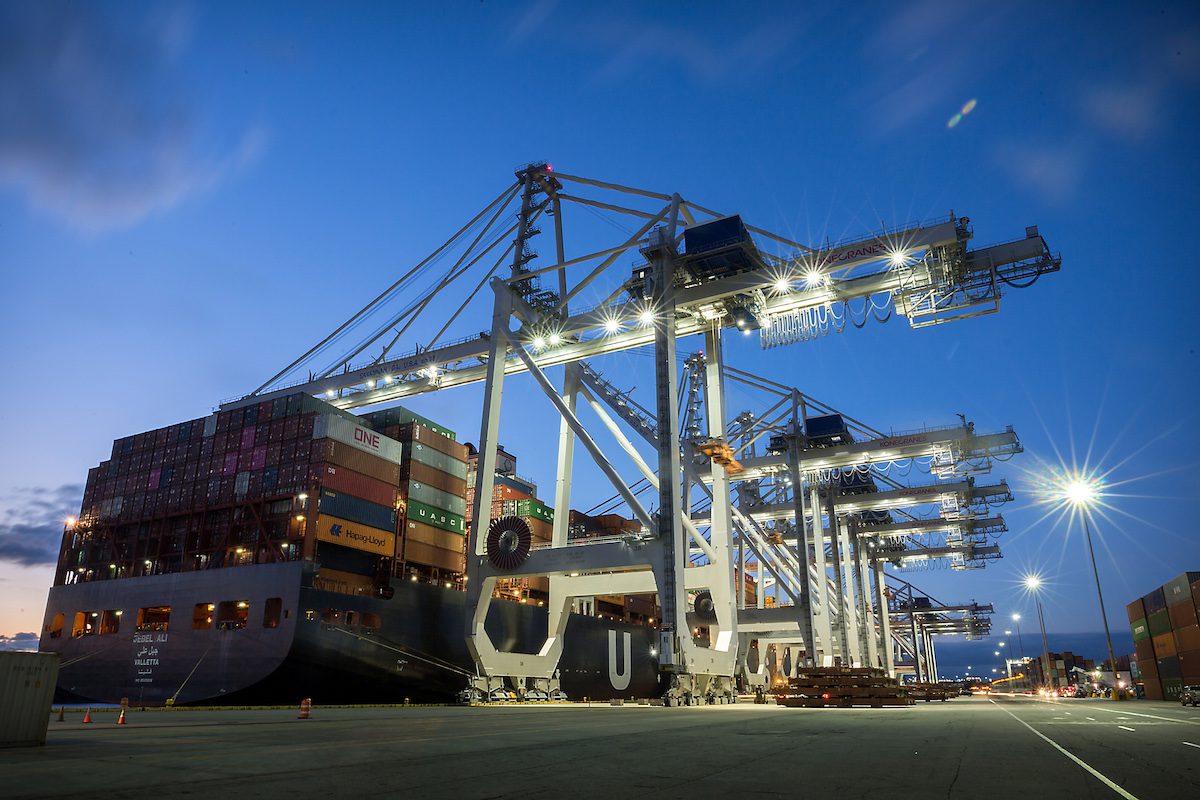
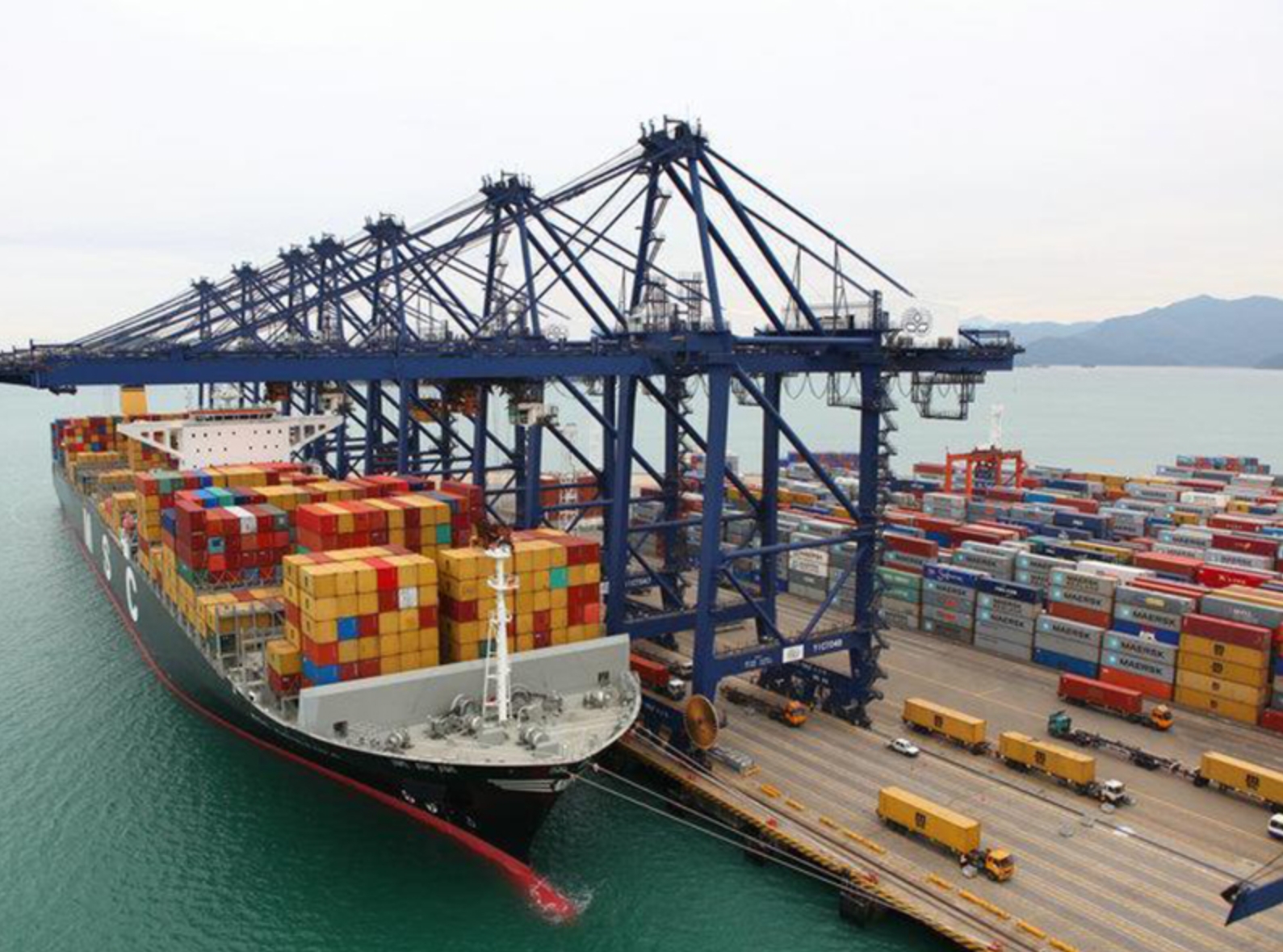
The core position of STS cranes is on the shore (Quayside), specializing in container loading and unloading between ship and shore. Whether it is a mega container ship, or small and medium-sized ships, need to rely on STS cranes to realize the rapid transfer of containers, it is the port connected to the sea “portal”.
RMG cranes are mainly used in container yards and railroad yards, and their core task is to stack, extract and transfer containers within the yard. It can maximize the use of yard space, to ensure orderly storage of containers to avoid congestion, is the port land operation of the “core hub”.
Simply put, STS tube “ship to shore”, RMG tube “shore to field”, the two synergistic cooperation, in order to make the whole port operation efficiently, which is also container terminal crane types in the most core of the two kinds of equipment. This is also the two core equipment in container terminal crane types.
What Is an STS (Ship-to-Shore) Crane?
Definition and Function
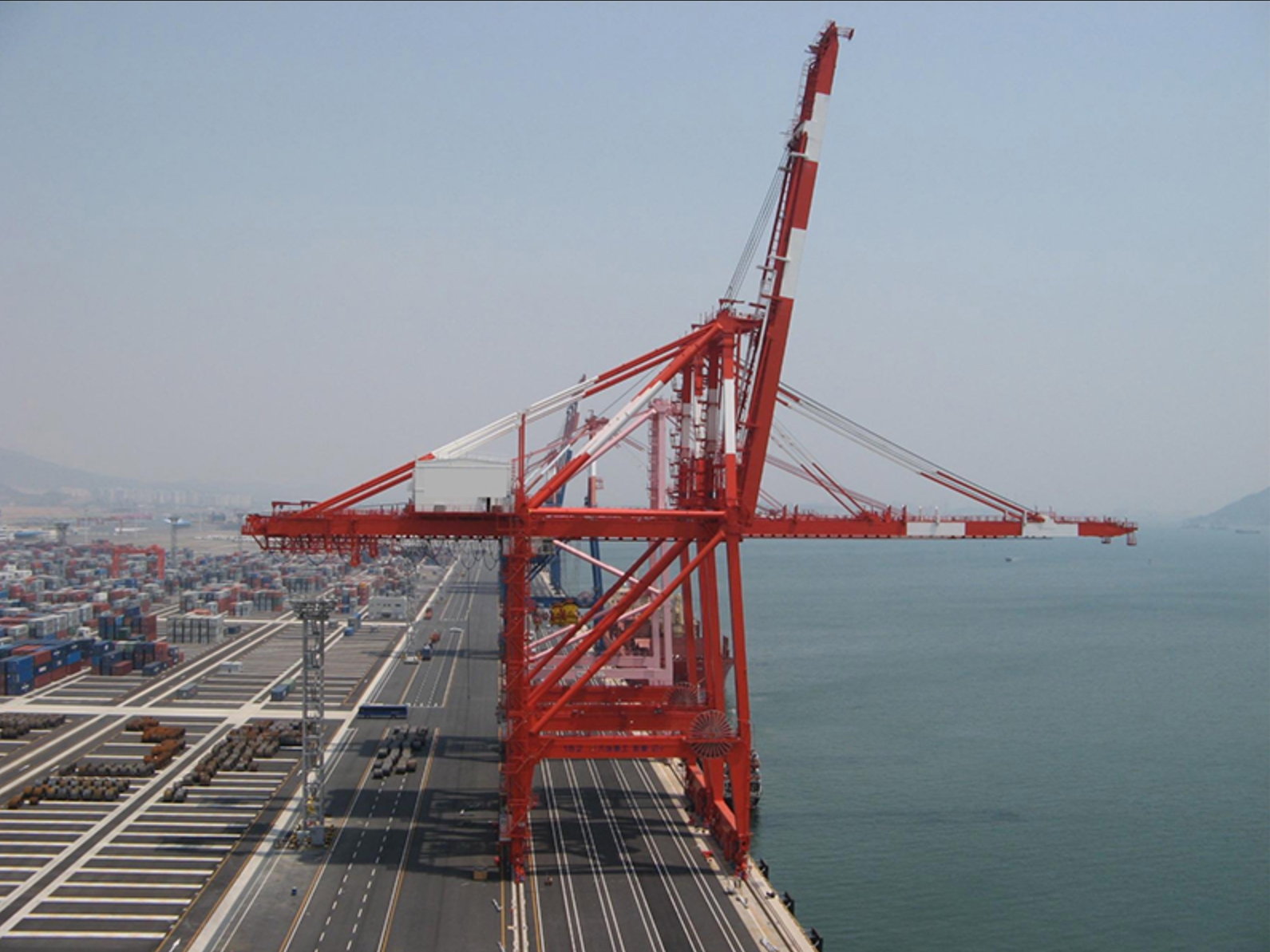
STS crane, full name Ship-to-Shore Crane (Shore Container Crane), is a large crane installed on the shore of the port, the core function is only one: to realize the container loading and unloading transshipment between the ship and the port.
It is like a “giant arm” of the port, one end of which reaches out to the sea and docks with the deck of the container ship, while the other end connects with the shore of the port to accurately unload the containers from the ship or load the containers from the port smoothly onto the ship.
Henan Mine Crane produces STS cranes, adapted to different types of port shore layouts around the world, whether it is a deep-water berth or a shallow-water berth, can be adjusted according to the size of the ship and the operational needs of its own parameters, to ensure that the loading and unloading operations are smooth.
Many people do not know that STS crane function in port is not only simple loading and unloading, but also directly determines the ship's stay in port, which in turn affects the port's throughput and competitiveness.
Key Features
Long outreach (outreach) is the core feature of STS crane, which is also the key to docking large ships. Now the world's mainstream Post-Panamax and Ultra Large Container Vessel (ULCV), the deck width is large, STS cranes need to have a long enough outreach to cover the entire deck.
Henan Mine Crane's STS cranes, with an outreach of more than 60 meters, can be easily adapted to ultra-large container ships with a capacity of more than 24,000 TEU, which is consistent with the specifications of the large STS cranes ordered by the U.S. Port of Georgia, and meets the operational needs of the world's large ports.
High lifting height and fast lifting speed are also its core advantages. The lifting height is high enough to lift containers from the bottom deck of a large ship to the shore; the fast lifting speed improves the loading and unloading efficiency and reduces the ship's waiting time.
Like RMG, STS cranes also run along the track, but its track is laid on the shore and extends horizontally along the berth, which ensures that it can cover the whole berth of the ships during operation, and runs stably and accurately.
Typical Applications
The application of STS cranes is very concentrated, mainly all kinds of container ports and terminals, whether coastal deep-water ports, or river ports, as long as there is a container ship docking, it is indispensable.
High throughput shore-side operations, is its core application scenarios. For example, the main berths of major mainstream ports around the world need to handle thousands of standard containers every day, and the efficient loading and unloading capacity of STS cranes can ensure rapid turnover of ships and improve the overall throughput of the port.
Like the Port of Singapore in Southeast Asia, the Port of Rotterdam in Europe, as well as the domestic port of Shanghai, Shenzhen Port, have deployed a large number of STS cranes, including Henan Mine Crane's equipment, which operate continuously all year round, supporting the efficient operation of the port.
What Is an RMG (Rail Mounted Gantry) Crane?
Definition and Function
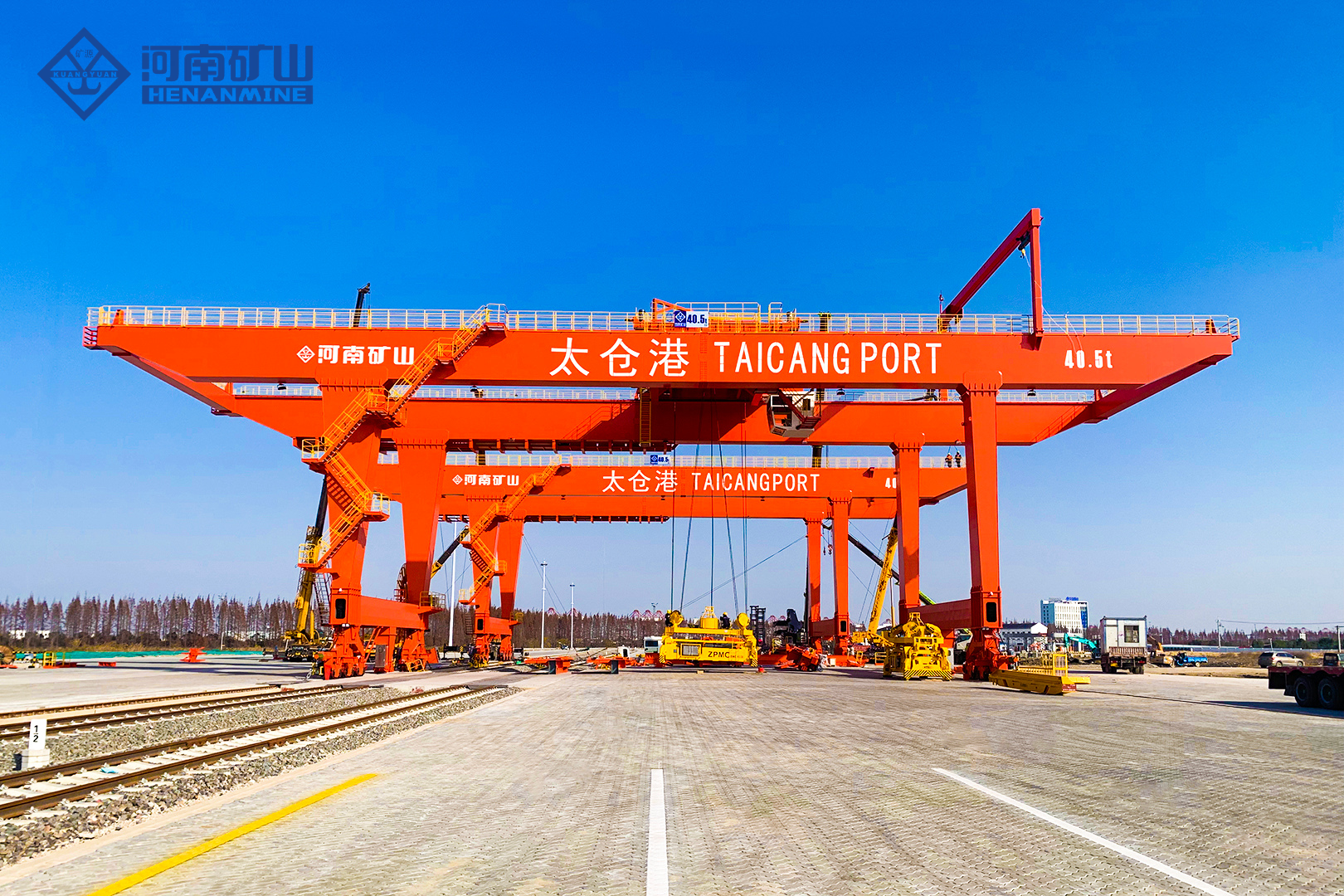
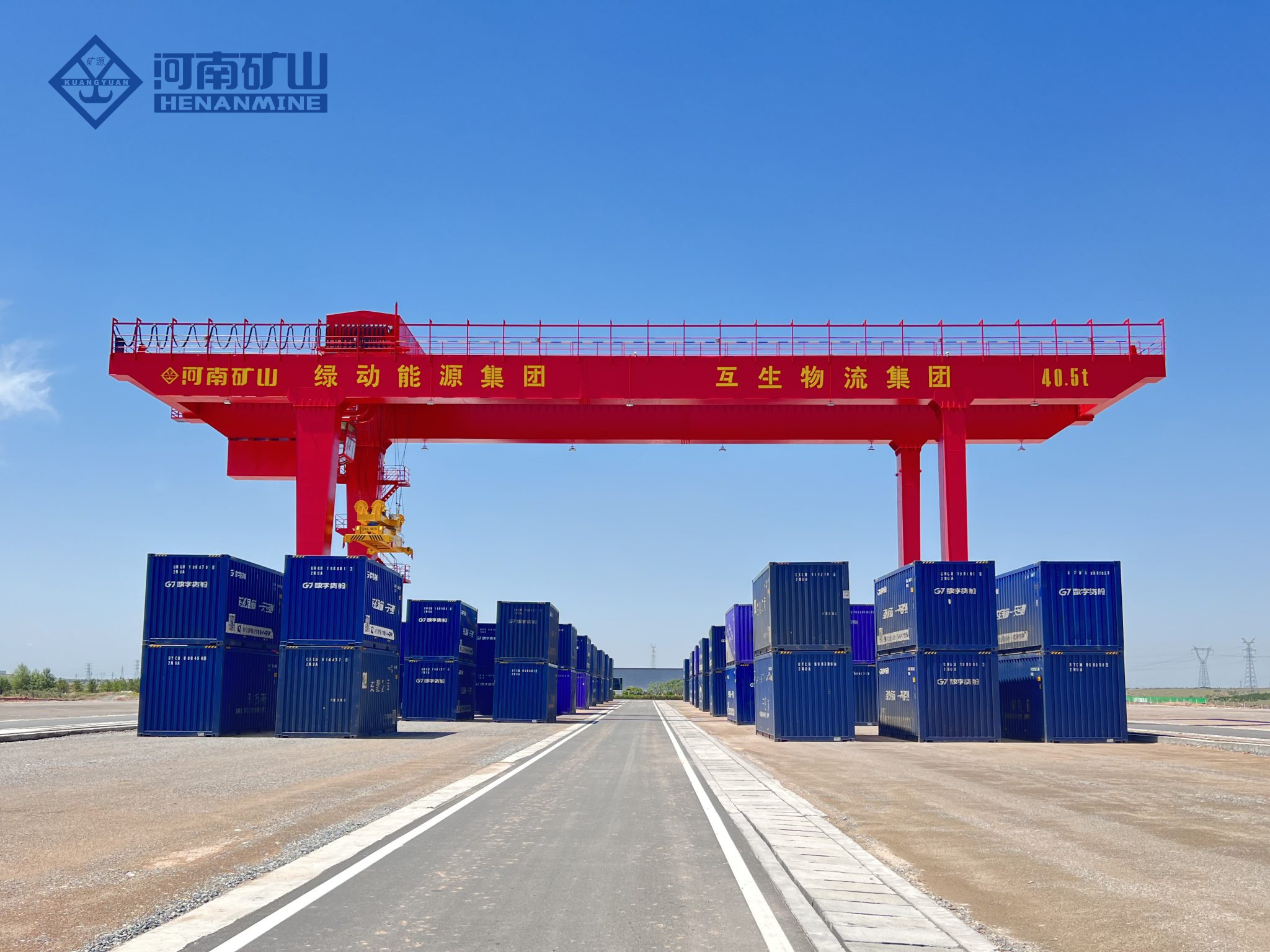
RMG crane, full name Rail Mounted Gantry Crane (Rail Mounted Gantry Crane), is a gantry crane relying on the rail operation, the core function is in the container yard and the rail yard station, complete the stacking of containers, picking up and on-site transfer.
The biggest difference between it and STS cranes is that the scope of operation is limited to land, not involving sea operations. If STS is the “gateway” of the port, then RMG is the “warehouseman” of the port, responsible for storing containers in an orderly manner, quick access.
Henan Mine Crane's RMG cranes can not only realize multi-layer stacking of containers, but also docking railroad transportation to realize seamless transfer of containers “yard - railroad”, which is also the core value of RMG crane for container yard.
Key Features
Rail-guided precision operation is the core feature of RMG crane. Its track is laid on the yard floor and extends vertically or horizontally along the yard, and the crane runs along the track without any deviation, which can realize precise stacking and extraction of containers.
High stacking density is another major advantage. Because of the precise operation, the containers can be accurately aligned when stacking, without the need to reserve too much clearance, usually 6-8 layers of containers can be stacked, which significantly improves the utilization of yard space, which is also its core advantage over other yard cranes.
Its automation compatibility is extremely strong, very suitable for automated yard (ASC/RMG systems). Henan Mine Crane's RMG cranes can easily interface with the terminal operating system (TOS) to realize remote operation and unattended operation, reducing labor costs, which is also the mainstream development direction of the current global smart port.
In addition, RMG cranes have stable operation, low wear and tear, light maintenance burden, and lower long-term operating costs, which is an important reason for many ports to choose it as the core equipment of the yard.
Typical Applications
Container yard is the most important application scenario of RMG cranes, whether it is a dedicated yard in large ports, or a comprehensive yard in medium-sized ports, you can see its figure. Especially high throughput, long-term fixed layout of the yard, RMG advantages are more obvious.
Automated stacking yards (ASC/RMG systems) are one of its core application scenarios. With the development of smart ports around the world, more and more ports have started to build automated yards, and RMG cranes have become the core equipment of automated yards due to their precise operation and strong automation compatibility.
Railroad intermodal yard is also an important application scenario for RMG cranes. It can accurately docking railroad container loading and unloading needs, realize the container “yard - railroad” seamless transfer, the formation of a “non-landing” operation chain, to enhance the efficiency of intermodal transport.
For example, the Port of Hamburg in Europe and Zhengzhou International Dry Port in China have deployed Henan Mine Crane's RMG cranes for intermodal railroad operations, which have significantly improved the efficiency of container transshipment.
RMG Crane vs STS Crane - Core Functional Differences
Many customers can not distinguish the core differences between RMG and STS, in fact, as long as you grasp the “operational scenarios” and “core functionality”, you can quickly distinguish. I will use the table below to make a clear comparison, and then combined with the actual operation scenarios to explain in detail, to help you completely clarify the STS and RMG crane difference.
| Aspect | STS Crane | RMG Crane |
| Primary Role | Ship loading/unloading | Yard stacking and transfer |
| Location | Quayside | Container yard or rail yard |
| Core Function | Vessel interface | Yard efficiency and storage |
| Mobility | Rail-mounted along quay | Rail-mounted within yard |
| Automation Level | Semi to fully automated | Highly suitable for full automation |
From the table, we can clearly see that the core difference between the two lies in the operation scenario and function, the core of STS is “docking ship”, all the designs are centered on ship and shore loading and unloading; the core of RMG is “yard management”, all the designs are designed to enhance the efficiency of the yard and the space utilization. The core of RMG is “yard management”, and all designs are aimed at improving yard efficiency and space utilization.
For example, the track of STS is laid along the shore, aiming at covering the whole berth and facilitating the docking of ships; the track of RMG is laid inside the yard, aiming at realizing the precise stacking of containers and in-field transfer. The two running tracks seem to be similar, but in fact they are suitable for different operational needs.
In terms of automation level, RMG is more suitable for fully automated operation, because its operation scope is fixed, the process is standardized, and it is easy to interface with automated systems; STS is mostly semi-automated or fully automated, and requires certain manual intervention in combination with the docking position of the ship and the container placement.
Technical Comparison: RMG vs STS Crane
In addition to functional differences, there are also obvious differences between the two in terms of technical parameters, which directly determine their operational capabilities and adaptable scenarios. The following is a detailed comparison of the four core dimensions to help you accurately match your needs when selecting a model.
1. Lifting Capacity and Reach
Lifting capacity and reach is one of the core technical differences between the two, which directly determines their operating range and capacity.
STS crane lifting capacity is usually 40-75 tons (including spreader weight), this lifting capacity can easily cope with the handling of large containers, especially 40 feet of heavy containers. Its core advantage is its large outreach, usually over 40-60 meters, which can cover the entire deck of Super Panamax and ULCV, ensuring that all containers on the ship can be loaded and unloaded.
The lifting capacity of RMG cranes is usually 40-65 tons. Although the lifting capacity is slightly lower than STS, it can fully meet the stacking and transshipment needs of container yards. Its design focus is not outreach, but stacking height and span, stacking height of up to 18-24 meters, span of up to 30-50 meters, can cover a number of yard blocks, to enhance the utilization rate of the yard.
Simply put, STS pursues “far enough” to dock with large ships, while RMG pursues “high enough and wide enough” to maximize the utilization of yard space.
2. Structural Design
The difference in structural design is to fit the respective operation scenarios, the specific comparison is as follows:
| Feature | STS Crane | RMG Crane |
| Structure | Cantilever boom over water | Gantry frame over yard blocks |
| Key Dimension | Outreach & lift height | Span & stacking height |
STS crane adopts cantilever beam structure, one end of which extends to the sea, and the other end is fixed on the shore rail, this structure can maximize the extension of outreach, and at the same time ensure the stability of the equipment to cope with the wind loads on the sea. Henan Mine Crane STS cranes, cantilever beams manufactured with high-strength steel, can withstand strong winds, to ensure that the normal operation in bad weather.
The RMG crane has a gantry structure that spans the entire yard block. This structure ensures the stability and precision of the equipment, while facilitating the stacking and extraction of containers. Its gantry height and span can be customized according to the actual dimensions of the yard, which is suitable for different sizes of yards.
3. Operational Speed and Productivity
The operational speed and productivity of both cranes are measured by different standards, and they are suitable for their respective operational needs.
The operational speed of STS cranes is usually measured by the number of moves per hour (MPH), which is the key to determine the turnaround time of the vessel. Large STS cranes can complete 30-40 operations per hour. Efficient STS equipment can significantly shorten the vessel's stay in the port and increase the utilization rate of berths in the port.
The operational focus of RMG cranes is not speed, but yard throughput, stacking efficiency and precision. Its operating speed is slightly lower than that of STS, but it can realize continuous operation, especially the automated RMG system, which can operate 24 hours a day to ensure the rapid flow of containers in the yard and avoid congestion.
For example, a port with an annual throughput of 1 million TEU needs to be equipped with efficient STS cranes to shorten the turnaround time of ships, and at the same time, it needs a sufficient number of RMG cranes to ensure that containers can be received and released quickly at the yard, and both of them work together in order to realize the efficient operation of the port.
4. Infrastructure Requirements
The two infrastructure requirements differ greatly, which is also a key consideration in port planning and equipment selection.
STS cranes require reinforced shore structures and specialized crane tracks. Because of its large size and lifting capacity, the load bearing capacity of the bank is extremely high, and the bank needs to be reinforced in advance, and the track needs to be laid in precise alignment to ensure stable operation of the equipment. The investment cost of this infrastructure is high and the cycle time is long.
RMG cranes require yard track beams, precise track alignment and civil foundations. Its tracks are laid on the yard floor and do not need to reinforce the shore structure like STS, but it needs to ensure the precise alignment of the tracks to avoid affecting the operational accuracy of the equipment. Compared with STS, RMG has lower infrastructure investment cost and shorter cycle time.
When Henan Mine Crane undertakes global port projects, it will customize RMG and STS cranes according to the existing infrastructure of the port, so as to minimize the cost of infrastructure renovation for customers.
Which Is the “Core” Crane for Port Handling?
Back to the most concerned question: RMG and STS, which is the core of port operation? The answer is very simple: both are the core, but they play different roles in different stages of operation.
STS Crane - The Core of Vessel Operations
STS Crane is the core of vessel operations, without it, container vessels can not efficiently complete loading and unloading operations. It directly determines the vessel turnaround time, which is one of the core indicators of port competitiveness.
For ports, the shorter the ship turnaround time is, the higher the berth utilization rate is, the more ships can be received, and the larger the port throughput is. Especially in the present time of fierce competition in global shipping, fast ship turnaround capacity enables the port to attract more shipping companies to cooperate.
Without STS cranes, container ships can only stay at berth for a long time, unable to complete loading and unloading, which will not only affect the operational efficiency of the port, but also bring huge losses to shipping companies. From this point of view, STS cranes are the “lifeline” of ports connecting to the sea.
RMG Crane - The Core of Yard Efficiency
RMG crane is the core of yard efficiency, without it, the yard can not realize the orderly stacking of containers and rapid extraction, which will eventually lead to yard congestion, and then drag down the efficiency of the entire port operations.
It directly determines the capacity of the yard and the efficiency of container flow. High stacking density enables the port to store more containers on limited land, reducing land occupation costs; fast stacking and extraction capacity ensures the timely flow of containers and avoids the STS cranes on the shore not being able to unload containers properly due to yard congestion.
Especially in automated ports, the role of RMG cranes is more prominent. It can realize unmanned operation, reduce labor costs, and at the same time improve operational accuracy and efficiency, is an indispensable core equipment for automated ports.
The Real Answer: Both Are Core in Different Stages
The Real Answer: Both Are Core in Different Stages Both are core equipments in different stages of operation, which can realize the efficient operation of the port only by cooperating with each other. The specific correspondence is as follows:
| Port Function | Core Crane |
| Ship operations | STS Crane |
| Yard operations | RMG Crane |
| Overall terminal efficiency | Integrated STS + RMG system |
For example, if a large container ship docks at the port, STS cranes are responsible for unloading the containers from the ship and transferring them to the yard through horizontal transportation equipment; RMG cranes are responsible for stacking these containers in an orderly manner, extracting them quickly when needed, and transferring them to the gates or railroads, completing the whole operation process.
If there is only STS and no RMG, the unloaded containers will be piled up on the shore, resulting in STS not being able to continue unloading; if there is only RMG and no STS, the containers can not be unloaded from the ship to the yard, and RMG can not play a role. Both are indispensable and can only work together to realize the efficient operation of the port.
Workflow Integration: How STS and RMG Work Together
After understanding the core role of the two, let's talk in detail about how they work together to complete the entire port container workflow. Combined with Henan Mine Crane's practical experience in serving ports around the world, the whole process is divided into four steps, which are smoothly connected to ensure maximum efficiency.
Step 1 - Ship Operations
After the ship docks at the berth, STS cranes start the operation immediately, unloading the containers from the ship accurately and placing them on trucks, trailers or AGVs on the shore.
During the process, STS crane will adjust the lifting speed and outreach according to the weight and size of the container to ensure the container is unloaded smoothly and avoid damage. At the same time, it will work with the horizontal transportation equipment to ensure that the unloaded containers can be quickly transferred without occupying space on the shore.
Step 2 - Horizontal Transport
Horizontal transportation equipment (trucks, trailers, AGVs) will unload the containers from the STS crane and transfer them to the designated yard blocks. This link is equivalent to a “conveyor belt”, connecting the shore and the yard to ensure the fast flow of containers.
When Henan Mine Crane provides solutions for ports, it will optimize the horizontal transport routes to ensure that the transport equipment can quickly go back and forth between the shore and the yard, reducing the waiting time and improving the efficiency of the whole operation process. At the same time, equipment linkage is realized through the TOS system, allowing STS, horizontal transportation equipment and RMG to work together and realize automatic task allocation.
Step 3 - Yard Operations
After the containers are transferred to the yard, the RMG crane starts the operation immediately and stacks the containers accurately to the specified position. It will assign different stacking areas according to the types of containers (heavy containers, empty containers) and destinations to ensure that the containers are stored in an orderly manner for subsequent pickup.
If the container needs to be extracted, the RMG crane will quickly find the target container according to the instruction from the TOS system, accurately extract it, place it on the horizontal transportation equipment, and transfer it to the shore or gate. In this process, the precise operation and high stacking density of RMG can significantly improve the efficiency of the yard and avoid congestion.
Especially, the automated RMG system can realize the remote control mode of “1 control 3-5”, which can improve the throughput of the yard and the continuity of the night shift, and further optimize the operation efficiency.
Step 4 - Gate and Rail Handling
In the last step, RMG cranes work with gate and rail operations to transfer containers that need to be shipped out of the port to trucks or railroad cars to complete inland distribution.
For rail intermodal transport, RMG cranes can accurately docking rail container handling needs, to achieve seamless container “yard - rail” transfer, reduce the container transfer time, improve intermodal transport efficiency. This is also one of the core advantages of Henan Mine Crane RMG cranes, which can be adapted to the needs of global intermodal transportation ports.
Cost and Investment Comparison
Port planning and equipment selection, the cost and return on investment is a key consideration, RMG and STS crane investment costs, operating costs vary greatly, the following three dimensions, to give you a detailed comparison, to help you clearly calculate the "input-output account.
Capital Investment
Initial investment, the difference between the two is very obvious, STS cranes have a very high unit cost, because of its large size, high technical difficulty, need to be equipped with a long cantilever, high lifting height and a strong lifting mechanism, the single unit investment is usually 3-5 times of RMG cranes.
However, the demand for STS cranes is less, a port berth, usually only need to be equipped with 1-2 sets of STS cranes to meet operational needs. For example, the U.S. Port of Georgia for the Port of Savannah ordered 8 sets of STS cranes, which can support the operational needs of large ships.
RMG cranes have a lower cost per unit, although the technical requirements are also very high, but the size and structure is relatively simple, the investment per unit is much lower than STS, but it is in greater demand, a large yard, usually need to be equipped with more than 10 RMG cranes, in order to cover the entire yard's operational needs, to ensure the efficiency of the yard.
Operating Costs
In terms of operating costs, both are powered by electricity, energy costs are relatively low, which is also a common advantage of port cranes. However, the operating costs of the two, there are some differences.
RMG cranes have lower operating costs, especially the automated RMG system, which can achieve unmanned operation and significantly reduce labor costs. At the same time, RMG equipment wear and tear is small, low maintenance costs, rail structure is stable, no need to frequently adjust the parameters of the equipment, the average annual maintenance cost is only 50% -60% of similar yard cranes.
The operating cost of STS crane is relatively high, it needs to be equipped with professional operators, the labor cost is high; at the same time, its operating environment is complex, facing the strong winds of the sea, high humidity and other harsh environments, the wear and tear of the equipment and maintenance costs are also relatively high, and it needs to be regularly maintained on the cantilever, hoisting mechanism and other core components.
ROI Perspective
From the perspective of return on investment (ROI), the two have different influencing factors, can not simply say which one is more cost-effective, the key to look at the core needs of the port.
The return on investment of STS cranes is mainly reflected in the berth productivity and vessel turnaround time. An efficient STS crane can significantly shorten the turnaround time of the ship, enhance the utilization rate of the berth, so that the port can receive more ships, increase throughput, and then enhance the port's revenue. For large deepwater ports, the return on investment of STS cranes is very significant.
The return on investment of RMG cranes is mainly reflected in the yard capacity, automation level and long-term scalability. It can improve the utilization of yard space and reduce land occupation costs; after automation, it can reduce labor costs and improve operational efficiency; at the same time, it is highly scalable and can flexibly increase the number of equipments according to the growth of port throughput, which is suitable for the long-term development of the port.
Standards and Technical Compliance
For global ports, the standards compliance of equipment is crucial, especially for export projects, which must comply with international standards and local port-specific requirements, or else they will not pass the acceptance, affecting the progress of the project.RMG and STS cranes are required to comply with the following international standards and port-specific requirements.
Common International Standards
ISO standard is a global crane standard, ISO 4301 mainly regulates the classification and safety requirements of cranes, and specifies the equipment design, manufacturing and inspection standards corresponding to different working levels, RMG and STS cranes need to comply with this standard.
FEM standard (European Material Handling Federation standard), mainly regulating the structure of the crane and the classification of the working level, RMG and STS cranes working level is usually A7-A8, this level of cranes, can withstand high-frequency, high-load continuous operation, in line with the port's high-intensity operational needs.
Henan Mine Crane's RMG and STS cranes can be customized according to the CMAA standard to meet the needs of ports in North America.
Henan Mine Crane's RMG and STS cranes are all in compliance with the above international standards, and can provide complete certification documents to ensure that the projects of customers around the world can be successfully accepted.
Port-Specific Requirements
In addition to international standards, different ports have their own specific requirements, mainly focusing on three aspects.
The first is wind resistance and storm protection systems. Coastal ports face strong winds, storms and other inclement weather, RMG and STS cranes need to be equipped with a perfect wind resistance system and storm protection devices to ensure safe operation in bad weather to avoid equipment damage. Henan Mine Crane will customize the wind-resistant design according to the wind level of the port to adapt to the environmental needs of different ports.
Second, seismic considerations. In earthquake-prone areas, cranes need to have a certain degree of seismic capacity, Henan Mine Crane will optimize the structural design of the equipment according to the local seismic level, to enhance the seismic performance of the equipment, to ensure that the equipment can remain stable in the event of an earthquake.
Third, the integration with the terminal operating system (TOS). The efficient operation of modern ports can not be separated from the scheduling of the TOS system, RMG and STS cranes need to be able to seamlessly integrate with the TOS system to achieve automatic task allocation, real-time feedback on the operating status, to enhance the operational efficiency of the entire port. Henan Mine Crane can easily interface with the world's mainstream TOS system to meet the port's automated scheduling needs.
When to Prioritize STS Investment
Although RMG and STS are both core equipment, when planning and upgrading equipment in ports, you need to prioritize investment in one of the equipment according to your own development needs. In the following cases, it is recommended to prioritize STS crane investment.
If the port is expanding berth capacity, increasing deep-water berths and needing to dock more large ships, it needs to prioritize investment in STS cranes. Adequate STS equipment will ensure the efficient operation of the additional berths and enhance the port's ship reception capacity.
If the port needs to deal with super Panamax, ULCV and other large ships, the outreach and lifting capacity of the existing STS cranes can not meet the demand, it is necessary to prioritize investment in new STS cranes. For example, the U.S. port of Georgia in order to deal with large ships of more than 24,000 TEU, specifically ordered large STS cranes to enhance the port's ability to adapt to the ship.
If the ship turnaround time is too long, which becomes a bottleneck for port development, it is also necessary to prioritize investment in STS cranes. Enhancing the operational efficiency of STS can shorten the ship turnaround time, improve the competitiveness of the port and attract more shipping companies to cooperate.
In addition, if ports want to enhance their competitiveness in global shipping routes, they also need to prioritize the investment in STS cranes to build efficient shore-side operation systems, which will enhance the port's throughput and ship turnaround capacity.
When to Prioritize RMG Investment
In the following cases, it is recommended to prioritize the investment of RMG cranes, which can more quickly improve the operational efficiency of the port and achieve a higher return on investment.
If the port's land resources are tight, want to increase the yard capacity, but can not expand the land area, you need to prioritize the investment of RMG cranes, RMG's high stacking density, can be stored in the limited land more containers, significantly increase the yard capacity, without the need to occupy additional land.
If the port is transforming into an automated and intelligent port, it is necessary to give priority to investing in RMG cranes. the RMG's strong automation compatibility can quickly realize unmanned operation, with the TOS system and AGV equipment, to create an automated yard, reduce labor costs, and improve operational efficiency.
If the yard is heavily congested and becomes a bottleneck for port operations, affecting the efficiency of the entire port, you need to prioritize investment in RMG cranes. Increasing the number of RMG equipment improves the stacking and extraction efficiency of the yard, eases yard congestion, and ensures that STS cranes on the shore can operate normally.
In addition, if the port is developing railroad intermodal transportation, the need to achieve seamless container “yard - rail” transfer, also need to give priority to invest in RMG cranes, which can accurately docking rail container handling needs, improve intermodal efficiency.
Common Misconceptions
Combined with so many years of global port consulting experience, I summarized three of the most common misconceptions of customers in the selection, many ports have stepped on these pits, I hope you can avoid.
“STS Cranes Are the Only Core Equipment”
Many customers believe that as long as there are efficient STS cranes, the efficiency of the port can be improved, and RMG cranes are only auxiliary equipment, dispensable. In fact, this idea is wrong.
Without efficient RMG cranes, the containers unloaded by STS cranes will be piled up on the shore, and cannot be transferred to the yard in time, which ultimately leads to STS cranes not being able to continue unloading containers, and the turnaround time of the ship will be lengthened instead. Henan Mine Crane has served a Southeast Asian port, the initial focus on STS investment, ignoring the construction of RMG, resulting in serious congestion in the yard, STS equipment is often idle, but affects the efficiency of the port.
Only RMG and STS synergistic cooperation can realize the efficient operation of the port, both are indispensable.
“RMG Can Replace STS”
Some other customers ask, RMG and STS are both rail cranes, can we use RMG to replace STS and save investment cost? The answer is absolutely not.
The operating range of RMG is limited to the yard interior, there is not enough outreach to extend to the sea, can not docking ships, can not complete the ship-to-shore loading and unloading operations. It is designed to focus on yard stacking and transshipment, not ship-to-shore docking, and the two have completely different operating scenarios and core functions that cannot be replaced by each other.
“Ports Only Need to Focus on the Quay”
Some port planners believe that as long as the shore STS cranes are done well and the efficiency of shore operation is improved, the efficiency of the whole port can be improved, ignoring the construction of RMG in the yard. This thinking is also one-sided.
The efficiency of modern ports depends on the synergy of the shore and yard, and one is indispensable. No matter how efficient the shoreside STS is, if the RMG in the yard cannot receive and transfer containers in time, it will form a bottleneck and drag down the efficiency of the whole port. Only by balancing the performance of the shore side and the yard can we realize the efficient operation of the port.
Decision Checklist for Port Planners
In order to facilitate port planners to quickly determine which equipment to prioritize investment, I have compiled a decision checklist, check against, you can quickly make a choice to avoid selection errors.
1. what is the current berth utilization rate of the port? If the berth utilization rate is too high, the ship waiting time is long, give priority to invest in STS cranes.
2. Is the main bottleneck of the port ship turnaround time, or yard congestion? If vessel turnaround time is long, prioritize investment in STS; if yard congestion, prioritize investment in RMG.
3. Is automation a long-term development strategy for the port? If yes, prioritize investment in RMG cranes to lay the foundation for automated yard construction.
4. Is the port's development focus on expanding berth capacity or enhancing yard density? For berth expansion, prioritize investment in STS; for upgrading yard density, prioritize investment in RMG.
5. What is the target annual throughput (TEU) of the port? For high throughput ports, it is necessary to take both STS and RMG investments into consideration to ensure that they are synergistic and appropriate.
Frequently Asked Questions
Q1: Can a port operate without RMG cranes?
Yes, it can. It is true that some smaller ports or ports with lower throughput can operate without RMG cranes and use RTG cranes or frontal cranes instead. However, the stacking density and automation level of these equipment are not as good as RMG cranes.
For medium and large ports, especially high throughput, the pursuit of automation of the port, the advantages of RMG cranes is very obvious, can significantly improve the efficiency of the yard, reduce the cost of land occupation, and more cost-effective in the long term.
Q2: Can RMG cranes replace STS cranes?
No, we can't. The operation scenarios and core functions of the two are completely different: STS cranes are responsible for container loading and unloading between ship and shore, and need a long enough outreach to connect to the ship; RMG cranes are responsible for stacking and transshipment within the yard, and their operation range is limited to land, and cannot connect to the ship.
Simply put, RMG is in charge of the “yard” and STS is in charge of the “shore”, they cannot replace each other.
Q3: Which crane is more expensive?
STS cranes are significantly more expensive than RMG cranes, usually 3-5 times more expensive than RMG cranes. However, the demand for STS is low and the demand for RMG is high. The overall investment cost needs to be calculated according to the size and demand of the port.
For example, a large port may need 2 sets of STS cranes and 10 sets of RMG cranes, and the total investment of RMG may be more than STS.
Q4: Which crane is better for automated ports?
RMG crane is better for automated ports. Its operation range is fixed, the process is standardized, and it is easy to interface with automation system and TOS system to realize fully automated operation. At present, most of the automated yards around the world are using RMG cranes.
STS cranes can also be semi-automated or fully automated, but because of the complexity of the operating scenario, need to be combined with the ship's docking position, container placement to adjust, the difficulty of automation is relatively high.
Q5: Which crane has a greater impact on port competitiveness?
Both cranes have a greater impact on port competitiveness, but with different focuses: STS crane affects the ship turnaround time, the shorter the ship turnaround time, the stronger the competitiveness of the port, and the more shipping companies can be attracted to cooperate; RMG crane affects the efficiency of the yard, the higher the efficiency of the yard, the higher the port's throughput, which can support the long-term development of the port.
Only when the two work together can the competitiveness of the port be maximized.
Conclusion
Talking about this, I believe you have a clear understanding of the core differences between RMG and STS cranes, and also understand the answer to the question “which is the core of port operations”.
STS cranes are the core of ship-to-shore operations, is the port connected to the sea “gateway”, directly determines the turnaround time of the ship and the port's berth competitiveness; RMG cranes are the core of the yard operations, is the port's “warehouseman”, directly determines the yard capacity and container flow efficiency. Capacity and container flow efficiency.
There is no absolute priority between the two, a high-performance container port, inseparable from the seamless synergy between the two. The core of port planning and equipment selection, not to choose “which is better”, but according to their own scale, throughput, development strategy, balance the investment of both, so that they work together to maximize port efficiency.
Henan Mine Crane Factory Custom
Henan Mine Crane has been focusing on the design, production and service of heavy-duty harbor cranes for more than 20 years, and has provided RMG and STS crane solutions for harbors in more than 50 countries and regions around the world, accumulating rich experience in harbor planning and equipment selection.
Whether you need efficient STS cranes to improve the efficiency of ship turnover, or need highly automated RMG cranes to optimize yard management, we can customize the equipment in line with international standards according to your specific needs, from the selection of consulting, design and production, to the installation and commissioning, after-sales maintenance, the whole process of providing professional support, to help you avoid the selection of misunderstandings, and to achieve the port's efficient and stable operation.
For the port, RMG and STS crane investment, not a simple equipment procurement, but the layout of the long-term development of the port. Only by choosing the right equipment and synergistic cooperation, can we take advantage of the global shipping competition and realize long-term benefits.