
Standard vs Automated STS Crane: Which Is Better for Container Terminal?
Ship-to-shore equipment is the core carrier of container terminal operation. The selection of standard ship-to-shore crane and automated STS crane directly determines the efficiency of ship turnover, stability of berth operation, manpower allocation mode and long-term operation cost. Whether it is a new deep-water container terminal, or in-service terminal bridge system upgrading and remodeling, most port operators, EPC contractors and equipment procurement managers will face the same core selection problem.
In the planning of terminal equipment configuration, many customers are torn between the purchase of ordinary manual STS bridge, or higher investment costs of automated STS bridge. There are no absolute advantages and disadvantages of the two container terminal crane, only the difference of the adapted scene.
The annual throughput of the terminal, the specifications of the vessels in port, the local labor cost, the level of terminal automation, the ability to dock the TOS system and the long-term development plan are all key factors affecting the selection. Common STS bridge is simple to operate and maintain, flexible to adapt, suitable for most small and medium-sized terminals. Automated STS bridge has strong operational stability, high safety coefficient and perfect data linkage, but it has higher requirements on terminal infrastructure, software system and technical operation and maintenance team.
What is a standard STS bridge?
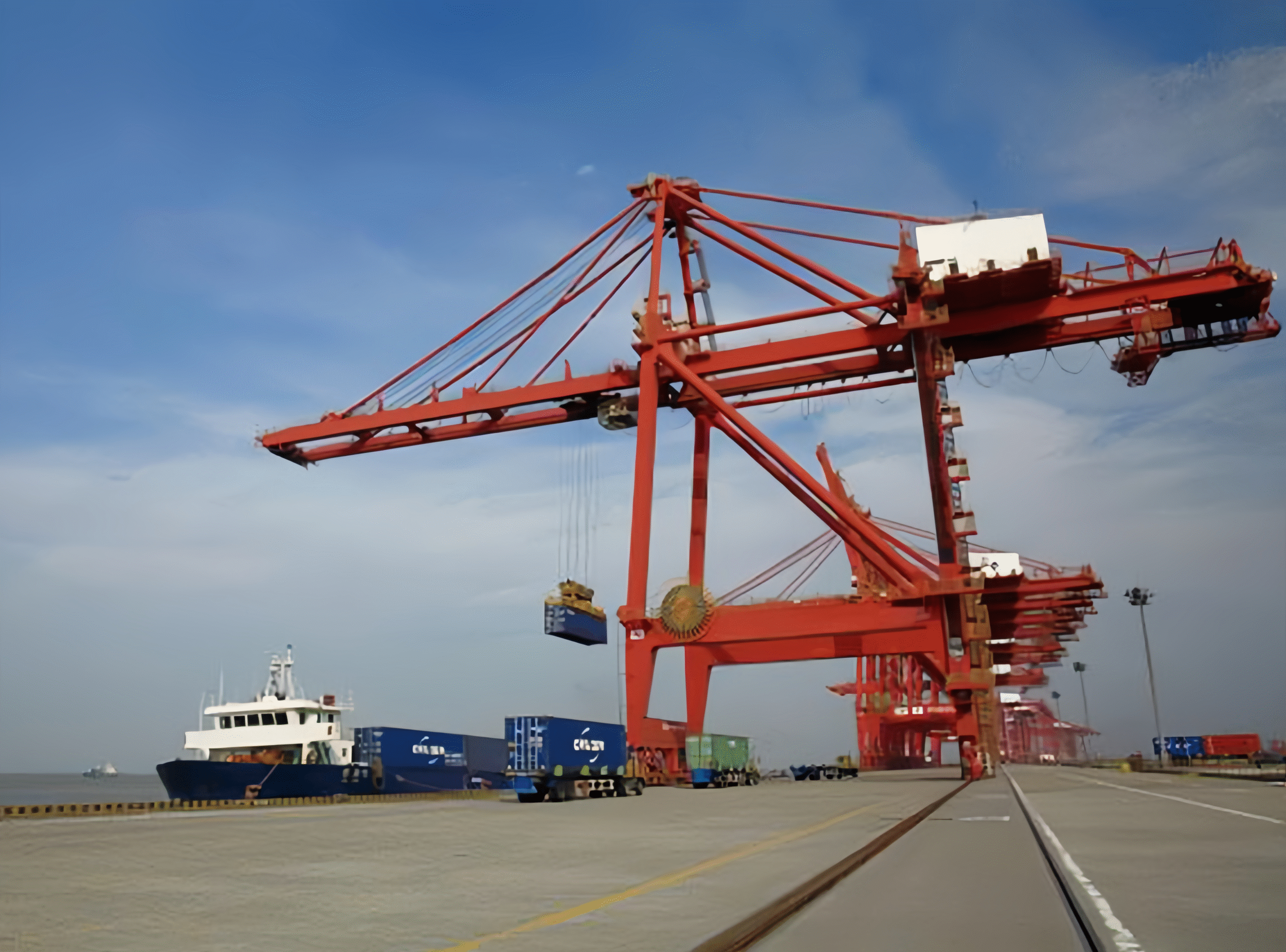
Ordinary standard STS crane is the most basic and widely used manual quay container crane, the core of which relies on the operator to complete the whole operation in the overhead cab, which is the main loading and unloading equipment of traditional container terminals.
This kind of standard STS crane machine structure is mature, simple control logic, mainly relying on manual control to complete the lifting, trolley walking, trolley running, spreader alignment and other full set of operational actions, support for single-box, double-box conventional loading and unloading modes, to adapt to the vast majority of standard container operating conditions.
The automation configuration of the equipment is extremely low, almost no intelligent sensing and automatic control module, the threshold of troubleshooting and daily maintenance is even lower. On-site operation and maintenance personnel do not need to master complex software and digital technology, but only need to be familiar with the mechanical structure and basic electrical system to complete the daily maintenance.
Relying on high adaptability and low O&M threshold, ordinary STS shorebridge is widely used in small and medium-sized container terminals, feeder ports, ports in emerging markets, as well as terminals with irregular vessel call schedules and flexible operating conditions. For terminals with weak automation infrastructure and limited budget, it is a very cost-effective basic configuration.
What is an automated STS bridge?
Automated STS bridge is a high-end port equipment adapted to container terminal automation. On the basis of the traditional mechanical structure of the bridge, it is equipped with a full set of sensor monitoring, visual recognition, automatic control and remote operation and maintenance system, which greatly reduces the proportion of manual intervention.
The professional automated STS crane is equipped with laser positioning equipment, container OCR recognition system, anti-sway control system and special port management software, which can realize the automation functions such as automatic trolley alignment, intelligent control of lifting path, precise positioning of spreader, and collision avoidance and warning of equipment.
Different from the traditional manual operation mode, the remote-controlled quay crane can support centralized control in the remote control room, so that the operator does not need to station in the high-altitude cab, which greatly optimizes the operating environment. At the same time, it can be deeply linked with AGV, automated yard gantry crane and terminal TOS system, which is suitable for the whole process operation mode of smart port.
At present, the STS bridge automation in the industry is divided into three mainstream levels, namely, intelligent auxiliary manual bridge, remote control semi-automatic bridge, and highly automated bridge adapted to the whole process of intelligent terminal, the terminal can be upgraded step by step according to its own throughput and development planning.
Ordinary STS VS Automated STS Core Parameters Comparison Table
Combined with the global container terminal operation experience, we organize the core differences between the two types of ship-to-shore cranes, which is convenient for overseas projects to quickly select the model for reference:
Core difference 1: Terminal operating capacity performance
The operational capacity of ordinary STS shoreline crane depends entirely on the operator's operational experience and status. The operating rhythm of senior operators is faster and more accurate, while novice operators are prone to delayed rhythm and alignment deviation.
The capacity of this type of equipment is also affected by the ship loading program, yard congestion, weather changes and other factors, the operation data fluctuations. However, the advantage lies in the high degree of manual flexibility, encountering container misalignment, sundry obstruction and other unconventional working conditions, can be quickly adjusted manually to adapt to the complex emergency scene.
The automated STS shorebridge completely avoids the unstable production capacity problem caused by the fluctuation of manual status. The equipment relies on the fixed program, laser positioning and anti-swing system to complete the cycle of operation, and the rhythm, path, and alignment accuracy of each round of loading and unloading process remain uniform.
In high-frequency, high-volume container operation scenarios, STS crane automation can continuously output stable capacity, and the linkage with automated yard equipment and transportation equipment is much smoother. The only limitation is that under extreme special working conditions, manual intervention is still required for adjustment, and it is not possible to completely disengage from manual assistance.
Core Difference 2: Manpower allocation and operation safety
The traditional STS bridge requires operators to stay in the overhead cab for a long time. The high-altitude operating environment is always affected by wind and rain, vibration, temperature difference, and the operator is easily fatigued by long-time operation, which not only affects the operation efficiency, but also has certain safety risks.
This mode of operation is highly dependent on mature licensed operators, and many emerging ports and remote terminals are often faced with a shortage of skilled drivers and high personnel mobility, indirectly restricting the normal operation of the terminal.
The automated STS bridge revolutionizes the traditional manpower operation mode, transferring the operator from the overhead cab to the remote control room on the ground. The operating environment is more comfortable and safe, which reduces the risk of overhead operation and personnel fatigue from the root.
At the same time, the remote control mode can realize the supervision of one person and multiple machines, significantly reducing the number of front-line operators. It should be noted that automation is not completely eliminate manpower, but optimize the manpower structure, the terminal needs to support automation operation and maintenance, system debugging, network security and other professional and technical personnel.
Core Difference 3: Pre-CAPEX input cost
Ordinary STS shorebridge has lower procurement and infrastructure investment, simple equipment structure, no need for supporting sensing system, remote control room, high-speed data network and exclusive TOS docking module, short installation and debugging cycle, suitable for terminal projects with limited budget and urgent need for commissioning and operation.
For new feeder terminals with unstable throughput and short-term planning, the common STS bridge will not cause idle equipment costs, and the risk of capital investment is lower.
The upfront investment of automated STS bridge is higher, in addition to the cost of the entire mechanical structure, but also includes OCR recognition equipment, laser positioning system, automation control software, network security systems and remote control platform and other ancillary costs.
At the same time, the equipment needs to be put into production before the completion of the terminal infrastructure renovation, system debugging, hardware and software adaptation work, the overall landing cycle is longer. This kind of investment is more suitable for large-scale deep-water container terminals with long-term operation, high throughput, and intelligent upgrading planning.
Core difference 4: Long-term OPEX and full-cycle costs
The long-term operation cost of ordinary STS quay bridge mainly focuses on the salary of front-line operators, regular machinery maintenance, spreader loss and safety management. The equipment structure is simple, the parts are common, the maintenance threshold is low, and there is no need to hire a professional technical team with high salary.
However, the instability of manual operation will occasionally lead to problems such as operation errors and slight collision of equipment, indirectly generating additional downtime loss and maintenance costs.
The automated STS shorebridge significantly reduces the front-line labor costs, but adds the costs of system operation and maintenance, sensor replacement, software upgrades, network security maintenance and so on. The maintenance of the equipment digitalization module is more specialized and requires regular overhaul by a fixed technical team.
From a full-cycle perspective, automation equipment in high throughput terminals can quickly recover the initial investment by relying on stable capacity and low fault loss. For small and medium throughput terminals, the comprehensive operation cost of ordinary STS bridge is more advantageous.
Core difference 5: terminal infrastructure supporting requirements
Ordinary STS bridge has lower requirements on terminal infrastructure, only need to meet the standard quay wall bearing, track laying, conventional power supply and basic operation and maintenance channels, which is suitable for most of the traditional container terminal renovation and new projects.
On the basis of conventional infrastructure, automated STS bridge also needs stable high-speed data network, uninterrupted power supply system, independent remote control room, and at the same time, it has to match the docking standard of terminal TOS system, automated yard equipment, and shore-side identification system.
If the terminal yard is still purely manual mode of operation, even if equipped with high-end automation STS bridge, but also can not play the full performance of the equipment. Port automation is a whole set of system engineering, a single equipment upgrade can not realize the overall capacity enhancement.
Selection program for different scale terminals
For small and medium-sized container terminals, ordinary STS bridge is preferred. These terminals have moderate throughput, irregular port call frequency and limited budget, so the flexibility and low operation and maintenance cost of common equipment can fully meet the daily operation requirements.
Small and medium-sized terminals can install anti-sway system, remote diagnosis, energy consumption monitoring and other intelligent auxiliary modules as required, which can slightly improve the stability of operation without increasing the high cost.
Large-scale deep-water container hub port and smart terminal projects are more suitable for automated STS shore bridge. These terminals have high throughput and intensive ship turnover, and need stable operation capacity and digital management system, and the automation equipment can perfectly match the cooperative operation mode of AGV and automated stacking equipment.
Automation upgrade program for in-service STS bridge
Many terminals do not need to directly eliminate the old bridge and replace the new automation equipment. As long as the main steel structure of the equipment is intact and the basic electrical system can be modified, the automation upgrade can be completed step by step.
Common low-cost upgrade projects include the addition of anti-sway system, remote control module, container visual identification system, equipment condition monitoring system, etc., which can gradually realize semi-automated operation and reduce the dependence on manual labor.
If the old equipment outreach, lifting height can not be adapted to large ships, or the equipment structure is aging seriously and has no value for transformation, directly replacing the brand new automated STS bridge will be more in line with the long-term development plan of the terminal.
Automated STS bridge selection risk and avoid pit points
When purchasing automation equipment, many customers only focus on the configuration of the equipment itself, ignoring the overall process of the terminal to adapt, resulting in the equipment can not run at full capacity after the commissioning, resulting in cost waste.
Automation equipment not only relies on mechanical performance, but also relies on software system, network stability and TOS docking accuracy. Network failure, system compatibility problems, sensing equipment loss, will directly lead to equipment downtime.
At the same time, the automated terminal needs to be supported by a professional technical operation and maintenance team. If the team's technical ability is insufficient, it cannot investigate software and hardware failures in a timely manner, which will greatly affect the terminal's operational efficiency.
Terminal equipment selection decision matrix
For terminals with moderate throughput, controllable labor cost, limited budget and manual operation in yard, standard ship-to-shore crane is preferred.
For terminals with high throughput, intensive ship turnover, high labor cost, smart port construction, and yard automation upgrades, the automated container terminal crane is preferred.
For terminals that want to upgrade steadily, avoid the risk of full automation, and have medium budget, semi-automated STS crane can be selected, and the step-by-step upgrading mode can be adopted to match the development rhythm of the terminal.
Common Misconceptions
Simply comparing the unit price of equipment procurement, ignoring the full cycle of operating costs, blindly configuring fully automated equipment for low throughput terminals, or sticking to the old purely manual equipment for terminals with high capacity for a long period of time are all common selection mistakes in the industry.
In addition, neglecting TOS system adaptation, network security protection, personnel technical training, as well as failing to reserve manual backup operation mode, will lay hidden dangers to the long-term operation of the terminal.
RFQ List for Terminal Purchase
Before docking with the equipment supplier, you need to sort out the core parameters and requirements in advance, including the target ship type, maximum number of deck container rows, equipment reach, lifting height, rated load, single and double container operation requirements, hourly operation target, track gauge, wind resistance level, power supply parameters, yard operation mode, automation level and after-sales training requirements.
FAQ Frequently Asked Questions
Does an automated STS bridge always have a higher operating capacity?
Not necessarily. The advantage of automated equipment is capacity stabilization, not absolute speed. If the terminal yard is congested, the ship allocation is chaotic, and the TOS system is poorly adapted, the advantage of automation equipment can not be realized, and the production capacity is not as good as that of the normal bridge operated by skilled manpower.
Can the existing ordinary STS bridge be modified and upgraded to automation equipment?
Yes. In-service equipment with intact structure and rebuildable electrical system can be retrofitted with automation module step by step to realize semi-automatic operation, which is the optimal solution for low-cost upgrading. Old aging equipment is not recommended for retrofitting, direct replacement is more cost-effective.
Is it still necessary for small and medium-sized terminals to purchase ordinary STS quay bridges?
It is absolutely necessary. Ordinary STS bridge has simple operation and maintenance, controllable cost, flexible adaptation, and with basic intelligent auxiliary module, it is enough to meet all the operational needs of small and medium-sized terminals, and the short-term return on investment is higher.
Henan Mine Crane Factory supply
Selecting between standard and automated STS cranes is not a simple choice of new technology versus traditional equipment. The core is matching crane configuration with terminal throughput, vessel frequency, and other factors. The core is matching crane configuration with terminal throughput, vessel frequency, labor cost, infrastructure conditions and long-term smart port planning.
Henan Mine Crane, as a professional global STS crane manufacturer, provides reliable standard ship-to-shore cranes, semi-automated and highly automated STS crane solutions for containerization. Henan Mine Crane, as a professional global STS crane manufacturer, provides reliable standard ship-to-shore cranes, semi-automated and highly automated STS crane solutions for container terminals of all scales. We support parameter customization, system docking, on-site installation guidance and full lifecycle after-sales service for global port projects.
If you have STS crane procurement and upgrading demands, you can provide your terminal throughput, vessel parameters, berth conditions and automation planning. Our professional engineering team will customize exclusive and cost-effective container terminal crane solutions for your project.