
10 Things to Consider When Selecting an Overhead Crane
Sudden failure of plant material handling equipment can result in an average of thousands of dollars in economic losses per hour. The bridge crane specifications are too small, the selection does not match, is the most common cause of this kind of fault, but also the most easy to avoid one of the core reasons.
The service life of the bridge crane can reach 15 to 25 years. As the core fixed asset, its selection directly determines the safety, production efficiency and maintenance expenses of the plant, so the purchase selection verification is a crucial decision.
This guide summarizes the ten core points of selection, and helps enterprises to select cranes with suitable working conditions and long-term durability, which can be checked by factory engineers, operation and maintenance personnel before placing orders.
Define Your Lifting Requirements
Selection needs to be based on production conditions, not the equipment itself. The core basis for all crane parameters is only two: the maximum lifting load and the conventional lifting load. These two values are usually not the same, if only based on the rare peak load selection, it is very easy to cause equipment specifications redundancy, procurement and operation and maintenance costs.
Before the inquiry, it is necessary to sort out the list of core hoisting working conditions and specify the hoisting weight, reclaim position, running track and operation frequency. This 1 simple operation, which can avoid most of the selection differences of engineering, safety, operation and maintenance departments in advance.
At the same time, three key equipment parameters need to be defined:
- Hook height and lifting height: comprehensively consider the headroom height of the factory building, sandwich structure and various fixed obstacles, accurately determine the effective vertical lifting stroke of the electric hoist, and ensure that the lifting operation is free of interference.
- Operation span: According to the overall width of the workshop or the installation spacing of crane rails, the corresponding crane needs to cover the global horizontal operation range, which is the core basic parameter of equipment selection.
- Bridge and trolley running speed: combined with the workshop material transfer efficiency requirements, matching the appropriate equipment level running rate, taking into account the operation efficiency and operation stability.
In addition, a sufficient safety margin shall be reserved based on the design of the maximum rated load of the equipment. Overload operation is the core cause of crane equipment damage and failure shutdown. At the same time, it will directly violate the industry safety operation standards and have great safety risks.
Match the Duty Cycle to a Recognized Duty Class
Duty cycle indicates how frequently, how rapidly and how severely a crane will be used - and it immediately influences the frame strength, the motor sizes, brakes and gearbox the crane requires. The Crane Manufacturers Association of America (CMAA) and the Hoist Manufacturers Institute (HMI) list duty classifications standardized enough that most respected builders spec against:
| Duty Class | Typical Use | Example Application |
| Class A/B (Standby–Light) | Infrequent lifting, long idle periods | Maintenance bays, small shops |
| Class C (Moderate) | Regular use, moderate speed | Machine shops, light manufacturing |
| Class D (Heavy) | Frequent, intensive daily use | General manufacturing, multi-shift plants |
| Class E (Severe) | Continuous, high-speed cycling | Steel warehouses, high-volume production |
| Class F (Continuous Severe) | Round-the-clock, heavy service | Steel mills, nuclear facilities |
Don‘t under design the duty class to reduce initial capital cost if your line involves several shifts, starts and stops, or constant material throughout the line. The savings are normally realized within the first year to year and a half by drive and brake motor premature failure.
Choose the Right Crane Type for Your Facility
Overhead crane is a category, not a single product. The right type depends on coverage area, building structure, and how materials move through your space.
| Crane Type | Best For | Typical Capacity | Mobility |
| Bridge crane (single/double girder) | Full-bay coverage in permanent buildings | Up to 250 tons (double girder) | Fixed runway |
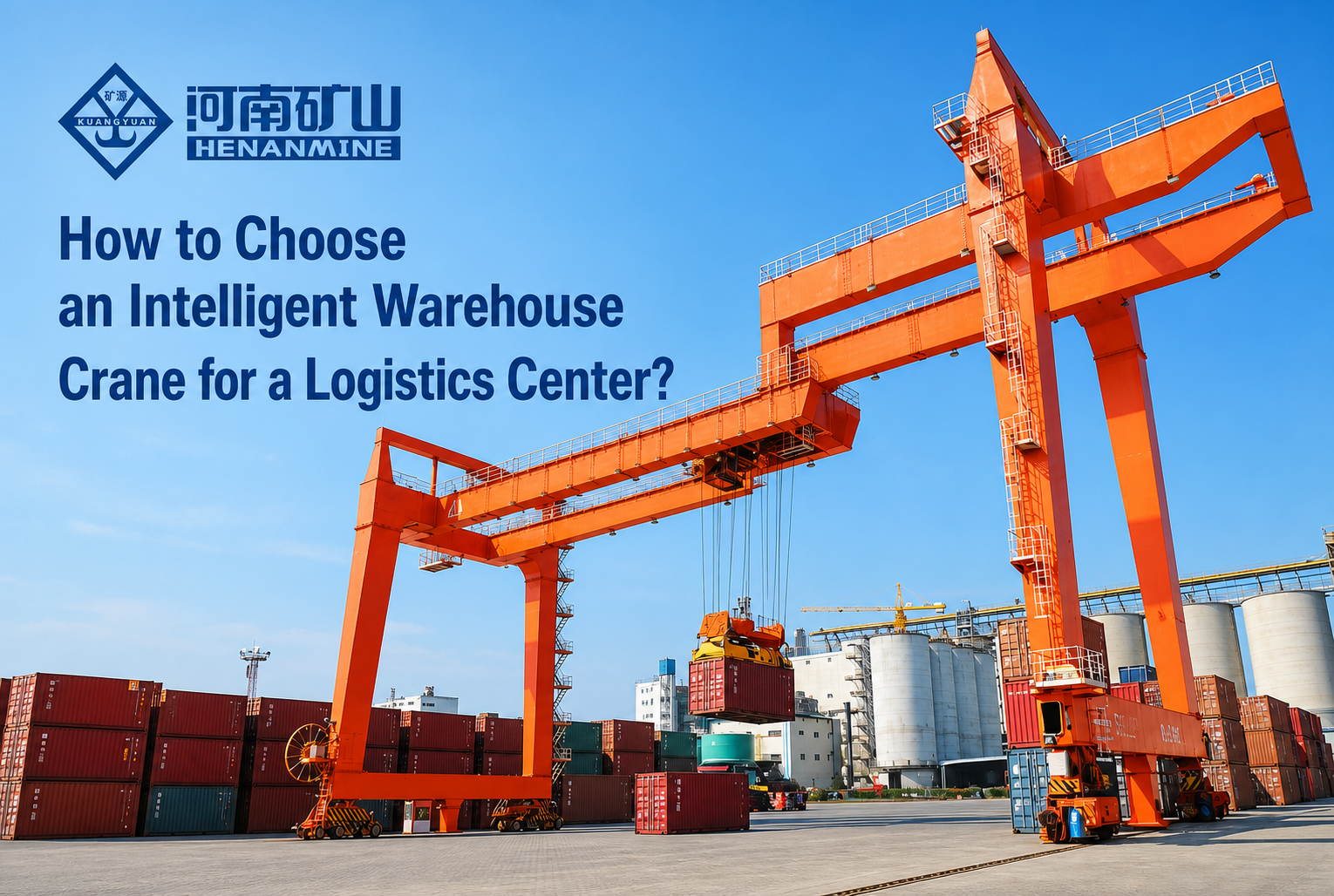
| Gantry crane | Facilities without adequate building support, outdoor use | A few hundred pounds to industrial-scale | Self-supporting, often portable |
| Jib crane | Localized, repetitive lifts at a single workstation | Typically up to 1–2 tons | Rotates around a fixed column |
| Monorail crane | Fixed, repeatable paths through tight or curved layouts | Up to roughly 6 tons | Follows a fixed curved or straight track |
Bridge cranes are still the default for permanent, full coverage handling because they use the building structure to support the load. Gantry cranes are logical when you can‘t support the runway loads in your building, or when you need to move the crane. Jib and monorail cranes address narrower issues - just one workstation, or a set production path - at a cost a small fraction of a full bridge system.
Secide Between Single and Double Girder, Top-Running and Under-Running
Once a bridge crane has been selected, two additional core structural options must be determined, as they directly influence the equipment’s overall configuration and operational performance: the choice between a single-girder and a double-girder design, and between top-running and suspended type configurations.
Single girder vs. double girder
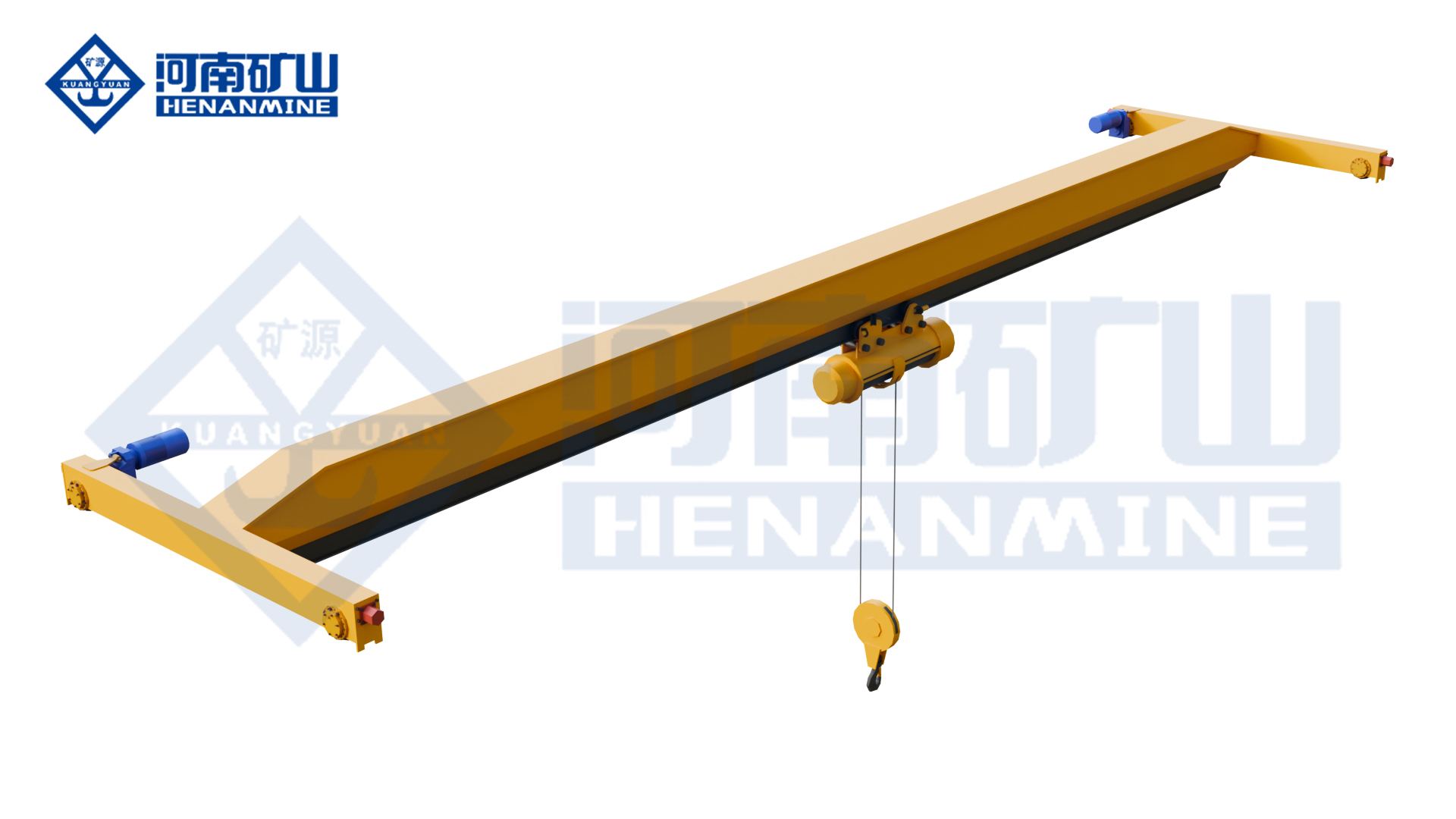
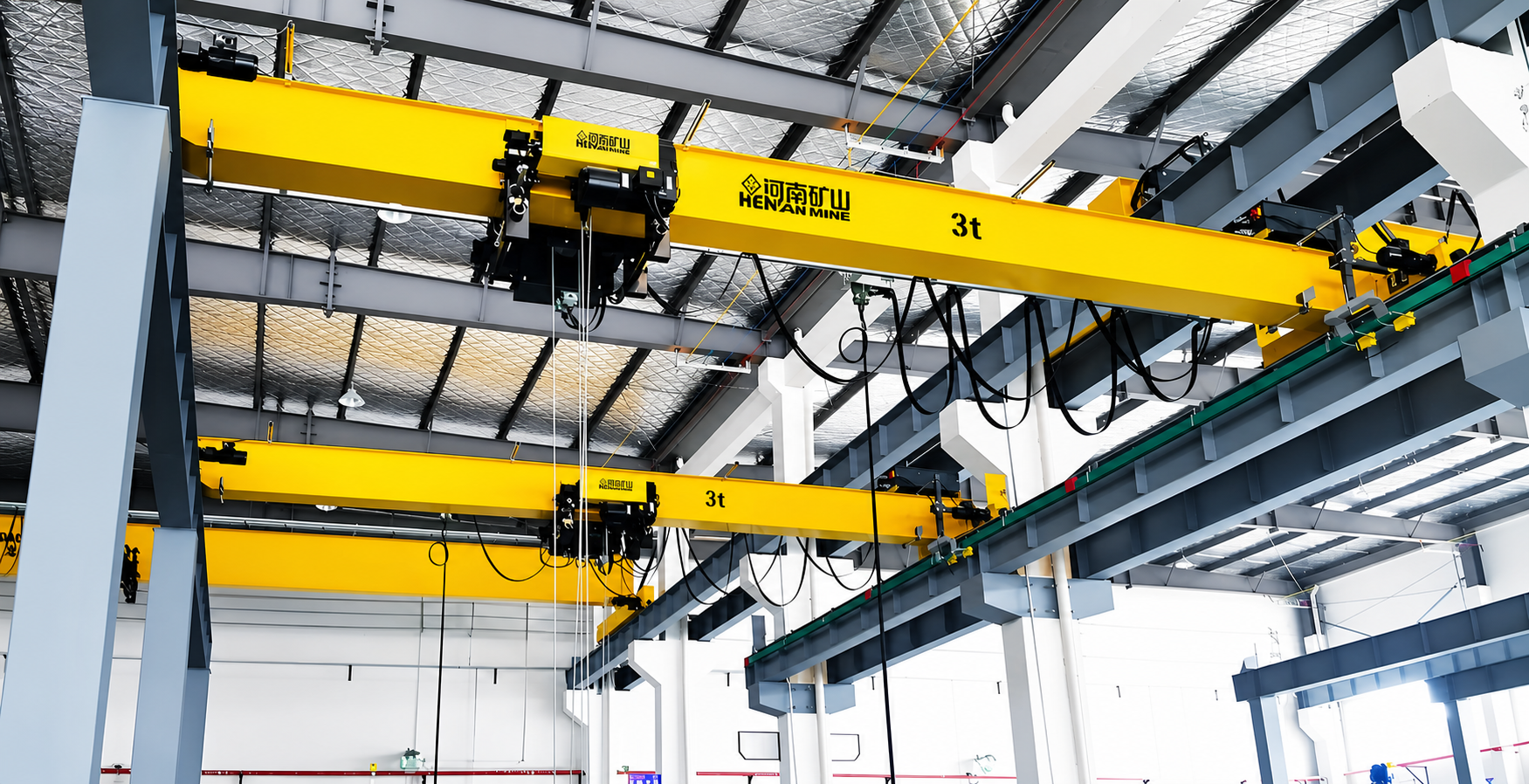
The single-girder crane adopts a single I-beam main beam, the overall structure is light and compact, the installation space is small, the procurement and operation and maintenance costs are lower, and the adaptability is stronger. It is generally suitable for light and medium load conventional hoisting conditions within 15 tons. It is the mainstream choice for small and medium-sized factories to be economical and practical.
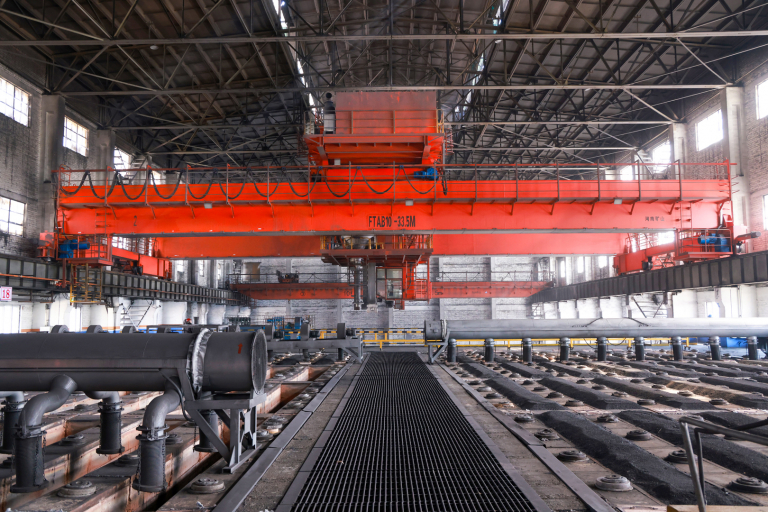
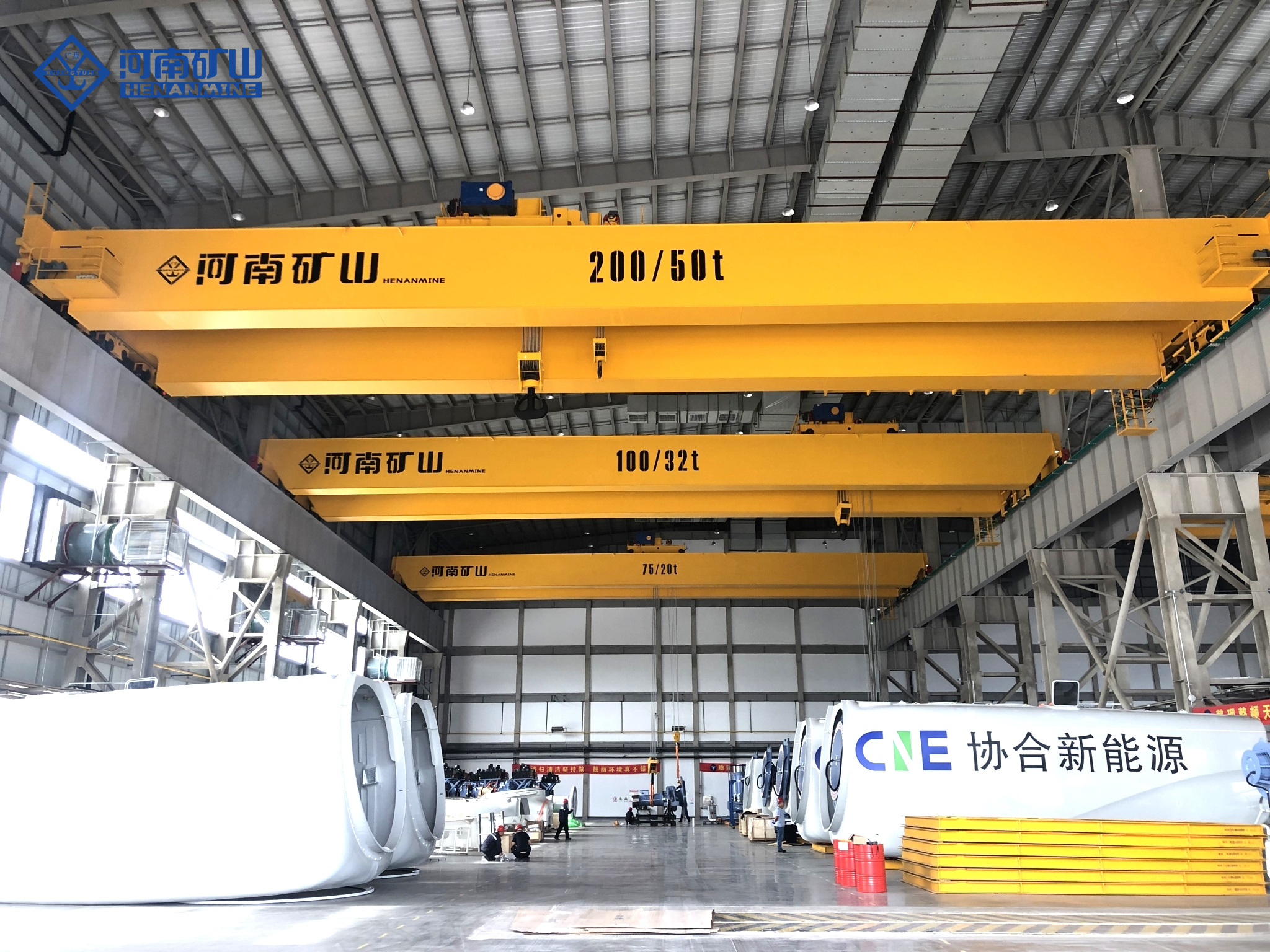
The double-girder crane adopts a symmetrical structure of double main girders, with stronger overall rigidity and more stable bearing performance. It not only has a larger effective lifting height, but also has a rated load of hundreds of tons. Its bearing capacity and operation stability far exceed that of the single-girder crane. It is a special standard equipment for heavy-duty, high-frequency and high-standard hoisting operations in large factories.
Top-running vs. under-running
The top running crane runs along the top of the track, which can fully release the rated load of the equipment, while retaining the maximum effective lifting height, the overall bearing capacity and the utilization rate of the working space are higher, and it is suitable for large-scale, heavy-duty, and high-working conditions. Lifting system.
The under running crane adopts the roof suspended ceiling installation method, does not occupy the ground and column space, the layout is more clean and flexible, the space adaptation advantage is outstanding, very suitable for light load conditions, plant floor height is limited, the site layout is compact production scene.
The selection of the above two structures has no absolute advantages and disadvantages, and the optimal scheme depends entirely on the load-bearing capacity of the plant structure and the indoor headroom height, which is also a crucial consideration dimension in the selection of cranes.
Select the Hoist and Control System
Electric hoist is the core lifting mechanism of crane, the choice of hoist type directly determines the use cost and operating performance of the equipment, the two types of mainstream model adaptation scenarios are different.
- The wire rope hoist has stronger carrying capacity and runs more smoothly under high frequency and high strength operating conditions. It is a general preferred model for heavy load and high frequency lifting scenarios and is suitable for most heavy industrial production conditions.
- The chain hoist has outstanding cost performance and is more suitable for work stations with small tonnage and light load. However, long-term continuous heavy-duty operation is easy to aggravate body wear and tear, and its service life will be greatly reduced, which is not suitable for high-intensity work scenarios.
On the control side, modern cranes typically offer:
- The wired handle has simple control structure, low cost, wired connection, stable and reliable operation, and easy maintenance. It is the mainstream choice for conventional basic working conditions.
- Wireless remote control can liberate the operator's activity space, greatly improve the operation flexibility and vision safety, especially suitable for large-span and large-scale hoisting operation scenarios, and avoid the risk of operation blind area.
The cab control is specially designed for large cranes or high-capacity, high-throughput heavy-duty systems, and is suitable for high-strength, high-precision, and all-weather industrial operations.
The variable frequency drive system (VFD) is a valuable upgrade configuration for cranes. Although the initial purchase cost increases slightly, it can realize soft start and stop of equipment, precise positioning, reduce mechanical impact and wear, effectively extend the life of equipment and reduce long-term maintenance costs.
Verify Facility and Runway Compatibility
Even cranes with fully compliant drawing parameters may not be able to adapt due to plant conditions. Before finalizing the procurement proposal, the following site conditions must be verified:
- Structural bearing parameters: the joint civil engineer shall confirm the track beam specifications, column spacing and equipment wheel pressure load to ensure that the plant structure meets the equipment operation requirements.
- Clearance and obstacles: do not only refer to the height of the highest floor of the factory building, but also check the running path of the crane in the whole process, completely avoid all kinds of obstacles such as spray pipes, ventilation pipes, lighting equipment and supporting steel beams, and verify the effective operation clearance.
- Supporting conditions for power supply: confirm the power supply scheme in advance, including the selection of sliding contact line or drag chain cable, equipment grounding mode and installation position of electric control cabinet.
- Feasibility of on-site installation: The construction risks of retrofitting cranes in old factory buildings are completely different from those of supporting equipment in new factory buildings. Improper planning can easily lead to rework and delay of construction period, which is a common problem of project landing.
For the old plant renovation project, this link can directly screen out a large number of unsuitable crane models. Therefore, the verification of plant conditions must be placed in the early stage of selection, rather than remedied after the completion of procurement, from the source to avoid adaptation failure, project rework and other problems.
Prioritize Safety Features and Regulatory Compliance
In the United States, the bridge crane to strictly follow the OSHA 1910.179 "bridge and gantry crane" specification, equipment construction and inspection process usually refer to ASME B30.2 and CMAA industry standards. The following security configurations are hard standard equipment and cannot be omitted:
- Overload protection and load limit switch: real-time monitoring of hoisting load, once exceeding the rated tonnage immediately limit the operation, from the source to avoid overload caused by equipment damage and safety accidents;
- Emergency stop device on the operation console: the operator can stop with one key at any time to deal with sudden abnormal working conditions, quickly cut off the operation of the equipment, and build a strong defense line for sudden risks;
- Lifting upper and lower limit switches: accurately control the lifting stroke of the hook, effectively prevent dangerous working conditions such as over-range operation, topping, falling bottom, etc., and avoid damage to the mechanical structure;
- Anti-sway and anti-collision system: it is mostly used in medium and high-end models, which can effectively inhibit hoisting shaking, avoid hidden dangers of equipment collision, and greatly improve equipment operation stability and operation safety factor;
- Acousto-optic integrated early warning device: when the equipment is running, it will send out light and sound prompt synchronously to clearly warn the on-site personnel and avoid the potential safety hazard of man-machine cross operation.
In addition to the equipment hardware configuration, the OSHA specification clearly requires the equipment daily power-on precheck and regular in-depth inspection. Enterprises need to consider compliance inspection, data filing and certification requirements in advance during the selection and procurement stage, and do not wait until the equipment installation is completed before making rectification.
Suppliers shall be able to provide CE, EN 13157 and other corresponding national standard certification, engineering drawings and load test process documents. Suppliers who cannot provide complete compliance information shall be carefully selected.
Account for Environmental and Operating Conditions
The actual operating environment of the crane directly determines the material selection, anti-corrosion coating, motor parameters and electrical protection level of the equipment, and the following key working conditions should be considered in the selection:
- Extreme temperature environment: whether it is cold storage low temperature conditions, or high temperature conditions in the foundry, all need to match the exclusive motor specifications and lubricating medium, to avoid the failure of conventional accessories due to temperature change.
- High humidity and flushing conditions: For food processing and other scenes that require high-frequency water washing and killing, waterproof flushing grade accessories must be selected and matched with corrosion-resistant coatings to prevent problems such as moisture corrosion and water inflow failures.
- Dust and explosion-proof environment: For flammable, explosive and high dust scenes such as grain processing, woodworking production and chemical workshops, special structures for fire prevention and explosion-proof shall be adopted. Pneumatic hoist is also a common adaptation model for such high-risk environments.
- Outdoor open-air working conditions: outdoor operation scenarios without closed plant protection, cranes need to be equipped with anti-ultraviolet protective coatings and fully sealed electrical components to resist outdoor environmental erosion such as sunlight, wind and rain.
According to the actual working environment, one-time accurate selection can effectively avoid premature corrosion and damage failure of the equipment, which is far lower and more stable than the renovation cost of later failure renovation and installation of anti-corrosion accessories.
Plan for Maintenance, Serviceability, and Future Expansion
A hard-to-service crane will hurt you in downtime long after the asking price is forgotten. Choose models with easily reachable parts, walkways, and platforms so that inspection and maintenance take less time. If you‘ll be operating a number of bays, standardize your hoists and controls so that your spare parts inventory and personnel training is manageable.
It‘s also helpful to be specific with future growth in mind: has there been either available capacity in the electrical panel, a runway designed for a longer length than you presently require, or structural clearances for a second bridge further in the future. These types of “wants” are significantly less expensive to include in the design at purchase than to modify at a later date.
Calculate Total Cost of Ownership, Not Just Purchase Price
The purchase unit price is the most intuitive purchase cost, but it is often the lowest expenditure in the 15 to 25 year service cycle of the crane. The total cost of ownership (TCO) of the equipment consists of four core segments:
- Energy cost: Equipped with high-efficiency motor and variable frequency drive system (VFD) equipment, can effectively reduce power consumption, while reducing equipment running heat, long-term energy saving benefits.
- Maintenance and spare parts cost: priority should be given to the models with strong versatility of spare parts, short supply cycle and common standardized spare parts with existing equipment in the factory area, so as to reduce the difficulty of subsequent operation and maintenance and the cost of consumables.
- Cost of downtime loss: Crane failure downtime will directly cause production stagnation, and the capacity loss caused by the shutdown is usually much higher than the input cost of preventive maintenance.
- Training and testing costs: including professional training costs for operators, as well as regular equipment testing and compliance filing related costs mandated by OSHA regulations.
Comprehensive long-term cost of use, the purchase of higher unit price of high-quality cranes, with lower frequency of parts replacement, fewer downtime failures, the total life cycle cost is much lower than the low-cost low-cost low-equipped models, is a more cost-effective long-term choice.
Conclusion
Bridge crane selection can not only refer to the rated load, but also need to consider the load conditions, operating frequency, plant conditions, operating environment, safety standards and future capacity requirements. Cranes customized for working conditions can effectively improve production efficiency, ensure operation safety, and reduce the cost of equipment life cycle.
Enterprises need to comprehensively comb the lifting requirements, plant parameters, operating frequency and installation conditions before making inquiries. Accurate working condition information can help manufacturers provide customized solutions, abandon the short board of general-purpose models, and realize accurate matching of equipment and production scenarios.
Henan Mine Crane specializes in providing all kinds of lifting equipment and intelligent lifting systems, adapting to multi-industry working conditions and supporting customized solutions. With one-stop service, for customers to create safe and efficient, high-durability lifting equipment, to ensure long-term production benefits.