
The Complete Guide to Gantry Crane Structural Stability
Gantry crane structural stability determines whether a multi-ton lift ends safely or ends in a headline. A single miscalculated wind load, an undersized runway beam, or a missed inspection can turn a routine lift into a structural collapse. This guide breaks down exactly what keeps a gantry crane upright, which forces threaten it, which standards govern its design, and how to keep it stable across decades of service.
What Is Gantry Crane Structural Stability?
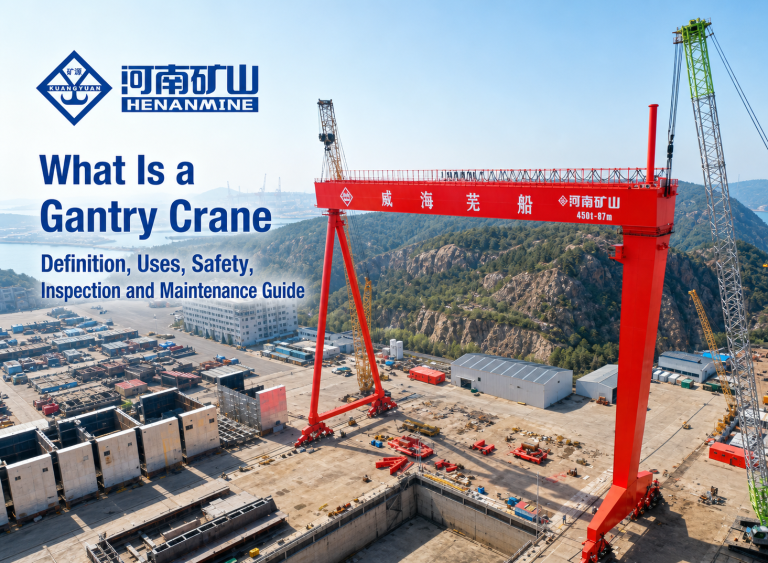
Henan Mine Crane manufactured Gantry crane structural stability is the capacity of a crane’s structure, to resist overturning, slipping or bending under its rated load, self weight, and local weather conditions. It achieves this by transferring vertical and horizontal loads through a stiff or semi-stiff structure to the ground or runway rails in a way that the center of gravity and reaction force remains within limits. It is important since a failure in stability doesn’t cause a component to bend, but causes the whole machine to fall, endangering all personnel, cargo and supporting structures nearby.
Stability is distinct from load capacity. A crane can be well within its rated tonnage and still become unstable if wind, skew, or an uneven foundation shifts the force path beyond what the frame was designed to handle.
Core Structural Components That Determine Stability
Every gantry crane's stability depends on how four structural elements work together.
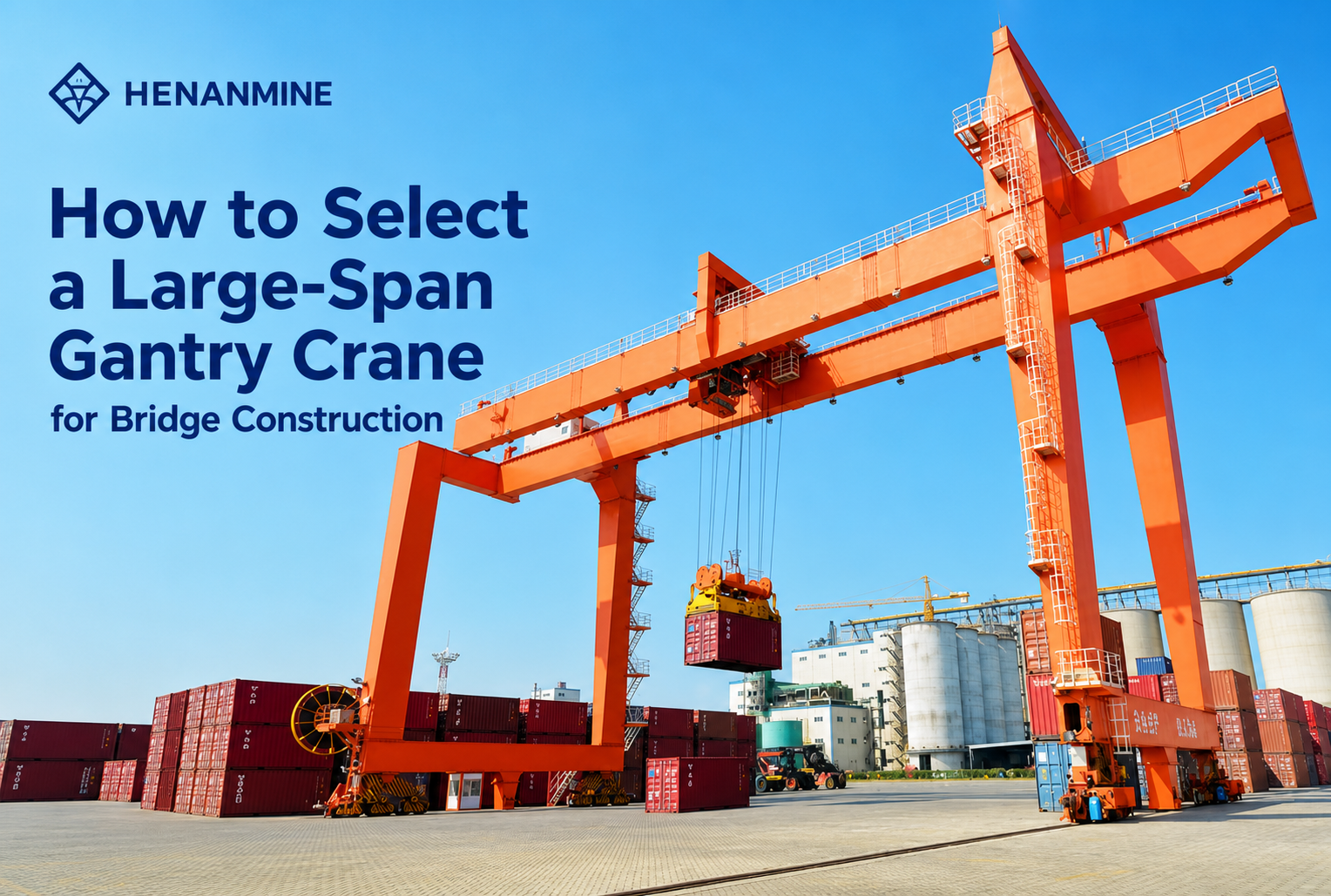
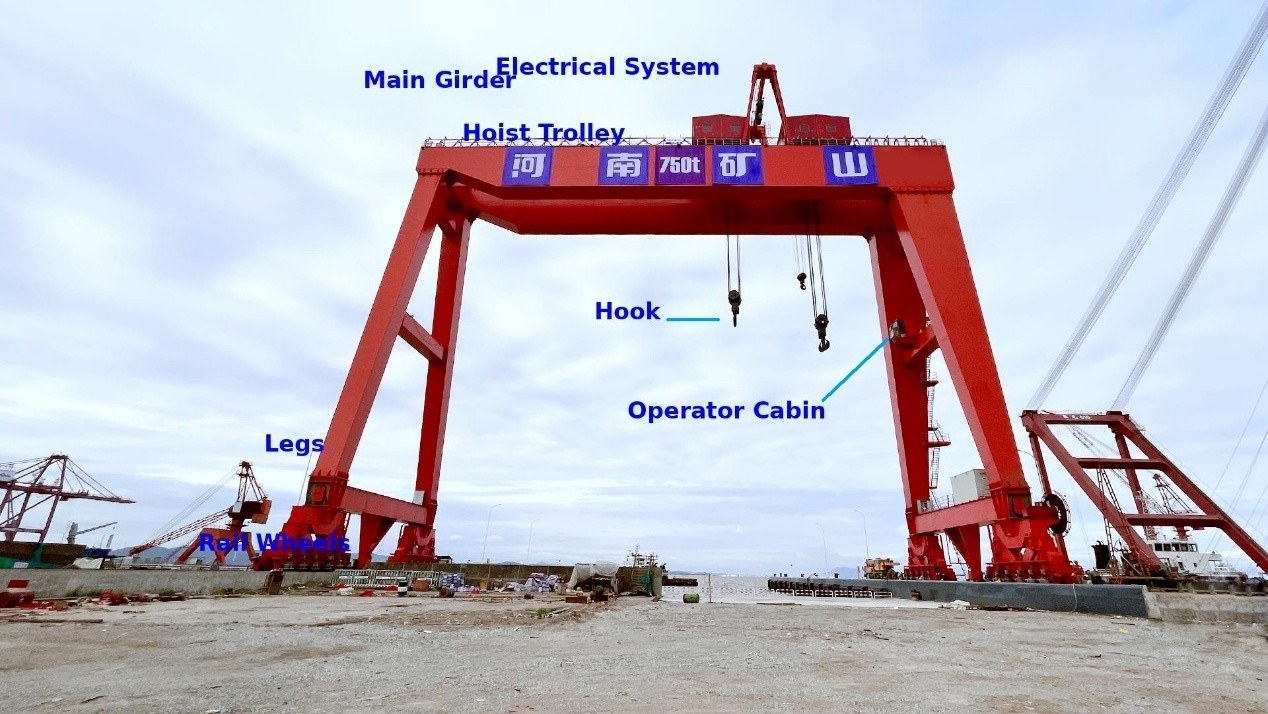
Main girder: The horizontal beam spanning the top of the frame carries the hoist, trolley, and lifted load. Single girder configurations are typically used for lighter loads, while double girder designs handle heavier capacities and longer spans. Cantilever extensions beyond the legs are generally limited to about one-third of the span length to control bending stress. Girders are built as either box sections or open truss structures, and this choice directly affects wind resistance, as later sections explain.
Gantry legs: The legs are vertical structures that support the bridge and connect it to the ground or to rails, and they are crucial for maintaining the stability and balance of the equipment. Leg configuration is one of the most consequential,and least understood,design decisions in gantry crane engineering.
End carriages and connections: The end beam is typically a box-shaped structure rigidly connected to the main beam, with high-strength bolts used to join the main beam and end beam for ease of transport and reassembly. This rigid connection is what allows the entire load path,from hoist to girder to leg to foundation,to behave as a single structural system rather than a chain of independent parts.
Foundation and runway: The frame is only as stable as what it stands on. Runway beams and foundations must be engineered to carry the crane's full dead weight plus rated load plus dynamic and wind forces, not just the static tonnage figure on the nameplate.
The Rigid Leg vs. Flexible Leg Mechanism
One of the most important,and most overlooked,stability concepts in gantry crane design is the asymmetric leg system used on many large gantry cranes: one rigid leg and one hinged (flexible) leg.
The rigid leg anchors the crane and carries both vertical and horizontal loads, acting as the backbone of the structure, while the flexible leg handles vertical load only, absorbing alignment errors and thermal expansion. When a horizontal force,a wind gust or a skew event from the crane running slightly off track,hits the top of the frame, the two legs respond differently. The rigid leg behaves like a vertical cantilever fixed at its base, converting every horizontal push at the top into a bending moment at the bottom, while the hinged leg carries no bending moment at all and instead takes only axial tension or compression.
Both legs working together create a self-balanced frame one legs pushes and the other pulls so that, as the flexible leg sags a couple of degrees, the frame remains stable. This setup isn’t a compromise; it is a carefully thought out structure that allows the frame to accommodate dimension change (rail misalignment, thermal growth) without creating unexpected stress, while still providing a predictable overturning resistance to the flexible end.
Forces Acting on a Gantry Crane: Load, Wind, and Dynamic Effects
Four force categories govern gantry crane stability:
- Rated load and dead weight the vertical force of the object being lifted and the dead weight of the crane itself.
- Wind load gantry cranes used outside such as in ports, ship yards or construction sites are subject to wind load which can substantially impact on their stability and structural stress. In some regions crane must endure wind exceeding 150km/h during storm.
- Dynamic and cycling loads Structural elements, including the girders, legs and end carriages are required to sustain repeated cycles of the specified duty class.
- Skew and misalignment forces The horizontal forces developed by the crane as the two rail mounted legs travel at slightly different speeds and cause the frame to skew.
Wind is the force most often underestimated. Unlike a static building, a Henan Mine Crane manufactured gantry crane is a tall, relatively light, mobile structure with a large exposed girder surface,making it uniquely vulnerable to sudden gusts and downdrafts.
Safety Factors and Stability Calculations Explained
Safety factor is the margin built into a crane's design between its rated capacity and the load at which failure would actually occur.
In the United States, the safety factor for hoisting devices must fall between 2:1 and 3:1, meaning the crane is designed to withstand at least twice,and often three times,its rated load before failure. Rigging components carry an even wider margin: slings and similar rigging hardware are typically rated to a 5:1 safety factor under ASME B30.9. These numbers aren't arbitrary,they account for dynamic shock loading, material fatigue, wind, and imprecise field conditions that a static calculation can't fully capture.
Beyond hoisting safety factors, structural stability calculations specifically evaluate:
- Overturning moment vs. resisting momentat each leg, factoring in wind and skew forces
- Leg reaction forces, used as the primary indicator of slip or overturning risk, as demonstrated in wind-collapse investigations
- Deflection limitson the main girder under rated load, per CMAA 74's 2025 stress and deflection guidance
- Foundation bearing capacity, since runway beams must be verified as strong enough to support the crane and its maximum load, with undersized or weak beams risking structural damage or accidents
Before commissioning, international standards require load testing to confirm the crane can safely handle its designed capacity. This typically involves lifting 110% of rated capacity, holding briefly, and checking for abnormal deflection or behavior across the structure.
Inspection and Maintenance Practices That Prevent Failure
Structural stability degrades gradually,corrosion, weld fatigue, foundation settlement, and loosened connections all accumulate silently until a load event or wind gust exposes the weakness. Systematic inspection is the only defense.
Frequency and depth: Annual inspections provide the most thorough assessment, typically performed by certified inspectors using specialized diagnostic equipment, and go beyond visual examination to include dimensional measurements, deflection assessment, weld integrity verification using non-destructive testing, and foundation condition review.
Portable vs. fixed cranes: Portable gantry cranes require the same inspection protocols as fixed installations under OSHA 1910.179, and because they experience frequent assembly and disassembly cycles, they often need additional verification of connections, leg stability, and structural integrity every time they're relocated.
Documentation: Employers must document proof of inspection, maintenance, and completed repairs, both to satisfy OSHA requirements and to build a maintenance history that reveals developing structural trends before they become critical.
Practical inspection focus areas:
- Weld integrity at girder-to-leg and leg-to-baseplate connections
- Foundation and runway beam condition, including settlement or cracking
- Leg alignment and verticality (particularly on rigid-leg designs)
- Corrosion on outdoor, port, and shipyard cranes exposed to salt air
- Bolted connections at end carriages, checked for loosening under cyclic load
Warning Signs of Structural Degradation
Certain visible and operational signs indicate that a gantry crane's stability may be compromised before a formal inspection catches it:
- Visible girder deflectionbeyond the manufacturer's specified limit, especially under no-load conditions
- Uneven wheel or leg wear, suggesting the frame is carrying an unbalanced load distribution
- New or widening cracksat welded joints, particularly at girder-to-leg transitions
- Foundation cracking or visible settlementbeneath one or more legs
- Unusual vibration or swayduring travel, which can indicate loosened bolted connections or leg misalignment
- Corrosion at structural joints, especially in outdoor, coastal, or shipyard environments
Any of these should trigger an immediate structural assessment rather than waiting for the next scheduled inspection.
Retrofitting and Reinforcement: When and How
Not every stability issue requires crane replacement. Common reinforcement strategies include:
- Girder reinforcement:adding stiffening plates or converting an open truss girder to a box section in high-wind environments
- Leg bracing upgrades:adding cross-bracing or converting a two-rigid-leg design to a rigid/flexible configuration to better absorb misalignment
- Counterweighting:using counterweights and structural reinforcements is a common method to enhance stability, particularly on cranes with cantilevered girder sections
- Foundation underpinning:addressing settlement issues identified during inspection before they propagate into leg misalignment
- Wind restraint systems:adding rail clamps or tie-downs for outdoor cranes in storm-prone regions, directly addressing the sliding and overturning failure mode documented in wind-collapse case studies
A retrofit decision should always be based on documented inspection findings and, for significant modifications, a re-verification of the crane's stability calculations against the applicable standard (ASME B30.17, CMAA 70/74, or equivalent).
Frequently Asked Questions
What is the difference between load capacity and structural stability in a gantry crane?
Load capacity is the maximum weight a crane can lift; structural stability is whether the frame remains upright and undeformed while lifting that weight. A crane operating within its rated capacity can still become unstable due to wind, skew, or foundation issues unrelated to the load itself.
Why do rigid-leg and flexible-leg gantry cranes remain stable under wind load?
The rigid leg absorbs horizontal wind forces as bending moment while the flexible leg carries only axial forces, allowing the two legs to form a self-balanced frame that maintains equilibrium even under uneven loading.
How often should a gantry crane's structure be inspected?
Annual inspections by certified inspectors provide the most thorough structural assessment, though daily and periodic visual checks are also required under OSHA 1910.179, with portable cranes needing additional checks after each relocation.
Can a gantry crane's stability be improved without full replacement?
Yes. Girder reinforcement, leg bracing upgrades, counterweighting, foundation underpinning, and wind restraint systems can all improve structural stability, provided any modification is re-verified against applicable stability calculations and standards.
Henan Mine Crane Factory Custom
A gantry crane is only as reliable as the engineering behind it. Choosing an experienced manufacturer means more than selecting the right lifting capacity,it means working with a team that understands structural analysis, load distribution, wind resistance, and international design standards. From custom spans and lifting capacities to application-specific configurations, every detail should be engineered to deliver long-term stability, safety, and dependable performance in demanding industrial environments.
Henan Mine Crane Factory specializes in custom gantry crane solutions tailored to the requirements of ports, shipyards, manufacturing plants, warehouses, and construction sites. With advanced manufacturing capabilities, strict quality control, and compliance with international standards, every crane is built for durability, operational safety, and long service life. Whether you need a standard model or a fully customized solution, our engineering team is ready to help you select the right gantry crane for your project and provide reliable technical support from design through installation.