
A Practical Guide to Container Straddle Carrier Operation & Maintenance
In container ports, multimodal transportation yards and inland logistics parks, container straddle carrier is the core equipment to undertake box transfer and stacking. Many unplanned shutdowns and operational accidents in the terminal do not originate from the quality of the equipment itself, but are mostly caused by the gradual accumulation of non-standardized operation and inadequate maintenance.
Standardized operating procedures and systematic preventive maintenance can not only reduce safety risks, but also lengthen the service cycle of the equipment and dilute the full life cycle operating costs. This guide combines Henan Mine Crane Industrial's many years of experience in equipment delivery and overseas terminal services to compile a practical program of operation and maintenance that can be directly implemented to help global users manage and use container trucks well.
Basic Equipment Awareness
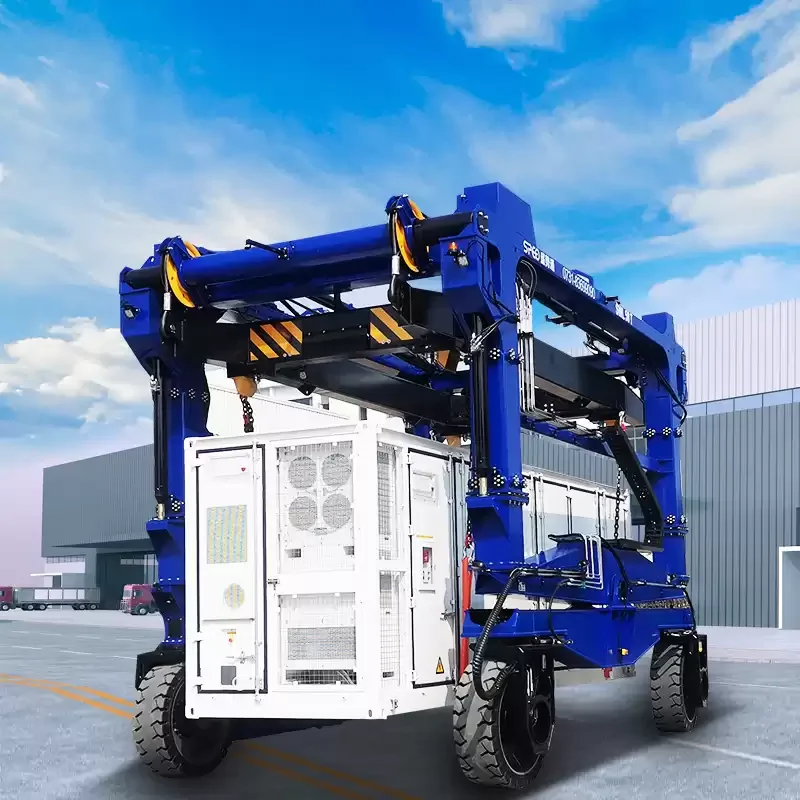
Container straddle carrier is a tire-type self-lifting equipment, portal frame can be directly across the container above, through the special spreader to complete the box lifting, landing, with its own walking system to achieve the field level transfer, a single device can cover the whole process of loading and unloading handling.
The core equipment components include steel frame, lifting mechanism, telescopic spreader, hydraulic system, driving system, steering mechanism, operating cab and multi-layer safety protection devices.
These equipments are widely used in container ports, railroad intermodal terminals, inland yards, logistics parks and empty container storage yards. Different scenarios have different operating intensities and environments, and the operation and maintenance focuses are also different.
Safety preparation before operation
Cross-trucks are special lifting equipment, operators must be licensed, and special training should be completed before replacing the new model, and should not be operated directly based on past experience.
Before starting the machine, it is necessary to complete the pre-shift inspection one by one: check the hydraulic oil level and pipeline leakage, check the tire wear and air pressure, test the spreader retraction, rotary lock function and braking, steering reliability, verification of lights, warning horns and sensing devices, fault state is strictly prohibited.
Before operation, make sure the site is solid and level, stop outdoor operation in bad weather such as gale, rainstorm, etc., and sound the warning horn for personnel traveling through the operation area, and start the equipment after confirming the evacuation.
Standard operation process
Turn on the main power first, start the power unit after the system self-test is completed, and test the lifting, steering and braking without any abnormality before driving into the operation area.
When picking up the box, slowly lower the spreader to the corner pieces of the container, make sure all the four sets of rotary locks are locked and then lift up smoothly, the box rises to a safe height and then start walking.
Maintain the safe height of the box during transit, slow down and sound the horn when turning and crossing the intersection, smoothly accelerate and decelerate to avoid shaking of the box, and maintain the safe distance when working in the same area with many vehicles.
When stacking, slowly drop the box to the target position, make sure the rotary lock is completely unlocked before driving away, multi-layer stacking needs to be aligned with the corner pieces of the lower layer of the box.
At the end of the operation, park the equipment to the designated area, reset the spreader, load to the ground, turn off the machine in order and make a good record of the operation of the shift.
Common operation misunderstanding
Strictly prohibit overloading, check the weight of the box before heavy box operation, long-term overloading will accelerate structural fatigue.
Before lifting, must confirm that the rotary lock is fully locked, locking is not in place is the main cause of falling box accident.
Prohibit forced operation in uneven ground, the ground undulation will increase the risk of rollover, but also exacerbate the uneven wear and tear of components.
Equipment alarms should be immediately shut down to investigate, do not ignore the alarm to continue to run, the accumulation of small faults can easily lead to major problems.
Pre-shift inspection should not be skipped. Oil leakage and tire breakage may occur during downtime, so early inspection can avoid risks.
Hierarchical preventive maintenance guidelines
- Daily maintenance: Clean the dust and debris on the surface of the equipment every shift, check the oil level and leakage points, and replenish the grease on the key articulation and lubrication points.
- Weekly maintenance: check the aging, leakage and loosening of hydraulic pipelines, check the tire pressure and tighten the wheel bolts, check the battery status and clean the terminals, and tighten the frame connection bolts.
- Monthly maintenance: checking brake pad wear and testing brake performance, calibrating steering system parameters, overhauling spreader swivel lock and telescopic mechanism, tightening electrical wiring and testing safety devices.
- Quarterly maintenance: replace the hydraulic oil filter, check the oil level and quality of reducer, calibrate the four-wheel alignment to reduce the abnormal wear of tires, and check the status of welded seams and joints of steel structure.
- Annual maintenance: carry out the load test of the whole machine, comprehensively overhaul the electrical system and replace the aging components, complete the comprehensive maintenance of the hydraulic system, repair the damaged anticorrosion coating, and do non-destructive testing of the key stress parts.
Common operation misunderstandings
Don't overload the operation, even if only a small amount beyond the rated load, long-term operation will accelerate structural fatigue, laying a hidden safety hazard. Check the weight of the box before the heavy box operation, and operate strictly within the rated load.
Don't save trouble by lifting without confirming the rotary lock, the rotary lock is not fully locked is the direct cause of many accidents of dropping the box, you must confirm that the lock is in place before lifting.
Do not force the operation in uneven ground, the ground is soft, undulation will lead to equipment tilt, both elevate the risk of rollover, but also exacerbate the uneven wear of tires and frame.
When the equipment alarms, stop the machine immediately to investigate the cause, and do not ignore the alarm to continue to work. Many major malfunctions are caused by the accumulation of small alarms, and timely investigation can prevent further damage.
You can't skip the pre-shift inspection. You can't just turn on the equipment because it was running normally the day before. Hidden dangers such as oil leakage and tire damage can occur during downtime, so pre-shift inspections can help you avoid risks in advance.
Hierarchical preventive maintenance guidelines
Daily maintenance: Clean the dust and debris on the surface of the frame and the electrical cabinet after each shift, check the oil level, see if there is any leakage point, and replenish the grease on the key articulation and lubrication points.
Weekly maintenance: check the hydraulic pipeline for aging, leakage, and whether the joints are loose. Check tire pressure and tighten loose wheel bolts. Check the battery status, clean the terminals to ensure good contact, and tighten the connecting bolts between the frame and the mechanism.
Monthly maintenance: check the brake pads wear, replace them in time when they exceed the limit, and test the braking performance. Calibrate the steering system parameters to ensure accurate steering. Comprehensively check the spreader rotary lock and telescopic mechanism, and replace the worn parts in time. Check the wiring of the electrical system, tighten the loose terminals, and test the effectiveness of the safety devices.
Quarterly maintenance: replace the hydraulic oil filter element to avoid impurity contamination of the oil. Check the oil level and oil quality of reducer and gear box, and replenish or replace as needed. Calibrate four-wheel alignment parameters to reduce abnormal tire wear. Check the welds and joints of the steel structure to detect signs of cracking and deformation.
Annual maintenance: complete the whole machine load test to verify the lifting performance. Comprehensively check the electrical system and replace the aging wiring and components. Comprehensive maintenance of the hydraulic system and replacement of hydraulic oil as required. Check the anti-corrosion condition of steel structure and repair the damaged coating in time. Do non-destructive testing on key stressing parts, and investigate the hidden danger of internal cracks.
Quick troubleshooting of common faults
When encountering common faults in daily operation, you can quickly locate them according to the basic process to reduce the downtime and waiting time. Complex faults need to contact the manufacturer's professional after-sales personnel to deal with, do not privately disassemble debugging.
| Symptom | Possible Causes | Recommended Solutions |
| Hydraulic pressure drop, slow lifting | Oil leakage; filter clogging; pump wear; valve group failure | Check oil level & pipeline leakage; replace filter element; inspect hydraulic pump and control valve |
| Steering jitter or insensitivity | Low hydraulic oil; steering valve failure; uneven tire pressure; steering mechanism wear | Replenish hydraulic oil; inspect steering valve group; adjust tire pressure; check steering hinge parts |
| Weak braking, long stopping distance | Brake pad wear; brake fluid leakage; brake cylinder failure; loose adjustment | Replace worn brake pads; check brake fluid circuit; adjust brake clearance |
| Spreader fails to expand or lock | Spreader motor fault; solenoid valve failure; lock mechanism jammed; signal fault | Check spreader power supply; inspect solenoid valve; lubricate lock mechanism; verify control signal |
| Frequent electrical tripping | Circuit short circuit; overload; component leakage; loose wiring | Check circuit insulation; verify load status; tighten terminals; replace faulty components |
Methods to improve equipment reliability
Landing on a fixed cycle of preventive maintenance system, the cost of maintenance according to the plan is much lower than the fault repair, and will not disrupt the production rhythm.
Try to use the original genuine spare parts, sub-factory parts price is low, but the dimensional accuracy, material strength is not guaranteed, easy to cause chain failures, but in the long run to increase expenditure. Henan Mine Crane, as an original manufacturer, can provide a full range of genuine spare parts to ensure the suitability of parts and delivery time.
Regular operator skills and safety training, standardized operation can reduce a lot of human-caused equipment damage.
Through the equipment operation data monitoring to grasp the status of the equipment, in advance of the discovery of anomalies. Conditional stations can match the Internet of Things predictive maintenance technology to collect operational data to pre-judge failures and proactively arrange maintenance.
Operation and maintenance safety tips
Maintenance operations must implement the locking process, cut off the main power supply, release hydraulic pressure, and confirm that the equipment is completely shut down before carrying out operations to prevent accidents caused by false starts.
Maintenance work at high altitude should be fastened with safety belts, set up a reliable working platform, and prohibit stepping on oil pipes and lines.
Remove the pressure of the hydraulic system before maintenance, to avoid high pressure oil injection caused by dismantling the pipeline under pressure.
Electrical maintenance has a licensed electrician to operate, after power outage power test to confirm that there is no electricity before operation, good insulation protection.
The operation area is equipped with fire-fighting equipment, and fire prevention measures are taken when overhauling oil and electric circuits.
Formulate a perfect emergency plan, regularly organize emergency drills, equipment failure, safety accidents in accordance with the process specification disposal, reduce losses.
Frequently Asked Questions
How often do I have to do maintenance on container trucks?
Daily inspection is carried out every shift, weekly and monthly maintenance is promoted according to the cycle, and comprehensive annual maintenance is carried out at least once a year. The maintenance cycle should be appropriately shortened for stations with high operating intensity and harsh environment.
How long is the normal service life of a transporter?
Under the premise of standardized operation and timely maintenance, the service life of the main structure can reach 15-20 years. With regular replacement of wearing parts and good maintenance of power and hydraulic systems, the design life can be reached.
How does preventive maintenance reduce operating costs?
The cost of preventive maintenance is much lower than emergency repairs and avoids production losses due to downtime. Timely maintenance of the equipment life is longer, but also reduces the expenditure on major repairs, which can significantly reduce operating costs in the long term.
How often should the hydraulic oil be replaced?
Under normal working conditions, the hydraulic fluid should be replaced once a year, or according to the number of operating hours, usually 2000-3000 hours. For stations with poor environment and high operating intensity, the oil change cycle should be shortened appropriately.
Conclusion
The stable operation of container trucks depends on the quality of the equipment and the standardized operation and systematic maintenance. Standardized operation can reduce human losses, preventive maintenance can eliminate hidden dangers in advance, the combination of the two can not only guarantee operational safety, but also enhance equipment reliability, lengthen the service cycle and reduce the whole life cycle costs.
For stations, good operation and maintenance management is essentially to protect the equipment investment, so that the equipment in the service cycle to create more stable value.
Why choose our straddle carrier program
Henan Mine Crane manufactured straddle car, has a mature R & D and manufacturing system, products through the CE, ISO and other international certifications, can be customized according to different station conditions.
We not only provide high-quality equipment, but also complete operator training, full-cycle maintenance support, global supply of original spare parts, with remote diagnostic technology and global after-sales service network, can quickly respond to the technical needs of customers around the world.
If your station has the need for cross-docking truck procurement, maintenance and upgrading, contact our technical team, we will customize the appropriate equipment solutions and maintenance services according to your operational scenarios, helping you to improve the attendance rate of the equipment and reduce the whole life cycle costs.