
How to Choose a New Hook Overhead Crane for Machinery Plant
Choosing the wrong overhead crane doesn't just waste budget, it creates a lifting bottleneck that follows your machinery plant for the next 20 years. A crane specified with too little capacity or too low a duty class wears out early and forces production stoppages. One overspecified for the job inflates both the purchase price and the building steel needed to support it.
For plants that manufacture, assemble, or maintain heavy machinery, the hook overhead crane is the workhorse of the material handling fleet. Unlike grab or magnet cranes built for bulk materials, a hook crane is designed to lift finished parts, fabricated assemblies, and machine components with precision and control. This guide walks through that determine whether your next hook overhead crane fits your operation for the long term.
What Is a Hook Overhead Crane?
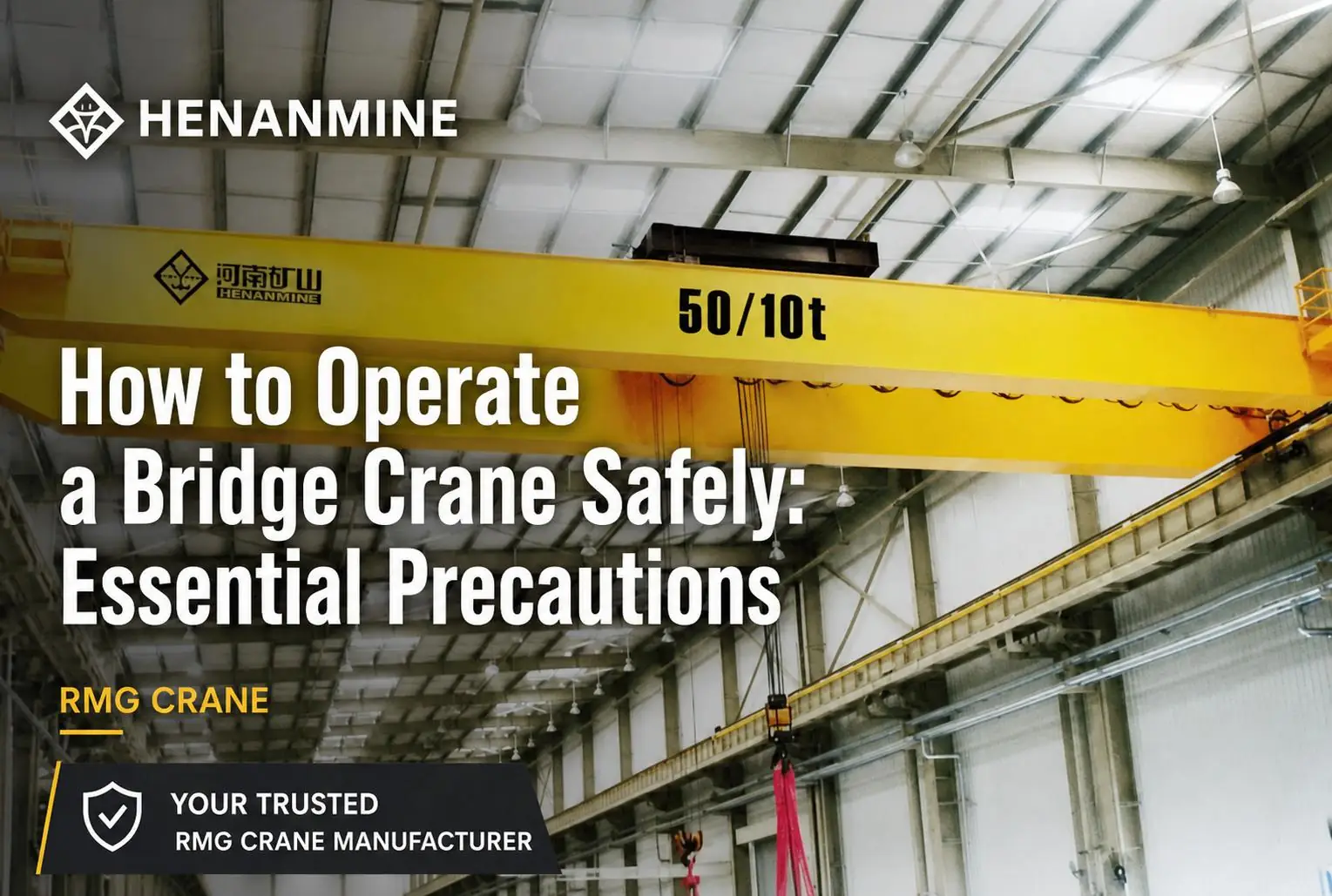
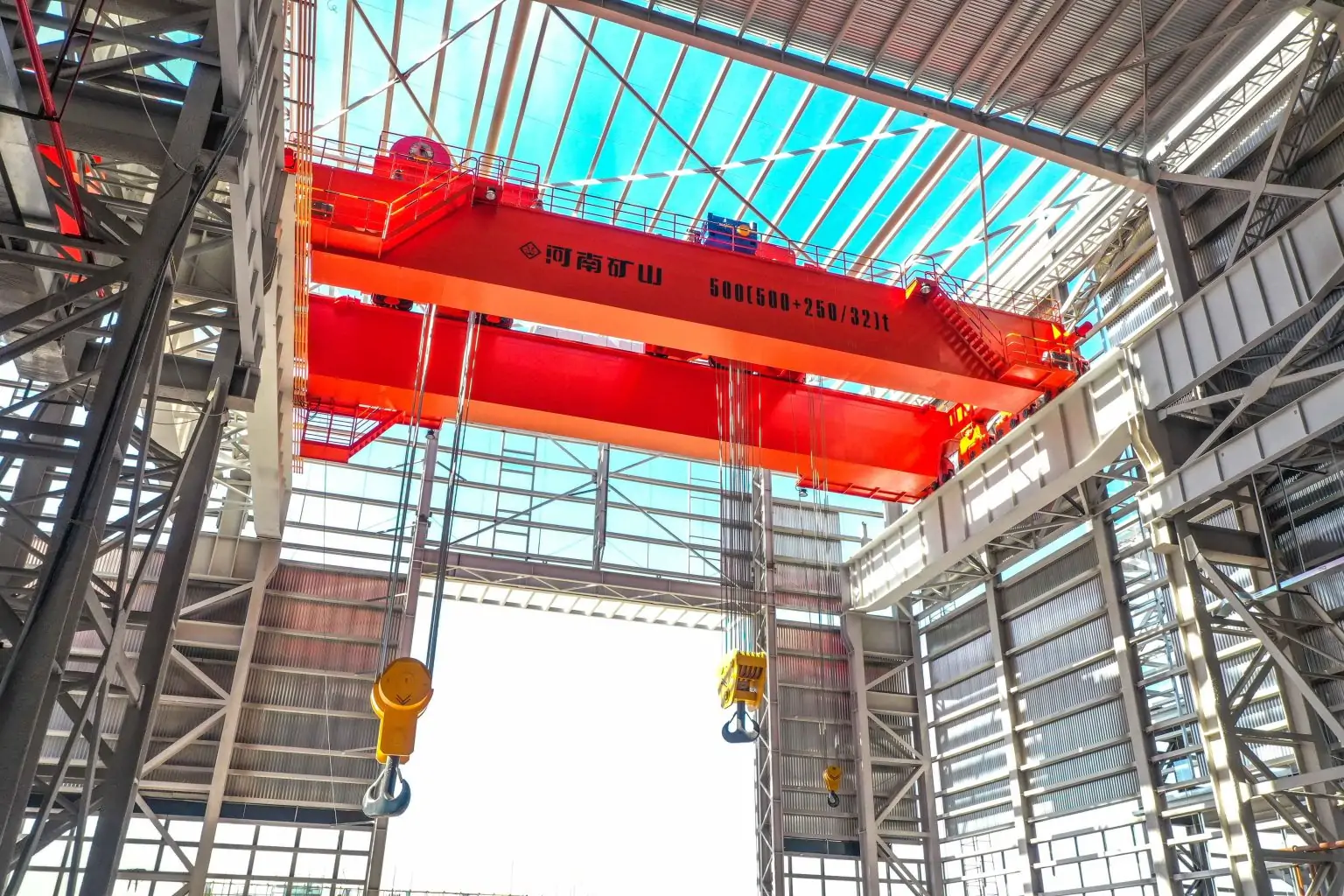
Henan Mine Crane manufactured hook overhead crane is a bridge-mounted lifting system in which a hoist equipped with a standard lifting hook travels along a trolley, which in turn travels along a bridge girder spanning the width of the workshop. The bridge runs on elevated rails supported by the building's columns or a dedicated runway structure.
The hook is what distinguishes this crane type from its close relatives. Grab cranes use a clamshell or orange-peel bucket to handle loose bulk materials like coal, scrap, or grain. Magnet cranes use an electromagnetic lifter for ferrous scrap and plate. A hook crane, by contrast, is built for discrete, engineered loads, castings, gearboxes, tooling, structural steel, and finished machinery, making it the standard choice for machinery manufacturing, assembly lines, and maintenance bays.
Hook overhead cranes come in two structural configurations, single girder and double girder, and are further defined by capacity, span, lift height, and duty class, the five specifications your supplier will ask for on day one.
Step 1: Define Your Load Capacity and Lifting Attachments
Capacity planning starts with the heaviest single load the crane will ever lift, not the average load. Underestimating this number is the single most common and most expensive crane-selection mistake.
How to calculate required capacity:
- Identify the heaviest individual component or assembly the crane must lift.
- Add the weight of any below-the-hook lifting devices,slings, spreader bars, lifting beams, or custom fixtures, since these count against rated capacity.
- Add a 10–20% safety margin to accommodate future production changes, heavier tooling, or measurement uncertainty.
- Round up to the nearest standard capacity your manufacturer offers (for example, 5, 10, 15, 20, or 25 tons) rather than custom-ordering an exact match.
Machinery plants should also account for growth. If a new product line is likely to introduce heavier assemblies within the crane's expected 20-plus year service life, specifying one capacity tier higher now is far cheaper than a structural retrofit later.
Worked example: Suppose your heaviest assembly is a 4.3-ton gearbox housing. Add a 200 kg (roughly 0.2-ton) lifting beam and slings, bringing the raw load to 4.5 tons. Apply a 15% growth margin: 4.5 × 1.15 ≈ 5.2 tons. The nearest standard capacity offered by most manufacturers is 5 tons, but since your calculated requirement already sits right at that ceiling with no buffer left, ordering a 6- or 7.5-ton crane is the safer, longer-lasting choice. This is exactly the kind of rounding decision that determines whether a crane still fits your operation five years from now, after tooling or fixtures have grown heavier.
It also helps to document this calculation and share it with every supplier you quote. Manufacturers sometimes quote to the capacity you state without flagging that your margin is thin, an engineer reviewing your worked numbers, rather than a single final figure, is far more likely to catch a fit issue before the crane is built.
Step 2: Measure Span, Lift Height, and Building Constraints
Span and lift height are dictated by your building, not your preference, get these measurements before talking to any supplier.
- Spanis the horizontal distance between the crane's runway rails, typically measured from column centerline to column centerline (or the inside faces of the runway beams, depending on the supplier's convention). Wider spans increase bridge deflection, which reduces effective capacity at a given girder size.
- Lift heightis the vertical distance the hook must travel, measured from the floor (or pit, if used) to the underside of the runway beam, minus the headroom the hoist itself consumes.
- Runway clearanceincludes any existing overhead obstructions, ductwork, lighting, sprinkler lines, or mezzanines, that could conflict with the bridge or trolley.
Bring accurate facility drawings to this step. A crane specified from approximate measurements is one of the most common causes of costly on-site rework during installation.
Don't stop at the crane's own dimensions, check whether your existing building columns and runway beams can actually carry the loads a new crane will impose. Retrofitting an older machinery plant with a crane heavier than the original structure was designed for often means reinforcing columns, adding bracing, or installing an independent runway support system, and that work can add materially to the total project cost. If your building predates the crane you're planning to install, ask your supplier or a structural engineer to review the existing runway beam capacity before you commit to a specific girder type or capacity, it's far cheaper to learn this during planning than during installation.
Step 3: Single Girder vs. Double Girder, Which Fits a Machinery Plant?
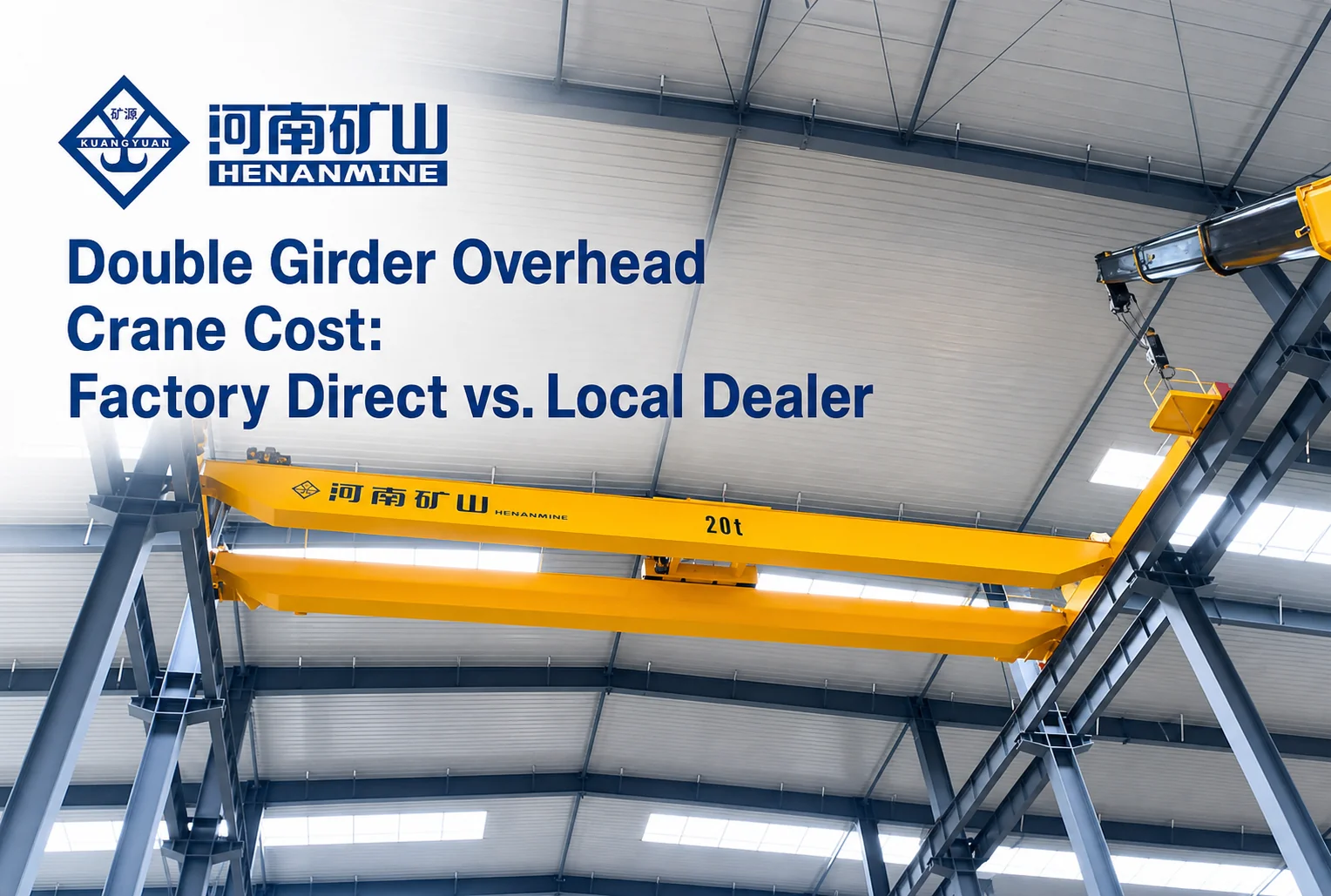
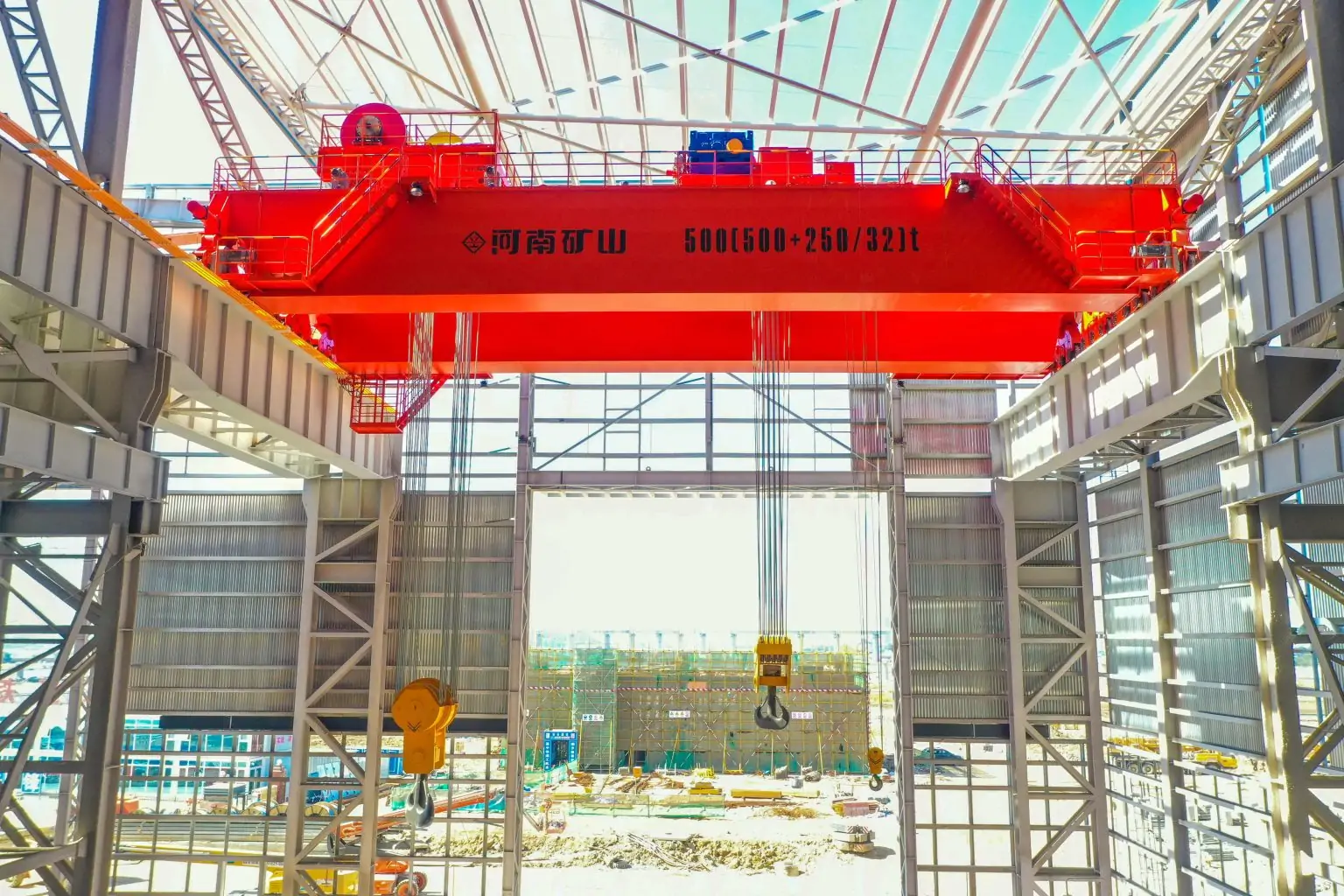
This is the decision that most affects both upfront cost and long-term capability. Henan Mine Crane manufactured single girder cranes use one bridge beam with the hoist and trolley running along its lower flange. Double girder cranes use two parallel beams with the trolley running on top, giving more hook height, higher capacity, and greater rigidity.
| Factor | Single Girder | Double Girder |
| Typical capacity | Up to 15–20 tons | 5–500 tons |
| Typical span | Under ~65 ft (20 m) | 20–100+ ft (10.5–31.5 m and beyond) |
| Hook height | Reduced (under-running hoist) | Maximum (top-running hoist) |
| Duty cycle fit | Light to medium, occasional use | Continuous, heavy, multi-shift use |
| Installed cost | 20–30% lower | 40–50% higher for equivalent capacity |
| Best fit | Machine shops, assembly lines, maintenance bays | Heavy fabrication, foundries, large-component machinery plants |
For most machinery workshops, assembly plants, and maintenance areas, a single girder crane is the practical starting point: it is lighter, cheaper to install, and imposes less structural load on the building. Machinery plants handling oversized assemblies, requiring wider spans, or running continuous multi-shift production are usually better served by a double girder crane, which trades higher upfront cost for greater capacity, hook height, and duty-cycle durability.
Key takeaway: Don't default to double girder "to be safe." Match the girder type to your actual load, span, and duty cycle,over-specifying inflates both equipment and building costs without adding usable capability.
Step 4: Match Duty Class to Your Work Cycle
Duty classification determines how the crane's structure, hoist, and mechanical components are engineered for your actual usage pattern, not just the maximum weight it can lift. Getting this wrong is a quieter but equally costly mistake than misjudging capacity.
Two classification systems are common:
- CMAA (Crane Manufacturers Association of America):Classes A through F, used primarily in the U.S., Canada, and Mexico.
- FEM/ISO 4301:Classes A1 through A8, used internationally, with A1–A4 considered light duty, A5–A6 medium duty, A7 heavy duty, and A8 severe duty.
Rule of thumb for machinery plants: Standard machinery assembly and maintenance work generally falls into CMAA Class C or D (FEM A4–A6), moderate, fairly frequent lifting at well below full rated capacity most of the time. Continuous multi-shift operations lifting near full capacity may require Class E or higher.
Selecting too low a duty class accelerates fatigue and shortens service life; selecting too high inflates cost without operational benefit. If your production volume is expected to grow, choosing one duty class above your current need is a low-cost way to avoid a future upgrade.
Quick-reference guide by usage pattern:
| Usage Pattern | CMAA Class | FEM/ISO Class | Typical Machinery-Plant Example |
| Infrequent, precise handling | A–B | A1–A3 | Occasional maintenance or installation lifts |
| Moderate, regular lifting | C | A4–A5 | Standard assembly-line material handling |
| Frequent, near-capacity lifting | D | A6 | Multi-shift assembly with heavier components |
| Continuous, heavy-duty service | E–F | A7–A8 | Foundries, heavy fabrication, high-tonnage plants |
Use this table as a starting point, not a final answer, a duty class selected purely from a table without validating your actual lifts-per-hour and average load percentage is still a guess. Ask your crane supplier to walk through your production schedule with you before locking in a class.
Step 5: Choose the Right Hoist, Wire Rope vs. Chain
The hoist is the component that actually lifts and lowers the load, and it's typically the first part to reach end of life, so match it carefully to your duty cycle, not just your capacity number.
Wire rope hoists are the standard choice above roughly 5–7.5 tons. They offer faster lifting speeds, smoother operation under sustained use, and are readily available in capacities from 1 to over 100 tons. They're the right call for heavier, more frequent lifting cycles typical of machinery manufacturing.
Chain hoists suit lighter loads, generally under 2–3 tons, and situations where headroom is limited or precise, low-speed vertical positioning matters, for example, positioning a component into a tight assembly fixture. They cost less upfront and are simpler to maintain, but they lift more slowly and have a lower practical capacity ceiling than wire rope systems.
Selection checklist:
- Capacity:Confirm the hoist is rated for your calculated load, including attachments.
- Headroom:Wire rope hoists need more vertical clearance for the drum assembly than chain hoists.
- Speed:Faster wire rope lifting speeds suit high-cycle production; chain hoists suit precision, lower-speed positioning.
- Environment:Dusty or contaminated environments can affect chain hoist performance more than sealed wire rope systems.
- Duty class:The hoist's duty rating must match the crane's overall duty classification, don't pair a light-duty hoist with a heavy-duty bridge.
Step 6: Controls, Safety, and Compliance
Every hook overhead crane installed in the U.S. must meet OSHA 1910.179 requirements for design, construction, and operation. Beyond baseline compliance, the control system you choose shapes daily operator safety and productivity.
- Pendant controlsare simple, low-cost, and tethered to the hoist, well suited to fixed-position lifting tasks.
- Radio remote controlslet the operator move freely around the load, improving sightlines and reducing the risk of being caught between the load and fixed obstructions, increasingly the default for machinery plants with complex floor layouts.
- Variable frequency drives (VFDs)provide smoother acceleration and deceleration, reducing load sway and mechanical wear compared with single-speed controls.
Also account for environmental exposure, heat, dust, or outdoor conditions, which affects motor ratings, enclosure types, and maintenance intervals.
Real-World Sizing Example: A Machinery Assembly Plant
To see how these seven steps fit together, consider a mid-sized machinery assembly plant that builds industrial pumps and needs to replace an aging jib crane with a full-bay Henan Mine Crane Factory supply hook overhead crane.
Load and attachments: The heaviest single assembly , a fully housed pump unit on a lifting fixture , weighs 8.5 tons including the fixture itself. Applying a 15% margin brings the target to roughly 9.8 tons, which the plant rounds up to a 10-ton rated capacity.
Span and building fit: The bay is 58 feet wide, measured column centerline to column centerline, with 22 feet of clear lift height available above the assembly floor. Both figures sit comfortably within single girder territory, and the existing columns , originally built for a lighter jib crane , need modest reinforcement to carry the new runway load.
Girder decision: At 10 tons and a 58-foot span, this plant sits right at the upper edge of single girder territory. Because the production schedule calls for two shifts of moderate, non-continuous lifting rather than round-the-clock heavy use, a single girder crane remains the more cost-effective choice , a double girder system would add capacity and hook height the plant doesn't currently need.
Duty class: Two-shift, moderate-frequency lifting at well under full capacity most of the time maps to CMAA Class C. The plant's engineer opts for Class D anyway, anticipating a planned expansion to heavier pump models within the next five years , a one-class upgrade that adds a modest premium now rather than a full crane replacement later.
Hoist: At 10 tons, a wire rope hoist is the clear choice over a chain hoist, both for its higher practical capacity ceiling and its faster cycle speed on a two-shift schedule.
Controls: Given the assembly floor's tight aisles and frequent operator movement around fixtures, the plant selects a radio remote control with a VFD-equipped hoist, trading the lower upfront cost of a pendant control for better sightlines and smoother load handling.
Result: A single girder, 10-ton, Class D hook overhead crane with a wire rope hoist and radio remote control , a specification built from actual measurements and production data rather than a generic "10-ton crane" quote. This is the level of detail worth bringing to every supplier conversation.
Common Mistakes That Lead to Over- or Under-Specifying a Crane
- Sizing to average load instead of peak load.Capacity must cover the heaviest single lift, not the typical one.
- Ignoring below-the-hook attachment weight.Slings, spreader bars, and fixtures all count against rated capacity.
- Choosing double girder "just in case."This adds 40–50% to upfront cost without benefit if your loads and duty cycle don't require it.
- Underestimating duty class for future growth.A crane sized for today's light usage may need premature replacement if production intensifies.
- Treating quoted price as total cost.Installation, building modification, and long-term parts availability often outweigh the sticker price difference between suppliers.
Frequently Asked Questions
Q: What is a hook overhead crane used for?
A hook overhead crane lifts, moves, and positions finished or fabricated loads , machine tools, molds, engine blocks, steel assemblies , using a standard lifting hook rather than a grab bucket or magnet. It's the standard configuration for machinery manufacturing, maintenance bays, and general workshop lifting.
Q: How do I calculate the crane capacity I need?
Take the heaviest single load you'll lift, add the weight of any below-the-hook attachments like slings or spreader bars, then add a 10–20% safety margin. Round up to the nearest standard capacity your supplier offers rather than down.
Q: Should a machinery plant choose a single girder or double girder crane?
Most machinery plants with loads under 15–20 tons and spans under roughly 65 feet do well with a single girder crane, which costs less and installs faster. Plants handling heavier assemblies, longer spans, or continuous multi-shift lifting typically need a double girder crane for the added capacity, hook height, and duty rating.
Q: What duty class does a machinery plant need?
Most machinery manufacturing and assembly operations fall into CMAA Class C or D (FEM/ISO A4–A6), reflecting moderate to fairly frequent lifting at less than full capacity most of the time. Continuous multi-shift heavy lifting may require Class E or higher.
Q: Wire rope hoist or chain hoist for a machinery plant crane?
Wire rope hoists suit heavier loads, faster cycle times, and capacities generally above 5–7.5 tons. Chain hoists suit lighter loads under roughly 2–3 tons, tighter headroom, and applications needing precise, low-speed vertical positioning.
Henan Mine Crane Factory Custom
Selecting the proper hook overhead crane is not just about getting business done today but laying the foundation for a productive operation for years into the future. Machinery plants must weigh the economic benefits of a more powerful crane against the opportunity cost of efficiency down the road by considering lifting capacity, span, duty classification, type of hoist, safety protocol, and building the shop‘s equipment fleet on a sound plan.
By being an established professional crane maker and material handling equipment supplier, Henan Mine Crane Factory will provide tailor-made hook overhead crane system to meet your industrial lifting demands, available workshop space and manufactory objectives. We are committed to providing quality, cost effective lifting equipment to increase productivity and benefit customers in long term.