
Maintenance of Overhead Cranes: A Comprehensive Guide to Stable Operation
Overhead cranes are the core equipment in workshops, warehouses, steel mills and manufacturing plants, and their stable operation is directly related to the pace of production and the safety of personnel. Many customers think that the equipment can be used normally as long as they buy it back, but ignore the importance of routine maintenance.
This content I will put the importance of crane maintenance, daily inspection points, core component maintenance, common fault handling, and practical maintenance program development methods, are clear. Help you avoid maintenance misunderstandings, so that the equipment can be used longer and more stable.
Why is overhead crane maintenance so important?
Enhance operational safety
Crane ropes, hooks, brakes and other components are subject to long-term loads and friction, and are prone to wear and fatigue. Regular maintenance can detect these hidden dangers in time, avoiding safety accidents caused by component breakage and failure.
I have seen a case, a workshop crane wire rope broken wire more than the standard is still in use, and finally lifting the process of sudden breakage, resulting in hundreds of thousands of dollars worth of equipment damage, but fortunately no casualties. This kind of accident can be completely avoided by doing a good job of daily inspection.
Ensure stable operation of equipment
Cranes that are well-maintained will not have abnormal vibrations and rattles when running, and will be smoother when lifting and traveling. On the contrary, equipment that has not been maintained for a long time may have problems such as swaying hooks, deflection of the big car, and brake failure, which affects lifting precision and efficiency.
For example, the wear and tear of wheels and rails, which is only a slight rattling at the beginning, will lead to chewing of rails if not dealt with in time, which will not only aggravate the wear and tear, but also affect the stability of the plant structure.
Reduce long-term operating costs
Many customers feel that maintenance costs money, so save what you can. But small problems are not dealt with, sooner or later will become a big failure. Replacement of a wire rope as long as a few thousand dollars, if the wire rope breakage led to equipment damage, production stoppage, the loss may be dozens of times the maintenance costs.
Regular lubrication, tighten the bolts of these simple maintenance work, the cost is very low, but can effectively extend the life of parts, reduce the frequency of overhaul.
Extend the service life of equipment
Crane steel structure, motor, reducer and other core components, reasonable maintenance can significantly extend the service life. For example, the gear reducer lubricating oil, on-time replacement can avoid gear wear; steel structure regular inspection, can find cracks in time to prevent structural failure.
A well-maintained crane, the service life can be more than the lack of maintenance of the equipment 5-10 years, which is a considerable savings for the enterprise.
What are the consequences of poor crane maintenance
Increased downtime
Small faults accumulate into big problems, leading to frequent equipment downtime.
Once a production line is shut down due to a crane failure, the daily loss can be up to tens of thousands of dollars. I have contacted an automotive parts factory, due to crane brake failure, resulting in production line stopped for 3 days, direct losses of more than a million.
Decline in lifting precision and efficiency
Swaying hooks, deflections, and unstable lifting speeds are all common manifestations of poor maintenance. In precision assembly workshops, lack of lifting precision affects product quality; in logistics warehouses, a drop in efficiency leads to order delays.
Rising maintenance and replacement costs
Waiting until a component is completely damaged before replacing it not only costs more, but may also require the replacement of associated components. For example, a badly worn wire rope may damage reels and pulleys, resulting in double the cost of repair.
Safety threat to operators and neighboring people
Cranes are high-altitude operating equipment, and failure of any component can lead to serious safety accidents.
Hook breakage, wire rope detachment, loss of control of the large vehicle, once these situations occur, the consequences are unimaginable.
Possible damage to plant structures and lifting materials
Abnormal vibration and track gnawing during crane operation can cause damage to the steel structure of the plant and track beams. Failure of components during lifting may also cause materials to fall and damage other equipment and products.
Core components requiring regular maintenance
Steel structure The main girder and end girder are the load-bearing skeleton of the crane, and should be inspected regularly for cracks, deformation, and rust. The connecting bolts are easy to loosen, especially under frequent lifting and braking conditions, and the tightness should be checked every time maintenance is carried out.Inspection platforms and walkways are also safety priorities, and damage to railings and treads can bring risks to maintenance personnel. The main girder deflection of single girder cranes and the main girder side bending of double girder cranes are problems that need to be dealt with in time.
Lifting mechanism
Wire rope or chain is the core of the hoisting mechanism, focus on checking broken wire, wear, deformation, rust and corrosion. The rope groove wear and cracks of the reel, and the deformation, cracks and wear of the hook should not be neglected.
The rotation flexibility of the pulley block, the oil level and oil quality of the reducer are also the focus of inspection. Reducer oil leakage will lead to insufficient lubrication and accelerate gear wear, which must be dealt with in time.
Running mechanism
The running wheels of large and small vehicles should be checked for rim wear, tread wear and cracks. The parallelism and perpendicularity of the wheels directly affect the smoothness of operation, and any deviation should be adjusted in time.
Motor, gear box, coupling running status, should also be checked regularly. Temperature and vibration of the motor, abnormal noise and oil leakage of the gear box are all signals of potential failure.
Braking system
Hoisting brake, trolley brake, large brake, is the safety of the crane. To check the wear of the brake tile, the surface condition of the brake wheel, the size of the brake clearance.
Brake failure is one of the most dangerous malfunctions, which may be caused by brake tile wear, spring failure, oil contamination, and so on. Test braking performance with every maintenance to ensure reliable braking.
Electrical system
Control cabinets, slide wires, cables, limit switches, contactors, these electrical components are susceptible to environmental influences. Dust and humidity can lead to poor contact and short circuit, affecting the operation of the equipment.
Limit switches are key to preventing overcoiling and overtravel and must be tested regularly for proper function. Cables are worn and aged and must also be replaced in a timely manner to avoid the risk of leakage.
Safety devices
Overload limiter, emergency stop button, buffer, alarm, these safety devices should be ensured to be intact and effective. The overload limiter can prevent the equipment from overloading, and the emergency stop button can quickly stop the machine in case of emergency.
Buffers can reduce the impact of collision, alarms can remind the surrounding personnel to pay attention to safety. No crane should be put into service with any safety device failing.
Types of maintenance for overhead cranes
Daily Maintenance
Before each day's operation, the operator should do a routine visual inspection. Mainly look for any abnormalities in the wire rope and hook, whether the brake is sensitive, whether the limit switches are effective, and whether there are any strange noises and vibrations.
Routine maintenance is simple but critical to detect obvious faults in time and avoid running with faults.
This link can not be saved, nor can it be a formality.
Weekly maintenance
Do a weekly function check and basic cleaning and lubrication. Clean the dust and oil on the surface of the equipment, check the lubrication of each lubrication point, and replenish the grease.
Also check the bolt fastening, test the function of the braking system and control system to ensure that all parts of the equipment operate normally.
Monthly Maintenance
A more detailed inspection should be done every month, focusing on the wear and tear of vulnerable parts. For example, the number of wire rope breaks, the amount of wear on the hook, and the thickness of the brake tile should all be recorded.
Electrical system terminals and contactors are also checked, and insulation resistance of motors is tested to ensure electrical safety.
Quarterly or Semi-Annual Maintenance
Quarterly or semi-annually, a comprehensive inspection of the steel structure, electrical system, and mechanical system should be done. Check the deformation of the main beam, measure the span and diagonal of the wheels, and adjust the parallelism of the wheels.
Also check the oil quality of the reducer and replace the lubricant if necessary; check the pressure and leakage of the hydraulic system to ensure that the system is normal.
Annual maintenance
Every year, do a thorough inspection, performance evaluation, and overhaul if necessary. Annual maintenance should preferably be carried out by professionals, including non-destructive testing, load testing, and a full inspection of the electrical system.
It is also important to do an assessment of the overall performance of the equipment and develop a maintenance plan for the next year based on the usage.
Daily checklist for overhead crane
Check the condition of hooks and wire ropes
Check the wire ropes for broken wires, broken strands, abrasion, deformation, rust and corrosion, and whether the rope head is firmly fixed.
Check the hook for cracks, deformation, wear and tear, whether the rotation is flexible or not, and whether the safety catch is intact or not.
If the number of broken wires of the wire rope exceeds the standard, or the abrasion amount exceeds 10% of the diameter, it should be replaced in time. The hook must also be replaced if the dangerous section of the hook is worn by more than 10%.
Check brake response
Test the braking performance of the hoist, trolley, and big trolley to ensure that the braking is sensitive and reliable. There should be no obvious slipping when braking, and the contact area between the brake wheel and brake tile should be sufficient.
If there is any delay or slippage in braking, adjust the brake clearance or replace the brake tile in time.
Check the limit switch
Test the upper and lower lifting limit positions, and the travel limit positions of the trolley and trolley to ensure proper functioning. Limit switches are the key to preventing over-travel of the equipment, which may lead to collision accidents in case of failure.
Check abnormal sound or vibration
Run the equipment, listen to any abnormal noise, feel any obvious vibration. The abnormal sound may come from the gear box, motor, wheels, vibration may be due to the wheels are not parallel, track uneven and other reasons.
When abnormalities are found, stop the machine for inspection, find out the cause and deal with it.
Check the control device and emergency stop button
Test the sensitivity of control handles and buttons to ensure smooth operation. The emergency stop button should be able to quickly cut off all power supplies and stop the equipment immediately.
Malfunctioning controls can lead to misuse and jeopardize safety and must be in good condition.
Check the track, wheels and running path
Check the track for deformation, cracks and looseness, and the track surface for oil and debris. Check the wheels for wear and tear, cracks, and whether there is any gnawing phenomenon when running.
The running path should be free of obstacles to ensure that the equipment can run safely.
Check the oil leakage or loose fasteners
Check whether there is any oil leakage in the reducer and hydraulic system, which will lead to insufficient lubrication and may also pollute the environment. Check the bolts and nuts on each part to make sure they are tight and prevent loose parts.
Best Practices for Preventive Maintenance
Lubrication Management
Use different types of lubricants for different parts, such as special wire rope grease for wire ropes, lithium grease for bearings, and gear oil for gearboxes.
Lubrication points should be regularly filled with lubricants to avoid over-lubrication and under-lubrication. Over-lubrication will lead to accumulation of oil, adsorption of dust and accelerated wear; under-lubrication will lead to dry friction and damage to components.
The amount of oil injected into the wheel bearing should be 2/3 of the cavity of the bearing body, too much or too little will affect the life of the bearing. Wire rope should be evenly coated with grease to ensure that each wire can be lubricated.
Common faults and possible causes
- Unstable lifting speed: it may be brake wear, motor failure, control problem, or gear wear of reducer, loose coupling.
- Excessive noise during operation: it may be poor lubrication, worn gears, damaged bearings, loose parts, or uneven track, non-parallel wheels.
- The wire rope wears out too fast: it may be improper winding, insufficient lubrication, overload lifting, or the rope groove of pulley or reel is worn out.
- Brake slipping: may be brake tile wear, improper adjustment, oil contamination, may also be spring failure, brake wheel surface damage.
- Frequent electrical failures: may be loose terminals, aging cables, worn contactors, or a humid, dusty environment.
How often should overhead cranes be maintained?
According to the working level
Light load level (A1-A3) cranes, low frequency of use, the maintenance cycle can be appropriately extended. Medium load class (A4-A5) cranes, the daily use of a longer time, maintenance should be more frequent.
Heavy-duty class (A6-A8) cranes, such as steel mills, port equipment, 24 hours a day, the maintenance cycle to be the shortest, or even need to check every day, weekly overhaul.
According to the working environment
Cranes in dusty, high temperature, humid and corrosive environments have faster wear and aging of parts and shorter maintenance intervals. For example, in the seaside, chemical workshop cranes, electrical components and steel structure is more likely to be damaged, need to strengthen the inspection.
Outdoor cranes also need to consider windproof, rainproof and frostproof, check the anti-freezing measures of the hydraulic system in winter, and check the heat dissipation of the motor in summer.
According to the number of running hours
It is more scientific and reasonable to take the number of running hours as the basis for maintenance. For example, the lubricating oil of the reducer should be replaced once every 2000 hours of operation; the wire rope should be inspected once every 1000 hours of operation, and it should be decided whether to replace it according to the wear and tear situation.
The running hours can be recorded by the timer of the equipment to ensure that the maintenance is not missed.
Developing an effective overhead crane maintenance program
Establish a maintenance schedule
Establish a detailed maintenance schedule based on the equipment's operating level, environment, and number of operating hours. Specify the items and times for daily, weekly, monthly, quarterly, and annual maintenance, and assign responsibility to each person.
The maintenance schedule should be posted next to the equipment for easy viewing by operators and maintenance personnel.
Assigning Responsible Personnel
Daily maintenance is the responsibility of operators, weekly and monthly maintenance is the responsibility of workshop maintenance personnel, quarterly and annual maintenance can be entrusted to professional organizations or manufacturers.
Clearly define the responsibilities of each person to ensure that the maintenance work is managed and done by someone.
Keep inspection and maintenance records
Each maintenance should be recorded in detail, including inspection items, problems found, treatment methods, replacement parts, maintenance personnel, maintenance time.
Maintenance records can help trace the operation of the equipment, analyze the causes of failure, and provide reference for subsequent maintenance.
Prepare spare parts in advance
Commonly used spare parts such as wire ropes, hooks, brake tiles, bearings, contactors, etc. should be stocked up in advance to avoid downtime due to lack of parts in case of failure.
The quality of spare parts should be reliable, and it is best to use original parts to ensure that they match the equipment.
Train operators to report abnormal conditions in time
Operators are the first users of the equipment, the easiest to find abnormalities. Operators should be trained to recognize common faults, such as abnormal noise, vibration, brake failure, etc., and to stop and report problems promptly.
Encourage operators to participate in maintenance to improve their sense of responsibility and maintenance awareness.
Follow proper operating procedures to reduce unnecessary wear and tear
Correct operating methods can reduce the wear and tear of the equipment and prolong its service life. For example, when lifting, it should be smooth and avoid impact; when running, it should avoid sharp stops and sharp turns; and it should not be overloaded for lifting.
Operators should work in strict accordance with the operating procedures and take care of the equipment.
Safety precautions during maintenance
Disconnect and lock
Before maintenance, the power supply must be cut off and locked and tagged to prevent others from mistakenly operating the power. The key is kept by the maintenance personnel to ensure that there is no electricity during maintenance.
Protection for working at height
If you need to work at height during maintenance, fasten your safety belt and use a safety ladder or platform to avoid falling.
Use of qualified maintenance personnel
Maintenance personnel must have appropriate qualifications and skills, and be familiar with the structure and performance of the equipment. Unqualified personnel shall not carry out maintenance work.
Test before putting into use after maintenance
After the maintenance is completed, carry out no-load test and load test to ensure that the equipment operates normally and is free from faults. Only after the test is qualified can it be delivered for use.
Maintenance under suspended load is strictly prohibited
Maintenance must ensure that there is no load on the hook to avoid falling loads and injuries.
Common Maintenance Mistakes to Avoid
Focusing only on visible faults
Many people only notice obvious faults, such as wire rope breakage and hook deformation, but ignore hidden problems, such as oil quality of the reducer, insulation of the motor, and cracks in the steel structure.
These hidden problems are often the root cause of major failures.
Ignore the slight abnormal sound or vibration
Slight abnormal sound and vibration during the operation of the equipment, many people feel that it does not affect the use, so ignore it. In fact, these are wear and tear of parts, loose signals, long-term will lead to serious failures.
Delayed replacement of worn parts
Some parts have reached the replacement standard, but because of the temporary use and delayed replacement. For example, the number of broken wire rope exceeds the standard, but still continue to use, eventually leading to breakage accident.
Using incorrect lubricants or spare parts
The use of poor quality lubricants or non-original spare parts will accelerate the wear and tear of parts and affect the performance of equipment. For example, using common grease instead of special grease for wire rope will lead to faster wear of wire rope.
Do not keep maintenance records
Many companies do not pay attention to maintenance records, resulting in the operation of the equipment can not be traced, the cause of failure is difficult to analyze. Maintenance records are an important basis for equipment management and must be carefully preserved.
Waiting for failures to occur before maintenance, rather than preventive maintenance
Preventive maintenance can effectively avoid failure and reduce costs. Many companies wait until the equipment breaks down before repairing it, which not only has high maintenance costs, but also affects production.
How proper maintenance improves stable operation
Better lifting performance
A well-maintained crane with smooth lifting and precise operation can improve lifting efficiency and quality. Stable lifting performance is especially important in precision manufacturing plants.
More reliable operation and positioning
Good wheel parallelism, flat track and sensitive braking make the crane run more reliably and position more accurately. Reduce rework and waste due to inaccurate positioning.
Reduced downtime
Regular maintenance can find and deal with problems in time, avoiding downtime caused by sudden failure. Improves equipment utilization and ensures production continuity.
Lower Total Cost of Ownership
Maintenance costs are much lower than repair costs and downtime losses.
Preventive maintenance extends equipment life, reduces the number of major repairs and lowers total cost of ownership.
Longer service life and safer operation
Proper maintenance reduces wear and tear on components and extends equipment life. At the same time, timely detection of safety hazards ensures safe operation of the equipment and protects the operator and those in the vicinity.
What information should be provided to the crane supplier or service team
Crane model and technical parameters
Including model, rated lifting capacity, span, lifting height, working level, operating speed, etc. This information can help suppliers understand the basic situation of the equipment.
Working frequency and working level
Let the supplier know the intensity of the use of the equipment, in order to develop a suitable maintenance program.
Operating environment
Such as dust, high temperature, humidity, corrosion, explosion-proof, etc. This information can help suppliers recommend appropriate maintenance methods and spare parts.
Current Failure Symptoms
Detailed description of equipment failure phenomena, such as abnormal noise, vibration, brake failure, running off, etc., to help suppliers quickly locate the problem.
Maintenance History and Replacement Parts
Provide the maintenance history and replacement parts of the equipment, so that the supplier can understand the equipment's operating condition and history of failures, and better provide services.
Example: Simple Maintenance Process for a Shop Overhead Crane
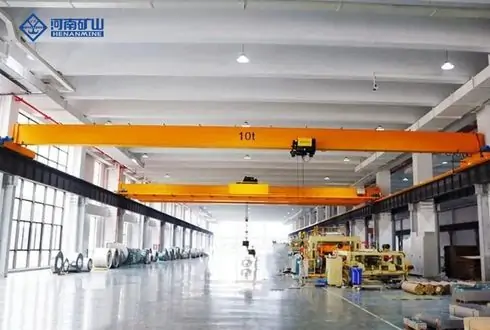
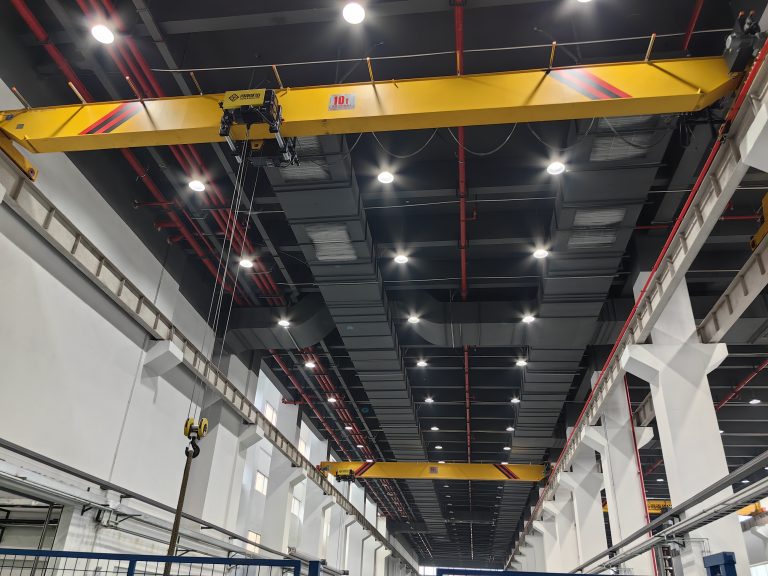
A machine shop has a 10-ton single girder overhead crane, class A5, operating 8 hours a day in a general shop environment. We have developed the following maintenance procedure for it:
- Daily visual inspection: the operator checks the wire rope, hook, brake, limit switch and control device to ensure there is no abnormality before operation every day.
- Weekly lubrication and brake inspection: maintenance personnel clean the equipment every week, check each lubrication point and replenish lithium grease; test brake performance and adjust brake clearance.
- Monthly wire rope and electrical inspection: check the number of broken wires and wear of wire ropes and record the data; check the terminals and contactors of the electrical system and test the insulation resistance of the motor.
- Quarterly wheel and gearbox inspection: check the wear and parallelism of the wheels, adjust the wheels; check the oil quality and level of the gearbox, and replace the lubricant if necessary.
After the implementation of this maintenance process, the frequency of equipment failures is significantly reduced, the operation is more stable, and the service life is extended.
overhead Crane Maintenance Frequently Asked Questions
How often should overhead cranes be inspected?
Daily inspection once a day, weekly inspection once a week, monthly inspection once a month, quarterly inspection once a quarter, and annual inspection once a year. The periodicity can be adjusted appropriately according to the working level and environment.
What are the most important components in crane maintenance?
Every component is important, but wire rope, hooks, brakes, and limit switches are safety-critical components and must be inspected in a focused manner.
Can operators do routine maintenance themselves?
Yes, routine maintenance such as visual inspection, cleaning, and simple lubrication can be done by the operator himself after training. However, complex maintenance work, such as electrical overhaul and structural adjustment, requires specialized personnel.
When should the wire rope or brake be replaced?
Wire rope should be replaced when the number of broken wires exceeds the standard, or when the wear exceeds 10% of the diameter; brakes should be replaced when the wear of the brake tile exceeds 50% of the original thickness, or when there is obvious damage to the surface of the brake wheel.
Is preventive maintenance really more cost-effective than repair?
Yes, preventive maintenance can identify and deal with minor problems in time, avoiding major breakdowns and reducing repair costs and downtime losses. Statistically, preventive maintenance is only 1/5 to 1/10 of the cost of breakdown repairs.
Conclusion
The stable operation of overhead cranes cannot be separated from regular inspection, preventive maintenance and timely replacement of worn parts. Maintenance is not only to avoid breakdowns, but also to guarantee safety, improve efficiency and protect long-term investment.
Many companies find maintenance troublesome and costly, but compared to the losses caused by failures, the investment in maintenance is worthwhile. I've seen too many safety incidents and financial losses due to poor maintenance that could have been avoided by standardizing maintenance.
I hope this content will help you establish a proper maintenance concept and develop a practical maintenance program. If you have specific equipment maintenance problems, please feel free to consult the professional team of Henan Mine Crane, we will provide customized maintenance programs according to your equipment situation and use needs.