
The Ultimate Guide to RMG Crane Energy Saving & Efficiency
Under the goal of “double carbon”, energy efficiency is the core of port operation, RMG cranes, as the key equipment for container handling in ports, are the main carriers of energy consumption despite their precise positioning and stable operation.
At present, the energy consumption of RMG cranes accounts for more than 35% of the total energy consumption in ports, reducing its energy consumption and improving energy efficiency has become the key to cost control and compliance for ports and logistics enterprises.
In this paper, we will sort out the strategies, technologies, cases and indicators for improving energy efficiency of RMG cranes, and introduce Henan Mine customized solutions to provide guidance for the industry.
What is RMG Crane?
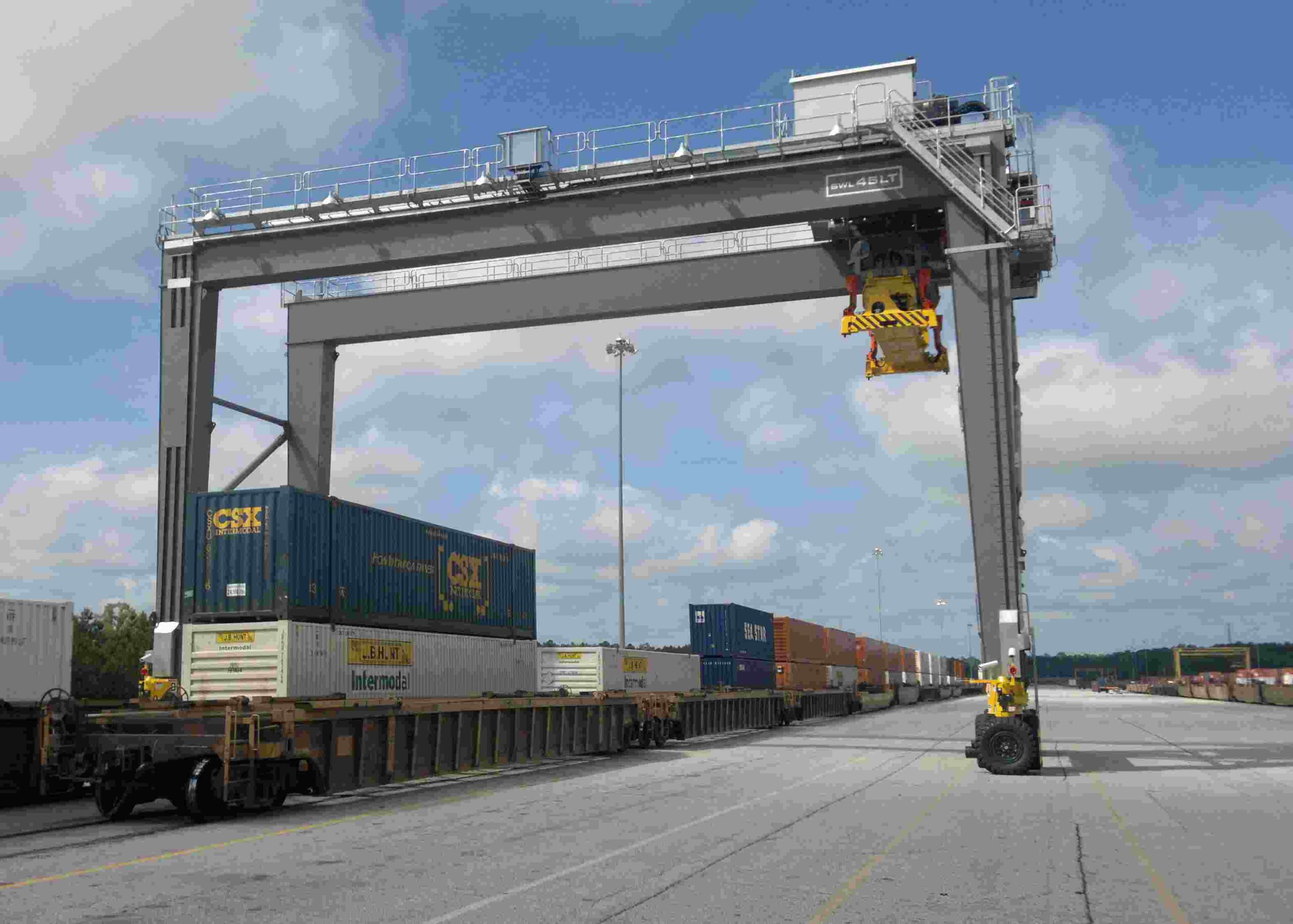
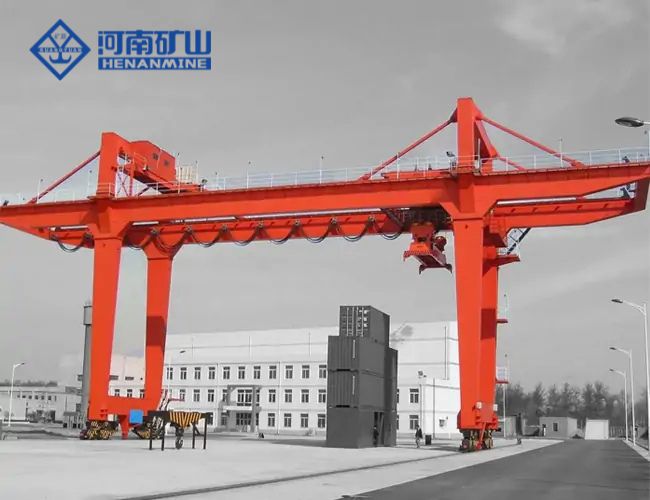
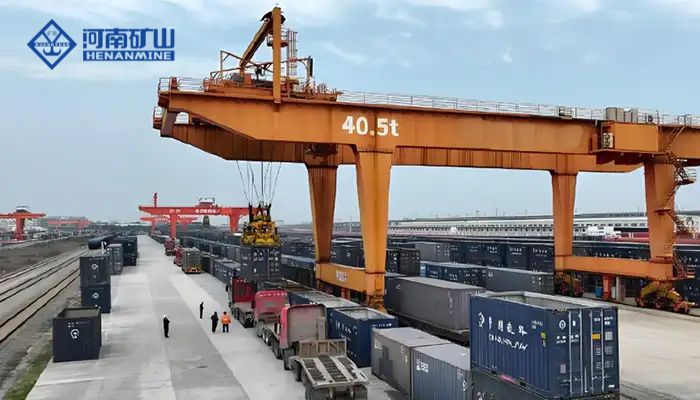
Rail-mounted gantry cranes (RMG cranes) are a kind of large-scale lifting equipment running on rails, adopting steel wheel-supported structure, realizing precise movement through fixed rails, with modular design features, and positioning accuracy of up to ±10mm.
Its core application scenarios include port container yards, intermodal railroad yards, large logistics hubs, etc. It is mainly used for high-density container stacking (up to 6-8 layers of containers can be stacked), container railroads and highway transshipment and other operations, which can effectively improve the efficiency of container handling and space utilization.
Energy Consumption Pattern of RMG Cranes
The energy consumption of RMG cranes is mainly concentrated in the three core actions: lifting, running and luffing, while lighting, control systems and other auxiliary systems will also generate a certain amount of energy consumption.
From the energy consumption benchmark, the average energy cost of electric RMG cranes per standard container (TEU) handled is about 0.15 U.S. dollars, the specific level of energy consumption is affected by the load capacity, frequency of operation, environmental conditions (such as wind) and other factors.
The larger the load and the more frequent the operation, the higher the energy consumption; in a strong wind environment, the equipment needs to consume additional energy to maintain stable operation, which further increases the burden of energy consumption.
Challenges of High energy Consumption
- Environmental impact: High energy consumption means higher carbon emissions, which not only contradicts the global “dual-carbon” goal, but also leads to the risk of not being able to meet international environmental goals such as IMO 2030 and local environmental regulations, and facing compliance risks.
- Cost pressure: energy costs account for 42% of the total operating costs of RMG cranes, long-term high energy consumption will bring a heavy financial burden to port operators and logistics companies, squeezing profit margins.
- Operational inefficiency: High energy consumption is often accompanied by increased wear and tear of equipment components, which can easily lead to unplanned downtime, thus reducing operational efficiency and affecting the overall throughput of the port.
Core Advantages of Energy-efficient RMG Cranes
Cost Savings
Energy-efficient RMG cranes can directly reduce electricity and fuel consumption (hybrid model), a single unit can save up to 21,000 U.S. dollars in energy costs per year. In terms of long-term return on investment, the payback period for energy-saving retrofits is only 1-3 years, and it also reduces equipment maintenance costs and extends the service life of the equipment - .
For example, the energy-saving RMG cranes of Henan Mine Crane can reduce the maintenance cost by 15%-20%, which further improves the return on investment of the enterprise.
Environmental Benefits
Electric RMG cranes can realize zero-emission operation, which perfectly meets the global “dual-carbon” target and the requirements of green port certification; at the same time, energy-saving equipment can effectively reduce greenhouse gas emissions, help enterprises meet international and domestic standards such as EN 16258:2012, GB/T36410.2-2018, etc., and avoid green trade barriers. green trade barriers and enhance the environmental image of enterprises.
Operational Performance Enhancement
Energy-saving systems (e.g. predictive maintenance, intelligent monitoring) can minimize unplanned downtime, improve equipment operation continuity and overall productivity; in addition, reasonable energy consumption control can reduce the mechanical stress of motors, hydraulic systems, drag chains and other components, reduce component wear and tear, improve equipment operation reliability, and prolong the service life of the equipment.
Practical Strategies to Improve Energy Efficiency of RMG Cranes
Regular Maintenance and Predictive Monitoring
Proactive maintenance is the core foundation for avoiding energy waste. Keeping cranes in optimal operating condition effectively reduces the additional energy loss caused by wear and tear of components (e.g. inefficient motors, damaged drag chains).
Key maintenance areas include hydraulic systems, motors, electrical systems and drag chains. i.sense ec.p, i.sense cf.p and other condition monitoring systems can be integrated to realize real-time detection of drag chain tension, thrust and breakage.
Predictive maintenance with the help of AI-driven early warning mechanism can detect potential equipment failures in advance, reducing unplanned downtime and energy waste. The intelligent monitoring solution equipped by Henan Mine Crane for RMG cranes can realize real-time monitoring of equipment status and early warning of failures, which helps enterprises realize refined maintenance and further reduce energy consumption.
Optimized Load Management
Reasonable load handling is the key to reducing energy consumption, avoiding overload or underload operation can reduce unnecessary energy consumption; at the same time, real-time overload protection is realized through dynamic load scanning, preventing energy consumption from soaring due to abnormal load.
In addition, with the AI-driven path optimization technology, balancing the load capacity and crane performance can minimize the energy consumption during lifting and operation, and improve the energy efficiency of the operation.
Adoption of Variable Frequency Drive (VFD)
Variable Frequency Drive (VFD) can save 15%-25% of motor energy consumption by adjusting the crane motor speed according to the operational demand, replacing the traditional constant speed operation mode.
The device is highly compatible and can be seamlessly integrated with the existing RMG crane system, which not only reduces energy consumption, but also extends the service life of the motor, while working in tandem with the intelligent control system to further improve energy efficiency.
Henan Mining's RMG cranes are all equipped with high-quality variable frequency drives to help customers realize precise control of energy consumption.
Intelligent Control System and Automation
The advanced intelligent control system can optimize crane operation movements, for example, through the anti-sway technology and precise positioning function, reduce unnecessary movement amplitude and lower energy consumption;
semi-automatic/full-automatic operation modes, remote monitoring and AI-driven trajectory control technology can achieve collision-free and high-efficiency operation, further enhancing operational efficiency and energy efficiency.
Renewable Energy System
The regenerative braking system converts the kinetic energy generated during crane hoisting and braking into electrical energy, which can be reused for equipment operation or fed back to the power grid, with an energy recovery rate of up to 15%.
The system can effectively reduce the dependence on external power supply, reduce energy costs and improve the sustainability of the equipment. The practice of Shenzhen Port has proved that the application of renewable energy system can significantly improve the energy saving effect of RMG cranes in the port.
Energy-saving Power and Auxiliary System
Replacement of traditional lighting with LED lighting can reduce auxiliary energy consumption by 30%-50%, adapting to the crane operating environment while reducing energy waste;
in addition, the use of “peak shaving and valley filling” energy storage mode, combined with the battery storage system, solar power supply can further reduce energy consumption, some scenes can be used in the full battery power supply mode In addition, the use of “peak shaving and valley filling” energy storage mode, combined with battery energy storage system, solar energy auxiliary power supply, can further reduce energy consumption, some scenes can be used in full battery power mode, to achieve zero-emission operation.
RMG Crane Energy Efficiency Improvement of Advanced Technology
AI and IoT Real-time Monitoring Technology
Internet of Things (IoT) devices through the sensor real-time collection of crane energy consumption, equipment health status, operating cycle and other data (such as temperature, load, drag chain status), to achieve real-time tracking of energy consumption;
AI algorithms can analyze these data, predict changes in energy consumption, optimize the operating path, and generate maintenance recommendations, which can reduce 10%-15% of the waste of energy consumption, to achieve precise control of energy efficiency.
Hybrid and Electric RMG Crane Technology
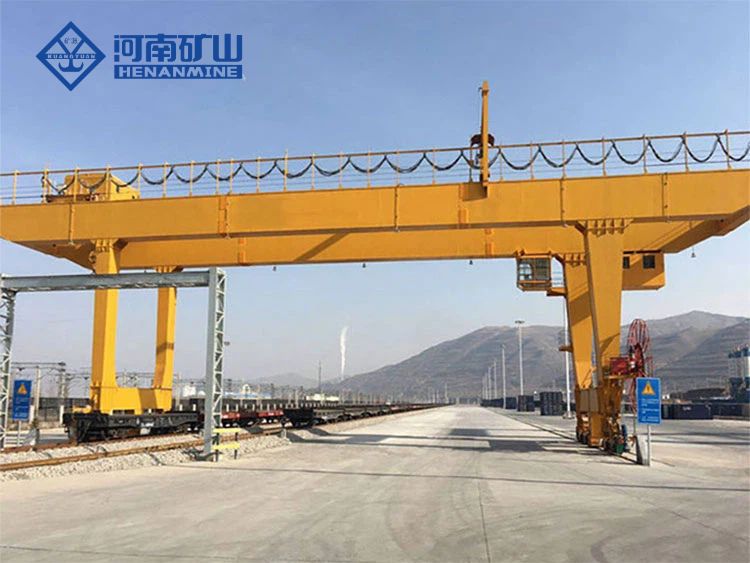
Electric RMG cranes have the advantages of zero emissions and low energy costs, and are suitable for port scenarios with perfect grid coverage; hybrid models are both flexible and adaptable to off-grid operation requirements, and are suitable for remote or unstable power grid yards.
As an industry leader, Henan Mine Crane electric/hybrid RMG cranes comply with international and domestic standards such as FEM, DIN, IEC, GB, etc., and integrate a variety of energy-saving technologies to suit the individual needs of different ports.
Future Trend of Energy-saving Crane Design
In the future, energy-saving innovations for RMG cranes will focus on digital twin integration, lightweight and environmentally friendly material applications, regenerative system upgrades and fully automated operation to further improve energy efficiency;
At the same time, “zero-carbon factory” will become the mainstream trend of crane manufacturing, Henan Mine Crane, as a national “zero-carbon factory”, is through the green manufacturing technology, to promote the development of RMG cranes in the direction of more energy-efficient, more environmentally friendly, more efficient, to help the industry green! Transformation.
Key Indicators (KPIs) for Measuring Energy Efficiency
Energy Consumption Per Standard Container (kWh/TEU)
This is the core indicator for measuring the energy efficiency of RMG cranes, calculated by dividing the total energy consumption of the crane by the number of standard containers (TEU) handled, with corrective factors such as load and environment taken into account in the calculation process.
Enterprises can refer to the GB/T36410.2-2018 standard for standardized assessment, and by tracking this indicator and comparing industry benchmarks, they can clarify the space for energy efficiency improvement.
Operational Downtime and Performance Indicators
It is necessary to focus on tracking downtime due to energy inefficiency or equipment failure, and unplanned downtime can be reduced by more than 30% through predictive maintenance;
at the same time, pay attention to productivity indicators such as the number of TEUs handled per hour and energy efficiency per operating cycle, and analyze the correlation between the energy efficiency improvement and the operational efficiency, so as to realize the double improvement of energy efficiency and production capacity.
Energy Consumption Savings vs. Operating Costs
Enterprises can calculate the return on investment (ROI) of energy-saving renovation through the formula, and take into account the cost of energy consumption, maintenance cost savings and equipment service life extension, to clarify the economic value of energy-saving renovation;
at the same time, it is necessary to pay attention to the long-term cost of ownership (TCO), and to reduce the overall operating costs of RMG cranes for 5-10 years through energy efficiency improvement.
Energy Saving Primer for Ports and Logistics Enterprises
Evaluate Existing Equipment
First, conduct an energy audit to comprehensively assess the energy consumption level of existing RMG cranes, identify inefficient links (e.g., old motors, lack of variable frequency drives, etc.), and prioritize retrofit priorities;
At the same time, check the compatibility of existing equipment with energy-saving technologies and determine which technologies can be retrofit applied and which need to be replaced with new equipment to achieve a balance between cost and effectiveness.
Operator and Employee Training
Enhance operator training and popularize energy-saving operating practices (e.g., reasonable load handling, optimal speed control) to reduce wasted energy consumption due to improper operation; train the maintenance team to master the use of predictive monitoring tools and be able to carry out regular energy-saving maintenance to ensure that the equipment is always in the optimal energy-saving operating condition.
Setting Long-term Energy Efficiency Targets
Set quantifiable annual energy efficiency targets (e.g., 10%-15% reduction in energy consumption per year), taking into account the port's sustainable development goals and international standards such as IMO 2030; review key indicators such as kWh/TEU and downtime on a regular basis, and adjust energy efficiency strategies according to the actual situation to ensure that the targets are met.
Choose Reliable Suppliers and Solution Providers
It is crucial to choose a supplier that has expertise in energy-saving RMG cranes, meets international standards, and can provide customized solutions. As a national “zero-carbon factory”, Henan Mine Crane has more than 20 years of experience in the design, production and customization of RMG cranes, and can provide one-stop services from consulting, design, installation to maintenance and training to ensure that customers achieve maximum energy efficiency and return on investment.
Henan Mine Crane Factory Custom
As a national “zero-carbon factory” and green manufacturing leader, Henan Mine Crane has more than 20 years of experience in the design, production and customization of RMG cranes, and focuses on providing energy-efficient lifting equipment solutions for customers around the world.
In terms of energy-saving advantages, Henan Mine Crane customized RMG cranes integrate variable frequency drives, renewable energy systems, Internet of Things monitoring and automation technology, which strictly comply with international and domestic standards such as FEM, DIN, IEC, GB, etc.,
and can be tailored to meet the needs of customers' port scenarios to create suitable energy-saving solutions; in terms of service, we provide one-stop services from consulting, design, installation to maintenance and training.
In terms of service, we provide one-stop service from consulting, design, installation to maintenance and training, tracking customer needs throughout the process, ensuring stable operation of the equipment, and helping customers maximize energy-saving effect and return on investment.
Choose Henan Mine Crane, is to choose efficient, energy-saving, reliable RMG crane solutions, hand in hand to achieve a win-win situation of green development and economic benefits.