
A Practical Guide to RTG Crane Tyre Maintenance and Replacement
All container terminals rely on uptime and uptime from tyres. A sudden rubber-tyred gantry (RTG) crane breakdown due to an unanticipated tyre failure can bring a yard block to a halt, delay the vessel operation and rapidly turn a small maintenance problem into a serious cost concern. However, tyre maintenance is often a secondary task in the routine maintenance of a crane and is often easily overlooked by hydraulic and electrical inspections.
So this is why this handbook exists. It takes RTG crane tyre inspection, maintenance and replacement in a straightforward, hands-on style, covering everything from types of tyres and how to spot the signs of wear, to the step-by-step process of changing them, safety points and the costs of ownership that operators need to prepare for.
What Is an RTG Crane and Why Tyre Care Is Mission-Critical
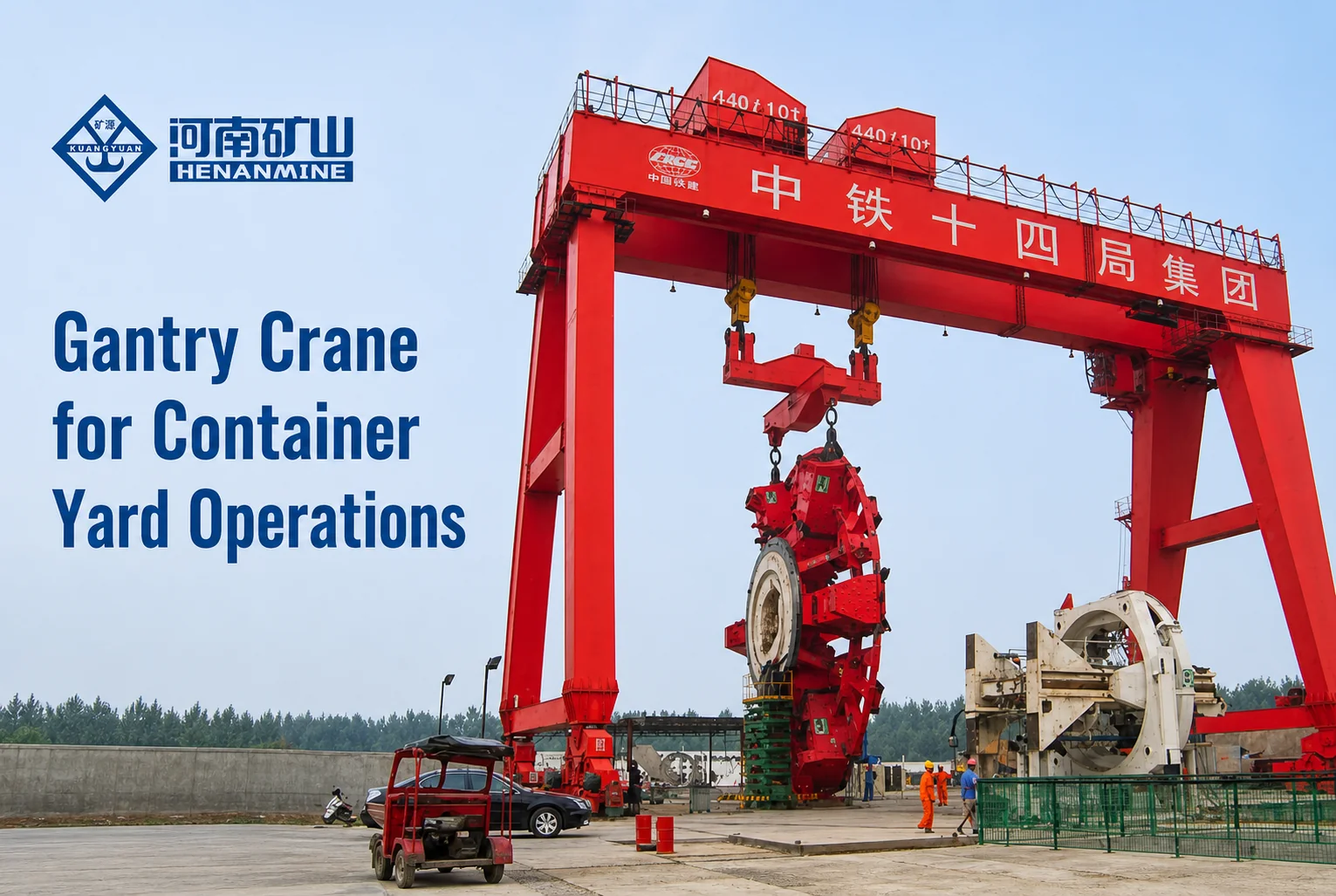
Henan Mine Crane manufactured rubber-tyred gantry (RTG) crane is a self-propelled, tyre-mounted container handling machine used in port and intermodal yards to stack and move shipping containers without fixed rail infrastructure. It typically runs on 4, 8, or 16 tyres arranged in bogies at each corner, distributing the combined weight of the crane structure and its rated load, often 35 to 70 tons, across the yard surface.
Because the entire machine rests on tyres rather than steel rails, tyre condition directly affects structural load paths, steering accuracy, and braking performance. A tyre that's underinflated, misaligned, or worn past safe limits doesn't just wear out faster — it transfers uneven stress into the bogie frame, axle, and steering linkage.
This is why tyre care sits at the center of RTG reliability, not at the edge of it. A tyre-related structural failure carries repair time, inspection costs, and crane downtime that far exceed the cost of proactive tyre replacement. Terminal operators who treat tyres as a scheduled wear item — inspected, measured, and replaced on condition, consistently see fewer unplanned stoppages than those who treat tyres as a reactive fix.
RTG Tyre Types: Pneumatic vs. Solid vs. Polyurethane
Choosing the right tyre construction is the first lever terminal operators have over long-term maintenance cost. RTG cranes most commonly run on pneumatic tubeless tyres in sizes such as 16.00-25, 18.00-25, or 21.00-25, selected for high load capacity, structural stiffness, and stable movement under repeated container-handling cycles.
| Tyre Type | Best For | Key Advantage | Key Trade-off |
| Pneumatic | Outdoor yards, uneven ground | Shock absorption, lower ground pressure | Requires pressure monitoring; vulnerable to punctures |
| Solid rubber | Debris-heavy yards | Eliminates deflation downtime | Less cushioning; harder ride transmits more shock to chassis |
| Polyurethane | High-cycle, abrasive surfaces | Long wear life, strong UV/temperature resistance | Higher upfront cost; weaker performance on soft or uneven ground |
Pneumatic tyres remain the default choice for most RTGs because terminal yards combine heavy static loads with constant pivoting and scrubbing, conditions where air-cushioned construction reduces stress on the crane's suspension and steering components. Solid and polyurethane tyres trade that cushioning for puncture immunity and wear life, making them a fit for yards with high debris exposure or where deflation-related downtime is unacceptable.
The right choice depends on yard surface, load profile, and how much downtime your operation can tolerate for a flat repair versus a higher per-unit tyre cost.
Common Causes of Premature RTG Tyre Wear
Uneven or accelerated tyre wear is rarely a tyre-quality problem. It's almost always a symptom of a mechanical or operational issue elsewhere on the crane. The most frequent root causes include:
- Steering misalignment:If there is a misalignment between the wheels; the tyres will have less contact patch to transmitthe load, leading to increased load per unit area on the remaining contact patch. This then causes increased wearand rolling resistance.
- Inappropriate pressures:Excess pressure causes the tread center to bear more load, too little causes contact pressure to be distributed irregularly. Both lead to premature tyre wear and greater chance of a blowout when heavily loaded.
- Unbalanced cargo or load distribution:Continued unbalanced loading will cause persisting unequal forces on particular wheelsets, resulting in permanent long-term axle misalignment.
- Too many sharp steering or crab-steering inputs:While tight turning response is acceptable on Henan Mine Crane manufactured RTGs, too much scrub during other steering inputs on the improper was tires increases tire consumption.
- Yard surface condition:Diverging road surface conditions like uneven pavement, garbage, loose stones can lead to misalignment over time, and even cause damage to tyre tread and tubes directly.
The practical implication: replacing a worn tyre without diagnosing why it wore unevenly just resets the clock on the same failure. Any time a tyre shows abnormal wear, the inspection should extend to alignment geometry and pressure across the full bogie — not just the tyre itself.
RTG Tyre Inspection Checklist: Daily, Weekly, and Quarterly
A structured inspection cadence catches the vast majority of tyre issues before they become downtime events. Build your routine around three tiers:
Daily (pre-shift, under 5 minutes per bogie)
- Walk the full perimeter checking for cuts, sidewall bulges, or visibly uneven wear
- Confirm no exposed cords or embedded debris
- Visually check for oil or hydraulic fluid pooling near tyres, which accelerates rubber degradation
Weekly
- Check pressure on every pneumatic tyre with a calibrated gauge,low pressure on a single corner creates uneven load distribution across the entire crane structure
- Inspect for early-stage scrub wear or feathering on tread edges
- Check wheel nut torque and fastening bolt condition
Quarterly
- Full four-point alignment check
- Steering system calibration (angle, pressure, and center-return calibration), since alignment drift and steering faults are the leading contributors to abnormal tyre wear
- Documented tread-depth measurement across all tyres, logged for trend tracking
Document every inspection result. A logged trend in tread depth or pressure loss on one corner is often the earliest warning of a developing alignment or axle issue, well before it becomes visible to the naked eye.
Tyre Pressure and Load Management Best Practices
Tyre pressure is the single most controllable variable in RTG tyre longevity, and it's also the most frequently neglected. Both overinflation and underinflation accelerate wear, reduce traction, and raise blowout risk, but they fail in different ways:
- Overinflated tyresconcentrate load on the center of the tread, wearing that section faster and reducing the tyre's effective contact area with the yard surface.
- Underinflated tyresspread contact unevenly, generate excess heat during continuous low-speed travel, and increase the risk of sidewall flexing damage under heavy container loads.
Set and verify pressure against the manufacturer's specification for your specific tyre size and crane load rating, not a generic industrial tyre chart. Because Henan Mine Crane Supply RTGs combine sustained static loading (while stacking) with continuous low-speed travel (while repositioning), pressure should be checked when tyres are cold, before the start of a shift, to get an accurate baseline reading.
Load balance matters as much as pressure. Uneven cargo distribution during lifts creates unilateral stress that no amount of correct tyre pressure can fully offset. Operators should avoid habitually loading from the same side or skewing the spreader unnecessarily, since repeated unilateral loading compounds wear on specific bogies over time.
Wear Indicators: How to Tell When a Tyre Needs Replacing
The decision to replace an RTG tyre should be driven by condition, not calendar date. Use these indicators as your primary decision framework:
Tread depth Measure remaining tread depth against the tyre's original depth at multiple points around the circumference. Once tread depth approaches the manufacturer's minimum safe threshold, replacement should be scheduled immediately, running a tyre past that point increases stress on the bogie frame and creates uneven load paths through the crane structure.
Sidewall condition Classify sidewall damage by severity:
- Minor surface scuffing: monitor, no immediate action required
- Visible cracking or weather-checking:schedule replacement within the next maintenance window
- Bulging, cuts exposing cord layers, or embedded debris: replace immediately; do not return the crane to service
Wear pattern Even wear across the full tread indicates correct pressure and alignment. Wear concentrated on one edge, the center, or in a serrated pattern signals an alignment or pressure problem that needs correcting in addition to tyre replacement.
Pressure retention A tyre that repeatedly loses pressure between checks, even without a visible puncture, should be treated as a replacement candidate, since slow leaks are difficult to diagnose definitively in the field and create unpredictable load distribution.
When any of these indicators crosses into "replace" territory, the cost of delaying replacement, measured in accelerated bogie wear, steering strain, and failure risk, consistently outweighs the cost of the tyre itself.

Step-by-Step RTG Tyre Replacement Process
Replacing an RTG tyre is a heavy-lift mechanical job that touches structural load paths — it should follow a consistent, documented procedure every time.
- Stage the crane and isolate power:Position the RTG on level ground, apply parking brakes, and follow full lockout-tagout procedure before any work begins.
- Confirm the load sharing is correct in relation to the type of crane:record the details of the serviced bogie and corner. Check the condition of the neighbouring tyres to ensure the crane is stable when the next corner is lifted.
- Lift and crib the corner:Use rated jacking equipment at manufacturer designated lift point and incorporate cribbing or mechanical blocking, never depend on hydraulic jack pressure alone to hold a lifted corner.
- Take off the wheel assembly:In the proper order, all wheel fasteners are to be loosened and removed. After that, extract the wheel and tyre assembly from the hub.
- Check the condition of the hub, axle and brake parts before fitting the new tyre:Tyre changing is an ideal opportunity for identifying any hub wear, bearing movement or brake part problems.
- Fit the new tyre and torque to OEM specification:Torque wheels fasteners to the manufacturer‘s torque setting in the correct order, then re-torque after the first running hours as the assembly settles down.
- Lower the crane and remove cribbing:confirming the new tyre seats evenly and pressure (for pneumatic tyres) matches specification.
- Run a full alignment check:Perform a four-point alignment verification after any tyre replacement or steering repair, this single step prevents the most common cause of premature repeat tyre failure.
- Document the replacement, including tyre batch/serial details, torque values recorded, and alignment results, for maintenance traceability and audit purposes.
Skipping the post-replacement alignment check is the single most common mistake in RTG tyre replacement, and the most common reason a freshly replaced tyre wears abnormally within weeks.
Safety Protocols During Tyre Maintenance and Replacement
Henan Mine Crane Supply RTG tyres support multi-ton structural loads, which makes tyre service one of the higher-risk maintenance tasks performed on the crane. Non-negotiable safety protocols include:
- Lockout-tagout (LOTO)on all power and hydraulic systems before beginning any tyre work
- Mechanical cribbing or blockingunder any raised corner, hydraulic jacks can fail or drift and should never be the sole support
- Rated lifting equipment only, matched to the actual corner load, not a generic estimate
- Exclusion zonesaround the work area to keep personnel clear of the raised structure and rolling wheel assemblies
- PPE appropriate to the task, including steel-toe footwear, gloves rated for handling tyre and wheel assemblies, and eye protection during fastener removal
- Two-person minimumfor any tyre and wheel assembly over manageable single-person handling weight
These protocols exist because the failure modes for tyre service are severe: a dropped corner or an improperly blocked lift can cause crushing injuries, and incorrect torque on wheel fasteners can lead to wheel separation during operation. Building these steps into a signed-off checklist, not just verbal practice, is what keeps tyre service incident-free across a fleet.
RTG Tyre Lifecycle Cost and TCO: What to Budget For
Tyres are one of the largest recurring cost centers in RTG fleet maintenance, and they deserve their own line item in total cost of ownership (TCO) planning, not a buried allowance inside general maintenance budgets.
What drives the cost:
- Replacement frequency:High-throughput terminals typically replace RTG tyres every 2 to 4 years, depending on cycle count, yard surface abrasiveness, and how well pressure and alignment are maintained.
- Tyre construction choice:Solid and polyurethane tyres carry a higher upfront unit cost than pneumatic tyres but can reduce downtime from punctures and deflation in debris-heavy yards.
- Downtime cost, not just tyre price:The direct cost of a tyre is almost always smaller than the indirect cost of the crane being out of service, lost throughput, redirected container moves to other yard blocks, and potential vessel turnaround delays.
- Root-cause repairs:Tyre wear driven by misalignment or pressure issues, left undiagnosed, leads to repeat replacements, multiplying tyre spend without fixing the underlying cause.
Budgeting approach: Track tyre spend per crane, per year, alongside replacement triggers. A fleet with frequent emergency tyre replacements is signaling an underlying maintenance gap, usually in alignment checks or pressure monitoring, that costs more in the long run than the inspection program required to prevent it.
Best Practices to Extend RTG Tyre Lifespan
A handful of disciplined habits consistently separate fleets with low tyre spend from fleets replacing tyres reactively:
- Maintain a written inspection cadence, daily, weekly, and quarterly,and hold technicians accountable to it, not just to "as needed" checks.
- Calibrate the steering system quarterly, including angle, pressure, and center-return calibration, since steering drift is the leading mechanical cause of uneven tyre wear.
- Check tyre pressure cold, before the start of a shift, using a calibrated gauge rather than estimating by sight or feel.
- Keep yard surfaces clear of debrisand report surface damage (potholes, loose stones, spalled concrete) for repair rather than working around it indefinitely.
- Stock frequently worn parts, including tyres, so replacement happens on schedule rather than being delayed by parts availability.
- Store spare tyres properly,away from direct UV exposure, chemical contact, and extreme temperature swings, since improper storage degrades rubber before a tyre is even mounted.
- Log every inspection and replacement, building a trend history per crane that flags developing issues before they cause downtime.
None of these practices is complex on its own. The fleets that get the most life out of their tyres are simply the ones that apply all of them consistently, every shift, on every crane.
Frequently Asked Questions
Q: How often should RTG crane tyres be replaced?
A: There's no fixed calendar interval, replacement should be driven by tread depth, sidewall condition, and wear pattern. That said, high-throughput terminals typically see RTG tyres reach replacement condition every 2 to 4 years under normal operating cycles.
Q: Which tyres are used for RTG cranes?
A: Almost all RTG gas cranes operate on pneumatic tubeless tyres of 16.00-25, 18.00-25, 21.00-25 or similar, selected for their high load carrying capacity and high structure stiffness in 4, 8 or 16 wheel arrangements.
Q: What is the difference between pneumatic, Solid and Polyurethane RTG tyres?
A: Pneumatic tyres can dampen shock and are default for outdoor yards with uneven ground, however need to be monitored for pressure levels. Solid and polyurea tyres do not give flat downtime and are more resistant to debris damage, however transmit more shock to the crane chassis and have a higher initial cost.
Q: How come RTG tyres are worn out more on one side?
A: Uneven, biased tyre wear is almost never the result of a tyre fault. It is always due to the tracking being out of specification, a pressure fault, or an uneven load distribution. When re-fitting any tyre exhibiting uneven wear, always carry out a four-point track out measurement and check the pressures.
Q: What safety precautions are required for RTG tyre replacement?
A: Full lockout-tagout, mechanical cribbing under any raised corner, rated lifting equipment matched to the actual load, and a documented alignment check after the new tyre is fitted. Hydraulic jacks should never be the sole support for a raised crane corner.
Henan Mine Crane Factory Custom
RTG crane tyre maintenance isn’t just another line in routine crane servicing — it plays a key role in keeping terminal operations stable and predictable. When tyre wear is properly monitored, inspections are consistent, and replacements are based on actual condition rather than fixed timelines, unplanned downtime can be significantly reduced.
The practices outlined in this guide, from inspection routines to wear monitoring and replacement procedures, are most effective when they are embedded into a structured operating system on site.
For terminal operators looking to improve overall RTG reliability and reduce avoidable downtime, the focus should always be on the equipment system as a whole, including crane design, load behavior, and operational consistency. Henan Mine Crane Factory provides heavy-duty RTG crane solutions to help operators build more stable, efficient yard operations from the ground up.