
How to choose an overhead crane for your workshop
Henan Mine Crane sales and technical support for so many years, I found that many customers choose overhead crane (overhead crane), the first reaction is to look at the lifting capacity - "I want to lift 5 tons of goods, choose 5 tons of crane! ".
In fact, this is only half right. Selecting the right overhead crane is never as simple as just looking at the tonnage. A suitable crane, you have to match your workshop structure, production process, lifting frequency, and even the future use of demand.
Today I'll use layman's words, talk to you slowly, choose the workshop overhead crane, in the end to consider what points, from the workshop conditions to technical parameters, from the material characteristics to compliance requirements, step by step to help you clear, to avoid stepping on the pit.
Why is it important to choose the right overhead crane?
Impact on safety and daily operation
The first thing you need to ensure is safety when choosing the right crane. The lifting operation in the workshop, once the problem is a big deal, light is damage to equipment, heavy is a danger to the safety of personnel.
A crane that matches the working conditions of the workshop will run smoothly and will not run off, shaking, overloading and other problems. For example, if you choose an ordinary crane for a high-temperature workshop, the electrical components are easy to be baked, which is likely to lead to braking failure, and choose the right high-temperature-resistant overhead crane to avoid this kind of hidden danger.
On the contrary, the selection of inappropriate, such as heavy load with a light crane, long-term overload operation, wire rope, brake will accelerate the wear and tear, sooner or later to failure, to the daily production of buried safety hazards.
Impact on production efficiency
Crane is the core equipment of the workshop material handling, choose the right one can help you save a lot of time, rationalize the production process. For example, the workshop is mainly lifting steel coils, selected with a special spreader crane, than with an ordinary hook lifting, the efficiency can be improved a lot.
If you choose a small, a crane can not be much, you have to go back and forth repeatedly; choose a large, slow running equipment, but also occupy space, but slow down the pace of production. The right crane can make the material flow more smoothly, reduce unnecessary handling time, and indirectly improve the overall capacity of the workshop.
Impact on long-term costs
Many customers choose cranes, always thinking of “saving money”, either choose the configuration of excess equipment, or choose just enough to meet the current demand, not realizing that these two options, the long-term down will be more money.
Configuration of excess cranes, such as obviously only hanging 5 tons of goods, but chose a 10-ton, high pre-purchase costs, late maintenance, energy costs are higher than ordinary cranes, pure waste.
And choose not enough to use, such as late capacity enhancement, the need to lift heavier goods, can only re-procure new equipment, pre-bought cranes have become idle assets, but more losses. Selected right, both to meet current demand, but also adapt to future development, the most cost-effective in the long run.
Start from your workshop conditions
Workshop dimensions
The width, length and height of the workshop directly determine the span, lifting height and running length of the crane, which is the basis for selection, and should not be sloppy at all.
Workshop width determines the crane span, span is too large or too small, will affect the lifting coverage; length is related to the running length of the crane, to ensure that the crane can cover the entire workshop lifting area.
Height is even more critical, workshop headroom height is not enough, the crane's lifting height will be limited, the hook can not lift the designated position, even if the other parameters are right, can not be used. In addition, it is also necessary to consider the available installation space in the workshop, such as the position of columns and beams, to avoid collision when the crane is running.
Existing support structure
Many old workshops or workshops that have been built may have installed runway beams, and then the selection should first confirm the size and load capacity of the runway beams to see if they can be adapted to the crane you want to choose.
If there is no runway beam, you need to check the building structure of the workshop, such as the load-bearing capacity of the columns, can withstand the crane's dead weight and lifting load. If the load bearing is not enough, you need to reinforce the workshop first, otherwise the crane installation may lead to deformation of the building structure and cause safety accidents.
Our Henan Mine Crane engineers, door-to-door survey will focus on checking these, to help customers confirm the applicability of the existing structure, to avoid rework later.
Indoor or special environment
Different workshop environments, the requirements for cranes are different, can not be generalized.
Ordinary indoor workshop, such as machining workshop, assembly workshop, choose the standard overhead crane can be, to meet the basic lifting needs can be. But if it is a special environment, we have to target selection.
Dusty workshop, such as building materials workshop, the crane's electrical system to do dust treatment, to avoid dust into the damaged components; high temperature workshop, such as metallurgical workshop, need to choose high temperature resistant cranes, equipped with high temperature resistant cables and cooling devices; corrosive or humid environments, such as chemical industry workshop, to choose anticorrosive, moisture-proof cranes, to prevent the equipment from rusting and damaging; there is a risk of explosion in the region, such as flammable and explosive goods In areas with explosion risks, such as flammable and explosive goods warehouses, explosion-proof overhead cranes should be selected to meet the explosion-proof standards.
Confirm the key technical parameters before selection
Lifting capacity
The lifting capacity is the most basic parameter, but not only the current maximum lifting weight. First of all, we need to clarify the maximum weight of materials to be lifted in the workshop, and also consider whether there is a dynamic load or partial load situation.
For example, when lifting liquid materials, irregular materials, will produce dynamic load, lifting capacity should be appropriate to leave a margin; if there is a bias load, the crane's force will be uneven, but also need to be taken into account in the selection.
In addition, it is also necessary to consider whether there is the possibility of lifting heavier materials in the future. For example, the workshop plans to expand production capacity, the later may lift heavier equipment, selection can be appropriate to reserve the lifting capacity, to avoid re-procurement later. According to the industry standard, when lifting bulk materials, usually reserve 10%~15% overload space, and when lifting hazardous materials, additional consideration should be given to the dynamic load factor.
Span
Span is the distance between the centerlines of two rails, this parameter must be matched with the layout of the workshop. If the span is too big, the structure of the crane will be more complicated and costly; if the span is too small, the lifting coverage is not enough, which will affect the production.
Previously, a customer, did not measure the distance from the centerline of the track, directly according to the width of the workshop to determine the span, the results of the crane to the scene, can not be installed, can only be re-customized, and spend a lot of money.
When selecting the type, we must measure the distance from the centerline of the track, combined with the workshop column spacing, lifting area, to determine the appropriate span. For indoor operation, the crane span is usually 1.5m~2m smaller than the span of the workshop, and it is necessary to reserve space for track installation and safety clearance.
Lifting height
Lifting height is the distance that the hook needs to lift, according to the stacking height of the material, the workshop headroom height to determine. For example, if the materials need to be stacked on a 6-meter-high shelf, the lifting height of the hook should be at least 7 meters, and a safety clearance should be reserved.
Also consider the roof clearance and hook proximity distance, to avoid collision with the roof and beams when the hook rises to the highest position, and at the same time to ensure that the hook can be close to the corners of the workshop, without affecting the lifting.
If the workshop headroom is limited, you need to choose a crane with low building height, or adjust the lifting height parameter to ensure that the equipment can operate normally. The lifting heights of the main and auxiliary hooks can be set independently to meet the vertical operation requirements of different scenarios.
Running length
Running length is the running distance of the crane along the workshop track, to ensure that the running length of the crane can cover the entire lifting area, such as from one end of the workshop to the other end, from the material area to the production line, can be reached smoothly.
If the workshop is very long and the lifting area is scattered, it is necessary to increase the running length appropriately, or consider multiple cranes to work together to avoid lifting blind zones.
Working level
Working level is ignored by many customers, but it directly affects the service life and stability of the crane. Working level is divided into light, medium and heavy, mainly based on the frequency of lifting and daily running time to determine.
For example, only occasionally used to maintain the equipment, less than 1 hour a day running time, choose the light-grade cranes can be; if it is a daily high-frequency lifting, running time of more than 8 hours, you need to choose a heavy-grade cranes, otherwise the equipment will accelerate the wear and tear, and prone to failure.
According to GB/T3811 standard, the working level is divided into A1~A8 eight levels, metallurgical workshop and other frequent operation scenes usually choose A6~A8 level, warehouse and other intermittent operation scenes choose A1~A4 level. We, Henan Mine Crane, will recommend the appropriate working level according to the customer's working frequency.
Lifting speed and running speed
Speed is not the faster the better, according to the material characteristics and operational needs to determine. For example, when lifting precision parts and fragile materials, the speed should be slow to avoid material shaking and damage; when lifting large quantities of ordinary materials, the speed can be faster to improve efficiency.
Lifting speed and running speed should be matched, for example, the lifting speed is fast, the running speed should also be adjusted appropriately to ensure that the lifting process is smooth. 5 tons of electric hoist below the normal speed is usually 8m/min, 10 tons and above is reduced to 7m/min or even lower; large car running speed is generally 20~30m/min.
If the workshop production rhythm is fast, you can choose a slightly faster crane; if the lifting precision requirements are high, the speed should not be too fast.
Define the materials you want to lift
Shape and size of materials
Different shapes and sizes of materials, crane lifting methods and spreader requirements are not the same, the selection must be considered clearly.
For example, lifting steel coils (steel coils), you need to use a special steel coil spreader, to avoid slipping steel coils in the lifting process; lifting steel plates (steel plates), you can use electromagnets or lifting tongs; lifting molds (molds), machinery parts (machinery parts), with ordinary hooks can be, but we must take into account the irregularity of the material, to avoid partial load.
If the size of the material is very large, such as large prefabricated parts, but also consider the crane lifting space, to ensure that the material can smoothly pass through the workshop columns, beams, will not collide.
Lifting method
Common lifting methods include hooks, grabs, electromagnets, spreaders, and some special lifting tools, which should be selected according to the material characteristics.
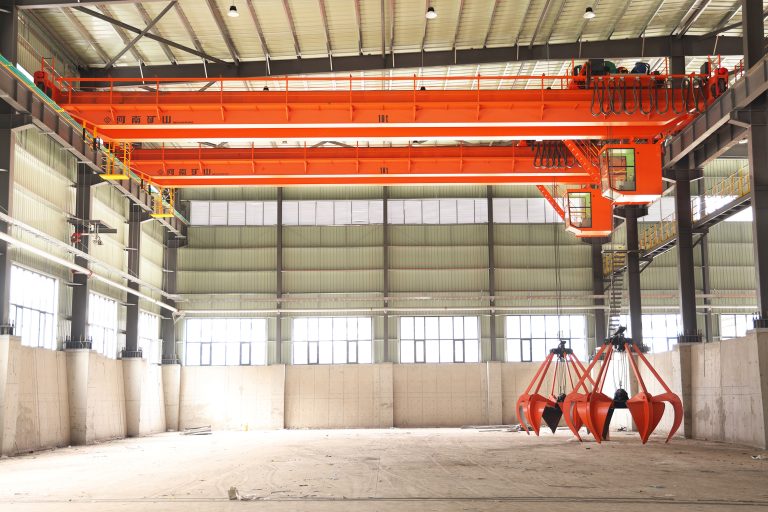
Hook is the most commonly used, suitable for most materials; grapple is suitable for lifting bulk materials, such as gravel, coal; electromagnet is suitable for lifting magnetic materials such as steel, iron, etc., with high efficiency; and special spreader is suitable for special shaped materials, such as steel coils, pipes.
We, Henan Mine Crane, can match the suitable lifting tools according to the material characteristics of customers to ensure safe and efficient lifting. When equipped with electromagnetic suction cups, it is necessary to add 10%~15% of the lifting capacity as the weight of the spreader.
Material lifting precision
Different operation scenarios have different requirements for lifting precision. For example, in precision machining workshop, materials need to be accurately lifted to the designated position of the machine tool, which requires a high degree of accuracy, and then we need to choose the crane that can accurately position.
If only ordinary material transportation, such as from the material area to the production line, do not need too much precision, ordinary cranes can meet the demand.
Scenarios with high precision requirements, you can choose cranes with frequency conversion speed control function, smoother running, more accurate positioning.
Single girder or double girder overhead crane?
When is a single girder overhead crane suitable?
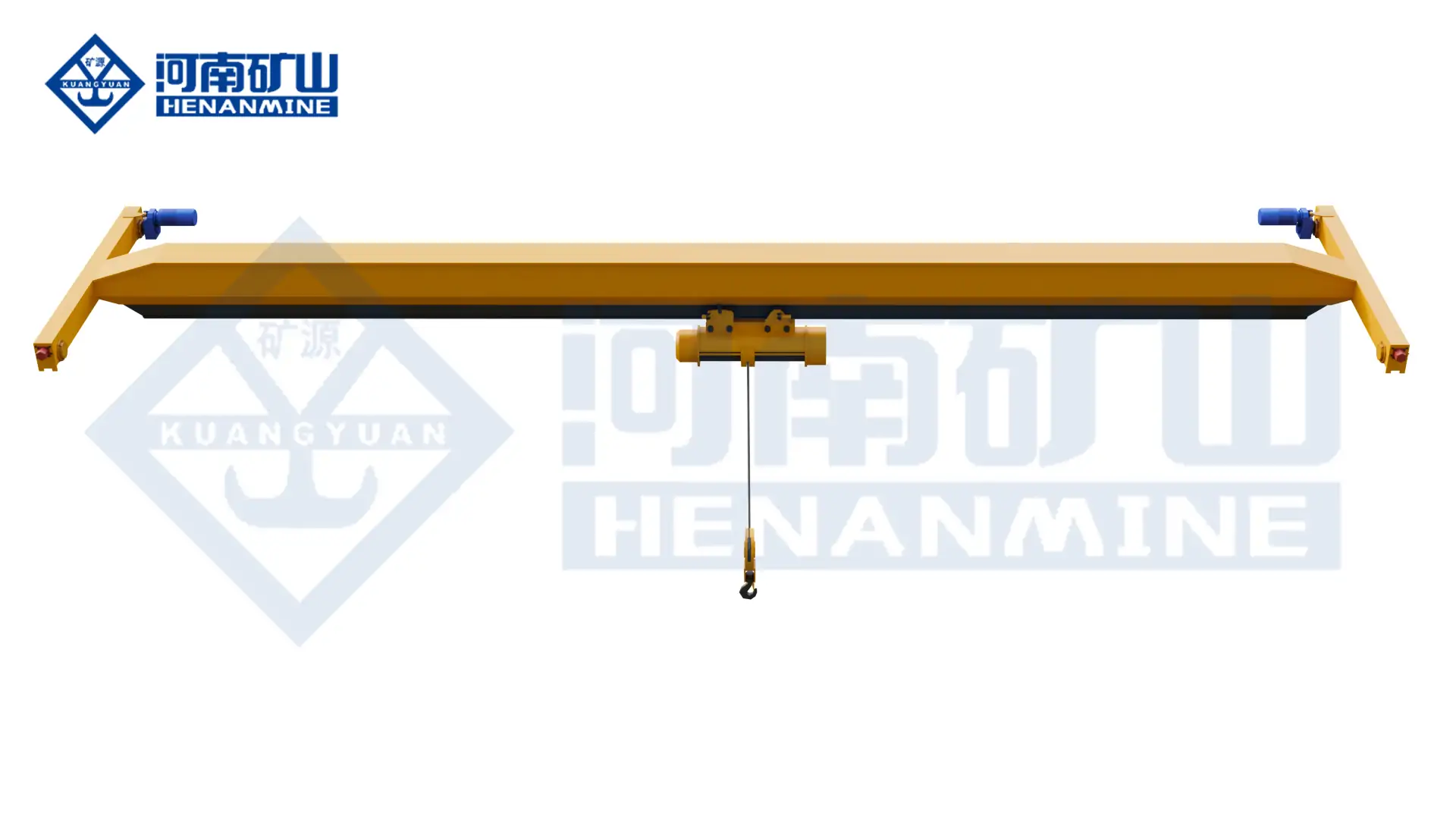
Single girder overhead crane is suitable for light to medium load scenarios, such as workshops with lifting capacity between 0.5-20 tons and span between 3-20 meters.
Its advantages are low investment cost, simple structure, easy installation, low load requirement for workshop, suitable for relatively simple workshop condition scenarios, such as small machinery processing factory, warehouse, assembly workshop.
If your workshop lifting frequency is not high, the weight of materials is not large, and the budget is limited, the choice of single girder crane is very suitable. Single girder cranes are compact, light weight, and can work flexibly in low plants, and maintenance is relatively easy.
When is a double girder overhead crane more suitable?
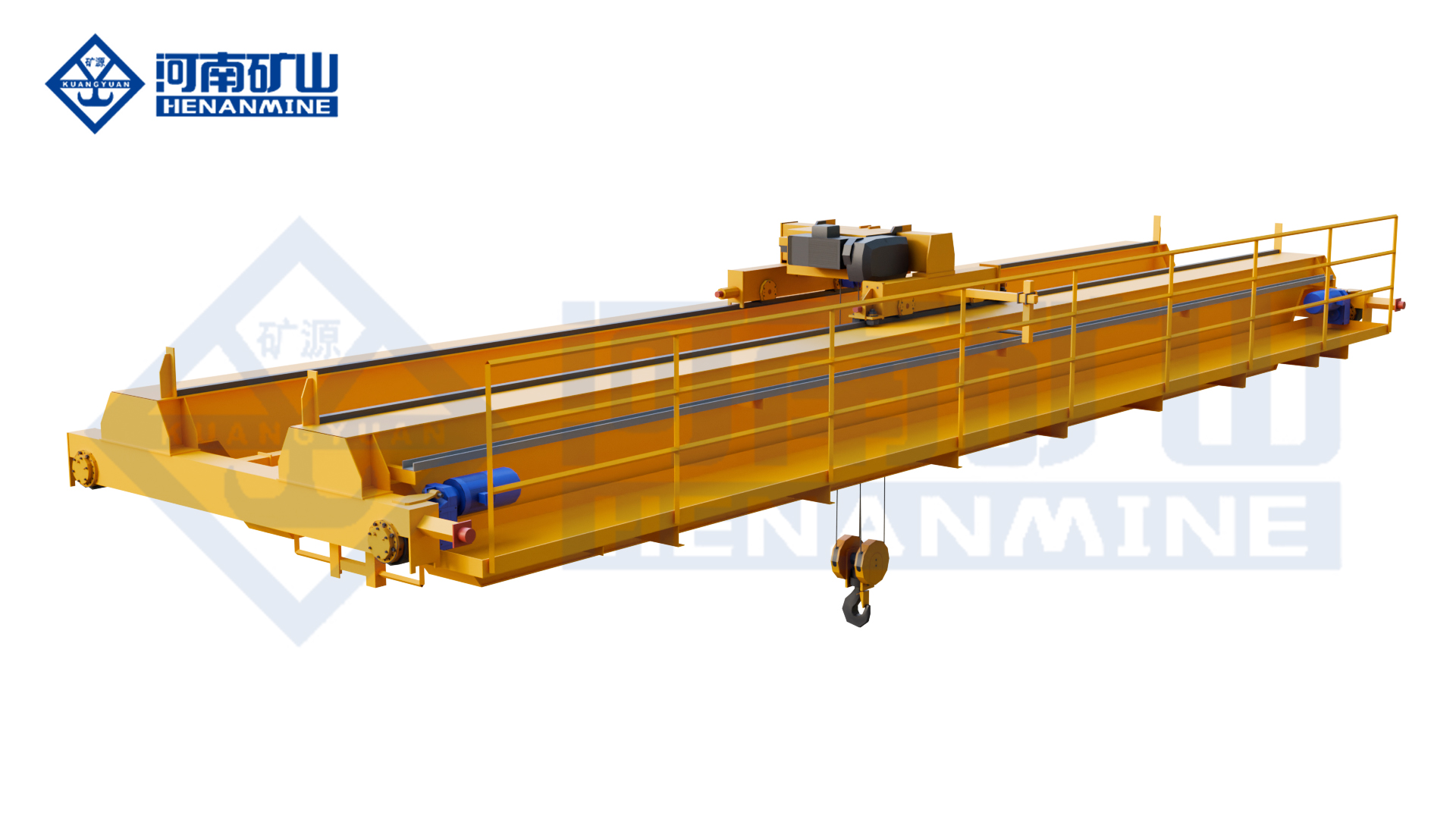
Double girder overhead cranes are more suitable for heavy loads, large spans and high-frequency lifting scenarios. For example, if the lifting capacity is more than 20 tons, the span is 10-35 meters or even larger, and the lifting frequency is high every day, you need to choose double girder overhead crane.
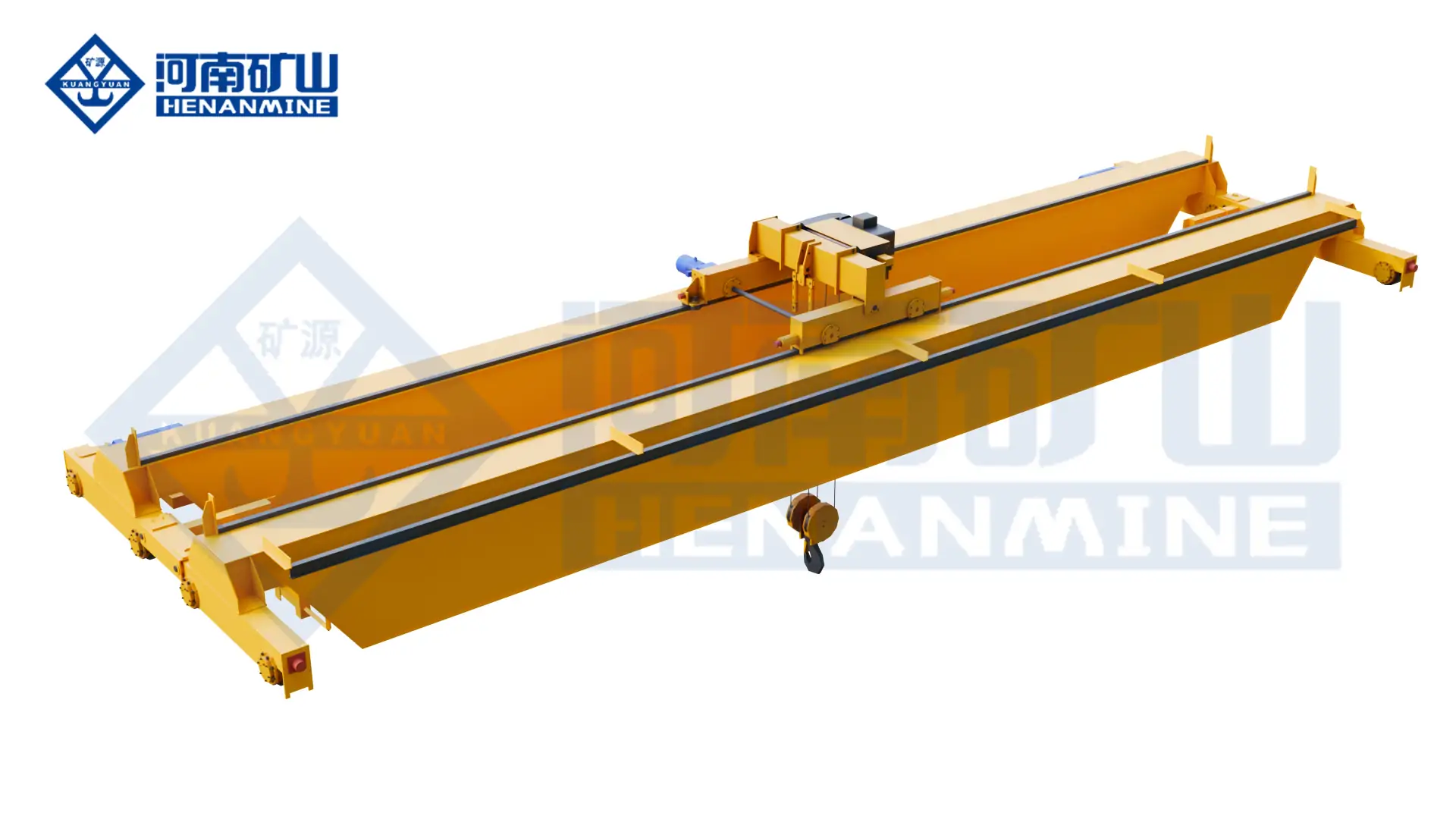
Double girder cranes have stronger load carrying capacity, more stable structure and higher lifting height, which is suitable for large industrial workshops, such as heavy machinery factories, metallurgical workshops and steel structure workshops.
In addition, if the workshop needs to lift large equipment, or requires high lifting precision, double girder cranes are also more advantageous. The force distribution of double girder structure is more uniform, the deformation is small when bearing large loads, and the working efficiency is higher.
The main differences buyers need to understand
Single girder and double girder cranes, the core difference is mainly in the structure, cost, hook proximity distance, maintenance space and future upgrade flexibility.
Structurally, single girder cranes have only one main girder, which is simple; double girder cranes have two main girders, which are more complex and have a stronger carrying capacity. Cost, single girder crane than double girder crane is much lower, suitable for customers with limited budget.
In terms of hook proximity, the hook of single girder crane can be closer to the columns and walls of the workshop, and the lifting coverage is more flexible; the hook proximity of double girder crane is slightly smaller, but the lifting height is higher.
Maintenance space, double girder cranes have specialized aisles and platforms, maintenance is more convenient; single girder crane maintenance space is relatively small. In terms of future upgrading, double girder cranes have more space for upgrading, such as increasing the lifting capacity and installing auxiliary spreaders at a later stage; single girder cranes have limited space for upgrading.
Choose up-running or down-running cranes?
Top running overhead cranes
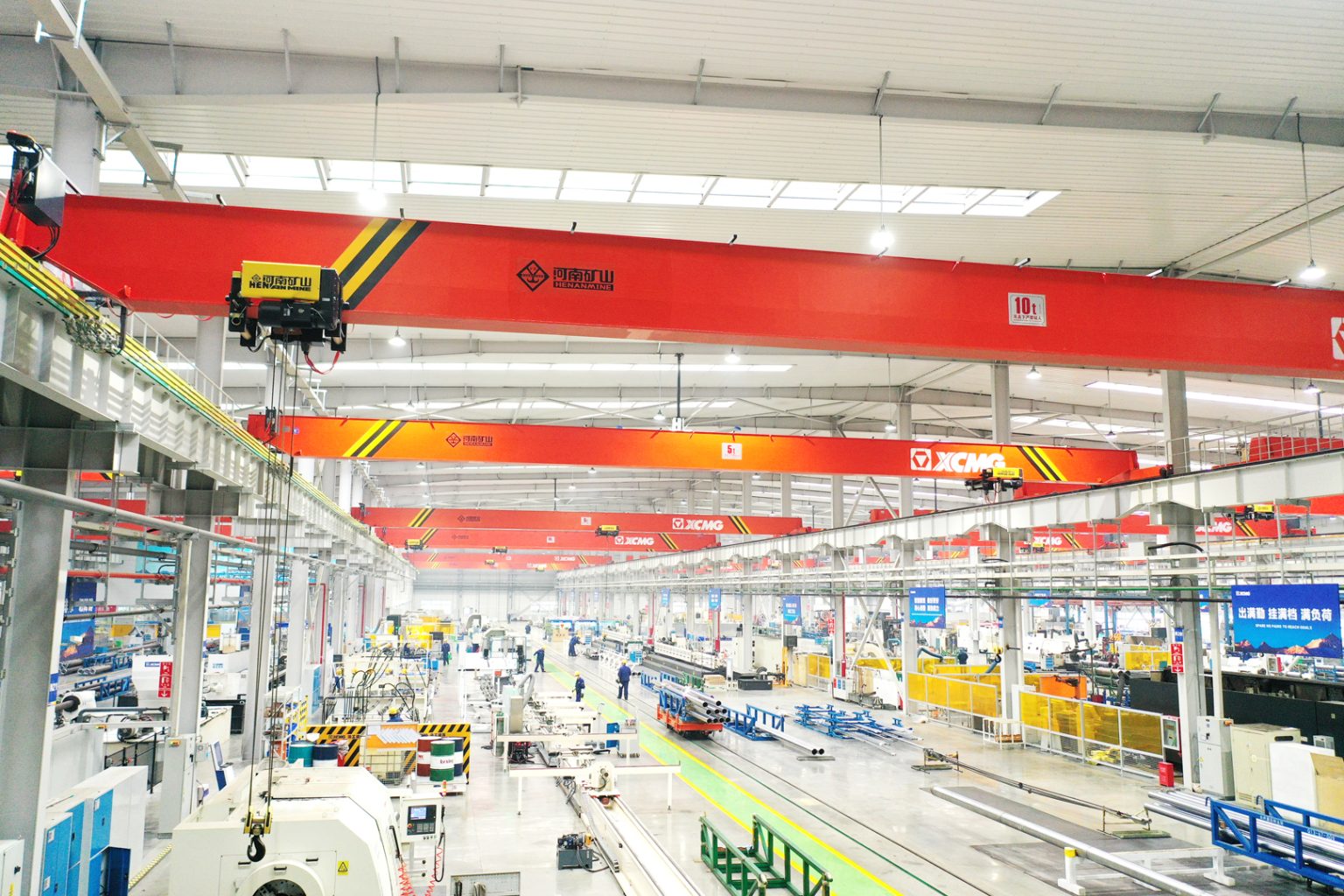
The top running overhead crane, the most common type, is suitable for most industrial workshops. It has a large carriage running mechanism above the main girder and runs along a track.
The advantages of this type of crane are strong load carrying capacity, suitable for heavy load and large span scenarios, stable operation and easy maintenance. Most workshops, such as machining, metallurgy, steel structure workshops, you can't go wrong with the running crane.
It has a wide range of applications, whether it is a new workshop or an old workshop remodeling, can be adapted, but also one of our Henan Mine Crane highest sales type.
Under running overhead crane
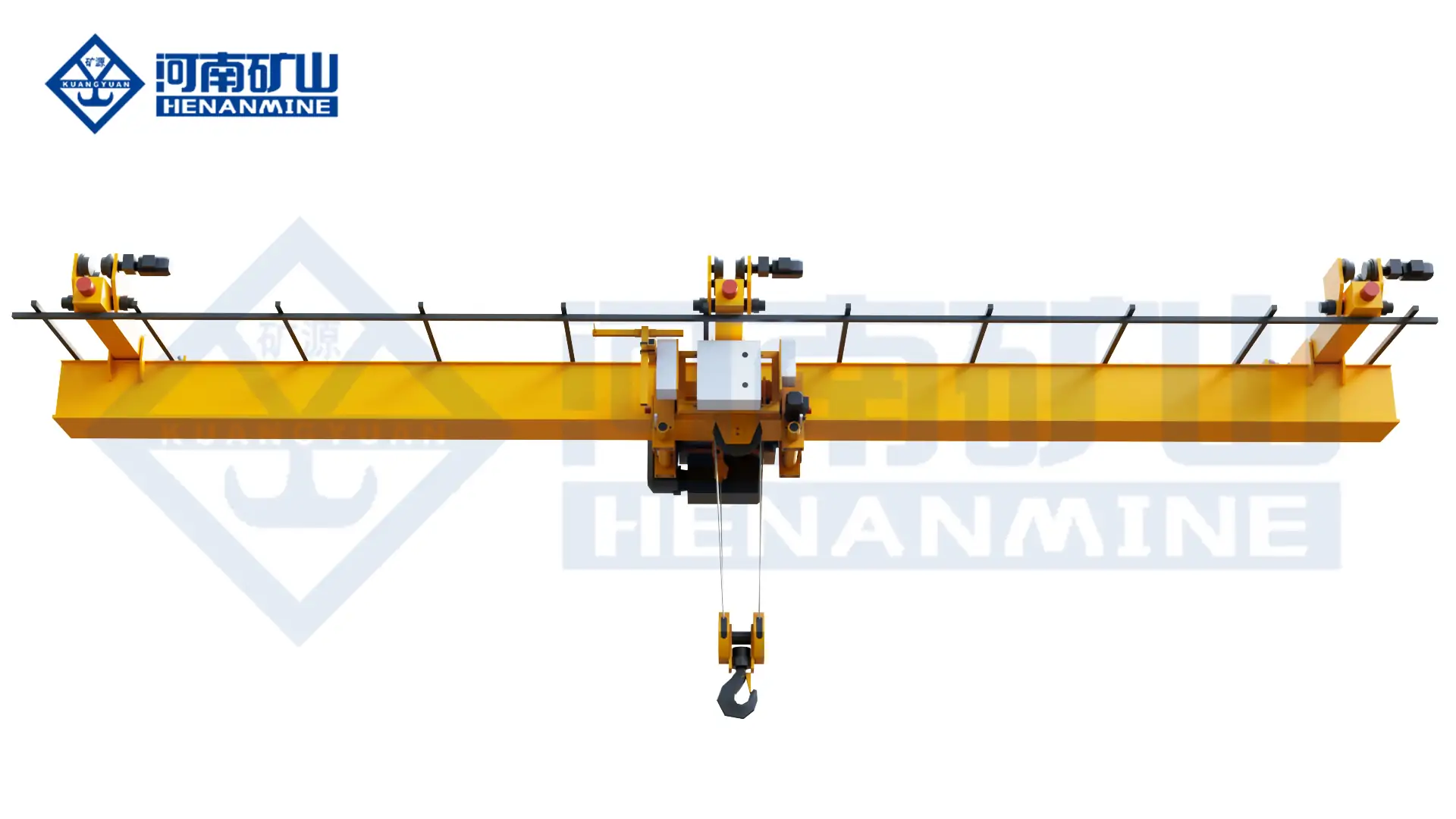
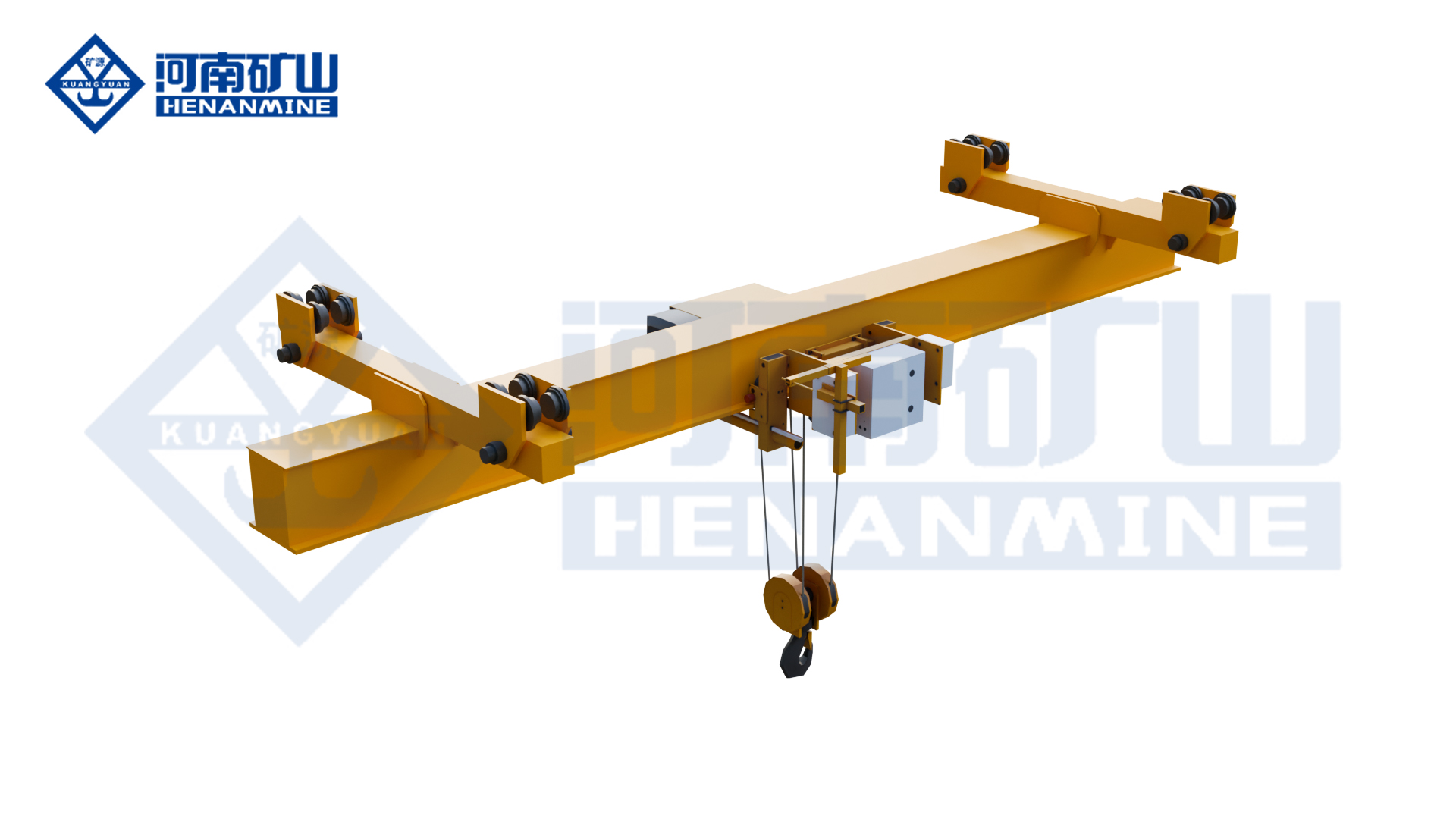
under running overhead crane (under running overhead crane), the big car running mechanism is under the main beam, running along the track. It has the advantage of being compact and taking up little space, making it suitable for scenarios where workshop headroom is limited.
This type of crane is usually suitable for light load operations, such as lifting capacity below 5 tons, lifting frequency is not high workshop, such as small warehouses, small assembly workshops.
If your workshop height is not high enough to install an up-running crane, or the lifting load is not large, a down-running crane is a good choice.
Which is more suitable for your workshop
Choosing up-running or down-running mainly depends on the structural support and headroom conditions of the workshop. If the workshop has enough headroom, enough carrying capacity, and needs heavy loads and large span lifting, choose the up-running crane.
If the workshop headroom is limited, the lifting load is not large, or the existing structure can not support the weight of the upper running crane, then choose the lower running crane.
Our Henan Mine Crane engineers will help you determine which type is more suitable according to the actual situation of your workshop to avoid choosing the wrong one.
Consider the workshop process, not just the crane itself
Crane frequency of use
The frequency of use of the crane directly determines its working level and service life. You have to first think about whether the crane is used once in a while, or whether it is used every day with high frequency.
If it is only occasionally used to maintain the equipment, such as a few times a month, choose a light-grade crane can be; if it is used every day production, such as running more than 8 hours a day, frequent lifting of materials, you need to choose a heavy-grade crane, otherwise the equipment is easy to wear and tear, affecting the service life.
For example, in metallurgical workshop, if you need to frequently lift billets and ladles every day, you must choose heavy-grade double girder cranes to meet the needs of long-term high-frequency operation.
Where is the main lifting area
To clarify the main lifting area in the workshop, such as material area, production line, assembly area, to determine whether a crane can cover all lifting areas.
If the workshop is not big, the lifting area is relatively centralized, a crane is enough; if the workshop is very big, the lifting area is scattered, a crane can not cover, you need to consider multiple cranes to cooperate, or set up a transfer point, to ensure that the material can flow smoothly.
For example, a large steel structure workshop with multiple processing areas and material areas usually requires 2-3 cranes to work together in order to improve production efficiency.
Future production changes
When selecting the type, must consider the future production changes, such as capacity expansion, new equipment, workshop layout adjustment. If you want to expand capacity in the future, lifting heavier materials, selection should be reserved for lifting capacity and span margin.
For example, now lifting 5 tons of materials, plans to expand production capacity in two years, lifting 10 tons of materials, you can directly choose 10 tons of cranes, to avoid re-procurement later.
If the future layout of the workshop to be adjusted, it is necessary to choose a crane with high flexibility, such as mobile rail cranes, to facilitate the later adjustment of the scope of lifting.
Check the power supply and control mode
Available power supply in the workshop
Crane operation requires a stable power supply, before selecting the workshop to confirm the power supply voltage and frequency, to ensure that the design requirements and crane match.
For example, the power supply of most industrial workshops around the world is 380V, 50Hz, but some countries and regions are 415V, 60Hz, which needs to be confirmed in advance to avoid the crane being unable to supply power normally after it is transported to the site.
Our Henan Mine Crane can be customized according to the customer's power supply needs, different voltage and frequency of the equipment, adapted to different regions of the world workshop. At the same time, you need to confirm whether the power supply capacity to meet the operating requirements of the crane, to avoid unstable voltage.
Control mode selection
There are three main crane control methods: pendant control (handle control), wireless remote control (wireless remote control), cabin control (cab control), according to the operational scenarios and needs to choose.
Handle control is suitable for scenes with low lifting frequency and small operation range, simple operation and low cost; wireless remote control is suitable for scenes with large operation range and operators are not conveniently close to the lifting area, such as high temperature and dusty workshop, flexible operation and high safety.
Cab control is suitable for heavy-duty, high-frequency lifting, or the lifting of high precision requirements of the scene, the operator in the cab, good vision, more accurate operation. Our Henan Mine Crane can be equipped with wireless remote control + wired handle dual control to enhance operational flexibility.
Why the control mode is important
The control mode is directly related to operational safety, operator's field of vision, lifting accuracy and ease of operation. For example, in a hot workshop where the operator cannot get close to the lifting area, wireless remote control can avoid high-temperature injuries and ensure precise operation.
If the lifting accuracy requirements are high, such as precision processing workshop, cab control is more appropriate, the operator can clearly see the lifting area, accurate control of the hook position, to avoid material damage.
Choosing the right control method can improve operation safety and efficiency and reduce operation errors. The wireless remote control distance is usually ≥100m, with stable signal and strong anti-interference ability, which is suitable for complex workshop environment.
Focus on safety and compliance
Safety devices
Safety device is the “shield” of the crane, and it is indispensable to confirm that the crane is equipped with a complete safety device when selecting the model.
Core safety devices include: overload limiter (overload limiter), which can prevent overloading of the crane to avoid equipment damage and safety accidents; limit switches (limit switches), which can limit the lifting height of the hook and the operating range of the crane to prevent collision; emergency stop (emergency stop button), which can immediately cut off the power supply and stop the operation of the equipment in case of emergency; and emergency stop button. Emergency stop (emergency stop button), in case of emergency can immediately cut off the power supply, stop the operation of equipment; buffers (buffers), can reduce the impact of the crane running; warning alarms (warning alarms), when lifting the warning, to remind the surrounding personnel to pay attention to safety.
Each crane of our Henan Mine Crane is equipped with a full set of safety devices, which are designed in strict accordance with safety standards to ensure the safety of lifting operations. The electrical cabinets usually adopt IP54 protection, which is dust and moisture resistant, and is suitable for the complex environment in the workshop.
Local standards and certifications
If your workshop is overseas or your products need to be exported, make sure that the crane meets local standards and certifications, otherwise it will not be able to pass the local compliance scrutiny or be put into use.
Common global standards and certifications include ISO (international standard), FEM (European standard), CE (European Union certification), EAC (Eurasian Economic Union certification), and different countries and regions have different requirements.
Our Henan Mine Crane, designed, produced and tested in strict accordance with these international standards, each piece of equipment has a complete certificate of compliance, whether it is exported to Europe, the Americas, or other regions, can successfully pass the local certification. It also complies with GB/T 3811-2008 “Crane Design Code”, GB/T 14405-2011 “General Overhead Cranes” and other domestic standards.
Why discuss compliance as early as possible
Compliance issues, if considered at a later stage, are likely to result in cranes needing to be redesigned, remodeled, or even unable to be exported, delaying the schedule and increasing costs.
For example, cranes exported to Europe must comply with CE certification, if not considered in the early stages, the production is completed and found to be non-compliant with the standard, it will need to be remodeled, not only to increase costs, but also delays in shipment (shipment) time.
Therefore, the initial stage of selection and supplier communication compliance requirements, to ensure that the crane meets local standards, to avoid problems later.
When selecting overhead cranes, common misconceptions to avoid
Only look at the price to choose equipment
This is the most common misunderstanding, many customers choose cranes, only to see which low price, choose which one, not realizing that low-priced equipment often cut corners, safety is not guaranteed.
Previously, a customer, greedy for cheap choice of a low-priced crane, with less than a year, the wire rope broke, almost triggered a safety accident, the cost of late maintenance, replacement parts, more money than the initial savings. Some manufacturers on the market reported prices lower than half of the counterparts, the actual use of thin steel plate, poor quality electrical appliances, and even no formal certificate of conformity, and may be investigated and punished by the Safety Supervision at a later stage.
Selection of cranes, can not just look at the price, to consider the quality, safety, maintenance costs, penny for penny, choose reliable equipment, more cost-effective in the long run.
Incomplete technical information provided
Many customers consult, only say “I want to lift 5 tons of goods”, but do not provide workshop size, lifting materials, operating frequency and other information, resulting in the supplier can not give accurate selection recommendations.
For example, if you do not provide the workshop height, the crane recommended by the supplier is not enough lifting height, and can not be used at the site; do not provide the size of the material, the recommended spreader does not match, and can not lift the material.
When consulting, be sure to provide complete technical information so that the supplier can help you select the right crane to avoid mistakes.
Ignore the working level
The working level directly affects the service life of the crane, many customers ignore this, such as high-frequency lifting but chose a light crane, resulting in frequent equipment failures, the service life is significantly shortened.
For example, running 8 hours a day, frequent lifting of heavy loads, choose light grade cranes, less than half a year will appear motor damage, brake failure and other problems, the late maintenance costs are very high. The working level reflects the “long-term operating intensity”, even if the rated lifting capacity meets the demand, if the working level is low, frequent high-load operation will lead to structural fatigue, parts wear and tear accelerated.
Failure to consider future needs
Only consider the current lifting demand, not consider the future expansion of capacity, resulting in the later need to lift heavier materials, the existing cranes can not meet, only to re-purchase, a waste of costs.
For example, now lifting 5 tons of material, plans to expand production capacity in two years, lifting 10 tons of material, but chose a 5-ton crane, and later can only re-buy, the previous equipment has become an idle asset. Some manufacturers will fool customers to choose high-end parameters, said “the higher the parameters the better”, but the ordinary workshop simply can not be used, pure waste.
Ignore the workshop headroom restrictions
Many customers only look at the lifting height of the crane, but ignored the workshop headroom height, resulting in the crane to the site, the hook can not rise to the required position, or the crane can not be installed.
For example, the workshop headroom height is only 8 meters, but selected the crane with a lifting height of 8 meters, deducting the height of the crane itself, the actual lifting height of the hook is only 6 meters, which can not meet the lifting requirements. When installing overhead cranes in old plants, it is more important to focus on checking the headroom and load-bearing capacity of the plant.
Not confirming track beam conditions
If the workshop already has track beams, many customers do not confirm the load-bearing capacity and size of the track beams, and then directly select the crane, resulting in mismatch between the crane and the track beams, which can not be installed, or the track beams are deformed during operation.
For example, if the load-bearing capacity of the track beam is not enough, after the crane is installed, the track beam will be deformed and broken, which will cause safety accidents. Be sure to confirm the condition of the rail beam before selecting the model to avoid rework at a later stage.
What information should you provide to the crane supplier?
Basic technical information
First of all, you should provide the core technical parameters, including lifting capacity, span, lifting height and running length, which are the basis for selection and are indispensable.
Also provide workshop power supply information, such as voltage, frequency, to ensure that the crane power supply needs and workshop match. If there are special technical requirements, such as lifting accuracy, running speed, should also be explained.
For example, the lifting capacity should be clear whether the weight of the spreader is included, the span should provide the distance from the centerline of the track, and the lifting height should be clear about the height that the hook needs to reach.
Workshop information
Workshop information is also very important, including architectural drawings of the workshop, site photos, so that the supplier can visualize the size of the workshop, the structure, the position of the columns and so on.
If the workshop already has track beams, provide detailed dimensions and load-bearing capacity of the track beams; if there are special environmental requirements, such as high temperature, corrosion, explosion-proof, it should also be explained, and the supplier will target selection.
On-site photos can help suppliers judge workshop conditions more accurately and avoid errors based on drawings alone. It is also a necessary step to commission a professional organization to test the load-bearing performance of plant columns and bull legs.
Application information
It is important to tell the supplier what materials you are going to lift, the shape, size and weight of the materials, as well as the lifting method, so that the supplier can recommend the right type of spreader and crane.
Also state how often the crane will be used, how long it will be in operation each day, and whether there are any special operational requirements, such as precise positioning and continuous lifting, and this information will help the supplier to determine the crane's working level and configuration.
For example, lifting flammable and explosive materials, to explain the characteristics of the material, the supplier will recommend explosion-proof cranes; high-frequency lifting, will recommend heavy-grade cranes.
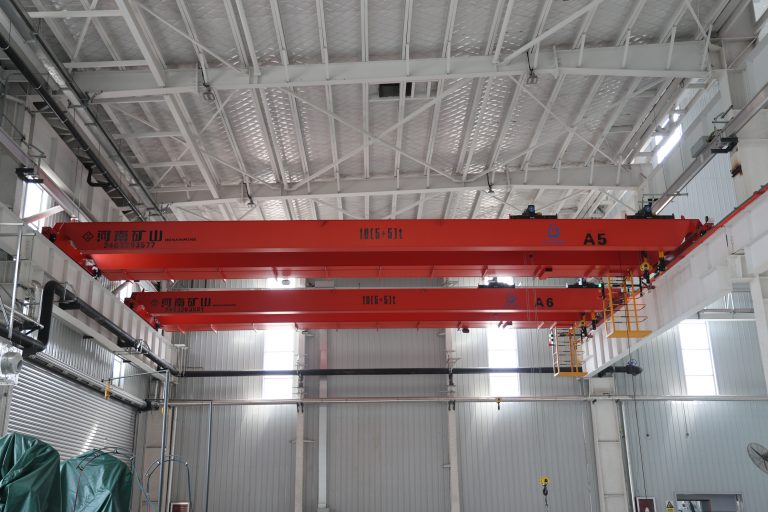
Case: how to choose the right workshop overhead crane
We would like to share with you an actual case of Henan Mine Crane to understand the selection process more intuitively.
The customer is a steel fabrication workshop (steel fabrication workshop), mainly lifting structural steel parts, the maximum material weight of 15 tons, there is a dynamic load, the future may expand capacity, lifting 20 tons of material.
Workshop dimensions: width 24 meters, length 60 meters, headroom 10 meters, there is a rail beam, rail centerline distance 22.5 meters, power supply 380V, 50Hz, high frequency of lifting every day, running time more than 8 hours, lifting area covers the whole workshop.
According to the customer's demand, we recommend 20 tons double girder upper running overhead crane, equipped with wireless remote control + cab dual control, retrofitted with a full set of safety devices such as overload limiter, limit switch, etc., in line with ISO and CE certification.
Recommended reasons: 15 tons of maximum material weight, plus dynamic load, choose 20 tons of crane, reserved for future expansion of the margin; workshop span 22.5 meters, double girder cranes are more suitable for the carrying capacity and stability; high-frequency lifting, choose the heavy-duty class of work level, to meet the needs of long-term operation; double girder running on the crane, a wide range of coverage to meet the needs of the entire workshop lifting; double control mode, suitable for high-frequency and precise lifting, while ensuring that the operation of the crane is safe. The dual control method is suitable for high-frequency and precise lifting, and at the same time protects the safety of operators.
Customers use, feedback equipment running stable, high efficiency, fully meet the production needs, later expansion of production capacity, there is no need to re-procurement of cranes.
Frequently asked questions about the selection of overhead crane
How to determine whether I need a single girder or double girder crane?
Look at the lifting capacity, span and lifting frequency. Lifting capacity ≤ 20 tons, span ≤ 20 meters, lifting frequency is not high, choose single girder cranes; lifting capacity > 20 tons, span > 20 meters, high frequency lifting, choose double girder cranes. If the lifting height, lifting precision requirements are high, also prioritize the double girder crane. Single girder cranes are suitable for small and medium tonnage, low-frequency operations, double girder cranes are suitable for large tonnage, high frequency, large span operations.
Can one overhead crane cover the whole workshop?
It depends on the size of the workshop and the lifting area. If the workshop is not big, the length and width are moderate, and the lifting area is centralized, one crane can cover it; if the workshop is big, the lifting area is scattered, and one crane can't cover it, so you need more than one crane to cooperate with it or set up transfer points. According to the length of the workshop and the distribution of the lifting area, the running length of the crane can be determined to ensure that all operating areas are covered.
What about the limited height of the workshop?
Priority is given to down-running overhead cranes, which have a compact structure, occupy little space and are suitable for workshops with limited headroom; single girder cranes with low building heights can also be selected, and the lifting height parameter can be adjusted to ensure that the hook can reach the required position. At the same time, the spreader design can be optimized to reduce the height occupied by the spreader and enhance the actual lifting space.
The bigger the crane, the higher the cost performance?
No. The cost-effectiveness of the crane depends on whether it matches your workshop conditions and needs. Too large a crane, procurement costs, maintenance costs, energy consumption are very high, and slow running speed, but not cost-effective; too small a crane, can not meet the lifting needs, the later need to re-procurement, but also a waste of cost. Suitable is the most cost-effective, fit their own lifting needs, is the most cost-effective choice.
Workshop is not fully built, can I choose the crane?
Yes, you can. As long as the workshop design drawings, clear workshop dimensions, load-bearing structure, track beam location and other information, we can help you according to the drawings, accurate selection, in advance to determine the parameters and configuration of the crane. So that after the workshop is built, the crane can be installed and put into use in a timely manner, without delaying the schedule. However, it is necessary to confirm the layout of track beams, headroom height and other key parameters in the design drawings of the workshop to avoid dimensional deviations in the later stage.
Conclusion
The core of choosing workshop overhead cranes is not to choose the “biggest” or ‘cheapest’, but the “best match”. You must start from your own workshop conditions, lifting needs, production process, step by step to confirm the key parameters, to avoid common misconceptions, in order to choose the right equipment.
Henan Mine Crane has been in the overhead crane field for decades, focusing on the research and development, production and sales of workshop overhead crane. We have a team of professional engineers, who can provide you with free on-site surveys, selection consulting, and help you accurately match the configuration of the crane to ensure that it meets the local compliance standards.
No matter which country you are in, whether it is a new workshop or old workshop remodeling, as long as you provide workshop information and lifting needs, we can help you choose the right crane, so that you take the wrong way, do not spend money.