
Installation Guide for Overhead Crane
Selecting a suitable overhead crane is only half of the success of the project, and standardized installation and construction also determines whether the equipment can be safely landed and operated stably for a long time.
When purchasing, many customers only focus on the price and rated lifting capacity, but ignore the core technical parameters, workshop track conditions, as well as the details of the installation process.
Later on, either the equipment and plant structure does not match, or installed after the operation of the jam, frequent failures, and even rework rectification, both delayed and increased costs.
I will combine this content with Henan Mine Crane's many years of project experience, the core parameters of the overhead crane, on-site installation procedures, precautions, to help you avoid the common pit in the selection and installation.
What is an overhead crane?
Basic Definition
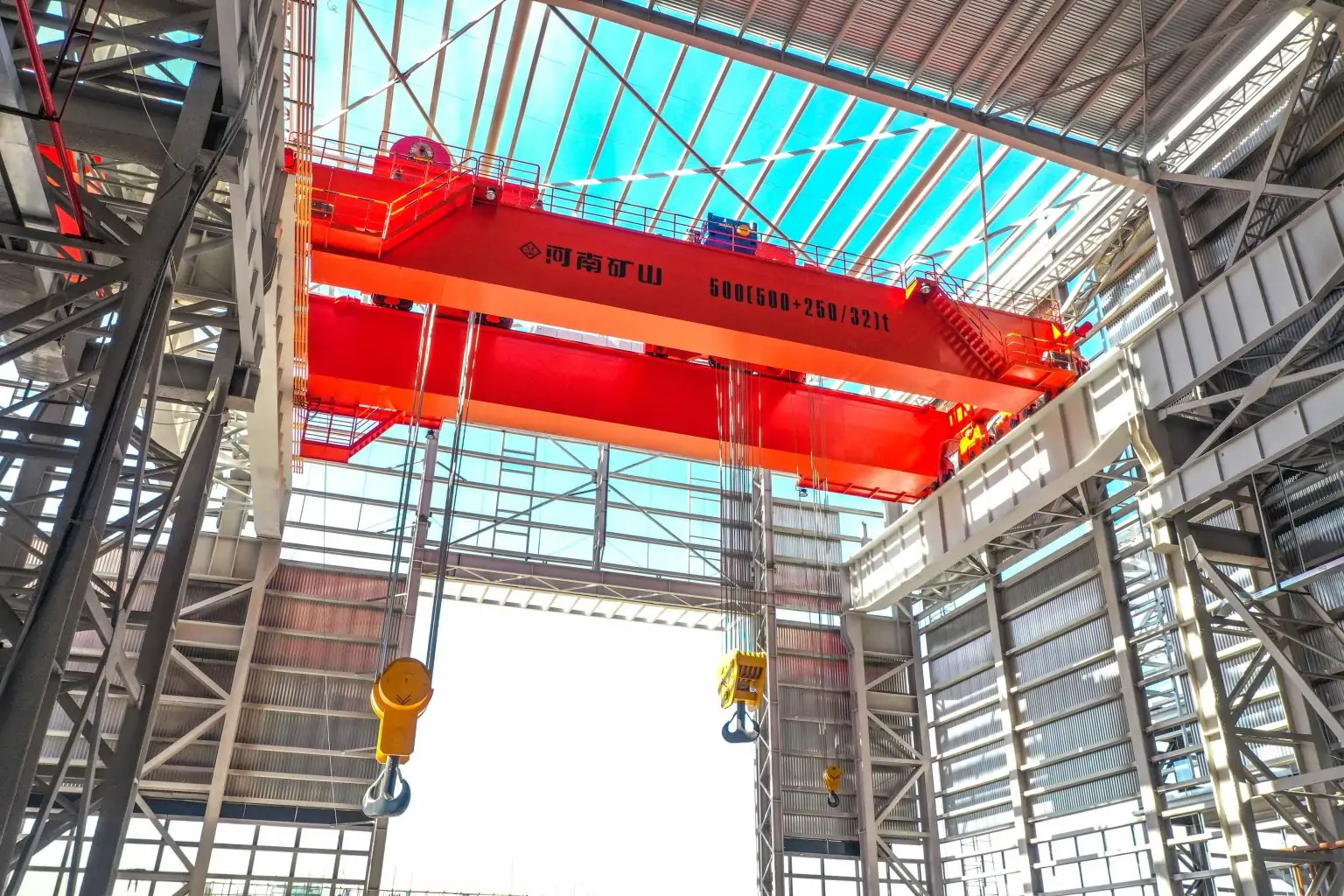
Overhead crane is what we often call overhead crane, traveling crane, running through the track beams erected on both sides of the workshop, doing horizontal and vertical material lifting inside the plant.
It relies on the steel structure of the workshop to bear the load, covering the whole workshop operation area, and is the most commonly used lifting and transportation equipment in industrial production.
No matter it is an indoor processing workshop or an outdoor simple plant, as long as there is a matching rail, it can be installed and used.
Main components
The core components of a complete overhead crane include the main girder, the end girder, the lifting trolley / hoist, the running rail, the control system and the power supply system.
The main girder is the central load-bearing structure. The end girder connects the main girder to the wheelset and is responsible for running along the track.
The hoist or trolley is responsible for the lifting and lateral movement of the hook, while the rail and power supply system provide the basic support for the operation of the equipment.
Typical application industries
Overhead crane are indispensable for the transfer of sections and billets in steel processing plants.
The assembly of equipment and lifting of parts and components in machinery manufacturing workshops are also mostly accomplished by bridge cranes.
In addition, storage and logistics warehouses, prefabricated parts production plants, paper mills, and equipment maintenance workshops are all high-frequency application scenarios for overhead cranes.
Why do you need to pay attention to the parameters of the equipment before installation?
If the parameter match is not up to standard, the subsequent installation and use will be problematic, which is not a trivial matter, but a core link directly related to safety and cost.
Impact on safety
Mismatch between parameters and plant structure, such as wheel pressure beyond the track beam load-bearing, will lead to track deformation, cracking, lifting is very easy to cause load falling accident.
Miscalculation of lifting height and gap size may also cause the hook to collide with the roof and columns, resulting in equipment damage and casualties.
Impact on equipment performance
Parameter-matched cranes will not run off, shaking, smooth lifting process, and less wear and tear of parts.
If the span and speed parameters are wrongly chosen, the equipment will either fail to reach productivity or run overloaded for a long time, and the failure rate will rise sharply.
Impact on project cost and duration
If the parameters are wrongly estimated in the early stage, either the structure of the plant needs to be reinforced or the crane size has to be modified again, which directly leads to the delay of the construction period.
There is even a situation where the equipment is transported to the site and cannot be installed. The cost of rework and secondary transportation is much higher than the input of checking the parameters in the early stage.
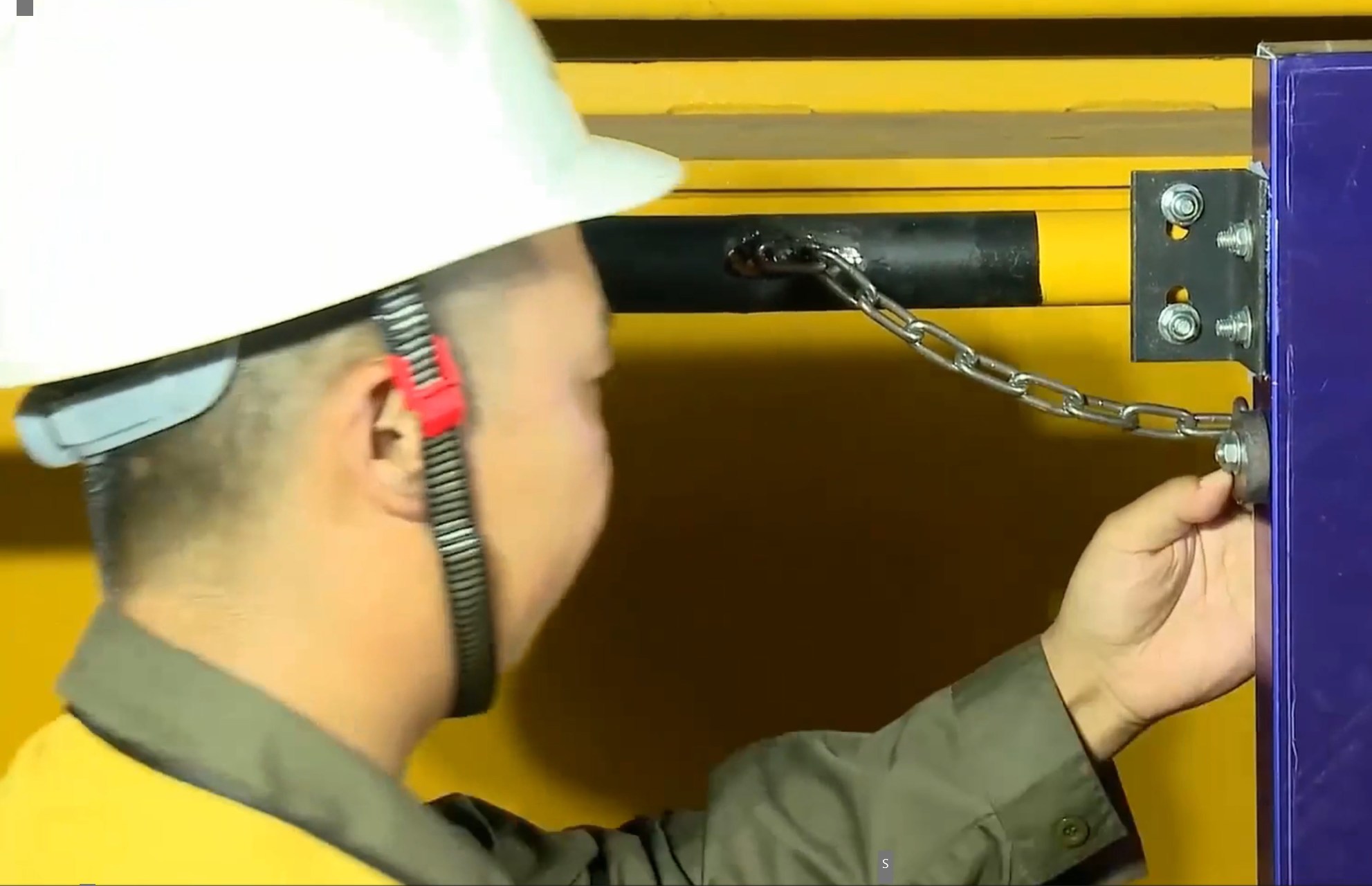
The core parameters of overhead cranes that must be understood
1. Rated lifting capacity
Rated lifting capacity is the maximum load allowed to be lifted by the equipment, which is also the most basic parameter when purchasing.
Determine the lifting capacity, to count the weight of the material, the weight of the spreader, not just look at the material itself.
If there is a demand for precision lifting and double hook operation, it is also necessary to consider whether to configure a secondary hook to meet the lifting of different weights of materials.
2. Span
Crane span refers to the horizontal distance between the centerline of two running rails, many customers will directly take the width of the workshop as the span, which is a typical error.
Workshop columns, safety channels, rail installation gap, will compress the actual available rail spacing, must be measured on-site centerline distance.
The span directly determines the length of the main beam, and also affects the wheel pressure distribution and track design.
3. Lifting height
Lifting height is the moving distance of the hook from the lowest position to the highest position, and the headroom height of the workshop should be taken into account in the calculation.
It is also necessary to reserve the top safety clearance to avoid collision with the main beam or roof structure when the hook rises to the limit position.
Under the same workshop height, the effective lifting height of single girder and double girder cranes will also be different.
4. Wagon running length
It refers to the total running distance of the crane along the workshop track, which should cover all the material lifting areas, and there should be no operation blind area.
The running length should be determined by combining the total length of the workshop and the spacing of the columns, and at the same time, the buffer gap at the end of the track should be reserved.
5. Working level
The working level is divided into three types: light load, medium load and heavy load, and the core is determined by the daily lifting frequency and running length.
Just occasionally do equipment maintenance lifting, choose light load level can be; all day continuous high frequency operation, must choose heavy load level.
If you choose the wrong level of work, the equipment will age quickly and its service life will be shortened by more than half.
6. Lifting, trolley, trolley running speed
There is no uniform standard for the three speeds, and they should be adapted to the actual operational requirements.
Lifting precision molds, fragile materials, the speed should be slowed down to ensure smooth lifting; transfer bulk common materials, can be appropriate to increase the speed.
Unreasonable speed matching will either affect the production efficiency or increase the safety hazard.
7. Power supply parameters
Power supply mainly depends on the voltage, frequency and number of phases, different countries and regions of the industrial power supply standards are different, must be checked in advance.
Domestic commonly used 380V/50Hz power supply, overseas projects will have 415V/60Hz, 220V and other specifications, the parameters do not match the equipment can not be energized.
8. Control mode
The common control methods are handle control, wireless remote control and cab control.
Ordinary light work with handle control can be, dust, high temperature workshop suitable for wireless remote control, heavy-duty high-frequency operations more suitable for cab control.
The control mode will also affect the wiring arrangement and wiring process during installation.
9. Wheel pressure and track load bearing
Wheel pressure is the pressure of crane wheels on the rail beam, is the core basis for the design and reinforcement of the rail beam.
The load-bearing capacity of the rail beam must be greater than the maximum wheel pressure of the equipment, otherwise there will be sinking of the rail and deformation of the steel structure.
This is also a key parameter that must be checked before installation, and many old plants retrofitted with cranes have to do wheel pressure accounting first.
10. Gap size
Gap includes top gap, side gap, hook approach distance, end approach distance.
To ensure that when the crane is running, and the workshop columns, walls, other equipment to maintain a safe distance, do not collide.
Incorrect accounting of the gap size will directly lead to the inability to operate normally after installation.
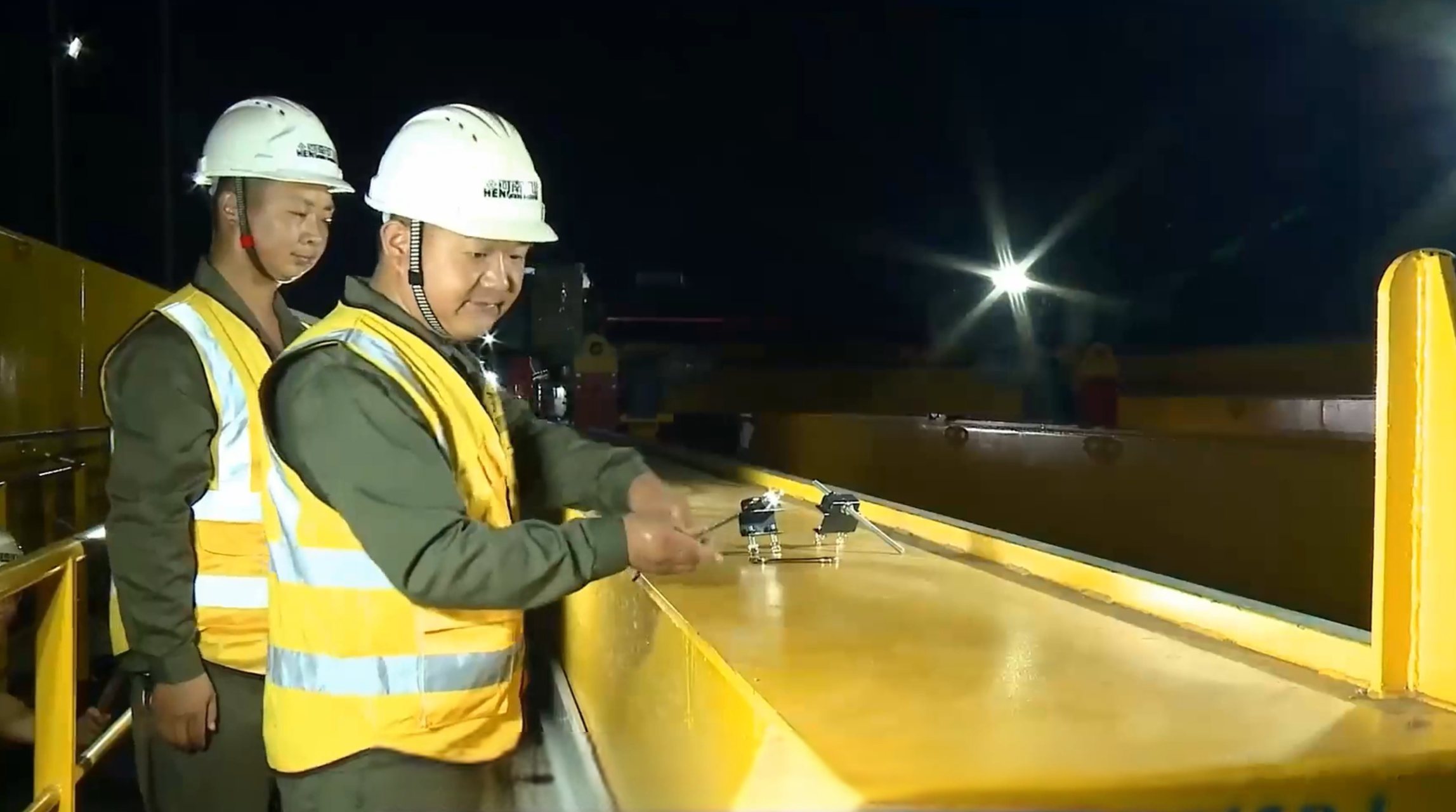
Parameter differences between single girder and double girder overhead cranes
Single girder overhead crane
The lifting capacity is mostly in the range of 0.5-20 tons, with simple structure and lighter weight.
It has lower requirements for workshop load bearing, more cost-effective procurement and installation costs, but the effective lifting height is smaller due to structural limitations.
It is suitable for small and medium-sized span, light and medium load, low-frequency operation of ordinary workshop.
Double Girder Overhead Cranes
The lifting capacity can cover from 20 tons to hundreds of tons, which can be adapted to larger operating spans.
The trolley is arranged on the top of the main girder, which has high space utilization and greater effective lifting height.
It can also be equipped with an access platform, cab, and special spreader, which provides more space for customization and is suitable for heavy-duty, high-frequency, and large-span industrial scenarios.
Selection basis for both
The final choice of single girder or double girder, do not blindly pursue high matching, combined with the lifting capacity, working level, workshop size and budget judgment.
Small tonnage, ordinary workshop choose single girder is more economical, large tonnage, heavy production workshop choose double girder is more durable.
Workshop and track information to be confirmed before installation
Workshop size
Check the width, length, roof height, column spacing of the workshop in advance, all the data should be measured on site, not just looking at the drawings.
These data are the basis for determining the crane span, lifting height, running length, and also the core basis for installation and construction.
Track beam condition
If the workshop already has track beams, check the level and straightness of the beams, as well as the load-bearing capacity of the steel structure.
Most of the track beams in old workshops need to be reinforced to meet the operating requirements of cranes.
The installation accuracy of the rail beam directly determines whether the crane runs smoothly.
Rail specification
The model, size and fixing method of the rail should be matched with the crane wheel set.
When installing the rail, it is necessary to ensure that the straightness, centerline spacing, and elevation error of the rail are within the standard range to avoid misalignment of the rail.
Site environment
Indoor or outdoor installation directly affects the protection level of the equipment.
Dust, humidity, high temperature, corrosion, explosion-proof and other special environments, to choose the corresponding protection configuration of the crane, the installation should also do targeted processing.
Technical documents to be confirmed before installation
Installation is not blind construction, all links should rely on formal technical documents, to avoid operating based on experience.
Documents to be verified include crane general arrangement drawings, track beam foundation drawings, electrical schematic diagrams, installation manuals, packing lists, and equipment factory inspection reports.
Incomplete documents or parameters do not match, we should communicate with the manufacturer in time, and can not force the installation.
Overhead crane installation step-by-step process
Step 1: Site survey before installation
After the construction team enters the site, first review the track size, the condition of the beam, the straightness of the track, as well as the site power supply conditions.
Confirm that all parameters are consistent with the design of the equipment, mark the installation baseline, and remove obstacles to on-site construction.
Step 2: Equipment unloading and parts checking
According to the packing list, check all the components such as main girder, end girder, hoist, electrical components, etc., and check whether there is any transportation damage.
Missing or damaged components should be replaced in time to avoid stopping the work halfway through the installation.
Step 3: Track installation or existing track calibration
Newly installed track should be adjusted for centerline spacing, elevation and levelness, with the error controlled within the standard range.
The original track should do the second calibration, clean up the debris on the track and tighten the fixed bolts.
Step 4: Crane bridge assembly
The main girder and end girder will be spliced, and the bolts should be tightened according to the torque standard to ensure that the bridge structure is stable.
Single girder crane assembly is simpler, double girder crane to additional calibration of the parallelism of the two main beams.
Step 5: Lifting the bridge onto the rail
Use lifting equipment such as truck cranes to smoothly lift the assembled bridge onto the running track.
The lifting process should be well protected to avoid bumping the main girder, and operate in strict accordance with the safe lifting sequence.
Step 6: hoist, trolley and power supply system installation
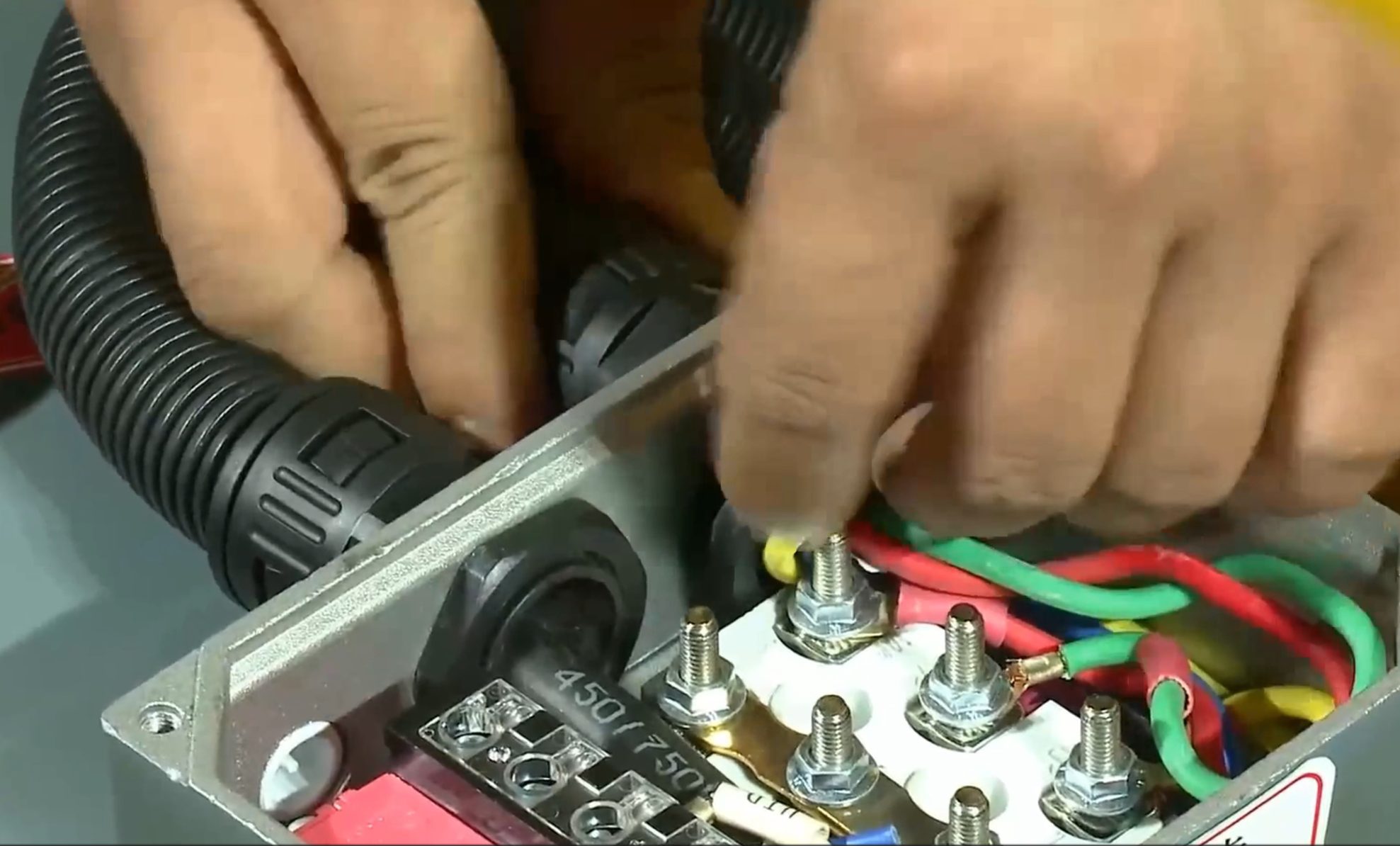
Install the hoist or trolley on the main beam track, connect the power supply system such as slip wire and cable reel.
Complete the wiring according to the electrical schematic diagram and fix the lines to avoid pulling and wearing during operation.
Step 7: Mechanical and electrical commissioning
Adjust the brake clearance, calibrate the limit switch, and correct the alignment of the wheel set.
Do the basic circuit test after power on to make sure that the control buttons and emergency stop devices function normally.
Step 8: No-load test run
Start the equipment, test the operation of the big car and the small car, and the function of the hook lifting and lowering, and check whether there is any abnormal noise, jamming, and running away.
Confirm that all actions respond normally and there is no abnormal vibration, then enter the next test.
Step 9: Load test and debugging
Do static load test first, hoist 1.25 times rated load, check whether the main beam structure and track load bearing are up to standard.
Then do dynamic load test, simulate the actual lifting conditions, test the stability of the equipment and braking performance.
After all tests are qualified, final commissioning is completed.
Step 10: Operator training and delivery
Explain the basic operation methods, safety precautions, and daily inspection points to the operators on site.
Hand over the equipment data and test reports to confirm that the equipment can be officially put into use.
Common installation methods of overhead crane
Installation in a new workshop
Newly built workshops can plan track beams and power supply lines in advance, and synchronize with plant construction.
Smoother docking of parameters in the early stage, lower installation difficulty, and avoiding structural modification in the later stage.
Existing workshop installation
Old workshop installation needs to focus on doing on-site measurements, checking the headroom, track load bearing, many scenes need to reinforce the steel structure.
On-site construction space is limited, and the lifting route should be planned in advance to minimize the impact on existing production.
Integral and Split Installation
Integral cranes have been assembled at the factory, and only need to be lifted onto the rails at the site, with a short construction cycle.
Large-span, large-tonnage cranes are transported in separate units and assembled on site, which makes the installation process more complicated and more demanding for the construction team.
Common problems of crane installation
Rail misalignment
Excessive deviation from the centerline of the rail will cause the crane to run out of alignment and the wheels to gnaw on the rails, increasing the wear and tear of the rails and wheels.
Wrong span confirmation
The span is set according to the width of the workshop, which leads to mismatch between the bridge and the rail, and cannot be installed properly.
Insufficient headroom height
The lifting height is not accounted for in the previous period, and the hook cannot be lifted to the specified position after the equipment is installed, which cannot meet the lifting demand.
Mismatch of power supply parameters
Voltage, frequency and equipment design do not match, motor failure and control failure after power on.
The load-bearing capacity of track beam is not up to standard
Failure to account for wheel pressure, insufficient strength of track beams, deformation and sinking of beams after operation.
Improper calibration of wheel sets
Poor wheel alignment, rattling and shaking during operation, long-term use will damage the end beam structure.
Inadequate site preparation
The construction site is narrow and the power supply is not connected, which leads to the delay of the installation schedule.
Safety Precautions during Installation
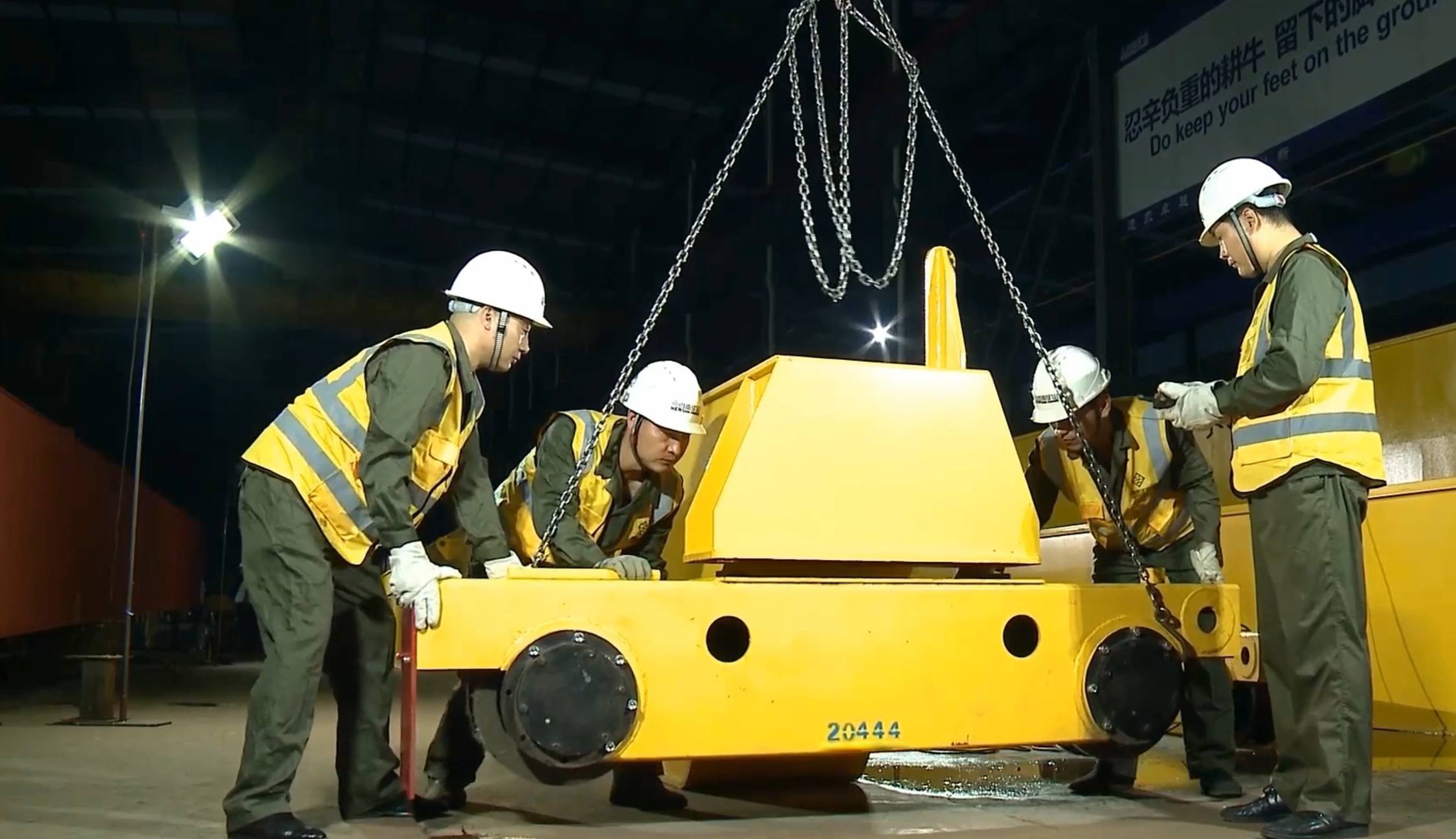
Installation must be operated by qualified professional team, unlicensed construction is very likely to cause safety accidents.
When lifting bridges and working at height, professional lifting equipment should be equipped and overhead protection measures should be taken.
Cut off the power supply before electrical wiring, and do a good job of locking and tagging to avoid the risk of electric shock.
Load test must be carried out within the controllable range, arrange for on-site supervision by specialized personnel, and prohibit unrelated personnel from entering the construction area.
Influence of equipment parameters on installation difficulty
Lifting capacity and deadweight
Large tonnage cranes have greater deadweight, requiring larger tonnage truck cranes and more complex construction schemes when lifting.
Before installation, we need to plan the lifting points in advance and calculate the ground load bearing to avoid the site can not be constructed.
Span and main beam length
For cranes with a span of more than 20 meters, the main girder will be transported in sections, and there will be more joining processes on site, resulting in a longer installation period.
The calibration difficulty of double girder large span equipment is also much higher than that of ordinary single girder cranes.
Special Configuration
Cranes with access platforms, cabs, electromagnetic suction cups, and anti-swaying systems require additional debugging of supporting devices during installation.
The more special configurations, the more complex the installation and commissioning process.
How to ensure the smooth progress of crane installation
Measure all on-site dimensions in advance, do not replace on-site measurement with drawing estimation data.
Send the workshop drawings and track information to the crane manufacturer as early as possible, so that the manufacturer can match the equipment parameters in advance.
Clean up the construction site in advance to guarantee the space for equipment unloading and lifting, and avoid site congestion.
Connect the standardized temporary power supply before installation to meet the commissioning requirements.
Docking construction progress with civil and electrical teams in advance to avoid process conflicts.
Common Misconceptions of Purchaser in Selection and Installation
Only focus on the rated lifting capacity, ignoring the core parameters such as working level, wheel pressure and clearance.
Do not check the load bearing and size of the rail beam, and default to the existing rail can be adapted to all cranes.
Estimating the size with drawings, not doing on-site measurements, resulting in mismatch between the equipment and the site.
Ignore local safety standards and compliance requirements, equipment can not pass acceptance.
Thinking that all cranes have the same installation process, without considering the construction differences in tonnage and structure.
Skip operator training and load testing and put them into use directly, laying a safety hazard.
Information to be provided to crane manufacturers
Infrastructure requirements
Clarify the rated lifting capacity, span, lifting height, large car running length, and working level.
These are the core basis for manufacturers to design equipment and match parameters.
Workshop and track information
Provide architectural drawings of the workshop, drawings of track beams, track specifications, accompanied by actual photos of the site.
It is convenient for manufacturers to judge the feasibility of installation in advance and optimize equipment design.
Electrical and control requirements
Inform the site power supply voltage, frequency, and preferred control mode, special safety requirements should also be explained in advance.
Installation Service Requirements
Indicate whether the manufacturer needs to guide the installation at home, or the local team construction, whether the manufacturer is responsible for debugging.
Project case: from parameter confirmation to installation
A machine shop with a total width of 24 meters and a headroom of 9 meters plans to lift mechanical parts with a maximum weight of 10 tons.
The daily lifting frequency is medium, belonging to medium load operation, and the workshop has old track beams.
We measured the distance from the centerline of the track to 22.5 meters on site, and did partial reinforcement of the track beam after calculating the wheel pressure.
The final choice is 10 tons single girder overhead crane, span 22.5 meters, lifting height 7 meters, wireless remote control.
The installation was carried out by on-site assembly and lifting, first calibrating the track, then splicing the bridge, and then delivering it after completing the no-load and load test.
The whole project avoided the problems of span miscalculation and insufficient track loading, and the equipment operated smoothly after commissioning.
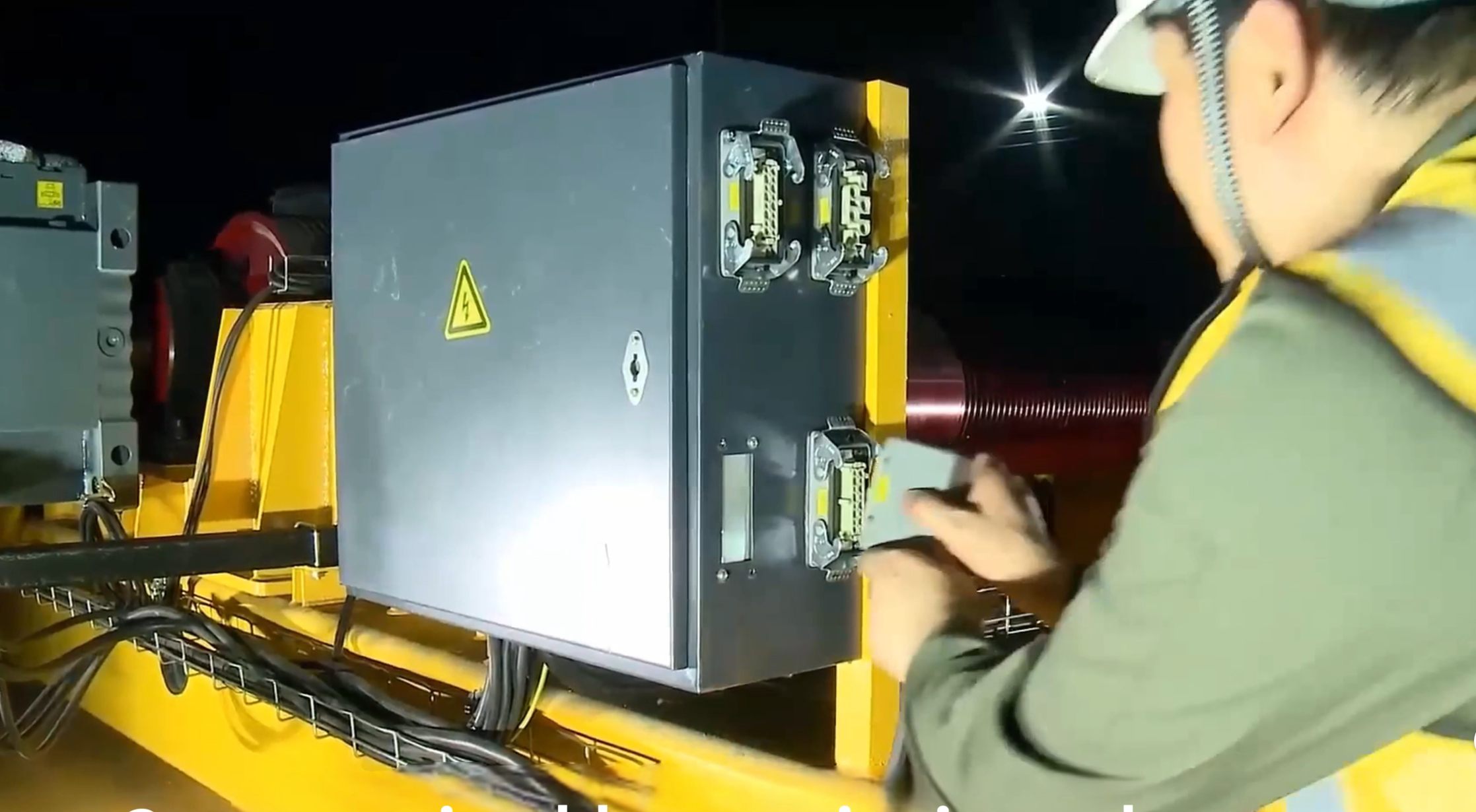
Frequently Asked Questions on Overhead Crane Parameters and Installation
What is the most important parameter of overhead crane?
There is no single core parameter, span, lifting capacity, wheel pressure, lifting height are all critical, any error will affect the use.
Can an overhead crane be retrofitted to an existing workshop?
Yes, but you must first measure the workshop dimensions, calculate the load bearing capacity of the track beams, do structural reinforcement if necessary, and match the equipment with the corresponding parameters.
How to judge whether the track beam is up to standard?
Crane wheel pressure is calculated by the manufacturer, compared with the designed load bearing capacity of the rail beam, and the level and straightness of the rail are tested at the same time.
Is the installation of double girder crane more complicated?
Yes, double girder structure is more complicated, need to calibrate the parallelism of the main girder, add more supporting components, more installation procedures than single girder.
Should the manufacturer be responsible for crane installation and commissioning?
It is recommended that the manufacturer or the manufacturer's certified team is responsible for it, which can ensure the quality of installation and avoid equipment failure due to unstandardized construction.
What tests should be done before the equipment is delivered?
Must do empty load test, static load test, dynamic load test, all tests passed before formal delivery.
Conclusion
Whether overhead crane can operate safely for a long period of time is not only inseparable from the accurate matching of parameters, but also relies on standardized installation and construction.
The details of track beam conditions, headroom height, power supply parameters and load test are never trivial, and any negligence may lead to safety accidents and cost loss.
From drawing design, parameter checking, to on-site installation, commissioning and delivery, the whole process and experienced crane manufacturers to cooperate, in order to avoid detours, so that the equipment is truly adapted to the workshop conditions, stable service production.