
Overhead Crane vs Gantry Crane: Which Fits Your Indoor Space Better
Overhead cranes and gantry cranes are the two most commonly used types of lifting equipment. Many procurement professionals and factory managers often find it difficult to choose between them, as both types of equipment can perform basic tasks such as material handling, equipment hoisting, and mold transport.
Drawing on years of experience in providing lifting equipment for indoor facilities both domestically and internationally, we compare the suitability of indoor Overhead Cranes and indoor Gantry Cranes based on real-world operating conditions to help you select the lifting equipment that best fits your workshop.
Detailed Explanation of the Two Main Types of Indoor Cranes
The core difference between overhead cranes and gantry cranes lies in their support structures and operating methods, which are also the fundamental reasons why they are suited for different indoor scenarios.
What is an Overhead Crane?
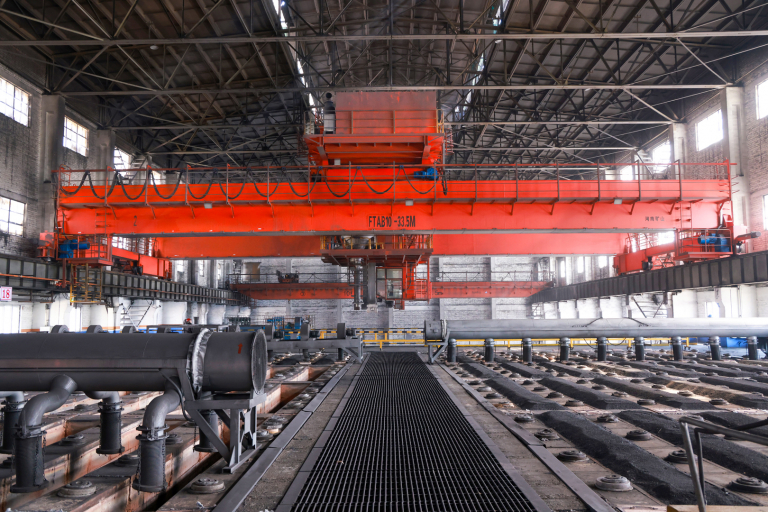
Overhead crane, also commonly known as bridge cranes, are typical overhead lifting equipment. The equipment relies on overhead track beams constructed using factory columns and walls for support, with the entire unit suspended and operating in the space above the workshop.
Overhead Cranes fully utilize the upper space of the factory for operations, without occupying floor passageways or work areas, allowing the floor space to be fully reserved for production and material storage. Suitable for fixed lifting operations in standardized factories, they offer a wide coverage area and stable operation, making them the most commonly used permanent lifting equipment in industrial facilities.
What is a gantry crane?
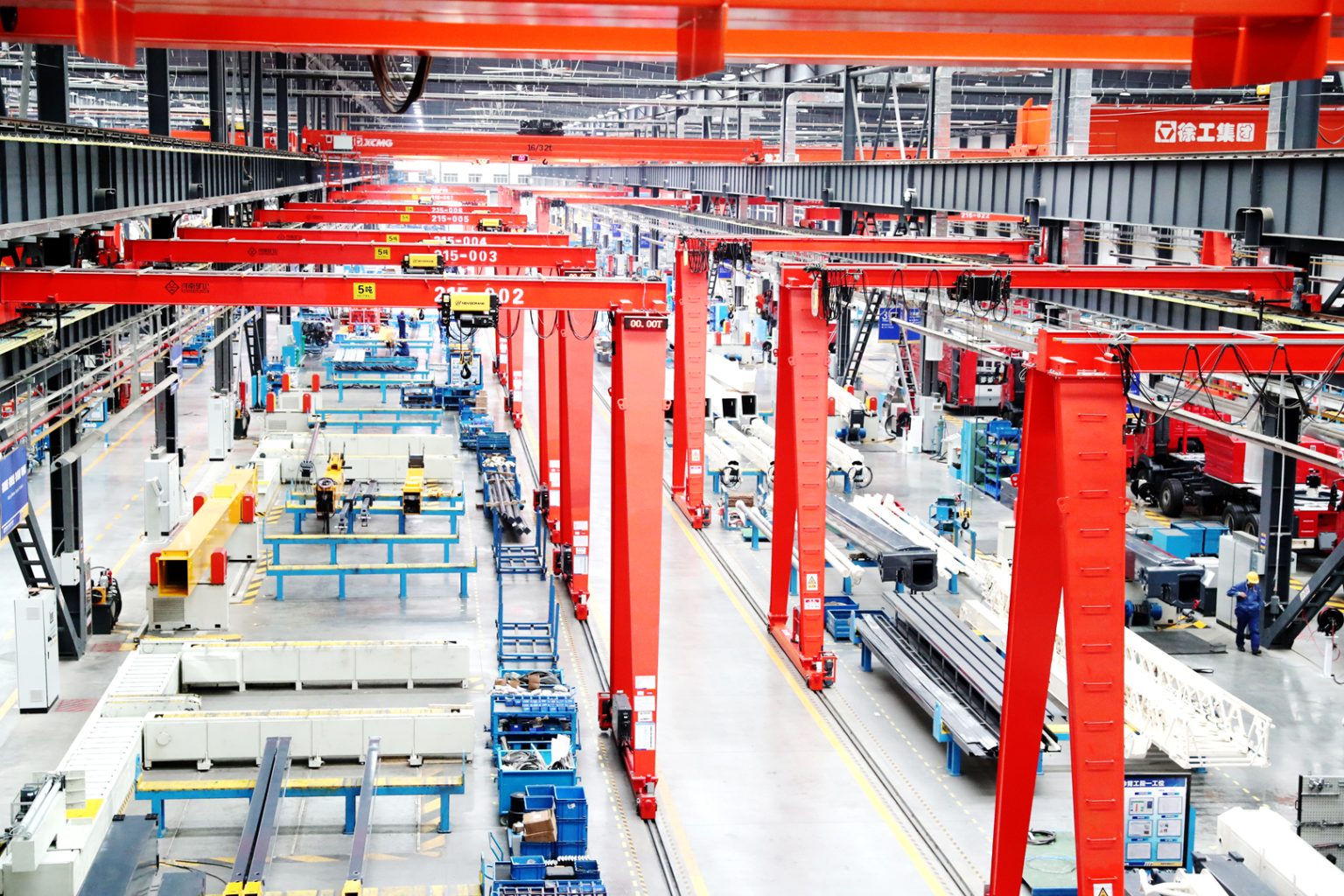
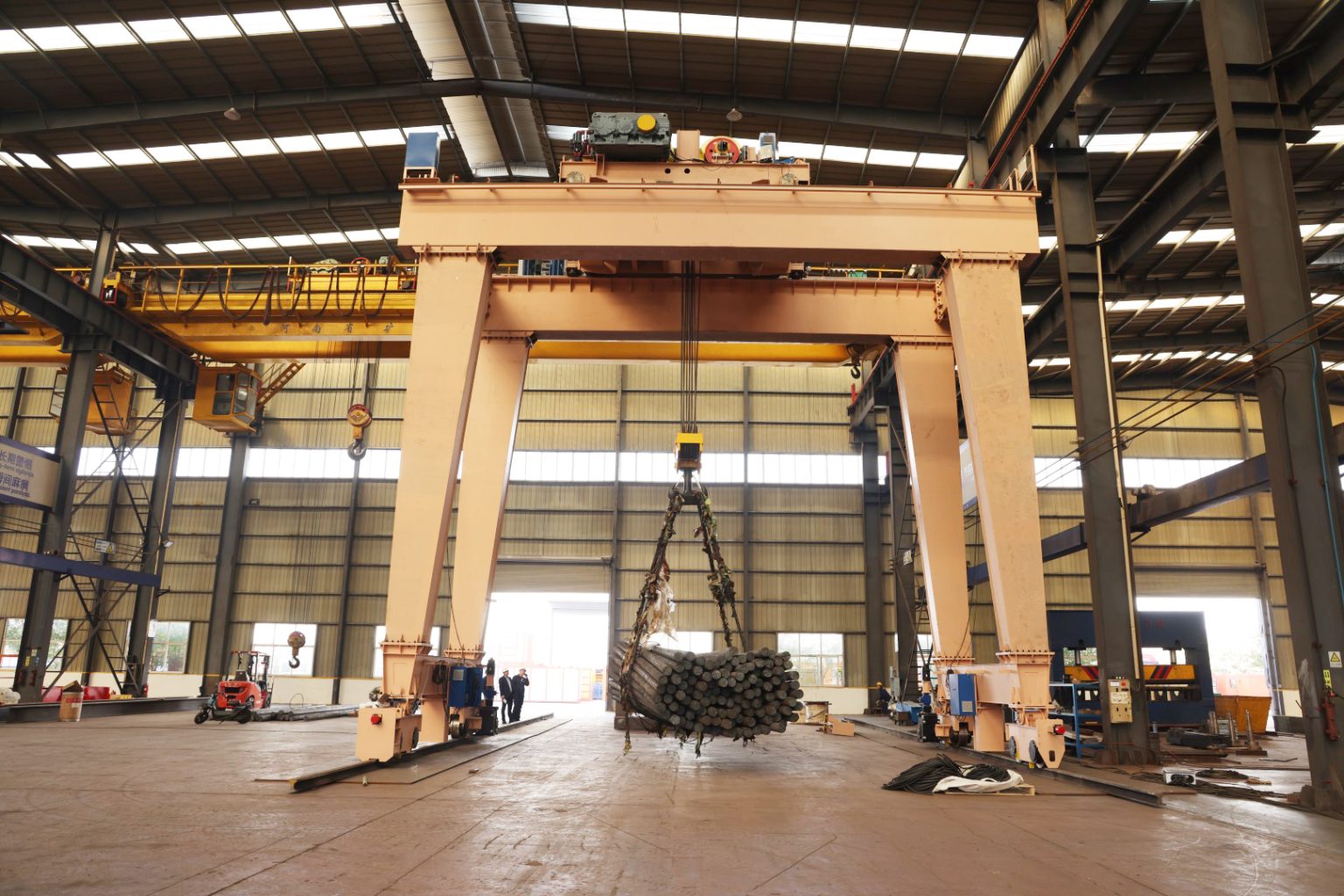
Gantry cranes rely on their own legs for ground support, with tracks laid on the ground foundation. The entire unit travels along ground-level tracks and does not rely on the building structure for load-bearing.
Indoor gantry cranes feature an independent structure and flexible installation, making them suitable for indoor scenarios without overhead tracks, where the building structure is weak, or where bridge cranes cannot be installed. Lightweight gantry cranes can also be disassembled and relocated as needed to accommodate flexible operational requirements.
Scenarios Where Overhead Cranes Are the Preferred Choice
For standardized new factory buildings, fixed production lines, and high-frequency, routine lifting operations, Overhead Cranes are the preferred choice. These facilities typically feature regular structural layouts, meet load-bearing standards, and allow for easy installation of overhead tracks.
Overhead Cranes maximize floor space utilization without interfering with production flow. They offer superior stability and adaptability for long-term, fixed operations, making them ideal for sustained, stable, and continuous production-oriented lifting needs.
Scenarios Where Gantry Cranes Are the Preferred Choice
Old factory buildings, simple sheds, and warehouse areas often lack supporting overhead load-bearing structures, and retrofitting track beams is extremely costly. In such cases, gantry cranes are more suitable.
For short-term temporary operations, localized small-scale lifting, and situations requiring equipment mobility, the flexibility of gantry cranes is fully realized, as no structural modifications to the building are required.
Hybrid Applications (Semi-Gantry Cranes)
Many indoor environments feature semi-structured conditions: one side has building columns for support, while the other lacks load-bearing structures. This makes it impossible to install a full bridge crane, yet a full gantry crane would waste space.
In such scenarios, a semi-gantry crane is the ideal choice. It relies on the building structure on one side and uses ground-mounted outriggers on the other, balancing space utilization and installation flexibility to accommodate various non-standard, space-constrained indoor conditions.
Core Technical Parameters That Must Be Verified During Procurement
Most errors in selecting indoor cranes result from insufficient attention to parameter verification, overlooking the compatibility of space, structure, and operating conditions, which leads to equipment being unable to function properly after installation.
Rated Lifting Capacity
Select the model based on the maximum weight of materials, equipment, and molds to be lifted in the workshop, and allow for a reasonable margin of capacity. Avoid operating at full load or overloading to ensure long-term, stable operation of the equipment.
Equipment Span
The span must precisely match the workshop’s operational width and the lateral dimensions of the production line to ensure full coverage of the work area without any lifting blind spots, while avoiding resource waste caused by excessive span.
Effective Lifting Height
Determine this by considering the workshop’s clear ceiling height, equipment stacking height, and lifting/transfer routes. Avoid overhead pipelines, suspended ceilings, and high-level equipment to ensure unobstructed and interference-free lifting throughout the entire process.
Overall Operating Length
Determined based on the workshop’s longitudinal operational range, this defines the equipment’s total coverage area to ensure all production points are within the lifting range.
Workshop Clear Height and Headroom
This is a key parameter distinguishing between the two Crane types. Workshops with low ceilings and insufficient headroom cannot accommodate the tracks and travel mechanisms of Overhead Cranes, necessitating the use of Gantry Cranes; standardized workshops with high clear heights are better suited for Overhead Cranes.
Floor Space and Floor Load-Bearing Capacity
Crane outriggers require floor space; careful selection is necessary for workshops with narrow aisles or dense layouts. Additionally, the concrete floor thickness and load-bearing capacity must meet the travel load requirements of the crane.
Duty Class
Classified based on daily lifting frequency: low duty class is suitable for light maintenance operations, while medium to high duty classes are required for high-frequency, continuous lifting on production lines to meet equipment durability needs.
Control Methods
Conventional workshops can use joystick controls, while precision assembly and operations in confined spaces should prioritize wireless remote control for greater flexibility and safety, reducing risks associated with personnel working at close range.
Power Supply Methods
The equipment’s power supply mode must be compatible with the workshop’s existing electrical system to avoid future circuit modifications and reduce installation and operating costs.
Comparison of Core Differences Between Overhead Cranes and Gantry Cranes
Distinguishing between the two types of equipment across multiple dimensions—including structure, space utilization, installation requirements, and operating costs—allows for a more intuitive match with your workshop’s specific conditions.
Differences in Support Structures
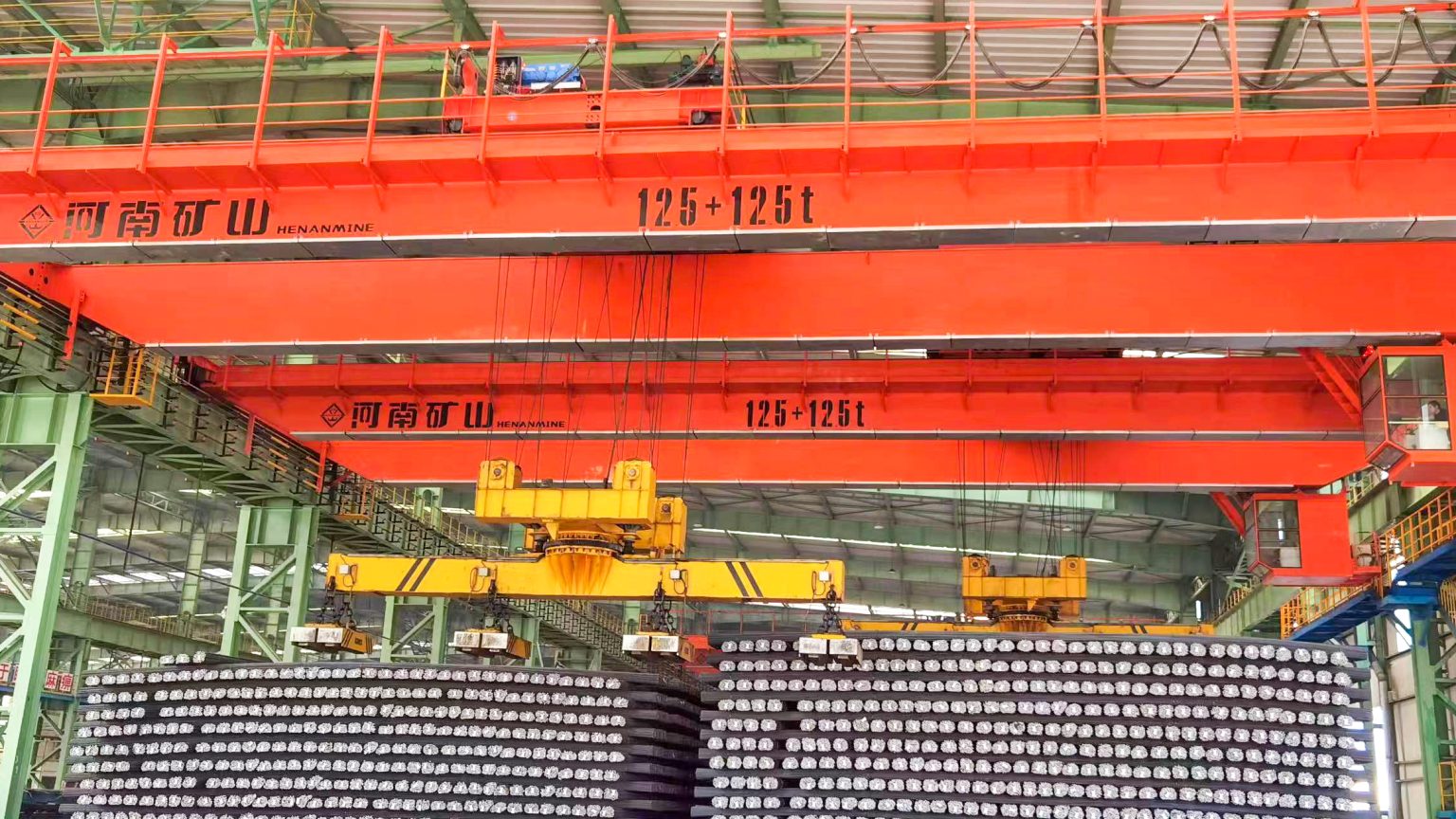
Overhead Cranes rely entirely on the building structure, supported by columns at both ends and overhead track beams, with the entire unit suspended in the air. The equipment’s stability depends on the structural strength of the building.
Gantry cranes feature a self-supporting structure, resting on metal legs that bear the load directly on the ground. They come with a complete support system and do not rely on the building’s walls or roof.
Differences in Floor Space Occupancy
Overhead cranes occupy almost no floor space, as all support structures and operating mechanisms are elevated. The floor can be fully utilized for production, storage, and traffic, resulting in extremely high space utilization.
The four legs of a gantry crane occupy a certain amount of floor space, which can cause passage difficulties in workshops with limited space and narrow aisles.
Differences in Dependence on Factory Buildings
Overhead Cranes have extremely high requirements for factory buildings, necessitating a qualified load-bearing structure, regular column spacing, and sufficient headroom. They are not suitable for old or simple factory buildings.
Gantry cranes have virtually no building dependency; they can be installed as long as the ground is level and meets load-bearing requirements, making them suitable for various non-standard, old, or simple indoor spaces.
Differences in Installation Difficulty
Installing an Overhead Crane requires the advance construction of track beams, verification of the building’s load-bearing capacity, and integration with the building structure. The process involves multiple construction steps, a long timeline, and requires precise coordination with civil engineering teams.
The installation process for gantry cranes is straightforward: the entire unit can be assembled once the tracks are laid on the ground. No facility modifications are required, resulting in a short construction cycle and faster deployment.
Differences in Operational Flexibility
Overhead Cranes are fixed installations that cannot be relocated once installed. They are suited for long-term, fixed production lines and offer greater stability.
Gantry cranes can be disassembled, relocated, and have their track positions adjusted according to production needs, making them ideal for flexible operations such as temporary tasks or changes in production flow.
Differences in Space Utilization
In standardized high-clearance facilities, Overhead Cranes offer significantly higher space utilization than Gantry Cranes, maximizing the use of overhead working space.
In facilities with structural constraints or limited headroom, Gantry Cranes are more practical and often the only viable lifting solution.
Differences in Cost Structure
While the equipment cost of an Overhead Crane is moderate, it requires additional civil engineering work and track beam modifications, resulting in higher overall implementation costs. It is suitable for standardized workshops intended for long-term production.
Gantry cranes require no civil engineering modifications and have lower initial implementation costs; however, they occupy floor space long-term, and their comprehensive operating costs are slightly higher for high-frequency operations.
How to Select a Reliable Crane Supplier
There is no absolute “best” or “worst” choice when selecting indoor cranes; it is all about suitability. A reliable manufacturer will provide a precise solution based on the actual conditions of the workshop, rather than blindly pushing equipment.
Verify the Manufacturer’s Production Qualifications
Prioritize manufacturers with their own production lines who possess independent capabilities in design, production, customization, and commissioning. Trading companies cannot optimize equipment parameters based on specific workshop conditions, which can easily lead to compatibility issues.
Verify Experience with Indoor Projects
Focus on the manufacturer’s implementation cases in various workshops, warehouses, and indoor assembly environments. Familiarity with the characteristics of confined indoor spaces and diverse structural conditions helps avoid compatibility issues.
Assess Professional Engineering Adaptation Capabilities
High-quality manufacturers will proactively review factory blueprints, structural parameters, and spatial dimensions. They will compare the advantages and disadvantages of gantry and overhead crane solutions and provide selection recommendations tailored to the customer’s production needs.
Verify the Complete Set of Technical Documentation
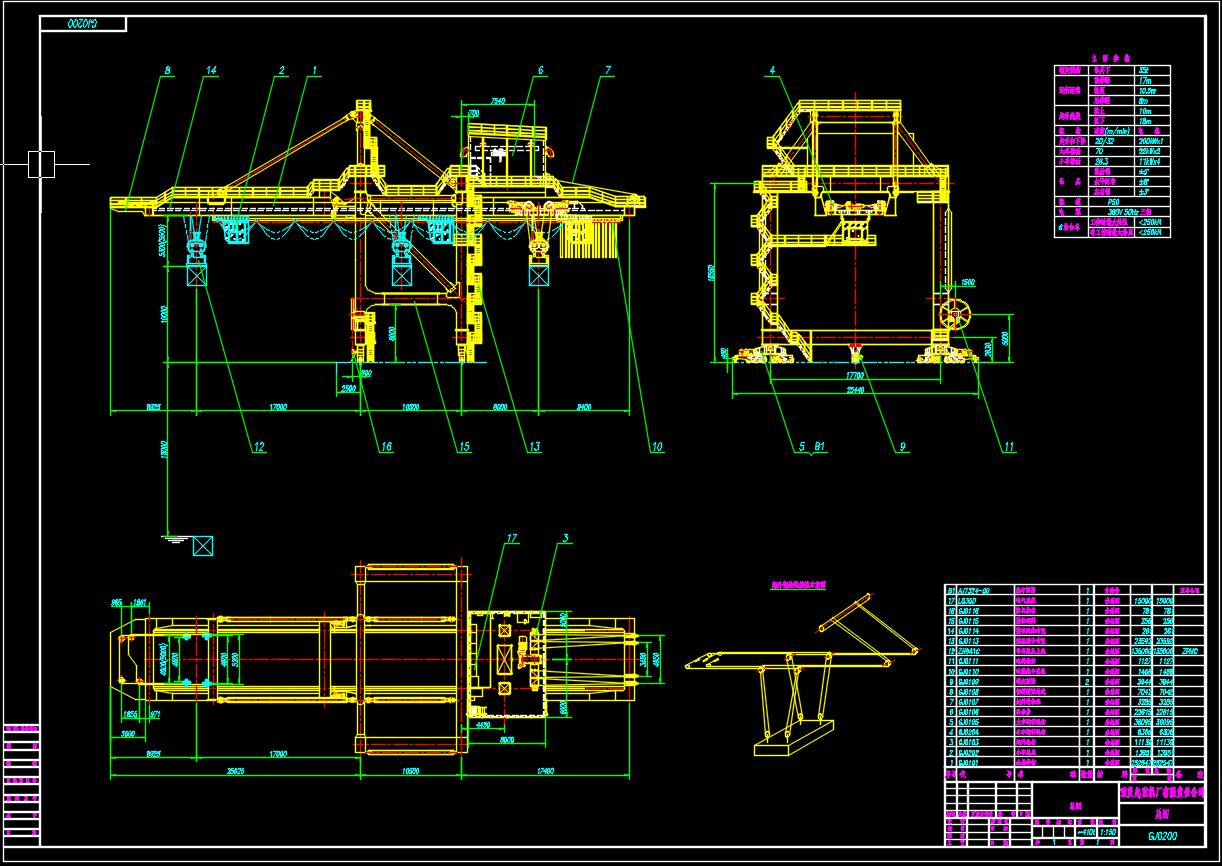
Reputable manufacturers provide a full suite of documentation, including general assembly drawings, workshop layout adaptation plans, load parameters, electrical schematics, and parts lists, to meet requirements for equipment acceptance, filing, and operation and maintenance.
Confirm the Quality of Core Components
Core components such as motors, gearboxes, brakes, wire ropes, travel wheels, and electrical control systems directly determine the stability of equipment operation; it is essential to verify the brands and quality standards of these components.
Verify the Factory Inspection System
Before shipment, the equipment must undergo dimensional verification, weld inspection, no-load trial operation, and full-load testing. Complete inspection records must be retained to ensure the equipment can be put into production with zero faults upon arrival.
Clarify the Scope of Installation and Commissioning Services
Indoor equipment requires high installation precision. The manufacturer must provide integrated on-site services including installation, commissioning, alignment, and operator training to ensure the equipment is fully adapted to workshop conditions.
Verify After-Sales Support and Spare Parts Availability
Downtime of indoor production equipment impacts production capacity. Manufacturers must possess the capability for rapid after-sales response, maintain a stock of spare parts, and conduct regular inspections and maintenance to ensure the long-term stable operation of the equipment.
Common Misconceptions in Equipment Selection
Many customers make selection errors due to one-sided judgments, neglecting the compatibility between operating conditions and equipment, which ultimately leads to wasted funds or production constraints.
Selecting equipment based solely on price, blindly choosing low-cost options while ignoring spatial compatibility and long-term operational stability.
Completely disregarding the factory’s structural load-bearing capacity and ceiling clearance, resulting in equipment that cannot be installed or poses safety hazards during operation.
Focusing only on lifting capacity while neglecting space utilization, leading to equipment occupying large production areas and reducing operational space.
Blindly selecting gantry cranes for narrow aisles or compact workshops, where outriggers obstruct workshop traffic and disrupt overall production flow.
Forcing the installation of overhead cranes in facilities that lack the necessary structural conditions, resulting in exorbitant civil engineering costs that make the project uneconomical.
Ignoring headroom and actual lifting paths, leading to restricted high-level lifting capabilities after installation and an inability to meet production demands.
Failure to provide complete workshop drawings during the quotation process prevents manufacturers from accurately assessing operating conditions, resulting in poorly suited solutions.
Incomplete workshop data leads to discrepancies in equipment span, lifting height, and travel range parameters, preventing the equipment from being put into normal operation.
Frequently Asked Questions
For indoor operations, is an Overhead Crane or a Gantry Crane a better choice?
There is no single optimal solution. Choose an Overhead Crane for standardized, load-compliant, and long-term production facilities; choose a gantry crane for facilities with structurally weak buildings, no overhead tracks, temporary operations, or older workshops.
Do Overhead Cranes always save more floor space?
Yes. Overhead Cranes operate entirely on overhead structures, leaving the floor completely unobstructed, making them the indoor lifting equipment with the highest space utilization currently available.
Can gantry cranes be used inside a factory building?
Absolutely. Indoor gantry cranes are specifically designed for confined indoor environments. They feature a compact structure and stable operation, making them suitable for various indoor scenarios where Overhead Cranes cannot be installed.
What should you choose if the factory building cannot support an Overhead Crane?
Prioritize indoor gantry cranes or semi-gantry cranes. These do not rely on the building’s load-bearing capacity and can perform operations using their own structural support, eliminating the need for major building modifications.
Are gantry cranes cheaper to purchase than Overhead Cranes?
For the same tonnage and span, gantry cranes have lower initial purchase and installation costs. Overhead Cranes require accompanying civil engineering modifications, resulting in higher overall implementation costs.
What workshop information should be prepared before requesting a quote?
Workshop length and width dimensions, clear roof height, floor load-bearing capacity, factory structural drawings, maximum lifting weight, frequency of daily operations, and a layout diagram of the work area.
Can the manufacturer help compare the suitability of the two Crane types?
Professional manufacturers can conduct a one-on-one comparison of the advantages and disadvantages of Overhead Cranes, Gantry Cranes, and Semi-Gantry Cranes based on the actual conditions of your workshop, and provide the optimal selection plan based on your budget and production requirements.
Summary
There is no absolute superiority between Overhead Cranes and Gantry Cranes; they are simply suited for different indoor operating conditions. Overhead cranes excel in space utilization and stability, making them suitable for standardized, long-term production workshops; gantry cranes excel in flexibility and convenience, requiring no factory modifications, and are suitable for indoor scenarios with structural constraints or temporary operations.
During the selection process, one should not focus solely on equipment price and lifting capacity; instead, a comprehensive evaluation must consider factory structure, spatial dimensions, operational frequency, and long-term production planning. Only by selecting equipment that aligns with specific operating conditions can one effectively balance safe production, space utilization, and long-term cost control.
Henan Mine Crane has specialized in customizing indoor lifting equipment for many years. We are well-versed in the operational characteristics of various factories, warehouses, and assembly workshops, enabling us to accurately assess the suitability of Overhead Cranes versus Gantry Cranes and provide tailored indoor lifting solutions for clients worldwide.
If you are unsure which model is best suited for your workshop, please provide us with your facility dimensions, lifting requirements, and layout drawings. Our engineering team will prepare a professional selection proposal for you free of charge.